Shock Drugs (Inotropes and Vasopressors)
 Call Kai
 Learn
Learn Practice Test
 Spaced Repetition
 Match
Match Flashcards
 Knowt Play
1/26

There's no tags or description
Looks like no tags are added yet.
Name | Mastery | Learn | Test | Matching | Spaced | Call with Kai | Chat |
|---|
No analytics yet
Send a link to your students to track their progress
27 Terms
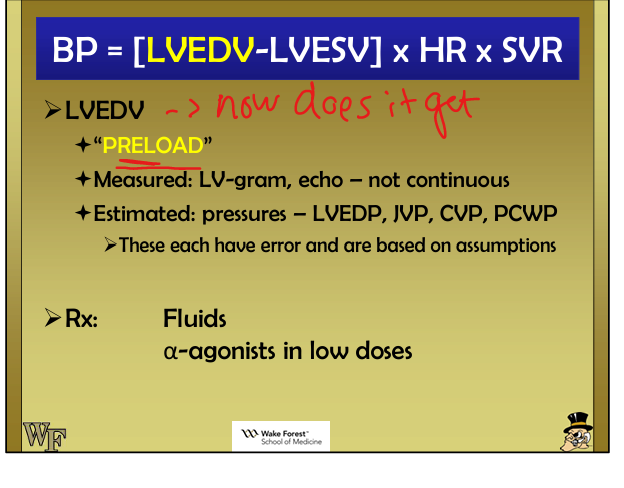
What does blood pressure depend on (components of equation)
BP= (LVEDV-LVESV) x HR x SVR: depends on CO(SVxHR) and SVR, so drugs target LVEDV (preload), LVESV (contractility/afterload), HR (chronotropy), or SVR (vasoconstriction) to correct hypotension.

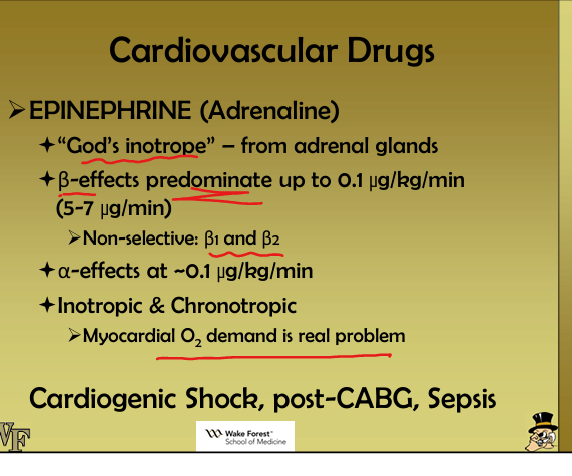
Which hemodynamic variable does epinephrine primarily modify, and how does this help differentiate shock types?
Epinephrine increases CO (β1/β2) and SVR (α1 at higher doses), improving hypotension in distributive(low SVR) or cardiogenic shock depending on the dominant deficit.
How does norepinephrine’s receptor profile help identify distributive shock physiology?
Norepinephrine’s strong α1 vasoconstriction corrects low SVR, the hallmark of distributive shock (e.g., sepsis), while modest β1 support maintains CO.

Why is phenylephrine inappropriate for cardiogenic shock when analyzing pump function?
Phenylephrine is a pure α1 vasoconstrictor that increases SVR/afterload without improving contractility, worsening CO in cardiogenic shock.

How does dobutamine’s effect on LVESV help differentiate cardiogenic shock from hypovolemic shock?
Dobutamine(b1 agonist) reduces LVESV by increasing contractility (β1) and decreasing afterload (β2), improving CO in cardiogenic shock but ineffective if preload is low (hypovolemia).

How does isoproterenol’s physiology help identify obstructive vs cardiogenic shock?
Isoproterenol increases HR/contractility (beta agonist) and causes pulmonary vasodilation, improving RV output—useful in pulmonary hypertension or RV failure but not in tamponade or PE obstruction.

How does angiotensin II help differentiate shock states with preserved CO but severe vasoplegia?
AT1 vasoconstriction rapidly increases SVR and BP, identifying distributive shock with intact cardiac function.
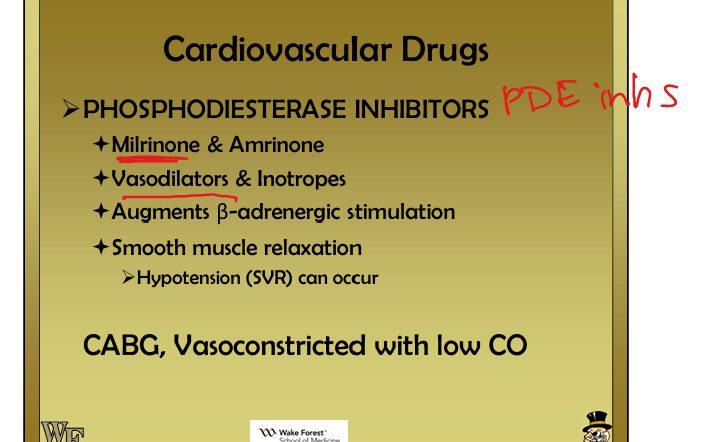
How do PDE inhibitors (milrinone) help evaluate afterload vs contractility problems?
Milrinone increases contractility and decreases SVR
Why does norepinephrine improve MAP more predictably than epinephrine in septic shock?
Norepinephrine’s dominant α1 vasoconstriction increases SVR without β2 vasodilation, producing a more stable MAP rise in vasoplegic states.

Why is dopamine avoided in modern shock algorithms?
Tachyarrhythmias from β1 stimulation worsen CO and oxygen demand, complicating diagnosis and increasing mortality in septic shock.

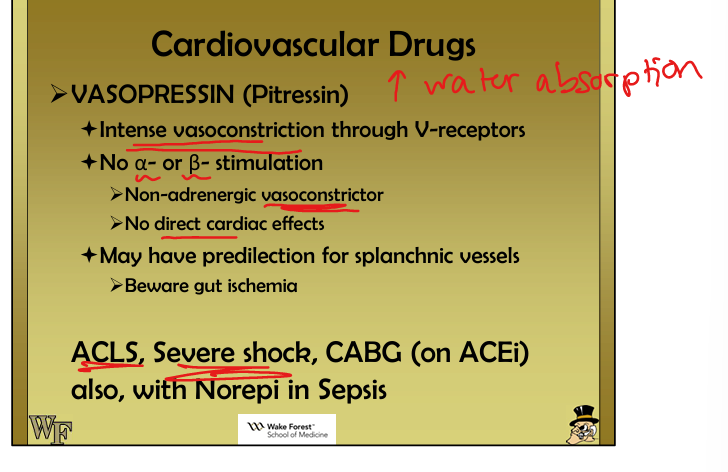
How does vasopressin’s splanchnic vasoconstriction help critique its risks?
V1 constriction may cause gut ischemia, limiting use in patients with mesenteric hypoperfusion.
How does angiotensin II’s aldosterone stimulation affect fluid resuscitation strategy?
AT2 increases Na/H2O retention, supporting intravascular volume but risking fluid overload in cardiogenic shock.

How does analysis of LVEDV guide the choice between fluids vs pressors?
Low LVEDV → fluids first

What is isoproterenol useful in?
Pulmonary hypertension or congenital heart repairs bc it vasodilates(especially pulmonary circulation)
How does myocardial oxygen demand critique epinephrine use?
Epinephrine increases HR/contractility → ↑O2 demand → risk of ischemia in cardiogenic shock(pulls O2 away from other areas)

How does obstructive shock physiology limit drug effectiveness?
Tamponade/PE prevent LV filling regardless of drugs
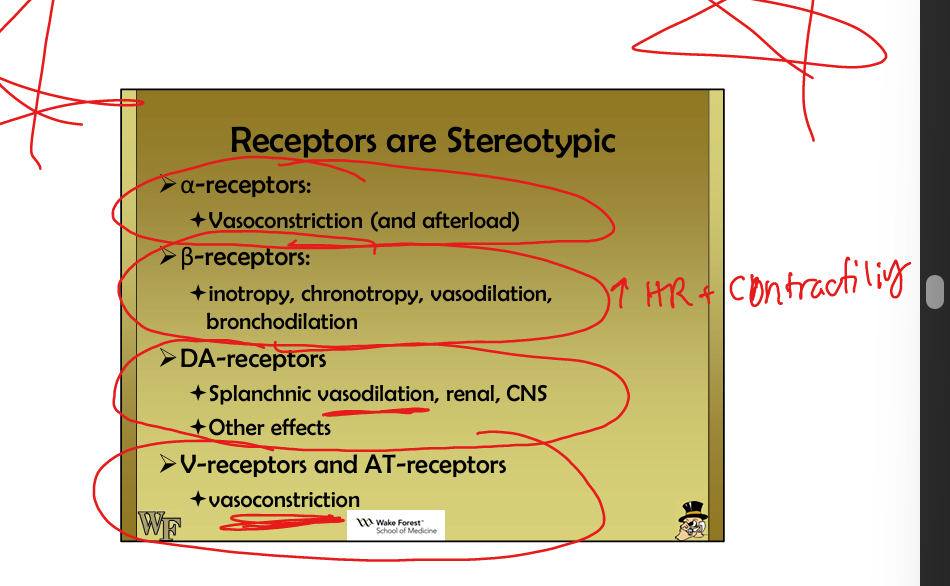
Alpha 1 agonists do
vasoconstrict peripheral arteries


Alpha 2 agonists do
mainly inihibit presynaptic receptors and act as negative feedback for sympathetic NS, vasoconstrict


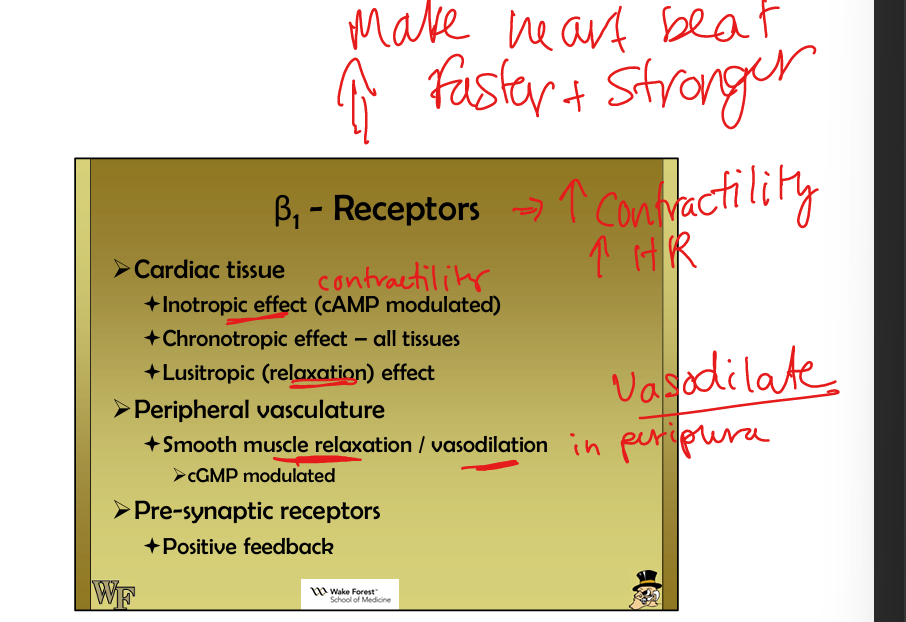
B1 agonists do
Inc HR(chronotropic) and contractility(inotropic); vasodilate in peripheral vasculature
B2 agonists do
Inc HR(chronotrope) and contractility(Inotrope), vasodilate in periphery, bronchodilate!; **In advanced CHF»they are better target than B1


Dopamine agonist do
Increase HR, vasodilation in splanchnic and peripheral, diuretic


Vasopressin agonist do
Vasoconstriction, inc water reabsorption


Angiotensin agonist do
Inc vasoconstriction, inc aldosterone release (inc water and Na retention)


Drugs to increase LVEDV
Fluids, low dose a agonists

Drugs to dec LVESV
Afterload reduction: ACEi, PDEi, vasodilators
Contractility: B agonists, PDEi

Drugs to inc HR
B agonists, atropine, pacemaker

Drugs to inc SVR
Alpha agonists, vasopressin, angiotensin
