Bio 117 Exam #2
 Call Kai
 Learn
Learn Practice Test
 Spaced Repetition
 Match
Match Flashcards
 Knowt Play
1/97

Earn XP
Description and Tags
Core Principles About: Prokaryotes, Protists, Fungi, Seed Plants, Homeostasis, Invertebrates, Vertebrates
Name | Mastery | Learn | Test | Matching | Spaced | Call with Kai | Chat |
|---|
No analytics yet
Send a link to your students to track their progress
98 Terms
features of prokaryotes
no true nucleus, no membrane bound organelles, unicellular, genetic material is usually circular, some unique structural features (e.g. cell wall).
archaebacteria and eubacteria
The domain of prokaryotes includes __________ and __________
Prokaryotic cell membrane (differences)
isoprene (phytanyl) chains, ether bonds v. ester bonds, archaea can sometimes form monolayers
monolayers
are lipid bilayers where the lipids are arranged in a single layer instead of two, providing unique stability to some archaeal membranes.


peptidoglycan
bacterial cell walls use ___________; archaean cell walls do not
cyanobacteria
photosynthetic bacteria that produce a significant amount of oxygen
proteobacteria (pseudomonadota)
largest and most metabolically diverse bacterial phylum, some members are pathogenic
extremophiles
many prokaryotes are ___________
Euryarchaeota (methanobacteriati)
includes thermophiles, methanogens, and halobacteria (haloarchaea)
thermophiles
thrive in 45-80 degrees celsius, 113-176 degree F
Hyperthermophiles
thrive over 80 degrees celsius, 176 degrees F
archaea
pretty much all extremophiles are _________
thermophiles
some bacteria are ____________
crenarchaeota (thermoproteota)
include thermophiles, hyperthermophiles, and sulfur-dependent extremophiles
halobacteria
salt-loving microorganisms are ___________
methanogens
a group of Archaea that produce methane as a metabolic byproduct in anoxic conditions.
prokaryotic metabolism chart
prokaryotic metabolism chart

metabolism
sum of all life sustaining reactions in a cell
energy source (prokaryotes)
light or chemical compounds
electron source (prokaryotes)
organic or inorganic compounds
carbon source (prokaryotes)
produce own or consume
Nitrogen
________ is a major component of proteins and nucleic acids
nitrogen fixing
transformation of gaseous nitrogen into a more usable form
nitrogen cycle
Nitrogen is made accessible and usable by plants, which can then be accessed by animals. The nitrogen cycle is the process by which nitrogen is converted between its various chemical forms in the environment, involving processes like nitrogen fixation, nitrification, denitrification, and ammonification. This cycle is essential for maintaining ecosystem health and supporting life.

ammonification
The process by which organic nitrogen is converted into ammonia by decomposers, making it available for uptake by plants.
nitrification
the process of converting ammonia into nitrites and then nitrates through microbial activity.
nitrifying bacteria
Bacteria that convert ammonia into nitrites and then nitrates during nitrification, playing a crucial role in the nitrogen cycle.
denitrifying bacteria
Bacteria that convert nitrates back into nitrogen gas, returning it to the atmosphere and completing the nitrogen cycle.
assimilation
the process by which plants and microorganisms take up nitrates and nitrites and incorporate them into amino acids, proteins, and nucleic acids.
decomposers
Organisms that break down dead organic matter, recycling nutrients back into the soil and contributing to the nutrient cycle.
prokaryotes v. eukaryotes
Prokaryotes are unicellular organisms without a defined nucleus, while eukaryotes are organisms with complex cells that contain a nucleus and organelles. This distinction differentiates bacteria and archaea from plants, animals, and fungi.
bacteria v. archaea
Bacteria are single-celled prokaryotic organisms characterized by their peptidoglycan cell wall, while archaea are also prokaryotic but have distinct biochemistry and often inhabit extreme environments, lacking peptidoglycan in their cell walls.
electron source
what source is used to make ATP
supergroups
proposed new way of organizing eukaryotes as alternative to kingdoms. is organized based on common ancestors. each are believed to be monophyletic, or evolved from a common ancestor. kingdom Protista has been largely abandoned in favor of this new system.
eukaryotes
prokaryotes are examples of __________
characteristics of protists
eukaryotic cells, nucleus surrounds genetic material, membrane bound organelles, mitosis and/or meiosis, more complex cytoskeletons, chromosomes commonly organized by histones, some structures common with prokaryotes (like a cell wall or flagella)
histones
are proteins that help package and organize DNA into chromosomes in eukaryotic cells.
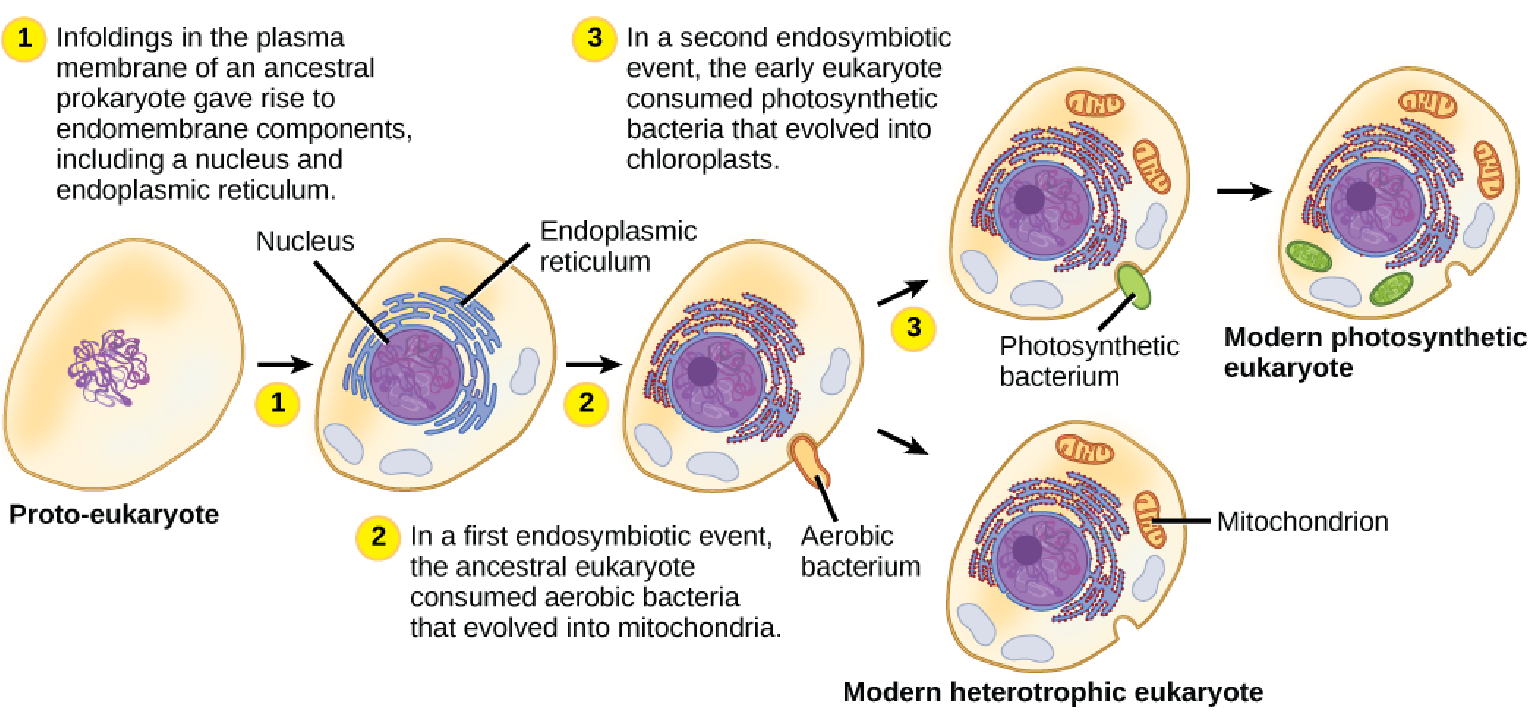
endosymbiosis
relationship where one organism lives inside the other and both benefit
mitochondria
looks resemble proteobacteria in membrane structure, DNA structure and replication, and in how the mitochondria replicates
proteobacteria
are a diverse group of bacteria that are characterized by their distinctive membrane structures and play significant roles in ecology and human health.
plastid
broad family of organelles, chloroplast is an example of a plastid
characteristics of protists
unicellular or multicellular, microscopic or macroscopic, some live in colonies and behave live individuals or as a multicellular organism, can be photoautotrophs, heterotrophs, and even phagocytose
photoautotrophes
organisms that use light energy to synthesize food from carbon dioxide and water.
phagocytose
the process of engulfing solid particles or other cells by a cell to form a food vacuole.
motile
most protists are _______
flagella
small whip like appendage which gives an organism or cell motility
cilia
short hair-like structures that help with movement or feeding in protists.
pseudopodia
temporary projections of the cell membrane that assist in movement and feeding in various protists.
taxis
a directional movement of an organism in response to a stimulus, such as light or chemicals.
traits of eukaryotes
Eukaryotes are characterized by membrane-bound organelles, including a nucleus, and complex cellular structures. They can be unicellular or multicellular and exhibit greater genetic diversity.
characteristics of fungi
can be unicellular or multicellular, store carbohydrates as glycogen, are decomposers/ nutrient recyclers, can exchange plants via mycorrhizae, are eukaryotic, heterotrophs, cell walls with chitin, can reproduce asexually and/or sexually.
digestion
fungi get nutrients through a process that does _______ before ingestion.

saprobes/saprophytes
decomposer organisms that obtain nutrients via extracellular digestion
hyphae
tiny, tubular filaments that form complex networks (mycelium)
mycelium
the dense mass of hyphae that collectively make up the vegetative part of a fungus.
exoenzymes
fungi excrete _________ from hyphae to break down organic material into absorbable nutrients
exoenzymes
enzymes that digest substances externally
bioremediation
the process of using living organisms, often microbes or plants, to remove or neutralize contaminants from the environment.
asexually or sexually
fungi can reproduce ______ __ ______
budding
a type of asexual reproduction where a new organism grows out from the parent organism, looks like a small bud.
fragmentation
A type of asexual reproduction where an organism splits into fragments, each capable of growing into a new individual.
spores
reproductive structures in fungi that can develop into new individuals under favorable conditions, enabling both sexual and asexual reproduction.
plasmogamy
the process in fungal reproduction where the cytoplasm of two parent cells fuses together, resulting in a cell with two nuclei.
karyogamy
the final step in fungal reproduction where the nuclei of two parent cells fuse to form a diploid nucleus.
meiosis
the process of cell division that reduces the chromosome number by half, resulting in four haploid cells (the fungal spores), crucial for sexual reproduction in fungi.
chytridiomycota
phylum of fungi that mostly live in aquatic environments, the only fungi that can have flagella, some cause skin diseases in amphibians
zygomycota
a phylum of fungi that includes bread molds and other fungi, the conjugating fungi, so they link up with other cells and exchange genetic material
ascomycota
a phylum of fungi known as sac fungi, characterized by the production of ascospores in sac-like structures called asci, encompassing a wide variety of species including truffles.
ascomycota
most fungi belong to the phylum __________
glomeromycota
a group of fungi that form symbiotic relationships with plant roots, assisting in nutrient exchange and enhancing plant growth.
arbuscular mycorrhizae
specialized structures formed by glomeromycota fungi that penetrate plant root cells, facilitating nutrient transfer.
basidiomycota
a phylum of fungi that forms club shaped fruiting bodies, also seen in fairy rings, puffballs,
pileus
the cap of a mushroom, often umbrella-shaped, that covers the spore-producing structures.
veil
a membranous covering that surrounds young mushrooms, protecting the developing reproductive structures.
gills
the thin, blade-like structures found underneath the pileus of a mushroom that produce and release spores.
stipe
the stalk or stem that supports the pileus of a mushroom.
annulus
a ring-like structure found on the stipe of some mushrooms, typically formed from the remnants of the veil.
organ system
a group of organs that work together to perform complex functions necessary for sustaining life.
shoot system
the part of a plant that includes stems and leaves, responsible for photosynthesis and reproduction. (vegetative and reproductive)
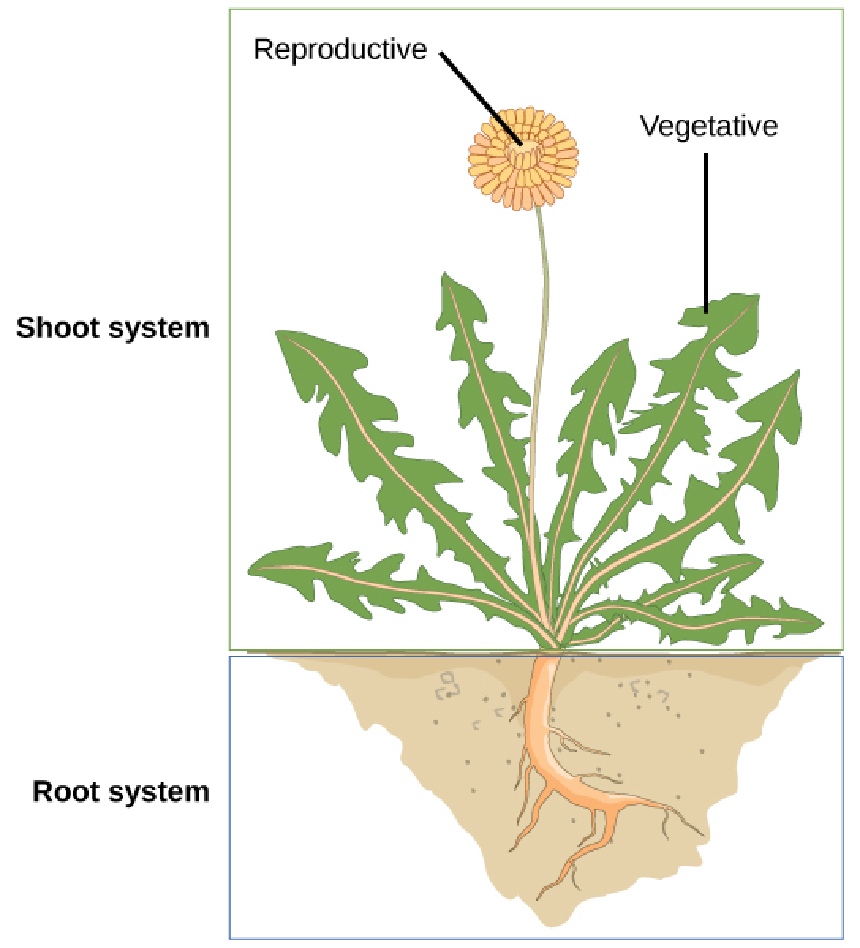
root system
the part of a plant that includes roots, responsible for anchoring the plant and absorbing water and nutrients from the soil. (xylem, phloem)
xylem
the tissue in vascular plants responsible for the transport of water and dissolved nutrients from the roots to the rest of the plant.

phloem
the vascular tissue in plants responsible for the transport of nutrients and sugars produced by photosynthesis throughout the plant.

angiosperms
seeds enclosed in ovary/fruit

gymnosperms
seeds are not inclosed in ovary or fruit

sporophyte
diploid, multicellular phase in life cycle of plants
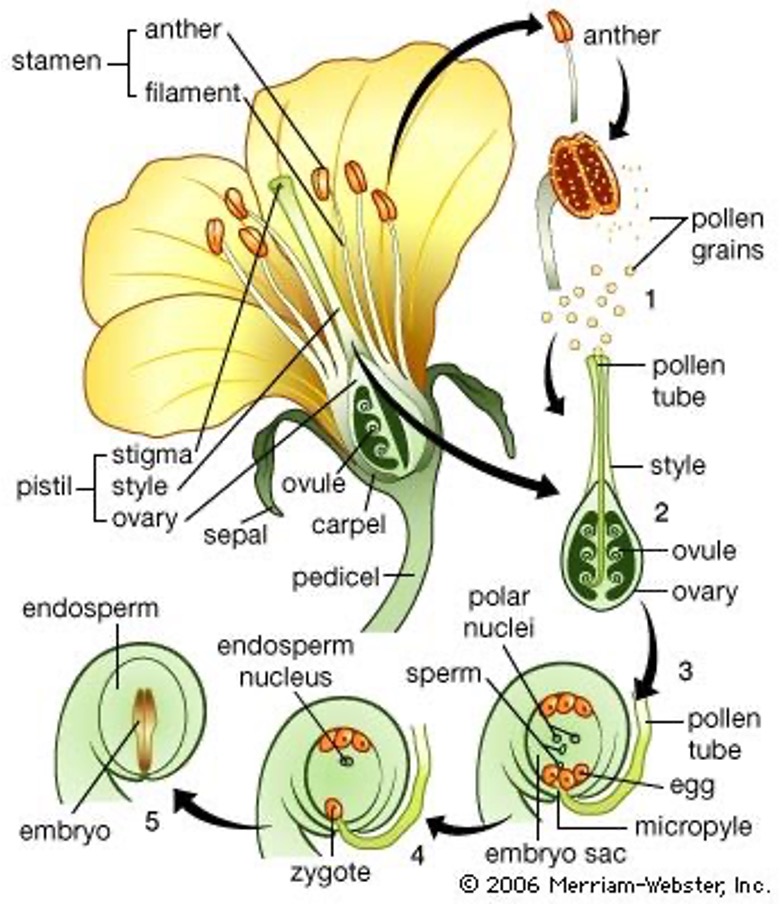
pollen grain
a male gametophyte that carries sperm cells in seed plants.

pollen tube
a structure that grows from a pollen grain to deliver sperm cells to the ovule in seed plants.

megaspore
a haploid spore that develops into a female gametophyte in seed plants.
stamen
the male reproductive part of a flower, consisting of the anther and filament.
pistil
the female reproductive structure of a flower, consisting of the ovary, style, and stigma.

stigma
the part of the pistil that receives pollen during fertilization.
style
the narrow, elongated part of the pistil that connects the stigma to the ovary.

embryo sac
the female gametophyte in flowering plants, containing the egg cell and facilitating fertilization.
ovary
the enlarged basal portion of the pistil that contains ovules and develops into fruit after fertilization.

double fertilization
a unique process in flowering plants where one sperm fertilizes the egg cell, and another sperm fuses with two polar nuclei to form triploid tissue.