SLHS Unit 1 Terms
 Call Kai
 Learn
Learn Practice Test
 Spaced Repetition
 Match
Match Flashcards
 Knowt Play
1/37

Earn XP
Description and Tags
Anatomy and Physiology of Speech
Name | Mastery | Learn | Test | Matching | Spaced | Call with Kai | Chat |
|---|
No analytics yet
Send a link to your students to track their progress
38 Terms
Anatomy
structural makeup of an organism and its parts
Physiology
the study of functions and activities of living organisms
Diagnostic phase
identifying the nature of the disorder
Prognosis
Prediction of how much recovery will occur and with what speed
Treatment
Strategies, interventions, management options to help the client be
a more effective communicator
Communication
the exchange of thoughts and ideas, doesn’t specifically need to be done through speech
Language
abstract, symbolic, rule-based, representation of meaning transmitted to others by an arbitrary code that is shared through language users
Speech
acoustic signal coding or representation of language generated
by sequences of rapid, coordinated movements of the functional
components of the speech mechanism
Sound
acoustic signal generated by sequences of rapid, coordinated
movement of functional components of speech
What order is the Speech chain?
(speaker) linguistic>physiological>acoustic >(listener) physiological, linguistic

Message Planning
The message that an individual wants to send to a
communication partner, an idea
Message encoding
choosing words and sounds are putting them together in a grammatical sentence
Motor Planning and Programming
unconsciously choosing the appropriate movements to communicate the message by deciding what muscles move and when
Motor Execution
direct activation and movement of muscles in the respiratory, phonatory, resonatory, and articulacy systems
Levels of observation
neural, muscular, structural, aeromechanical, acoustic, and perceptual
10 functional components of speech
abdominal muscles, diaphragm, ribcage, larynx, pharynx, posterior tongue, anterior tongue, velopharynx/ soft palate, jaw, lips
Communication disorders
include both speech, vocal, and language disorders and can be comorbid
Speech disorders
due to anatomical difference, neurological disorders, can have no biological cause (functional). some examples include cleft palates, dysarthria, apraxia, and vocal nodules
Language disorders
are neurological, developmental, and acquired disorders. some include ALS, strokes, etc.
anterior
towards front

posterior
towards back

dorsal
towards spine

ventral
towards stomach

inferior
towards bottom

superior
towards top

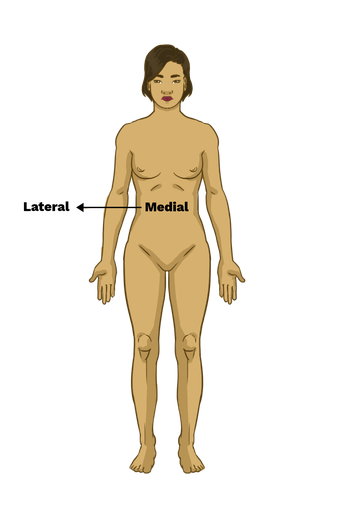
medial
towards midline
proximal
toward root of extremity
central
towards center
lateral
away from midline
distal
away from body
peripheral
away form center
abduction
movement away from body


adduction
movement towards body
coronal plane
frontal plane

axial/transverse/horizontal plane
horizontal plane

sagittal plane
vertical split

ipsilateral
same side as extremity

contralateral
opposite side of extremity
