Global Contemporary Art
 Call Kai
 Learn
Learn Practice Test
 Spaced Repetition
 Match
Match Flashcards
 Knowt Play
1/32

Earn XP
Description and Tags
Name | Mastery | Learn | Test | Matching | Spaced | Call with Kai | Chat |
|---|
No analytics yet
Send a link to your students to track their progress
33 Terms

Frank Gehry, Guggenheim Bilbao Museo
1997
Located in Bilbao, Spain
Frank Gehry
Canadian-American architect based in Los Angeles
Developed his design using CATIA CAD program that enabled him to create powerfully organic, sculptural structure
Titanium, glass, and limestone
Complex steel skeleton, covered by thin skin of silvery titanium that shimmers gold depending on time of day and weather conditions
From river side, building resembles a boat, referencing Bilboa’s past as a shipping commercial center
Guggenheim Bilbao was also part of ambitious urban renewal program
City of Bilbao was aging port and industrial center
City had entered period of significant decline during the 1980’s
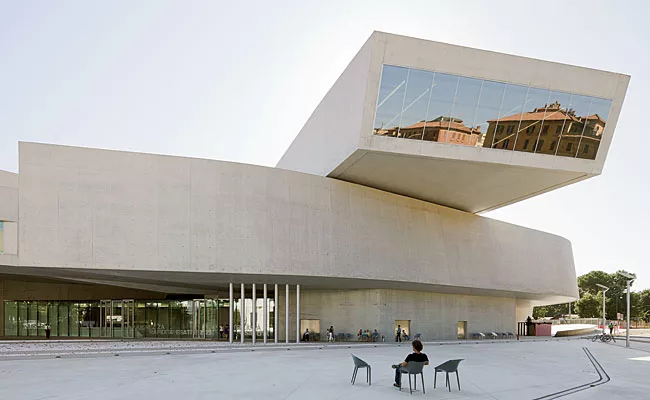
Zaha Hadid, MAXXI National Museum of XXI Century Arts
2009
Located in Rome, Italy
Zaha Hadid
one of most important architects of 20th and 21st centuries
Born in Baghdad, Iraq and raised in London (Iraqi-born, British-based architect)
Was first woman to win architecture’s highest prizes (the Pritzker and the Royal Institute of British Architects Royal Gold Medal)
Glass, steel, and cement
Constantly changing interior and exterior views
Internal spaces covered by a glass roof
natural light admitted into the interior
Walls flow and melt into one another, creating new and dynamic interior spaces
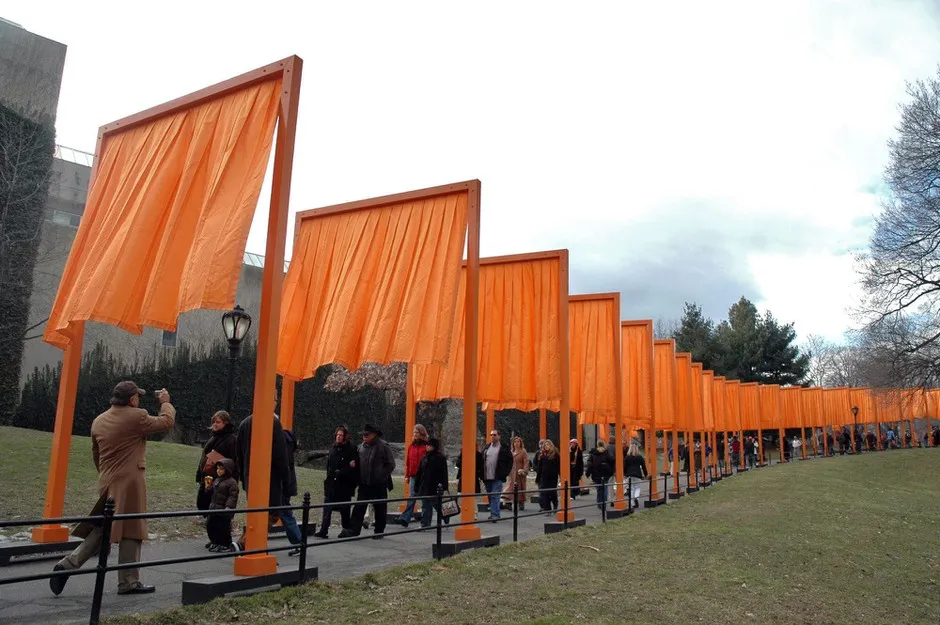
Christo and Jeanne-Claude, The Gates
Christo and Jeanne-Claude insist that their artistic creations designed to inspire “joy and beauty” rather than to explore deep messages
Their art has not purpose except to be a work of art
7,503 “gates” of free-standing saffron colored fabric panels
Framed all the pathways in Central Park, New York City
16-foot-tall gates formed a continuous river of color
Covered 23 miles of footpath
Temporary installation, left up for 16 days
After exhibition closed, material were recycled

Maya Lin, Vietnam Veterans Memorial
1982
Located in Washington, D.C.
Black granite → has highly reflective surface so viewers can see themselves in the etched-in names of the veterans
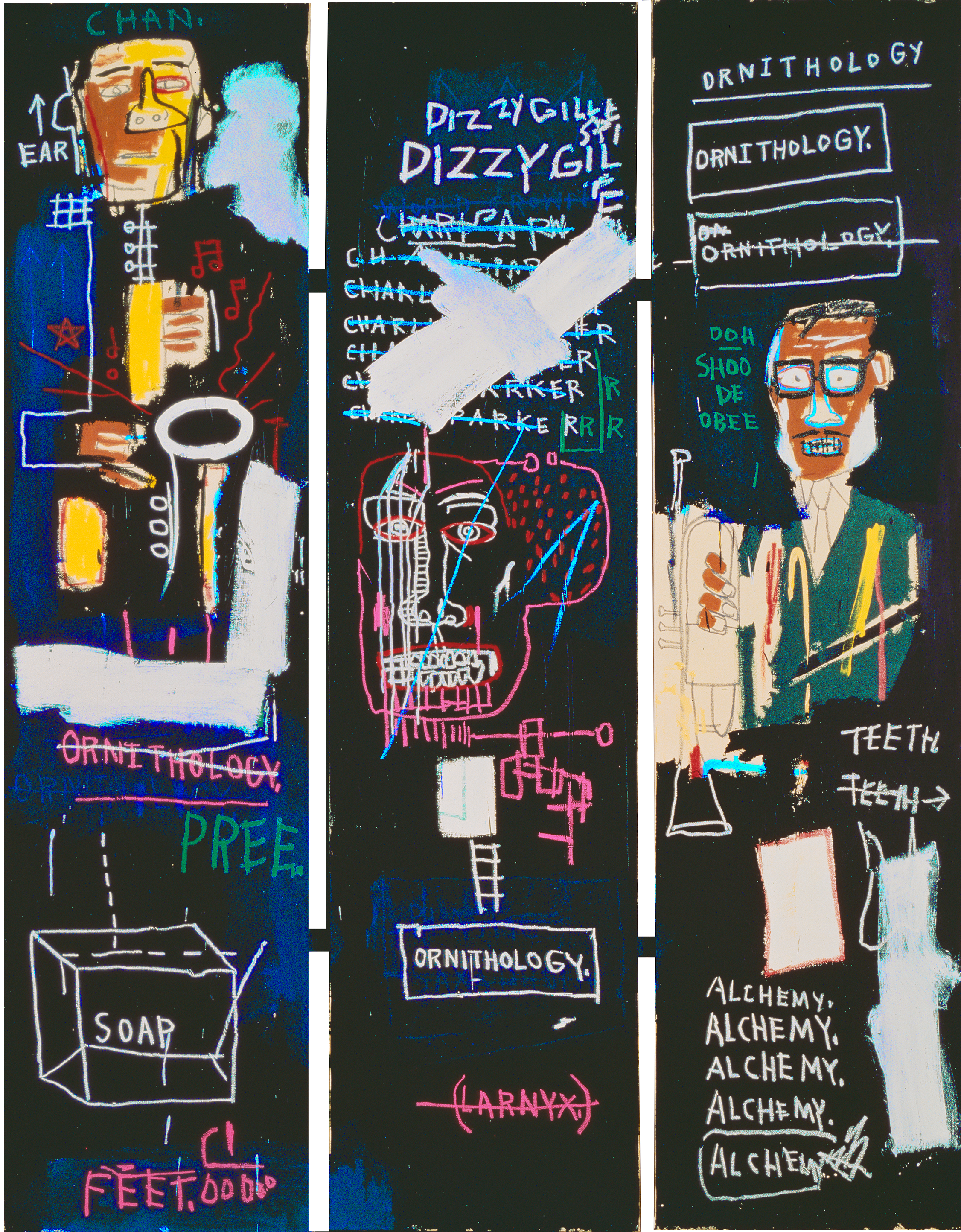
Jean-Michel Basquiat, Horn Players
1983
Located in Santa Monica, California
Jean-Michel Basquiat
Brooklyn-born
Raised in middle-class comfort, but rebelled by quitting high school and leaving home to become a street artist
For 3 years, covered walls of lower Manhattan with short and whity philosophical texts signed with the tag “SAMO” (Same Old Sh*t)
Wanted to make “paintings that look as if they were made by a child”
Began his career as graffiti artist when he was 17
Was invited to participate in TIMES SQUARE SHOW in June 1980
Economic prosperity fueled booming art market as the number of New York galleries soared from 73 in 1970 to 450 in 1985
His paintings expressed vibrant artistic spirit → new and younger generation of affluent art buyers favored the emotionally charged paintings
Acrylic and oil painstick on canvas panels
Strongly emotional Horn Players portrays legendary jazz musicans Charlie Parker and Dizzy Gillespie
Urgent paint application and hurried lettering conveys his dedication to jazz
Passionate determination to foregroun African-American subjects in an unsettling way
Crosses out some of the words in his artwork to bring more of viewer’s attention to them
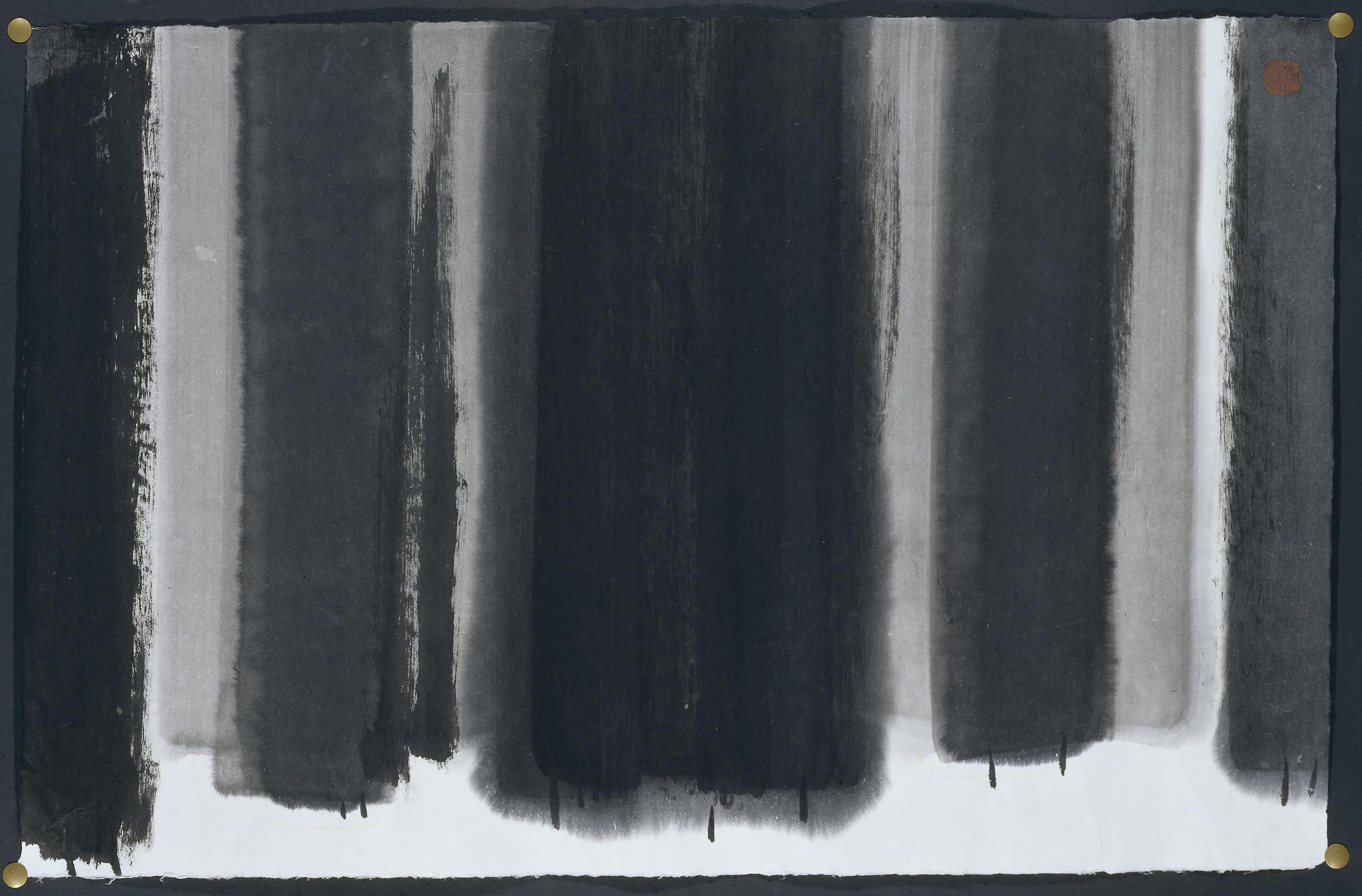
Song Su-nam, Summer Trees
1983
Located in British Museum, London
Song Su-nam
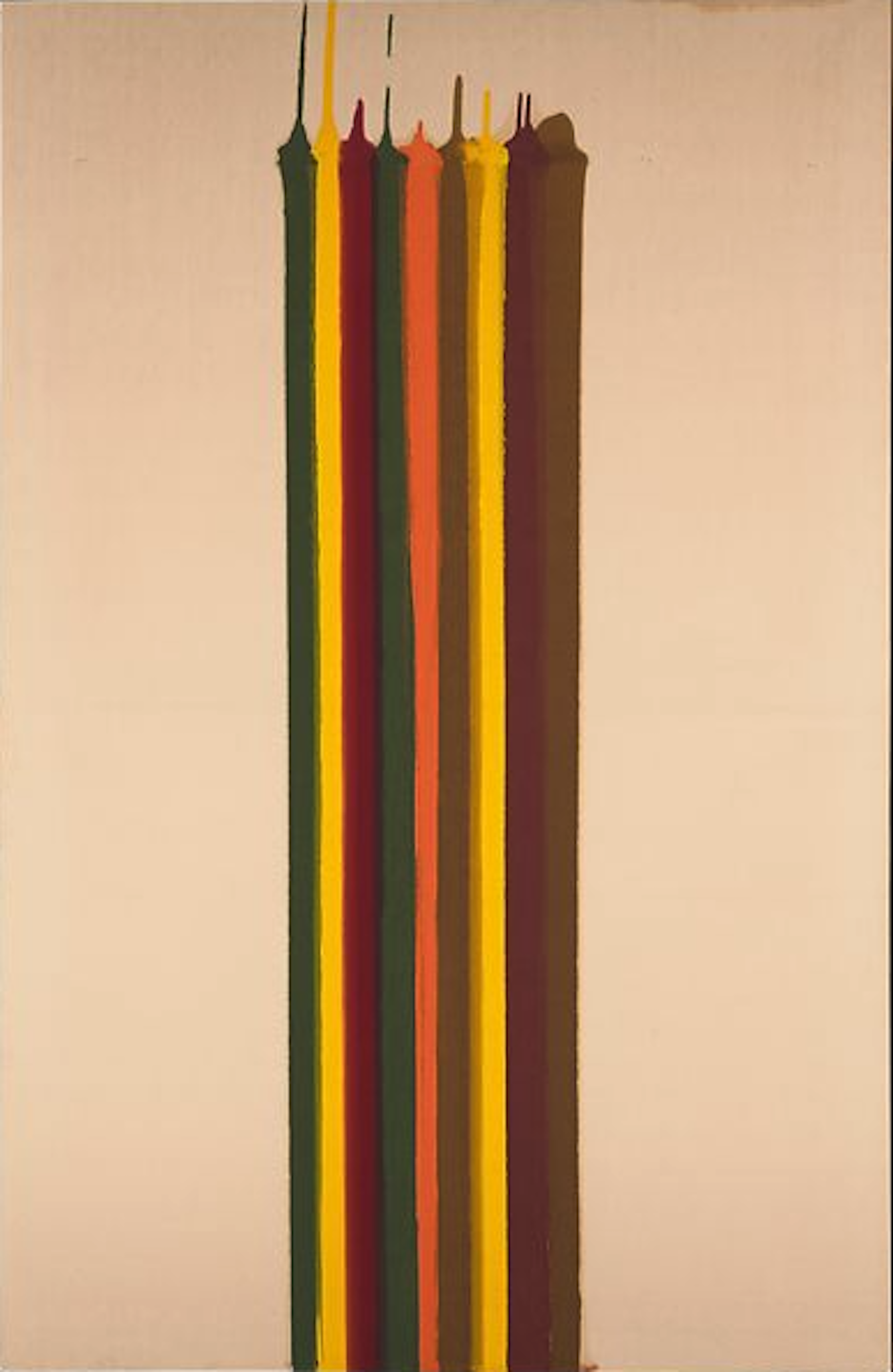
Song’s interest in Western abstraction and the formal properties has led art historians to attribute the inspiration for his work to American artists like Morris Louis (Pungent Distances)
Ink on paper (Indian ink on Korean paper)
To choose medium of ink on paper was important for artist, who was leader of Korea’s “Sumukhwa” (Oriental Ink Movement of the 1980s)
Sumukhwa → Korean pronunciation of Chinese word for “ink wash painting” (also called “literati painting”)
Sumukhwa provided Song and his circle with a way to express Korean identity
Summer Trees may reference a traditional theme → group of Pine trees can symbolize a gathering of friends of upright character

Magdalena Abakanowicz, Androgyn III
1985
Located in Metropolitan Museum of Art, New York
Magdalena Abakanowicz
Polish artist
In 1960s and 70s, created radical sculptures from woven fibre
Were soft, not hard; ambiguous and organic
Towering works that hung from the ceiling and pioneered new form of installation → became known as Abakans
Burlap, resin, wood, nails, and string
Abakanowicz draws on her personal history, but sculptures possess ambiguity that encourages multiple interpretations that speak broadly to human experience
Artwork alludes to brutality of war and totalitarian state
Body is a husk without arms, legs, or head
Expression of suffering, both mournful and disturbing
Sexual characteristics minimized to increase universality of the figure
Title of artwork is Androgyne → androgynous figure: one that is neither male nor female

Xu Bing, A Book from the Sky
1987-1991
Located in Madison, Wisconsin
Xu Bing
Chinese-born artist, U.S. resident
Installation
400 handmade books placed in rows on the ground
Uses traditional Asian wood block techniques
Many of the Chinese characters are inventions of the artist and have no meaning
Artist was inspired by Marcel Dúchamp and Andy Warhol

Jeff Koons, Pink Panther
1988
Located in Museum of Modern Art, New York
Jeff Koons
Pennsylvania-born artist
Glazed porcelain
More than 3 feet tall made of porcelain, a material more commonly used as knick-knacks (small, decorative, and often inexpensive object) than sculpture
Artwork depicts Jayne Mansfield → popular screen star and one of the early Playboy Playmates
Work exists as commentary on celebrity, romance, sexuality, commercialism, stereotypes, pop culture, sentimentality
Artifically idealized female form
Tender delicacy of the panther’s gesture

Cindy Sherman, Untitled #228
1988-90
Completed while living in Rome
Untitled #228 is part of her series of photographs called History Portraits
Draws upon Renaissance and Baroque images of Judith with head of Holofernes
Book of Judith (included in some Bibles) discusss the devout widow Judith, a heroine who saves the Israelites from a conquering Assyrian general by befriending him and visiting his tent one night while he’s drunk
She takes advantage of his unfit state and decapitates him
Assyrians, shocked by assassination of their leader, retreat, allowing Israelites to be saved

Faith Ringgold, Dancing at the Louvre from the series The French Collection, Part 1
1991
Faith Ringgold
Her story-quilting technique is important to meaning in her work
Creates central image using acrylic paint on canvas, reflecting her knowledge of western art history in both style and subject matter
Then, surrounds painting with patchwork cloth border that includes her hand-written text
Acrylic on canvas with fabric borders
Draws on tradition of African-American quilt making combined with heritage of African textiles to paint significant statements about race in America
Typical of much postmodern art, Ringgold’s work appropriates recognizable imagery and alternative artistics practices to offer critical cultural commentary
Challenges viewers to consider expectations of gender and race & traditional expectations and values of what art might be
Through image and text, writes history to make a place for women like herself in its historical development

Jaune Quick-to-See Smith, Trade (Gifts for Trading Land with White People)
1992
Locate in Norfolk, Virginia
Oil and mixed media
As a response to 500th anniversary of Christopher Columbus’s arrival to North America in 1992, artist created large mixed-media canvas called Trade (Gifts for Trading Land with White People)
Array of objects sardonically (sarcastic) representing Indian culture in eyes of Europeans
Sports teams, Indian-style knickknacks like tomahawks, dolls, and arrows
Layered images, paint, and objects on surfaces of canvas, suggesting layers of history and complexity
Divided into 3 large panels, triptych (three part) arrangement is reminiscent of medieval altarpiece
Covered the canvas in collage with newspaper articles about Native life cut out from her tribal paper “Char-Koosta,” photos, comics, tobacco and gum wrappers, fruit carton labels, ads, and pages from comic books
All feature stereotypical images of Native Americans
Mixed collaged text with photos of deer, buffalo, and Native men in historic dress holding pipes with feathers in their hair and an image of Ken Plenty Horses (a character from Smith’s earlier pieces)

Emily Kngwarreye, Earth’s Creation
1992
Located in Norfolk, Virginia
Emily Kngwarreye
Australian aborigine artist
Oil and mixed media
Simulates the color and lushness of the “green time” in Australia after the rains when the outback (the vast, remote, interior of Australia) flourishes
Four panels, eleven meters wide (around 36 feet)
Patches of bold yellows, greens, reds, and blues seem to bloom like lush vegetation over large canvas

Shirin Neshat, Rebellious Silence (From the Woman of Allah Series)
1994
Located in New York
Photo by Cynthia Preston
Shirin Neshat (artist)
Iranian-born artist, raised in the U.S.
Explores how Iranian Women are stereotyped in the West, claiming that their Islamic identities are more varied and complex than is frequently perceived
Ink on photograph
Chador → type of outer garment → only face/hands exposed
Keeps women’s bodies from being seen as sexual objects
Although woman wears chador in photo, she looks directly and definately out of the photograph at us, meeting and returning our gaze
She challenges us to acknowledge her as an individual as a strong and beautiful woman but simultaneously and paradoxically prompts us to see her as a stereotypical Iranian woman in the chador
Poem on face written in Farsi, the Persian language; poem expresses piety
Poem by Iranian women who writes poetry on gender issues
Black and white photograph
Gun divides body into lighter and darker sides, adds ominous tension to the work
Image of obedient right-minded woman ready to die for faith or an expression of female oppression?
Neshat confronts our prejudice while also raising questions about the position of women in contemporary Iran

Pepón Osorio, En La Barberia no se Llora (No crying allowed in the barbershop)
1994
Pepón Osorio
Puerto-Rican born artist living in New York
Mixed media installation
Large installation recreating the center of Latino male culture: the barbershop
Challenges viewer to question issues of identity, masculinity, culture, and attitudes
Video screens on the headrests depict men playing, a baby being circumcised, and men crying

Michel Tufferey, Pisupo Lua Afe (Corned Beef 2000)
1994
Mixed media
Tufferey comments on some on Polynesia’s major ecological and dietary problems resulting from increased modernization
Changing eating habits, for example, afforded corned-beef the status of food staple and ritual gift

Naum June Paik, Electronic Superhighway
1995
Located in Smithsonian American Art Museum
Naum June Paik
Korean-born artist who lived in New York City
Mixed media
Neon lighting outlines the fifty states (Alaska and Hawaii are on the sides)
Neon lighting symbolizes motel and restaurant signs
Each state has a separate video feed (313 monitors)
A camera is turned on the spectator and its TV feed appears in the monitors for New York State
Turns the spectator into a participant of the artwork
Paik’s work generally described as celebrating the fact that “electronic superhighway” allows us to communicate with and understand each other across traditional boundaries
Can be read as posing some difficult questions about how that technology is impacting culture
Physical scale of work and number of simultaneous clips makes it difficult to to absorb any details, resulting in “information overload”
Visual tensions between static brightness of the neon and dynamic brightness of the screens points to a similar tension between national and local frames of reference

Bill Viola, The Crossing
1996
Video and sound installation
Room-size video installation that comprises a large two-sided screen onto which a pair of video sequences is simultaneously projected
Each open in the same fashion: a male figure walks slowly towards the camera, his body dramatically lit from above so that it appears to glow against the video’s stark-black background
After several minutes he pauses near the foreground and stands still, faces forward, staring directly into the lens, motionless

Mariko Mori, Pure Land
1998
Located in Los Angeles, California
Mariko Mori
Japanese artist best known for her sculptures, videos, photographs, installation, digital imagery, and performanec pieces, often involving surreal/science fiction-like objects and imagery
In her videos and performances, Mori appears costumed as sexy cyborg, pop star, mermaid, futuristic goddess
Relates her work to photographic practice of Cindy Sherman
Color photograph on glass
Artist uses a creative interpretation of traditional Japanese art forms → animated figures of aliens play musical instruments on clouds
Mori herself is the guise of a deity (the essence of beauty and harbinger of prosperity and happiness)
By taking on this ancient persona, Mori dissolves her own identity and is transformed into elegant Tang lady and goddess of fortune while simultaneously performing welcoming role of Amida Buddha
Her enlightened self-representation descends to guide the viewer into a “Pure Land of Perfect Bliss” of her own creation
Jewel symbolizes Buddha’s universal mind
Artist seeks to lead the viewer into her immersive paradise → message is enlightenment is for all

Kiki Smith, Lying with the Wolf
2001
Kiki Smith
Fascinated by intimate relationships with nature & feminist approaches to narrative
Many of her works from this period feature female protagonist who is based on Little Red Riding Hood and Sainte Geneviéve, the Patron Saint of Paris
Ink and pencil on paper
This artwork is one in a short series of works done between 2000 and 2002
Illustrates women’s relationships with animals, drawing from representations found in visual, literary, and oral histories
Female strength emphasized in woman lying down with the wild beast
Wolf seems tamed by woman’s embrace
Wolf is seens as a traditionally evil or dangerous symbol, but clearly not here in artwork
Smith shares a story that is normally violent with a kind of tenderness that is characteristic of her overall aesthetic
THEME: the human body

Kara Walker, Darkytown Rebellion
2001
Located in Luxembourg
Kara Walker
California-born, New York-based, African American artist
Cut paper and projection on wall
Installation
Brilliant pattern of colors washes over a wall full of silhouettes enacting a dramatic rebellion, giving the viewer the unforgettable experience of stepping into a work of art
Ensemble is made up of over a dozen characters, plays out a nightmarish scene on a single plane
One figure stands upright over his severed limb
A teenager holds a flag that resembles a colonial ship sale
A woman with a bonnet and voluminous hoop skirt may be attacking a smaller figure on its back, perhaps a crying baby

Yinka Shonibare, The Swing (after Fragonard)
2001
Located in London
Yinka Shonibare
British born of Nigerian decent
Mixed media
Life-size headless mannequin
Dress made of African print fabric
Headless figure: guillotined (executed by decapitation) by the French Revolution
Mimics Jean-Honoré Fragonard’s The Swing
Oil on canvas
1767
In Wallace Collection, London
Likely a reference to use of guillotine during Reign of Terror in 1790s, when members of French aristocracy were publicly beheaded
Artist invites viewers to consider increasing disparity between economic classes today, especially with growing culture of paranoia, terror and xenophobia in global politics since 9/11

El Anatsui, Old Man’s Cloth
2003
El Anatsui
African artist
Career was forged during utopia of mid-centry African independence movement
His work always engaged his region’s history and culture
Aluminum liquor bottle caps and copper wire
Artist’s choice of discarded liquor bottle caps as medium has to do with their formal properties and historical associations
Bottle caps signify a fraught history of trade between Africa and Europe

Julie Mehretu, Stadia II
2004
Located in Pittsburgh
Julie Mehretu
Ink and acrylic on canvas
About being in a large stadium, important athletic championship
Reflecting chaotic and energetic behavior of crowds
Matching clothing and painted faces of spectators wearing team colors with flags and banners

Wangechi Mutu, Preying Mantra
2006
Located in Brooklyn, New York
Mixed media on mylar

Doris Salcedo, Shibboleth
2007-2008
Located in London
Installation

Ai Weiwei, Sunflower Seeds (Kui Hua Zi)
2010-2011
Located in London
Ai Weiwei
Chinese artist & activist
Chose to link sunflowers was because of their role in Chinese communist propagand during his childhood
When Ai was growing up, he remembered propaganda posters featuring Mao Zedong or Chairman Mao with a face acting as the sun while sunflowers leaning up towards him represented citizens of the People’s Republic of China
In his artwork, relates sunflower seeds back to poverty of his childhood
Installation containing millions of individually handcrafted ceramic pieces resembling sunflower seeds
Seeds symbolically represent an ocean of fathomless depth
Each seed is made in Jingdezhen, city known for its porcelain production in Imperial China
600 artisans worked for two years, each seed hand-printed
sunflower seeds were eaten as a source of food during famine era under Mao Tze-tung
Ideology of Chairman Mao → he was the sun, his followers were the seeds
“Sunflowers supported the revolution spiritually and in material ways”
The seeds represent optimism during difficult times
Ai relates his artwork to individual people
The way they can easily become lost when absorbed into a large mass
Although seeds might all look similar from a distance, highly skilled craftsmen made each one by hand, carefully sculpting and painting them over many hours to look like real sunflower seeds
By drawing attention to the individual amongst the crowd, Ai reflects on dangers of conformity and censorship in modern China and the way political bodies can easily lose sight of indivudal’s nuanced seeds
Originally could talk on installation but viewing was then limited to sidelines due to harmful ceramic dust
Deconstructive architecture
Emerged in the 1990’s
Architects deliberately disturb traditional architectural assumptions about harmony, unity, and stability to create “decented,” skewed, and distorted designs

Triptych
a single work of art divided into three distinct panels or sections

Assemblage
The combining of objects into works of art done by sculptors on occasion
Earthwork
A large outdoor work in which the earth itself is the medium

Installation
Temporary work of art made up of assemblages created for a particular space, like an art gallery or a museum

Kitsch
Something of low quality that appeals to popular taste
