ASI218 Final
 Call Kai
 Learn
Learn Practice Test
 Spaced Repetition
 Match
Match Flashcards
 Knowt Play
1/84

There's no tags or description
Looks like no tags are added yet.
Name | Mastery | Learn | Test | Matching | Spaced | Call with Kai | Chat |
|---|
No analytics yet
Send a link to your students to track their progress
85 Terms
B1 (Thiamine)
Water-Soluble
Importance: Citric Acid Cycle metabolism
Precursor: Sulfur (Ruminants)
Deficiency: Beriberi, Cat Ventroflexion, Polyneuritis
Toxicity: Rare
B2 (Riboflavin)
Water-Soluble
Importance: Citric Acid Cycle metablolism, tryptophan to niacin conversion
Precursor: N/A
Deficiency: Poor growth and appetite, dermatitis
Toxicity: Rare
B3 (Niacin)
Water-Soluble
Importance: Citric Acid Cycle metabolism, alleviate ketosis, milk production
Precursor: N/A
Deficiency: Poor growth and appetite, pellagra
Toxicity: Rare
B5 (Pantothenic Acid)
Water-Soluble
Importance: Citric Acid Cycle and fatty acid metabolism
Precursor: N/A
Deficiency: Goose-stepping from nerve damage, enteritis
Toxicity: Rare
B6 (Pyridoxine)
Water-Soluble
Importance: Protein embolism, red blood cell and insulin production
Precursor: N/A
Deficiency: Dermatitis, nerve degeneration, and anemia
Toxicity: Rare
B7 (biotin)
Water-Soluble
Importance: Citric Acid Cycle metabolism
Precursor: Sulfur in Ruminants
Deficiency: Dermatitis in toes, anemia
Toxicity: Rare
Vitamin A
Fat soluble
Impacts: Eye sight and growth
Precursor: Beta-Carotene
Deficiency: Night Blindness, reproduction problem
Toxicity: Slowed Growth and birth defects
Vitamin D
Fat-Soluble
Importance: Ca and P metabolism
Precursor: 7-dehydrocholesteral
Deficiency: Rickets
Toxicity: Bone Calcification
Vitamin E
Fat-Soluble
Importance: Antioxidant
Precursor: Alpha-tocopherol
Deficiency: Mulberry heart disease, white muscle disease
Toxicity: Rare
Vitamin K
Fat-Soluble
Importance: Blood Clotting
Precursor: Quinones
Deficiency: Sweet Clover Disease
Toxicity: Rare
B9 (Folic Acid)
Water-Soluble
Importance: Homocysteine depletion and protein metabolism
Precursor: N/A
Deficiency: Neural tube defects, no long bone growth
Toxicity: Rare
B12 (Cobalamin)
Water-Soluble
Importance: Homocysteine depletion, citric acid cycle metabolism
Precursor: Cobalt in Ruminants
Deficiency: Anemia, Fatigue, Nerve degeneration
Toxicity: Rare
C (Ascorbic Acid)
Water-Soluble
Importance: Collagen Synthesis, immunity, vitamin E antioxidant properties
Precursor: N/A
Deficiency: Scurvy, reduced immunity
Toxicity: Rare
Ca
Macromineral
Importance: Bone development, muscle contraction
Supplement: calcium carbonate
Deficiency: Rickets, osteomalacia, milk fever
Toxicity: Rare
P
Macromineral
Importance: Bone development, enzyme cofactor
Supplement: Monocalcium or dicalcium phosphate
Deficiency: Pica, rickets
Toxicity: Low Ca:P ratio, big head disease, distorted snout
Mg
Macromineral
Importance: Energy Generation
Supplement: Magnesium sulfate oxide
Deficiency: Grass tetany
Toxicity: Rare
K
Macromineral
Importance: Electrolyte
Supplement: Potassium Carbonate
Deficiency: Dehydration, suppressed growth
Toxicity: Rare
Na
Macromineral
Importance: Electrolyte
Supplement: Salt
Deficiency: Dehydration, suppressed growth
Toxicity: Rare
Cl
Macromineral
Importance: Electrolyte
Supplement: Salt
Deficiency: Dehydration, suppressed growth
Toxicity: Rare
S
Macromineral
Importance: Precursor for S-containing Amino acids and vitamins in ruminants
Supplement: S-Methionine, S-methioinin hydroxyanalog
Deficiency: Poor appetite and growth
Toxicity: feedlot polio
Co
Micromineral
Importance: Component of B12
Supplement: Cobalt carbonate, chloride, sulfate, nitrate, glucoheptonate
Deficiency: Anemia, poor appetite and growth
Toxicity: rare
I
Micromineral
Importance: Thyroid function for metabolism
Supplement: EDDI, Potassium iodate, sodium iodate
Deficiency: Goiter, reproductive failure
Toxicity: Goiter, muscle weakness
Zn
Micromineral
Importance: Cofactor for enzymes
Supplement: Zinc sulfate, oxide, methionine
Deficiency: Parakeratosis, male reproductive failure
Toxicity: Rare
Fe
Micromineral
Importance: Hemoglobin function for oxygenating blood
Supplement: Ferrous sulfate, chloride, carbonate, oxide
Deficiency: Anemia
Toxicity: Rare
Cu
Micromineral
Importance: Collagen and elastin synthesis for hair and wool growth
Supplement: Copper sulfate, chloride
Deficiency: Anemia, hair pigmentation loss, sway back
Toxicity: Hemolysis in sheep
Mn
Micromineral
Importance: Bone formation, citric acid cycle enzyme cofactor
Supplement: manganese sulfate
Deficiency: Poor bone development, poor growth
Toxicity: Rare
Se
Micromineral
Importance: Antioxidant with Vitamin E
Supplement: Sodium selenite, selenate
Deficiency: liver necrosis and death, organ fibrosis, weak immune response, infertility
Toxicity: blind staggers, sloughed hooves
Microminerals (7)
Co, I, Zn, Fe, Cu, Mn, Se
Macrominerals (7)
Ca, P, Mg, K, Na, Cl, S
Water-Soluble Vitamins (9)
B1, B2, B3, B5, B6, B7, B9, B12, C
Fat-Soluble Vitamins (4)
A, D, E, K
Essential Nutrient
Required in the diet because it can’t be synthesized in the body in sufficient quantities
7 Major Nutrients
Water
Carbohydrates
Lipids
Proteins
Vitamins
Minerals
Epidemiology
Animal Health history
Controlled Research
Trial and Error
Monogastric Stomach
Acid Secretion, Enzyme secretion, mixing/churning
Fundic Region
produces acid and enzymes
Parietal Cells
Produce acid
Chief cells
Produce pepsinogen (enzyme)
M- Duodenum
site of entry for pancreatic and gall bladder secretions
Jejunum
Primary site of nutrient absorption
Illeum
some nutrient absorption
Gall Bladder
Secretes and stores bile
Pancreas
Secretes digestive enzymes
Liver
Produces bile, metabolism of nutrients
Large Intestine -M
Water Absorption, fecal storage/elimination
Compartment of the Ruminant stomach that acts as the transfer point to the other compartments of the stomach
Rumen
Villi
Finger like projections lined by the epithelial cells in the small intestine
Papillae
Covers the surface of the rumen
Role of Stomach in monogastrics
Metabolism
Net energy for production
energy system that accounts for metabolizable energy and potential energy losses through heat and that used for maintenance
Digestible Energy
energy system that accounts for gross energy in a feedstuff and potential energy losses in feces
Metabolizable energy
energy system that accounts for gross energy in a feedstuff and potential energy losses in feces, urine, and gas
Where is most water located within the tissues of an animal’s body?
Intracellular
Carohydrates gross energy
4.1 kcal
Proteins gross energy
5.7 kcal
Fats gross energy
9.4 kcal
Carbohydrate net energy
4 kcal
Protein net energy
4 kcal
Fats net energy
5 kcal
What pH is preferred by propionate producing bacteria?
6
What pH is preferred by acetate producing bacteria?
6.5
SGLT1
absorbs glucose/galactose + 2 Na
Phenylalanine
nonpolar , aromatic, common in corn
Valine
nonpolar, alkyl
Tryptophan
nonpolar, aromatic, low in corn, precursor to seratonin
Threonine
polar, neutral
Isoleucine
Nonpolar, alkyl
Methionine
nonpolar, alkyl, contains S, important in hoof, haor, and feather production
Histodine
polar, basic
Argenine
polar, basic
Lysine
polar, basic, low in corn protein, 1st limiting AA in pigs and humans
Leucine
nonpolar, alkyl, very high in corn protein
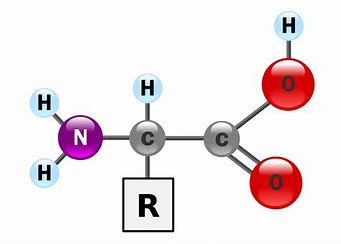
Amino Acid
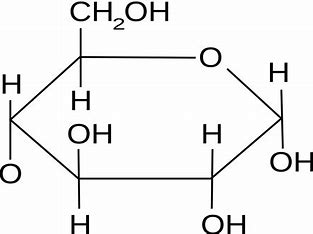
Glucose
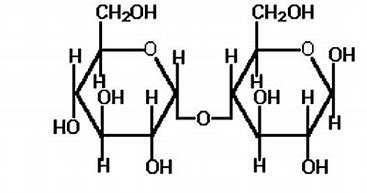
Maltose- AGlucose+AGlucose - Disaccharide
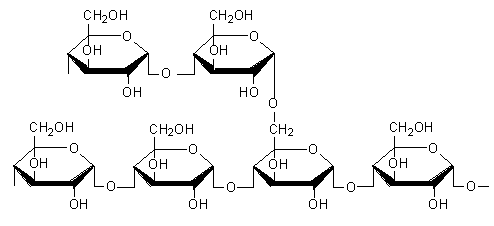
Amylopectin- AGlucose 1,4 and 1,6 Polysaccharide
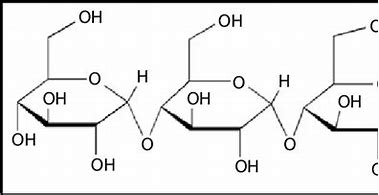
Amylose- A Glucose 1,4 Polysaccharide
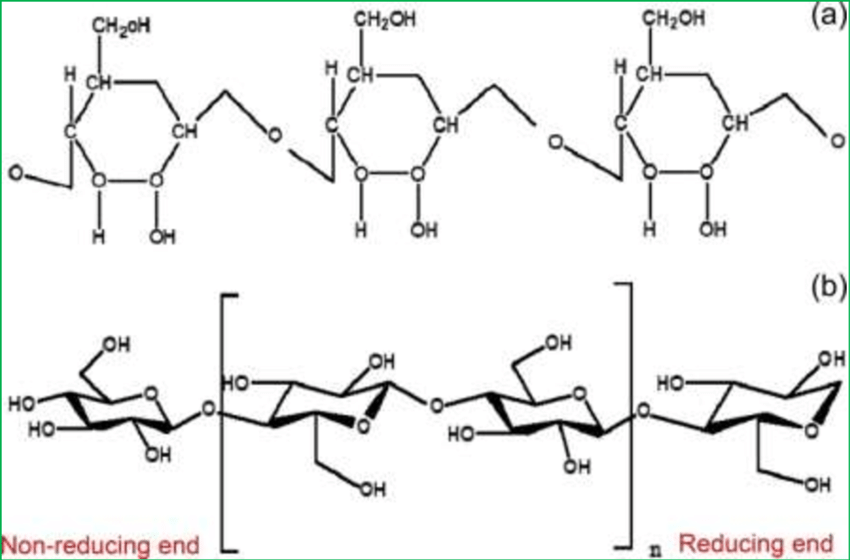
Cellulose- B Glucose 1,4 Polysaccharide
Carbohydrate Digestion/Metabolism in Ruminants-Fermentation
Starches and Fiber. Break a-1,4, a-1,6, and b-1,4 glycosidic bonds and C-C bonds within Glucose. Cellulase and Hemicellulase break B-1,4 in rumen. a-1,4 and a-1,6 digestion to VFAs in rumen. Rumen and Lg Intestine. =VFA
Carbohydrate Digestion Non-Ruminant
Salivary Amylase- starches to polysaccharides. Pancreatic Amylase- polysaccharides to disaccharides. Brush Border Enzymes (maltase, lactase, sucrase)- disaccharides to monosaccharides.
Protein Digestion-Enzymatic Hydrolysis- R
Abomasum+SI. =AA
Protein Digestion- Enzymatic hydrolysis- M
Stomach+SI +AA
Lipid Digestion in Monogastrics
Lingual lipase+gastric lipase hydrolyzes ester bonds. Triglyceride to diglyceride. Pancreatic lipase- breaks ester bond between glycerol and FA. =monoglyceride. Micelle form and are absorbed into Jejunum. Chylomicrons form to cross enterocyte and enter lymphatic system.
Lipid Digestion in Ruminants
Rumen Microbes hydrolyze triglyceride to glyceride + 3 FA. Glycerol fermented to VFA. FA saturated and absorbed in SI.