Lang & Comm - Lecture 8
 Studied by 0 people
 Call Kai
 Learn
Learn Practice Test
 Spaced Repetition
 Match
Match Flashcards
 Knowt Play
1/60

Earn XP
Description and Tags
the neurobiology of language
Name | Mastery | Learn | Test | Matching | Spaced |
|---|
No study sessions yet.
61 Terms
MEG
magnetoencephalography
what is MEG?
brain imaging technique
measures the magnetic fields generated by the electrical activity of neurons in the brain
indicates the electrical - and therefore active - areas of the brain
advantages and applications of meg
advantages
non-invasive
head is placed in a helmet
no cutting, injections, radiation exposure
high resolution
excellent spatial (location of neuronal activity) and temporal (millisecond precision) resolution
much faster than MRI
applications
widely used in research
used in diagnosis showing active brain regions
brain-computer interfaces
studies on traumatic brain injuries, dementia, autism
weaknesses of MEG
High Cost
Shielding Requirements: Needs a specialised magnetically shielded room
Depth Sensitivity: The signal decays rapidly with distance, making it much harder to detect activity in deep brain structures (e.g., the thalamus) compared to the cortex.
Movement Sensitivity: Since the sensors are in a fixed helmet, the patient must remain perfectly still to avoid data distortion.
what is fMRI
type of magnetic resonance imaging
shows which areas of the brain are active while a person is performing a specific task
how fmri works
use large magnet to create images of the body
measures specific signal related to how much oxygen the blood contains
blood has magnetic properties that change based on oxygen levels
Hickok & Poeppel - ventral stream overview
primarily responsible for transforming acoustic speech signals into conceptual and semantic representations
process of speech recognition or auditory comprehension
sound to meaning
Hickok & Poeppel - ventral stream function
maps sensory or phonological representations onto lexical conceptual representations
Hickok & Poeppel - ventral stream anatomy
structures in superior and middle portions of the temporal lobe
Superior Temporal Sulcus (STS) - phonological processing
Posterior Middle Temporal Gyrus (pMTG) - lexical-semantic interface
linking phonological information to widely distributed conceptual networks
Hickok & Poeppel - ventral stream organisation and laterality
assumed to be largely bilaterally organised
explains why unilateral temporal lobe damage often fails to cause substantial speech recognition deficits
Hickok & Poeppel - ventral stream multi-time resolution
stream is hypothesised to contain parallel pathways that integreate info over different timescales
short, bilateral pathway for resolving segment-level info (phonemes)
longer, right-dominant pathway for resolving syllable-level info (prosodic cues)
Hickok & Poeppel - dorsal stream overview
primarily involved in auditory-motor integration, translating acoustic speech signals into articulatory motor representations in the front lobe
sound to action
Hickok & Poeppel - dorsal stream function
crucial for speech development and normal speech production
provides neual mechanisms for phonological short-term memory
Hickok & Poeppel - dorsal stream anatomy
involves structures in posterior dorsal temporal lobe, parietal operculum, and posterior frontal lobe
Hickok & Poeppel - dorsal stream organisation and laterality
strongly left-hemisphere dominant
lesions in this area lead to prominent speech production deficits
Hickok & Poeppel - speech recognition
auditory comprehension
transforming sounds to access the mental lexicon
primary neural reliance
ventral stream circuitry
Hickok & Poeppel - speech perception
sub lexical tasks
primary neural reliance
dorsal stream circuitry
tasks involve phonological working memory and executive control
cognitive neuroimaging techniques
EEG
MRI/fMRI
MEG
OPM-MEG (optically pumped magnetometers MEG)
MEG overview
Records the magnetic fields generated by brain activity
Has good spatial resolution and excellent temporal resolution
This can capture rapidly changing brain activities
Magnetic fields outside the skull
MEG captures magnetic fields outside the skull around the synchronised neuronal activity
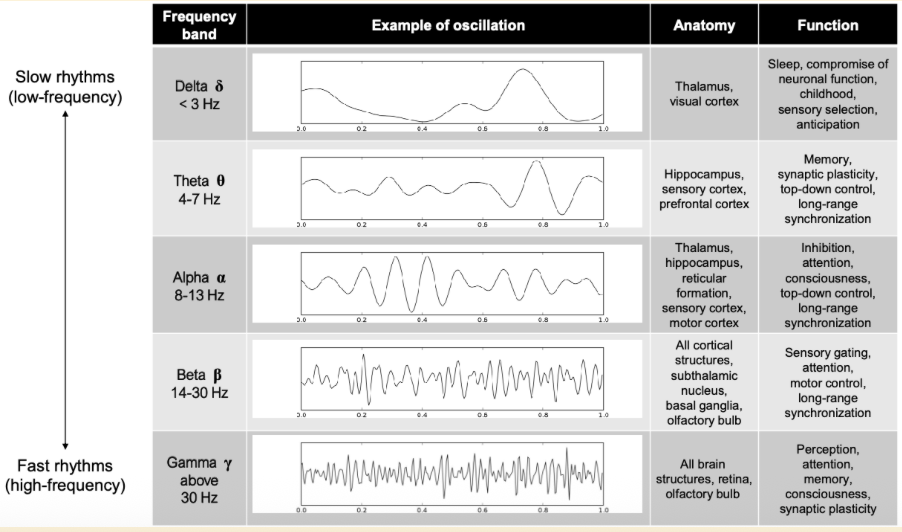
neural oscillations
brain rhythms
picture: each dot is a single neuron activity, and the x-axis indicates the time
there are moments of silence, and then rapid activation
if the neuron is activated 10 times per second, then this is labelled ‘10 Hz rhythm’
types of neural oscillations
alpha rhythm is very dominant in the brain
< 3 rhythm
per second under 3 rhythm fluctuations
speech overview
actual sound of spoken language
oral form of communicating
talking: using the muscles of the tongue, lips, jaw and vocal tract in a very precise and coordinated way to produce recognisable sounds that make up language
how we say sounds and words
speech includes:
articulation
how we make speech sounds using the mouth, lips and tongue
voice
how we use our vocal folds and breath to make sounds
our voice can be loud or soft, high-pitched or low-pitched
fluency
this is the rhythm of our speech
we sometimes repeat sounds or pause while talking
people who do this a lot may stutter
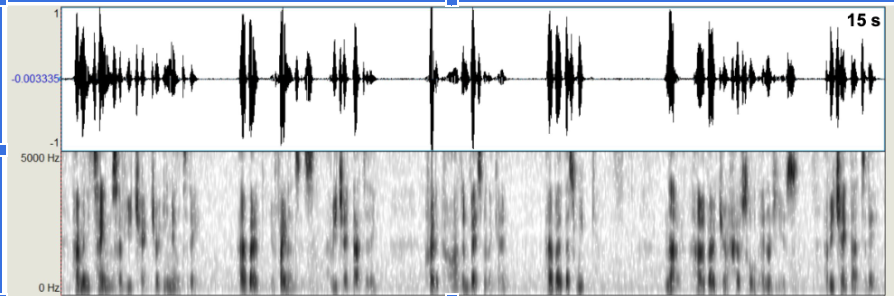
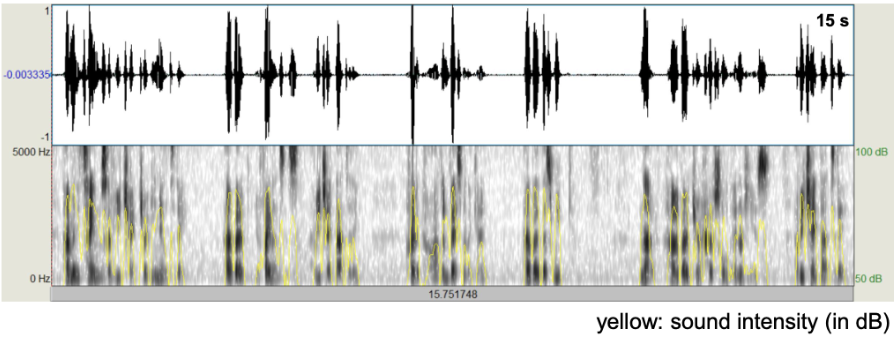
speech spectrogram
raw speech signal (top) and spectrogram (bottom)
speech spectrogram with sound intensity
old “localist” view on aphasia
aphasia is a disorder that results from damage to portions of the brain that are responsible for language
double dissociation between Broca’s and Wernicke’s aphasia
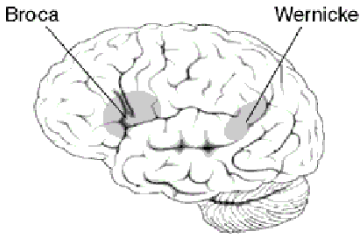
broca’s aphasia
impaired speech production
not-fluent aphasia, in which the output of spontaneous speech is markedly diminished
there is a loss of normal grammatical structure
specifically, small linking words, conjunctions, such as and, or, and but, and the use of prepositions are lost
wernicke’s aphasia
impaired language comprehension
despite this speech may have a normal rate, rhythm, and grammar
Hickok and Poeppel (2007) - dual-stream model of functional anatomy of language image
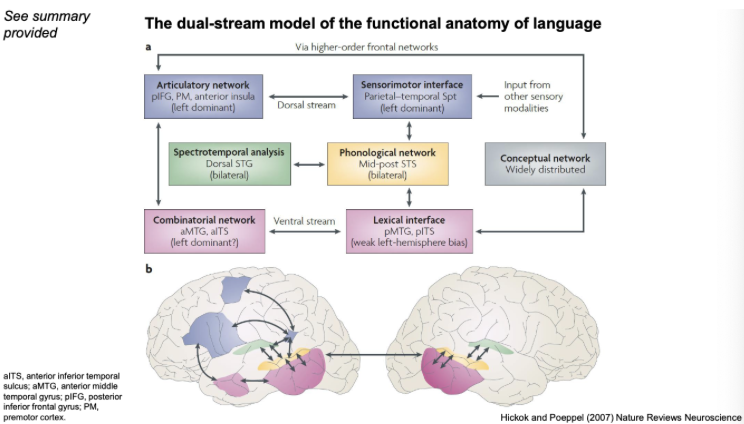
Hickok and Poeppel (2007) - dual-stream model of functional anatomy of language - stage 1
Firstly, the earliest stage of cortical speech processing involves some form of spectrotemporal analysis, which is carried out in auditory cortices bilaterally in the supratemporal plane (superior temporal gyrus (STG), depicted in green).
Hickok and Poeppel (2007) - dual-stream model of functional anatomy of language - stage 2
Secondly, phonological-level processing and representation involves the middle to posterior portions of the superior temporal sulcus (STS) bilaterally, although there may be a weak left-hemisphere bias at this level of processing (depicted in yellow).
Hickok and Poeppel (2007) - dual-stream model of functional anatomy of language - stage 3
Subsequently, the system diverges into two broad streams: a dorsal pathway (blue) and a ventral pathway (pink).
The dorsal pathway maps sensory or phonological representations onto articulatory motor representations which is strongly left dominant.
The ventral pathway (pink) that maps sensory or phonological representations onto lexical conceptual representations, which is bilaterally organised with a weak left-hemisphere bias.
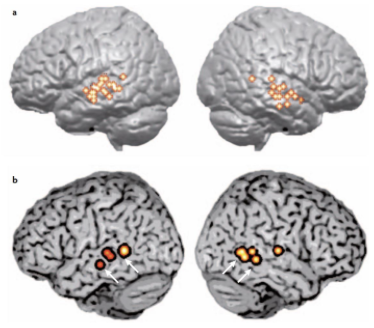
Hickok and Poeppel (2007) - lexical phonological networks in the superior temporal sulcus
A
brain responses to acoustic signals with phonemic info vs. non-speech signals
B
brain responds to words with many similar-sounding neighbours (high-density words) vs. words with few similar-sounding neighbours (low-density words)
high neighbourhood density words
words in a neighbourhood are based on one sound substitution, one sound deletion or one sound addition
phonetically similar to many other words and have 11 or more neighbours
e.g. “ship”. has 18 neighbours
low neighbourhood density words
germ (7)
giant (0)
jaguar (0)
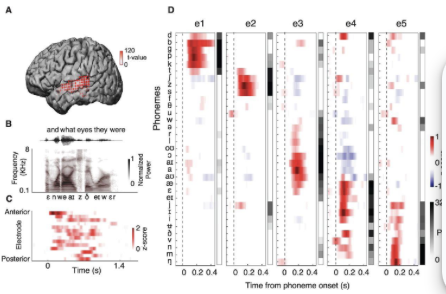
Mesgarani et al. (2014) - phonetic feature encoding in the human superior temporal gyrus - methodology and results
hgih-density direct cortical surface recordings in humans were used while the patients listened to natural, continuous speech
ECoG: Electrocorticogram on epileptic patients
it revealed the STG representation of the entire English phonetic inventory
at single electrodes, they found response selectivity to distinct phonetic features
Mesgarani et al. (2014) - phonetic feature encoding in the human superior temporal gyrus - explanation of the image
each electrode represents a different brain area
phonemes are observed in the different electrodes
the red parts show which sounds observed by which electrode
each area has mapping for different sounds
how our brain proceses each phoneme sound
Amal et al. (2015) - speech is rhythmic
raw speech signal and speech spectrogram during the sentence
very rhythmic (energy fluctuations)
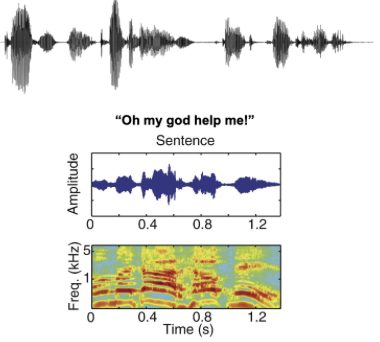
speech signal and speech envelope
the speech envelope comprises energy changes corresponding to phonemic and syllabic transitions
Aiken and Picton (2008)

Giraud & Poeppei (2012) - speech has hierarchically nested rhythmic structure
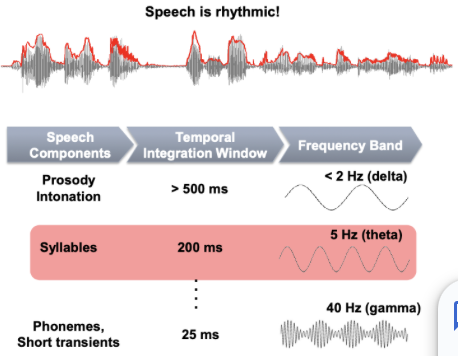
Speech has a hierarchically organised/nested rhythmic structure, and this matches the hierarchy in brain oscillations.
Prosody or intonation, which occurs on a slow timescale, matches delta rhythm in the brain.
Syllables match theta rhythm in the brain, and phonemes match gamma rhythm in the brain
In particular, the syllable rates corresponding to theta and brain oscillations have been known to be important for parsing and segmentation of speech streams and intelligible speech comprehension.
speech syllables
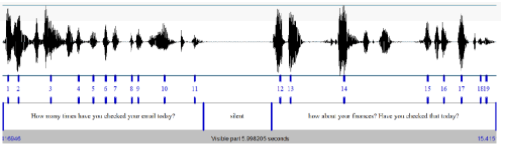
there are roughly ~3-5 syllables per second (~3-5 HZ) in typical speech
i.e. duration of each syllable: ~200-300 ms
syllable - a unit of pronunciation having one vowel sound, with or without surrounding consonants, forming the whole or a part of a word
Saberi and Perrott (1999) - speech intelligbility critically depends on syllable rate
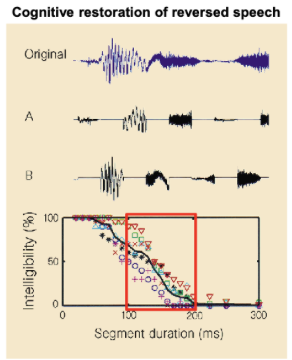
found intelligibility of speech is resistant to time reversal of local segments of a spoken sentence when they are at syllable rates.
They subdivided a digitised sentence into segments of fixed duration
Every segment was then time-reversed.
The entire spoken sentence was therefore globally contiguous, but locally time-reversed, at every point (A & B in the figure).
Listeners report:
perfect intelligibility of the sentence for segment durations up to 50 ms
partial intelligibility for segment durations exceeding 100 ms, with 50% intelligibility occurring at about 130 ms
no intelligibility for segment durations exceeding 200 ms (Figure bottom).
This duration (~200 ms) roughly corresponds to one syllable rate
Thus, the results support the importance of the temporal scale of syllables in speech intelligibility.
standard speech (intelligible) vs. backward speech (unintelligible)
in terms of rhythmic properties there are no differences
speech tracking
Synchronisation between speaker and listener
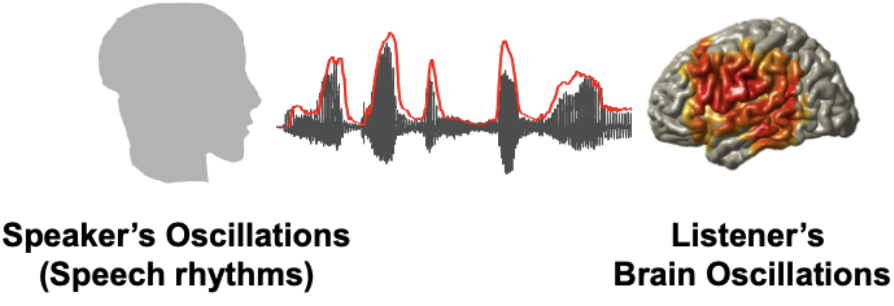
Using MEG or EEG, we can study the synchronisation (coupling) between the speaker’s speech rhythms and the listener’s brain oscillations
Park et al. (2018) PLoS Biol; Park et al (2016) eLife
Park et al (2015) Curr Biol; Gross et al (2013) PLoS Biol
studying the listener’s brain rhythms (oscillations) following the speaker’s speech rhythms
seeing if there is coupling between the two rhythms
park et al. - auditory speech entertainment modulated by intelligibility
MEG with 248 magnetometers (4-D Neuroimaging)
22 healthy, right-handed subjects (11 females; 19-44 years old)
Natural stimulus: 7-minute continuous real-life story (auditory speech)
ppt heard two different conditions
normal speech and reversed speech
rhythmic components will be the same
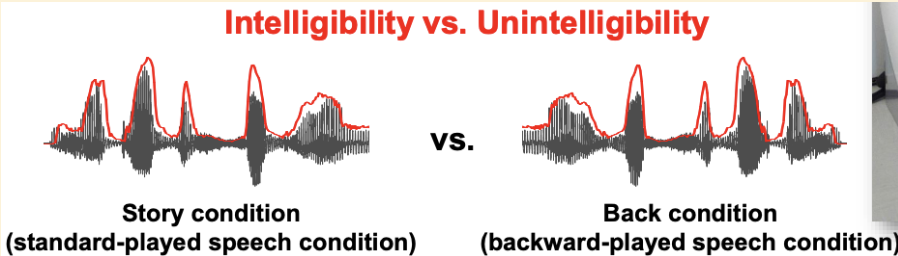
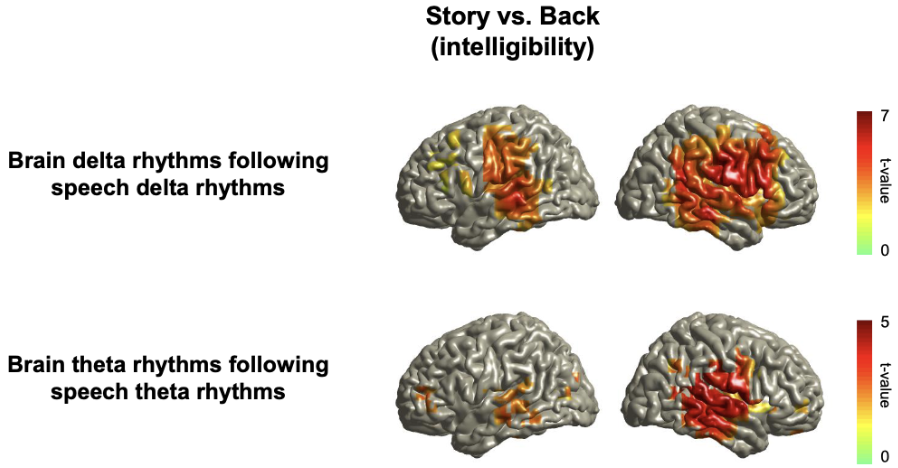
park et al. - low-frequency oscillations in the auditory cortext track intelligble speech
Low-frequency brain oscillations (delta and theta rhythms) in auditory cortex track only intelligible speech (story condition) but not back condition
Story: Standard Continuous Speech
Back: Backward-played Story
LAC: Left Auditory Cortex
RAC: Right Auditory Cortex
y-axis - coupling between two rhythms
bilateral auditory cortex - normal speech
reversed speech - brain rhythms do not follow the speech
magnitude of coupling almost 0
interesting as they both have the same frequency components (rhythms), but the brain rhythm only follows the standard

gross et al. (2013) - low-frequency speech tracking
LF (delta and theta) speech tracking is more right-lateralised
beyond the auditory cortex
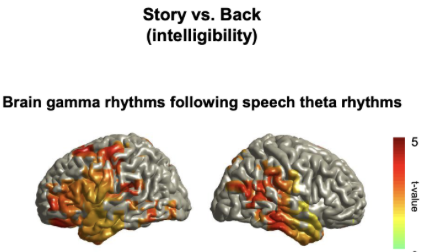
gross et al. (2013) - high-frequency speech tracking
HF (gamma) speech tracking is more left-lateralised
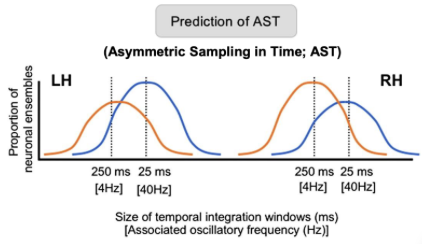
Poeppel (2003) - functional assymetry of the auditory system in speech processing
The Asymmetric Sampling in Time theory (AST; Poeppel, 2003) proposes that auditory cortices preferentially sample at rates tuned to fundamental speech units.
While the left auditory cortex would integrate auditory signals preferentially into ∼ 20–50 ms segments that correspond roughly to the phoneme length
The right auditory cortex would preferentially integrate over ∼ 100–300 ms and thus optimise sensitivity to slower acoustic modulations, e.g., voice and musical instrument periodicity, speech prosody, and musical rhythms.
Basnakova et al. (2015) - face-saving indirectness
public face, being respected, is critical
humans are very social species
public face determines whether people trust you, select you for collaboration, and determine social hierarchies
Basnakova et al. (2015) - brain areas activated for the indirectness effect
relative to direct replies, face-saving indirect replies increased activation in the:
medial prefrontal cortex
bilateral temporoparietal junction
bilateral inferior frontal gyrus
bilateral medial temporal gyrus
indicates understanding face-saving indirect language requires additional cognitive perspective-taking
and other discourse-relevant cognitive processing
stolk et al. (2016) - communication as a joint action
requires mutual understanding: when different minds mutually infer they agree on an understanding of an object, person, place, event, or idea
need contextual info in social settings
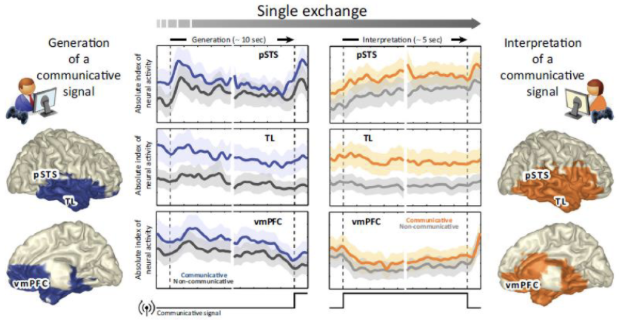
stolk et al. (2016) - experimentally controlled communication
Production and comprehension of novel communicative behaviours supported by right lateralised fronto-temporal network (MEG study: Stolk et al. 2013)
These areas are known to be necessary for pragmatics and mental state inferences, embedding utterances in conversational context (see earlier: Basnakova et al. 2015)
joint action tested experimentally
vmPFC: ventromedial prefrontal cortex
pSTS: posterior superior temporal sulcus
TL: temporal lobe
Friederici (2015) - language network - dorsal and ventral pathways
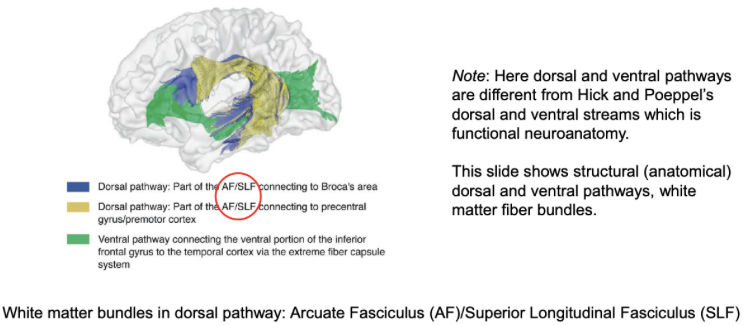
Skeide, Brauer & Friederici (2016) - dorsal pathway is crucial for the processing of complex sentences
dorsal pathway is associated with accurate responses and faster response time
but this pattern was not found in ventral pathway
dorsal pathway is important for complex sentences
developmentally - white matter tracked development, dorsal pathway develops to be more dominant

Dronkers et al. (2007) - white matter - overview
Dronkers et al. (2007) reported the findings from MRI scans of Paul Broca’s two patients (Leborgne and Lelong).
There were two important observations.
The white matter tracts seen so clearly in the right hemisphere are absent in the left.
White matter plays a crucial role in complex cognitive functions like speech and language because these activities involve various brain regions with extensive connections facilitated by white matter bundles.
Dronkers et al. (2007) - white matter - summary
In summary, the results also show differences between the area initially identified as Broca's area and what is currently referred to as Broca's area.
This discovery has important implications for both studies involving brain lesions and functional neuroimaging in this widely recognised brain region
Brain activity involved in complex and higher cognitive functions, such as speech/language, is quite distributed in brain areas with such extensive connections through white matter bundles.
Dronkers et al. (2007) - white matter - first observation
Firstly, the lesions in Broca’s original patients did not encompass the area we now refer to as Broca’s area.
Both patients’ lesions extended significantly into the medial regions of the brain, in addition to the surface lesions observed by Broca.
For example, Leborgne’s primary lesion was more anterior, and Lelong’s lesion only involved the posterior portion of the pars opercularis.
Dronkers et al. (2007) - white matter - second observation
Secondly, both also had lesions in an important white matter pathway, the arcuate/superior longitudinal fasciculus, the long fibre tract that connects posterior and anterior brain areas.
needing only the left hemisphere for language is a myth
While some aspects of language processing, like syntactic comprehension and production, are left-lateralised, many core language processes involve both hemispheres.
In young adults, several core language processes actually rely on right-hemisphere regions.
For instance, sentence-level semantics engages a bilateral network, including the left and right posterior temporal gyrus, which is shared for comprehension and production.
Similarly, phonological processing involves both the left and right middle/superior temporal gyrus.
needing only the left hemisphere for language is a myth - ageing
As individuals age, language processing tends to become more bilateral, even for functions that are left-lateralised in young adults.
Activation often appears more bilateral in older adults, possibly as a compensation for structural changes
The observed functional changes are often strongest in the hemisphere that is non-dominant for the specific cognitive function, such as the right hemisphere in language processing.
Many language processes essential for communication in a social context rely on right-hemisphere contributions.
Affective language processing, including understanding nuances like face-saving indirectness, relies on a right-lateralised network.
Additionally, the act of communication as a joint action also engages a right-lateralised fronto-temporal network.