SPAUD 210: 4/10
 Call Kai
 Learn
Learn Practice Test
 Spaced Repetition
 Match
Match Flashcards
 Knowt Play
1/30

There's no tags or description
Looks like no tags are added yet.
Name | Mastery | Learn | Test | Matching | Spaced | Call with Kai | Chat |
|---|
No analytics yet
Send a link to your students to track their progress
31 Terms
affect ability to turn eye in different directions
what does lesions to CN III, IV, and VI result in?
increases jaw jerk reflex
what does lesion to the UMN portion of CN V do?
weakness and atrophy of chewing muscles
what does lesion to the LMN portion of CN V do?
sagging/paralyzed face
what does lesion to CN VII do?
Bell's Palsy
comes from compression of Facial Nerve from cold weather
ipsilateral hearing loss and disturbances in equilibrium
what does lesion to CN VIII do?
hypernasality, swallowing problems
what does lesion to CN X do?
impacts swallowing (pharyngeal stage)
what does lesion the CN IX do?
unable to turn head away from side of lesion
what does lesion to CN XI do?
unilateral lesion -- loss of tongue movement on side of lesion?
what does lesion to CN XII do?
diencephalon
Contains thalamus and hypothalamus
thalamus
2 egg-like structures in the center of the brain
thalamus
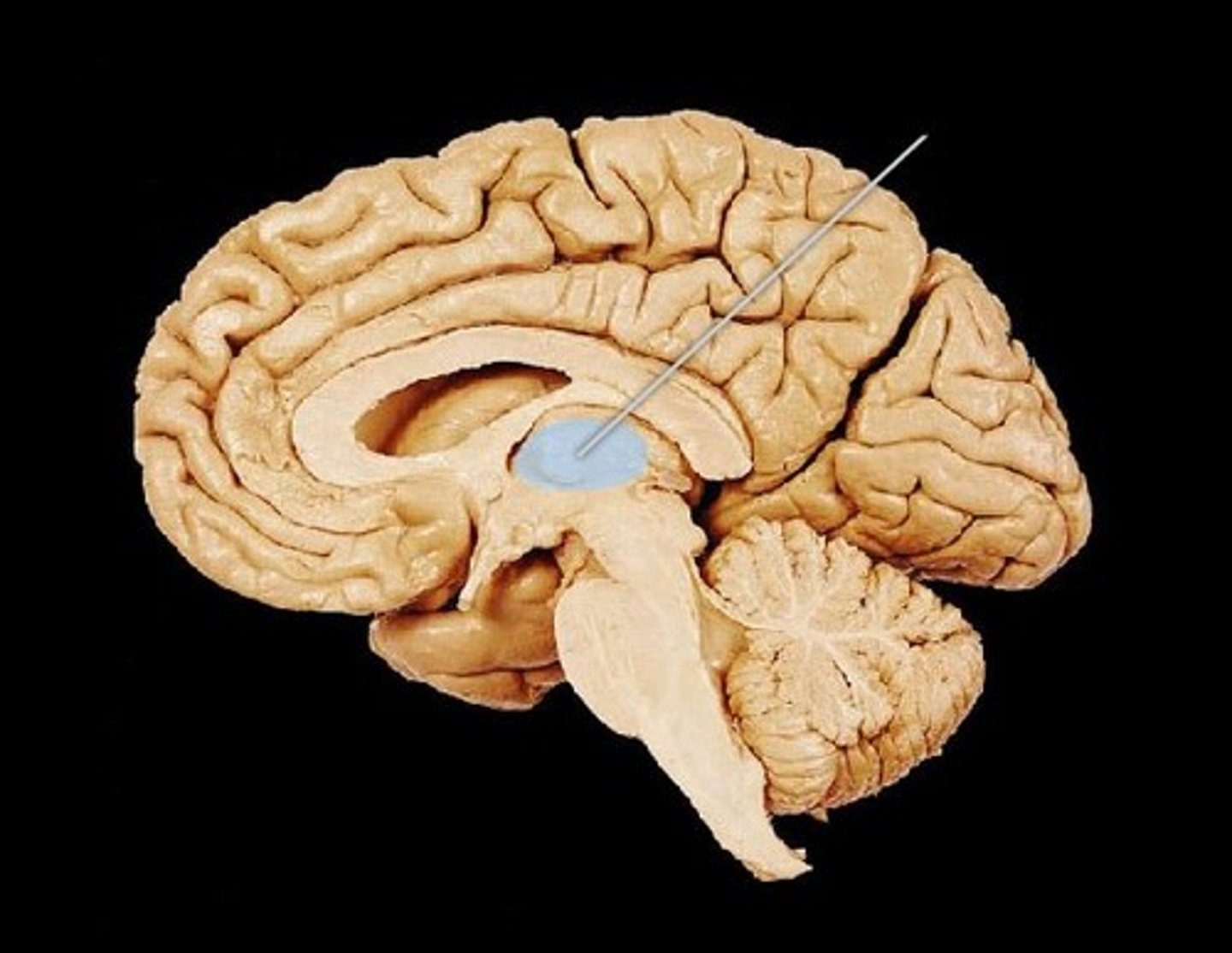
thalamus
collection of nuclei
1. relay point for all sensory info except smell
2. begin to perceive pain and temp (but not localized)
3. maintains cortical activity for sleep, waking, and arousal
4. Imarts pleasantness to sensations
what are the functions of the thalamus?
thalamus
what portion of the brain can feel pain?
thalamic aphasia
what aphasia results from damage to the thalamus?
hypothalamus
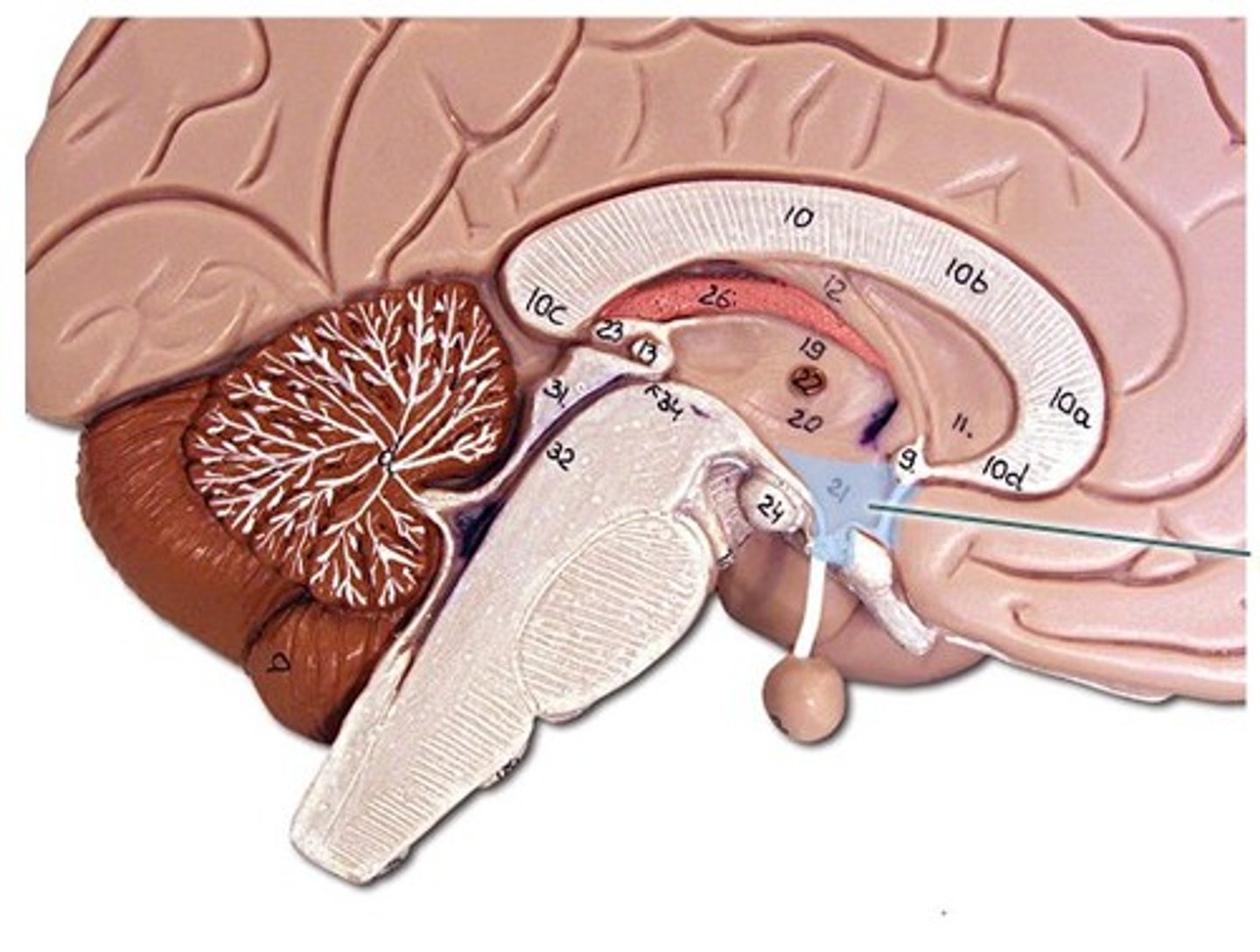
mammillary body
what other structure does the hypothalamus contain?
1. metabolism/water balance
2. autonomic NS (sympathetic/parasympathetic)
3. expressions of emotion
4. sleep/waking
5. body temp
6. food intake regulation
7. regulating sexual behavior
what are the 7 functions of the hypothalamus?
caudate nucleus, putamen
what is the corpus striatum made of?
caudate nucleus
A
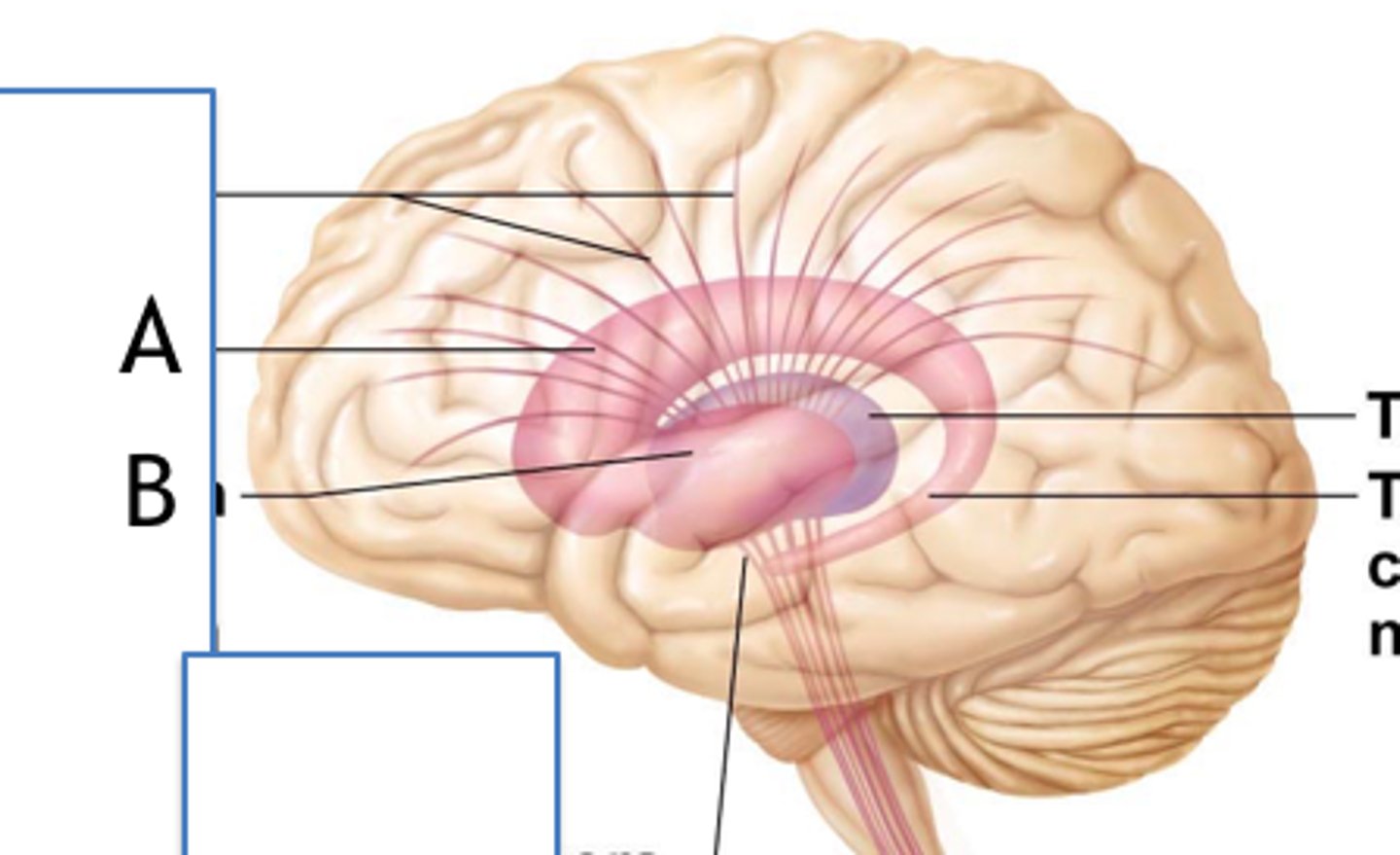
putamen
outside part of this blue shell
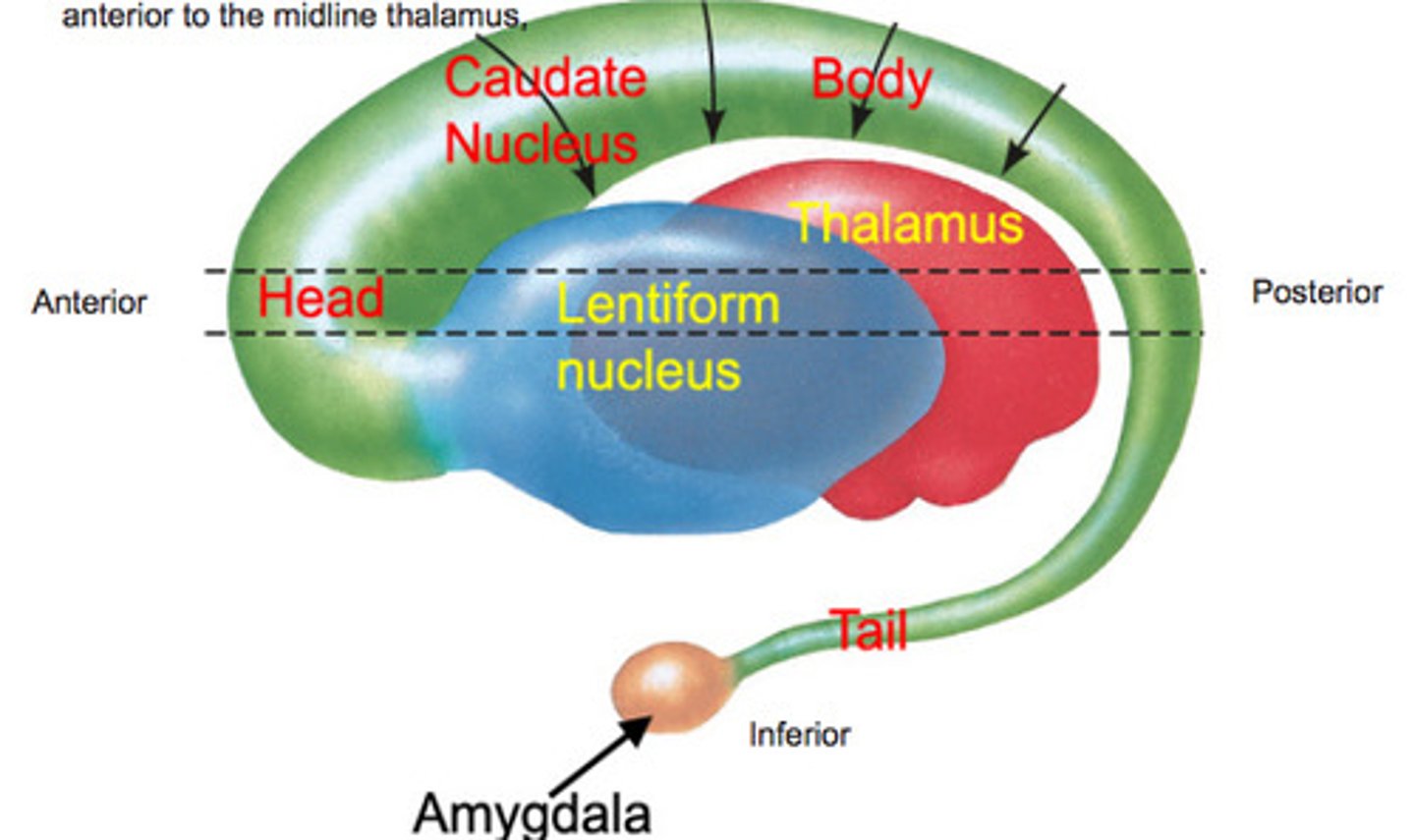
lentiform nucleus
blue part
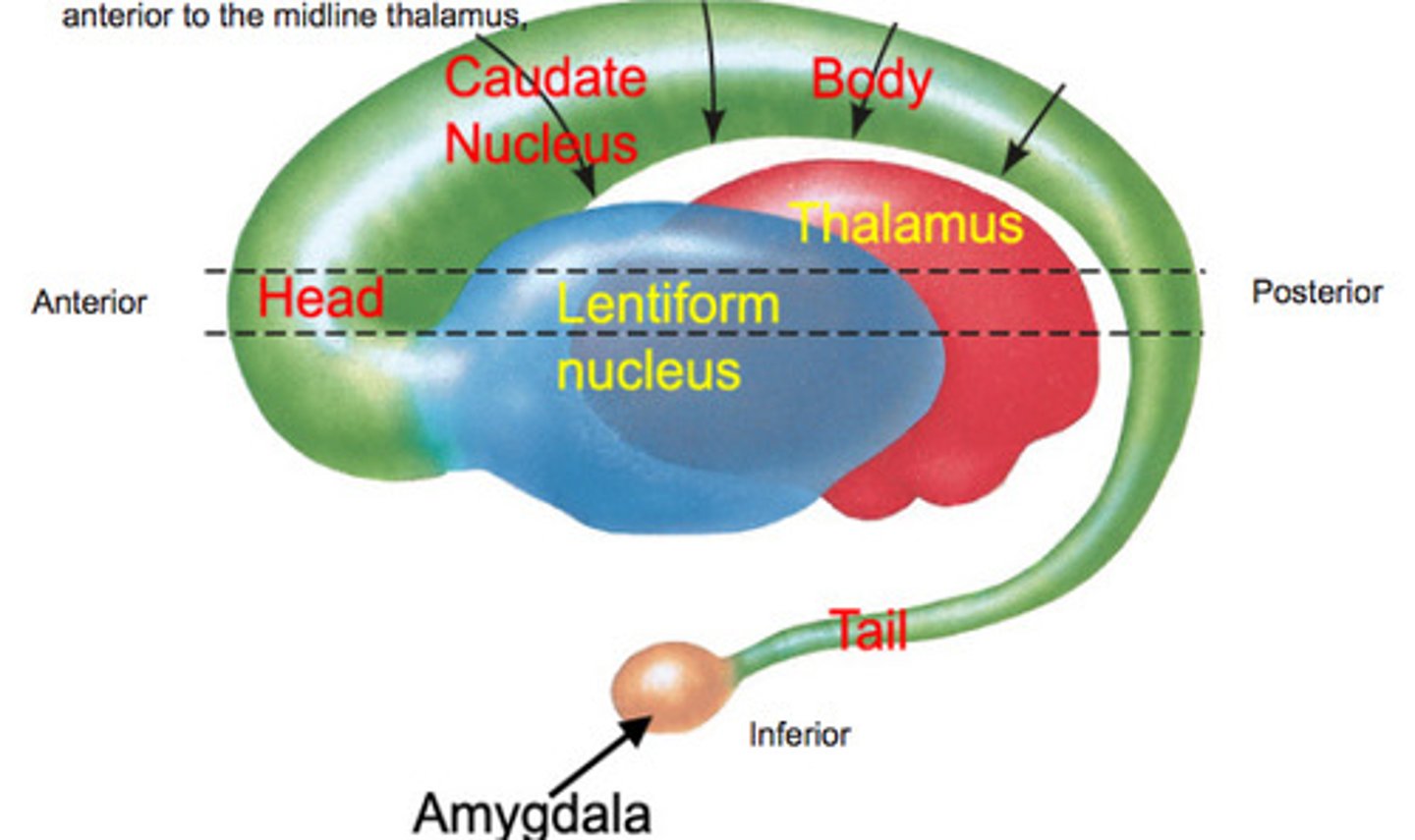
pallidum
little bean inside blue part
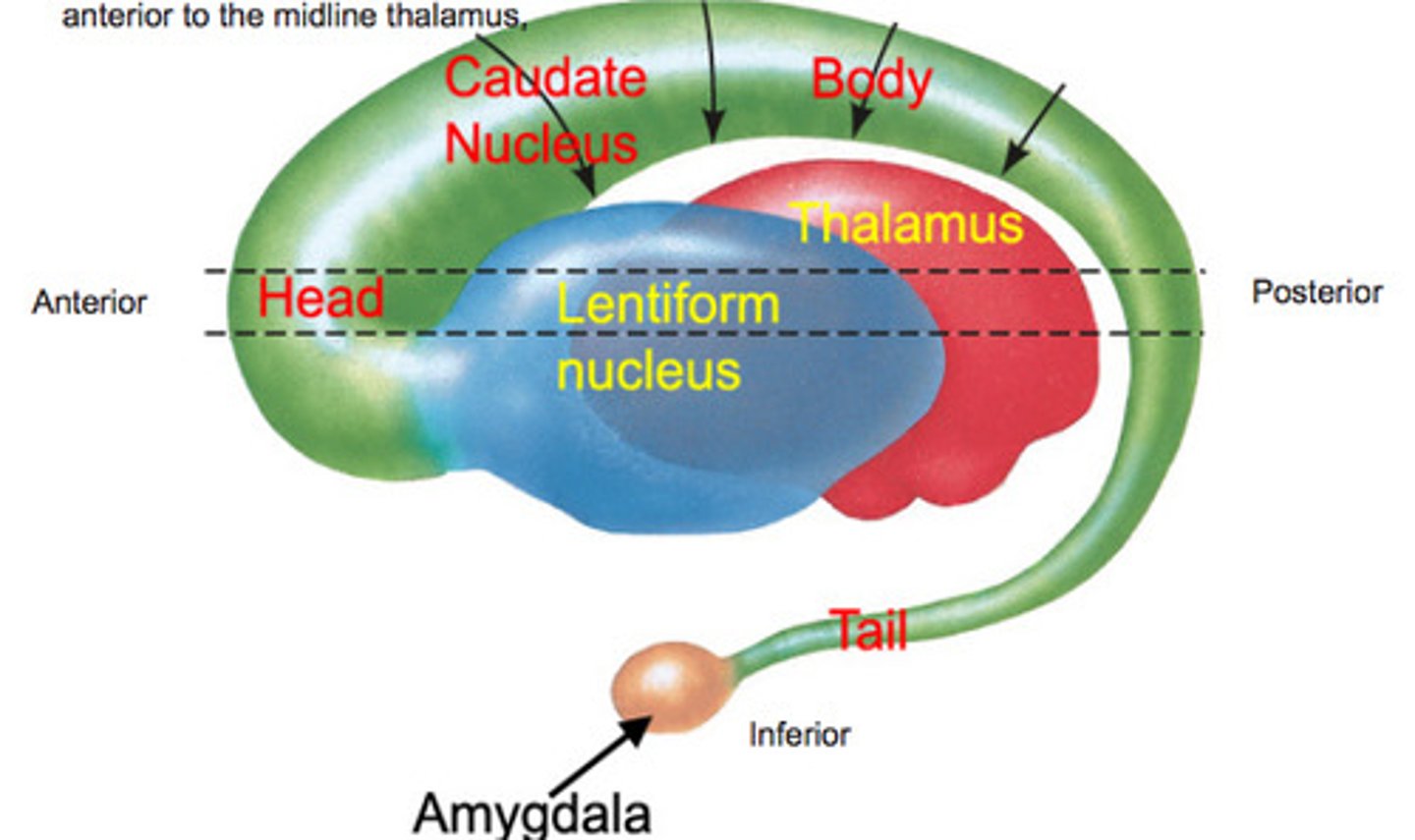
regulating movement, coordinating muscle groups for posture, walking
suppression of competing movements and decreasing muscle tone
cognitive and personality functions
basal ganglia functions
1. rigidity/muscle tone
2. resting tremors
what symptoms of impacted substantia nigra do those with PD have?
1. involuntary movement
2. rigidity/muscle tone
3. resting tremors
damage to the basal ganglia results in?
basal ganglia
where is the substantia nigra located?
chorea
sudden, jerky, purposeless movements associated with damage to the caudate nucleus
caudate nucleus
what does huntington's disease/chorea result from damage to?