NPTE: Complex Regional Pain Syndrome
 Call Kai
 Learn
Learn Practice Test
 Spaced Repetition
 Match
Match Flashcards
 Knowt Play
1/6

There's no tags or description
Looks like no tags are added yet.
Name | Mastery | Learn | Test | Matching | Spaced | Call with Kai | Chat |
|---|
No analytics yet
Send a link to your students to track their progress
7 Terms
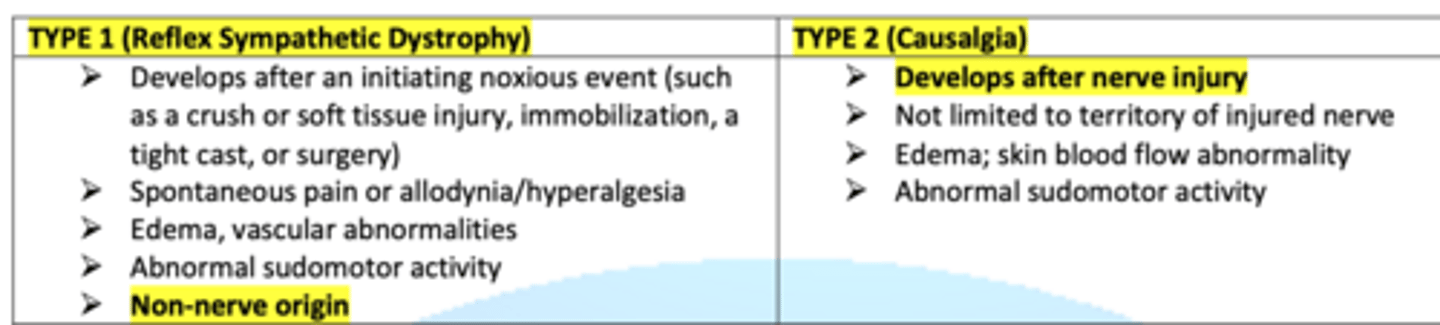
Type 1 vs type 2
Clinical features of CRPS
▪ Symptoms more marked distally in an extremity
▪ Symptoms progress in intensity and spread proximally
▪ Disproportion of symptoms in relation to the causing event
▪ A specific diagnosis, such as diabetes, or fibromyalgia, has been excluded
Signs and symptoms
▪ Pain is the key features
▪ Sensory abnormalities (burning pain and allodynia)
▪ Trophic changes
▪ Impairments of motor function
▪ Emotional/psychological responses
Common impairments of structure in CRPS
▪ Pain or hyperesthesia in extremity disproportionate to any inciting event
▪ Limitation of motion and/or motor dysfunction (weakness, tremor, dystonia)
▪ Sudomotor/edema: edema and/or sweating changes and/or sweating asymmetry (hyper or hypohydrosis)
▪ Vasomotor instability: temperature asymmetry and/or skin color changes and/or asymmetry
▪ Trophic changes: increased or decreased hair and nail growth and/or skin changes (thin or shiny)
Common impairments of function, activity limitations, and participation restrictions
▪ Pain avoidance behaviors, resulting in decreased use of the involved limb in ADLs, which may cause muscle
atrophy or osteoporosis/osteopenia in chronic stages
▪ Slower at initiating movement and/or slower and more inaccurate in executing targeted movement with the
involved limb
▪ Gait abnormalities
▪ Limitations in ability to participate in gainful employment and/or housework and in leisure activities
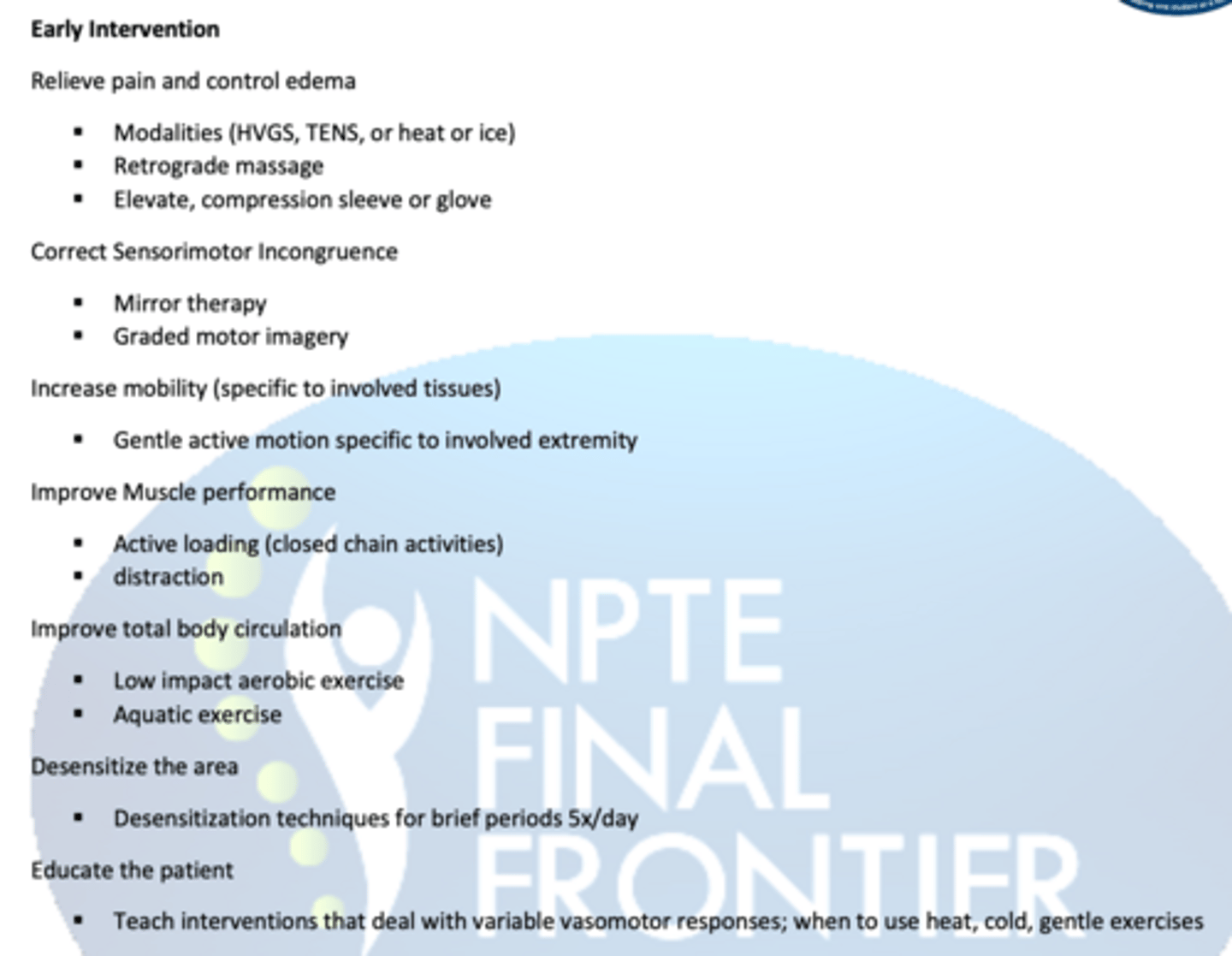
Early intervention
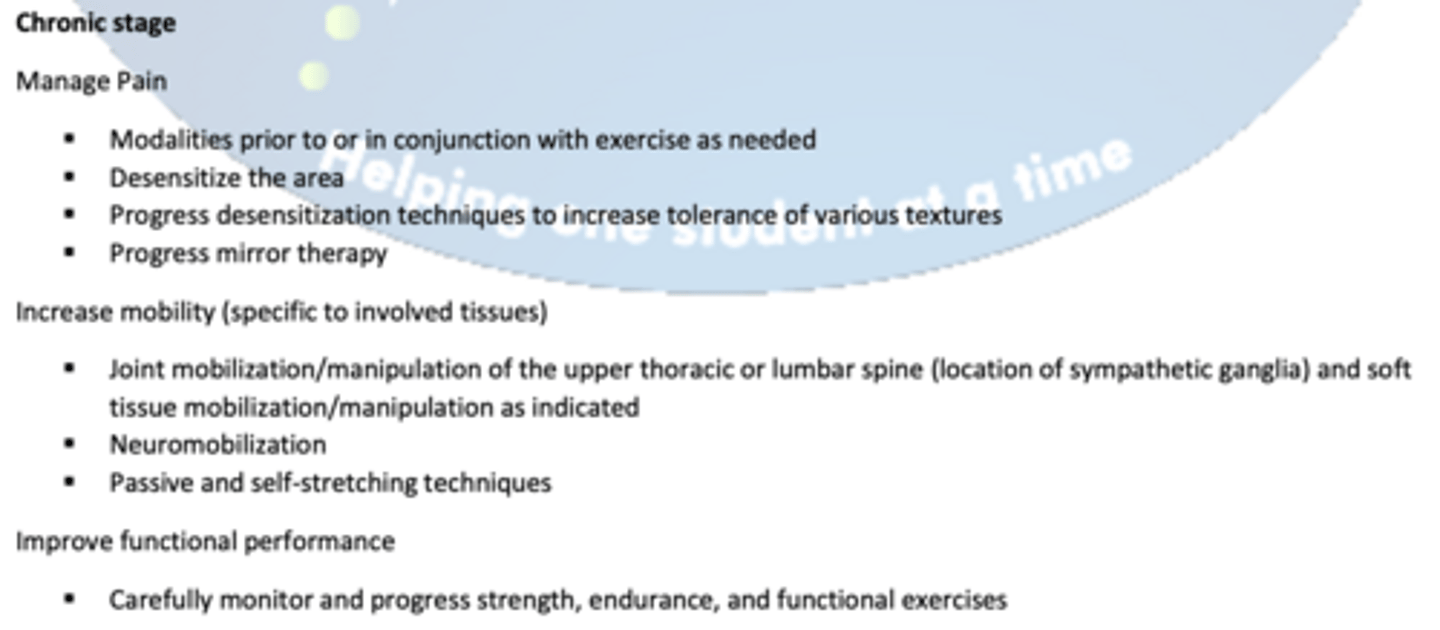
Chronic stage intervention