ECG's
 Call Kai
 Learn
Learn Practice Test
 Spaced Repetition
 Match
Match Flashcards
 Knowt Play
1/31

There's no tags or description
Looks like no tags are added yet.
Name | Mastery | Learn | Test | Matching | Spaced | Call with Kai | Chat |
|---|
No analytics yet
Send a link to your students to track their progress
32 Terms
Most common Tachyarrythmias
Sinus Tachycardia, Ventricular Tachycardia, Supraventricular/Atrial Tachycardia, Atrial Fibrillation, Atrial Flutter
Sinus Rhythm

A type of Normal Rhythm
P wave for every QRS
Rhythm is regular
Intervals have normal values
Respiratory Sinus Arryhmthmia
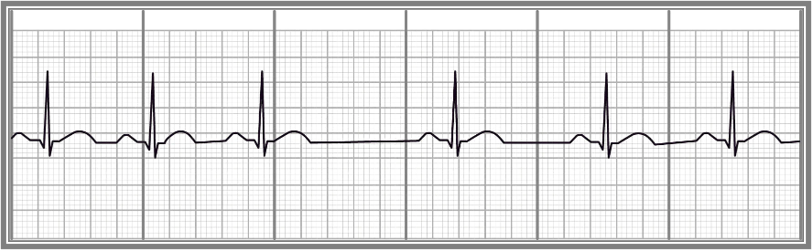
A type of Normal Rhythm
Same as sinus rhythm except
Heart rate varies with respiration
Increases with inspiration
Decreases with expiration
Wandering Pacemaker

A normal type of Normal Sinus
P waves differ in size within the same lead
Pacemaker site within SA node shifts locations
Sixty-cycle interference
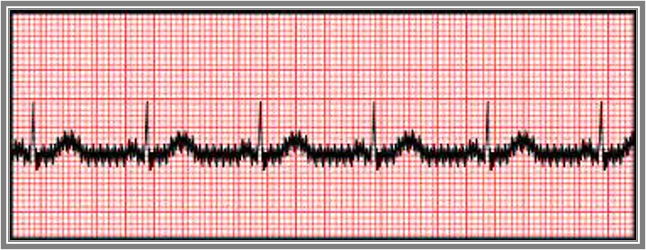
A type of Artifact
Electrical interference pattern due to equipment not properly grounded
Examples of causes:
Power cord not grounded
Clips not contacting skin
Clips are dirty or loosely attached to the cable
Legs are touching
Cables are touching the table or restrainer
Fluorescent lights
Other equipment running nearby
Muscle Tremors or Purring

A type of Artifact
Rapid irregular movements of baseline
Correct by calming the patient or reapplying the clips
Wandering Baseline

A type of Artifact
Caused by respiratory movement
Correct by holding patient’s mouth closed for 3-4 seconds
Sinus Tachycardia
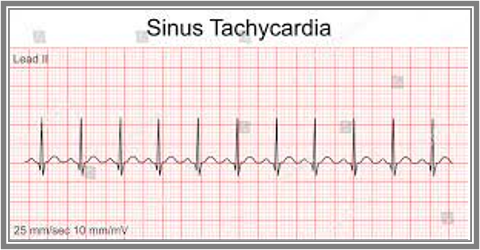
A type of Atrial/Supraventricular Tachyarrhythmias
Normal ECG complexes
Fast heart rate
R-R interval is consistent
Causes: stress, drugs, shock, anemia, thyroid dz, CHF
Tx: address underlying cause
Supraventricular Premature Complexes


A type of Atrial/Supraventricular Tachyarrhythmias
P waves look different (taller, smaller, hidden, or different shape)
Impulse initiated in atria not SA node
Cause: usually due to atrial enlargement
Supraventricular Tachycardia
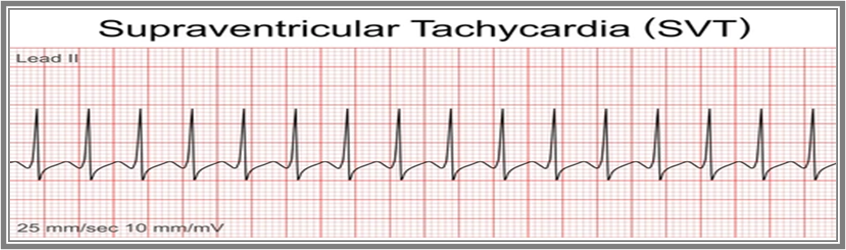
A type of Atrial/Supraventricular Tachyarrhythmias
4 or more SPCs in a row
Causes: congenital malformation of the conduction system, thyroid dz, anemia, electrolyte abnormalities, trauma
Affects dogs and cats
Treatment: beta blockers (sotalol, atenolol) and calcium channel blockers (diltiazem), ablation
Atrial Fibrillation

A type of Atrial/Supraventricular Tachyarrhythmias
No P waves, undulating PR segments, presence of f waves (fibrillations on baseline)
Irregular intervals between R waves
Tx: diltiazem, atenolol, digoxin, cardioversion (rate often reverts back and meds are used to slow the rate)
Atrial Flutter

A type of Atrial/Supraventricular Tachyarrhythmias
Rapid rate
Saw-toothed “flutter” waves instead of P
wavesRhythm degenerates into atrial
fibrillationTx: drug therapy or cardioversion
1st Degree AV Block

A type of Bradyarrythmia
Prolonged PR interval
2nd Degree AV Block

A type of Bradyarrythmia
Occasional missing QRS complexes
3rd Degree AV Block
A type of Bradyaarythmia
No relationship between P waves and QRS
complexes

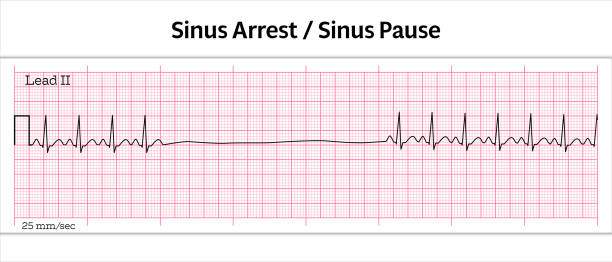
Sinus Pause/Arrest
A type of Bradyarrythmia
SA node fails to fire then resumes or a
different pacemaker fires
Sinus Bradycardia

A type of Bradyarrythmia
Heartbeat is too slow
Too slow varies by species:
Cat: <100 beats/min
Dog: <60 beats/min
Associated with cardiac arrest
Tx: address underlying cause (drugs, hypothermia, vagal tone, etc.)
Sick Sinus Syndrome

A type of BradyarrhySA node stops firing, heart stops beating
•Often has a rhythm with many long pauses, sinus bradycardia, may see tachycardia as well
•Tx: pacemaker
Ventricular Asystole
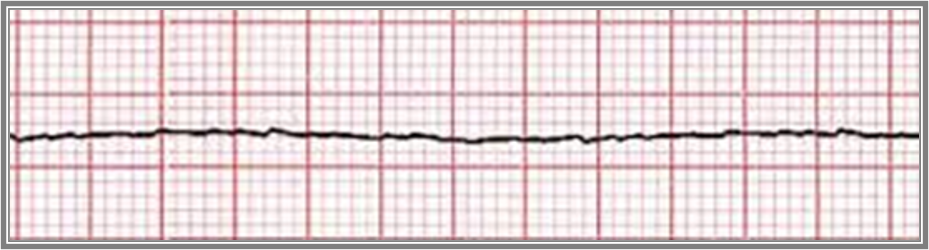
A type of Bradyarrhythmias
No ventricular complexes (“flat line”)
No pulse (heart is no longer beating)
CARDIAC ARREST—initiate CPR (epinephrine)
Irreversible brain damage occurs within 3-4 minutes from lack of oxygen
Ventricullar Fibrillation

A type of Ventricular Tachyarrhythmia
Rapid heart rate, irregular wide and bizarre waves
No P, QRS, or T waves seen
Oscillations seen on ECG can be large and coarse or small and fine
No pulse—cardiac arrest is near
Tx: defibrillation
Ventricular Premature Complexes

A type of Ventricular Tachyarrhythmia
Electrical impulses that arise from ectopic foci in the ventricles
They do not travel through the special conduction system, but through ordinary muscle which slows conduction
Wide and bizarre QRS complexes
A single VPC is not life threatening, but strings of VPCs are a concern
Ventricular Tachycardia

Type of Ventricular Tachyarrhythmia
VPCs from an ectopic focus in the ventricles
Can be intermittent (3 or more in a row) or continuous (all complexes are VPCs)
Rate is regular and >180 bpm
QRS complexes are wide and bizarre
No relationship between P and QRS (P waves not discernible)
Associated with cardiac arrest
Tx: defibrillation
Electromechanical Dissociation
Term which means there is electrical activity
recorded on the ECG, but no heartbeat can be
auscultatedPulseless rhythm (Pulseless Electrical Activity)
The electrical activity can look like anything
Patient is near death. Initiate cardiac
resuscitation NOWAlways monitor manually. DO NOT RELY ON
MACHINES!
