cell bio 2
 Call Kai
 Learn
Learn Practice Test
 Spaced Repetition
 Match
Match Flashcards
 Knowt Play
1/99

There's no tags or description
Looks like no tags are added yet.
Name | Mastery | Learn | Test | Matching | Spaced | Call with Kai | Chat |
|---|
No analytics yet
Send a link to your students to track their progress
100 Terms
How are different traits inherited from one generation to the other?
Traits are passed through genes, which are segments of DNA.
Offspring inherit genes/alleles from their parents
What was the experimental setup for Frederick Griffith’s experiment?
Used S strain bacteria: smooth, capsule, deadly to mice.
Used R strain bacteria: rough, no capsule, harmless.
Heat-killed S bacteria + live R bacteria → mouse died and live S bacteria were found.
What was the major conclusion from Griffith’s experiment?
A substance from dead S bacteria transformed R bacteria into S bacteria.
This was called the transforming principle.
What was the experimental setup for Avery, MacLeod, and McCarthy’s experiment?
Isolated DNA, RNA, and proteins from S bacteria.
Destroyed each type separately using enzymes.
Tested whether R bacteria could still be transformed.
What did Avery, MacLeod, and McCarthy’s experiment conclude?
Destroying DNA stopped transformation.
Therefore, DNA was the transforming principle.
What is the chemical substance that carries traits?
DNA (deoxyribonucleic acid)
What is DNA made up of?
DNA is a polymer made of nucleotides.
It contains sugar, phosphate, and nitrogenous bases.
What are nucleotides? What bond connects them?
Nucleotides are the building blocks of DNA and RNA.
Nucleotides are connected by phosphodiester bonds.
what are components of a nucleotide?
5-carbon sugar
Phosphate group
Nitrogenous base
What is special about the 5′ and 3′ positions?
The 5′ carbon is associated with the phosphate.
The 3′ carbon has an OH group where the next nucleotide is added.
DNA is synthesized 5′ → 3′.
What are the two types of bases in DNA?
Purines: A and G
Pyrimidines: C and T
What is Chargaff’s rule?
A = T
G = C
A always pairs with T; G always pairs with C.
What was concluded from Rosalind Franklin’s diffraction pattern?
DNA has a helical structure.
It provided evidence about DNA’s dimensions and arrangement of phosphate groups.
What was Watson and Crick’s DNA model?
DNA is a double helix.
Two strands run antiparallel.
Bases are inside; sugar-phosphate backbones are outside.
What resides in the inner core (inside) of DNA? What makes the backbone (outside)?
Inside: nitrogenous bases.
Outside: alternating sugar and phosphate groups.
What are the features of base pairing in DNA?
A pairs with T using 2 hydrogen bonds.
G pairs with C using 3 hydrogen bonds.
One purine pairs with one pyrimidine.
The strands are complementary and antiparallel.
What experiment showed DNA replicated semi-conservatively?
Meselson and Stahl experiment.
Used heavy ¹⁵N and normal ¹⁴N.
DNA density after replication showed that each new DNA molecule contained an old and new strand.
What does semi-conservative mean?
Each new DNA molecule contains:
1 original strand
1 newly made strand

DNA replication is catalyzed by what enzyme?
DNA polymerase
What is the template strand?
The existing DNA strand used as a guide to make the new complementary strand
What is a growing strand?
The new DNA strand being synthesized by DNA polymerase.
What enzyme unwinds DNA?
Helicase
Breaks hydrogen bonds and separates the DNA strands.
What are the key features of DNA polymerase?
enzymes that builds new DNA strands by matching nucleotides to an existing template strand
Adds nucleotides 5′ → 3′.
Has high fidelity (accuracy).
Can proofread and remove many incorrect nucleotides.
Requires a primer to begin synthesis.
What is the difference between nucleotides and nucleosides?
Nucleoside = sugar + base
Nucleotide = sugar + base + phosphate
Which bases are purines and pyrimidines?
Purines: Adenine (A), Guanine (G)
Pyrimidines: Cytosine (C), Thymine (T)
What are phosphodiester bonds?
Covalent bonds connecting nucleotides together.
Form the sugar-phosphate backbone.
What does bidirectional DNA replication mean?
Replication proceeds in two directions from the origin.
Two replication forks move away from the origin.
What are an origin, replication fork, and replicon?
Origin: location where DNA replication begins.
Replication fork: Y-shaped area where DNA is being copied.
Replicon: section of DNA replicated from one origin.
What are the key molecules/enzymes in DNA replication?
Helicase: unwinds DNA.
SSB proteins: keep DNA strands separated.
Topoisomerase: reduces twisting/tension.
Primase: makes RNA primers.
DNA polymerase: adds DNA nucleotides.
DNA ligase: joins DNA fragments.
Sliding clamp: keeps DNA polymerase attached to DNA.
What are the leading and lagging strands?
Leading: made continuously.
Lagging: made in short pieces because DNA synthesis only occurs 5′ → 3′.
What are Okazaki fragments? Why are they created?
Short DNA pieces made on the lagging strand.
Created because DNA polymerase can only synthesize 5′ → 3′.
Ligase joins them together.
What mechanism prevents DNA shortening at the end of the lagging strand?
Telomerase helps maintain chromosome ends.
It extends telomeres so important DNA is not progressively lost.
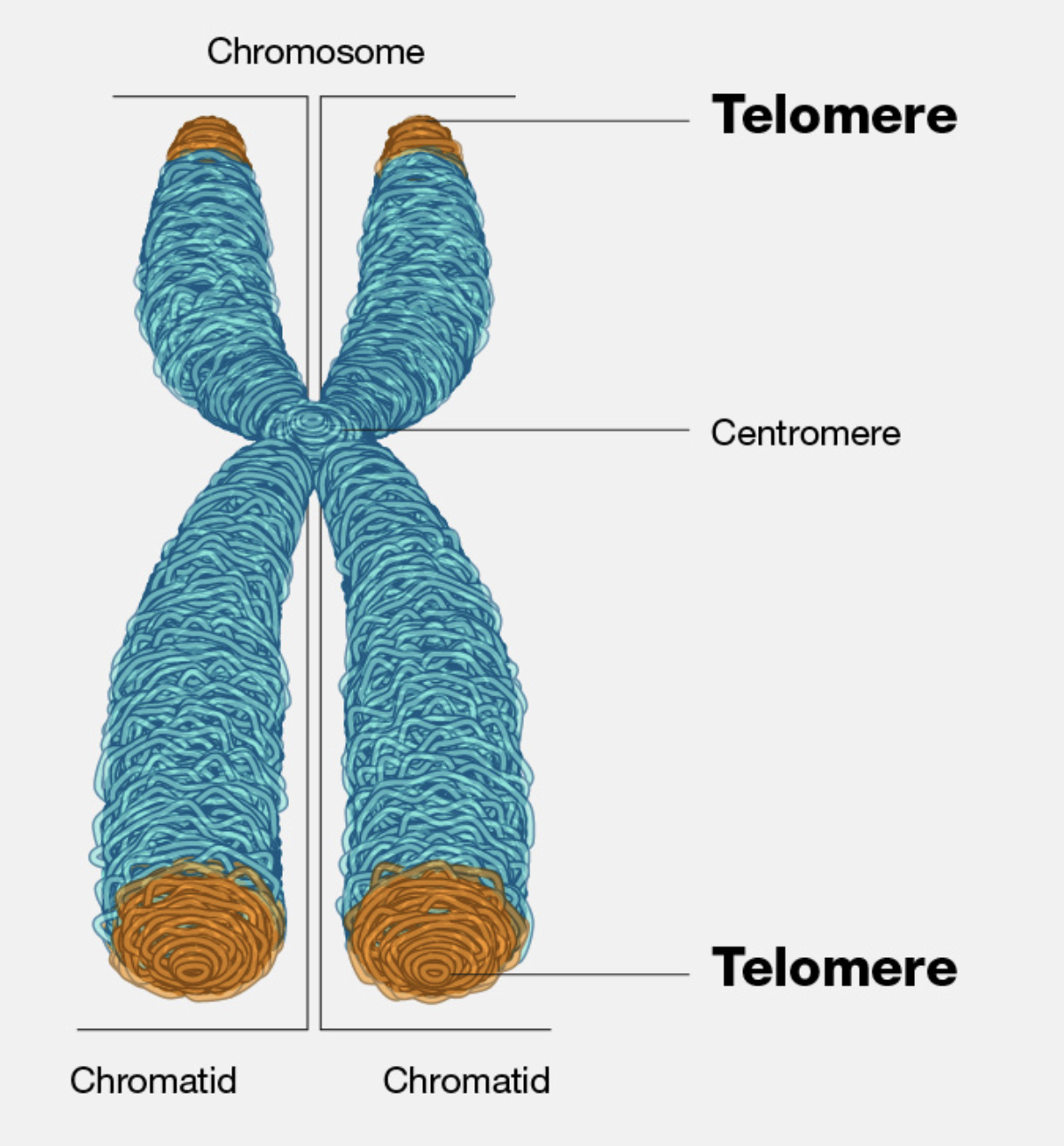
What are telomeres and telomerase?
Telomeres: repetitive DNA at chromosome ends that protect them.
Telomerase: enzyme that extends telomeres.
What are common DNA lesions?
Thymine dimers from UV radiation.
Depurination: loss of a base.
Deamination: chemical alteration of a base.
Mismatch: incorrect base pairing.
Single- or double-strand breaks.
What are four DNA repair mechanisms?
Direct repair: directly reverses certain damage.
Base excision repair: removes damaged individual bases.
Nucleotide excision repair: removes a larger damaged section.
Mismatch repair: fixes incorrect base pairs left after replication.
How did Beadle and Tatum develop the one gene–one enzyme hypothesis?
Mutated Neurospora using radiation.
Some mutants could not make specific substances.
They connected specific genes with specific enzymes.
Led to the one gene–one enzyme hypothesis.
What does each gene make?
A gene produces a functional product.
This can be a protein or functional RNA.
What is the central dogma?
DNA → RNA → Protein
DNA → RNA = transcription
RNA → protein = translation
What is making RNA from DNA called?
Transcription
What is making protein from RNA called?
Translation
Where is RNA made? Where is protein made?
Eukaryotes: RNA is mainly made in the nucleus; protein is made by ribosomes.
Prokaryotes: both occur in the cytoplasm.
What is a codon?
A group of 3 mRNA nucleotides.
Specifies an amino acid or a stop signal.
What are mRNA and tRNA?
mRNA: carries genetic instructions to the ribosome.
tRNA: carries amino acids to the ribosome.
What is the function of the ribosome?
Reads mRNA.
Positions tRNAs.
Builds the protein by forming peptide bonds.
What is the chemical difference between DNA and RNA?
DNA has deoxyribose; RNA has ribose.
DNA uses T; RNA uses U.
DNA is usually double-stranded; RNA is usually single-stranded.
What are some secondary and tertiary structures of RNA?
Secondary: hairpins, stem-loops, internal loops.
Tertiary: complex 3D folding of RNA, such as tRNA.
What are the key players in transcription?
RNA polymerase: makes RNA.
Promoter: DNA region where transcription begins.
Transcription factors: help regulate transcription.
NTPs: building blocks of RNA.
What are the three steps of transcription?
Initiation: RNA polymerase binds promoter.
Elongation: RNA strand is built.
Termination: transcription stops and RNA is released.
What is the directionality of RNA?
RNA is made 5′ → 3′.
New nucleotides are added to the 3′ end.
What are post-transcriptional modifications?
5′ cap
Poly-A tail
RNA splicing
Does RNA processing happen in both eukaryotes and prokaryotes?
Extensive mRNA processing is mainly characteristic of eukaryotes.
Prokaryotes can have RNA processing, but generally do not use the same 5′ cap/poly-A/splicing system.
What happens at the 5′ and 3′ ends of mRNA?
5′ end: receives a 5′ cap.
3′ end: receives a poly-A tail.
These help protect mRNA and help with translation.
What happens to introns?
Introns are removed from pre-mRNA.
Exons are joined together.
What mechanism splices introns?
The spliceosome removes introns and joins exons.
What are snRNPs?
Small nuclear ribonucleoproteins.
Made of snRNA + proteins.
Help form the spliceosome and remove introns.
What happens to introns finally?
They are usually released and degraded/recycled by the cell.
How many amino acids are present?
There are 20 standard amino acids used to make proteins.
How are amino acids made from nucleotides?
Three nucleotides form a codon.
Each codon specifies an amino acid.
The ribosome uses the codons to determine the amino acid sequence.
What is a start codon?
AUG
Usually codes for methionine.
Signals where translation begins.
What is a stop codon?
UAA, UAG, UGA
Signals the end of translation.
What are the features of the genetic code?
Triplet: 3 bases per codon.
Degenerate: multiple codons can code for the same amino acid.
Unambiguous: each codon specifies only one amino acid or stop.
Nearly universal: used by most organisms.
What is the function of tRNA?
Carries a specific amino acid to the ribosome
What is the anticodon domain?
Three bases on tRNA that pair with a complementary mRNA codon
What is the acceptor stem?
The 3′ end of tRNA.
The amino acid attaches to this end
end labeled ‘A’

What is wobble base pairing?
Flexible pairing at the third base of a codon.
Allows one tRNA to recognize multiple codons.
What is charging of tRNA?
Attaching the correct amino acid to tRNA.
Done by aminoacyl-tRNA synthetase.
Requires ATP.
What are the three ribosome sites?
A site: incoming tRNA.
P site: holds tRNA carrying growing protein.
E site: tRNA exits.
What are the steps of translation?
Initiation: ribosome finds start codon.
Elongation: amino acids are added.
Termination: stop codon causes protein release.
What catalyzes peptide bond formation?
The ribosome's peptidyl transferase center, primarily rRNA.
What structure do many antibiotics bind to in bacteria?
Many antibiotics target the 70S bacterial ribosome.
They interfere with protein synthesis, which can stop bacterial growth or kill the bacteria.

What is PCR? What is its purpose?
Polymerase Chain Reaction.
Amplifies a specific DNA sequence to make millions of copies.
What components are needed for PCR?
Template DNA.
Forward and reverse primers.
DNA polymerase.
dNTPs.
Buffer/Mg²⁺.
Water.
What are the steps of PCR?
Denaturation: DNA strands separate.
Annealing: primers attach.
Extension: DNA polymerase copies DNA.
What are uses of PCR?
Disease testing.
Forensics.
Genetic testing.
Research.
DNA sequencing preparation.
What are restriction enzymes?
Enzymes that cut DNA at specific sequences.
What is gel electrophoresis?
Separates DNA fragments by size.
DNA moves toward the positive electrode.
Smaller fragments move farther.
DNA is visualized using DNA-binding dyes.
How do restriction enzymes cut DNA?
Recognize specific DNA sequences.
Cut the DNA backbone.
Can create sticky ends or blunt ends.
What are plasmids?
Small, usually circular DNA molecules found in bacteria.
Used as vectors to carry foreign DNA.

What special feature helps select plasmids?
Often contain an antibiotic-resistance gene.
Only bacteria with the plasmid survive antibiotic selection.
What are the steps to express recombinant protein?
Isolate/amplify gene.
Insert gene into plasmid.
Put plasmid into host cell.
Select cells containing plasmid.
Express the gene.
Collect/purify protein.
What are uses of recombinant proteins?
Insulin.
Medicines.
Vaccines.
Industrial enzymes.
Research and diagnostics.
What technologies can knock down a gene?
RNA interference (RNAi/siRNA)
Antisense RNA
CRISPRi
What is an industrial application of gene knockdown?
Reduce production of unwanted products.
Increase useful product production.
Modify microorganisms for chemicals, medicines, or fuels.
What are biofuels?
Fuels made from biological materials.
Examples: ethanol, biodiesel, biogas.
How is CRISPR-Cas9 used to knock down a gene or insert DNA?
Guide RNA directs Cas9 to a specific DNA sequence.
Cas9 cuts the DNA.
Repair can disrupt the gene.
A DNA template can sometimes be provided to help insert new DNA.
What was the old method of DNA sequencing?
Sanger sequencing (chain-termination method).
Uses DNA polymerase and special nucleotides to determine DNA sequence.
What was the use of ddNTPs?
ddNTPs stop DNA synthesis because they lack a 3′-OH group.
Different ddNTPs stop DNA at different positions, allowing the sequence to be determined
What is next-generation DNA sequencing?
High-throughput sequencing that reads millions of DNA fragments at once.
Much faster for large amounts of DNA than traditional Sanger sequencing.
What is RNA-seq?
Uses sequencing to study the RNA transcripts in a cell.
Shows which genes are being expressed and their relative expression levels.
What is a disadvantage of studying transcriptomics?
RNA levels can change depending on cell type, environment, and time.
RNA levels also do not always equal the amount or activity of protein.
How many genes does the human genome have?
About 20,000 protein-coding genes.
What is proteomics?
Study of the entire set of proteins in a cell or organism.
Examines protein amounts, structures, functions, and interactions.
What are protein families?
Groups of proteins with a common evolutionary ancestor.
Often have similar sequences, structures, or functions.
What comprises the human genome besides coding sequences?
Regulatory DNA.
Introns.
Noncoding RNA genes.
Repetitive DNA.
Intergenic regions.
Telomeres and centromeres.
What does it mean to have homologous proteins?
Proteins that evolved from a common ancestral protein.
They may have similar or different functions.
What is metagenomics?
Study of DNA collected directly from an environmental or biological sample.
Can identify and study many microorganisms without growing each one separately.
What are SNPs?
Single Nucleotide Polymorphisms.
Differences in a single DNA nucleotide between individuals.
How are SNPs used to identify individuals?
People have different combinations of SNPs.
Analyzing many SNPs together can create a genetic profile that distinguishes individuals.
How can genomics revolutionize medicine?
Helps identify disease-associated genetic variants.
Allows personalized treatment.
Helps predict medication responses.
Can improve disease diagnosis and drug development.
How can genomics help better treat cancer?
Identifies mutations in a person's tumor.
Helps classify the cancer.
Can identify targetable mutations.
Helps doctors choose treatments that target specific molecular changes.
Can help track treatment resistance and changes in the tumor.