Lab exam 3 amy
 Call Kai
 Learn
Learn Practice Test
 Spaced Repetition
 Match
Match Flashcards
 Knowt Play
1/45

Earn XP
Description and Tags
based on study guide
Name | Mastery | Learn | Test | Matching | Spaced | Call with Kai | Chat |
|---|
No analytics yet
Send a link to your students to track their progress
46 Terms
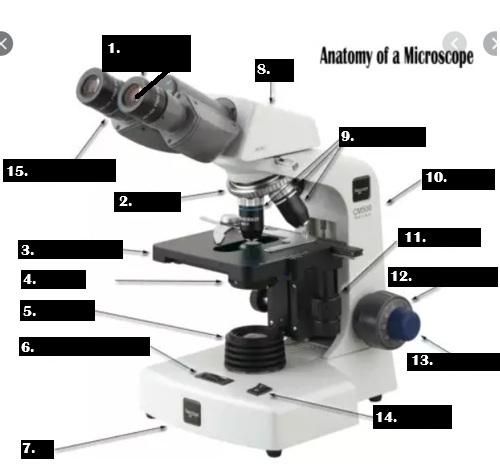
1.
Ocular lens (eyepiece)

2.
Nose piece

3.
Mechanical stage (Stage)

4.
Condenser

5.
Illumination (light source)

6.
Brightness adjustment

7.
Base

8.
Head

9.
Objective lens

10.
Frame (arm)

11.
Stage control

12.
Course adjustment

13.
Fine adjustment

14.
Light switch

15.
Diopter Adjustment
What is the function of the eyepiece on a microscope?
Contains the ocular lens.
What is the function of the nosepiece on a microscope?
Holds the objective lens.
What is the function of the objective lens on a microscope?
Increases magnification.
What is the function of the mechanical stage on a microscope?
Supports slide.
What is the function of the condenser on a microscope?
Concentrates light on specimen.
What is the function of the iris on a microscope?
Regulates amount of light.
What is the function of the Illumination on a microscope?
Projects light through condenser, specimen, and lenses.
What is the function of the arm on a microscope?
Supports microscope when carried.
What is the function of the fine adjustment on a microscope?
Moves stage slightly to sharpen image.
What is the function of the course adjustment on a microscope?
Moves stage up/down for focusing.
What is the function of the base on a microscope?
Supports microscope.
What is the function of the stage control on a microscope?
Moves stage clips & slide around the stage.
How is total magnification calculated?
Power of ocular lens/eyepiece (10) x the power of the objective lens.
Define: parfocal.
Slide stays in focus when moving from one objective to the next if it was properly focused.
Define: resolution.
Ability to distinguish between two close objects, minimum of 0.2 micrometers with these scopes. Decimal. (the shortest distance between two separate points on a specimen that allows them to be clearly distinguished as separate entities.)
Define: depth of field.
Thickness of the plane that is clearly in focus.
Define: working distance.
How far the bottom of the objective lens is from the specimen. Decreases as you increase power of objective.
Define: field.
Area you see through the microscope. Decreases as you increase power of objective.

Identify:
Nucleus
Mitochondria
Golgi apparatus


Identify:
Nucleus
Mitochondria
Golgi apparatus
Rough ER
Smooth ER
Lysosome
Centrioles


Identify the different stages.

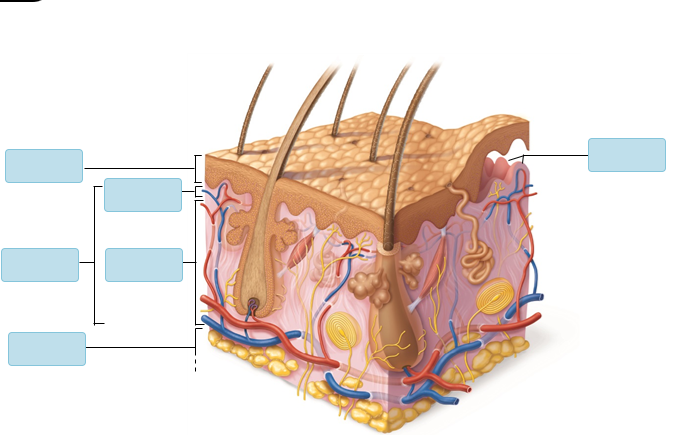
Label: layers of the skin


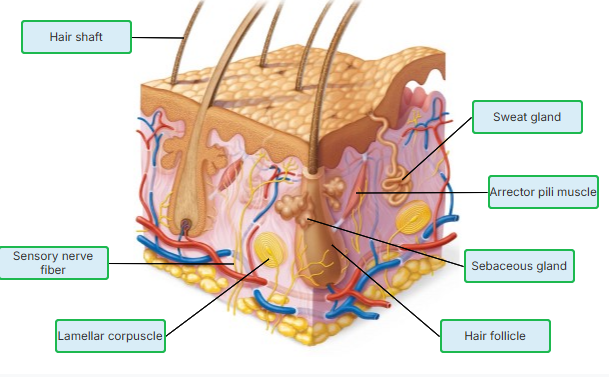
Label: structures of the skin

Label: layers of epidermis


Identify:
epidermis
dermis
hypodermis

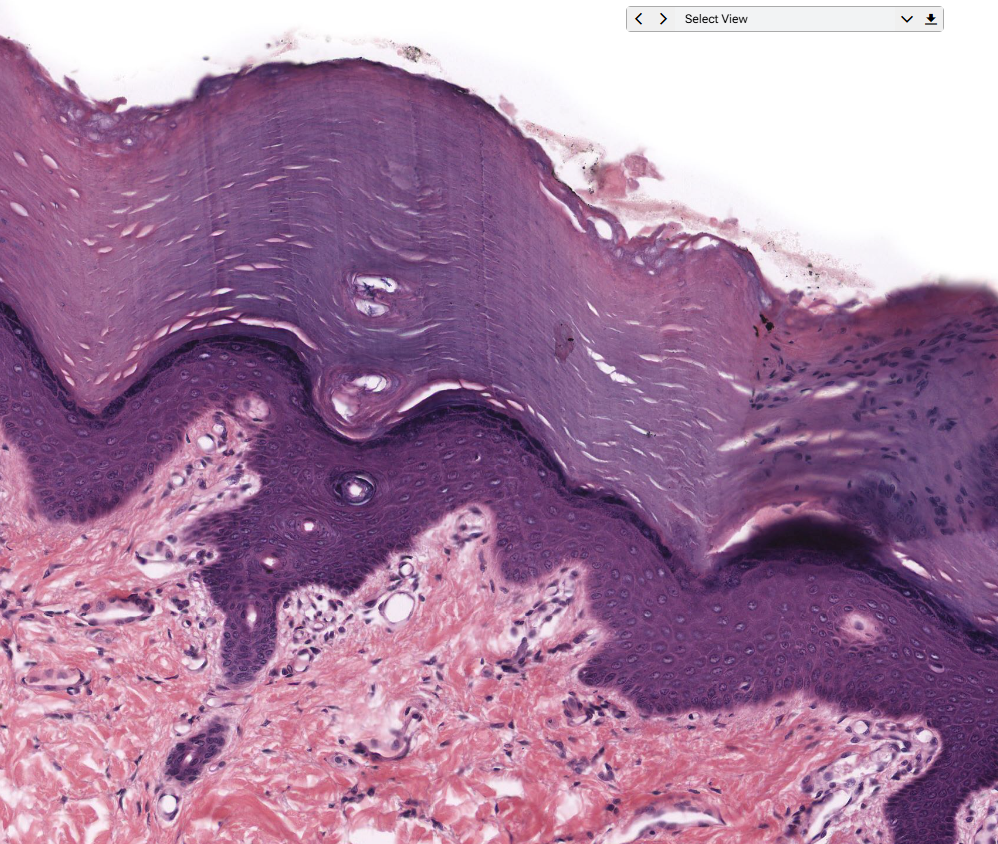
Layers of the epidermis


Identify:
Meissner’s corpuscle
Pacinian corpuscle
Arrector pili
Hair
Sebaceous gland
Eccrine sweat gland
Apocrine sweat gland
Dermal papillae


Identify:
Polar microtubules
Kinetochore microtubules


Identify: nuclear envelope

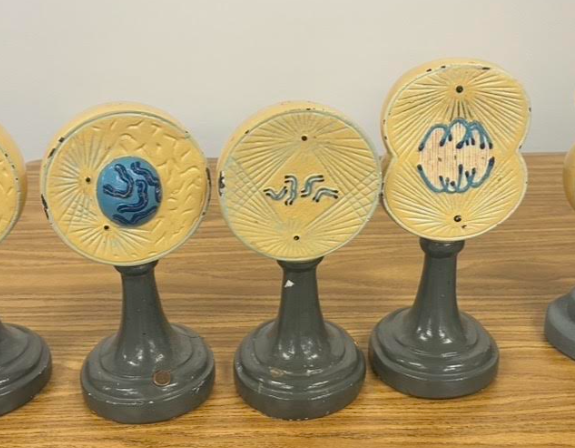
Identify: chromosomes


Identify: mitotic spindle
