Ortho 6 - Orthodontic Appliances (Dr. Suri)
 Call Kai
 Learn
Learn Practice Test
 Spaced Repetition
 Match
Match Flashcards
 Knowt Play
1/122

There's no tags or description
Looks like no tags are added yet.
Name | Mastery | Learn | Test | Matching | Spaced | Call with Kai | Chat |
|---|
No analytics yet
Send a link to your students to track their progress
123 Terms
Define the following:
A means by which force can be applied to a tooth or a group of teeth in a predetermined direction
Orthodontic appliance
The material evolution of what 2 things changed orthodontics forever?
- Elastics
- Bonding
Who introduced acid etch technique? When?
Dr. Michael Buonocore in 1955
What were characteristics of early appliances? (3)
- Bulky
- Unesthetic
- Crude metal bands were ligated to teeth with silver or brass wires
What are 4 ideal prerequisites of an orthodontic appliance?
- Biological
- Mechanical
- Hygienic
- Esthetic
What are the 4 classification for orthodontic appliances?
- Removable
- Fixed
- Semi-fixed
- Functional
Define the following:
An appliance that can be taken out of the mouth and reinserted by the patient
Removable Appliances
Removable Appliances are primarily efficient in ______ movements
Tipping
All of the following are advantages of using Removable Appliances EXCEPT:
A) Easy to fabricate
B) More chairside time
C) Less expensive
D) Oral hygiene is easy
E) Less conspicuous
F) In event of damage can be removed by patient
B - LESS chairside time
All of the following are the limitations of using Removable Appliances EXCEPT:
A) Only simple tipping movements can be performed
B) Multiple tooth discrepancies can be treated simultaneously
C) Mandibular appliances not well tolerated
D) Treatment dependent on patient compliance
E) Appliances can be readily broken, lost
B - CANNOT be treated simultaneously
The center of resistance of a healthy single-rooted tooth is located approximately where?
About one-third of the root length apical to the alveolar crest
A single force applied to the crown of a tooth by a removable appliance will most commonly produce what movement?
Tipping
If a force passes directly through the center of resistance of a tooth, the expected tooth movement is what?
Translation (bodily movement)
Which landmark is more clinically important for predicting orthodontic tooth movement?
Center of resistance
All of the following are general factors about appliance design, EXCEPT:
A) Patient comfort
B) Complexity
C) Retention
D) Strength
E) Hygiene
F) Aesthetics
B) Complexity (should be simplicity)
What determines the appliance design?
The nature of the tooth movement desired
What are the 3 components of a removable appliance?
- Active elements
- Retentive elements
- Base plate
Define the following:
The component of a removable appliance that moves the tooth by applying pressure
Active element
Define the following:
The component of a removable appliance that holds the appliance in the mouth
Retentive element
What is the most common type of removable appliance today?
Aligners
A clasp (adams, ball, hairpin, rotowire) is what type of component of a removable appliance?
Retentive element
A pinhead is what type of component of a removable appliance?
Retentive element
What is the most common type of base plate material today?
Acrylic (PMMA)
Define the following:
Retentive elements - a removable appliance that engage undercuts under the height of contour in relationship to the path of removal
Clasps
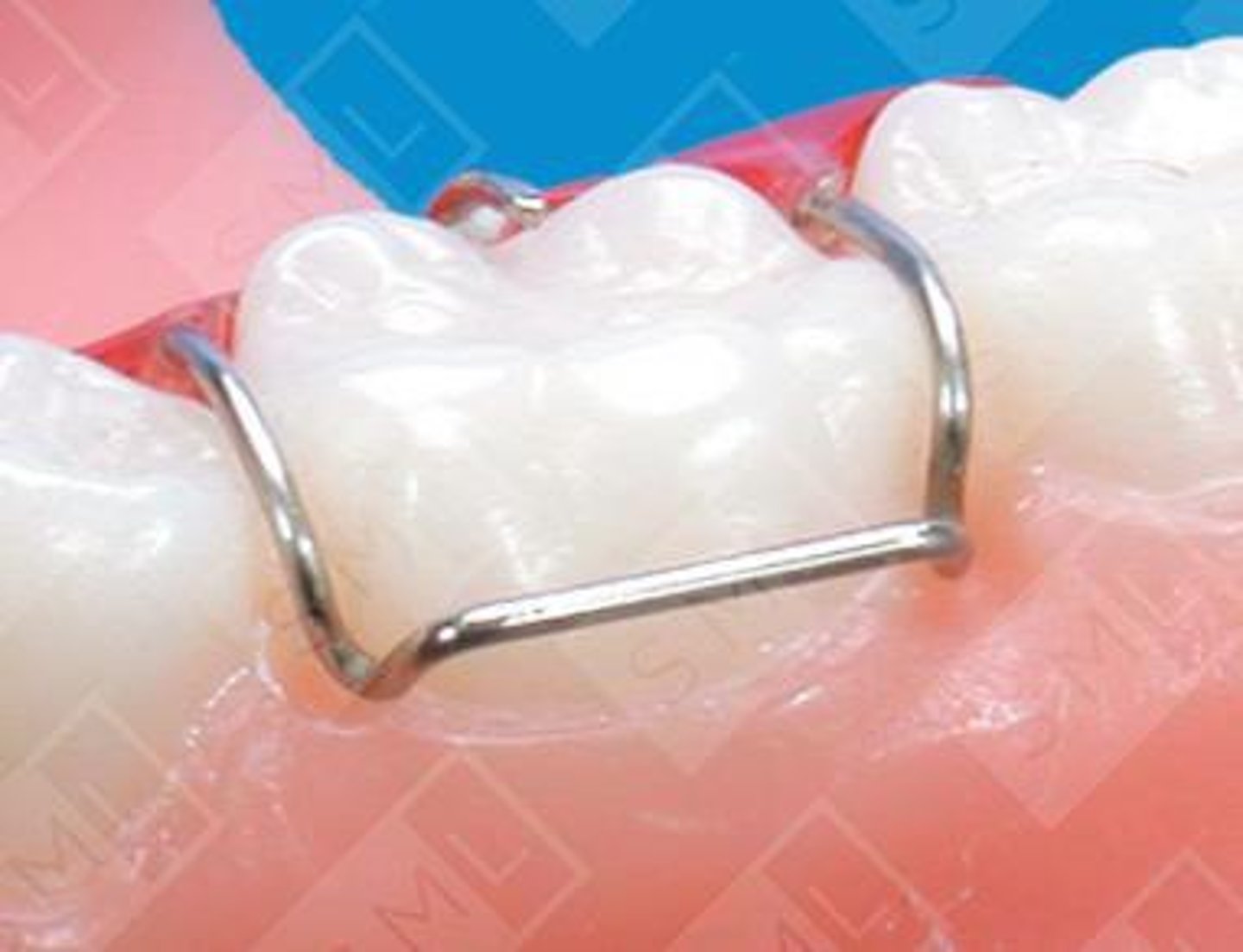
ID the component:
Adams clasp
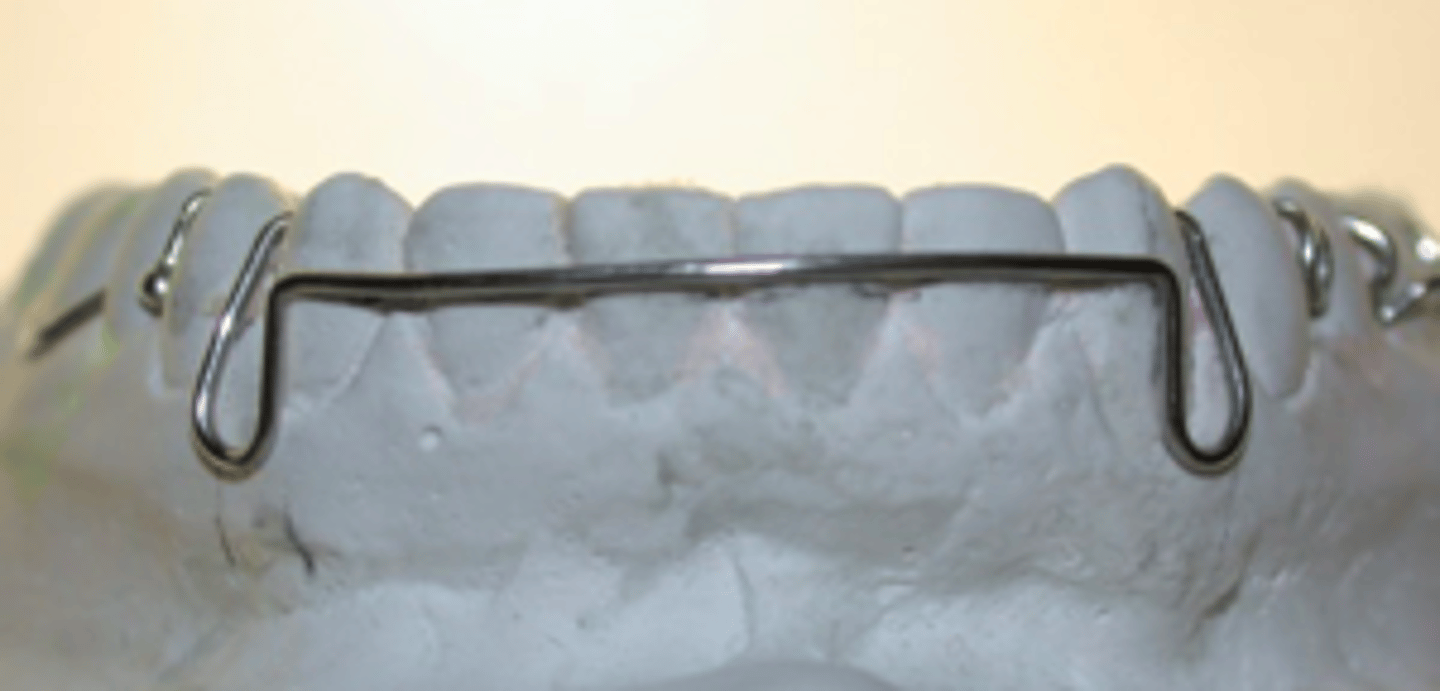
ID the component:
labial bow
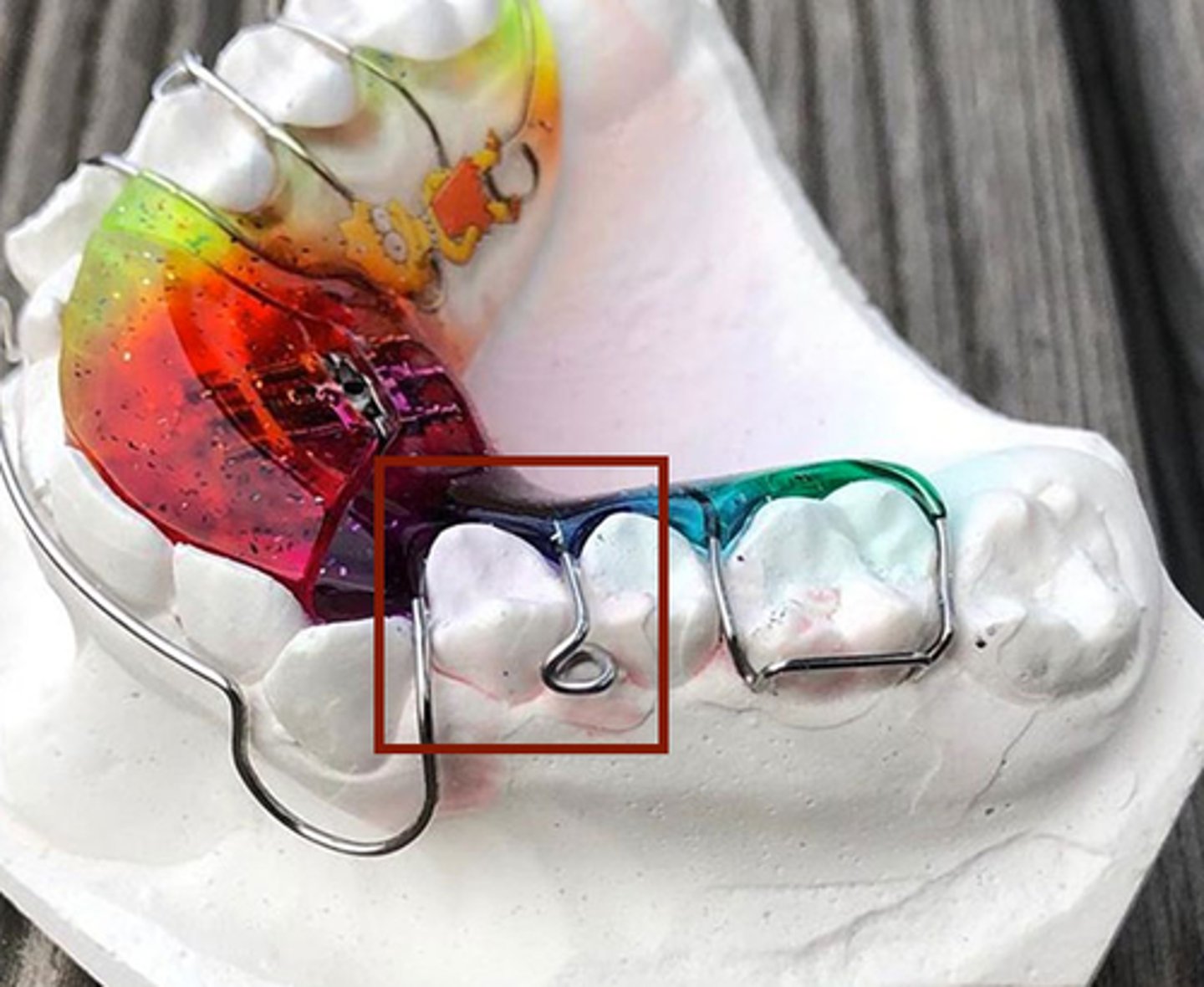
ID the component:
pin head clasp
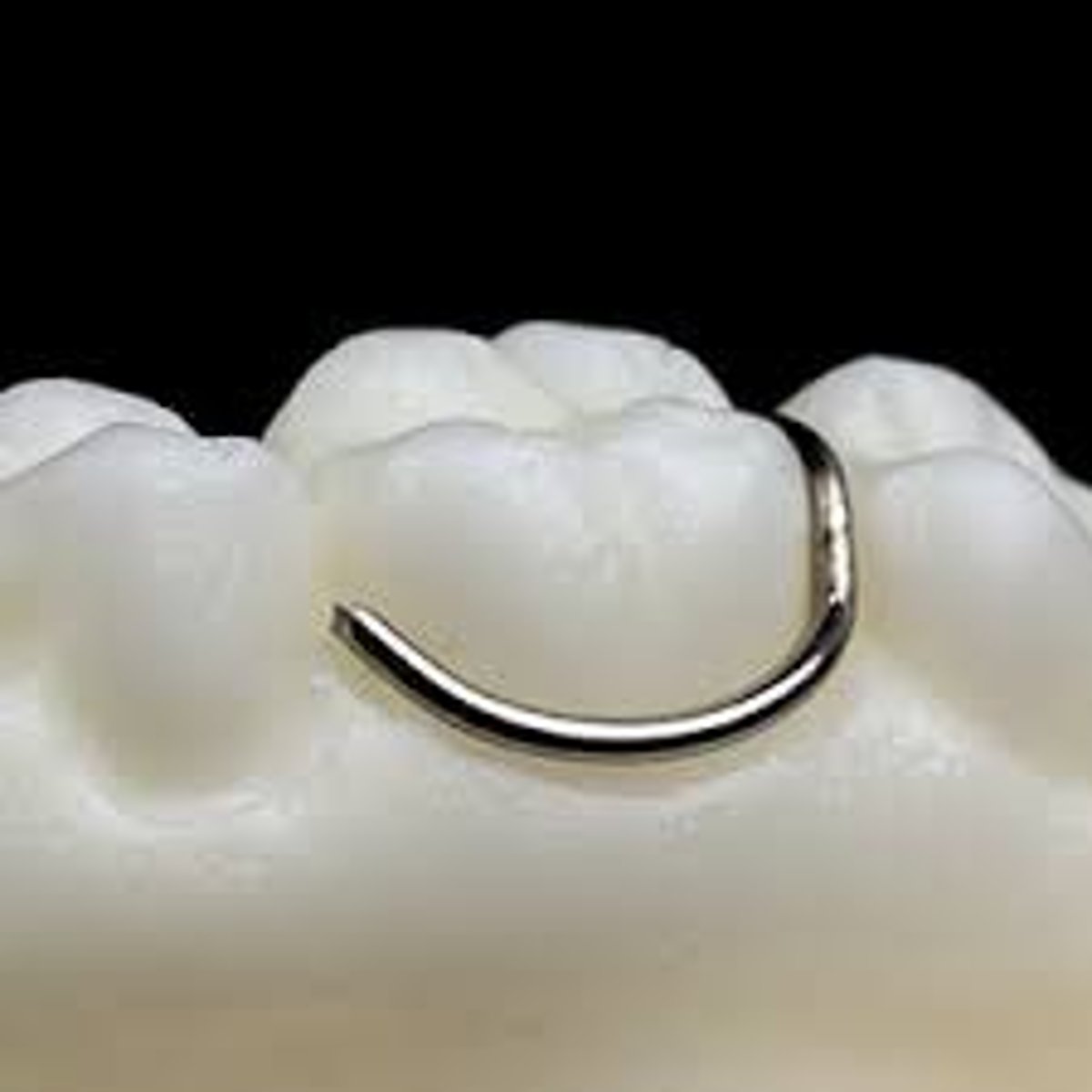
ID the component:
c-clasp
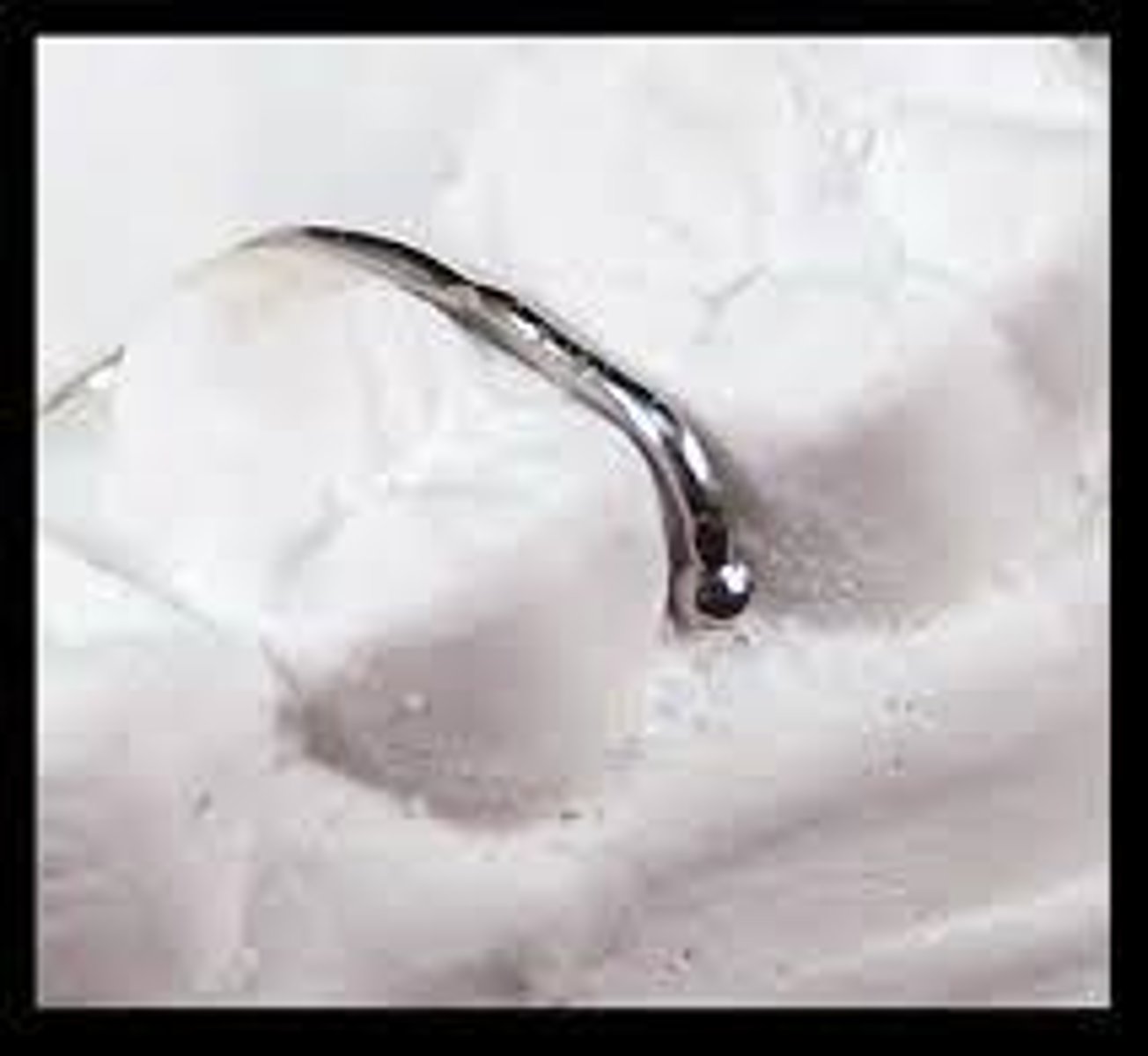
ID the component:
ball clasp
A labial bow has what actions?
Retentive and active
*gauge determines whether it is active or retentive
Springs and screws are what component of a removable appliance?
Active element
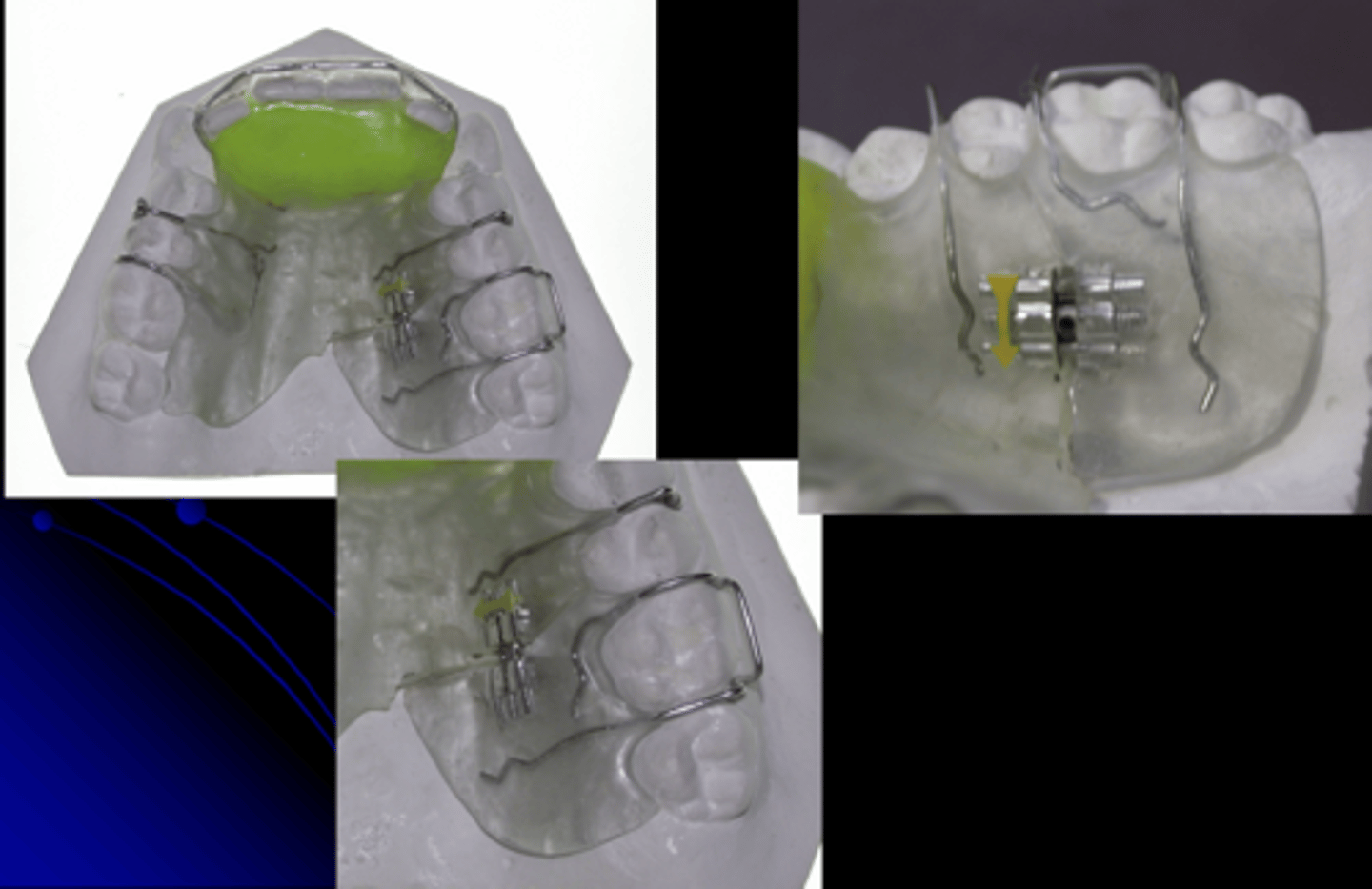
What type of removable appliance are the following?
Active elements
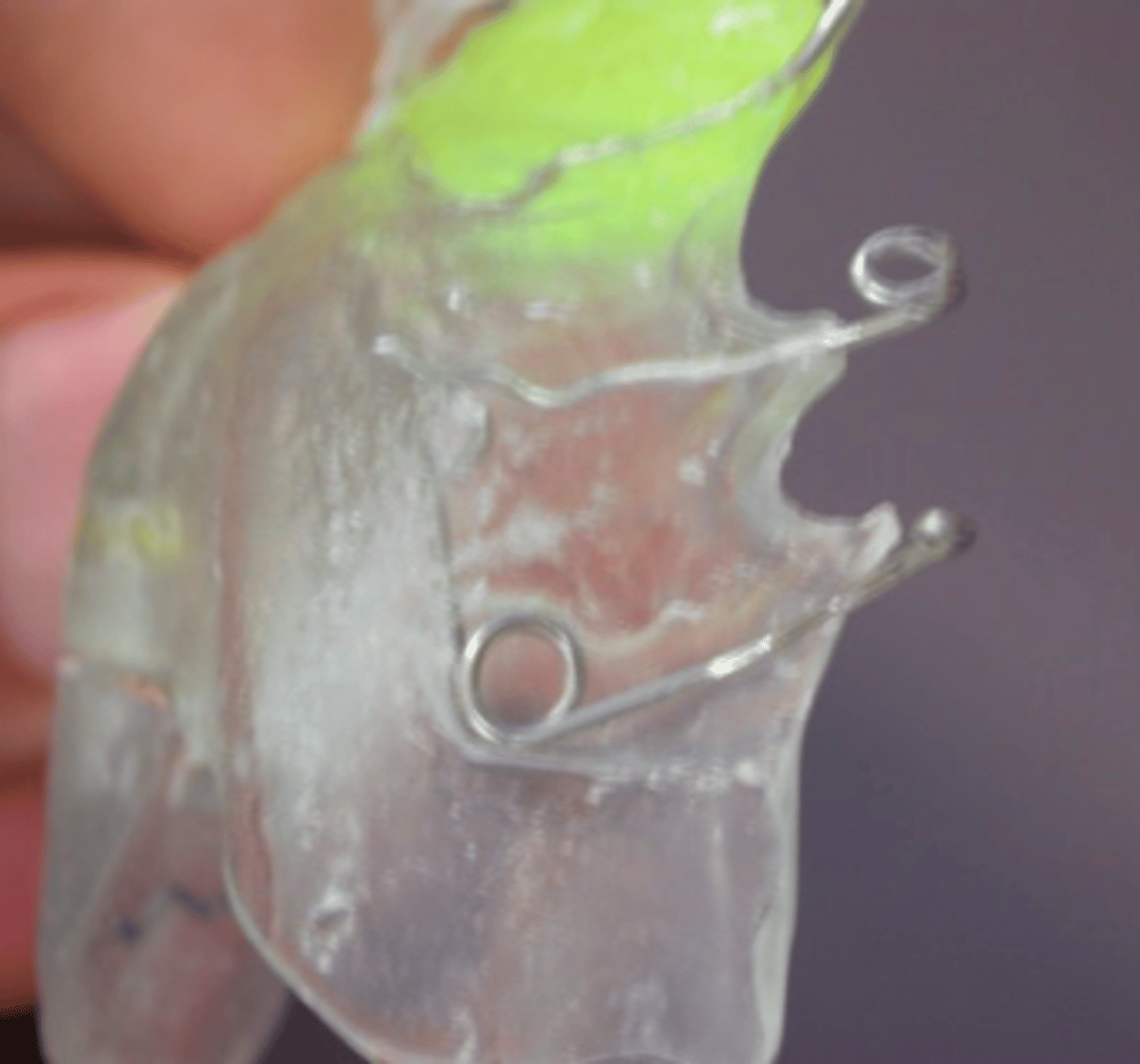
ID the component:
finger spring
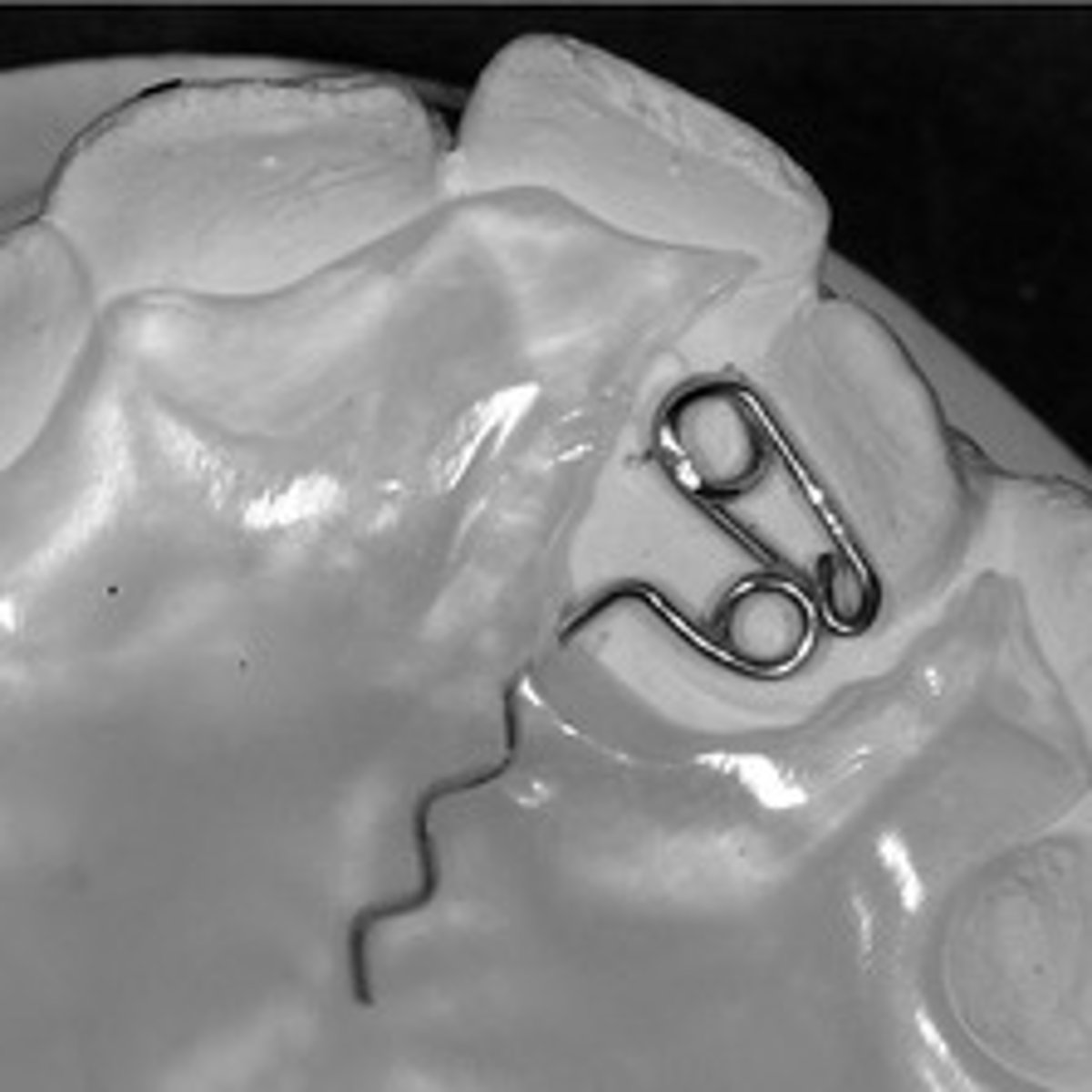
ID the component:
Z spring
Why are loops are added to wires?
To increase the range of activation
Which material is most commonly used to bond orthodontic brackets to enamel?
Light-cured composite resin (Ex: transbond XT)
What type of ortho bonding materials has the following characteristics?
Properties:
- Higher bond strength
- Greater wear resistance
- Lower solubility in saliva
- More brittle/stiffer (higher modulus of elasticity)
- No fluoride release
Why?
- Highly cross-linked resin matrix (e.g., Bis-GMA) with inorganic filler particles creates a strong, rigid material
Composite Resin
What type of ortho bonding materials has the following characteristics?
Properties:
- Lower bond strength
- More soluble in moisture
- Lower wear resistance
- Fluoride release and recharge capability
- Chemical bond to tooth structure
Why?
Acid-base reaction between fluoroaluminosilicate glass and polyacrylic acid forms the material, producing a less rigid structure but allowing fluoride release.
Glass Ionomer Cement (GIC)
What type of ortho bonding materials has the following characteristics?
Properties:
- Intermediate bond strength
- Fluoride release
- Better moisture tolerance than composite
- Improved physical properties compared with conventional GIC
Why?
- Combines traditional glass ionomer chemistry with a light-cured resin component.
Resin-Modified Glass Ionomer (RMGI)
What has the following characteristics?
- Resin matrix (plastic component, e.g., Bis-GMA or UDMA)
- Inorganic filler particles (glass, quartz, silica)
- Coupling agent (silane) that bonds the filler to the resin
- Initiator system for curing (light-cured or chemically cured)
Composite
Orthodontic composite resin adhesives polymerize primarily through what?
Free-radical addition polymerization
Which component of a light-cured composite initiates polymerization when exposed to blue light?
Camphorquinone
What are some cements used in ortho (4)
- Glass ionomers
- Zinc phosphate
- Resin
- Luting cement
What is the critical pH of enamel?
5.5
Where are white spot lesions typically found?
lateral incisors and molars
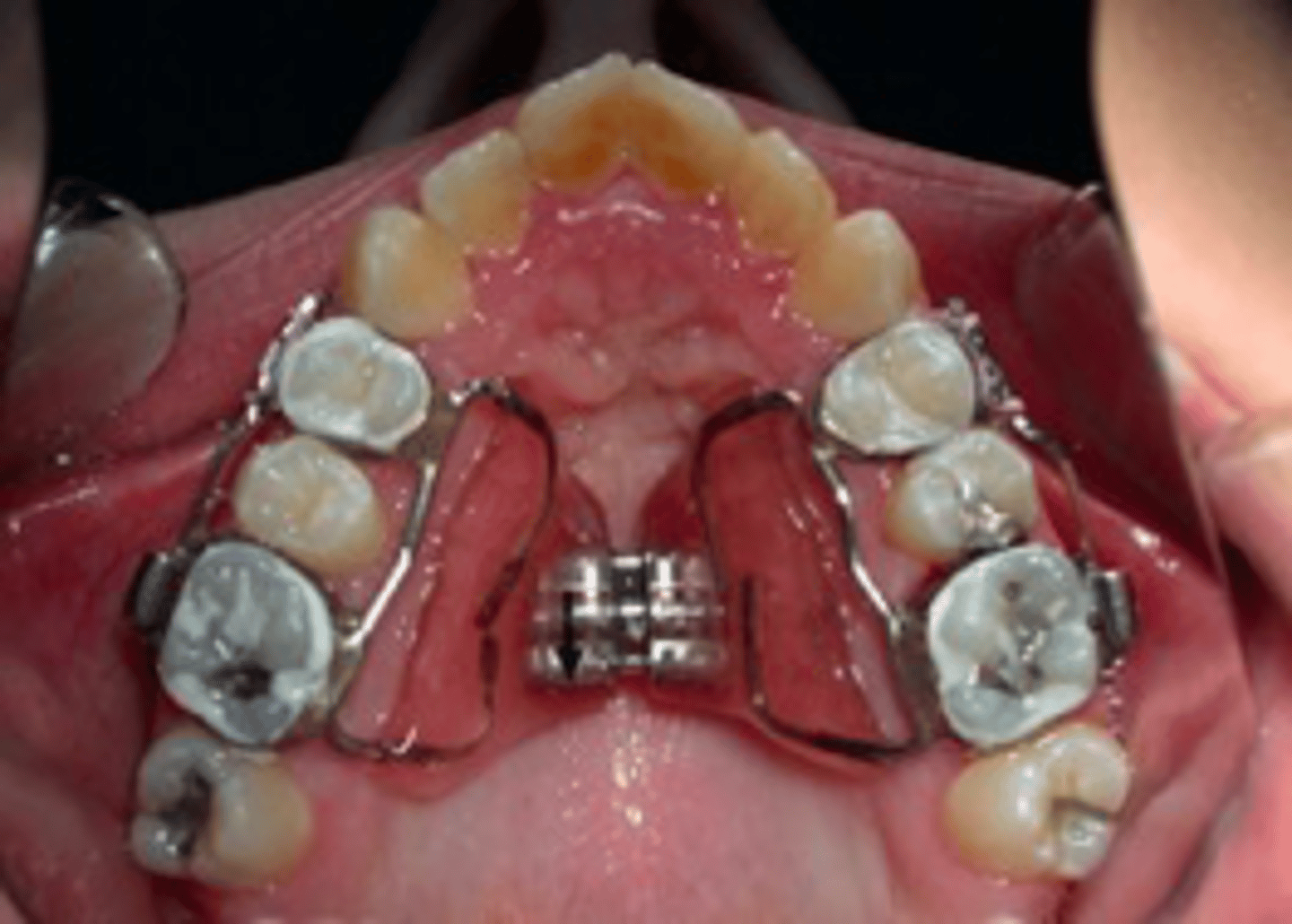
ID the appliance:
Haas Appliance
ID the appliance:
- Large bulky acrylic on palate
- Used to apply pressure against the palatal vault to expand the maxilla
Haas Appliance
What is the purpose of a Haas Appliance?
Maxillary expansion
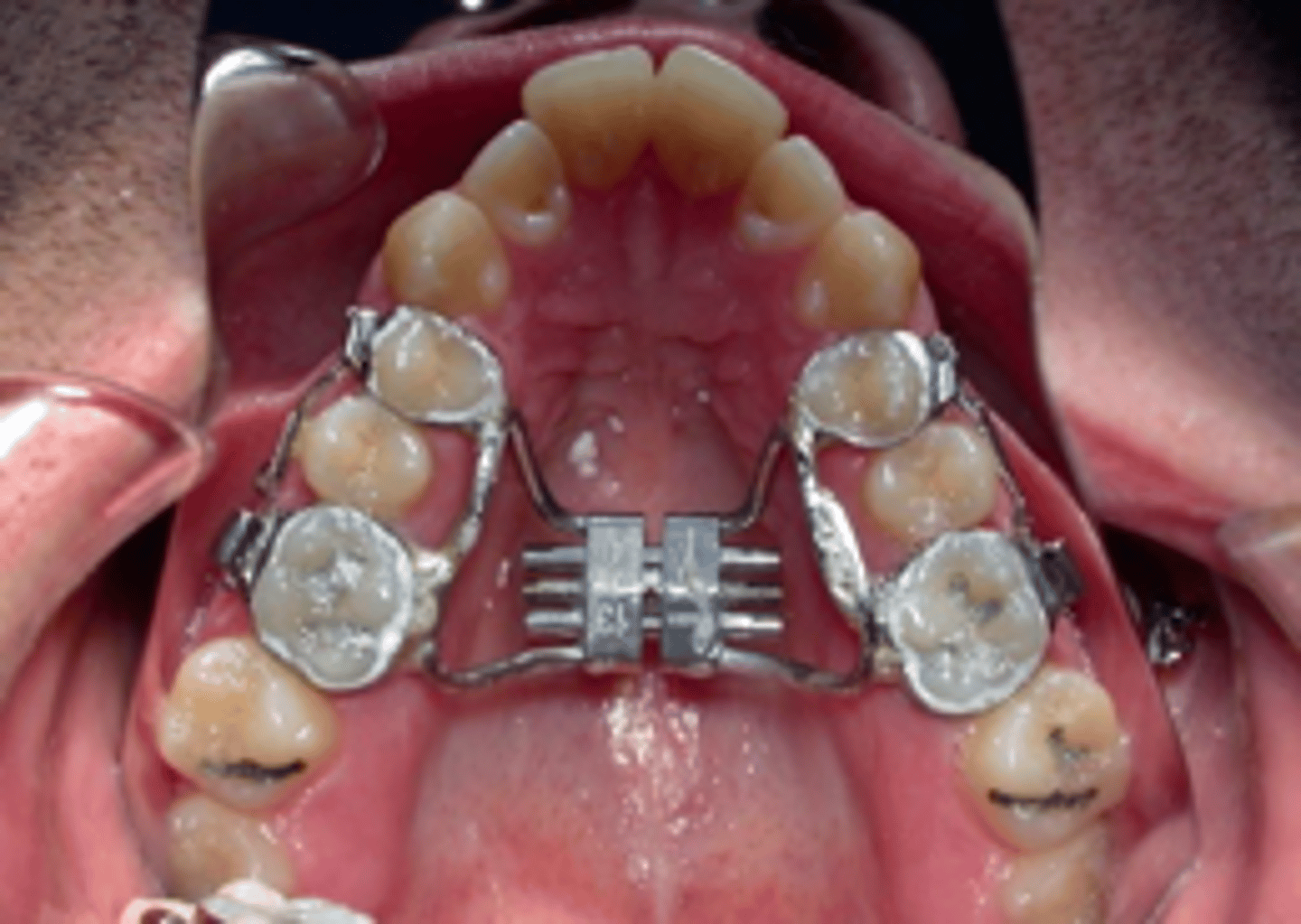
ID the appliance:
Hyrax Appliance
What is the purpose of a Hyrax Appliance?
Maxillary expansion
ID the appliance:
- More hygienic
- Child of Haas app
- Easier to brush and floss
- No acrylic on palate
- Used for maxillary expansion
Hyrax Appliance
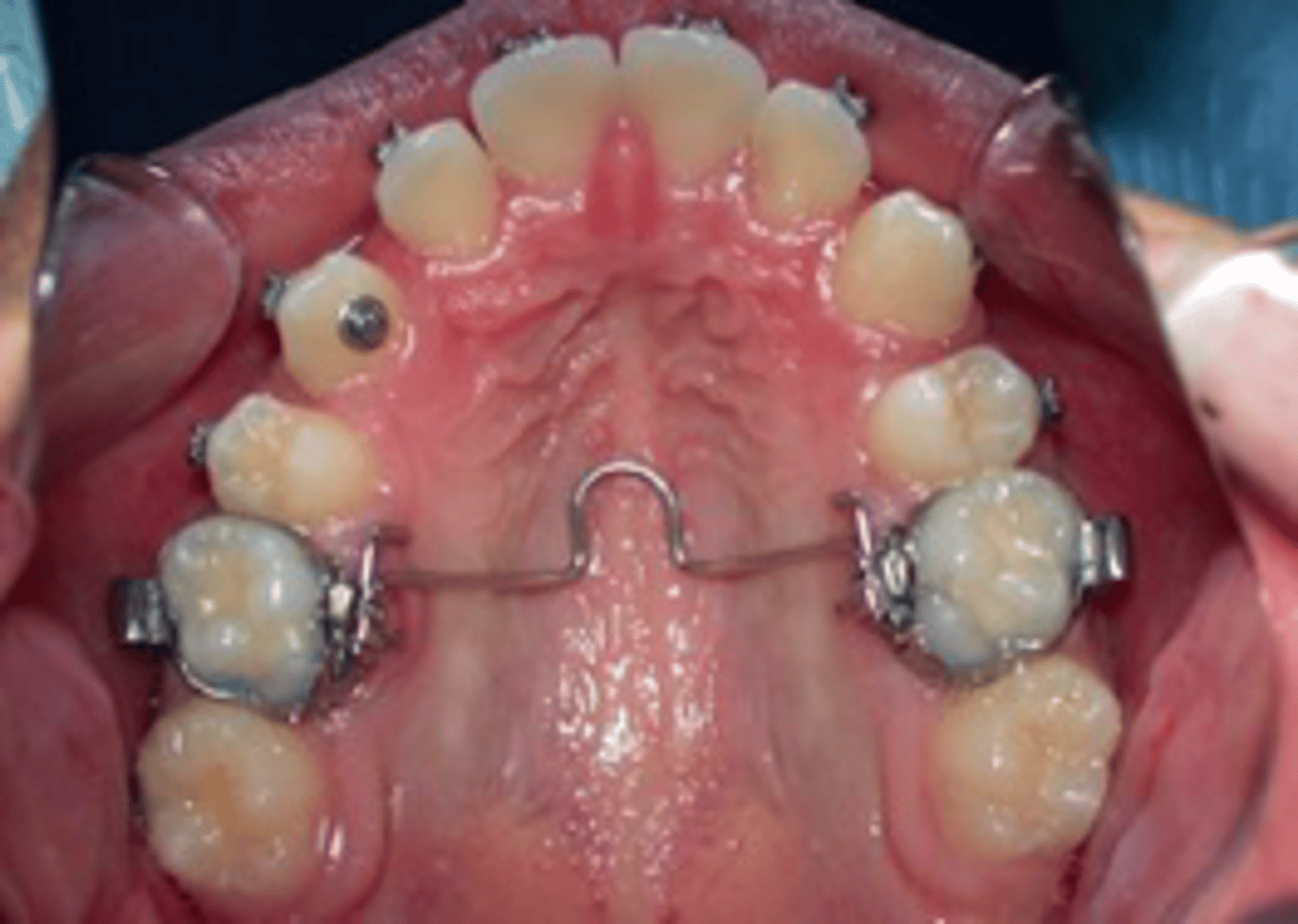
ID the appliance:
TPA (transpalatal arch) Appliance
ID the appliance:
- Has bar that crosses the palate
- Loops added to increase range of activation
- Used for maxillary expansion
TPA (transpalatal arch) Appliance
What is the purpose of a TPA (transpalatal arch) Appliance?
Maxillary expansion
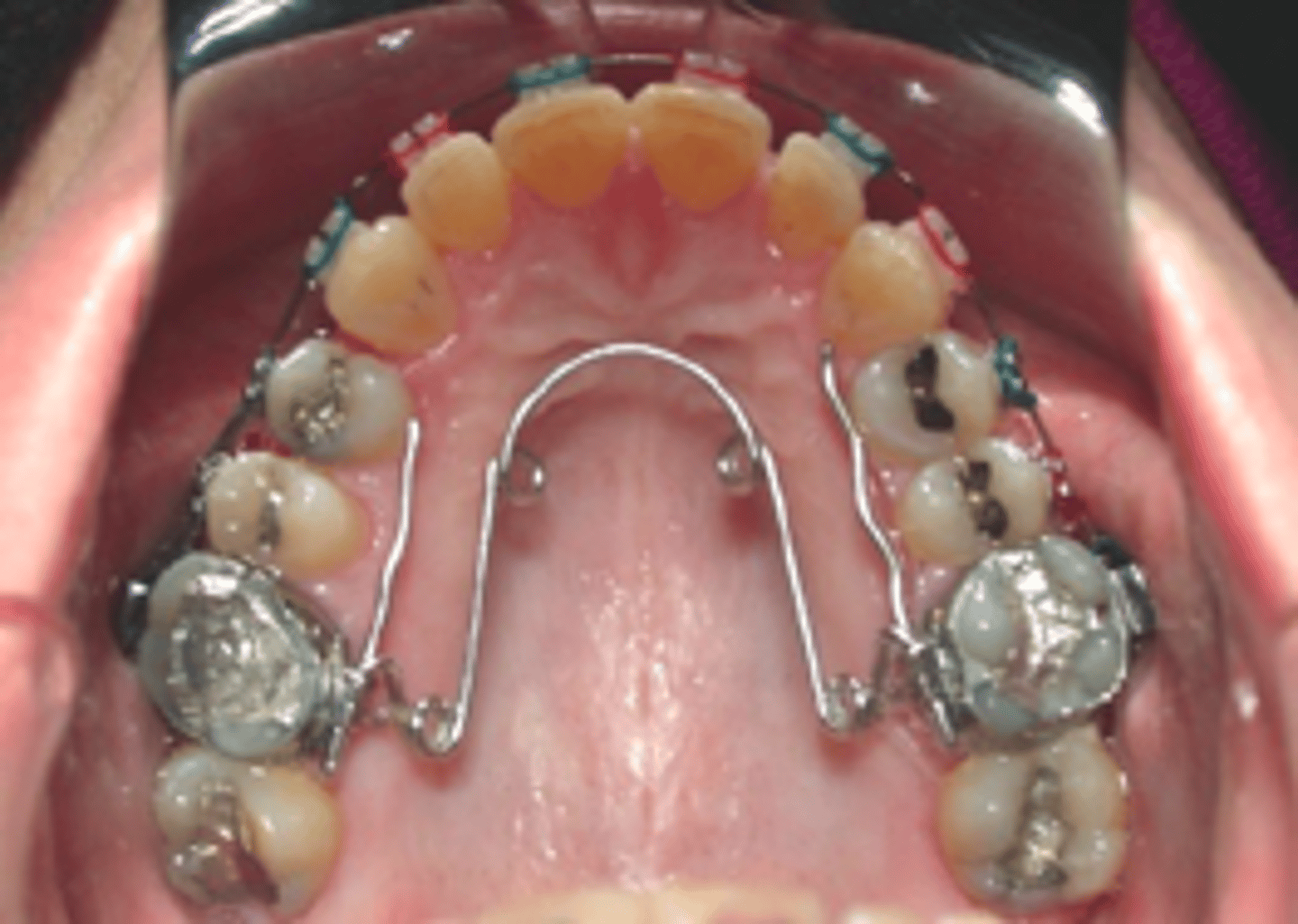
ID the appliance:
Quad Helix Appliance
What is the purpose of a Quad Helix Appliance:
Maxillary expansion
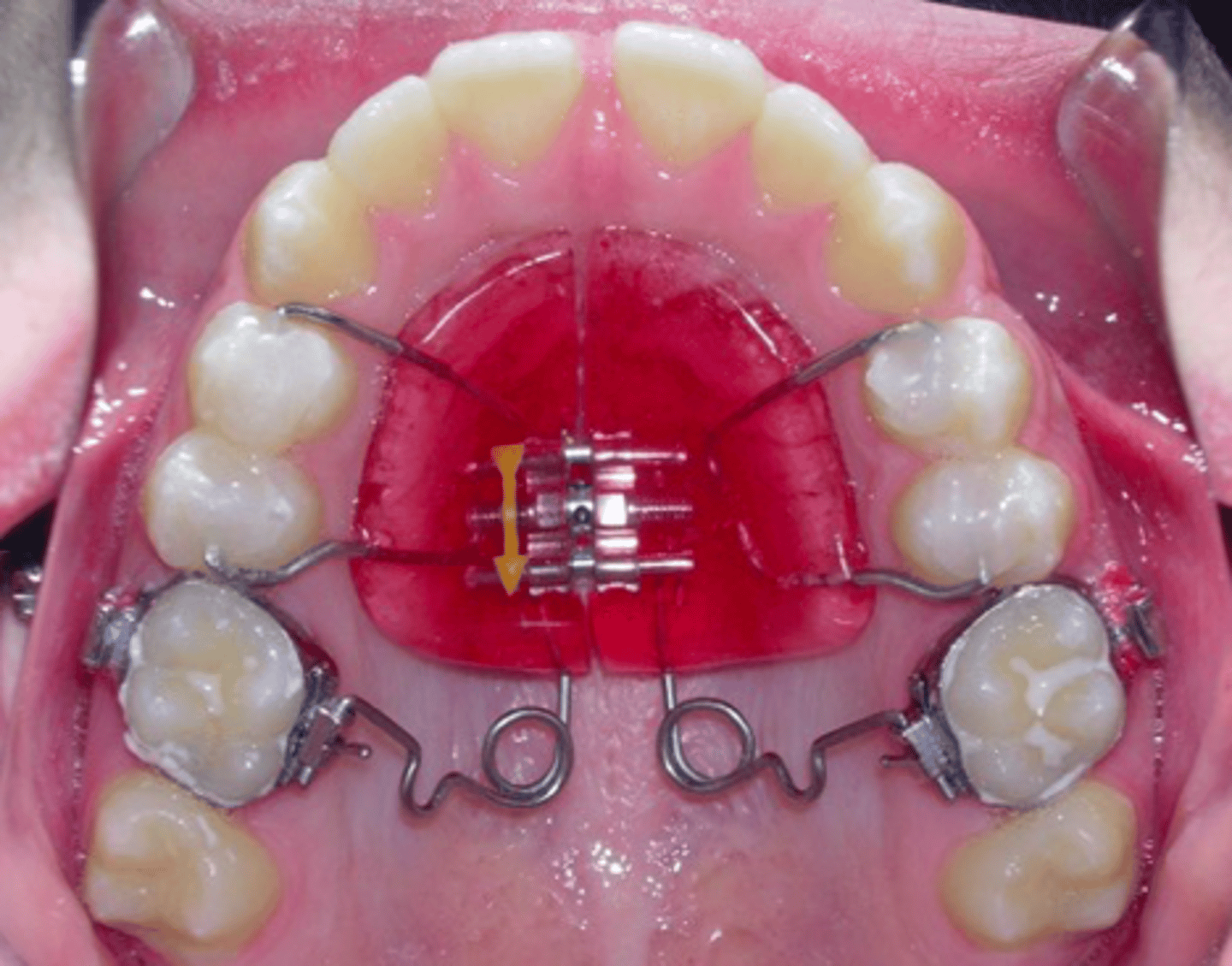
ID the appliance:
Pendex appliance
What is the purpose of a Pendex Appliance?
Molar distalization
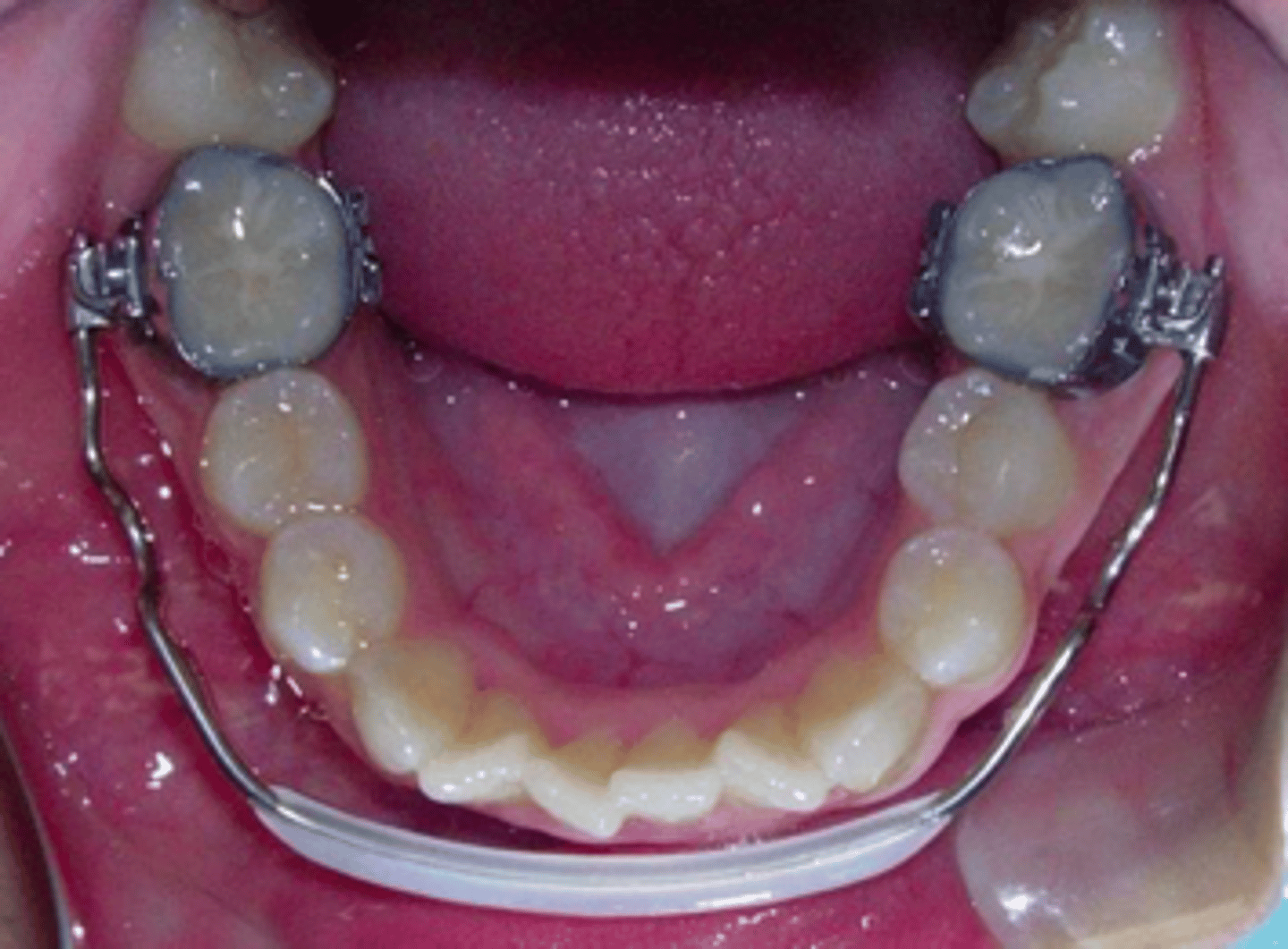
ID the appliance:
Lip Bumper
ID the appliance:
- Eliminated the muscular forces of the lips on the teeth
- Used for patients with lower lip trap
- Allows tongue to be the only force working on the teeth if the etiology of the crowding is pressure from the lip
- Cons: molar extrusion/distalization/tipping
Lip Bumper
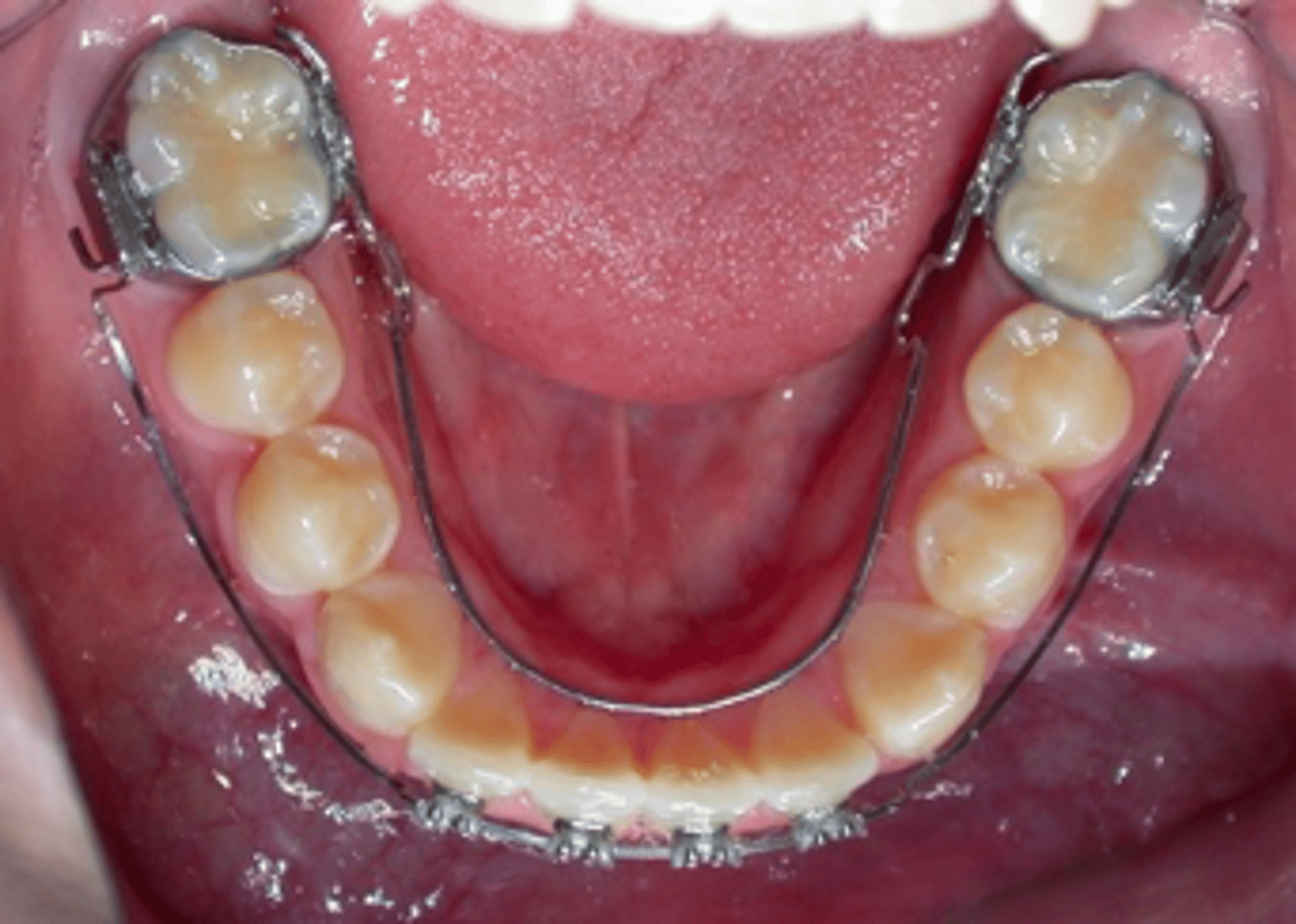
ID the appliance:
Lingual Arch
ID the appliance:
- Bilateral space maintainer for mandible
- Can be made active or passive
- Can regain/ open / maintain space
Lingual Arch
All of the following are advantages of using Fixed Appliances EXCEPT:
A) Compliance is not an issue
B) Controlled tooth movement
C) Less control
D) Extra-oral forces can be used simultaneously
C) GREATER control
All of the following are the limitations of using Fixed Appliances EXCEPT:
A) Oral hygiene complicated to maintain
B) Inexpensive
C) Esthetically not acceptable to some
D) Longer chair-side time
E) In case of emergency patient cannot remove
F) Specialist training required
B - EXPENSIVE
All of the following are components of what?
- Orthodontic Bands
- Orthodontic Brackets
- Arch wires
- Auxiliaries (elastics, springs, hooks)
Contemporary fixed appliances
What has the following characteristics?
- Fabricated from Stainless Steel
- Attachments are welded
- Cemented onto teeth
Orthodontic bands
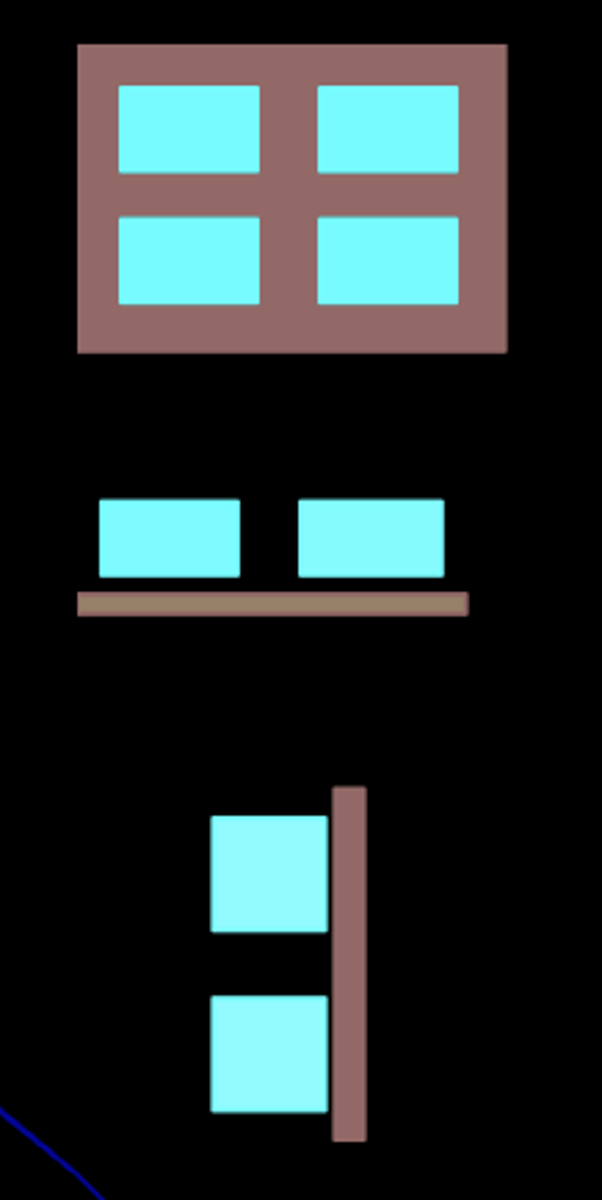
ID the bracket configuration:
Standard edgewise twin bracket

ID the bracket configuration:
Preadjusted twin brackets
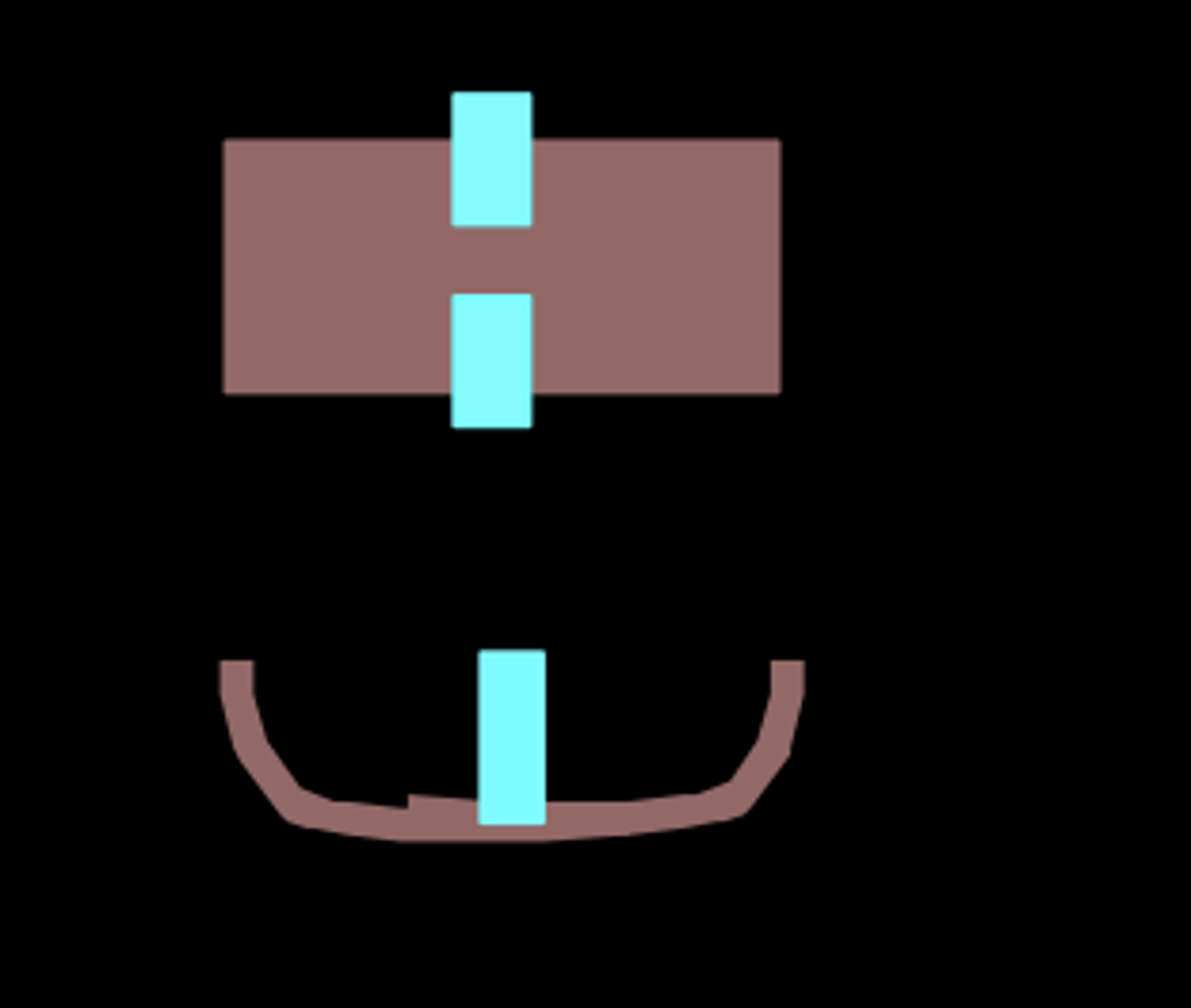
ID the bracket configuration:
Lewis rotation
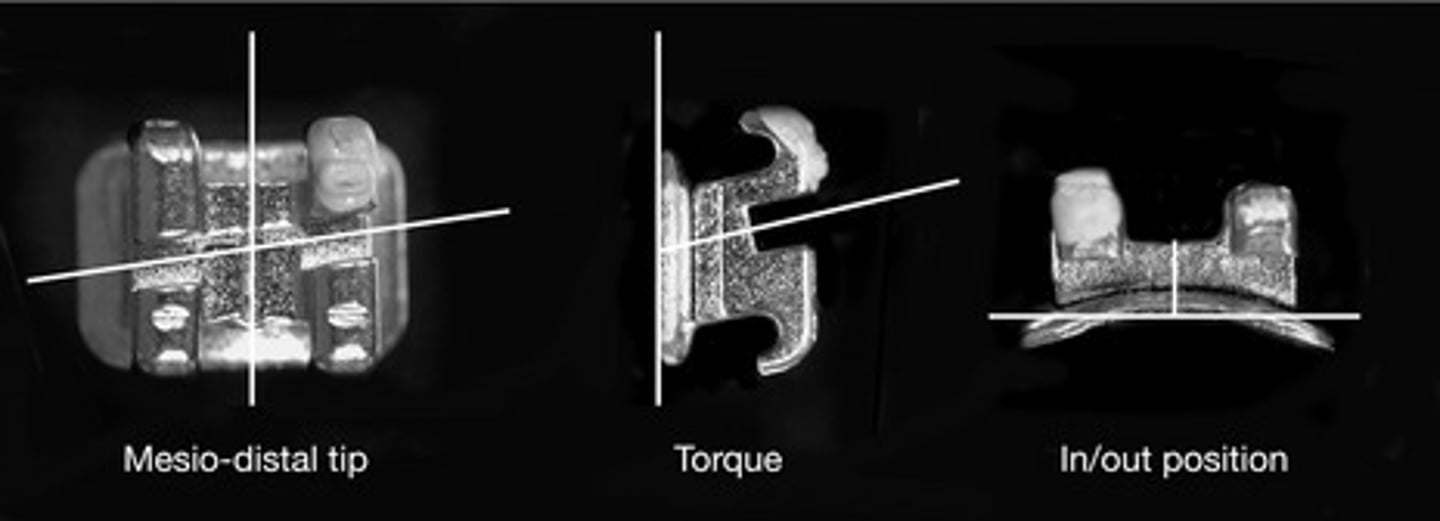
ID the component:
Preadjusted twin brackets
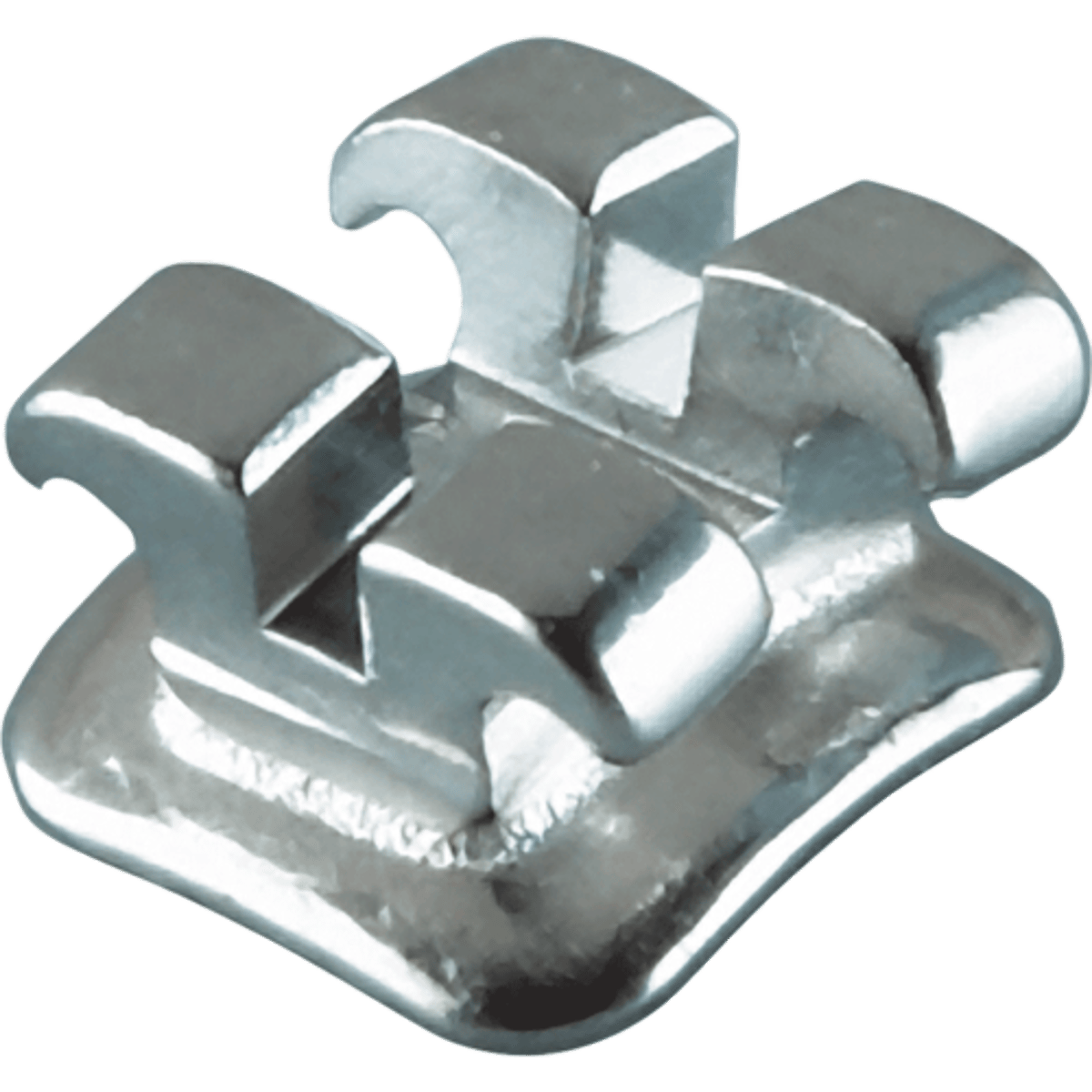
ID the component:
Standard edgewise twin bracket
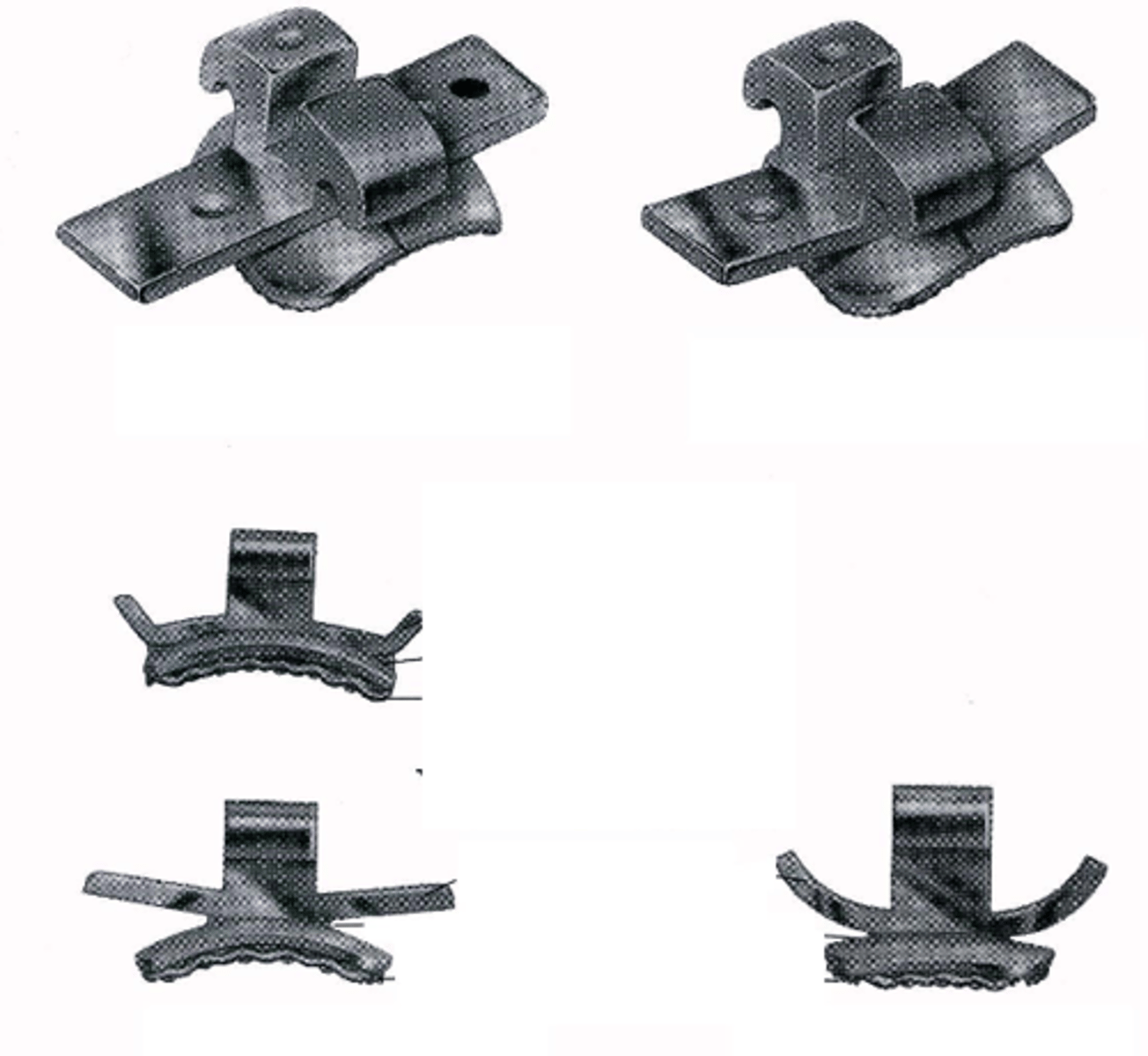
ID the component:
Lewis/Lang/ Wick brackets
______ are the means to move teeth
Wires
Wires are most commonly made of what 4 materials?
- Stainless steel
- Cobalt-chromium
- Nickel- titanium
- Beta- titanium
Wires usually have what 3 cross section designs:
- Round
- Square
- Rectangle
What metals are found in stainless steel?
- Iron
- Carbon
- Chromium
- Nickel
Which of the following is NOT a component of stainless steel?
A) Iron
B) Carbon
C) Chromium
D) Titanium
E) Nickel
D) Titanium
How does chromium make stainless steel stainless?
binds to O2 preventing iron from being oxidized
What element of stainless steel makes the metal stainless?
Chromium
What element of stainless steel makes the metal workable/flexible?
Nickel
What 2 elements make up steel?
- Iron
- Carbon
What is the make up for the most common composition for stainless steel wires used in orthodontics?
- 18% chromium
- 8% nickel
ID the metal:
- Limited memory
- Distorts easily
- Requires shaping and heat treatment to remove stress/ strain
Stainless steel
ID the metal:
- Developed by NASA for space application
- Newer ones have shape memory and super-elasticity
- Worse for pts w/ nickel allergy
Nickel-titanium
What is the percentage makeup for Nickel-titanium:
- 55% Ni
- 45% Ti
What wire bends are made in horizontal direction and influence the labiolingual/ bucco-lingual movement of teeth?
-"ins and outs"
1st order bends
What wire bends create changes in the axial/vertical inclination of teeth (mesial/ distal tipping, extrusion/ intrusion)?
2nd order bends
What wire bends are used for root movements (labial movement of root) by creating twist or torsion in the wire?
3rd order bends
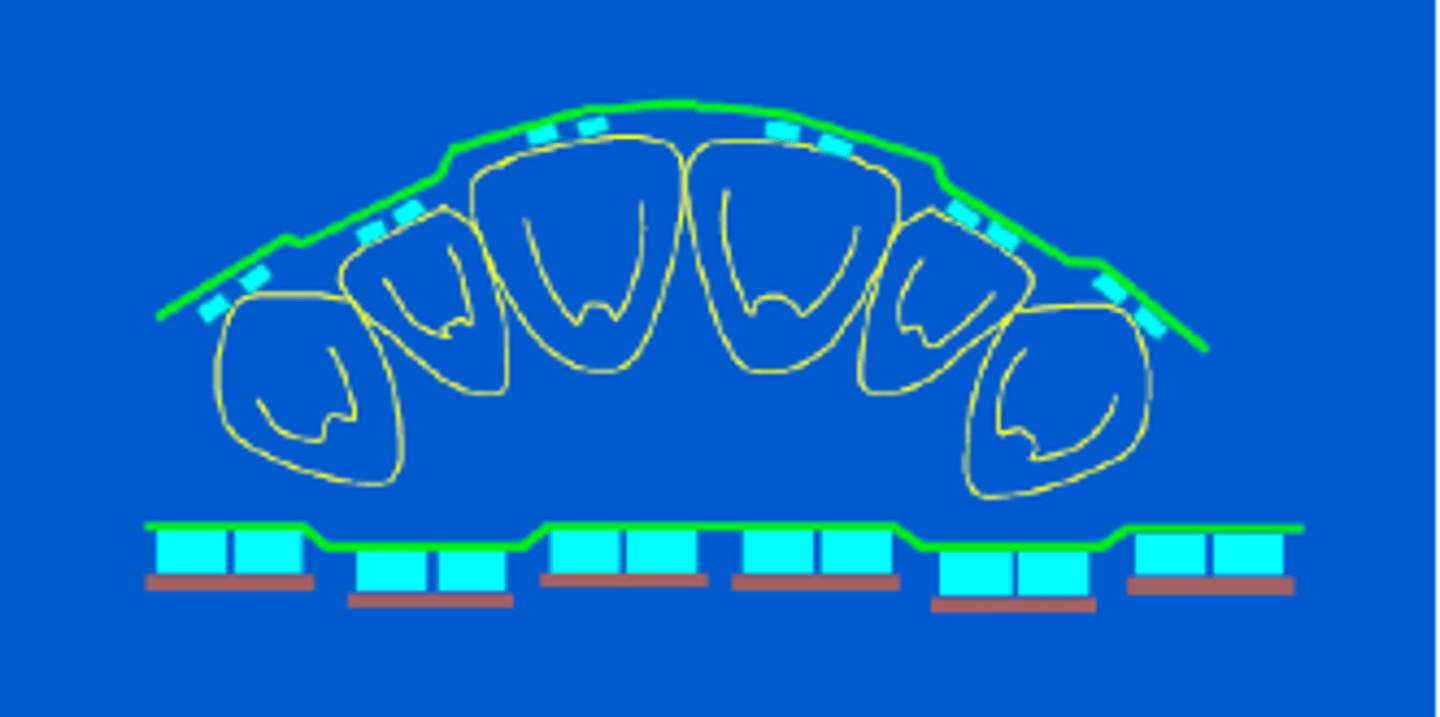
ID the bend order:
1st order bends
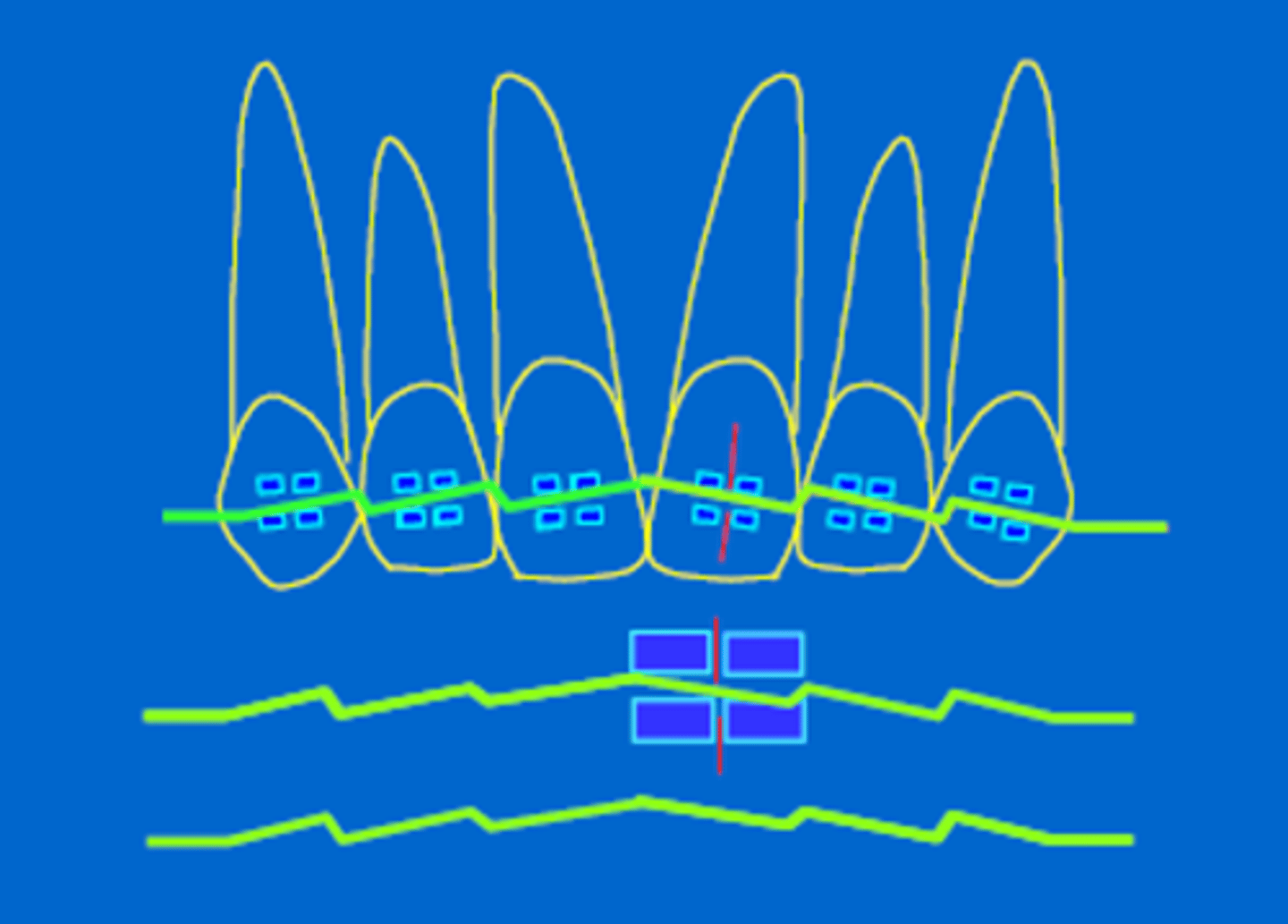
ID the bend order:
2nd order bends
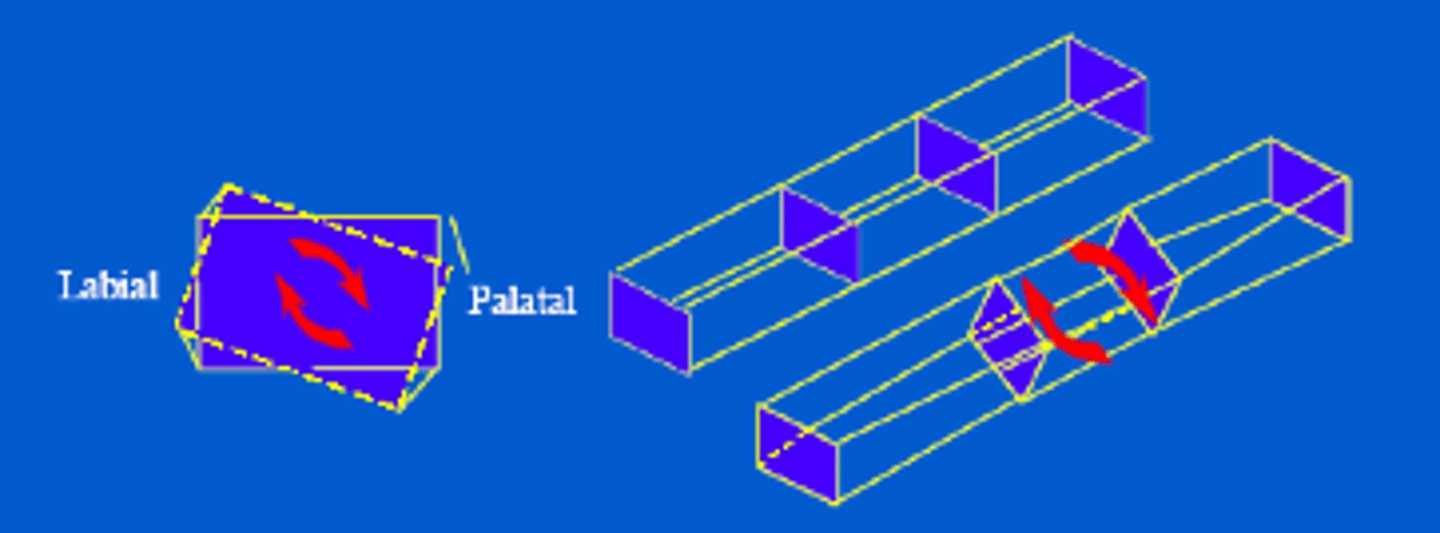
ID the bend order:
3rd order bends
Which of the following are uses for elastics:
a. En masse tooth movement
b. Individual tooth movement
c. Correction of cross bites
d. Close open bites
e. Tie arch wires (elastic modules)
ALL CHOICES
Which elastics classes are intra arch?
Class I Elastics
Which elastics classes are inter arch?
Class II & III Elastics
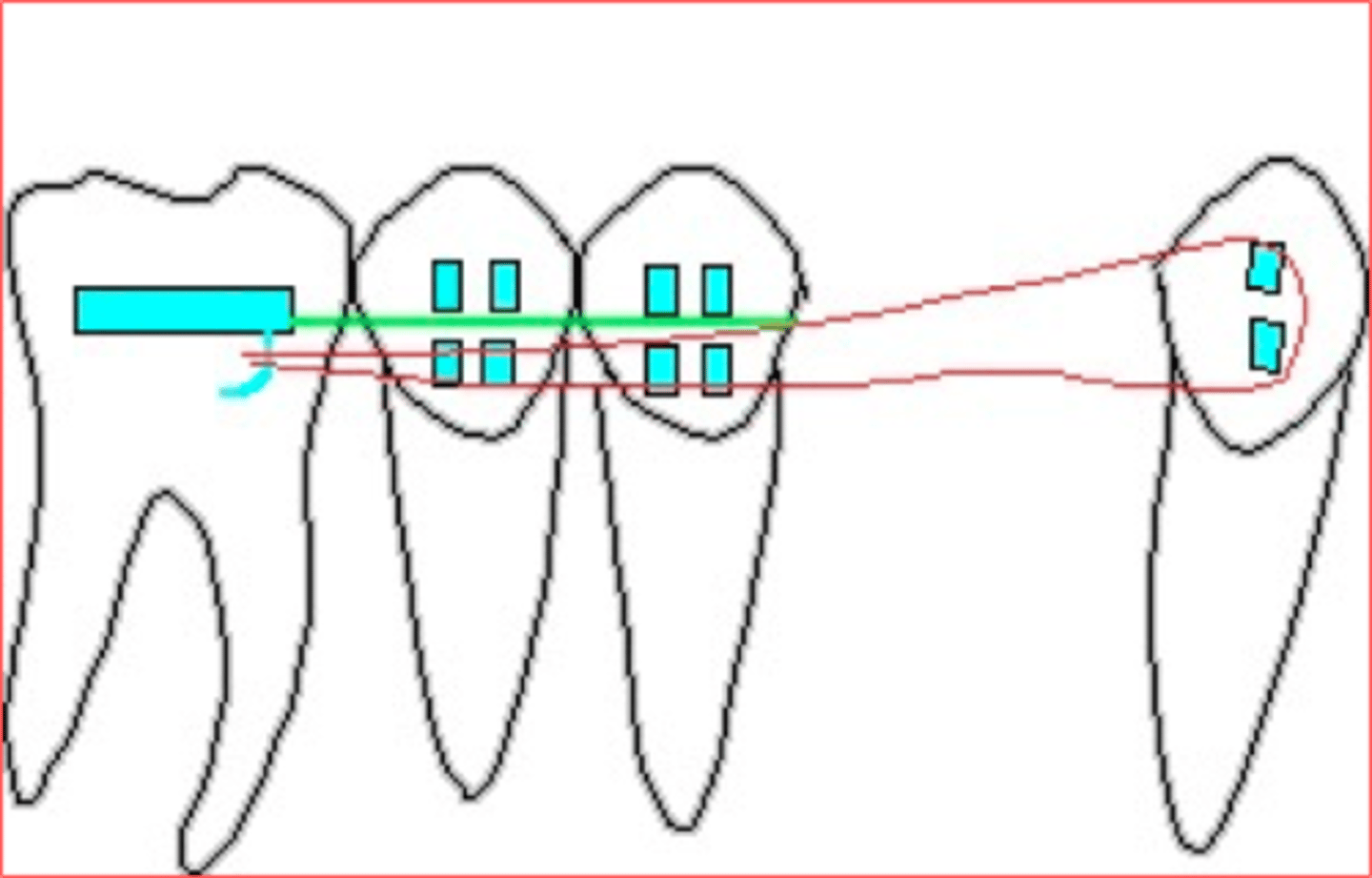
ID the elastics class:
Class I Elastics
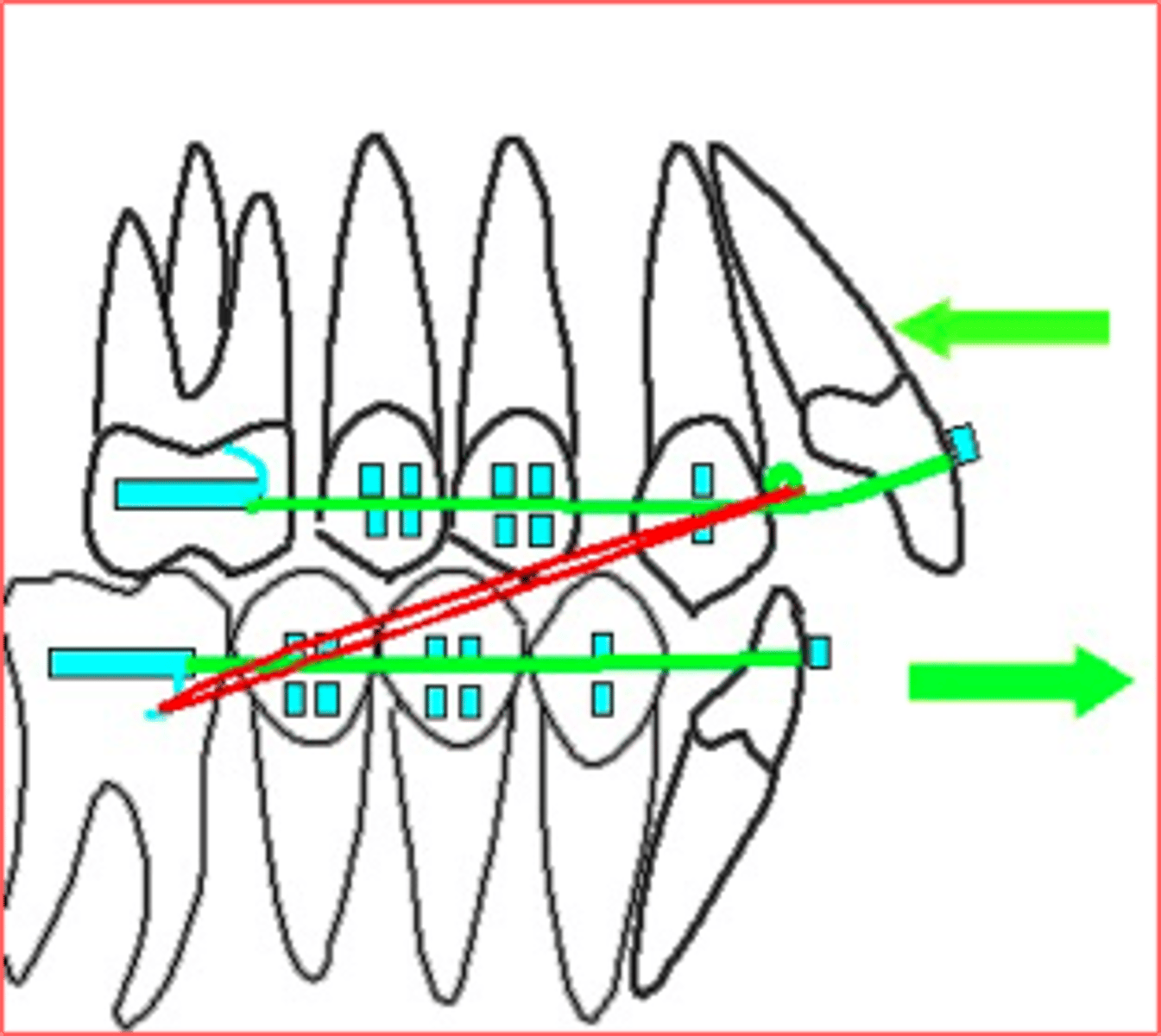
ID the elastics class:
Class II Elastics
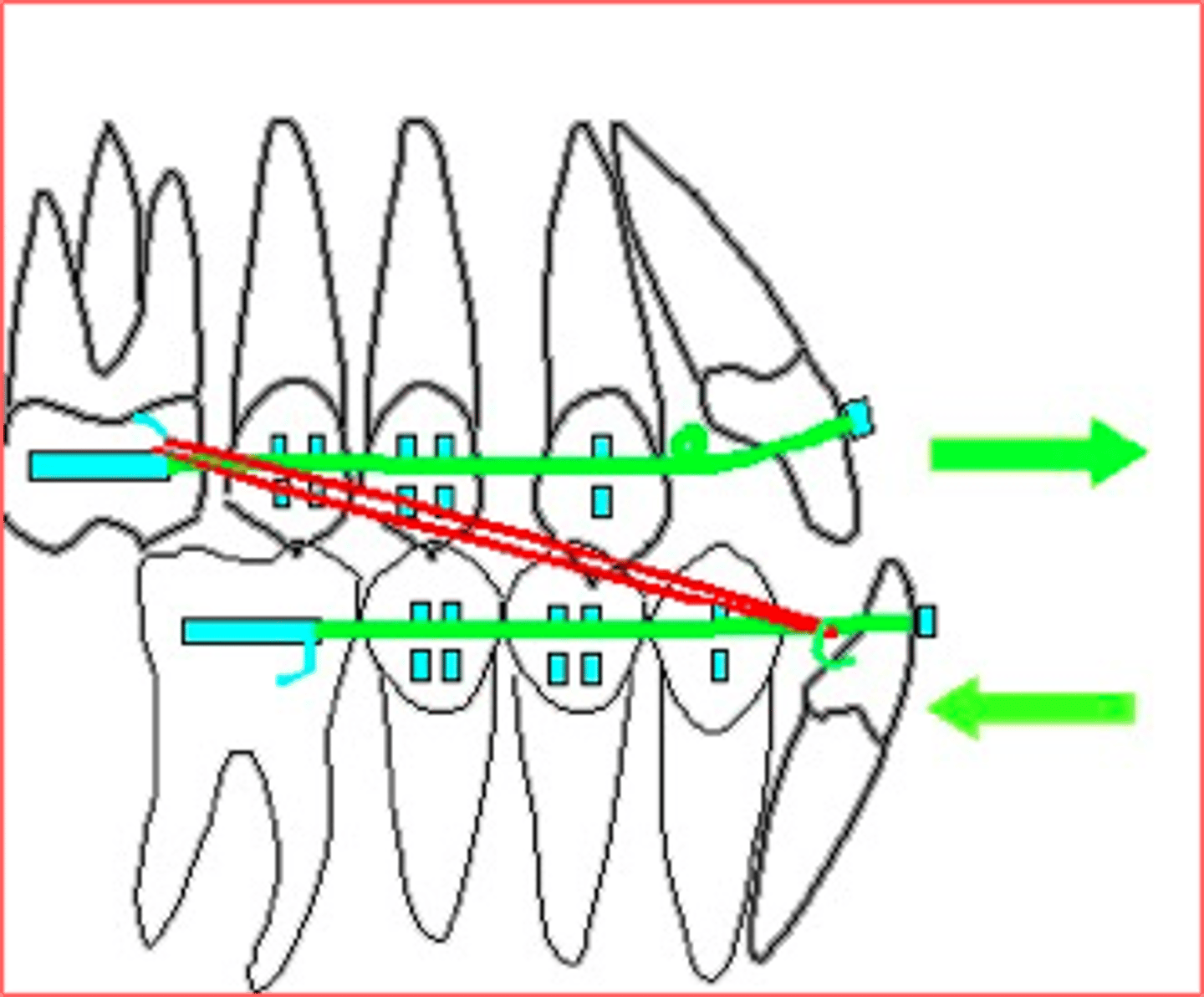
ID the elastics class:
Class III Elastics
ID the elastics class:
- Connects two teeth in the same arch
Class I Elastics
ID the elastics class:
- Connects maxillary teeth that are more anterior to mandibular teeth that are more posterior
Class II Elastics
ID the elastics class:
- Connects mandibular teeth that are more anterior to maxillary teeth that are more posterior
Class III Elastics