L06 Serotonin
 Call Kai
 Learn
Learn Practice Test
 Spaced Repetition
 Match
Match Flashcards
 Knowt Play
1/53

There's no tags or description
Looks like no tags are added yet.
Name | Mastery | Learn | Test | Matching | Spaced | Call with Kai | Chat |
|---|
No analytics yet
Send a link to your students to track their progress
54 Terms

Serotonin
Serotonin (or 5-hydroxytryptamine/5-HT) is a monoamine neurotransmitter (along w/DA + NA)
Like DA: well-known but misunderstood
things that act on monoamine will act on 5HT
monoamine but NOT catecholamine
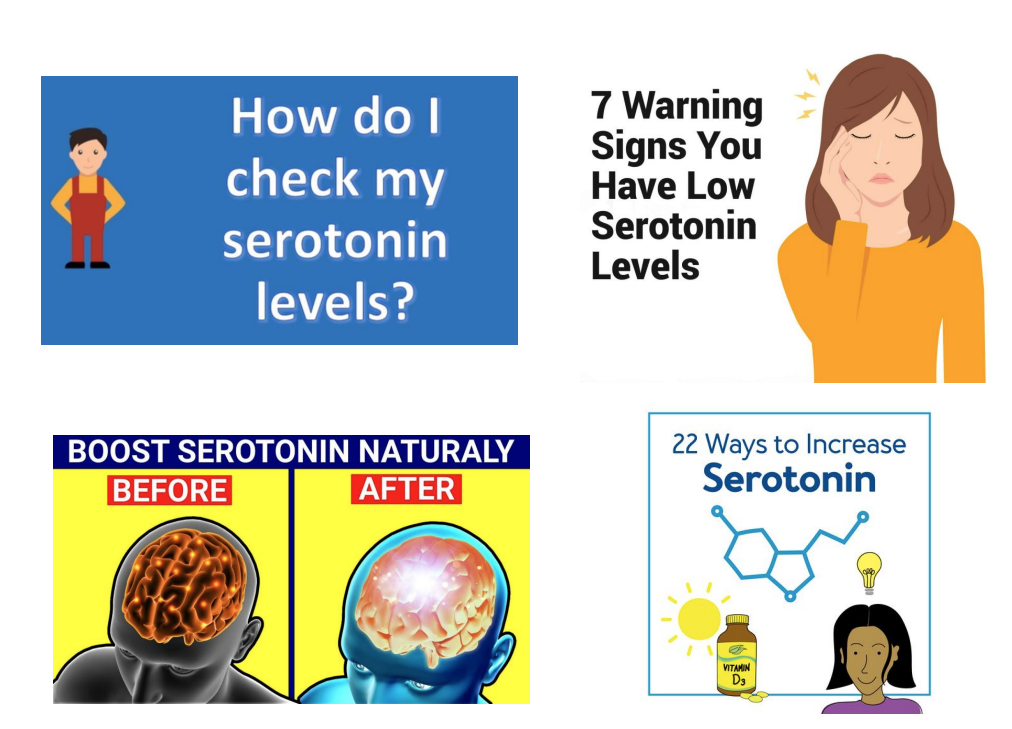
overstates levels of interventions to affect 5-HT
The reality
5-HT’s role in affect is complex, not unidirectional
Any disruption could be “bad”
Besides affect, 5-HT mediates other functions
social behavior (aggression), arousal, cognition and eating
Many disorders might involve imbalances in 5-HT
Depression, autism spectrum disorder and more
5-HT may contribute to depression but is not sole cause
plays a broader role in social behaviour etc., not just mood
plays a role in aversive processing specifically in text
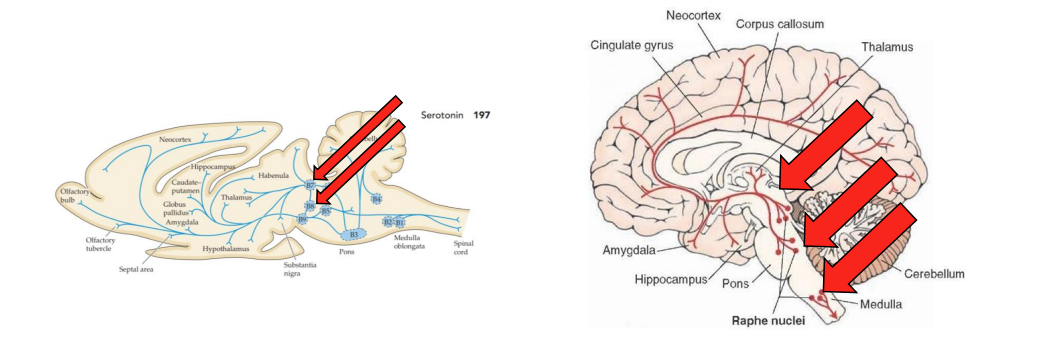
Serotonergic neurons
CNS: most are in the raphe nuclei (dorsal, median)
Most 5-HT is in the gut (~90%) rather than the brain
brain stem packed with clusters of neurons that project thru rest of brain
drugs can affect serotonergic transmission elsewhere (e.g., gut) since it is also present in the gut
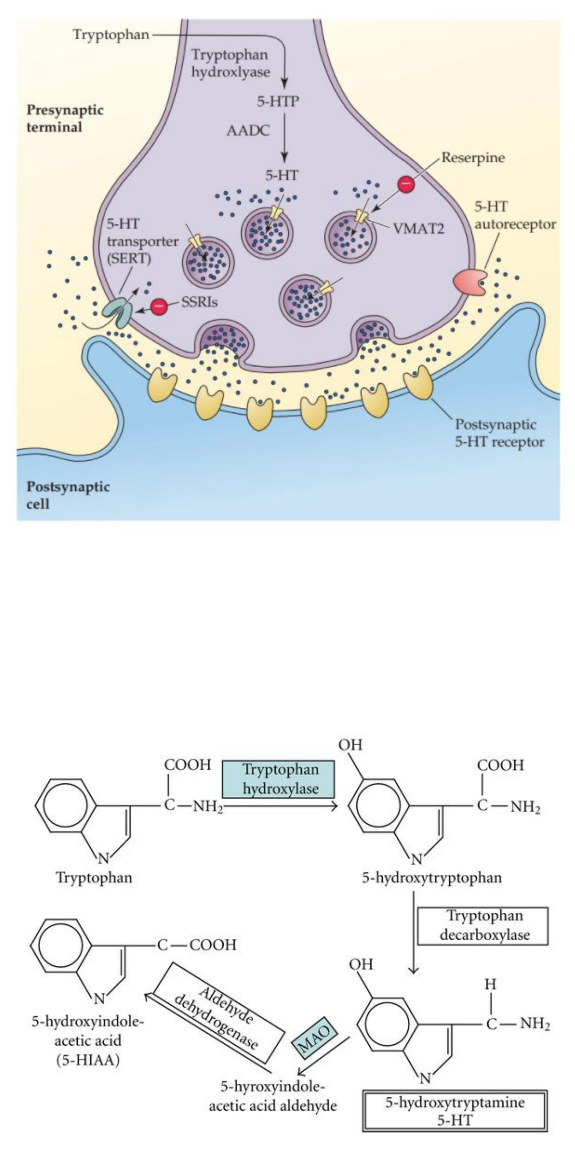
Serotonergic neurons
Synthesis (from precursor, via enzymes)
Vesicular storage (VMAT2)
Metabolism (MAO)
Transport (SERT)
Receptors and autoreceptors
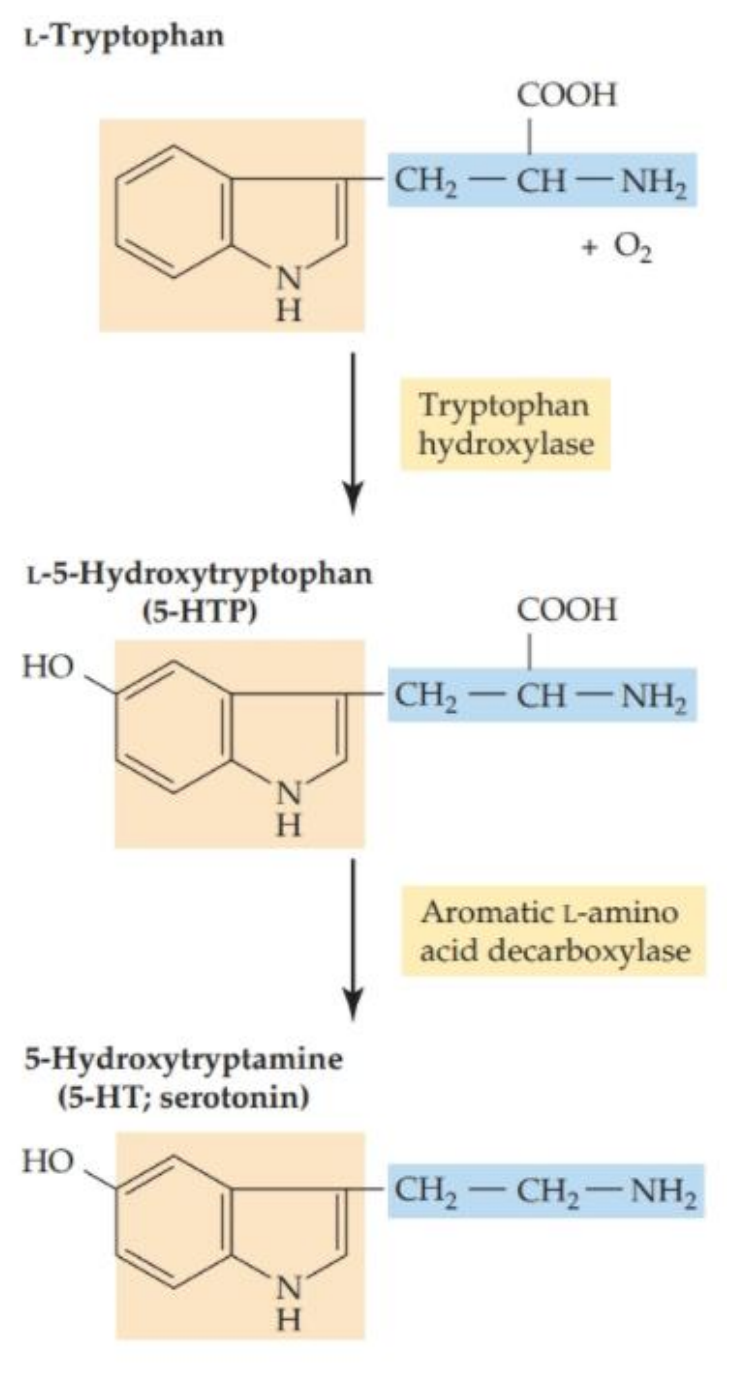
Serotonin synthesis
Precursor is tryptophan
Acquired via diet, variation may affect 5HT levels
Two key enzymes:
tryptophan hydroxylase (TPH2 in neurons), rate-limiting
aromatic L-amino acid decarboxylase (AADC)
Higher 5-HT synthesis in males is suspected
tryptophan usually obtained from diet (so differences in diet may lead to differences in 5-HT; but more tryptophan doesn’t exactly lead to more 5-HT)
>1 synthesis enzyme; but there is a rate-limiting enzyme (TPH2)
Tryptophan intake and diet
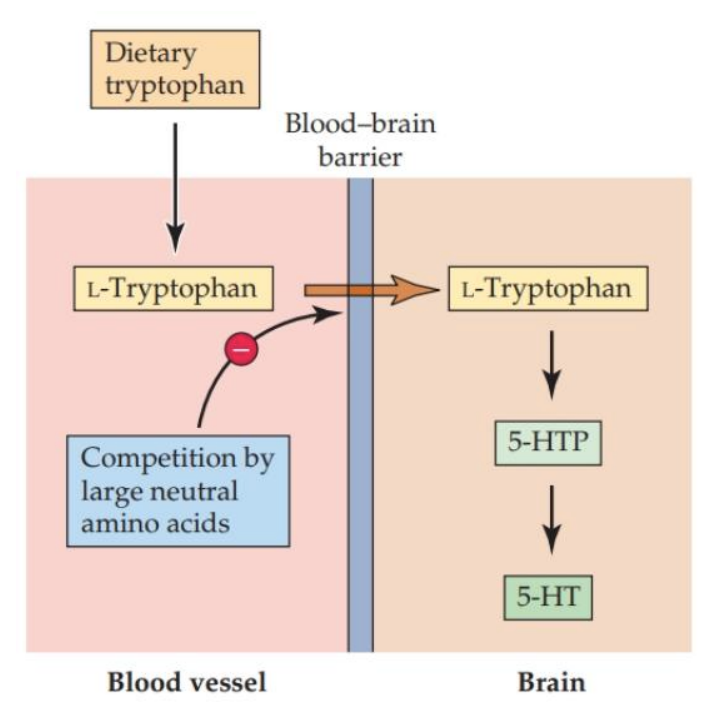
Ratio of amino acids affects tryptophan entry
High protein, low carb diets reduce entry + 5-HT (trp depletion diet)
Low protein, high carb diets increase entry + 5-HT (trp loading diet)
enters CNS but is competitive with large AAs
diet w lots of large neutral AA, Trp doesn’t get in, therefore low synthesis
change diet > AA > Trp entry
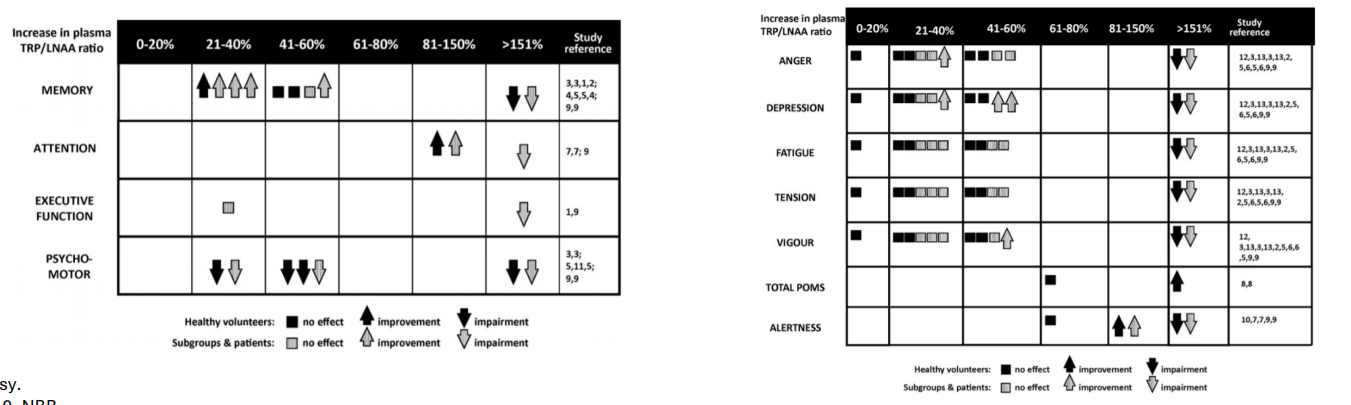
Effects of depletion and loading
Variable effects depending upon subject and protocol
With Trp depletion, vulnerable individuals might relapse into depression (healthy unaffected)
some capacities improved/impaired w diff levels of TRP/LNAA ratios (away from average)
5-HT metabolism
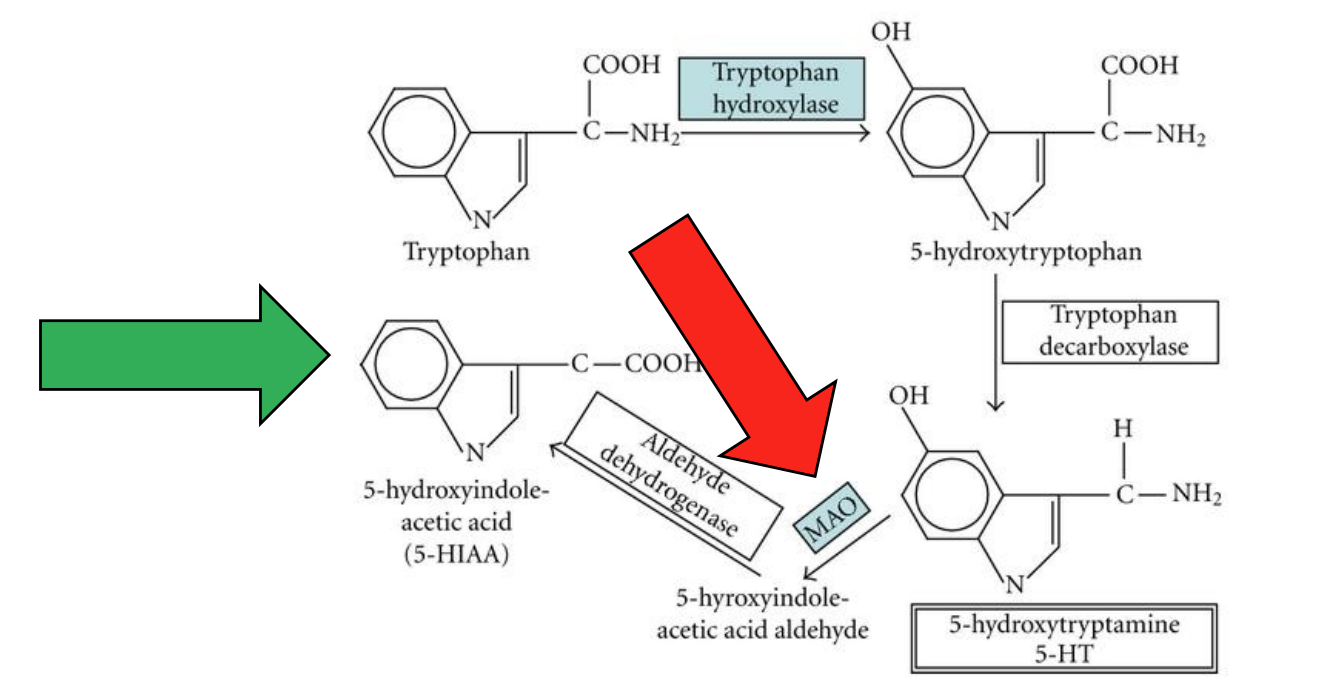
Metabolized by monoamine oxidase (MAO), final product is 5- hydroxyindoleacetic acid (5-HIAA)
MAO inhibitors are also used to treat depression
5-HIAA used as a surrogate measure of 5-HT
monoamine inhibitors may cause anti-depression effects
5-HIAA is a metabolite measured as index of overall serotonergic function (often this case)
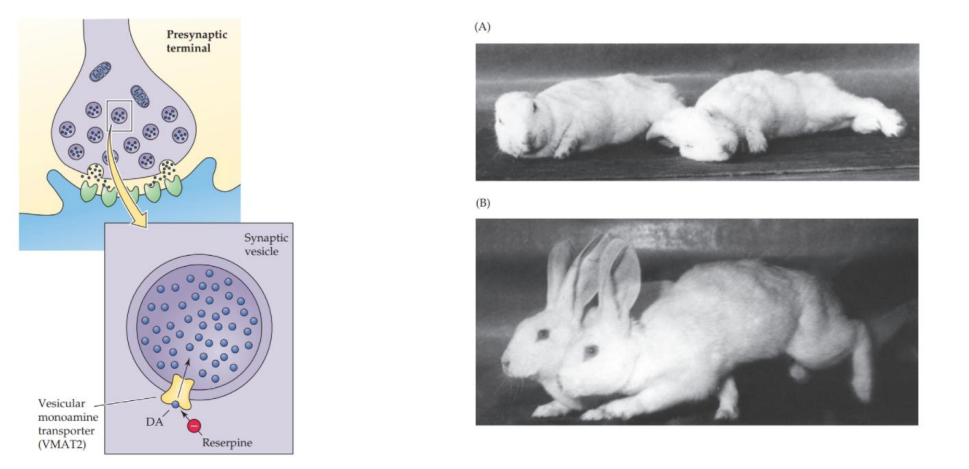
Vesicular storage
5-HT is transported into vesicles via vesicular monoamine transporter 2 (VMAT2)
Reserpine (L04 – L06) inhibits VMAT2, preventing 5-HT release*
Produces sedation + depression-like behavior
we can affect the ability of NT to move into vesicles
5-HT Transport
Occurs via the 5-HT transporter (SERT)
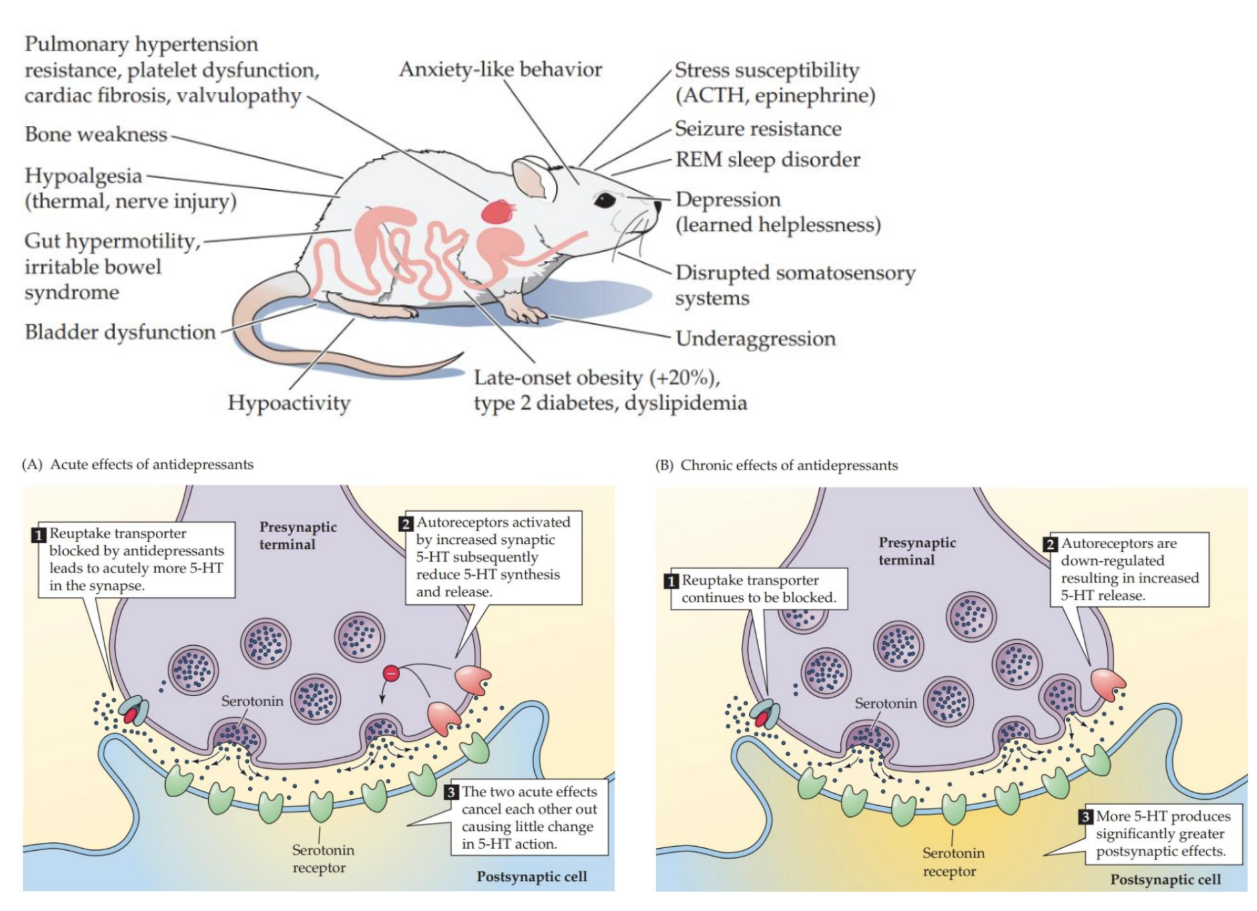
SERT knockout mice have many anatomical, physiological + psychological anomalies
SERT is the principal target of selective serotonin reuptake inhibitors (SSRIs, such as fluoxetine), the first-line drugs for treating depression
picks up 5-HT from extracellular to intracellular space in cell
DNM list in image
many roles of 5-HT peripherally and centrally
SSRI but transporting (although name implies inhibitor)
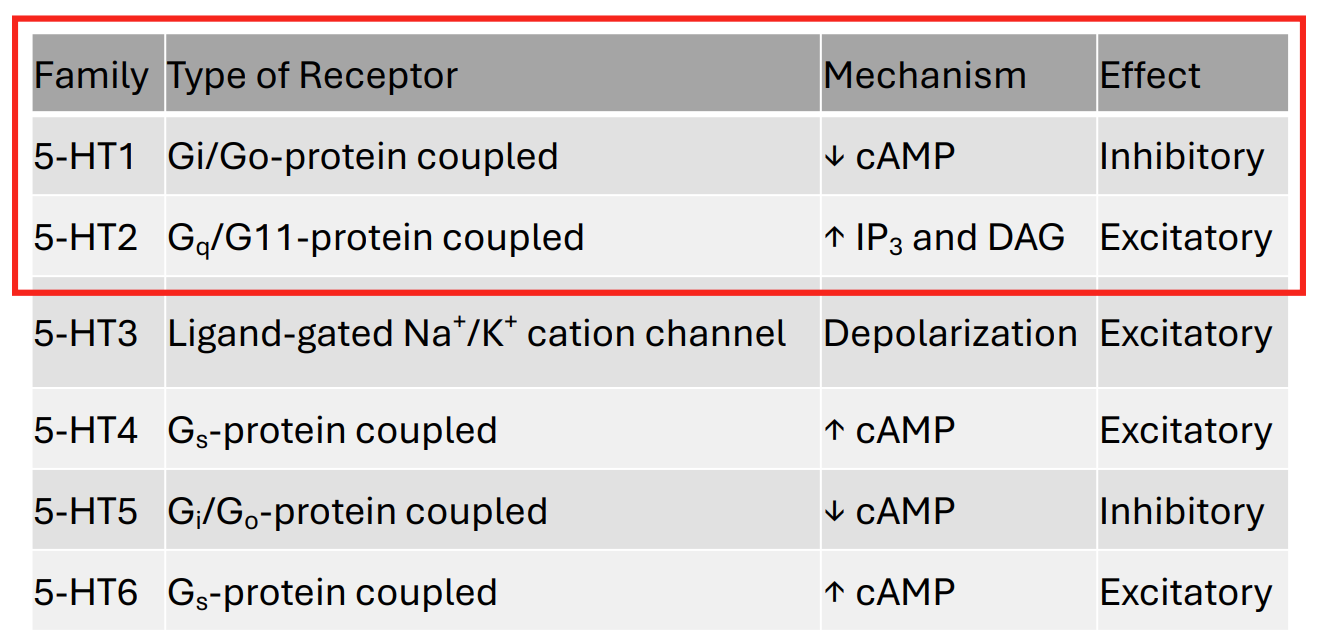
Serotonergic receptors
14 types have been identified with many subtypes
All are metabotropic GPCRs except 5-HT3 (ionotropic)
5-HT1 and 5-HT2 focused on - therapeutic + recreational drugs target these
most are metabotropic, slow
GABA = ionotropic
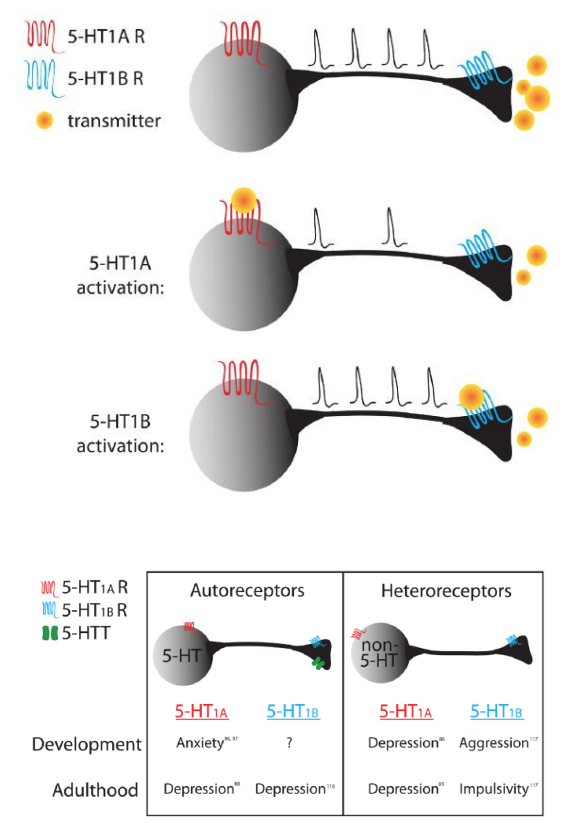
5-HT1A/B Receptors
5-HT1A: somatodendritic, inhibit action potentials
Role in antidepressant response
Delayed desensitization w/SSRIs (how receptor responds to agonist)
5-HT1B: presynaptic, NT release
Social behavior and other roles
KO mouse shows more aggression and impulsivity
usually inhibitor receptors? (only for action potentials and not any other functions)
diff receptors related to diff social behaviours
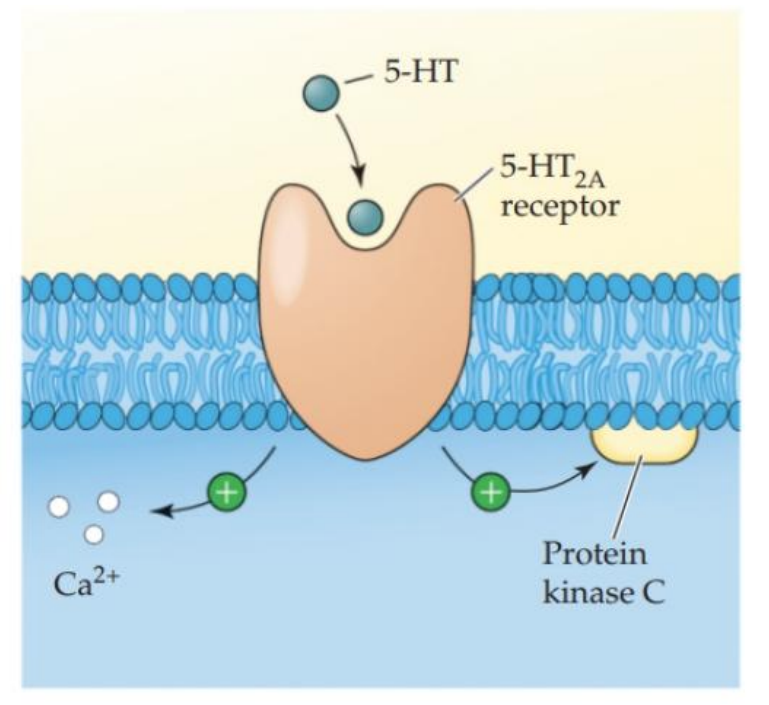
5-HT2A Receptors
Predominantly excitatory and targeted by many drugs
5-HT2B ~ involved with more peripheral effects
5-HT2C ~ psychological functions and drug responses
clozapine, risperidone (5-HT2C)
5-HT in behavior
Anxiety and depression (aversive processing)
Behavioral inhibition (impulsivity)
Social behavior (aggression)
Arousal and consciousness (psychedelics)
Hunger/eating (not covered)
Memory/cognition (not covered)
Pain (not covered)
Anxiety
Feeling of worry, nervousness or unease
Adaptive to an extent, but problems arise when dysregulated
Role of 5-HT is complex
w
5-HT signaling + anxiety
Duration matters (i.e. how long)
Increases sometimes associated w/increased anxiety
During stress, acute elevations in 5HT2
SSRIs might increase anxiety (jitteriness syndrome); inhibits 5-HT transport → anxiety
SERT KO mice have increased anxiety
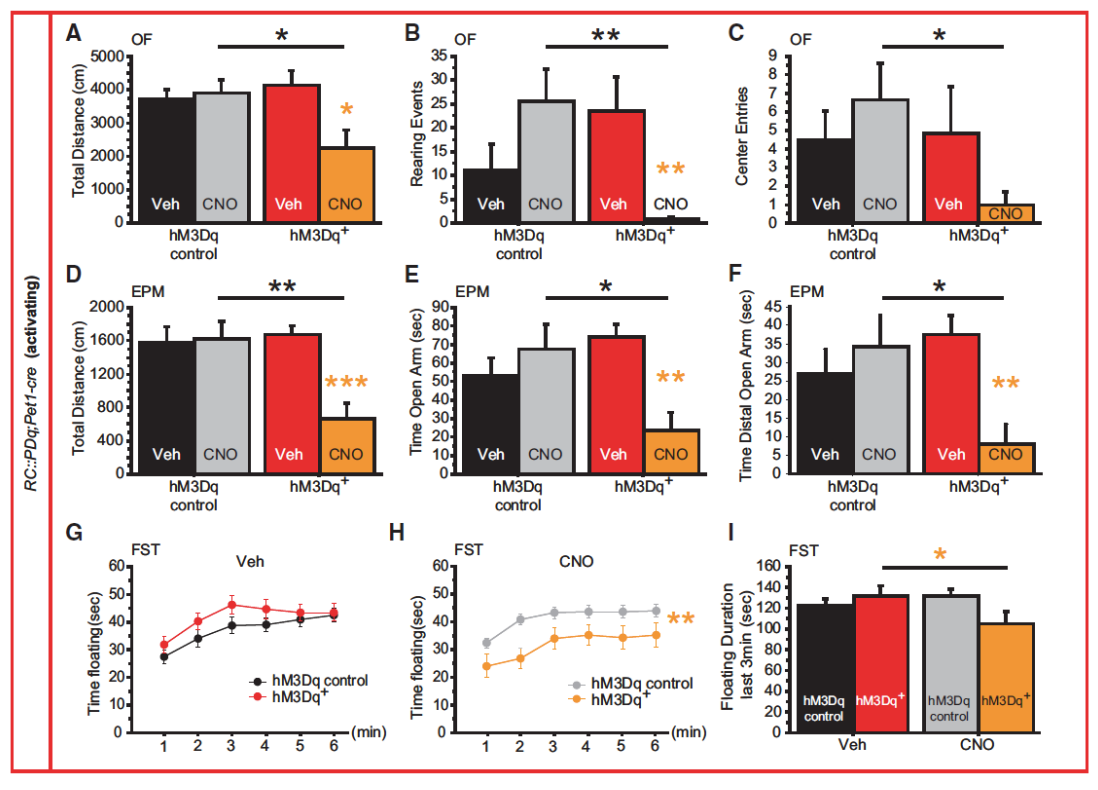
Selective activation of raphe nuclei of special interest
image: Acute but not long-term activation increases anxiety
selective activation of dorsal raphe neurons → brief activation vs chronic (chronic was not associated w anxiety)
Depression
Loss of interest or pleasure even when performing activities normally enjoyed (e.g. Anhedonia)
Decreased energy (e.g. Fatigue)
Feelings of guilt or low self-worth
Disturbed sleep, appetite and activity
Inability to concentrate
Thoughts of suicide
Causes of depression
Like most psychological disorders, multiple environmental and genetic factors contribute to risk
Our job is to discuss the neurochemical ones (as we are in PSY396)
Several major theories in this area:
Monoamine hypothesis
Neuroendocrine hypothesis
Inflammation hypothesis
The monoamine hypothesis
↓ Monoamine NTs (noradrenaline + serotonin) → ↓ Mood (depression)
This is where the much-maligned ideas of the “happy transmitter” and “chemical imbalance” originated.
monoamines includes serotonin and noradrenaline
Supporting evidence
Reserpine depletes 5-HT and other monoamines, produces depression-like behavior
Low levels of 5-HT (i.e. in blood), 5-HT metabolites (e.g. 5-HIAA) and other monoamine markers in depression
Tryptophan depletion can trigger an episode of depression in vulnerable individuals
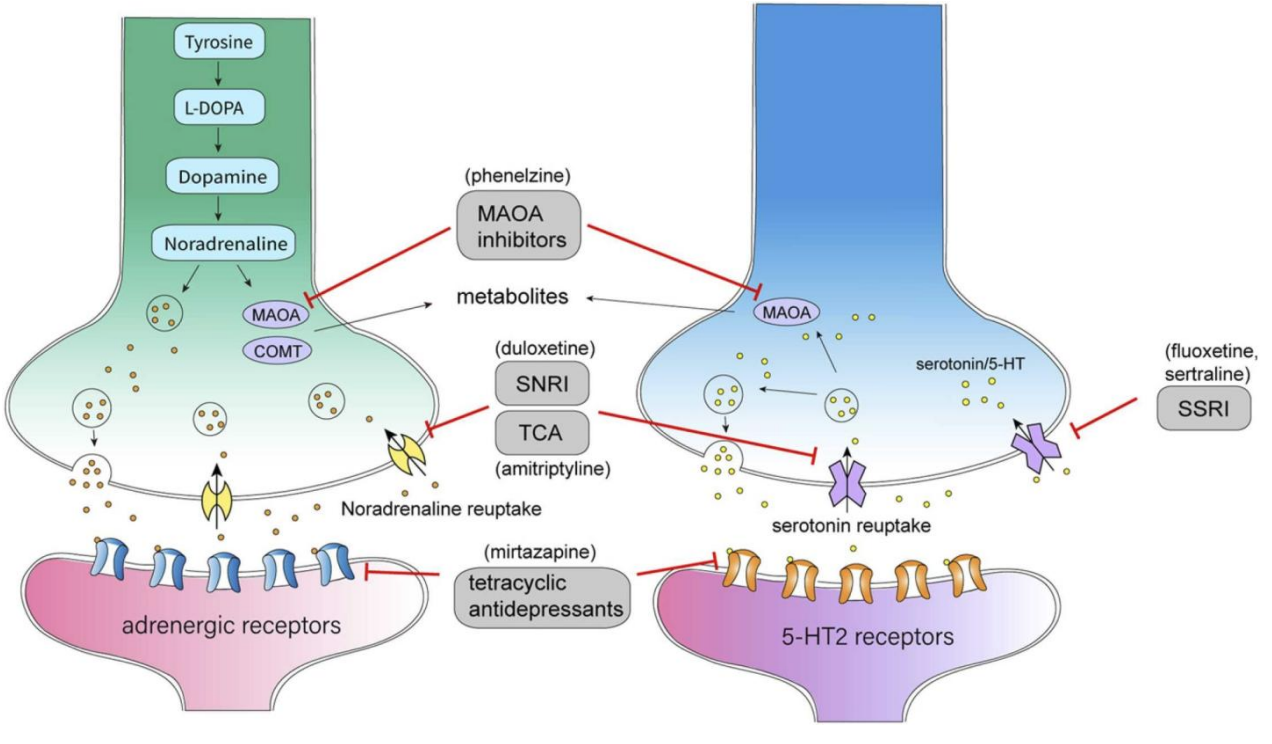
Most drugs that treat depression target the monoamine system (inhibiting transport/metabolism)
making inferences about periphery → caveat regarding 5-HT metabolites
found drugs that work → came up with theory from them
Antidepressant drugs
Surprising effect: some re-uptake of 5-HT by DAT, co-release of 5-HT with DA (not routine)
History of antidepressant drugs
MAO inhibitors were first widely-used class (starting late 50s)
Tricyclic antidepressants shortly afterward
Transporters and receptors
SSRIs followed (popularity rose over the 90s)
Numerous atypical drugs since:
Selective NAT + 5HTT inhibitors (SNRIs), DAT + NAT inhibitors (Bupropion)
more recently, more mixed ones + those targeting noradrenaline
Antidepressant controversy
Debate about over-prescription (for off-label use and mild depression) and discontinuation effects (~15-60% estimated; severe ~ 3% of cases)
Serotonin syndrome
Psychological, autonomic and neurophysiological changes (tremor + seizures)
Linked to antidepressant medications (5HT1A and 5HT2B action)
Uncommon without polypharmacy (i.e. many drugs at once)
affects mood, autonomic = organs, tremor (motor)
Problems (evidence against)
Drugs not always effective (~30% may not respond)
Benefits small over placebo
Though drugs increase serotonin levels immediately, mood is not improved for weeks
Drugs may increase anxiety (jitteriness syndrome)
Drugs don’t reverse depression directly but instead might reduce symptoms through other mechanisms (e.g. emotional blunting)
depression sometimes arises from diff mechanisms, where drugs may not be effective (that inhibits serotonin reuptake)
secondary long-term effect of drugs
drugs may help manage depression by indirectly affecting other mechanisms, doesn’t have to directly affect serotonin
The debate rages on
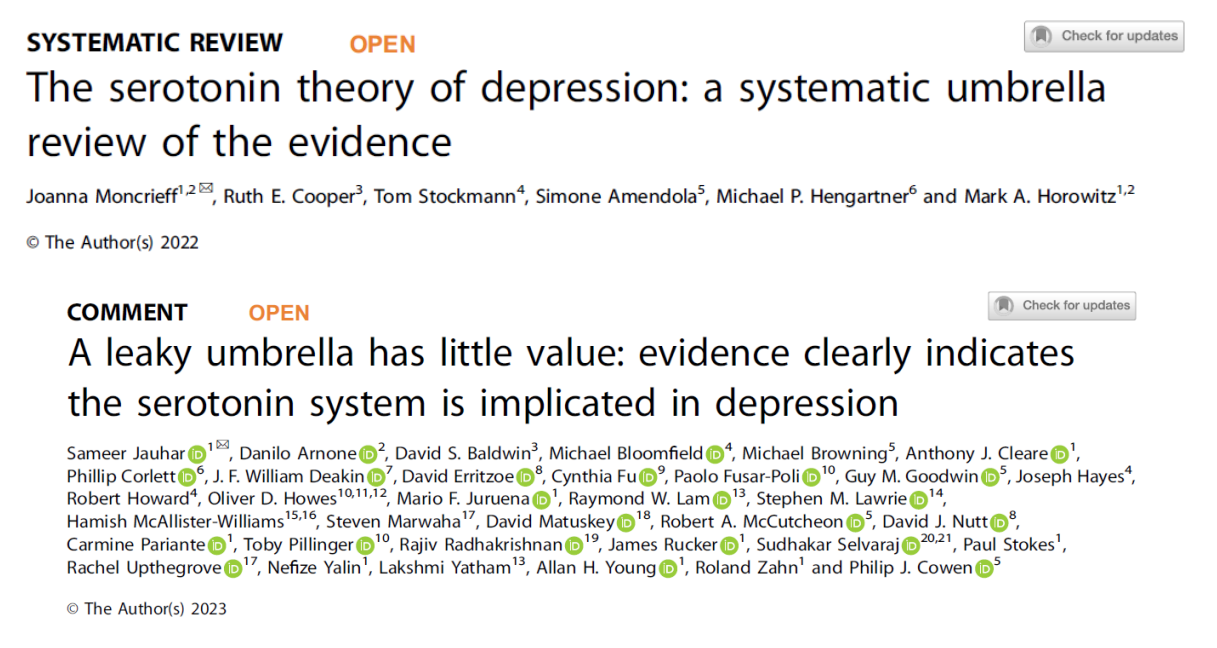
Even if serotonin imbalances do not cause depression, altering serotonin levels may still help treat it. Why?
serotonin is contributing factor, but is one of many
and depression is complex
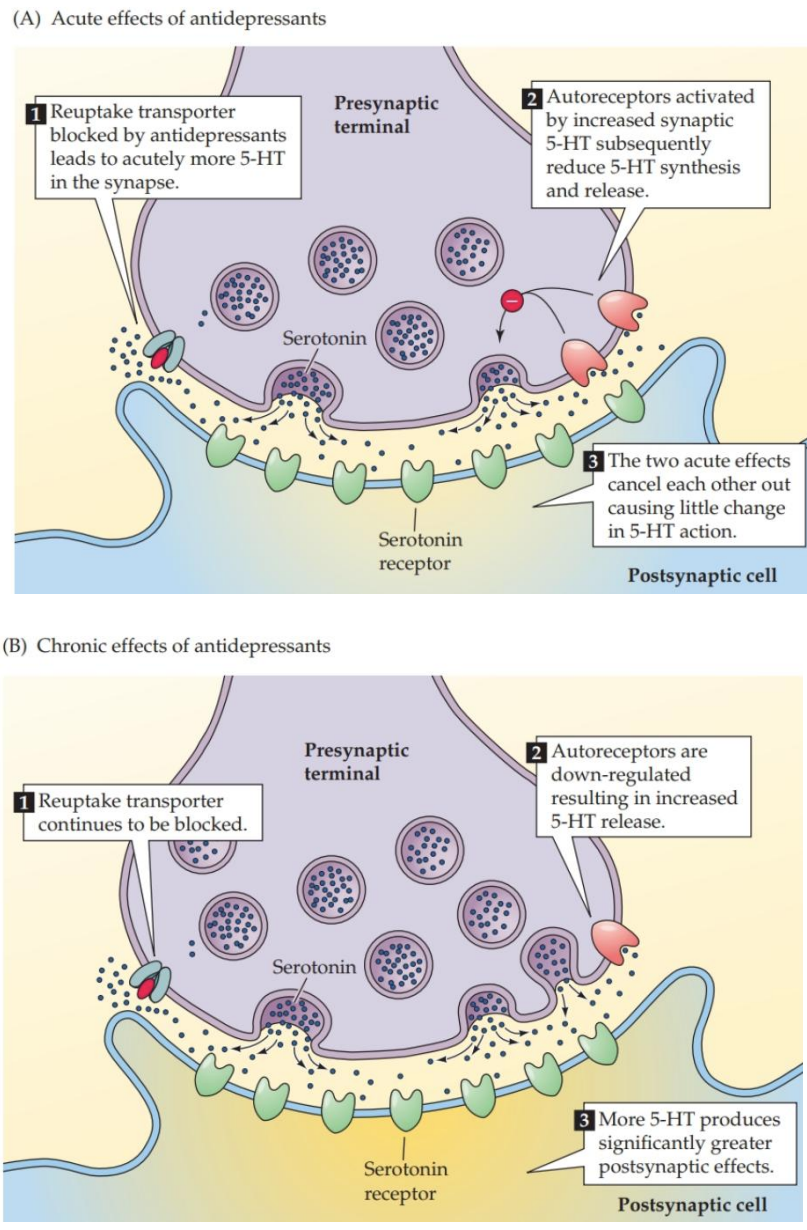
Long-term SSRIs + Autoreceptors
With chronic use, 5-HT autoreceptors downregulated
Downregulation increases 5-HT release
Effect is accompanied by desensitization of other receptors (particularly 5-HT1A)
downregulation of presynaptic receptor many inhibit NT release
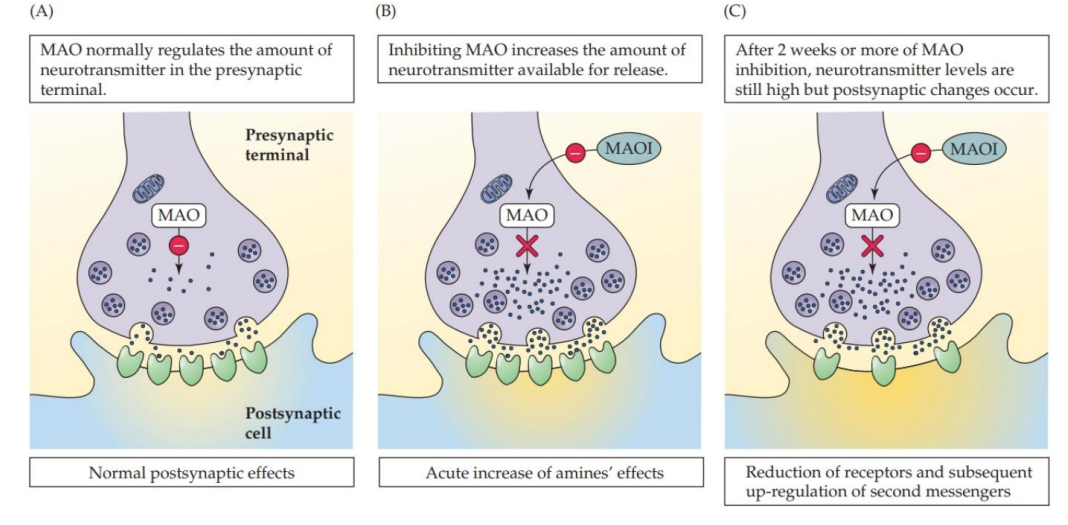
Long-term MAOIs have effects too!
Loss of post-synaptic receptors for monoamines (L05)
less receptors, receptor desensitization, or change in NT release
Long-term effects of 5-HT drugs (2): neurogenesis
Postnatal NG + depression
In most of the mammalian brain, new neurons are not generated after birth
The hippocampus might be an exception and show postnatal neurogenesis
New hippocampal cells could affect mood, learning + more
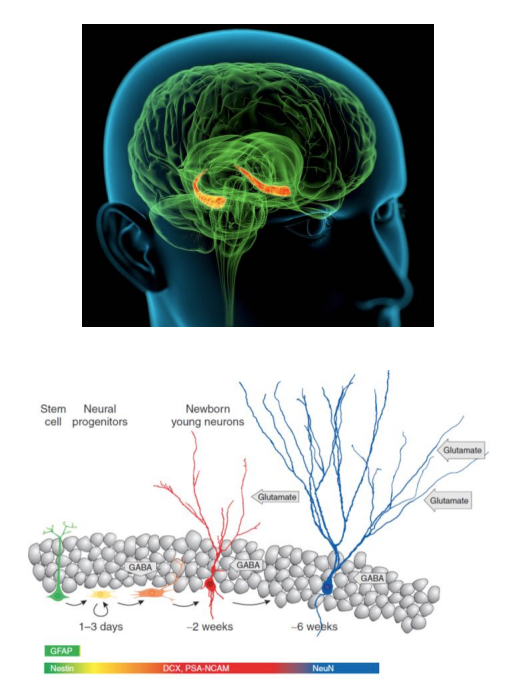
NG + depression
Antidepressants increase NG, at least in animals
If NG is blocked, antidepressants are less effective
Time course of antidepressants corresponds to time course of maturation of newborn neurons (~4 weeks)
Most major work is done in animals (generalize with care)
more excitable, plastic → more easily activated → long-term potentiation
note animal models → NG procedures invasive in humans
add more notes
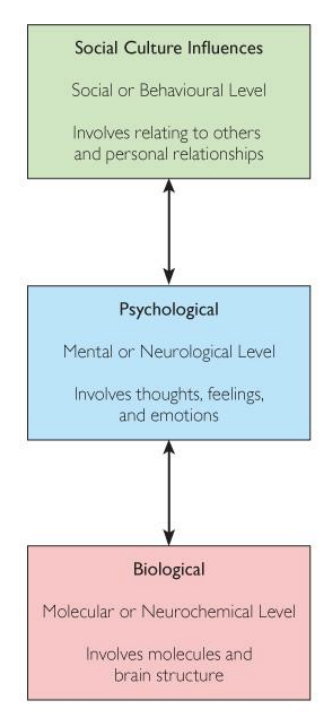
Levels of analysis for depression
Which level do we choose?
Beyond the brain
SSRIs might induce personality changes
Neuroticism decreased, extraversion increased
SSRIs might induce “emotional blunting” (valence of positive + negative states reduced)
Might be therapeutic (if negative states are a problem) but comes with side effects (positive states are less fun)
In reinforcement learning tasks, people taking antidepressants may respond less to negative outcomes and not modify their behavior
antidepressants may not be treating, but may be tuning system down for lots of emotions (may be useful for very aversive states, but note positive states?)
Other disorders treated by SSRIs
Generalized anxiety disorder
Social anxiety disorder
Panic disorder
Bipolar depression*
Premenstrual dysphoric disorder
Post-traumatic stress disorder
Bulimia nervosa
Obsessive-compulsive disorder
antidepressants broadly used for other conditions, not just depression
On a related note…
As SSRIs complex effects, there is interest in alternative drugs
In humans, the selective serotonin releasing agent (SSRA, see L03) fenfluramine was associated with:
Reduced sensitivity for outcomes in aversive contexts (reinforcement learning task > similar to SSRIs)
Enhanced inhibition, bias towards impulse control (no-go task)
Improved verbal memory
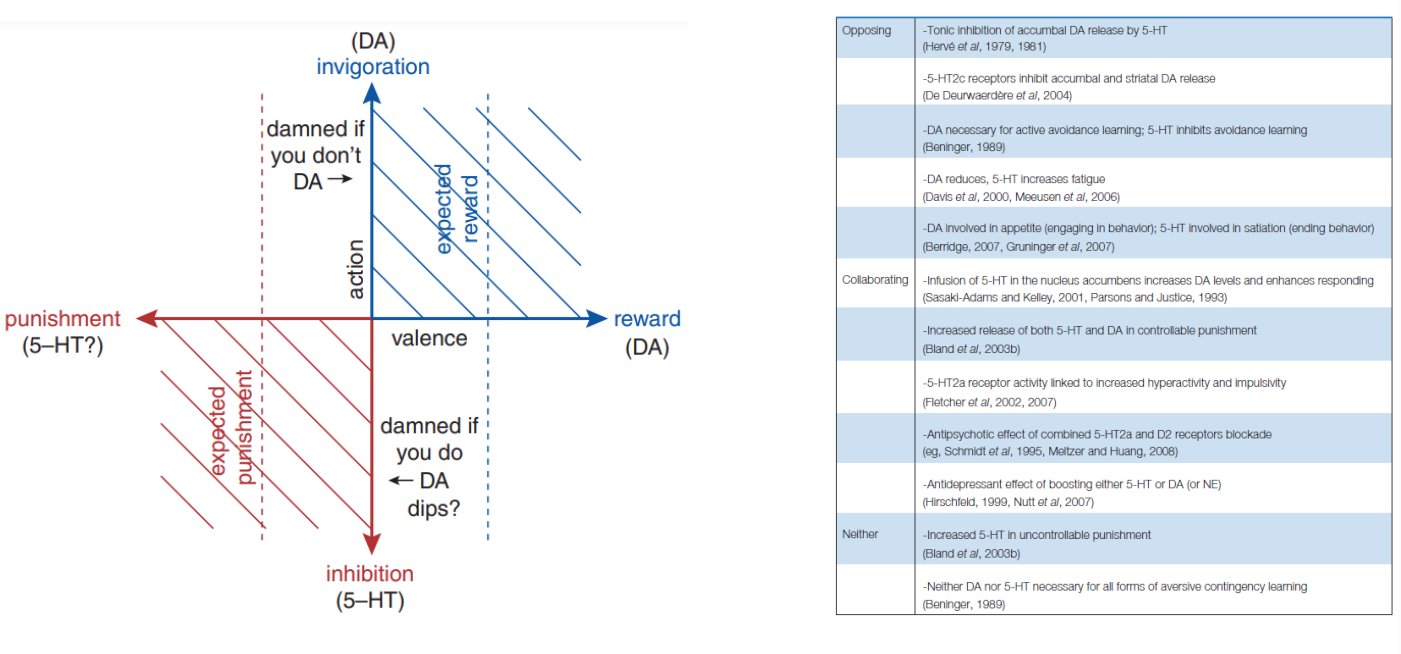
Opponency theory: 5HT vs. DA?
both forms of transmission actually strong in any given state
both in play, both interacting
Aggression
Behavior intended to cause harm/pain (whether psychological or physical)
Affective defense aggression (reactive)
response to a perceived threat, emotional, SNS activation
Predatory attack aggression (instrumental)
planned, goal-directed, lacks emotion or SNS activation
distinct mechanisms for reactive + instrumental
Aggression, Impulsivity and 5HT
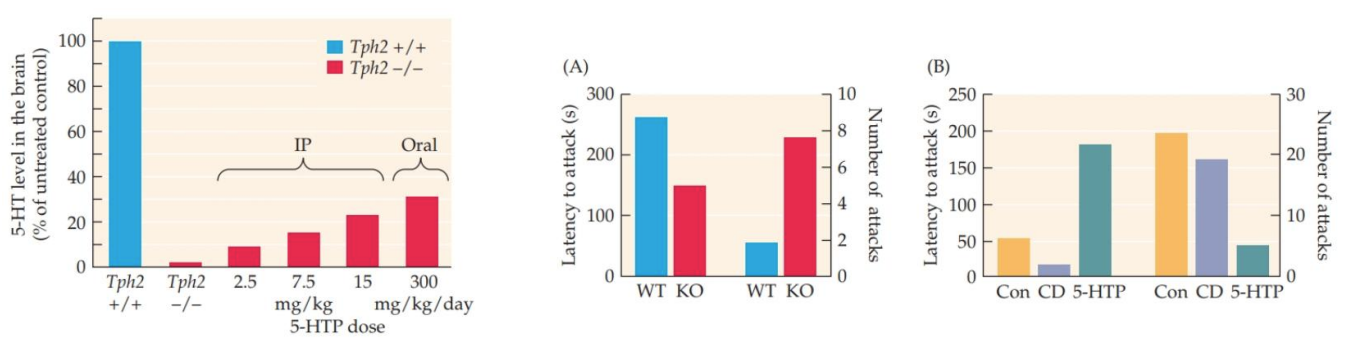
Disrupting 5-HT signaling affects aggression and impulsivity
TPH2-KO, MAO-KO, 5HTR1b-KO mice are more aggressive
For TPH2-KO: supplementation to increase 5-HT levels reduces aggression
SERT-KO and 5HTR1a-KO mice are less aggressive
KO = synthesis problem (without gene, can’t make it)
WT = wild type
latency to attack low = attack sooner + more attacks
data suggests deletion of TPH2 limits serotonin and increases aggression
supplement removed to allow for serotonin?
predicting that high serotonin levels = high aggression difficult to do
diff levels → diff amounts of aggression
Generalization to humans?
Rare gene variants linked w/aggression in humans
MAOA1 (case of James Fallon), 5HT2B2
Low 5-HIAA levels associated with anti-social behavior
Interaction of 5-HT system with home environment
Relevant to blunting of 5-HT system with stress in animals?
Human effects are in general less clear/compelling
rare for genes to be connected with something
all we say is that certain variations are associated with aggression
5-HT + the ultimatum game
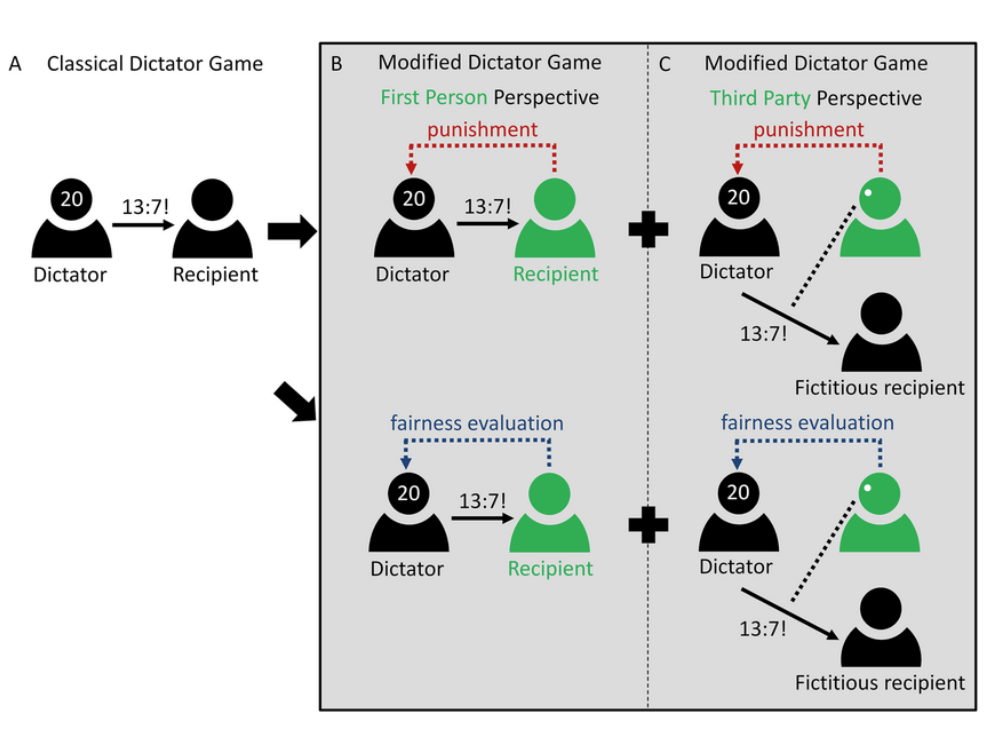
A. Dictator extends offers, player accepts or refuses
perceived fairness a factor
B. After many offers, the player might elect to “punish” the dictator
common in finance + economic behaviours
spend own money to hurt dictator (after history w dictator)
5-HT + other social behaviors
Tryptophan depletion is associated with increased rejection of unfair offers and punishment
Conversely, drugs increasing 5-HT levels (e.g. SSRIs) may increase acceptance of unfair offers
Results are complex, subject to interpretation
Genes in the 5-HT + DA system weakly related to performance
1st isn’t a problem, extreme forms are harmful
5-HT + Disordered Social Behavior – Focus on Autism- Symptoms
Poor social interaction
Fails to respond to name, poor eye contact, resists cuddling, prefers playing/being alone, aggression in certain cases
May not recognize/respond to social cues
Repetitive behaviors/Difficulty switching behaviors
Arranging objects, making sounds, hand flapping, head rolling and body rocking
Special interests
Slow language development
Starts later than age of 2 (may remain non-verbal), repetition of words/phrases (echolalia), abnormal tone/rhythm
Studying ASD today
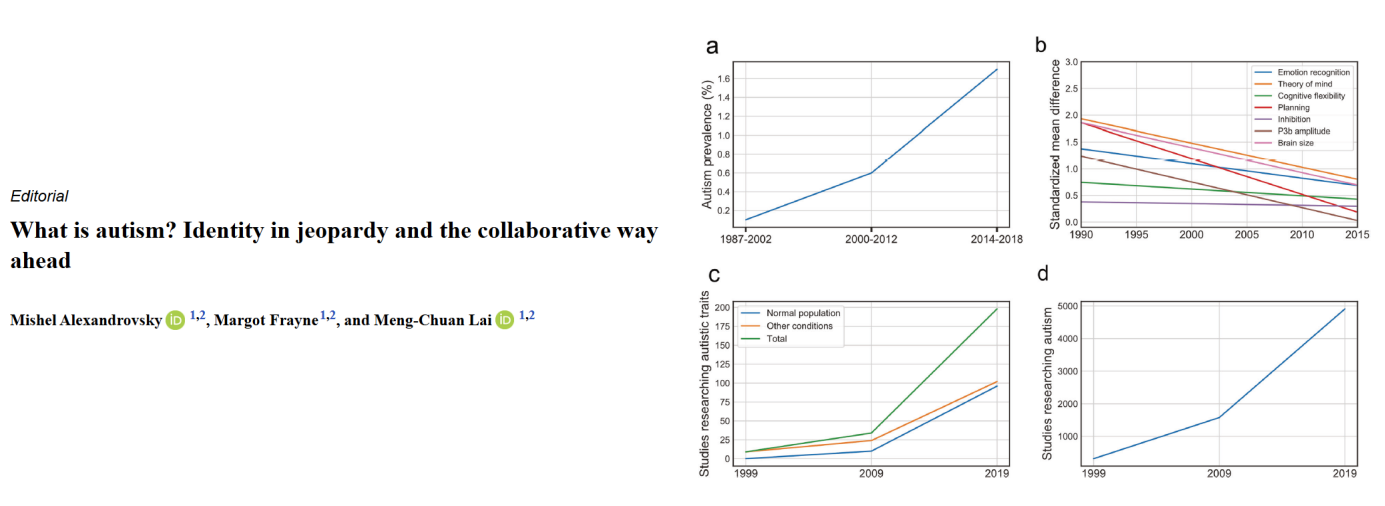
ASD ~ Neurodevelopmental
Characterized by abnormalities in brain growth and/or development
Deficits in emotion, learning, self-control + memory
Class also includes schizophrenia (SZ), attention deficit hyperactivity disorder (ADHD), learning disabilities and more
Alterations in brain structure may be associated with imbalances in serotonin at key periods
what defines the neurodevelopmental category
not acquired
5-HT + Autism
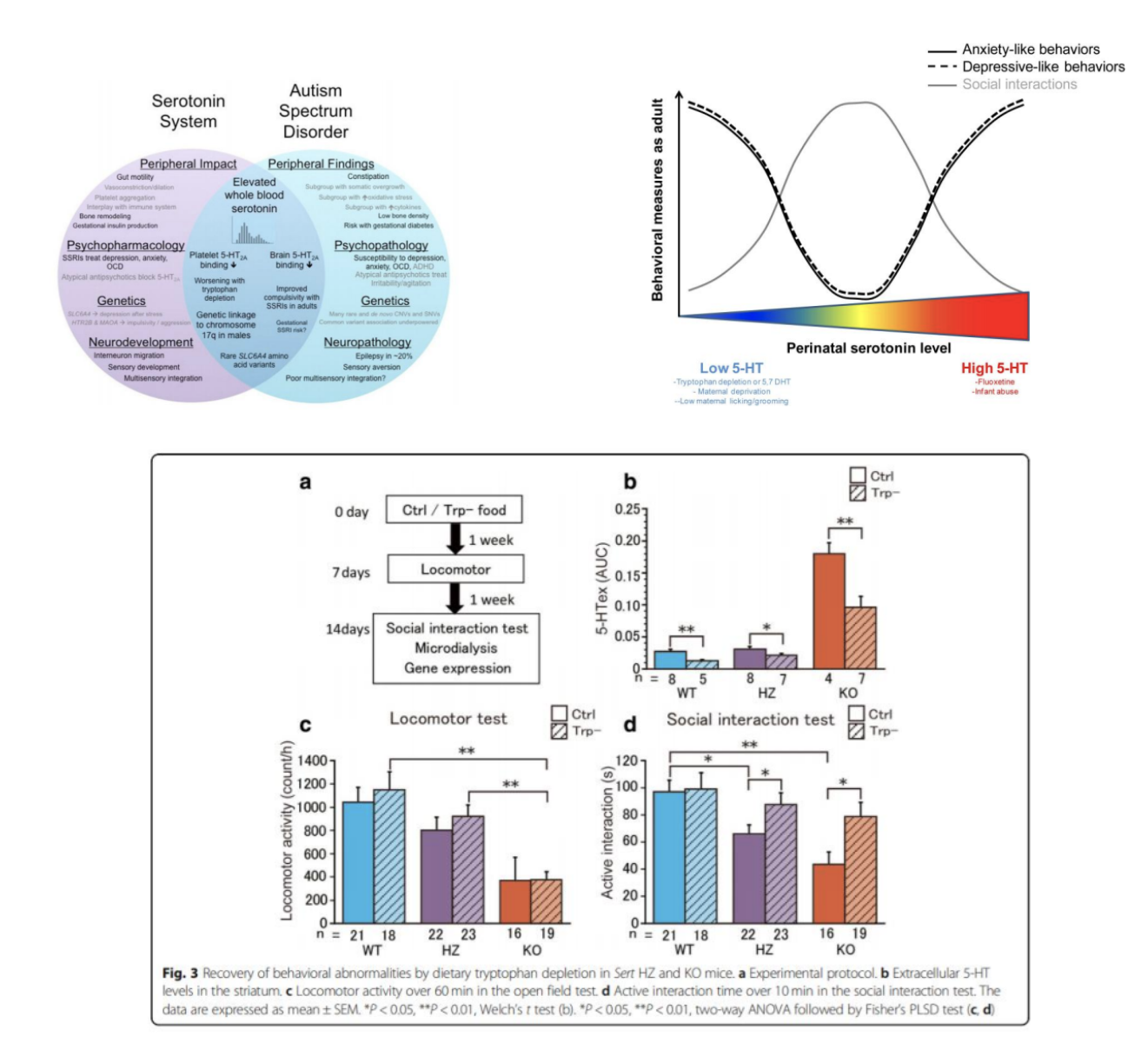
Associated with hyperserotonemia (high 5-HT peripherally, ~25% of male cases)
Imbalances early in life may affect neurodevelopment and subsequent adult behavior
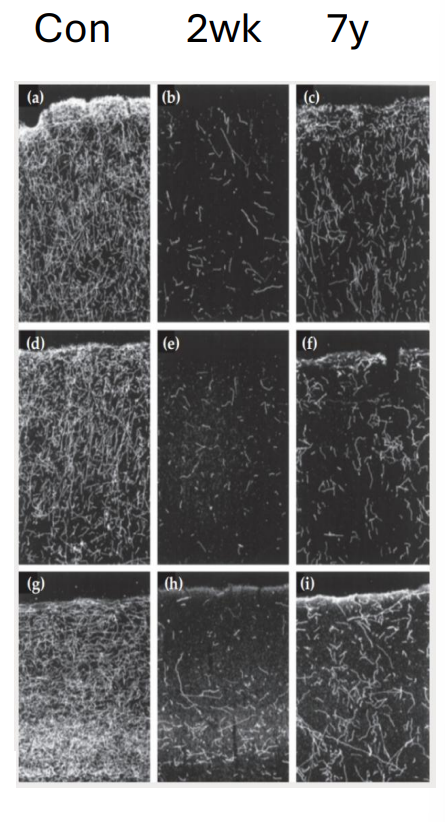
2nd image:
SERT KO mice show autistic-like behavior; tryptophan depletion normalizes behavior; several other transgenic studies are similar
Some have proposed treating autism w/5-HT drugs
very high serotonin levels in periphery in some cases
levels of 5-HT during development affects wiring in early stage + effects are long-lasting
low/high levels of 5-HT associated w diff wiring + conditions
KO/depletion has opposite effects on mice
5-HT Selective drugs
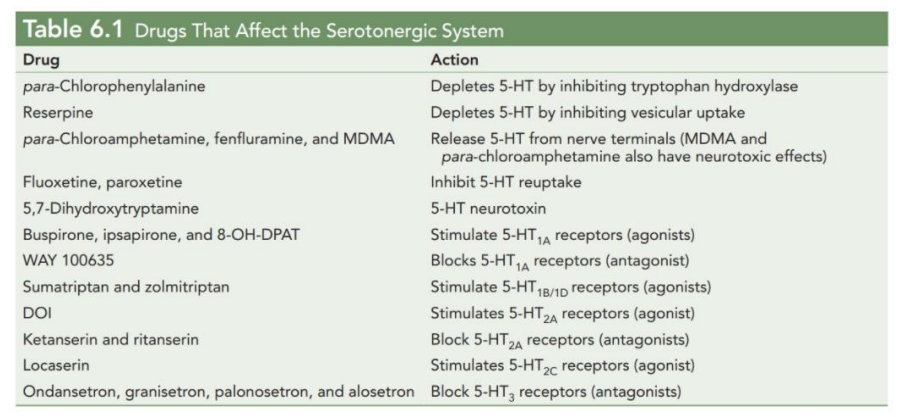
Many relevant drugs beyond SSRIs
skipped
Beyond SSRIs…
Atypical antipsychotics for schizophrenia (clozapine, risperidone) act on 5-HT2 receptors (5HT2A ~ therapeutic effects, 5HT2C ~ side effects)
Psychedelics are thought to involve 5HT2 receptors
Lysergic acid dimethyl amide (LSD), psilocybin, ayahuasca, mescaline are good examples; ketamine is not (mechanism not 5HT)
5-HT transmission is also central to the effects of 3,4- methylenedioxymethamphetamine (MDMA; ecstasy)
psychedelics have similar structure to 5-HT
ketamine not a lot of action on 5-HT
may ask for MDMA acronym but DNM long name
Psychedelics
Psychedelics + 5-HT
LSD is structurally similar to 5-HT
In humans, the perceived intensity of the psychedelic experience correlates with neural 5-HT2R binding (e.g. in the cingulate cortex)
In humans and animals, behaviors associated with psychedelics are blocked by 5-HT2R antagonists
In animals, the head twitch and discriminative states (L03) to psychedelics are both diminished by 5-HT2 blockers
binds receptor more, and receptors not available, effects are greater
Psychedelic use
Interest in treating mental health problems
Alternative treatment, early trials suggest it is not superior to other drugs
Could be combined with other methods
*note: not a lot of research surrounding this as treatment
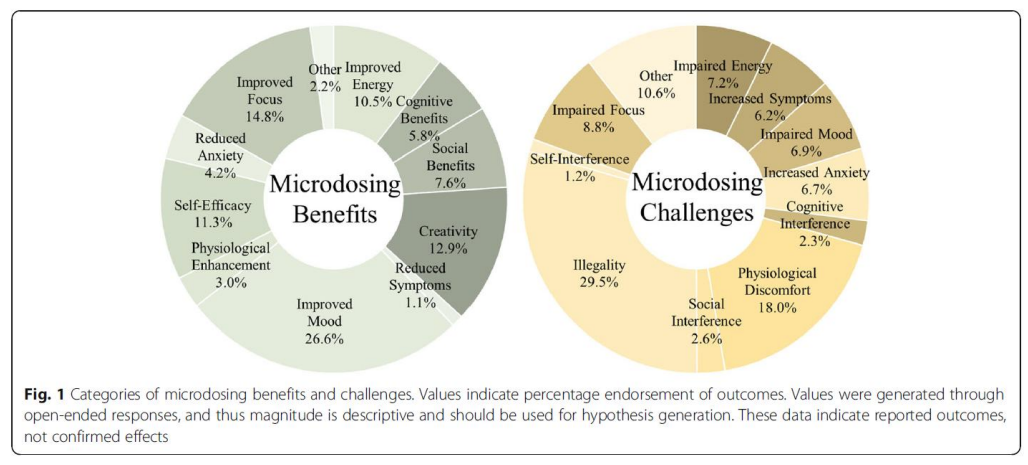
Interest in microdosing for perceived benefit
Research is tightly regulated due to legal status; funding hard to get
Placebo-controlled trials are complicated, placebo effects likely
Placebo responses in trials when confederates are present
Microdosing studies also show placebo effects
Perceived benefits may not reflect real drug effects
Recent studies have suggested complex effects on creativity (acute impairment, long-term enhancement)
breaking blind…
always know if you’re in treatment group for drugs → effects are strong
dose too low → can’t effect things of interest
Doing Better Psychedelic Research
Inference issues
Conflict of interest
Safety
Lack of control
Sample size
Selection bias
Study duration
Breaking blind
Placebo effects
Mechanisms
drug studies must be carefully observed + safe
MDMA + 5-HT
Potently increases 5-HT release (also affects catecholamines)
Associated with euphoria, warmth, energy and empathy
High doses associated w/lasting damage to the 5-HT system in animals, cognitive deficits and other problems
Therapeutic roles being explored
MDMA/ecstasy in medical context → explored effects in various conditions