ICS UNIT 2

0.0(0)
Studied by 0 people
call kaiCall Kai
Locked
learnLearn
examPractice Test
spaced repetitionSpaced Repetition
heart puzzleMatch
flashcardsFlashcards
GameKnowt Play
Card Sorting

1/192

encourage image

There's no tags or description

Looks like no tags are added yet.

Last updated 7:28 PM on 6/25/26
Name
Mastery
Learn
Test
Matching
Spaced
Call with Kai
Chat

No analytics yet

Send a link to your students to track their progress

193 Terms

1
New cards

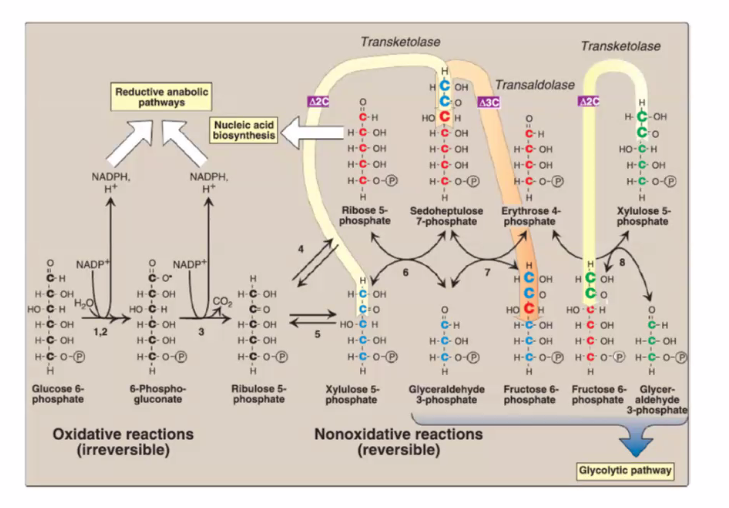
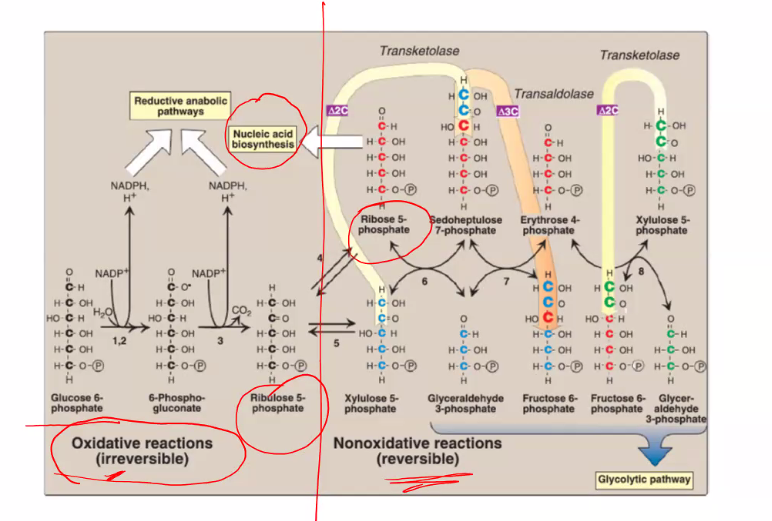
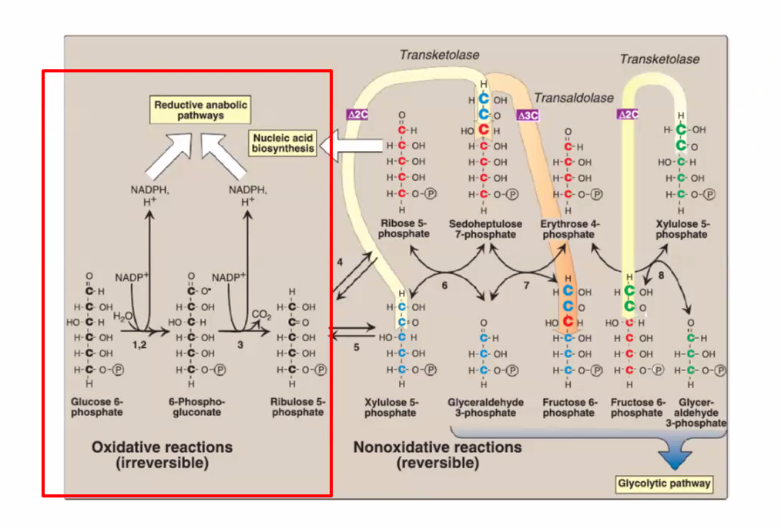
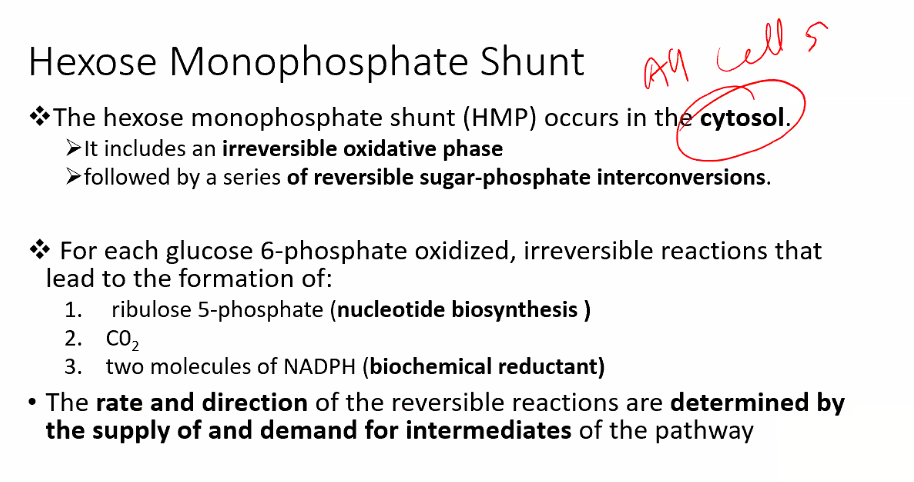
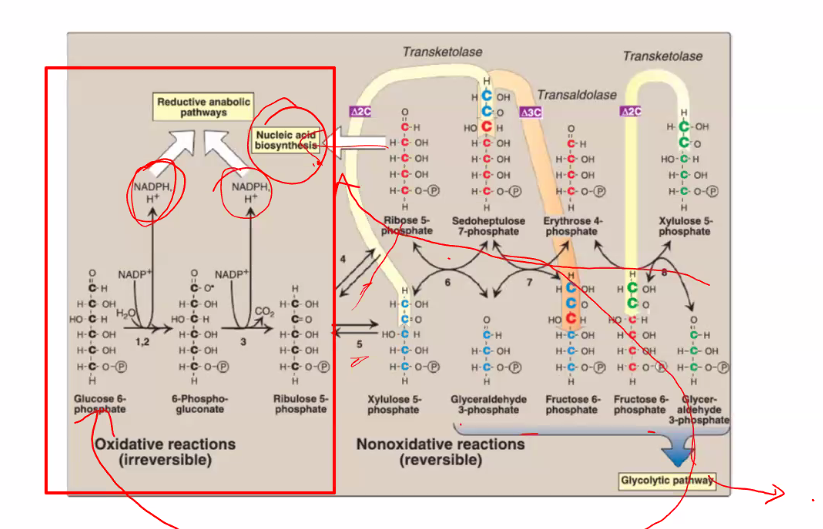
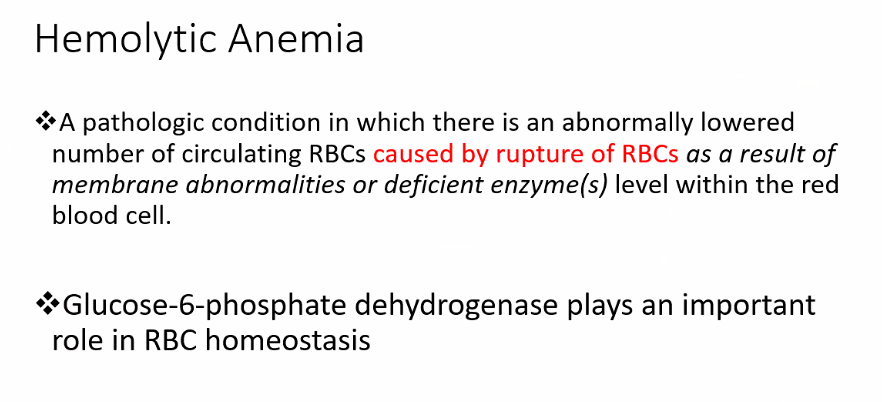
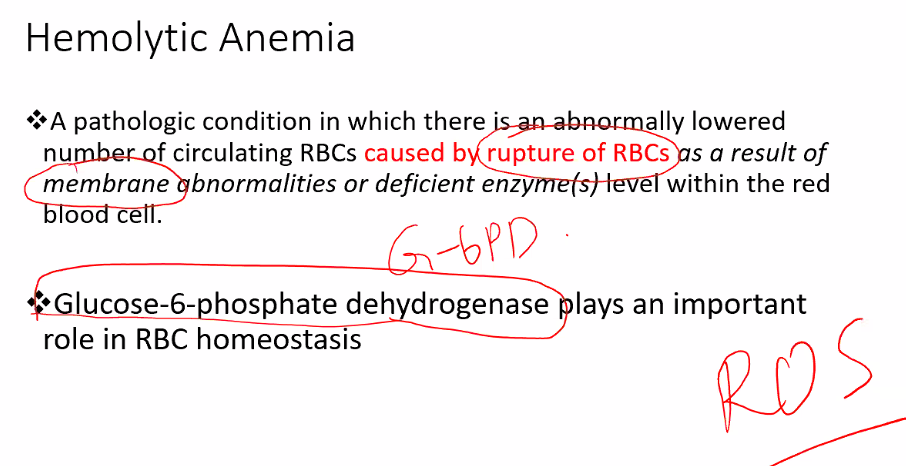
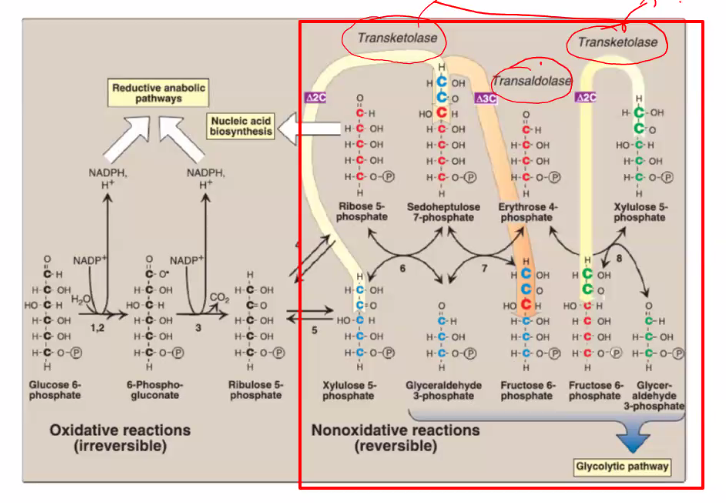
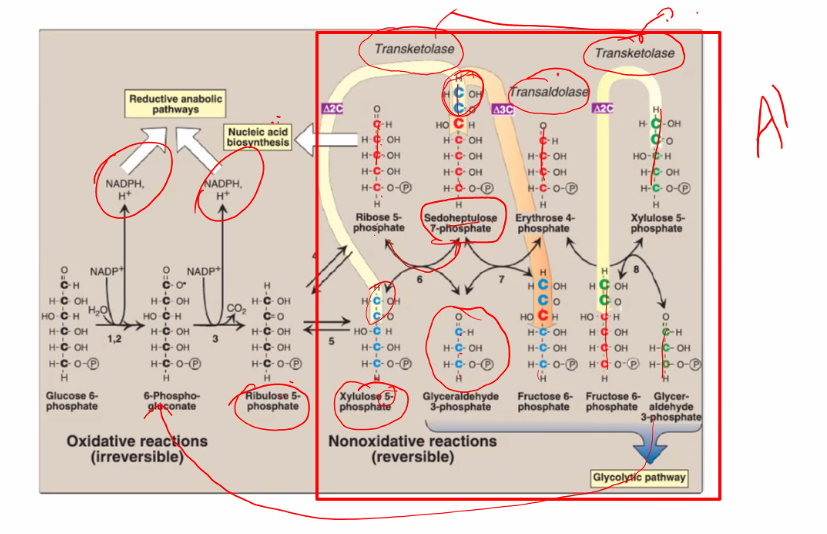
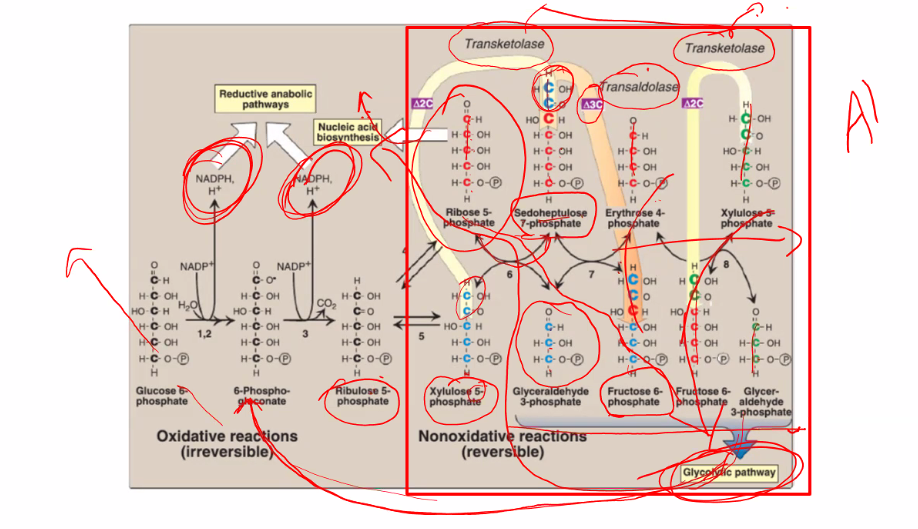
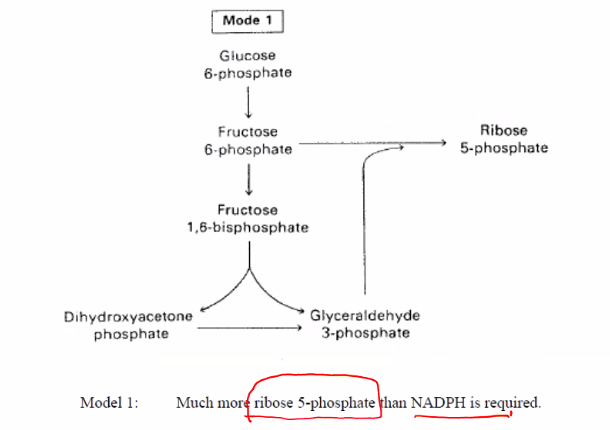
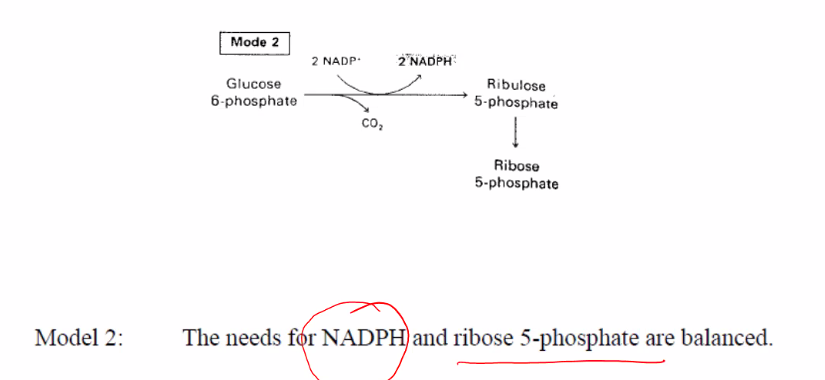
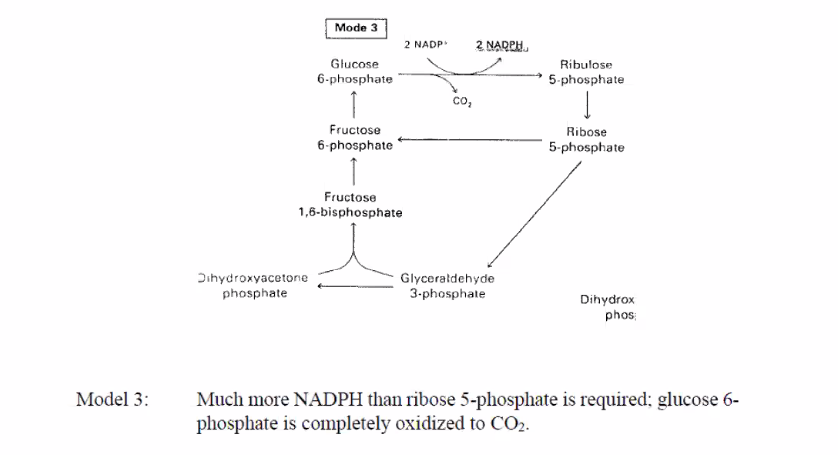
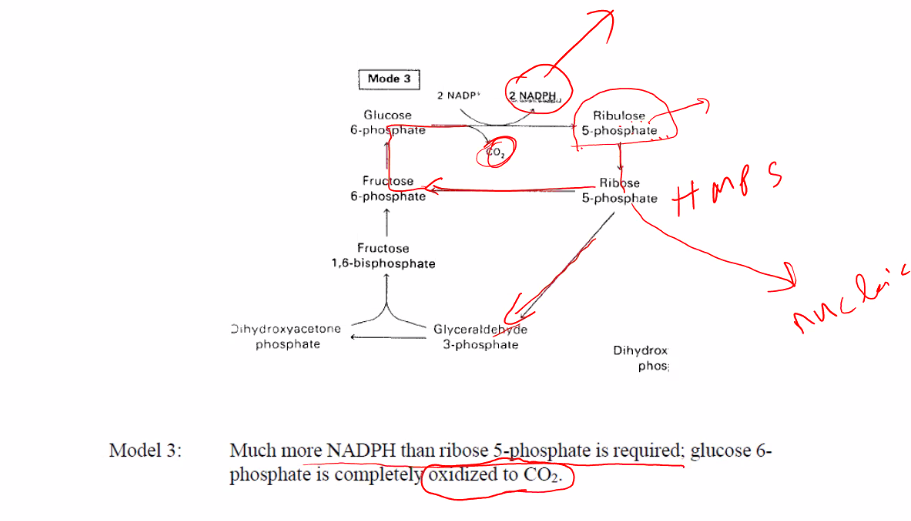
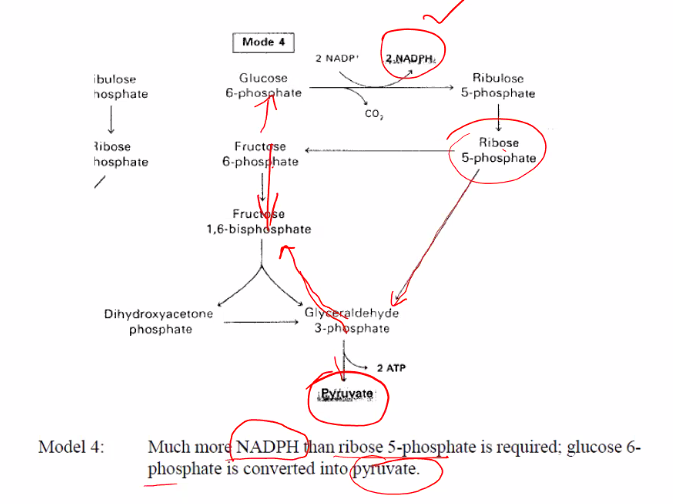
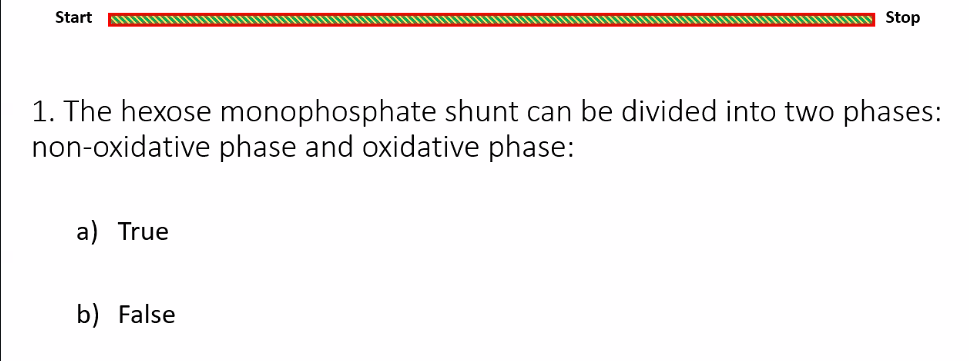
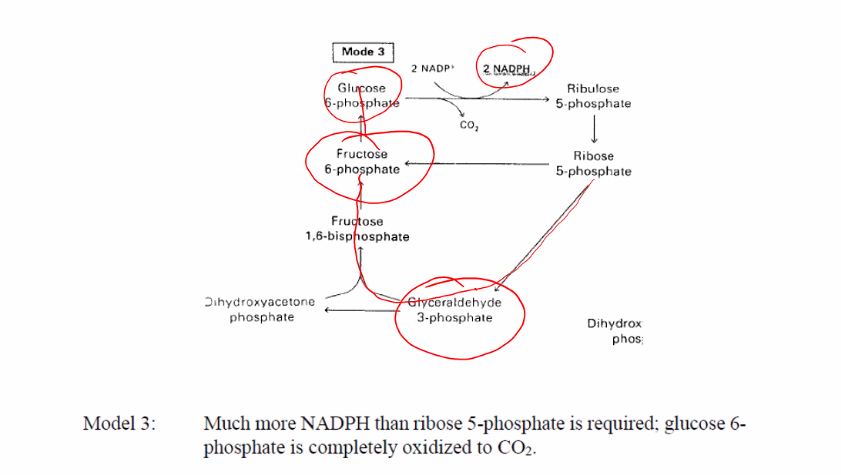
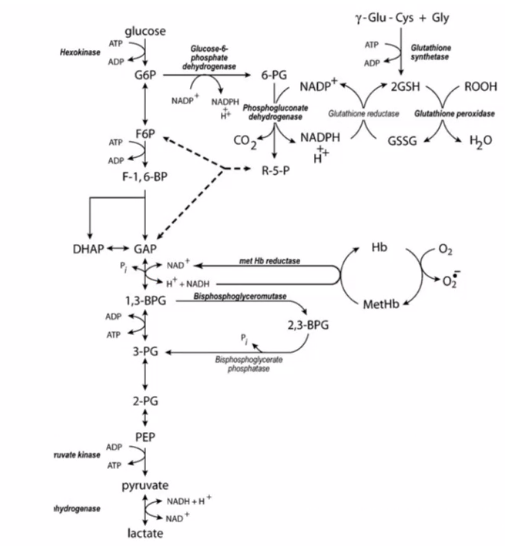
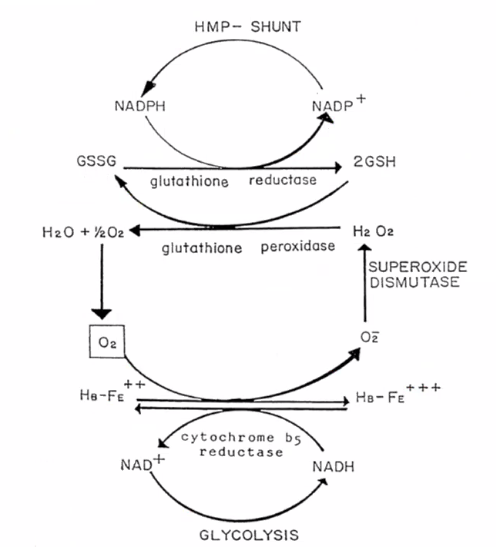
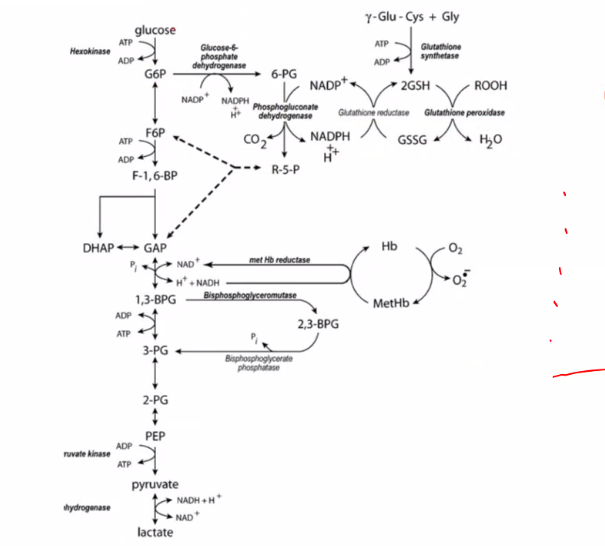
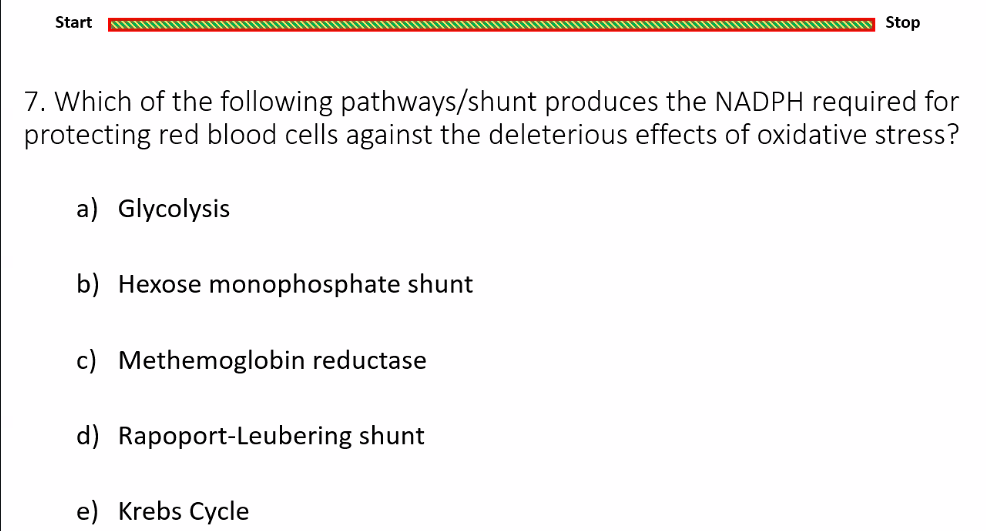
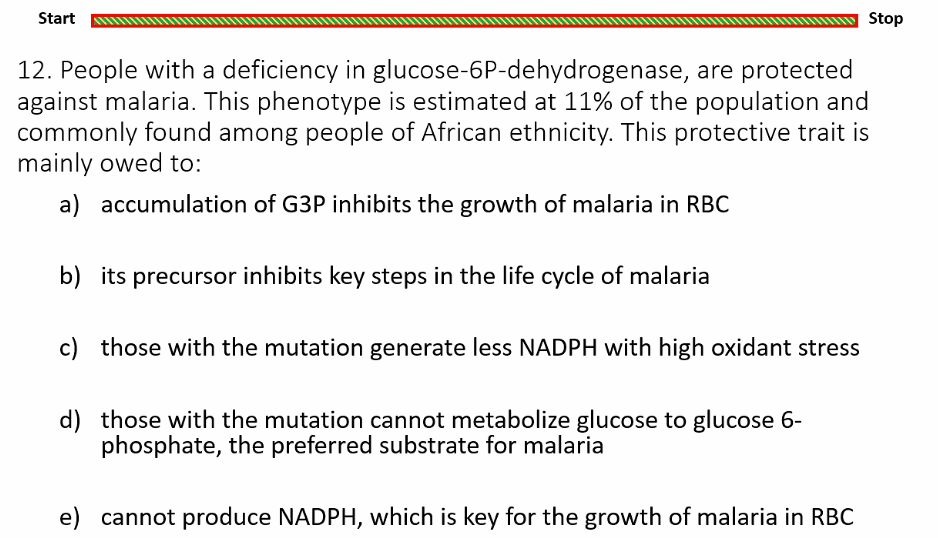
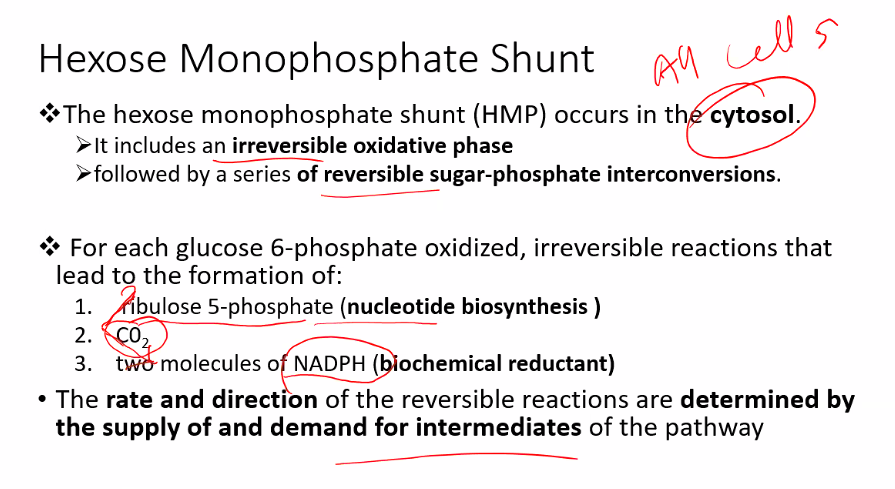
The Hexose Monophosphate (HMP) shunt—also known as the pentose phosphate pathway—is an alternative metabolic pathway to glycolysis.

-location: cytosol

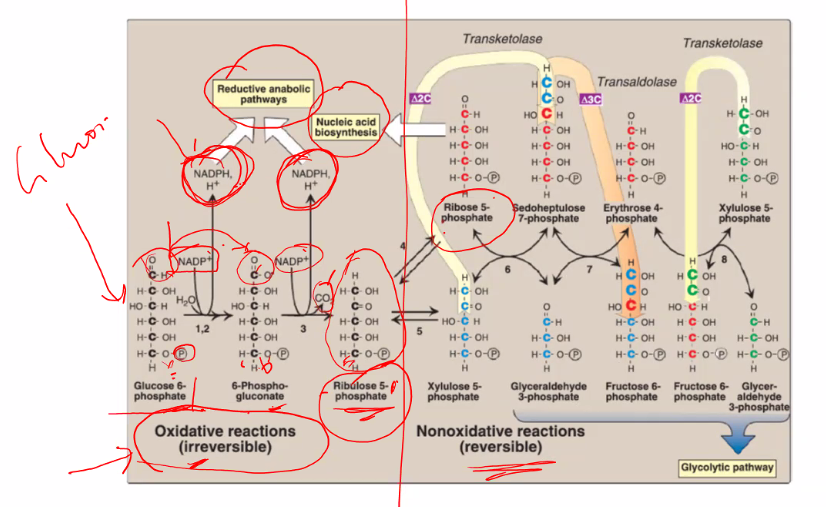
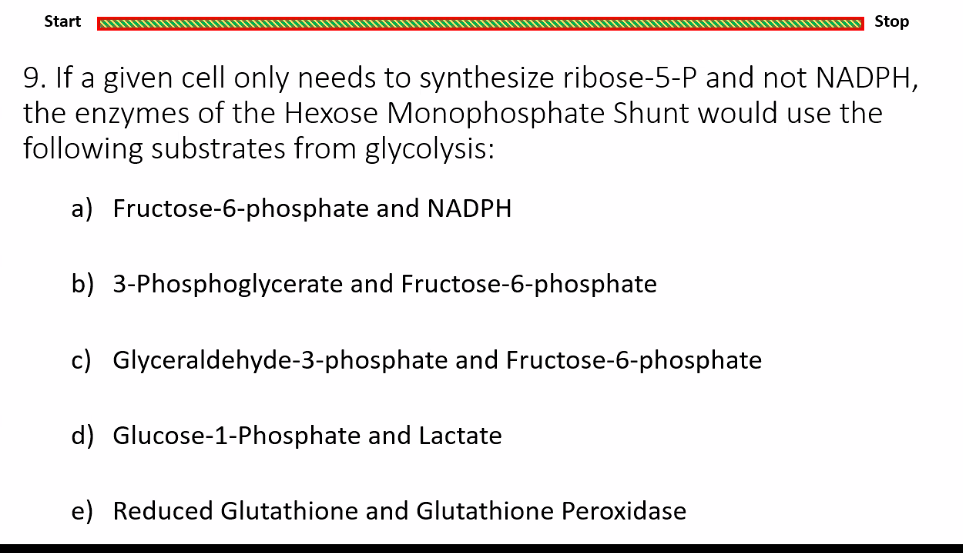
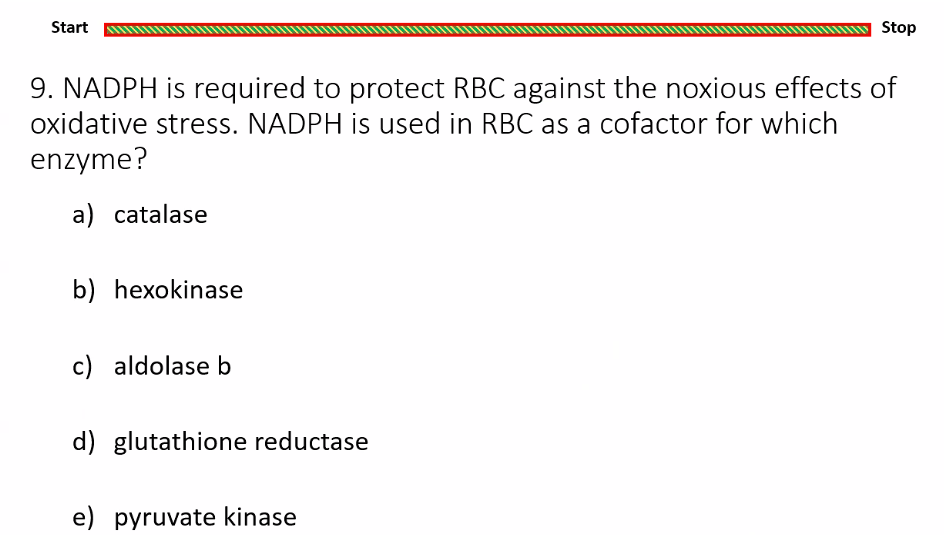
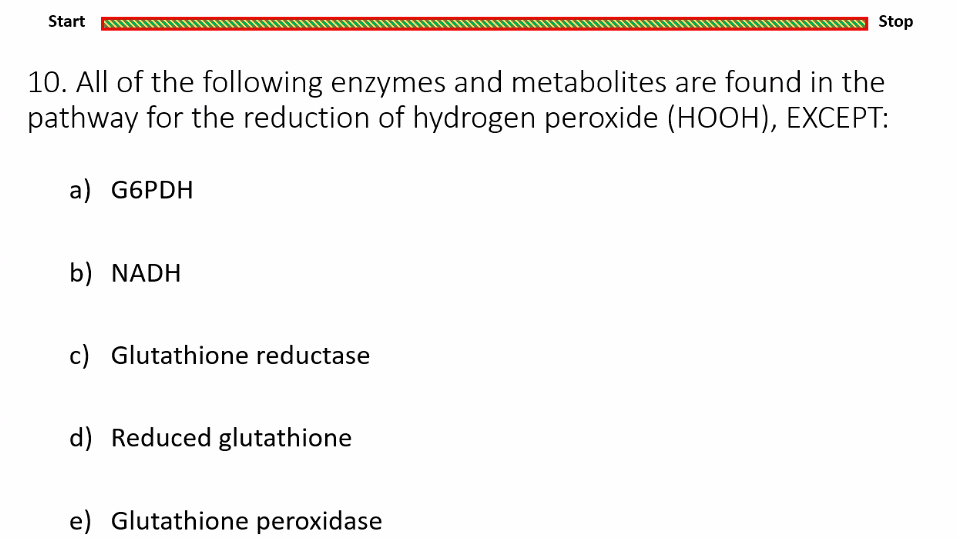
HMP: oxidizes glucose to generate NADPH (for anabolic reactions and antioxidant) and ribose-5-phosphate “pentose phosphate pathway” (for nucleotide synthesis).

called pentose phosphate pathway it makes ribose-5-phosphate.

HMP does not oxidize glucose for ATP.
<p>The Hexose Monophosphate (HMP) shunt—also known as the pentose phosphate pathway—is an alternative metabolic pathway to glycolysis.</p><p>-location: cytosol</p><p>HMP: oxidizes glucose <strong>to generate NADPH</strong> (for anabolic reactions and antioxidant) and ribose-5-phosphate “pentose phosphate pathway” (for nucleotide synthesis).</p><p>called pentose phosphate pathway it makes ribose-5-phosphate.</p><p>HMP does not oxidize glucose for ATP.</p>
2
New cards

<p></p>
3
New cards
knowt flashcard image
4
New cards
knowt flashcard image
5
New cards
knowt flashcard image
6
New cards
knowt flashcard image
7
New cards
knowt flashcard image
8
New cards
knowt flashcard image
9
New cards

The Hexose Monophosphate (HMP) shunt—also known as the pentose phosphate pathway—is an alternative metabolic pathway to glycolysis.

-location: cytosol

HMP: oxidizes glucose to generate NADPH (for anabolic reactions and antioxidant) and ribose-5-phosphate “pentose phosphate pathway” (for nucleotide synthesis).

called pentose phosphate pathway it makes ribose-5-phosphate.

HMP does not oxidize glucose for ATP.
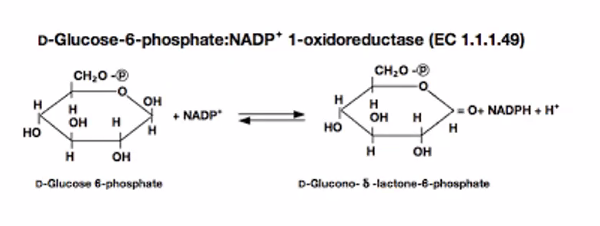
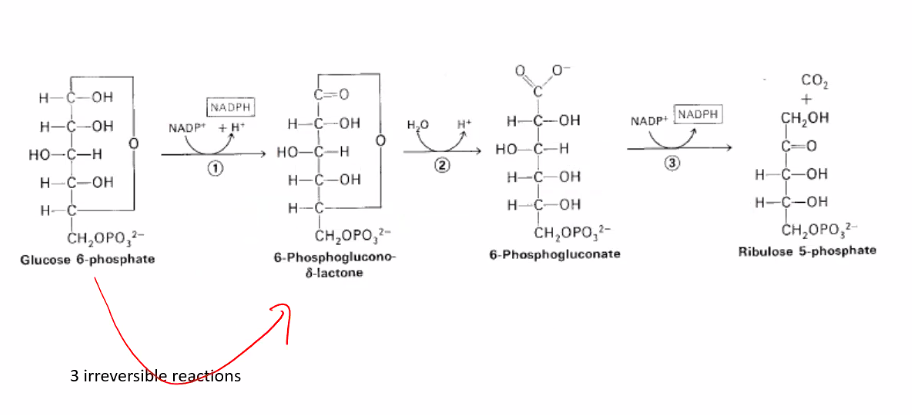
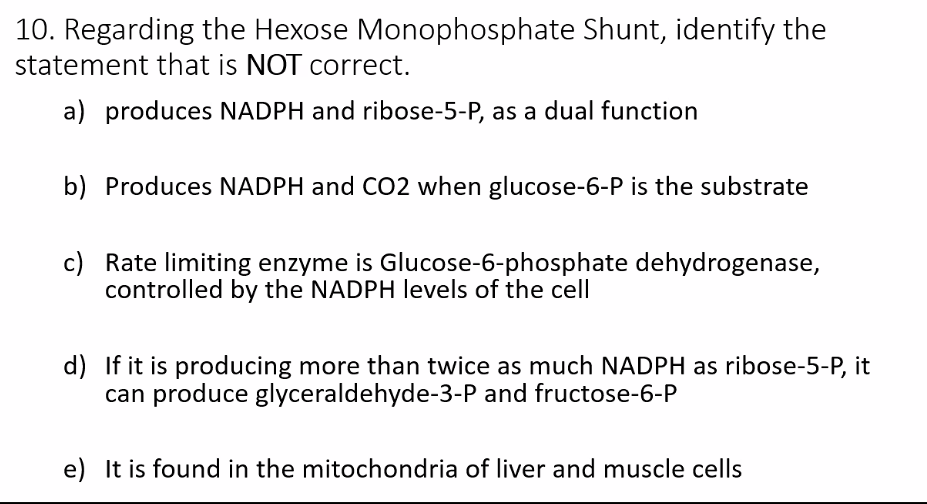
The rate-limiting enzyme for the HMP (Hexose Monophosphate) shunt—also known as the Pentose Phosphate Pathway—is Glucose-6-phosphate dehydrogenase (G6PD).

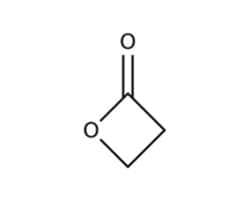
The H is taken from glucose and put to NAD+, making NADH.

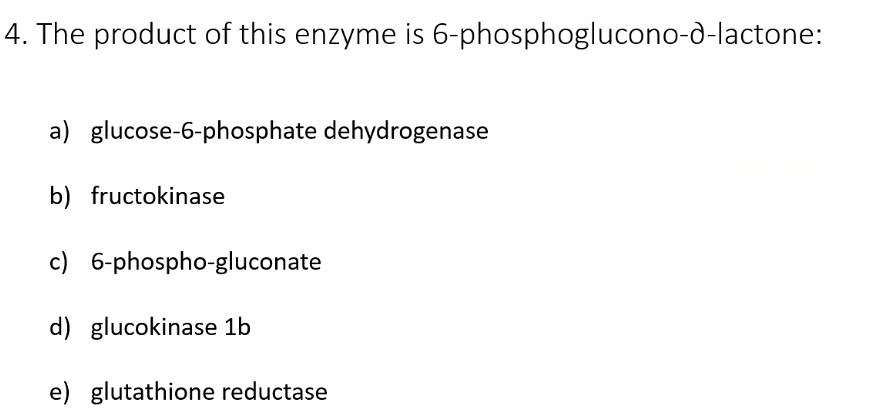
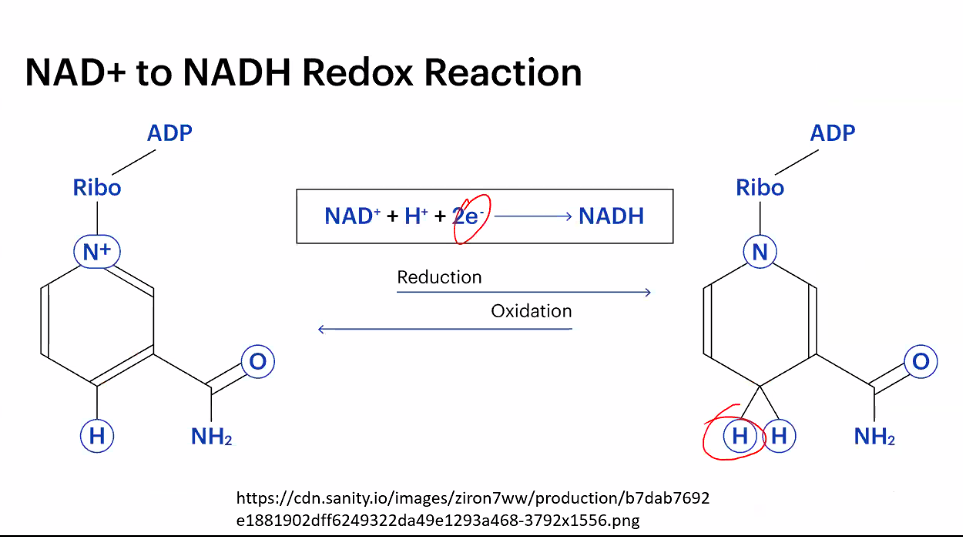
This enzyme catalyzes the first and irreversible step of the oxidative phase, converting glucose-6-phosphate to 6-phosphogluconolactone while generating NADPH.

Regulation of G6PD

  • stimulated by high cellular levels of NADP⁺, signaling a high demand for NADPH.

  • Allosteric Inhibition: G6PD is strongly inhibited by NADPH

  • Hormonal Control: Insulin induces the synthesis of G6PD, increasing the pathway's activity during the fed state
<p><span style="color: rgb(33, 89, 133);">The Hexose Monophosphate (HMP) shunt—also known as the pentose phosphate pathway—is an alternative metabolic pathway to glycolysis.</span></p><p><span style="color: rgb(33, 89, 133);">-location: cytosol</span></p><p><span style="color: rgb(33, 89, 133);">HMP: oxidizes glucose <strong>to generate NADPH</strong> (for anabolic reactions and antioxidant) and ribose-5-phosphate “pentose phosphate pathway” (for nucleotide synthesis).</span></p><p><span style="color: rgb(33, 89, 133);">called pentose phosphate pathway it makes ribose-5-phosphate.</span></p><p><span style="color: rgb(33, 89, 133);">HMP does not oxidize glucose for ATP.</span></p><p><span style="color: rgb(33, 89, 133);">The rate-limiting enzyme for the HMP (Hexose Monophosphate) shunt—also known as the Pentose Phosphate Pathway—is Glucose-6-phosphate dehydrogenase (G6PD).</span></p><p><span style="color: rgb(33, 89, 133);">The H is taken from glucose and put to NAD+, making NADH.</span></p><p><span style="color: rgb(33, 89, 133);">This enzyme catalyzes the first and irreversible step of the oxidative phase, converting glucose-6-phosphate to 6-phosphogluconolactone while generating NADPH.</span></p><p><strong><u>Regulation of G6PD</u></strong></p><ul><li><p><span><strong>stimulated </strong>by high cellular levels of <strong>NADP⁺</strong>, signaling a high demand for NADPH.</span></p></li><li><p><span><strong>Allosteric Inhibition:</strong> <strong>G6PD </strong>is <strong>strongly inhibited by NADPH</strong></span></p></li><li><p><span><strong>Hormonal Control:</strong> <strong>Insulin induces the synthesis of G6PD</strong>, <strong>increasing the pathway</strong>'s <strong>activity during </strong>the </span><span style="color: rgb(30, 101, 140);">fed state</span></p></li></ul><p></p>
10
New cards
<p><span style="color: rgb(40, 88, 138);">This is the lactone that forms on glucose after the dehydrogenation.</span></p>

This is the lactone that forms on glucose after the dehydrogenation.
11
New cards
term image
knowt flashcard image
12
New cards
term image
13
New cards
knowt flashcard image
14
New cards
knowt flashcard image
15
New cards
knowt flashcard image
16
New cards
knowt flashcard image
17
New cards

provides a SHUNT

<p>provides a SHUNT</p>
18
New cards
<p>Glut </p>

Glut

knowt flashcard image
19
New cards
knowt flashcard image
20
New cards
knowt flashcard image
21
New cards
knowt flashcard image
22
New cards
knowt flashcard image
23
New cards
term image
knowt flashcard image
24
New cards
knowt flashcard image
25
New cards
knowt flashcard image
26
New cards
knowt flashcard image
27
New cards
knowt flashcard image
28
New cards
<p>A. </p>

A.

29
New cards

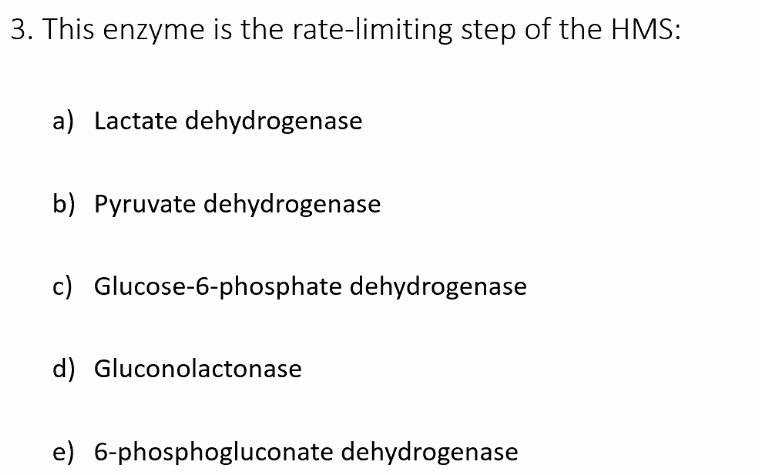
A)

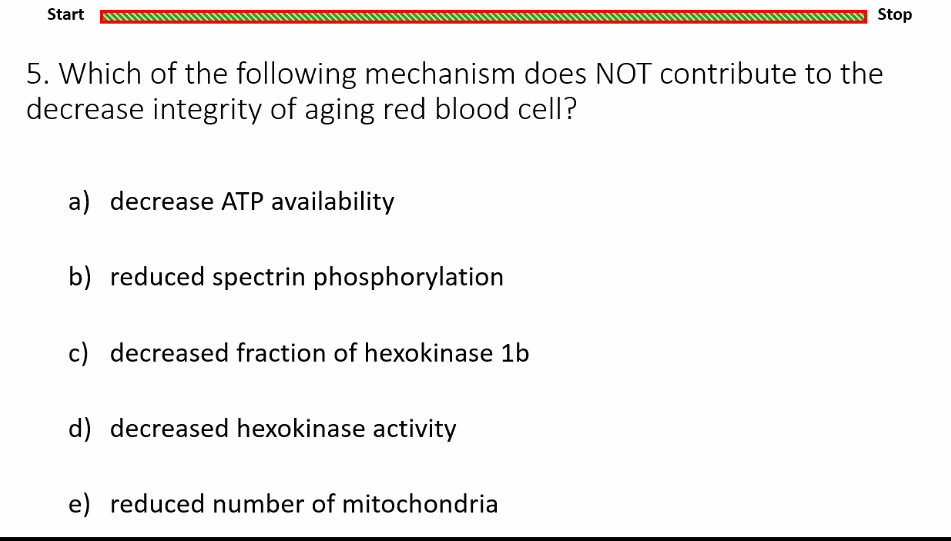
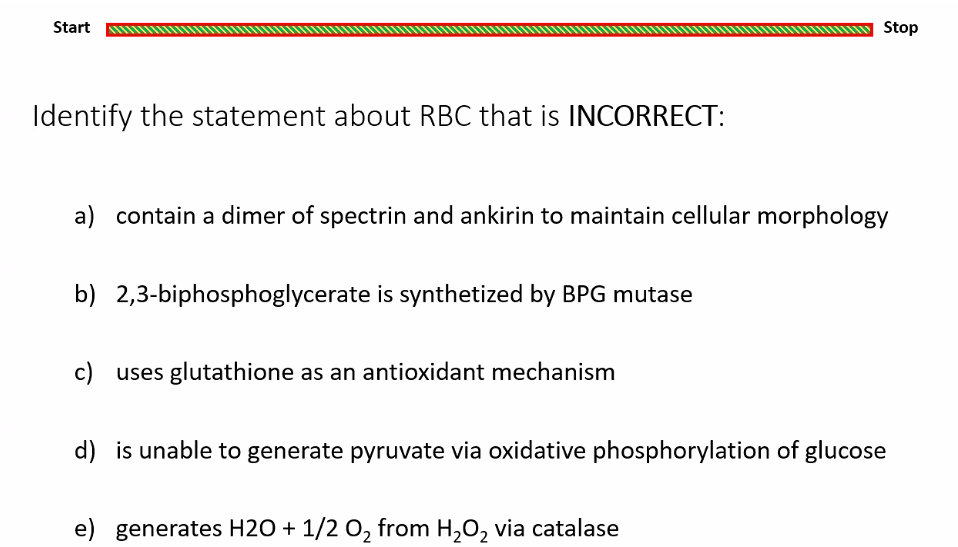
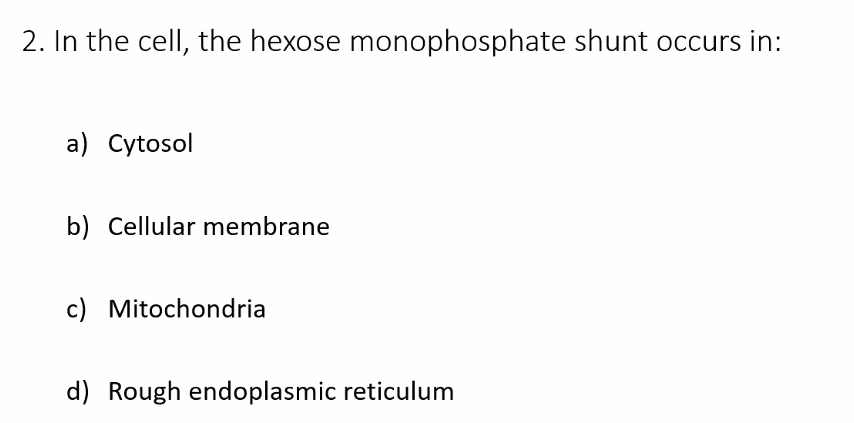
test question

it happens in the red blood cell in the cytosol.
<p>A) </p><p>test question</p><p>it happens in the red blood cell in the cytosol. </p>
30
New cards
<p>C) </p>

C)

31
New cards

A)

<p>A) </p>
32
New cards

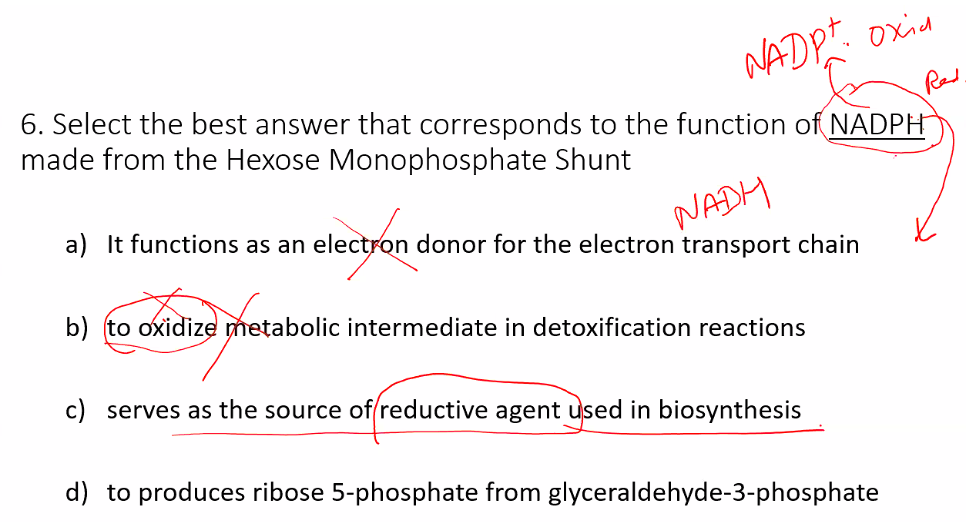
C)

NADPH is the reductive agent

NADH is the electron donor
<p>C)</p><p>NADPH is the reductive agent</p><p>NADH is the electron donor</p>
33
New cards

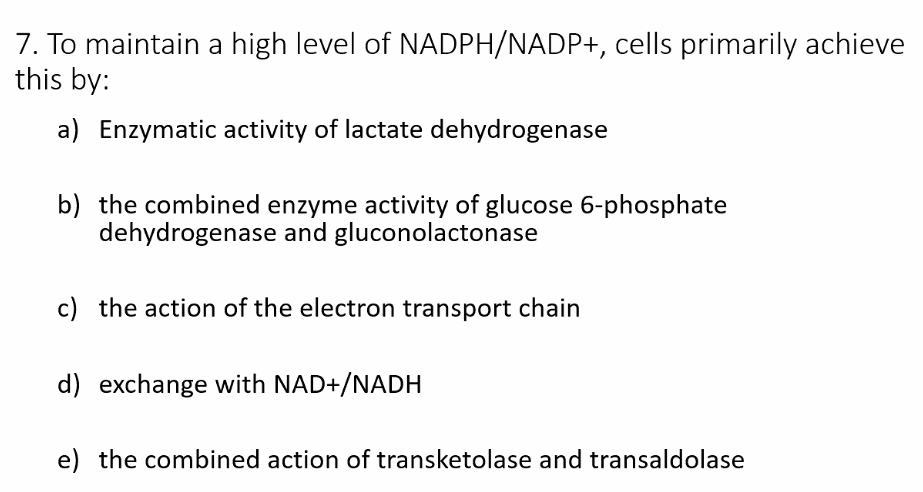
B)

you missed this question, submit this.
<p>B) </p><p>you missed this question, submit this. </p>
34
New cards
<p>E) </p>

E)

35
New cards
<p>C) </p>

C)

the answer is in the pathway.

<p>the answer is in the pathway. </p>
36
New cards
<p>E) </p>

E)

37
New cards
term image
38
New cards
term image
39
New cards
term image
40
New cards
term image
41
New cards
knowt flashcard image
42
New cards
term image
43
New cards
term image
44
New cards
term image
45
New cards
term image
46
New cards
<p>A) </p>

A)

47
New cards
<p>E) </p>

E)

48
New cards
<p>B) </p>

B)

49
New cards
<p>B) </p>

B)

50
New cards
<p>E) </p>

E)

51
New cards
<p>D) </p>

D)

52
New cards
<p>B) </p>

B)

53
New cards
<p>A) </p>

A)

54
New cards
<p>E) </p><p>B is NOT correct. </p>

E)

B is NOT correct.

55
New cards
term image
56
New cards
term image
57
New cards
term image
58
New cards
term image
59
New cards
term image
60
New cards
term image
61
New cards
term image
62
New cards
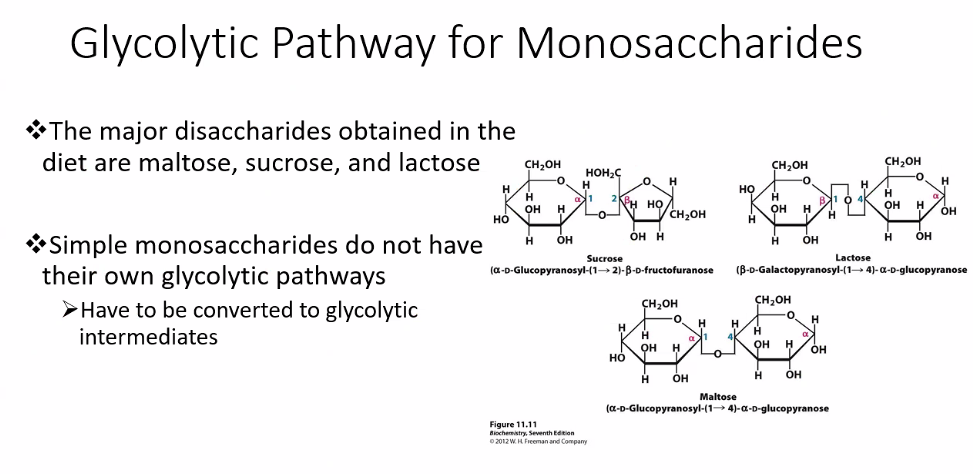
<ol><li><p>sucrose becomes either fructose or glucose </p></li></ol><p></p>
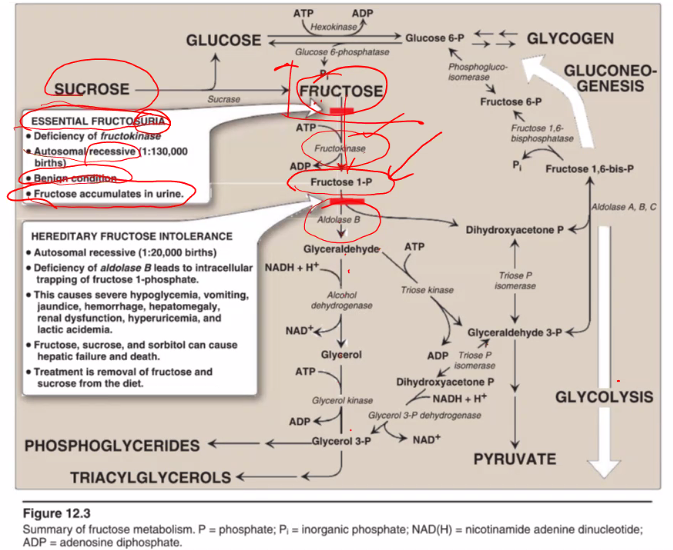
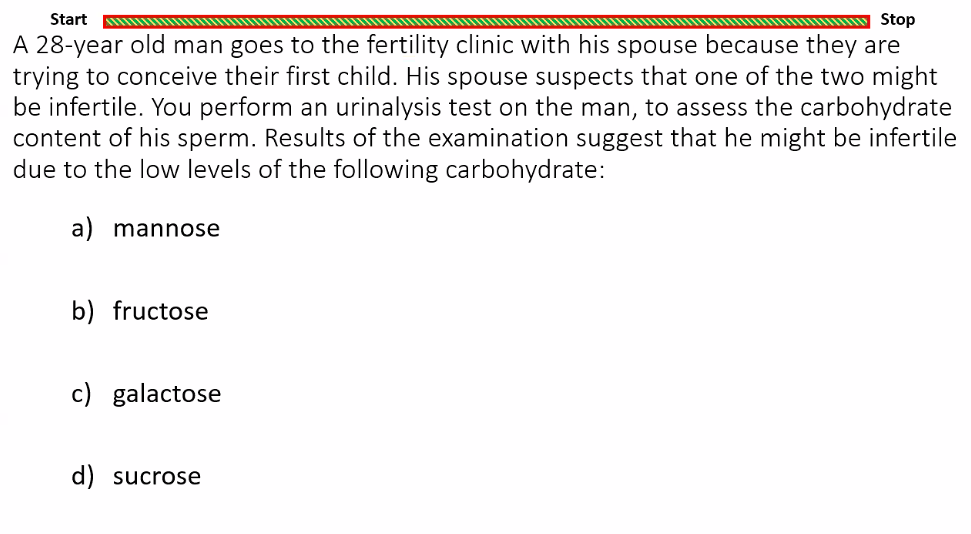
  1. sucrose becomes either fructose or glucose
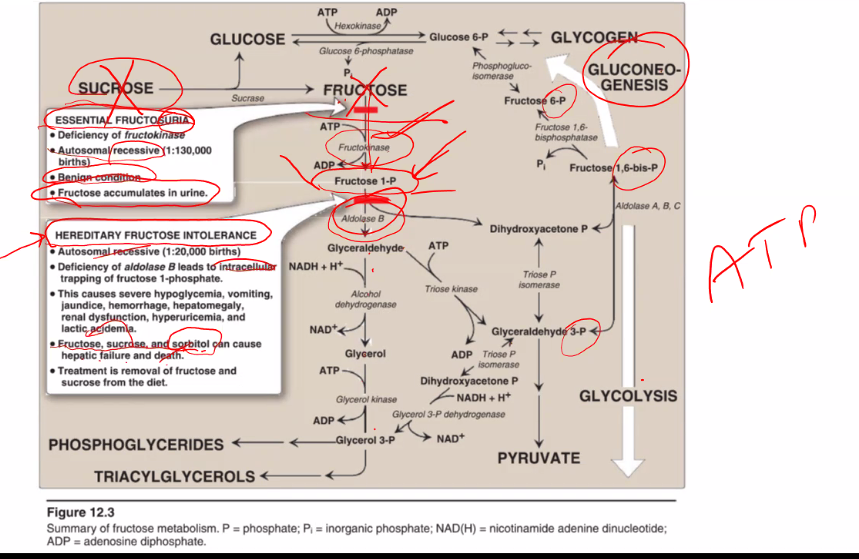
knowt flashcard image
63
New cards
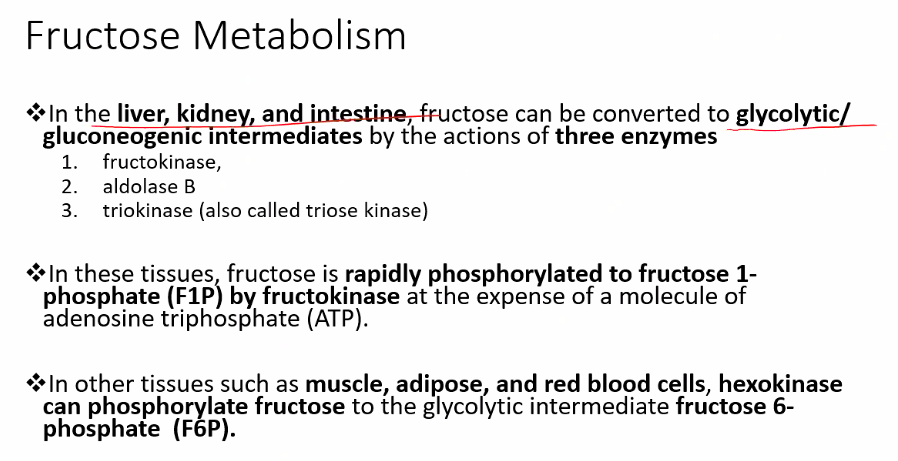
<p>know these three enzymes</p>

know these three enzymes

64
New cards
term image
65
New cards
term image
knowt flashcard image
66
New cards
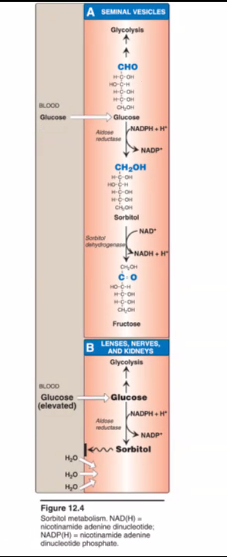
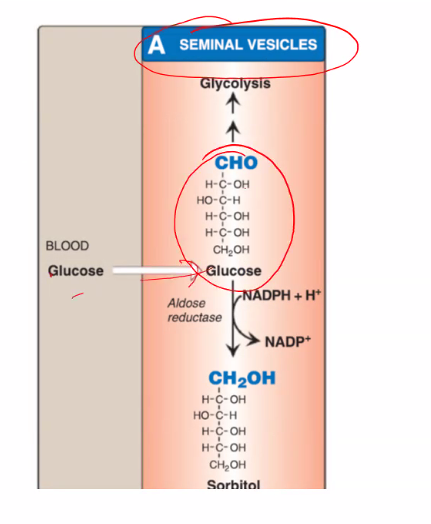
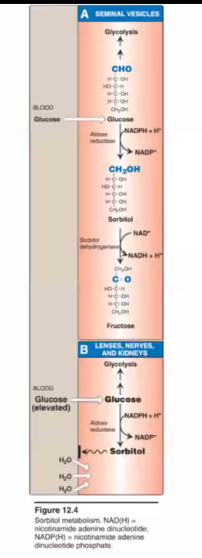
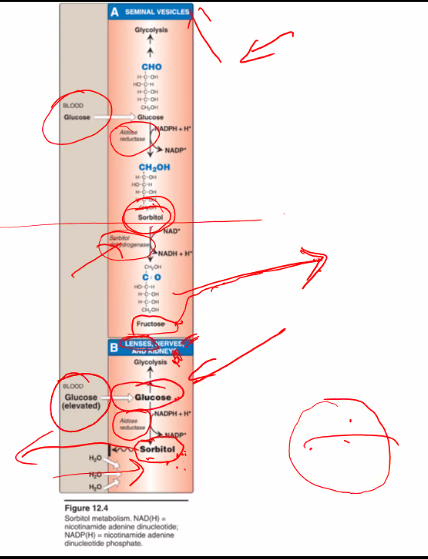
<p>people have elevate glucose in the blood, diabetes, often have eye problems, because there is glucose in their eye. </p>

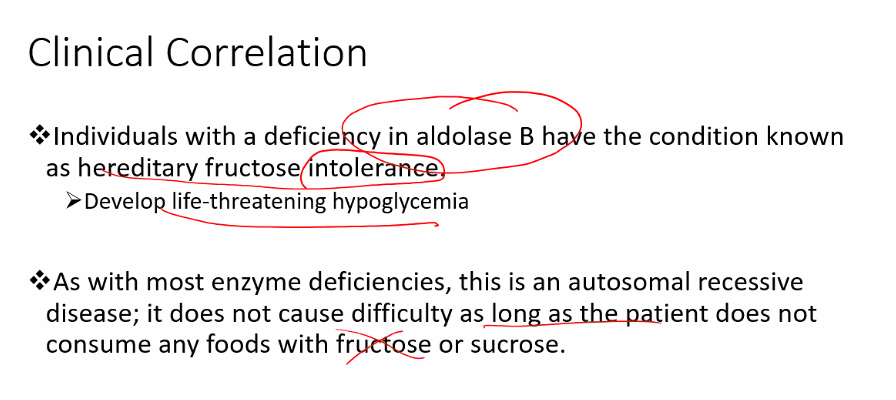
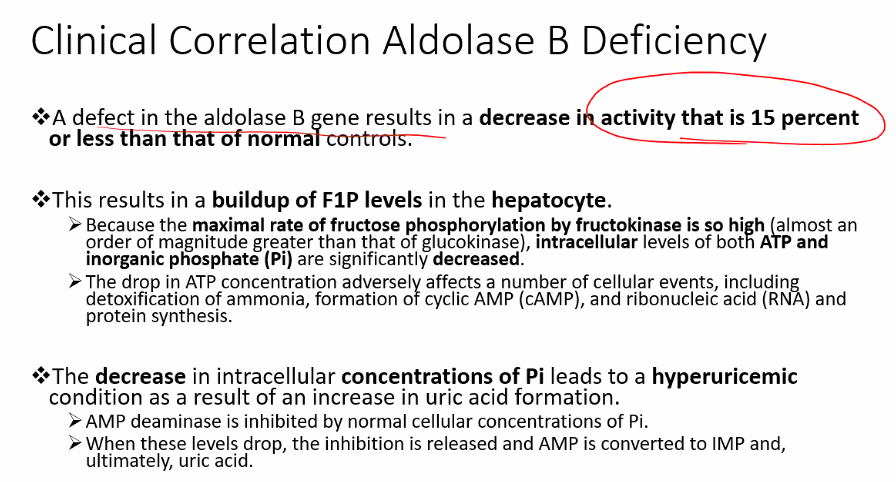
people have elevate glucose in the blood, diabetes, often have eye problems, because there is glucose in their eye.
67
New cards
term image
knowt flashcard image
68
New cards
term image
69
New cards
term image
70
New cards
term image
71
New cards
<p>B) </p><p>we don’t want that, so we combine it to be more efficient/ </p>
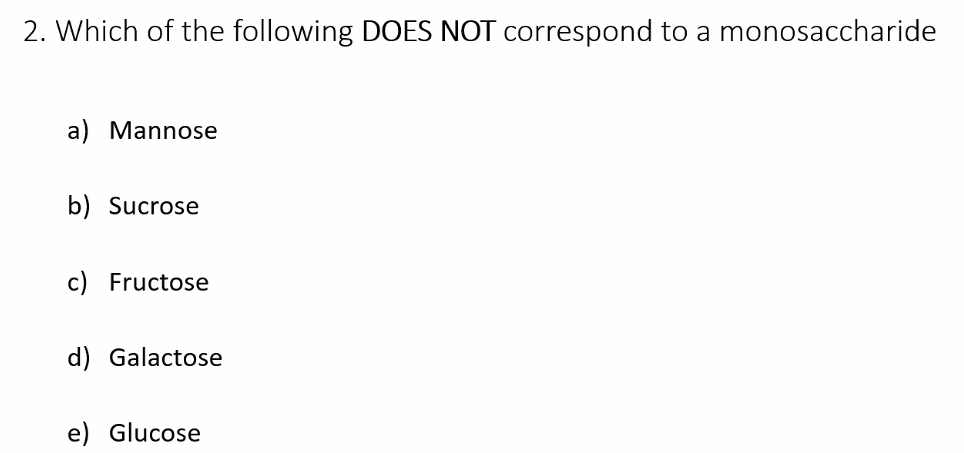
B)

we don’t want that, so we combine it to be more efficient/

72
New cards
<p>B) </p>

B)

73
New cards
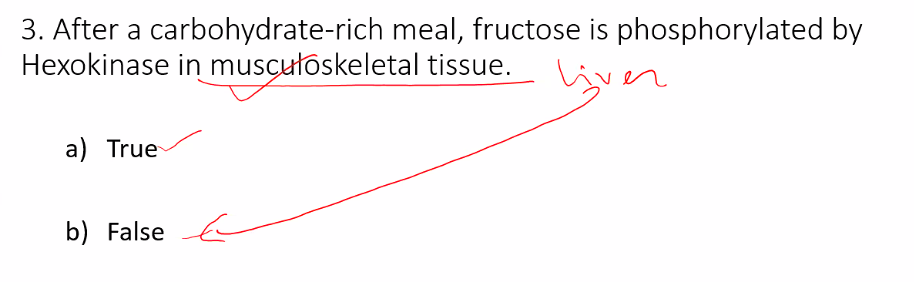
<p>A) </p><p>in the muskoloskeletal system, it’s true</p><p>in the liver, this is false. </p>

A)

in the muskoloskeletal system, it’s true

in the liver, this is false.
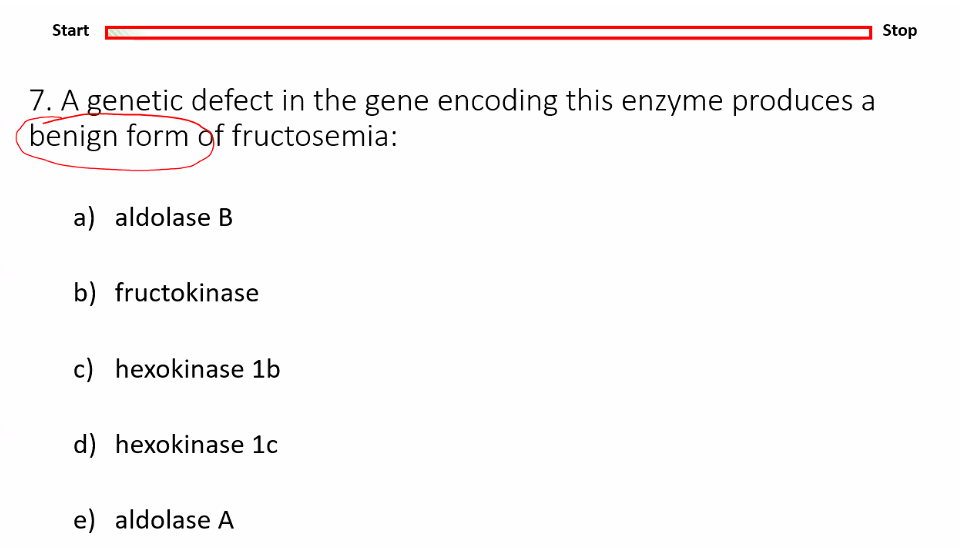
74
New cards
<p>B) </p>

B)

75
New cards
<p>A) </p>

A)

76
New cards
<p>A) </p>

A)

77
New cards
<p>D) </p>

D)

78
New cards
<p>D) </p>

D)

79
New cards
term image
80
New cards
term image
81
New cards
term image
knowt flashcard image
82
New cards
term image
knowt flashcard image
83
New cards
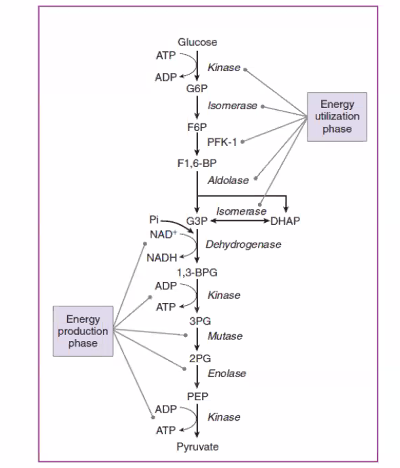
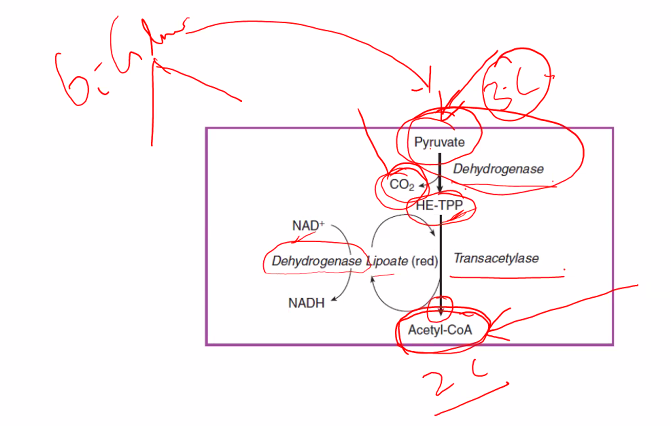
<p>1 glucose → 2 pyruvates &amp; 2 NADH. </p><p>each pyruvate has 3 carbons</p><p>this is important to keep track of so in the end we can calculate how many ATPs we could generate. </p>

1 glucose → 2 pyruvates & 2 NADH.

each pyruvate has 3 carbons

this is important to keep track of so in the end we can calculate how many ATPs we could generate.
knowt flashcard image
84
New cards
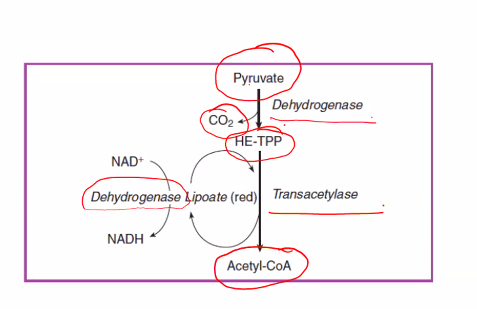
<p>vitamin B1 is deficient in alcoholics. </p>

vitamin B1 is deficient in alcoholics.
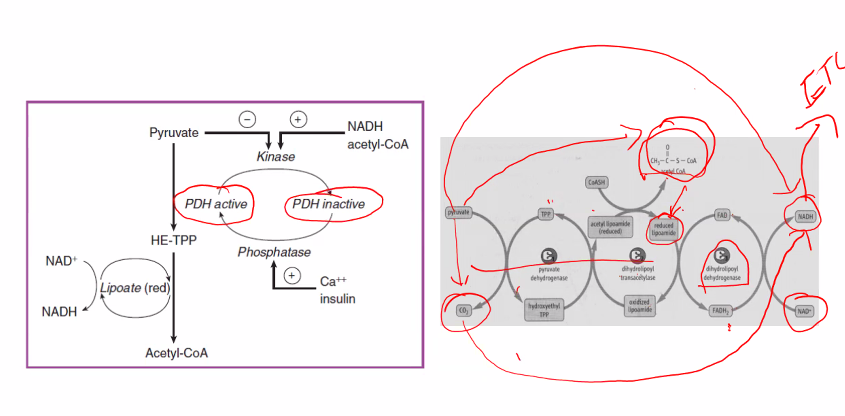
knowt flashcard image
85
New cards
term image

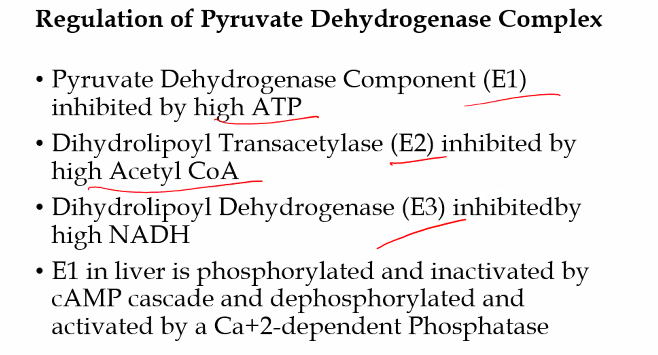
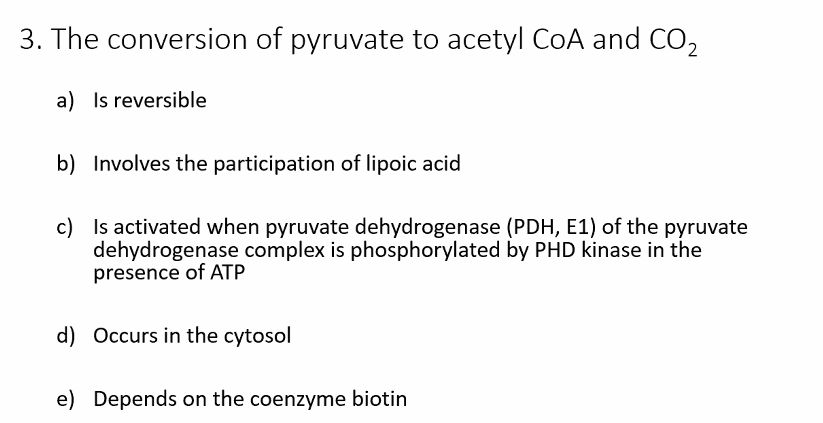
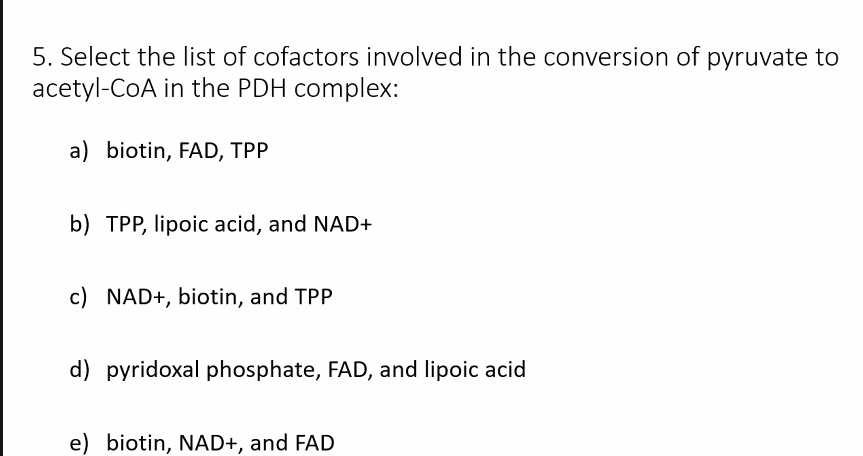
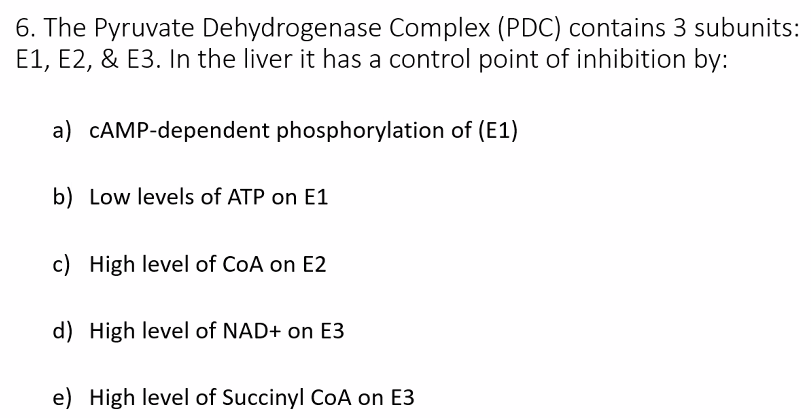
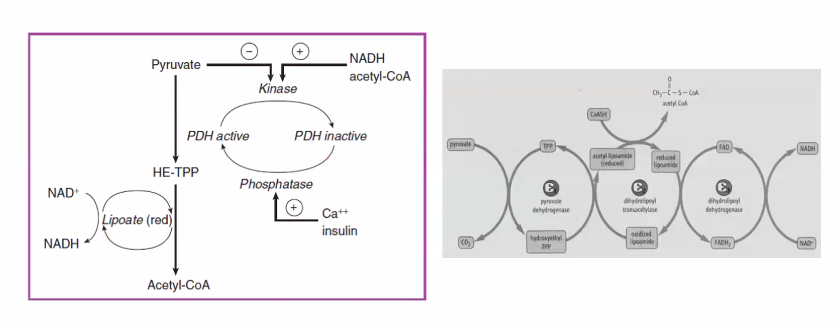
regulation of pyruvate dehydrogenase complex.
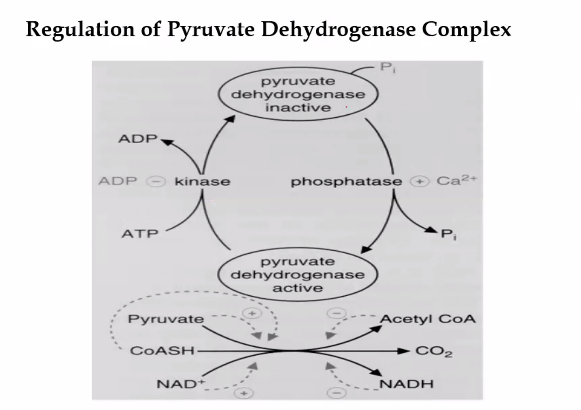
<p>regulation of pyruvate dehydrogenase complex. </p>
86
New cards
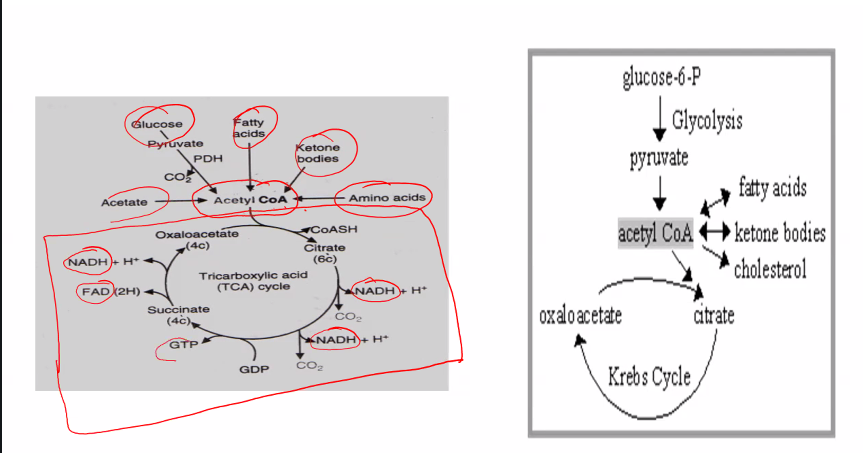
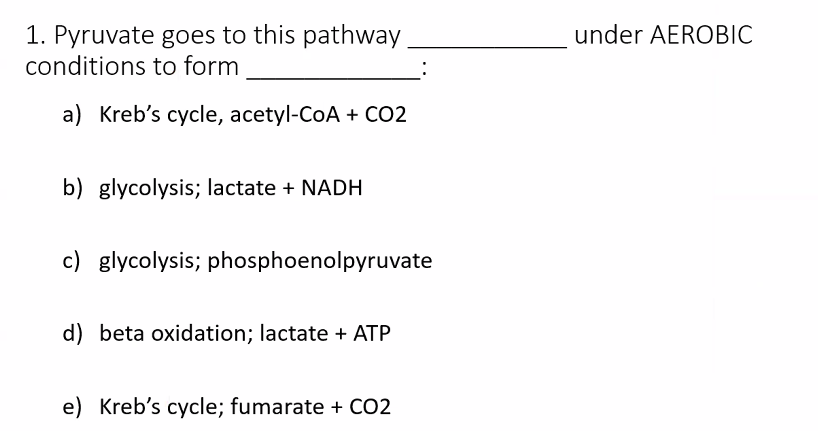
<p>krebs cycle: acetyl-CoA → 2NADH, 2 CO2, 1 GTP, FADH2, NADH</p><p>you cannot have over 1000ATP, once ATP count gets over 1000, you start to store it as something different (fat, etc). </p>

krebs cycle: acetyl-CoA → 2NADH, 2 CO2, 1 GTP, FADH2, NADH

you cannot have over 1000ATP, once ATP count gets over 1000, you start to store it as something different (fat, etc).
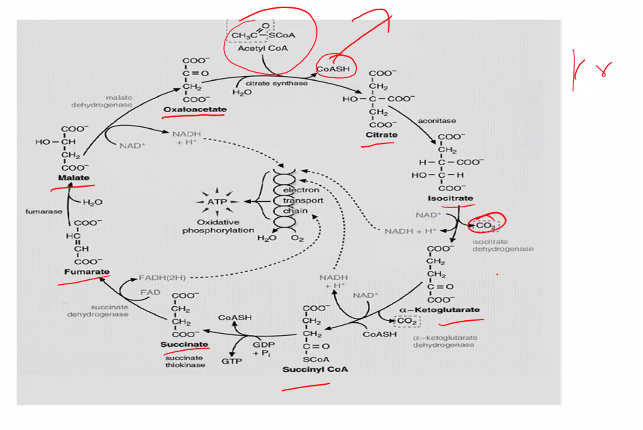
knowt flashcard image
87
New cards
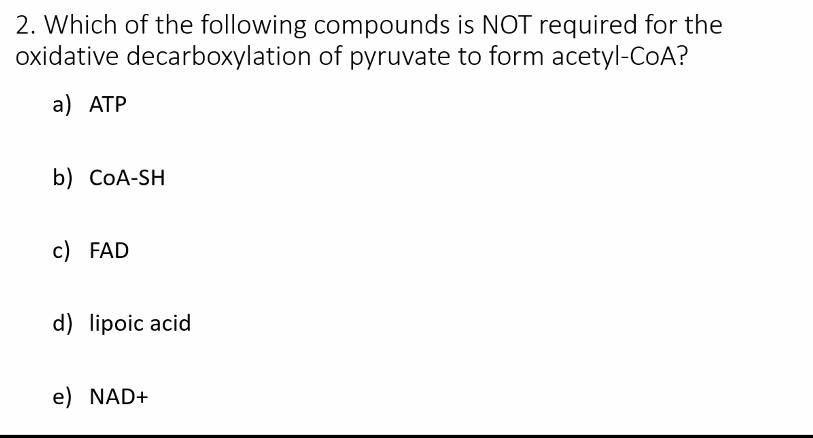
<p>A) </p><p>we don’t form acetyl-CoA, we break it down. </p>

A)

we don’t form acetyl-CoA, we break it down.

A)
<p>A) </p>
88
New cards
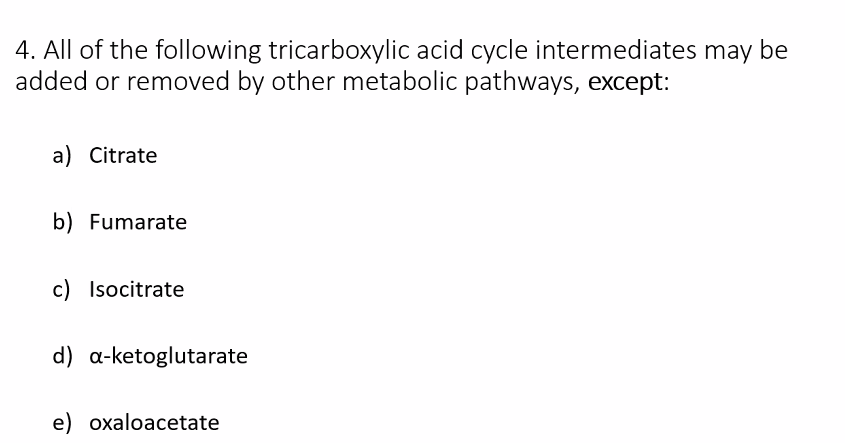
<p>B) </p><p>C is not the right one here (you did not get this far to explain it). </p>

B)

C is not the right one here (you did not get this far to explain it).

C)

isocitrate may be added or removed.
<p>C) </p><p>isocitrate may be added or removed. </p>
89
New cards
term image

B)

<p>B) </p>
90
New cards
<p>A) </p><p>you chose C) </p>

A)

you chose C)

A)

<p>A) </p>
91
New cards
<p>A) </p>

A)

<p></p>
92
New cards
<p>B) </p>

B)

both A and D

<p>both A and D</p>
93
New cards
<p>B) </p>

B)

A)

<p>A) </p>
94
New cards
<p>A) </p>

A)

C)

<p>C) </p>
95
New cards
term image
knowt flashcard image
96
New cards
term image

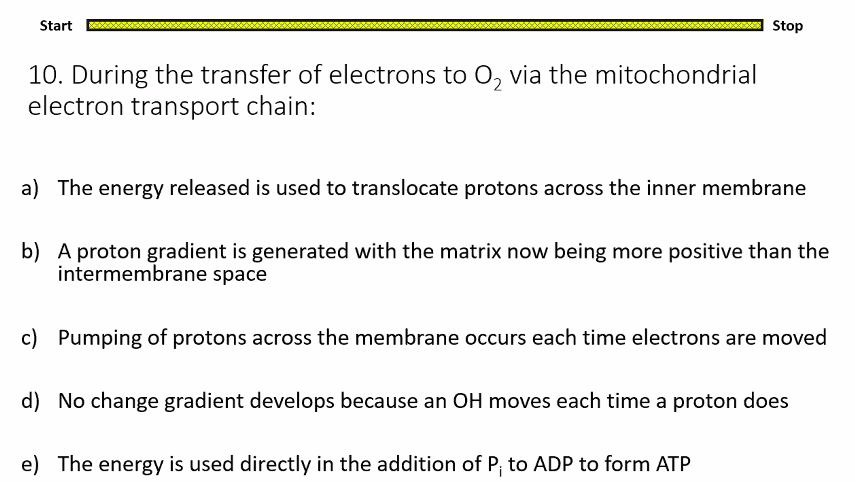
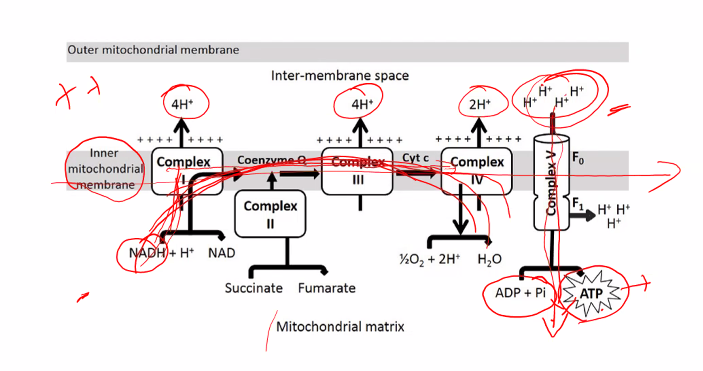
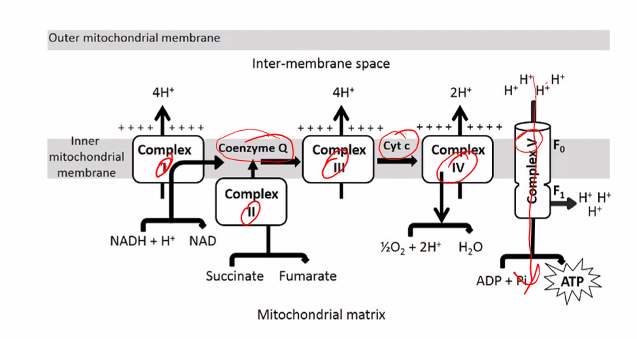
we cannot live without oxygen for even a few minutes, because oxygen accepts the electron.
<p>we cannot live without oxygen for even a few minutes, because oxygen accepts the electron. </p>
97
New cards
<p>the video goes over this. </p>

the video goes over this.

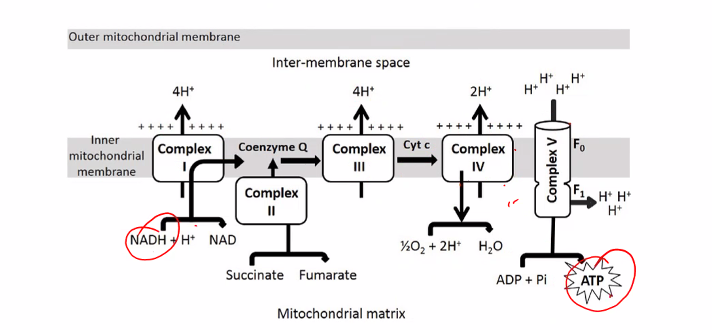
how many ATPs can you make from a glucose molecule?

1 glucose → 36-38 ATP.
<p>how many ATPs can you make from a glucose molecule?</p><p>1 glucose → 36-38 ATP. </p>
98
New cards
<p>D) </p>

D)

A)

<p>A) </p>
99
New cards
<p>C) </p>

C)

C)

<p>C) </p>
100
New cards
<p>A) </p>

A)

C)

<p>C) </p>