NURS 380: OB Exam Comprehensive Study Guide
 Call Kai
 Learn
Learn Practice Test
 Spaced Repetition
 Match
Match Flashcards
 Knowt Play
1/164

There's no tags or description
Looks like no tags are added yet.
Name | Mastery | Learn | Test | Matching | Spaced | Call with Kai | Chat |
|---|
No analytics yet
Send a link to your students to track their progress
165 Terms
What is the significance of antepartum care?
Antepartum care involves monitoring the health of the mother and fetus during pregnancy to prevent complications.
What is the EDD and how is it calculated?
The Estimated Due Date (EDD) is calculated using Naegele's Rule: subtract 3 months and add 7 days from the last menstrual cycle.
What does the GTPAL system stand for?
G - Gravida (total pregnancies), T - Term (pregnancies carried to term), P - Preterm (pregnancies birthed preterm), A - Abortion (loss before 20 weeks), L - Living (living children).
What is a Non-Stress Test (NST)?
A Non-Stress Test (NST) is a procedure that monitors fetal heart rate and movement to assess fetal well-being.
What are the criteria for a reactive NST?
A reactive NST requires at least two accelerations of the fetal heart rate within a 20-minute period.
What does a Biophysical Profile (BPP) assess?
A BPP assesses fetal well-being through ultrasound by evaluating fluid, movement, tone, and breathing.
What is the recommended time to start fetal kick counts?
Fetal kick counts should be started around 28 weeks of gestation.
What does clear amniotic fluid indicate?
Clear amniotic fluid indicates good fetal health, while green fluid may indicate the presence of meconium.
What is Prelabor Rupture of Membranes (PROM)?
PROM is the rupture of amniotic membranes before the onset of labor.
What are the signs of Preterm Labor?
Signs include uterine contractions, pressure in the pelvis, lower back pain, urinary frequency, and vaginal discharge.
What is the treatment for Preterm Labor?
Treatment may include medications like Nifedipine, Terbutaline, Magnesium Sulfate, and Betamethasone.
What is Gestational Diabetes and its screening tests?
Gestational Diabetes is a condition of insulin resistance during pregnancy, screened using a 1-hour glucose tolerance test (GTT) and a 3-hour GTT for at-risk mothers.
What are the risk factors for Gestational Diabetes?
Risk factors include obesity, physical inactivity, previous gestational diabetes, large babies, family history, hypertension, and advanced maternal age.
What is Placenta Previa?
Placenta Previa occurs when the placenta covers part or all of the cervix, leading to painless bright bleeding.
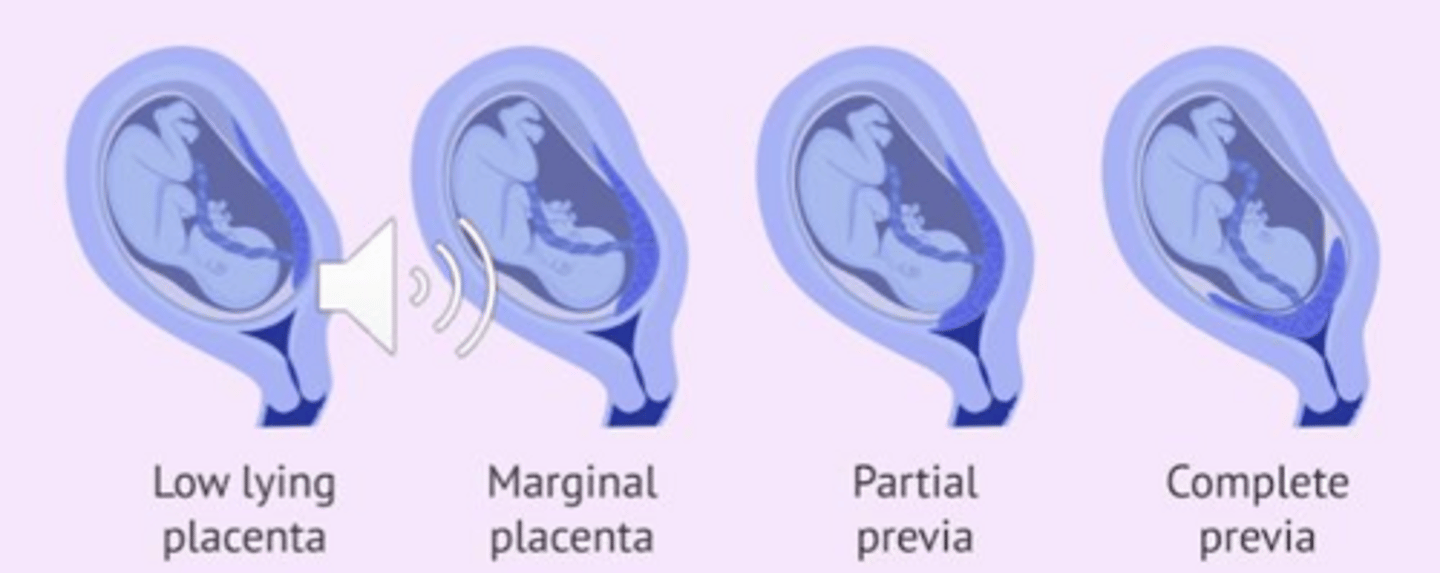
What is the management for Placenta Previa?
Management includes bed rest, no sexual intercourse, and avoiding vaginal exams.
What is Placental Abruption?
Placental Abruption is when the placenta detaches from the uterine wall before delivery, causing painful vaginal bleeding and abdominal pain.
What are the nursing interventions for Placental Abruption?
Nursing interventions include monitoring the patient, initiating IV access, and preparing for an emergency C-section.
What is Preterm Premature Rupture of Membranes (PPROM)?
PPROM is the rupture of membranes before 37 weeks of gestation prior to labor onset.
What are the risks associated with PPROM for the baby?
Risks include preterm delivery, neonatal sepsis, respiratory distress, and neurodevelopmental impairment.
What is the primary goal in managing Pre-eclampsia?
The primary goal is to prevent seizures and cerebral hemorrhage, often requiring delivery.
What are common symptoms of Pre-eclampsia?
Symptoms include high blood pressure, visual changes, swelling, upper right quadrant pain, headache, and protein in urine.
What medications are used to treat Pre-eclampsia?
Medications include antihypertensives (labetalol, hydralazine) and Magnesium Sulfate.
What is the significance of fetal kick counts?
Fetal kick counts help monitor fetal health and detect potential issues early in pregnancy.
What is the definition of macrosomia?
Macrosomia refers to a condition where a baby is significantly larger than average, typically over 9 lbs.
What is the role of Betamethasone in pregnancy?
Betamethasone is used to accelerate lung development in the fetus, especially in cases of preterm labor.
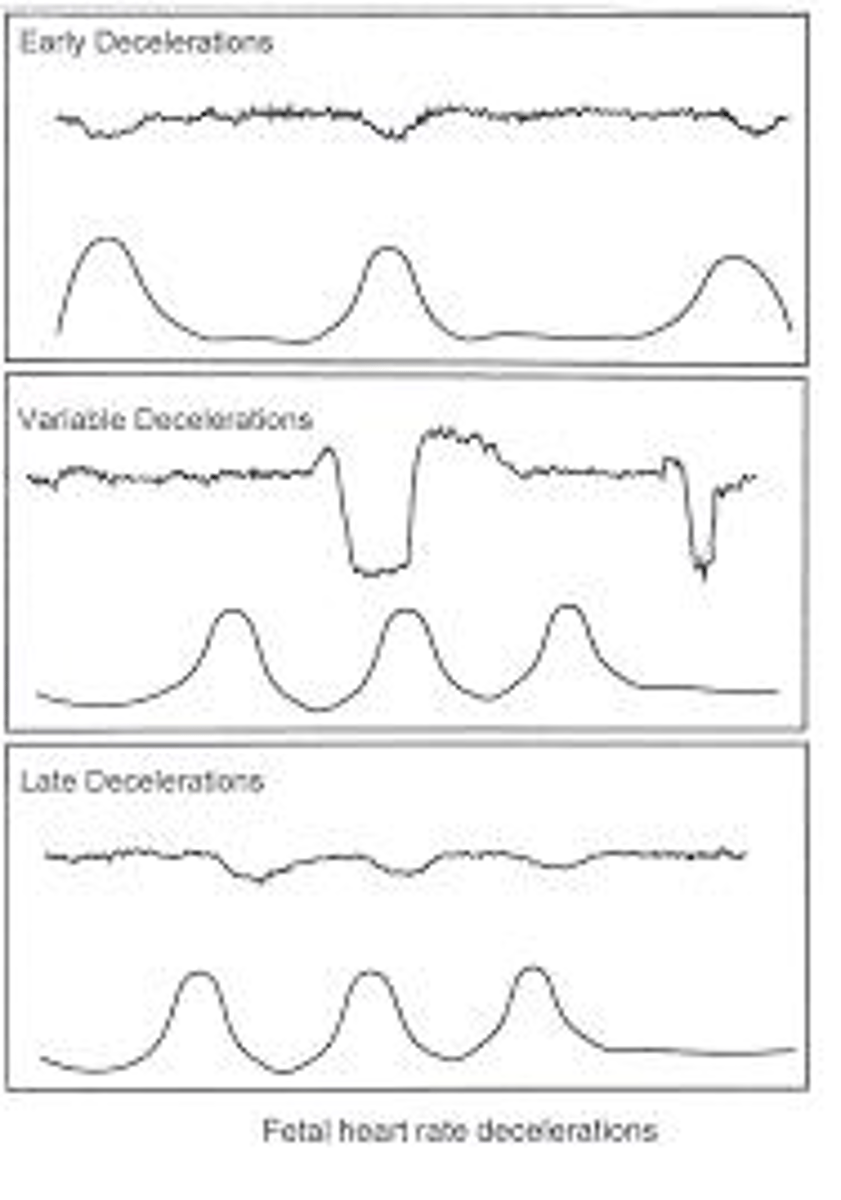
What is the significance of decelerations in fetal heart rate (FHR)?
Decelerations indicate potential issues such as uteroplacental insufficiency or cord compression.
What does VEAL stand for in FHR patterns?
Variable Deceleration, Early Deceleration, Acceleration, Late Deceleration.
What does CHOP represent in relation to FHR decelerations?
Cord Compression, Head Compression, Placental Insufficiency.
What is the management for variable decelerations?
Maternal repositioning, knee-chest position, oxygen at 10L, decrease or stop oxytocin.
What characterizes early decelerations?
Slowing of FHR starts with contraction and returns to baseline at the end of contraction.
What is the management for late decelerations?
Reposition the mother, assess for vaginal bleeding, increase fluid, and apply oxygen.
What is the normal baseline FHR range?
110-160 beats per minute.
What does an acceleration of FHR indicate?
The baby is well oxygenated and doing well.
What are the phases of cervical dilation during labor?
Phase 1: Latent (0-3 cm), Phase 2: Active (4-7 cm), Phase 3: Transition (8-10 cm).
What occurs during Stage 1 of labor?
Onset of labor to complete cervical dilation, including contractions and rupturing of membranes.
What is the duration for placenta expulsion in Stage 3 of labor?
5-30 minutes after the birth of the newborn.
What is the postpartum period defined as?
Begins after delivery of the placenta and ends within 4 hours.
What does BUBBLEHE stand for in postpartum assessment?
Breasts, Uterus, Bladder, Bowels, Lochia, Homan's sign (or Hemorrhage), and Episiotomy (or Emotional status)
What is a boggy uterus and its significance?
A boggy uterus indicates uterine atony, which can lead to hemorrhage.
What interventions are recommended for a boggy uterus?
Continuous fundus massage, reassess every 5 minutes, and call for help if needed.
What is TOLAC?
Trial of Labor After Cesarean section.
What are common complications for the mother during labor?
Vaginal and cervical lacerations, hemorrhage, infection.
What are potential complications for the baby during labor?
Cephalohematoma, intracranial hemorrhage, scalp lacerations.
What is the purpose of using uterotonic drugs like Pitocin in labor?
To manage the third stage of labor and prevent postpartum hemorrhage.
What does the term 'vacuum delivery' refer to?
A method where a cup is placed on the fetal head to assist in delivery.
What is the significance of assessing lochia postpartum?
To monitor for complications such as hemorrhage and ensure normal recovery.
What is the purpose of skin-to-skin contact after delivery?
To promote bonding and stimulate natural release of oxytocin.
What does 'VBAC' stand for?
Vaginal Birth After Cesarean section.
What is the definition of tachysystole?
More than 5 contractions in a 10-minute period.
What is the role of IV medication during labor?
To manage pain and provide comfort to the laboring mother.
What is the purpose of performing a sterile vaginal exam during labor?
To check cervical dilation and labor progress.
What does 'engorgement' refer to in postpartum care?
Swelling of the breasts due to milk production, which can cause discomfort.
What should a mother offer first when breastfeeding?
The opposite breast first.
How much should a newborn void after delivery?
300 mL within 2-4 hours.
What are some methods to promote urination postpartum?
Using a bedpan, spraying warm water on the urethra, or using a cotton ball with peppermint oil.
What indicates adequate breastfeeding in a newborn?
More than 6 wet diapers per day and recovery of birth weight by 2 weeks.
What is lochia?
The vaginal discharge after childbirth, consisting of blood, mucus, and uterine tissue.
What is an episiotomy?
An incision in the perineum to provide more space for delivery.
What are the stages of lochia?
Rubra (bright red, 1-3 days), Serosa (pinkish/brown, days 4-10), Alba (yellowish/white).
What is the purpose of the Edinburgh Postnatal Depression Scale?
To assess the emotional well-being of postpartum mothers.
What are signs of postpartum blues?
Anger, anxiety, mood swings, sadness, weeping, difficulty sleeping and eating.
What is postpartum hemorrhage?
Blood loss greater than 500 mL for vaginal birth or 1000 mL for C-section.
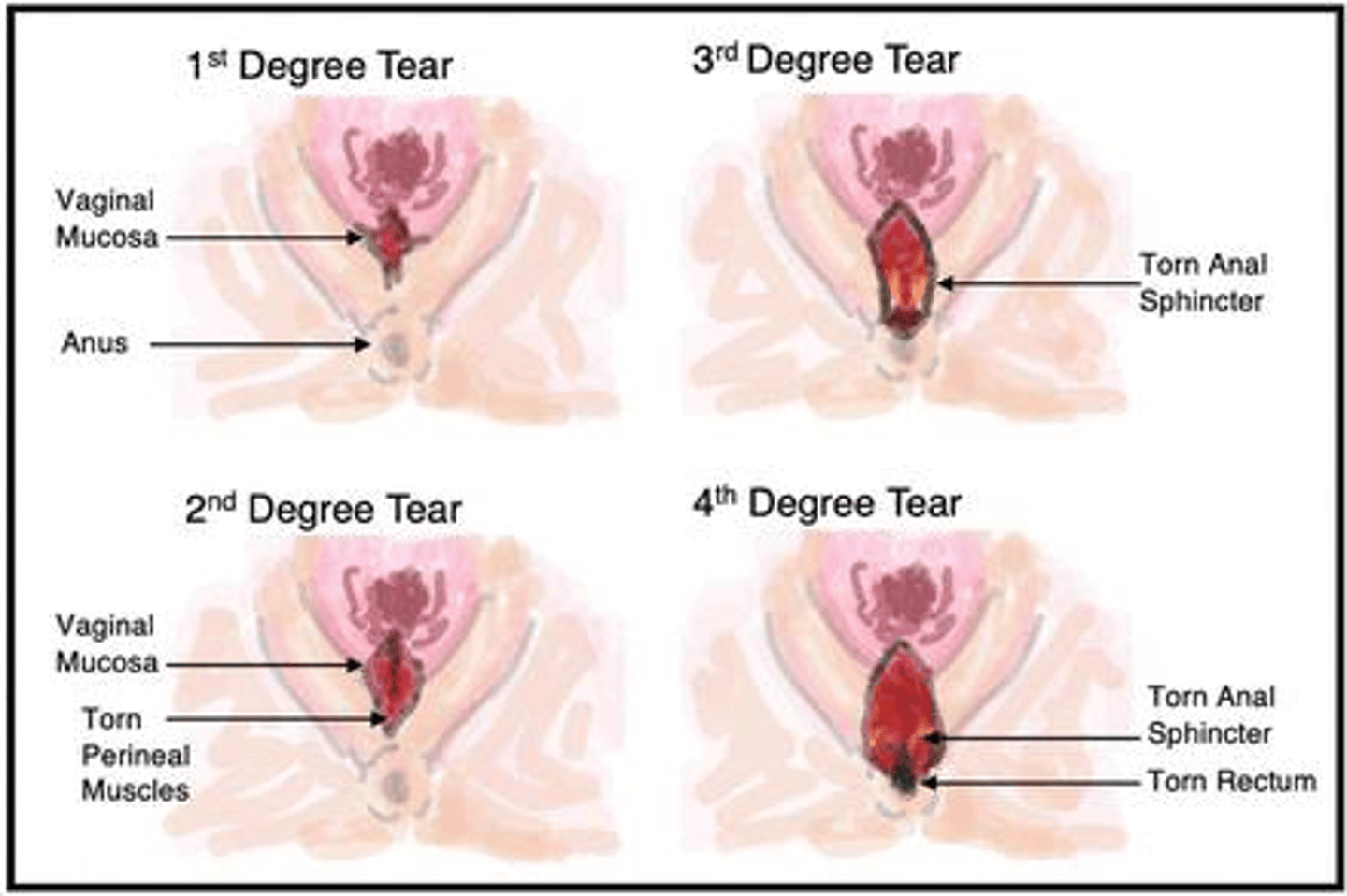
What are the degrees of perineal lacerations?
1st degree: skin and mucous membranes; 2nd degree: plus fascia; 3rd degree: plus rectal sphincter; 4th degree: plus rectal lumen.
What are common nursing interventions for incisional wounds?
Assessing the wound, using witch hazel pads, and avoiding heat sources.
What is uterine atony?
A condition where the uterus is boggy and unable to contract effectively, leading to excessive bleeding.
What are the clinical manifestations of postpartum depression?
Inability to care for self or infant, significant weight changes, fatigue, feelings of worthlessness, and mood swings.
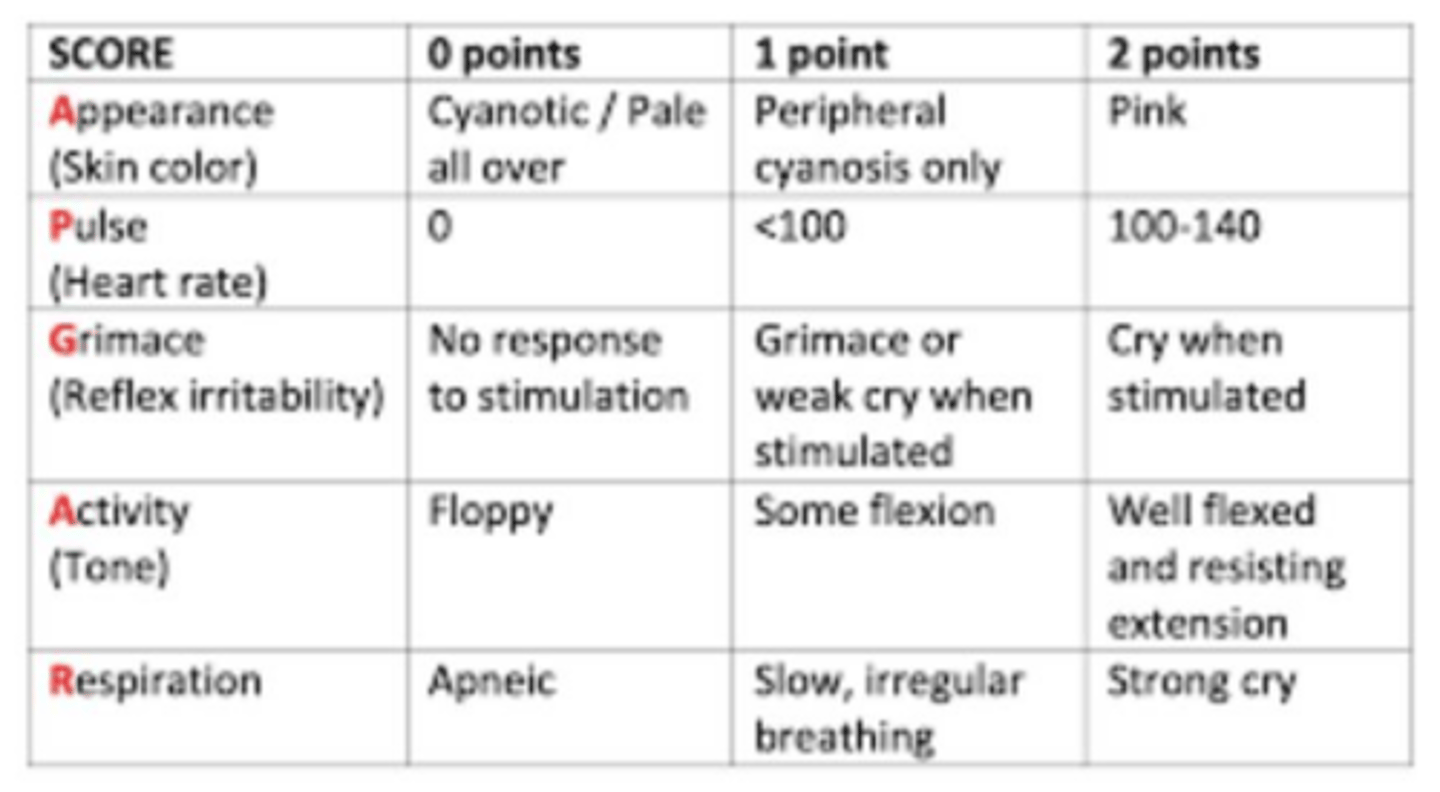
What is the APGAR score?
A quick test performed on a newborn at 1 and 5 minutes after birth to assess their health.
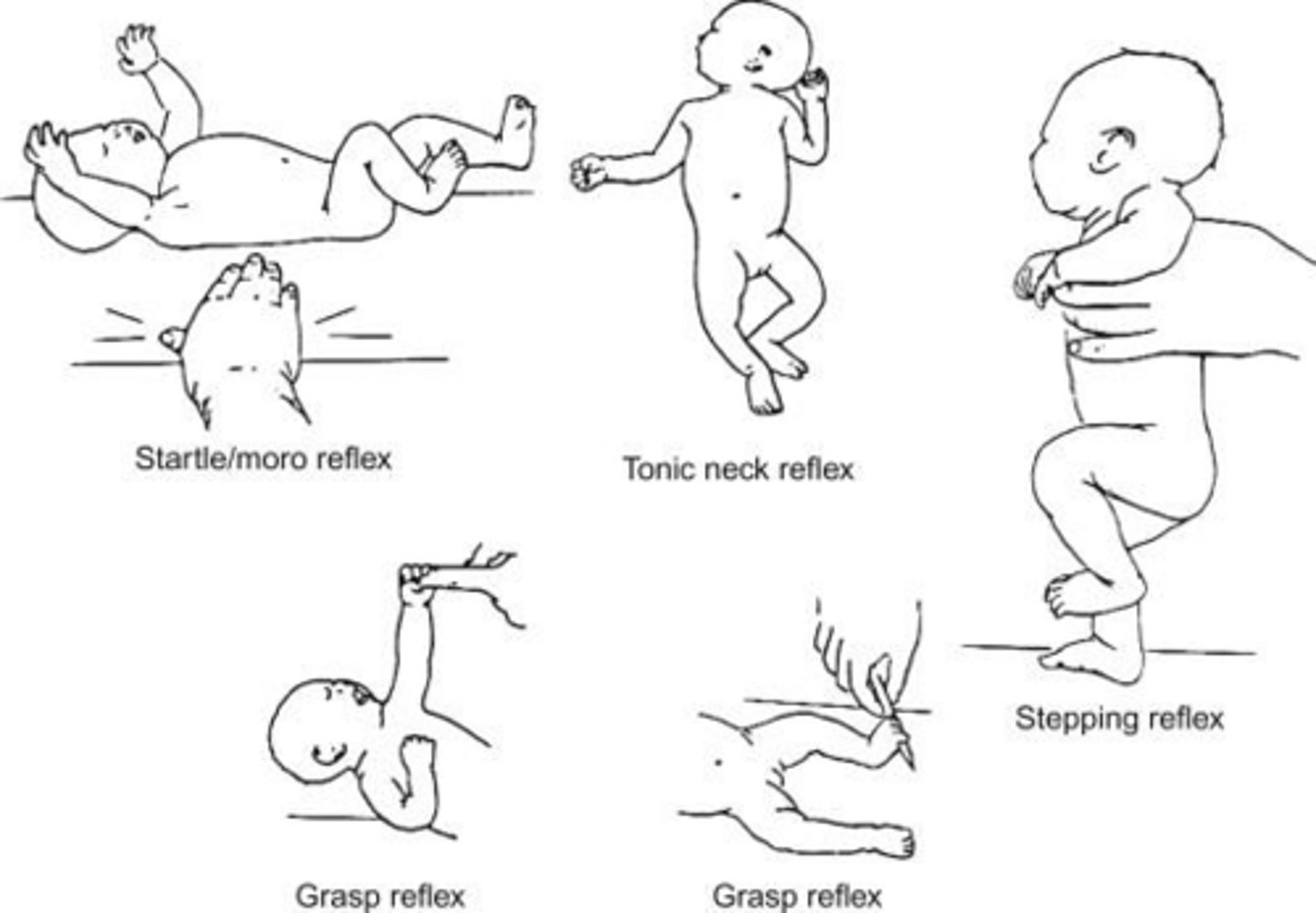
What are some newborn reflexes?
Palmar grasp, Moro reflex, Babinski reflex, plantar grasp, stepping reflex, tonic reflex, and sucking/rooting reflex.
What are the methods of contraception?
Surgical methods, natural family planning, barrier methods, and hormonal methods.
What is the effectiveness of coitus interruptus?
It is one of the least effective methods of contraception.
What should be monitored for a newborn's thermoregulation?
Axillary temperature and ensuring the baby is dry and warm.
What is the significance of monitoring blood glucose in newborns?
To prevent hypoglycemia after birth, especially in infants of diabetic mothers.
What are the signs of infection postpartum?
Fever, increased pain, foul-smelling lochia, and changes in wound appearance.
What are the signs of thrombin disorders postpartum?
Prolonged bleeding, bleeding from IV sites, and abnormal clotting studies.
What is the role of uterotonic medications?
To treat uterine atony and promote uterine contraction.
What is the purpose of skin-to-skin contact with newborns?
To promote bonding and thermoregulation.
What is the recommended action if a newborn's APGAR score is less than 7 at 5 minutes?
Additional scoring should be done every 5 minutes.
What is the function of a diaphragm in contraception?
Prevents STIs and requires refitting every 2 years.
What is a cervical cap and its requirements?
It must stay in place for 6 hours after intercourse and must be cleaned; it does not protect against STIs.
What is transvaginal sterilization?
Insertion of small flexible tubes into fallopian tubes to scar tissue and prevent conception; not reversible.
What is a vasectomy?
A male sterilization method involving the severing of the vas deferens; contraception should be used until all sperm are removed.
What are emergency oral contraceptives?
Also known as the morning-after pill, it should be taken within 72 hours and is not for regular use.
What is the purpose of the transdermal contraceptive patch?
Delivers consistent hormones through the skin.
How often are injectable progestins administered?
Every 11-13 weeks, requiring 4 injections per year.
What is the contraceptive vaginal ring?
A ring that delivers hormones vaginally and must be changed every 3 weeks.
What is an implantable progestin?
A minor surgery to insert a rod under the skin that delivers hormones for up to 3 years.
What is an Intrauterine Device (IUD)?
A device that is chemically active in the uterus, damaging sperm; hormonal IUDs last 3-5 years, copper IUDs last 10 years.
What is Misoprostol (Cytotec) used for?
Inducing contractions and reducing postpartum hemorrhage.
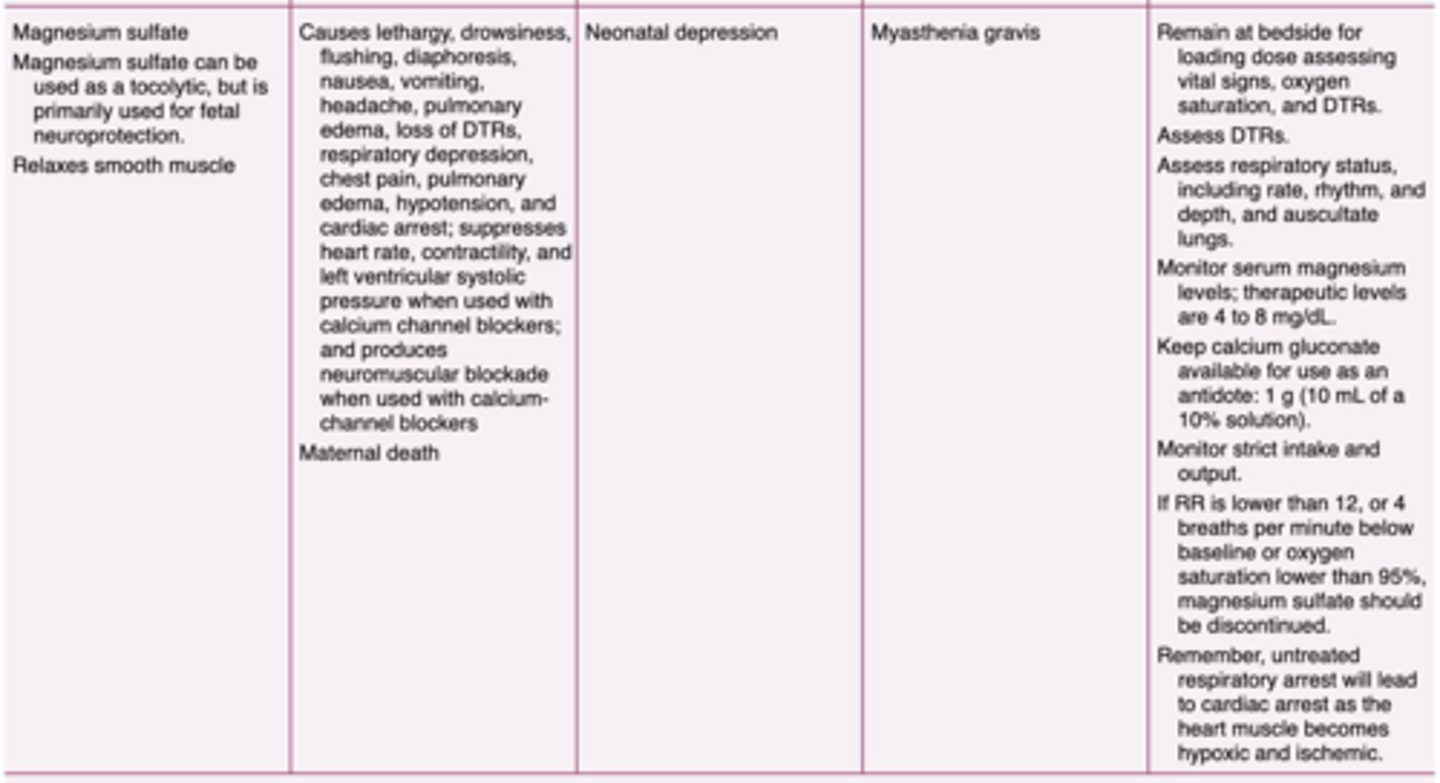
What are the uses of Magnesium Sulfate in pregnancy?
Neuroprotection for the baby and prevention/treatment of seizures associated with severe eclampsia or preeclampsia.
What is Rhogam and when is it given?
Given to Rh-negative mothers carrying Rh-positive babies at 26-28 weeks and after delivery.
What should be monitored after administering an epidural?
Baby's heart rate and mother's vital signs; blood pressure can drop.
What is Methylergonovine (Methergine) used for?
Prevention and treatment of postpartum or post-abortion hemorrhage caused by uterine atony.
What is the purpose of Vitamin K in newborns?
To prevent hemorrhagic diseases; administered as 0.5-1 mg IM into the vastus lateralis.
What does NST stand for in antenatal testing?
Non-Stress Test, which assesses fetal heart rate accelerations.
What is the purpose of corticosteroids like betamethasone in pregnancy?
To accelerate fetal lung development, especially in preterm labor.
What is the GTPAL system in obstetrics?
A method to record the number of pregnancies: G (Gravida), T (Term), P (Preterm), A (Abortions), L (Living children).
What is the glucose tolerance test (GTT) used for?
To screen for gestational diabetes, typically done at 28 weeks.
What is the significance of monitoring magnesium levels during pregnancy?
To prevent magnesium toxicity when administering magnesium sulfate.
What does BPP stand for in pregnancy monitoring?
Biophysical Profile
What is assessed during a BPP?
Fluid movement and muscle tone using ultrasound.