Series 1 Form B Part 4
 Call Kai
 Learn
Learn Practice Test
 Spaced Repetition
 Match
Match Flashcards
 Knowt Play
1/44

There's no tags or description
Looks like no tags are added yet.
Name | Mastery | Learn | Test | Matching | Spaced | Call with Kai | Chat |
|---|
No analytics yet
Send a link to your students to track their progress
45 Terms
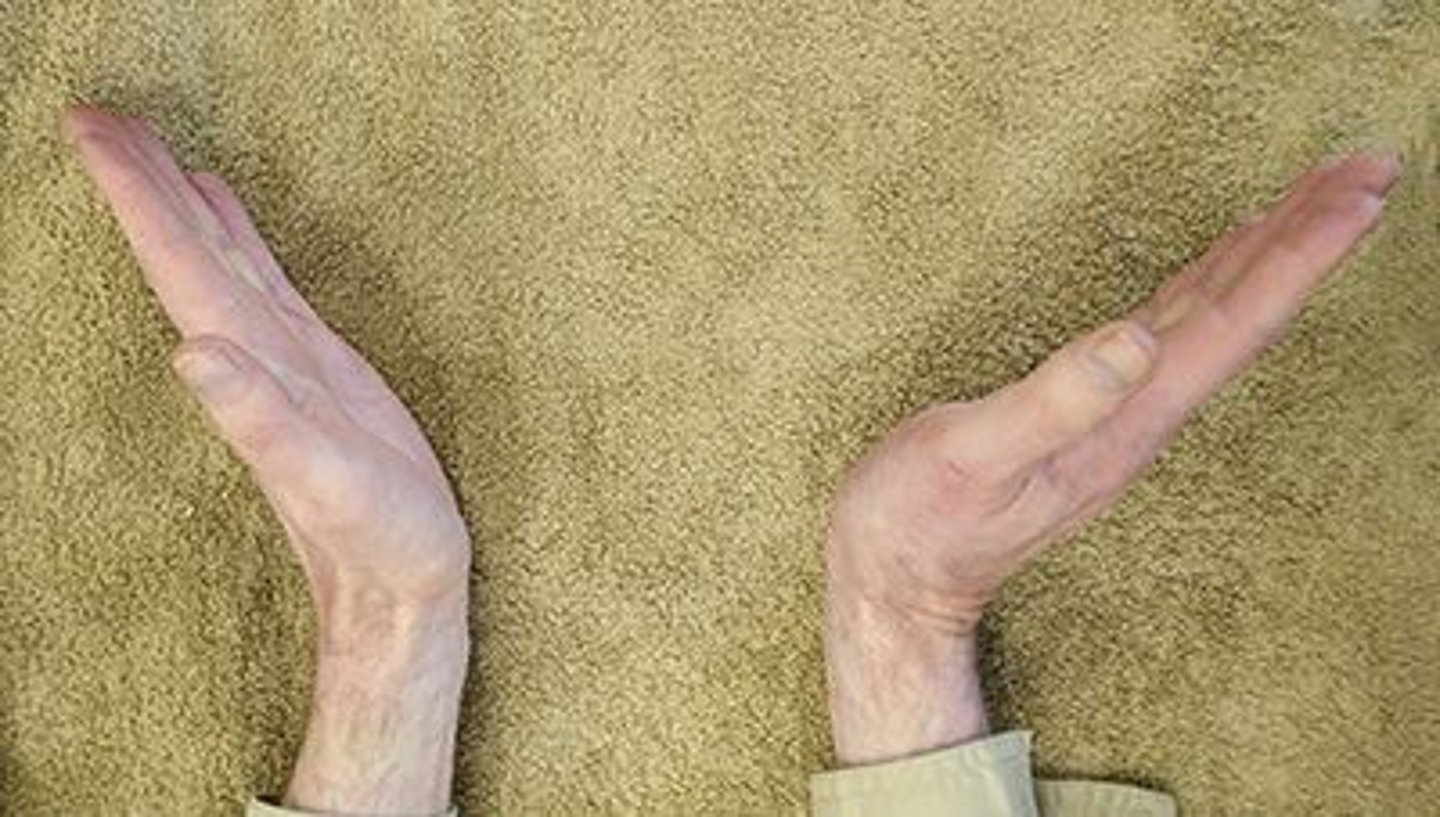
The patient whose hands are shown in the photograph exhibits a capsular pattern and firm end-feel of the left wrist. While stabilizing the distal radius and ulna, a physical therapist performs small-amplitude oscillations to the proximal carpal bones at the limit of the available motion and into tissue resistance. In which directions should the therapist move the carpals to improve the patient's ability to lift a heavy suitcase?
1.Dorsal and ulnar
2.Dorsal and radial
3.Volar (palmar) and ulnar
4.Volar (palmar) and radial
4,4
1. The power grip produces the greatest amount of force for hand grip. The power grip of the hand requires range of motion of slight extension and ulnar deviation. The dorsal mobilization is used for improving flexion, while the ulnar mobilization is used for improving radial deviation. Therefore, both of these mobilizations would not help improve the motions required for the power grip.
2. The power grip produces the greatest amount of force for hand grip. The power grip of the hand requires range of motion of slight extension and ulnar deviation. The dorsal mobilization would improve flexion, while the radial mobilization would improve ulnar deviation. Therefore, these would not be the most effective mobilization directions.
3. The power grip produces the greatest amount of force for hand grip. The power grip of the hand requires range of motion of slight extension and ulnar deviation. Although mobilization in a volar (palmar) direction would improve extension, the ulnar glide would increase radial deviation, not ulnar deviation.
4. The power grip produces the greatest amount of force for hand grip. The power grip of the hand requires range of motion of slight extension and ulnar deviation. While stabilizing the distal radius and ulna, mobilizing the proximal carpal rows in a volar (palmar) direction will increase extension, while a radial mobilization will increase ulnar deviation (Dutton). Therefore, a volar (palmar) glide followed by a radial glide would improve both extension and ulnar deviation, resulting in an improved power grip.
Which of the following individuals is authorized to have access to the medical records of a patient who is in the intensive care unit after a motor vehicle accident?
1.The patient's attorney, while preparing a civil suit related to the accident
2.The human resource representative at the patient's employer, inquiring about a return-to-work date
3.The patient's brother, who is providing financial support to the patient's family
4.The patient's friend, who is named in the durable power of attorney for health care
4,4
1. Written consent from the patient or the patient's power of attorney would be required before releasing the patient's medical record to an attorney.
2. Written consent from the patient or the patient's power of attorney would be required before releasing the patient's medical record to a human resource representative.
3. Written consent from the patient or the patient's power of attorney would be required before releasing the patient's medical record to a family member.
4. The patient executing a durable power of attorney may appoint a friend as his or her health care decision-maker. This person would have access to the patient's medical record.
A physical therapist is requesting funding to improve accessibility of a patient's home. Which of the following home modifications would be MOST appropriate for the patient in the video? {kid in w/c}
1.Outdoor ramp
2.Knee clearance below kitchen sink
3.High pile carpeting
4.Elevated toilet
1. The Fair Housing Amendment Act of 1988 requires landlords to allow individuals with disabilities to make reasonable, access-related modifications to their living space, however the landlord is not required to pay for these modifications. Loan and grant programs are available to secure funding for modifications to a physical environment. The patient is a wheelchair user and would benefit most from a ramp to enter the home.
2. While this option would be appropriate for an adult wheelchair user, it is not the best choice for a pediatric patient.
3. This option is incorrect, high pile carpeting increases roll resistance for those using a wheelchair or rolling walker.
4. This option is incorrect, an elevated toilet would facilitate transfers for many patients, but would not be appropriate for a pediatric patient
A patient with evidence of lateral stenosis at the C7-T1 level would MOST likely have which of the following signs and symptoms?
1.Weak biceps, normal biceps reflex, and paresthesia in the thumb (1st digit) and index finger (2nd digit)
2.Weak deltoid, diminished biceps reflex, and paresthesia along the lateral aspect of the upper extremity
3.Weak thumb extensors and adductors, normal triceps reflex, and paresthesia in the little finger (5th digit)
4.Weak triceps, diminished triceps reflex, and paresthesia in the index, middle, and ring fingers (2nd to 4th digits)
4,3
1. These signs and symptoms are associated with involvement of the C5-C6 nerve roots.
2. These signs and symptoms are associated with involvement of the C4-C5 nerve roots.
3. The C8 nerve root exits at the C7-T1 level, and the signs and symptoms listed in this option constitute the only combination that could only be attributed to involvement of the C8 nerve.
4. These signs and symptoms are associated with involvement of the C6-C7 nerve roots.
Which of the following is the normal equilibrium response of a patient tilting side to side while seated on a rocker board?
1.Convexity of the trunk on the upward side with downward side protective extension
2.Concavity of the trunk and shoulder adduction on the upward side
3.Concavity of the trunk and shoulder abduction on the upward side
4.Convexity of the trunk and protective extension on the upward side
1,3
1. The trunk being convex on the upward side is an abnormal response, and protective reactions are seen on upward side, not the downward side.
2. The trunk should curve toward the upside, creating a concavity, but shoulder adduction would not protect against falling.
3. The normal response is curvature of the trunk toward the upward side (creating concavity) with extension and abduction of the extremities on that side. Protective extension includes extension and abduction to support and protect body from falling.
4. The trunk convexity on the upward side is an abnormal response, although protective reactions on the upward side are normal.
Gastroesophageal reflux disease occurs when contents from what area of the gastrointestinal tract enter the esophagus?
1.Ileum
2.Jejunum
3.Pancreas
4.Duodenum
4,4
1. (GERD) is the term applied to symptoms associated with the reflux of gastroduodenal contents into the esophagus; the disease involves the following parts of the upper gastrointestinal tract: mouth, esophagus, stomach, and duodenum. The ileum is the most distal portion of the small intestine and is considered part of the lower gastrointestinal tract and, therefore, would not be the area from which contents are regurgitated
2. (GERD) is the term applied to symptoms associated with the reflux of gastroduodenal contents into the esophagus; the disease involves the following parts of the upper gastrointestinal tract: mouth, esophagus, stomach, and duodenum. The jejunum is the portion of the small intestine between the duodenum and the ileum and is considered part of the lower gastrointestinal tract and, therefore, would not be the area from which contents are regurgitated
3. (GERD) is the term applied to symptoms associated with the reflux of gastroduodenal contents into the esophagus; the disease involves the following parts of the upper gastrointestinal tract: mouth, esophagus, stomach, and duodenum. Although the pancreas produces digestive enzymes, it is not considered part of the gastrointestinal tract
4. (GERD) is the term applied to symptoms associated with the reflux of gastroduodenal contents into the esophagus; the disease involves the following parts of the upper gastrointestinal tract: mouth, esophagus, stomach, and duodenum
Which of the following tests would MOST likely produce symptoms if the pain was due to restricted mobility of the tibial nerve?
1.Contractile test of the hamstrings with the knee at 90°
2.Straight leg raises with 10° of ankle dorsiflexion
3.Prone knee flexion with 35° of ankle plantar flexion
4.Repeated lumbar extension in standing
2,2
1. Dorsiflexion, foot eversion, and toe extension stress the tibial branch. A resisted hamstrings test will not tension the tibial nerve.
2. Straight leg raises with ankle dorsiflexion, foot eversion, and toe extension will tension the tibial nerve.
3. Prone knee flexion will tension the femoral nerve.
4. Dorsiflexion, foot eversion, and toe extension stress the tibial branch. Repeated lumbar extension in standing position is not a test that will tension the tibial nerve.
A patient being treated for weakness is suspected of having acute appendicitis. Which of the following interventions is MOST appropriate after notifying the patient's physician?
1.Continue with gentle exercises but avoid gait training.
2.Apply a moist hot pack to the right back and flank.
3.Offer the patient some crackers and water.
4.Have the patient lie down and remain as quiet as possible.
2,4
1. Continuing exercise may aggravate the condition further. The patient should lie down and remain as still as possible.
2. There is danger of aggravating the condition with the use of the hot pack.
3. Giving the patient food or water may aggravate the condition and cause difficulties if surgery is needed.
4. When appendicitis is suspected because of a patient's symptoms, a physician should be notified and the patient should lie down and be as still as possible.
In an older adult patient, impaired proprioception may be a result of malabsorption of which of the following nutrients?
1.Potassium
2.Iron
3.Vitamin B12
4.Vitamin E
3,3
1. Potassium helps regulate normal muscle contraction and would affect the heart, intestines, and respiratory tract, but would not primarily affect proprioception
2. Iron deficiency can occur secondary to blood loss, malabsorption, and pregnancy. Iron deficiency may produce symptoms of irritability, lack of exercise tolerance, and headaches, but not impaired proprioception
3. Intrinsic factor often declines with age. Intrinsic factor is a protein that helps the body absorb vitamin B12. When stomach secretions do not have enough intrinsic factor, vitamin B12 is not absorbed well. This results in pernicious anemia and other problems related to low levels of vitamin B12. Inadequate vitamin B12 gradually affects sensory and motor nerves, causing impaired proprioception to develop over time. These neurological symptoms are due to myelin degeneration and loss of nerve fibers in the dorsal and lateral columns of the spinal cord and cerebral cortex.
4. Vitamin E is a fat-soluble vitamin that is an important antioxidant. Lack of vitamin E would not be expected to result in impaired proprioception.
Which of the following conditions is MOST likely to be associated with the presence of spastic bowel dysfunction in a patient?
1.Myelomeningocele at S2-S3
2.Spinal cord injury at T10
3.Spinal muscular atrophy
4.Cauda equina tumor
1,2
1. Spina bifida (myelomeningocele) is a disorder of the spinal cord. Patients who have an injury below S2-S4 would have a flaccid bowel, not a spastic bowel.
2. Spastic bowel occurs in patients who have a spinal cord lesion above S2. The T10 level is above S2.
3. Spastic bowel occurs in patients who have a spinal cord lesion above S2. Spinal muscular atrophy affects motor neurons and is characterized by limb and trunk weakness
4. Spastic bowel occurs in patients who have a spinal cord lesion above S2. Individuals who have cauda equina injuries exhibit areflexic bowel dysfunction
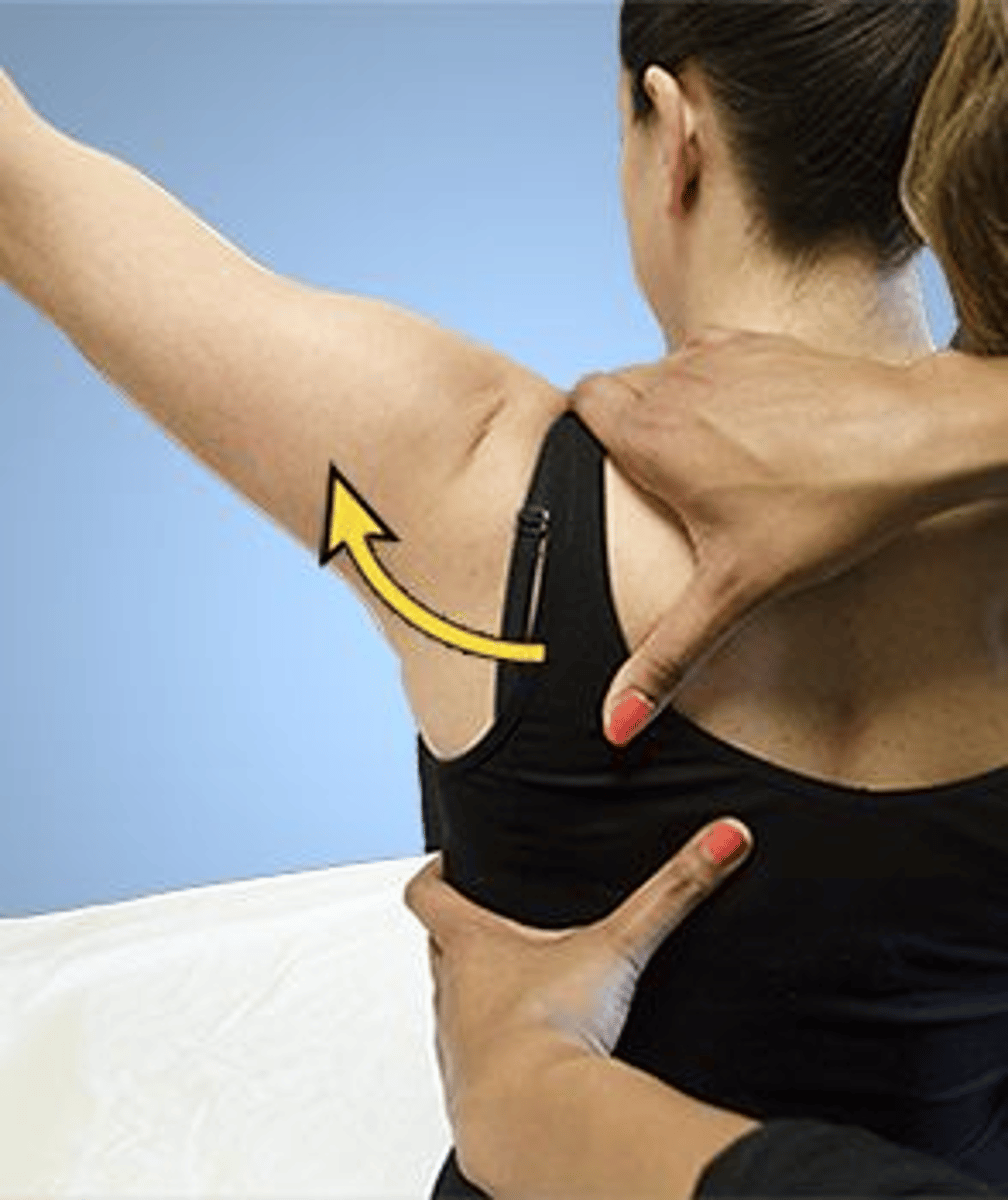
A patient reports relief of pain when actively assisted by the physical therapist in the test shown in the photograph. The patient MOST likely has which of the following conditions?
1.Adhesive capsulitis
2.Sternoclavicular sprain
3.Subacromial impingement
4.Acromioclavicular degeneration
3,3
1. Adhesive capsulitis is characterized by a loss of mobility at the glenohumeral joint. Assisting the scapula would not be expected to decrease pain. Moreover, an individual who has adhesive capsulitis is likely to have compensatory scapular mobility.
2. The test in the photograph is used to assess for the presence of subacromial impingement. Sternoclavicular joint problems occur later in the range of motion.
3. The test in the photograph is designed to assist scapular motion. Scapular abnormalities can be a cause of impingement, and the test is designed to identify the scapular role in impingement.
4. The test in the photograph is used to assess for the presence of subacromial impingement. Acromioclavicular joint problems occur later in the range of motion.
Following a fall onto an abducted and outstretched hand, a patient felt a sharp pain in the area between the abductor pollicis longus and the extensor pollicis longus. The physical therapist should suspect a fracture in which of the following?
1.First metacarpal
2.Lunate
3.Trapezoid
4.Scaphoid
4,4
1. The first metacarpal is not commonly fractured by a fall, and snuffbox tenderness would not be present
2. The lunate is commonly dislocated, not fractured
3. The trapezoid is not commonly fractured by this type of fall
4. The stem describes a classic mechanism for a scaphoid fracture, with snuffbox tenderness
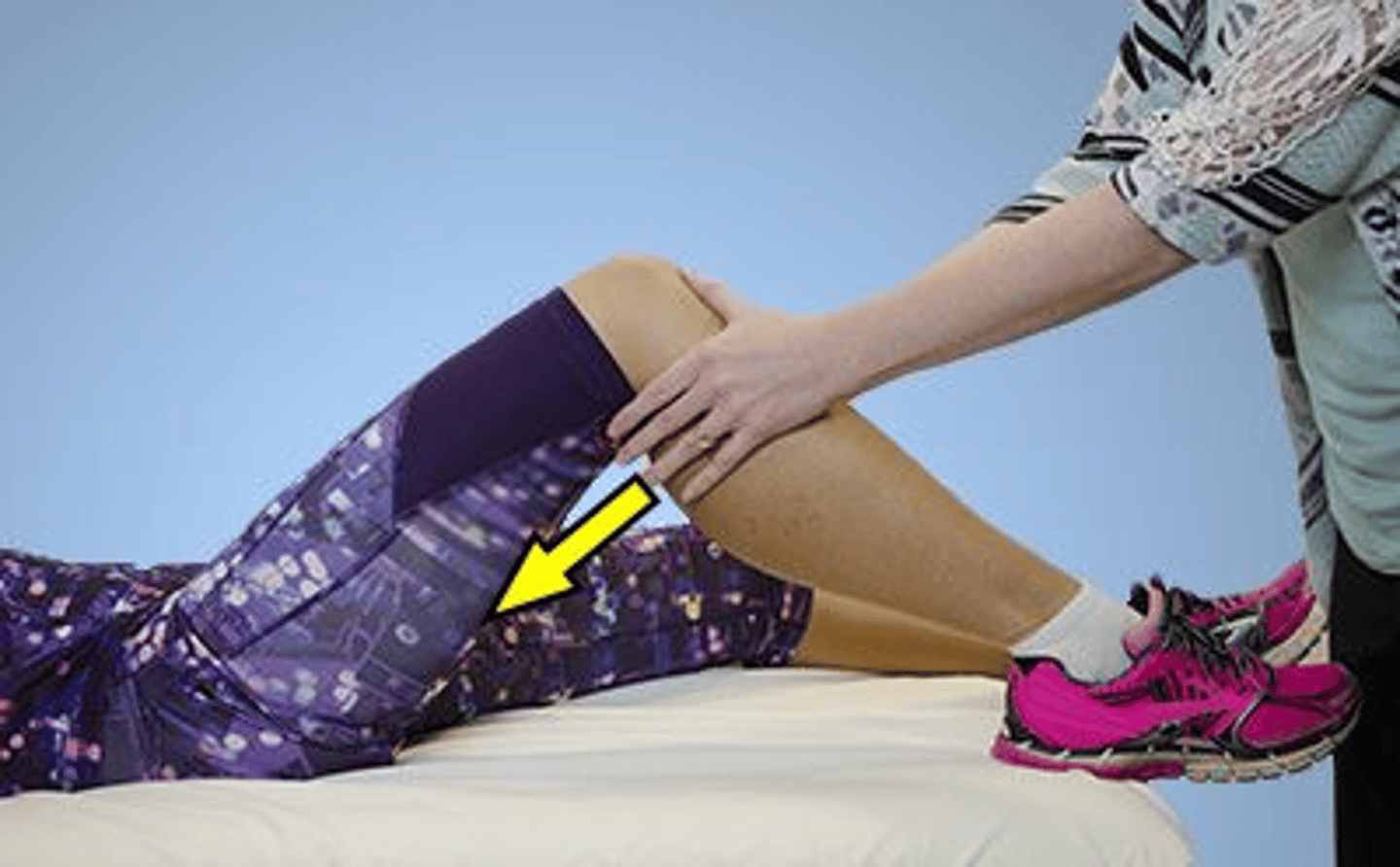
A patient had a positive result on the test shown in the photograph. What is the MOST likely mechanism of injury?
1.Hyperextension of the knee
2.Vertical compression through the tibia
3.Direct impact to the anterior proximal tibia
4.Direct impact to the lateral aspect of the fibula
3,3
1. The Posterior Drawer Test at 90° of knee flexion has been shown to be the most sensitive test for clinical assessment of the posterior cruciate ligament. Extreme hyperextension of the knee can cause anterior cruciate ligament injury, not posterior cruciate ligament injury.
2. The Posterior Drawer Test at 90° of knee flexion has been shown to be the most sensitive test for clinical assessment of the posterior cruciate ligament. An activity that results in a very strong quadriceps contraction that coincides with sudden knee flexion, such as landing from a jump, can cause a patellar tendon rupture, not posterior cruciate ligament injury.
3. The Posterior Drawer Test at 90° of knee flexion has been shown to be the most sensitive test for clinical assessment of the posterior cruciate ligament. Rupture of the posterior cruciate ligament is usually caused by a direct blow to the proximal tibia, a fall on the knee with the foot in a plantar flexed position, or hyperflexion of the knee.
4. The Posterior Drawer Test at 90° of knee flexion has been shown to be the most sensitive test for clinical assessment of the posterior cruciate ligament. A direct impact to the outside of the knee can cause an anterior cruciate ligament injury, not posterior cruciate ligament injury.
Which of the following interventions is MOST appropriate for a child who had a resection of a cerebellar glioma?
1.Auditory cues to improve motor initiation
2.Balance training to promote a stable base of support
3.Somatosensory stimulation to increase limb awareness
4.Functional electrical stimulation to antagonists to reduce spasticity
2,2
1. Individuals who have basal ganglia dysfunction have difficulty initiating movements, and this can be addressed through the augmentation of sensory cues. However, individuals who have cerebellar dysfunction have difficulty scaling movements according the correct amplitude (overshooting or undershooting)
2. Gliomas in children are primarily found in the cerebellum. Tumors in the cerebellum can result in ataxia, dysmetria, dysdiadochokinesia, and intention tremor. A cardinal sign of cerebellar damage is postural instability in both static and dynamic conditions. Further, the gait pattern may be wide-based. Common interventions for ataxia include balance training and gait activities
3. Individuals with cerebellar deficits have primarily motor deficits, including deficits in coordinating and adaptive movements. Somatosensory stimulation would be useful for individuals who have impairments related to unilateral neglect, somatosensation, and spatial relations. Impairments such as neglect, somatosensory loss, and impaired spatial relationship are common with resections in the parietal lobe
4. Although functional electrical stimulation can be used to promote walking in individuals with neurological disorders and potentially reduce spasticity through improved reciprocal activation of muscles, individuals who have cerebellar lesions have hypotonia due to the decreased excitatory drive from the cerebellum to the extensor muscles . Activities to attempt to decrease tone would not be appropriate.
A patient displays a hand tremor at rest. The tremor has a regular rhythm of 4 to 7 beats/second. The patient MOST likely has which of the following conditions?
1.Cerebellar lesion
2.Multiple sclerosis
3.Parkinson disease
4.Tardive dyskinesia
3,3
1. Cerebellar lesions are associated with action tremors, which are absent at rest and elicited during muscle activation
2. Postural and intention tremors are associated with multiple sclerosis but not a resting hand tremor
3. Patients who have Parkinson disease display tremors at rest. The tremors have a rhythm of 4 to 7 beats/second.
4. Tremors are not associated with tardive dyskinesia
The INITIAL rehabilitation program for a patient post coronary artery bypass surgery would consist of:
1.low-intensity walking.
2.lifting light weights.
3.low-level upper extremity ergometry.
4.stationary bike riding.
3,1
1. Walking in hall is included as an initial activity in a Phase I treatment program
2. Resistance training should not begin until a minimum of 8 weeks after coronary artery bypass surgery
3. Arm activity, such as use of ergometer, is not appropriate for patients immediately after coronary artery bypass surgery. The activity is contraindicated due to incisional precautions.
4. Stationary bike riding is a higher-level aerobic activity that should not be the initial choice after coronary artery bypass surgery. Limitation or restriction of upper body activities, including unloading the upper extremities, is an important element in the initial rehabilitation program for a patient post coronary artery bypass graft. A patient who may lean on the handlebars would potentially place too much pressure on their sternal incision.
A patient with spinal stenosis is referred to physical therapy. The patient reports pain in the right knee, ankle, and foot. While walking, the patient exhibits a mild foot-drop with no evidence of hypertonicity. When weight bearing, the foot and ankle are pronated. Which of the following orthoses is MOST appropriate?
1.Molded ankle-foot orthosis (AFO)
2.AFO with a split stirrup
3.Custom insole with lateral arch supports
4.Metal AFO with the ankle set in 5° of dorsiflexion
4,1
1. A custom-molded thermoplastic ankle-foot orthosis provides an intimate fit for control of the extremity, and will permit correction of the patient's foot and ankle position as well as the foot drop. This type of ankle-foot orthosis also is lighter weight and more cosmetic and comfortable to wear than a metal double-upright ankle-foot orthosis with dorsiflexion assist.
2. Split stirrups are bulky and would not address the pronation malalignment
3. A custom insole would not address the patient's foot drop. An ankle-foot orthosis is needed to position the foot and ankle to enhance toe clearance during gait.
4. This type of ankle-foot orthosis is not the best choice for this patient because it is heavy, and a metal ankle-foot orthosis would not address the pronation malalignment
A patient had a total knee arthroplasty 2 days ago. The patient now has a cough, chest pain, and a dull ache in the leg. Physical examination reveals diaphoresis and unilateral lower extremity pitting edema. The patient MOST likely has which of the following conditions?
1.Pleuritis
2.Pneumonia
3.Myocardial infarction
4.Pulmonary embolism
1,4
1. Signs of pleuritis include pain with coughing but not pitting edema or dull ache in the leg.
2. Pneumonia is an infectious disease, resulting in inflammation of the lung parenchyma, which could result in the pulmonary symptoms but is not associated with pitting edema. Pitting edema suggests a vascular or fluid balance issue, not a pulmonary condition.
3. Myocardial infarction is characterized by prolonged crushing chest pain that may radiate to the arms, throat, neck, and sometimes back but is not typically associated with leg pain.
4. Signs of pulmonary embolism include chest pain, hemoptysis, cough, diaphoresis, dyspnea, and apprehension. The unilateral lower extremity edema may have been from a deep venous thrombosis that may have embolized.
Which of the following cardiovascular exercise prescription guidelines would be MOST beneficial for a patient who has dyslipidemia?
1.Exercising at 40% to 80% of heart rate reserve, 3-4 times/week
2.Exercising at 40% to 80% of heart rate reserve, 5 or more times/week
3.Exercising at a rating of perceived exertion on the Borg scale of 11-14/20, 3-4 times/week
4.Exercising at a rating of perceived exertion on the Borg scale of 9-11/20, 5 or more times/week
2,2
1. The best evidence for reduction of lipid levels is to exercise at a moderate intensity of 40% to 80% of the heart rate reserve 5 or more times per week. Therefore, this option is incorrect, since the frequency is set too low for lipid-lowering benefits.
2. The best evidence for reduction of lipid levels is to exercise at a moderate intensity of the 40% to 80% of the heart rate reserve 5 or more times/week
3. The best evidence for reduction of lipid levels is to exercise at a moderate intensity 5 or more times/week. Therefore, this option is incorrect, since the frequency is set too low for lipid-lowering benefits.
4. The best evidence for reduction of lipid levels is to exercise at a moderate intensity. Exercising at a rating of perceived exertion on the Borg scale of 9-11/20 is considered very light to light effort; therefore, it would not be considered a moderate intensity
A physical therapist is examining a patient who has multiple sclerosis. The patient sits for 12 hours/day with good spinal and pelvic alignment in a standard wheelchair with a foam cushion. The patient sleeps in a sidelying position. The patient's family reports that the patient has recently gained a considerable amount of weight. Which of the following areas is/are at GREATEST risk for skin breakdown?
1.Lateral malleoli
2.Sacrum
3.Greater trochanters
4.Scapulae
3,3
1. The skin over the malleoli is unlikely to be under pressure when the patient is sitting in the wheelchair.
2. Because the patient sits with good alignment, skin breakdown over the sacrum is not likely to occur.
3. With the patient's recent weight gain, the wheelchair armrests and/or frame may be putting pressure on the skin over the greater trochanters. The greater trochanters are also at risk when the patient is in sidelying position.
4. Because the patient sits with good alignment, skin breakdown over the scapulae is not likely to occur.
Which of the following activities would be appropriate to direct a physical therapist assistant to do?
1.Responding to inquiries from a patient's family regarding the patient's prognosis
2.Determining a patient's need for continued therapy at home after discharge from a skilled nursing facility
3.Modifying a patient's home program to include exercises listed in the clinic's protocol for the patient's diagnosis
4.Performing reevaluation of patients who will be treated free of charge as a public service
1,3
1. Only the physical therapist should respond to inquiries regarding a patient's prognosis
2. Determining a patient's need for continued therapy at home is a level of evaluation that is the responsibility of the physical therapist. The physical therapist assistant is not qualified to evaluate and make determinations about a patient's need for therapy at home
3. Depending on a patient's rehabilitation progress, a physical therapist assistant can adapt a home exercise program using pre-approved exercises without the need for a new physical therapist evaluation.
4. Physical therapists give services free of charge as a public service, as their practice permits. These services should be given at the same level of care, regardless of patient payment. Reevaluation of patients must be done by a physical therapist.
A patient who had a cerebrovascular accident 4 days ago is being taught to roll to the uninvolved side. Which of the following motions should the physical therapist advise the patient to AVOID?
1.Pushing against a supporting surface with the uninvolved foot.
2.Lifting the head from the surface to assist with movement initiation.
3.Using the uninvolved arm to assist bringing the involved arm forward.
4.Positioning the involved lower extremity over the uninvolved extremity.
2,1
1. Pushing against a supporting surface with the uninvolved foot will encourage extension of the trunk when rolling. The patient should be taught motions that encourage flexion of the trunk.
2. Lifting the head from the surface to assist with movement initiation will help with the induction of flexion of the trunk.
3. Using the uninvolved arm to assist bringing the involved arm forward should occur to protect the uninvolved arm.
4. Positioning the involved lower extremity over the uninvolved extremity is an appropriate motion to begin the training process to encourage flexion of the trunk.
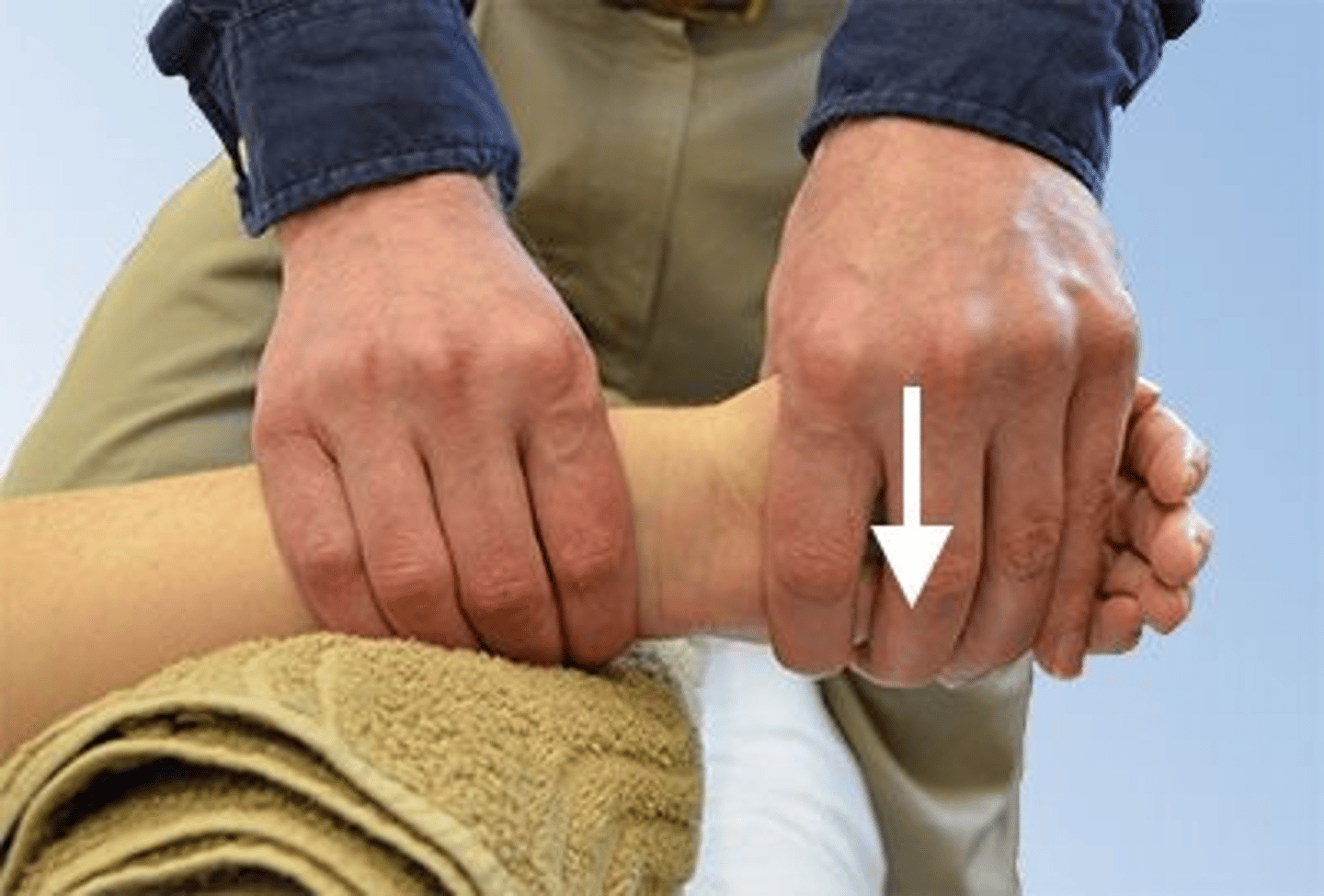
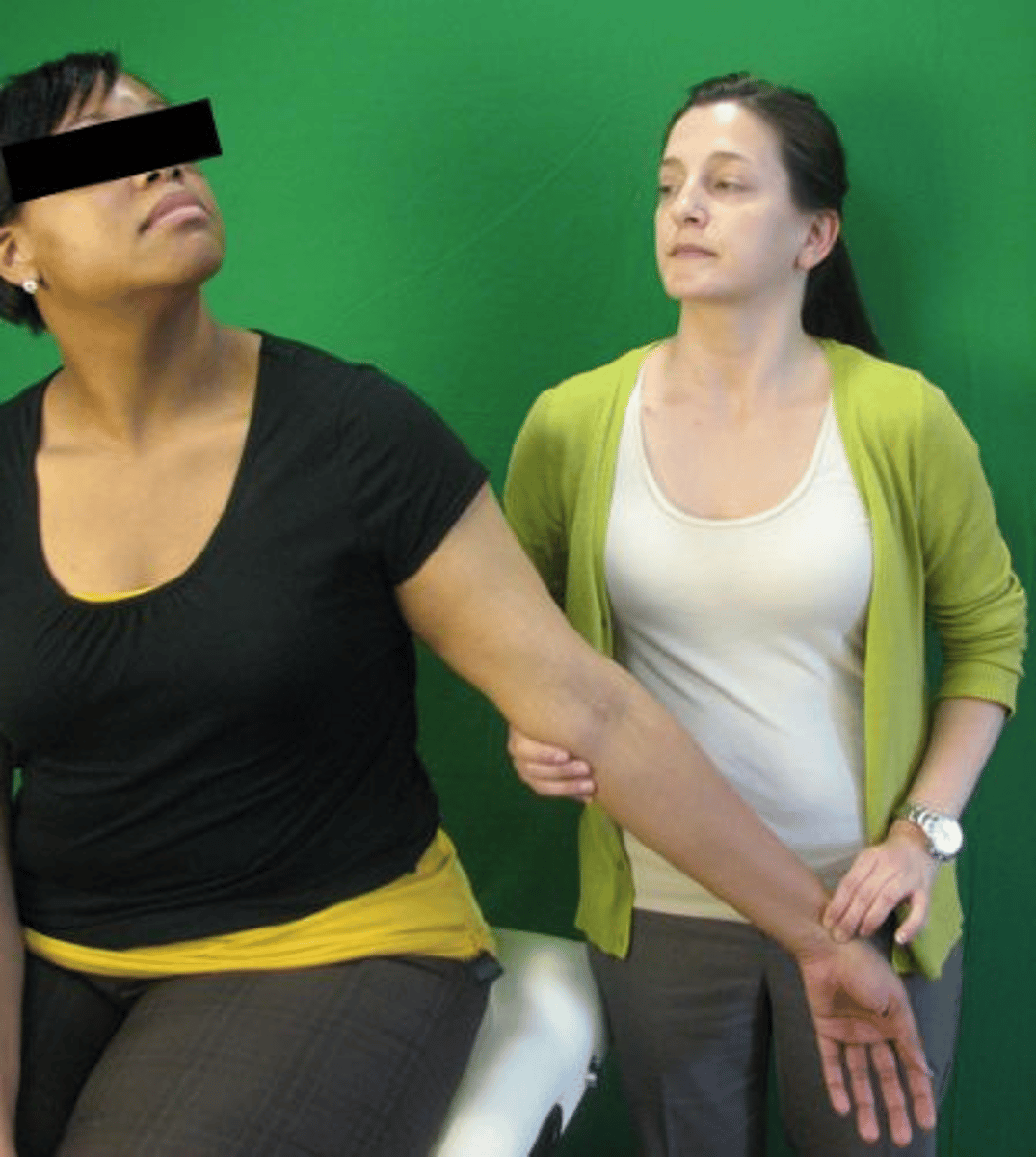
A physical therapist who is examining a patient's wrist joint play finds restriction in the direction indicated by the arrow in the photograph. The therapist should suspect a decrease in which joint motion?
1.Radial deviation
2.Ulnar deviation
3.Flexion
4.Extension
1,1
1. The physical therapist is shown performing an ulnar glide, which is the same joint motion used for radial deviation. Limited motion in this direction indicates limited ability to perform radial deviation.
2. The physical therapist is shown performing an ulnar glide. A radial glide should be used to assess ulnar deviation.
3. The physical therapist is shown performing an ulnar glide. A dorsal glide should be used to assess wrist flexion.
4. The physical therapist is shown performing an ulnar glide. A volar glide should be used to assess wrist extension.
Prior to initiating an intervention, a physical therapist MUST perform which of the following actions?
1.Discuss prognosis for improvement with the patient.
2.Obtain the patient's consent for the treatment.
3.Review the clinic's reimbursement policy with the patient.
4.Provide the patient with the clinic's policy for privacy of patient information.
2,2
1. Although the physical therapist should document any communication with the patient, a discussion of the patient's prognosis is not as essential as receiving consent to perform treatment.
2. Consent must be obtained from all patients prior to the initiation of any treatment. Informed consent is a communication between the physical therapist and the patient
3. Although knowledge of the clinic's policy on reimbursement is important to review, there is no obligation to provide the information prior to treatment.
4. The clinic's policies governing disclosure of patients' medical information should be discussed prior to the examination
To palpate the insertion of the supraspinatus tendon, a physical therapist should place a patient's arm in which of the following positions?
1.Shoulder flexion and lateral (external) rotation
2.Shoulder flexion and medial (internal) rotation
3.Shoulder extension and lateral (external) rotation
4.Shoulder extension and medial (internal) rotation
4,4
1. The supraspinatus tendon is most accessible for palpation when the shoulder is medially (internally) rotated.
2. The supraspinatus tendon is most accessible for palpation when the shoulder is extended.
3. The supraspinatus tendon is most accessible for palpation when the shoulder is medially (internally) rotated.
4. Extending and medially (internally) rotating the shoulder places the supraspinatus tendon in the optimal position for palpation.
A patient has a Mobitz type I (Wenckebach) second-degree heart block. Which of the following electrocardiogram findings would MOST likely be present?
1.Inverted P waves in leads I, II, and III
2.A uniform PR interval that exceeds 0.20 second
3.Progressive prolongation of the PR interval until one impulse is not conducted
4.Variable P waves that are not related to QRS complexes
2,3
1. P wave inversion is indicative of a premature junctional complex, not a Mobitz type I heart block
2. A uniform but prolonged PR interval (greater than 0.20 second) describes first-degree heart block
3. Mobitz type I (Wenckebach) heart block is a progressive prolongation of the PR interval until one impulse is dropped and is not followed by a QRS complex
4. Variable P waves that are not related to QRS complexes describe third-degree heart block
Which of the following splints is appropriate to use for treatment of de Quervain disease?
1.Thumb spica
2.Posterior long arm
3.Ulnar gutter
4.Wrist cock-up
1,1
1. A thumb spica is frequently used for immobilization of the thumb (1st digit) for 3 weeks when treating de Quervain disease
2. A posterior long arm splint does not immobilize the thumb (1st digit). Long arm casting is often used to immobilize the forearm in patients who have a Smith fracture. Immobilization of the thumb (1st digit) is used when treating de Quervain disease
3. An ulnar gutter splint is used on the ulnar side of the wrist, whereas de Quervain disease affects the radial side
4. A wrist cock-up splint is typically used for posterior interosseous nerve syndrome (p. 728) or wrist extensor tenosynovitis (p. 1487) and would not immobilize the thumb (1st digit).
A research team is using information from medical records to compare outcomes between a group of patients who received a 2-month intervention and a group who did not. Which of the following study designs is being used by the researchers?
1.Prospective cohort
2.Retrospective cohort
3.Cross-sectional
4.Case control
2,2
1. A prospective cohort would require the investigators to follow the patients until the outcome. Because the information was collected from medical records, and the outcome has already occurred, the stem does not describe a prospective cohort study.
2. The patients in this study have already received the exposure (intervention) and have already experienced the outcome. Therefore, this is a retrospective study.
3. A cross-sectional study is used to assess exposure and outcomes at a single point in time. This study abstracted data over a period of time and, therefore, cannot be a cross-sectional study.
4. A case control study classifies people based on whether they had an outcome of interest and then looks retrospectively at different exposures. Because the sample in this study is compared on the basis of exposure (intervention), this study cannot be a case control study.
After completing stroke rehabilitation, a patient wants to resume volunteering in a local program serving meals. Which of the following examination tools will provide the MOST relevant information for the physical therapist to determine if this activity is possible?
1.A self-report checklist of performance of motor skills that are pre-requisite to meal serving
2.A performance assessment of simulated meal serving in the clinical environment
3.A self-report checklist based on a task analysis of actual steps required for participation
4.A performance assessment of meal serving in the natural environment
2,4
1. The self-report approach would be acceptable only if the performance approach was not feasible.
2. The clinical environment is not as desirable as the natural environment.
3. The self-report approach would be acceptable only if the performance approach was not feasible.
4. Whenever possible, it is most desirable for the examination to be performed under conditions as close to the actual ones as possible. This option is the closest to the actual conditions that the patient will experience.
A patient reports back pain with radiating pain to the anterior right thigh. The pain increases with passive flexion of the knee in prone position. Which of the following nerve roots is MOST likely involved?
1.L1-L2
2.L2-L3
3.L4-L5
4.L5-S1
2,2
2. The pain pattern described is the dermatomal pattern for the L2 and L3 nerve roots (Dutton, pp. 149-150; Magee, pp. 879). The stem describes the findings of the Prone Knee Bending Test. A positive finding on the Prone Knee Bending Test will result in unilateral neurological pain in the lumbar area, buttock, or posterior thigh, or sometimes the anterior thigh. This test result may indicate an L2 or L3 nerve root lesion.
Which of the following activities would be LEAST appropriate in a treatment program for a patient with an ankle sprain and a history of prolonged corticosteroid use?
1.Elastic-band resistance training
2.Plyometric exercises
3.Calf raises
4.Single-leg balance activities
2,2
1. Resistance exercise with an elastic band would be safe and effective for this patient. There is no high force or excessive impact that may be damaging.
2. Plyometric exercise involves high speed, impact, and high force. Patients who have taken corticosteroids likely have decreased connective tissue strength. Plyometrics may cause additional harm/damage.
3. Calf raises are a resistance exercise that does not involve excessive force or impact. This should be a safe and appropriate exercise for this patient.
4. Single leg stance may safely build proprioception for this patient and is important to incorporate in a program after an ankle sprain.
An 8-year-old child who has Duchenne muscular dystrophy would MOST likely have which of the following examination findings?
1.Swayback posture and protraction of the scapulae
2.Hamstrings contractures and excessive hip extension
3.Standing lordotic posture and winging of the scapulae
4.Quadriceps contractures and excessive hip abduction
3,3
1. In a swayback posture, the pelvis is posteriorly tilted and the thoracic spine is in relative flexion. In children who have Duchenne muscular dystrophy, the hip flexors become shortened from overuse and the pelvis tilts anteriorly. The thoracic spine begins to move into relative extension to compensate for the pelvic tilt, and the scapulae wing in an attempt to keep the center of mass behind the hip joint.
2. TFL contractures become increasingly frequent from age 8-10 years in patients who have DMD. In addition, hip extension range of motion is often limited due to shortness of the hip flexor muscles.
3. No limitations in range of motion are typically noted before 5 years of age in children who have DMD. By age 8, the deficits listed would be clearly present. The normal lordotic standing posture is increased, and winging of the scapulae is seen as compensation to keep the center of mass behind the hip joint to promote standing ability.
4. In children who have DMD the hamstrings become contracted, not the quadriceps
A patient reports a recent significant weight loss as a result of diarrhea and vomiting. The patient is MOST at risk for which of the following conditions?
1.Bradycardia
2.Euvolemia
3.Shortness of breath
4.Orthostatic hypotension
2,4
1. Dehydration is likely owing to fluid loss associated with emesis and diarrhea. Tachycardia is more likely with dehydration.
2. Euvolemia is an indication of normal fluid balance, which is not likely to be present in a patient who has weight loss associated with diarrhea and vomiting.
3. Shortness of breath is not associated with body fluid loss. Significant postural hypotension results from extracellular fluid volume depletion.
4. Body fluid loss associated with weight loss, excessive diarrhea, and vomiting may cause electrolyte imbalances, which can result in orthostatic changes in blood pressure.
The BEST cleanser to use on a beefy, red wound is:
1.normal saline.
2.hydrogen peroxide.
3.Dakin's solution.
4.povidone-iodine.
1,1
1. Normal saline is an effective cleansing agent.
2. When a wound is suspected of being infected or having a bacterial colonization, irrigation with an antiseptic or antimicrobial is indicated. Saline is appropriate for a wound with no signs of infection.
3. When a wound is suspected of being infected or having a bacterial colonization, irrigation with an antiseptic or antimicrobial is indicated. Saline is appropriate for a wound with no signs of infection.
4. When a wound is suspected of being infected or having a bacterial colonization, irrigation with an antiseptic or antimicrobial is indicated. Saline is appropriate for a wound with no signs of infection.
When implementing therapeutic exercise to assist with generalized lymphedema management, which of the following treatment sequences is BEST?
1.Deep-breathing exercises, trunk exercises, proximal limb exercises, distal limb exercises.
2.Deep-breathing exercises, proximal limb exercises, distal limb exercises, trunk exercises.
3.Distal limb exercises, proximal limb exercises, trunk exercise, and deep-breathing exercises.
4.Trunk exercises, deep-breathing exercises, distal limb exercises, proximal limb exercises.
1,1
1. Exercises for lymphedema should follow a particular sequence to facilitate lymphatic flow. The sequence should start with relaxation so that tension in the body does not obstruct lymphatic flow. The next step is to clear central and proximal lymphatic vessels in the abdomen, inguinal, and cervical regions by doing trunk, hip, and neck exercises. Finally, the proximal regions (e.g., shoulders and hips) are worked to clear them before working distal regions (e.g., hands and feet).
A physical therapist working in an acute care facility is developing an aerobic exercise program for a patient who has had a sickle cell anemia crisis. The patient's current hematocrit is 27%. The therapist should be MOST concerned about the patient developing which of the following conditions while exercising?
1.Hypoxia
2.Excessive bruising
3.Dependent edema
4.Hypertension
1,1
1. The hematocrit level is well below normal values (36% to 46%), which indicates anemia. Anemia leads to possible hypoxia and decreased exercise tolerance. Hypoxia is common in sickle cell anemia.
2. Excessive bruising occurs in response to a decrease in platelets, not a low hematocrit level.
3. Neither sickle cell anemia nor a hematocrit value of 27% will cause dependent edema, which is caused by position and often occurs in patients who have right-sided heart failure.
4. Hematocrit changes do not influence blood pressure
A 6-year-old patient who has Legg-Calvé-Perthes disease is MOST likely to have which of the following gait deviations?
1.Vaulting
2.In-toeing
3.Toe-walking
4.Trendelenburg
2,4
1. Legg-Calvé-Perthes disease affects the hip and is not typically associated with vaulting. Vaulting is typically seen with hemiparetic limbs.
2. Legg-Calvé-Perthes disease affects the hip and is not typically associated with in-toeing. Further, limited range of motion into hip medial (internal) rotation is common in patients who have Legg-Calvé-Perthes disease, making in-toeing even less likely.
3. Legg-Calvé-Perthes disease affects the hip and is not typically associated with toe-walking. Toe-walking can be caused by short ankle plantar flexors or excessive tone. This is not seen in Legg-Calvé-Perthes disease, which typically only affects the muscles of the hip.
4. A positive Trendelenburg sign secondary to hip pain and/or hip abductor weakness is very common in children who have Legg-Calvé-Perthes disease. Although Legg-Calvé-Perthes disease can affect children of nearly any age, it is most common among boys ages 4 to 8 years.
An elderly patient is being evaluated for d/c from an acute care setting. Prior to admission, the patient lived alone on the 2nd floor of a building w/o an elevator and walked with the use of a cane. Currently, the patient performs bed mobility and stand pivot transfers with modA. The pt does not want to go to a transitional care facility for rehab, and prefers to go home instead. Which approach is MOST appropriate for the PT to take?
1.Recommend discharge to home with a home health aide during the day, and order all necessary equipment.
2.Clearly explain to the patient that the physician is the one who determines the type of facility to which the patient will be discharged.
3.Clearly explain to the patient that the goal of discharge to a transitional care facility is for short-term rehabilitation.
4.Recommend discharge to home with home physical therapy and community services, and order all necessary equipment.
3,3
1. Given that the patient lives on the 2nd floor and still needs assistance for transfers, the best option is discharge to a short-term rehabilitation facility.
2. The physical therapist can educate the patient about discharge planning as part of the treatment team; the physician is a part of the interdisciplinary team.
3. If the physical therapist educates the patient about the need for a short-term placement, the patient may better understand the need to become more independent before going home.
4. Given that the patient lives on the 2nd floor and still needs assistance for transfers, short-term rehabilitation would be the best option.
After evaluating a patient who is a baseball player, a physical therapist concludes that there is insufficient deceleration of the shoulder during throwing. Which of the following strengthening techniques will be MOST effective in improving control of deceleration of the shoulder?
1.Eccentric exercises of the lateral (external) rotators
2.Eccentric exercises of the medial (internal) rotators
3.Concentric exercises of the lateral (external) rotators
4.Concentric exercises of the medial (internal) rotators
2,1
1. Eccentric training is consistent with the eccentric demand of deceleration, and exercise of the posterior shoulder muscles is needed to improve this function. The eccentric contraction of the rotator cuff lateral (external) rotators decelerates the rapid medial (internal) rotation of the shoulder.
2. Although eccentric training is necessary, the medial (internal) rotators do not function in this manner.
3. Concentric exercise is not consistent with functional demand.
4. Concentric exercise is not consistent with functional demand, and the medial (internal) rotators do not require attention in this scenario.
Elevating a patient's lower extremity for less than 1 minute produces a noticeable pallor of the foot, followed by delayed reactive hyperemia in a dependent position. These signs are indicative of:
1.an intact circulatory system.
2.arterial insufficiency.
3.venous insufficiency.
4.thrombophlebitis.
3,2
1. An intact circulatory system can sustain adequate blood flow to an elevated limb.
2. A limb with arterial insufficiency may not be able to sustain adequate blood flow with the leg elevated. The vasodilation, caused by local mechanisms, occurs in response to ischemia.
3. Pallor upon limb elevation and reactive hyperemia when the limb is placed in dependent position are signs of arterial, not venous, insufficiency.
4. Thrombophlebitis (or deep vein thrombosis) would be more likely to result in posterior lower leg pain, tightness, or tenderness and swelling of the foot and ankle.
A patient has a positive result on the test shown in the photograph. The patient's condition would be BEST addressed by stretching of which of the following muscles?
1.Levator scapulae
2.Upper trapezius
3.Pectoralis minor
4.Anterior scalene
4,4
1. The neurovascular bundle associated with thoracic outlet syndrome does not run through the levator scapulae. Stretching the anterior scalenes, not the levator scapulae, would be most appropriate.
2. The neurovascular bundle does not run through the upper trapezius, and upper trapezius involvement is not expected to elicit thoracic outlet syndrome symptoms. Stretching the anterior scalenes, not the upper trapezius, would be most appropriate.
3. The Hyperabduction or Wright Test would be more suggestive of the pectoralis minor contributing to thoracic outlet symptoms
4. The photograph depicts a physical therapist administering the Adson Test. A positive test result indicates scalene involvement in a patient's thoracic outlet symptoms. Recommended intervention includes stretching of the scapulothoracic muscles. In this case, stretching the anterior scalenes would be beneficial.
A patient has fibular (peroneal) nerve palsy. Which of the following gait deviations is the patient LEAST likely to demonstrate during the swing phase of walking?
1.Increased knee flexion
2.Hip circumduction
3.Increased hip flexion
4.Increased ankle dorsiflexion
4,4
1. Increased knee flexion would be a possible compensation for the lack of dorsiflexion resulting from the fibular (peroneal) palsy in order to clear the foot during the swing phase of gait.
2. Circumduction is a possible lower extremity compensation to clear the foot during the swing phase of gait due to a lack of ankle dorsiflexion resulting from the fibular (peroneal) nerve palsy.
3. Increasing hip flexion during the swing phase of gait would help clear the foot to compensate for a lack of dorsiflexion resulting from the fibular (peroneal) nerve palsy.
4. Increasing dorsiflexion of the ankle would be the least likely deviation, because a fibular (peroneal) nerve palsy would reduce the ability of the patient to actively dorsiflex the ankle during the swing phase of gait.
75 y/o female Fall from standing position 7 days ago when pt was ambulating, son took her to ER
(-) fx
Pt has had episodes of intermittent dizziness before & after the fall
PMH- Osteoporosis, Hypothyroidism, B/L TKA 9 mos ago
Meclizine (Antivert) as needed
Pt began using a cane after fall
Pts goal is to walk community distances again
UEs: Fair (3/5) overall
Hip flexors: Good (4/5) B/L
Hip extensors: Fair (3/5) B/L
Knee flexors: Good (4/5) B/L
Knee extensors: Fair (3/5) B/L
Ankle dorsiflexors: Fair (3/5) B/L
Ankle plantar flexors: Good (4/5) B/L
Abdominals: Poor (2/5)
Activities-Specific Balance Confidence Scale (ABC) score: 49/100
30-second Sit-to-Stand score: 9 times
Gait speed: 0.75 m/second
Which of the following assessments is MOST appropriate for a physical therapist to perform NEXT?
1.Timed Up and Go Test
2.Active knee range of motion
3.Dix-Hallpike maneuver
4.Blood pressure reading in a standing position
3,3
1. The Timed Up and Go Test has not been shown to provide specific information on underlying balance deficits and is only useful as a screening tool to identify fall risk which has already been identified for this patient thus it would not yield any new or useful information.
2. Nothing in the scenario signifies that knee range of motion is affecting the falls and the patient is outside the window of time during which knee range of motion would have been an issue relative to surgery and rehabilitation.
3. The Dix-Hallpike maneuver will help in determining if the intermittent dizziness is due to benign paroxysmal positional vertigo
4. Positional blood pressures may be helpful in determining if the cause of the dizziness is orthostatic hypotension but blood pressure in standing alone will not yield this information. Positional blood pressures must be taken and compared to see if the drop is greater than 20 mm Hg/10 mm Hg (e.g., supine versus sit versus stand).
Which of the following goals would be MOST appropriate for the patient?
1.Increase gait speed to 4.3 feet (1.3 m)/second to safely resume community ambulation
2.Increase lower extremity strength by one full grade throughout to safely resume community ambulation
3.Increase Sit-to-Stand Test score to 12 or greater to safely remain living independently
4.To increase Activities-Specific Balance Confidence Scale score to 70 or greater to safely remain living independently
1,1
1. 4.3 feet (1.3 m)/second is in the range of norms for community ambulating elderly people. This improvement is statistically significant for this test (must be at 0.2 m/second or more), and the goal aligns with the patient's goal.
2. A lower extremity strength grade does not directly correlate with safety in community ambulation. A more functional test that directly correlates with safe ambulation should be used as a measurement for this goal.
3. The Sit-to-Stand Test measures lower extremity strength and power, not safety in living independently. A score for this age of 12.5 or above indicates it is safe to be community dwelling, not safety of living alone.
4. The Activities-Specific Balance Confidence Scale needs to be above 80 for community-dwelling elderly to be considered at a lower fall risk.
Which of the following exercises is MOST appropriate for the patient at this time?
1.Sit-ups
2.Standing while catching a ball
3.Opposite arm and leg extension in quadruped position
4.Stair climbing
4,2
1. The patient should avoiding flexion activities, such as sit-ups, which may increase kyphosis as already predisposed with wedged vertebrae and can increase risk of compression fracture.
2. Standing while catching a ball is an appropriate functional activity using reactive balance control. This activity would address balance and fall risk.
3. Kneeling can be difficult for up to a year total knee arthroplasty and after thus assuming a quadruped position could still be difficult for the patient.
4. Stair climbing should not be used with a patient who has such a high Activities-Specific Balance Confidence Scale (ABC) score. Additionally, this activity may be too advanced for this patient given her history of bilateral total knee arthroplasty, which can result in difficulty for a year or more following surgery. The scenario does not report the patient needs to climb stairs on a regular basis.