Digestive & Respiratory system
 Call Kai
 Learn
Learn Practice Test
 Spaced Repetition
 Match
Match Flashcards
 Knowt Play
1/149

There's no tags or description
Looks like no tags are added yet.
Name | Mastery | Learn | Test | Matching | Spaced | Call with Kai | Chat |
|---|
No analytics yet
Send a link to your students to track their progress
150 Terms
alimentary canal
digestive tract consisting of a tube running between the mouth and the anus
salivary glands
three pairs of exocrine glands in the mouth that secrete saliva; the parotid, submandibular (submaxillary), and sublingual glands
gallbladder
stores and concentrates the bile produced in the liver
liver
produces bile and stores glycogen
pancreas
produces insulin and glucagon, enzymes, and sodium bicarbonate
mouth
oral cavity; mechanical digestion (chewing) and chemical digestion of carbs start
pharynx
the throat; last place food and air mix
esophagus
muscular tube that connects the mouth to the stomach
stomach
large muscular sac that continues mechanical digestion and starts chemical digestion of proteins
small intestine
organ in which most chemical digestion takes place
large intestine
organ that absorbs water from undigested material
rectum
lower part of the large intestine where feces are stored
ingestion
process of taking in food
mechanical processing
physical breakdown of foods
chemical digestion
process in which enzymes and other chemicals are used to break foods into their smaller chemical building blocks
secretion
process of producing a substance within an organ and discharging it
absorption
process by which nutrient molecules pass through the wall of the digestive system into the blood
elimination
process of passing undigested material out of the anus
defecation
elimination of fecal waste through the anus
duodenum
first portion of the small intestine which receives secretions from the gallbladder and pancreas
ileum
last and longest portion of the small intestine where most absorption takes place
jejunum
second portion of the small intestine where most chemical digestion is completed
Peyer's patches
collections of lymphatic tissue found along the length of the small intestine
propulsion
movement of food from one organ to the next
peristalsis
involuntary waves of muscle contraction that keep food moving along in one direction through the digestive system
segmentation
rhythmic mixing of chyme with digestive enzymes in the small intestine
mucosa
innermost layer of digestive tract
submucosa
layer superficial to the mucosa which contains blood vessels, lymph vessels, and nerves
muscularis externa
bilayer of smooth muscle which consists of a layer running circularly and another running longitudinally
serosa
outer layer the alimentary canal; secretes a watery fluid to reduce friction
visceral peritoneum
serous membrane that covers abdominal organs
parietal peritoneum
serous membrane that lines the abdominal cavity
mesenteries
connective tissues that anchor organs to the body wall and provide a pathway for nerves and blood vessels
tongue
muscular organ which assists with chewing, swallowing, and taste
tonsils
clusters of lymphatic tissue found in the pharynx
mastication
chewing
haustra
pouches of the large intestine that allow expansion and elongation
anus
muscular opening at the end of the rectum
cecum
first part of the large intestine where appendix is attached
glucagon
pancreatic hormone that raises blood sugar
insulin
pancreatic hormone that lowers blood sugar
microvilli
extensions of the plasma membrane that increase its surface area
villi
projections inside the small intestine that increase the surface area for absorption of nutrients
bile
a substance produced by the liver that breaks up fat particles
ileocecal valve
sphincter separating the small and large intestine
rennin
a milk protein-digesting enzyme found in babies but not adults
gastrin
hormone secreted by stomach cells that signal glands in stomach to release gastric juice
chyme
acidic, semiliquid mass of partially digested food and gastric juice
pepsin
enzyme hat begins the breakdown of proteins in the stomach
mucus neck cells
produce an acidic mucus in the stomach
parietal cells
produce hydrochloric acid which kills bacteria and activates pepsinogen
chief cells
secrete pepsinogen, the inactive form of pepsin, in the stomach
goblet cells
secrete an alkaline mucus to protect the lining of the small intestine from stomach acid
salivary amylase
enzyme in saliva that begins the breakdown of carbs
saliva
contains mucus, enzymes, and water; moistens food
deglutition
swallowing
soft palate
soft part of the back of the roof of the mouth, closes off nasal cavities when swallowing
epiglottis
flap of cartilage that covers the trachea while swallowing
cardioesophageal sphincter
muscular opening between the esophagus and stomach
pyloric sphincter
circular muscle that controls the movement of chyme from the stomach to the small intestine
bolus
chewed up clump of food
rugae
numerous folds of the stomach which allow the stomach to be able to expand
pulmonary ventilation
movement of air into and out of the lungs
inspiration
breathing in; active process
expiration
breathing out; passive process
external respiration
the exchange of gases between the atmosphere and the blood
internal respiration
Exchange of gases between cells of the body and the blood
guard hairs; vibrissae
guard nostrils and ear canals
nasal cilia
hair in nose; propel trapped particles towards the throat for digestion by
digestive enzymes

Function of capillaries in nose
warm the inspired air
Nasal conchae
folds in the mucous membrane that increase air turbulence and ensures that most air
contacts the mucous membranes

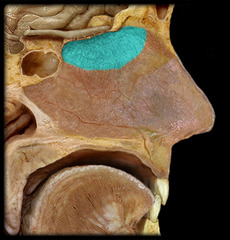
Olfactory mucosa
mucous membranes that contain smell receptors
Respiratory mucosa
pseudostratified ciliated columnar epithelium containing goblet cells that secrete
mucus

goblet cells
secrete mucus
Mucus function
Stickiness traps inhaled particles and Lysozyme kills bacteria
Lysozyme
an enzyme found in saliva and sweat and tears that destroys the cell walls of certain bacteria
Lymphocytes and IgA antibodies
protect against bacteria
lymphocytes
A type of white blood cell that make antibodies to fight off infections
IgA antibodies
causes phagocytosis by WBCs and prevent pathogens from adhering to mucous membranes

Pharynx
throat

3 regions of pharynx
nasopharynx, oropharynx, laryngopharynx
nasopharynx
air passage (pseudostratified columnar epithelium)

Oropharynx
passageway for air, food, and drink (stratified squamous epithelium)
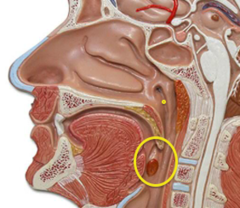
Laryngopharynx
passageway for air, food, and drink (stratified squamous epithelium)
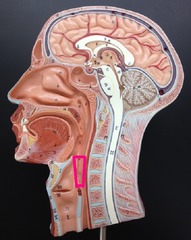
Larynx
Voice box

Larynx function
Keeps food and drink out of the airway
Sound production
Acts as a sphincter during abdominal straining (ex. During defecation and heavy lifting)
hyaline cartilage
form outer framework of larynx- 9- C rings
Glottis
the superior opening of the larynx

Epiglottis
prevents food and drink from entering airway when swallowing

False vocal cords
aid in closing the glottis when swallowing
True vocal cords
produce sound when air passes between them
Trachea
Wind pipe

Trachea functions
Air passageway
Cleans, warms, and moistens incoming air
Ciliated pseudostratified epithelium of trachea
traps inhaled debris and propels mucus up to the pharynx where it
is swallowed
Bronchi
Solely an air passageway

Left and right primary bronchi branch from?
trachea
alveoli
site of gas exchange in lungs

Type I alveolar cells
allow for diffusion of
gases (simple squamous epithelia)
Type II alveolar cells
secrete surfactant
(simple cuboidal epithelia)
Dust cells
alveolar macrophages (leukocytes)