Meiosis and Transmission Genetics
 Call Kai
 Learn
Learn Practice Test
 Spaced Repetition
 Match
Match Flashcards
 Knowt Play
1/26

There's no tags or description
Looks like no tags are added yet.
Name | Mastery | Learn | Test | Matching | Spaced | Call with Kai | Chat |
|---|
No analytics yet
Send a link to your students to track their progress
27 Terms
chromosome
a thread-like structure made of tightly wound DNA and proteins that carries genetic information from cell to cell
telomere
a protective cap made of repetitive DNA found at the ends of our chromosomes
acrocentric chromosome
a chromosome where the central joining point sits very close to one end
metacentric chromosome
chromosome that has its central connecting point (called the centromere) right in the middle
centromere
the narrow, pinched middle part of a chromosome
telocentric
chromosome where the centromere is located right at the very end
karyotype
a picture of a person's chromosomes used to spot genetic disorders, missing or extra chromosomes, or broken chromosome pieces
meiosis
a reduction division over 2 rounds of division that results in the formation of four haploid gametes
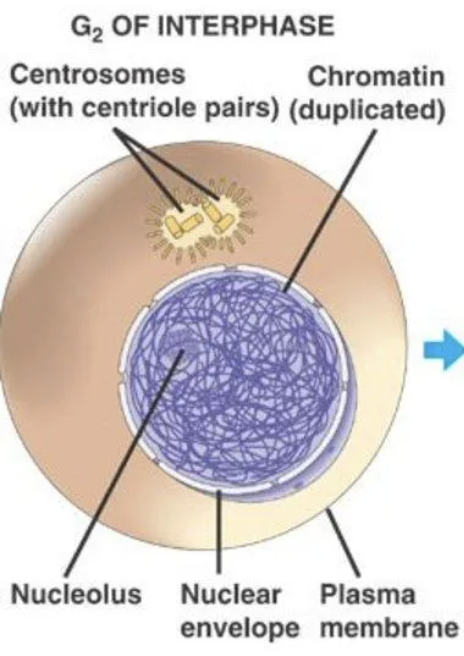
interphase
cell grows, copies its DNA, and gets ready to divide
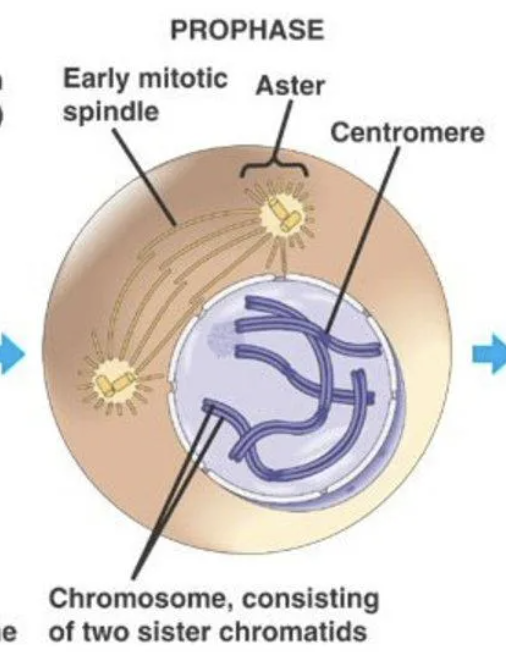
prophase I
Chromosomes condense, and synapsis (the close pairing of two homologous chromosomes) happens and homologs separate a little bit

metaphase I
pairs of homologous chromosomes line up side-by-side along the middle of the cell
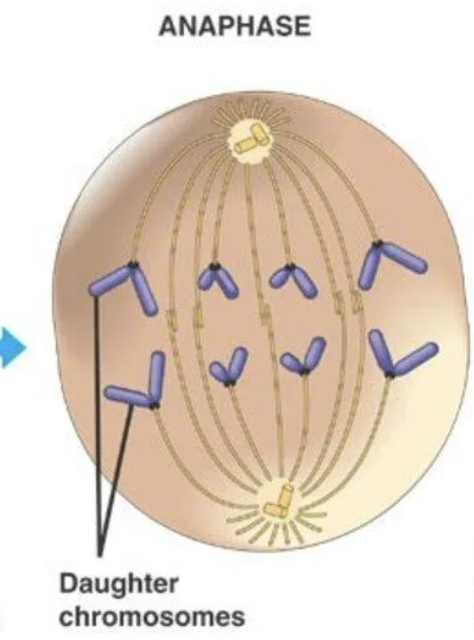
anaphase I
paired homologous chromosomes are pulled apart to opposite ends of the cell

telophase I and cytokinesis
wrap up the first round of meiosis by splitting one cell into two new haploid cells
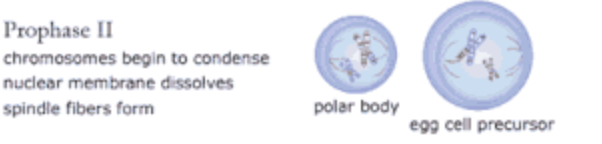
prophase II
chromosomes condense and spindle fibers form in two new cells
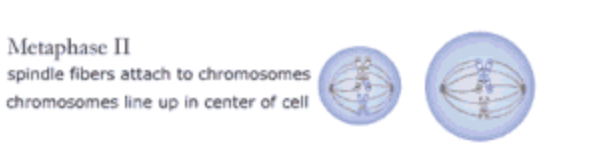
metaphase II
the stage of cell division where individual chromosomes line up along the middle of a haploid cell before being pulled apart
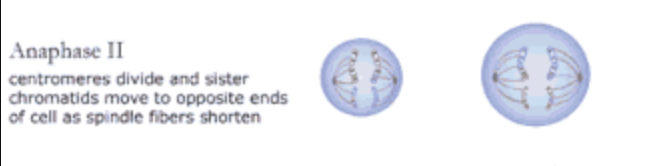
anaphase II
sister chromosomes split apart and move to opposite sides of the cell
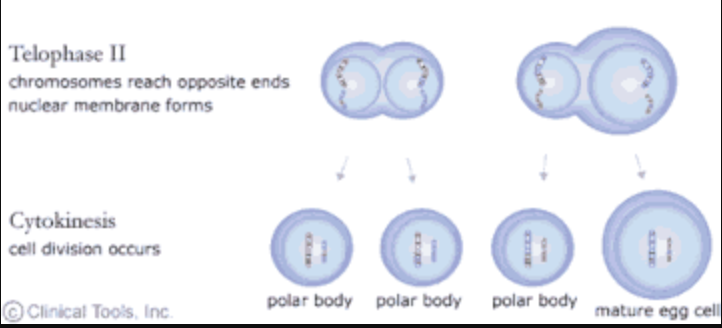
telophase II and cytokinesis
divide cells into four unique, final reproductive cells
number of rounds of division
mitosis - 1
meiosis - 2
number of progeny cells
mitosis - 2
meiosis - 4
are the daughter cells identical?
mitosis - yes
meiosis - no
ploidy change
mitosis - N → N; 2N → 2N
meiosis - 2N → N
separation of homologous chromosomes
mitosis - no
meiosis - yes; anaphase I
separation of sister chromosomes
mitosis - yes; anaphase
meiosis - yes; anaphase II
monosomy
loss of a chromosome
trisomy
addition of a chromosome
allopolyploids
organisms that have 2 or more full sets of chromosomes from two or more different species
Robertsonian Interchange
two different chromosomes fuse together into one large chromosome