Microbio w2 (bacterial classif, morph, phys)
 Call Kai
 Learn
Learn Practice Test
 Spaced Repetition
 Match
Match Flashcards
 Knowt Play
1/25

There's no tags or description
Looks like no tags are added yet.
Name | Mastery | Learn | Test | Matching | Spaced | Call with Kai | Chat |
|---|
No analytics yet
Send a link to your students to track their progress
26 Terms
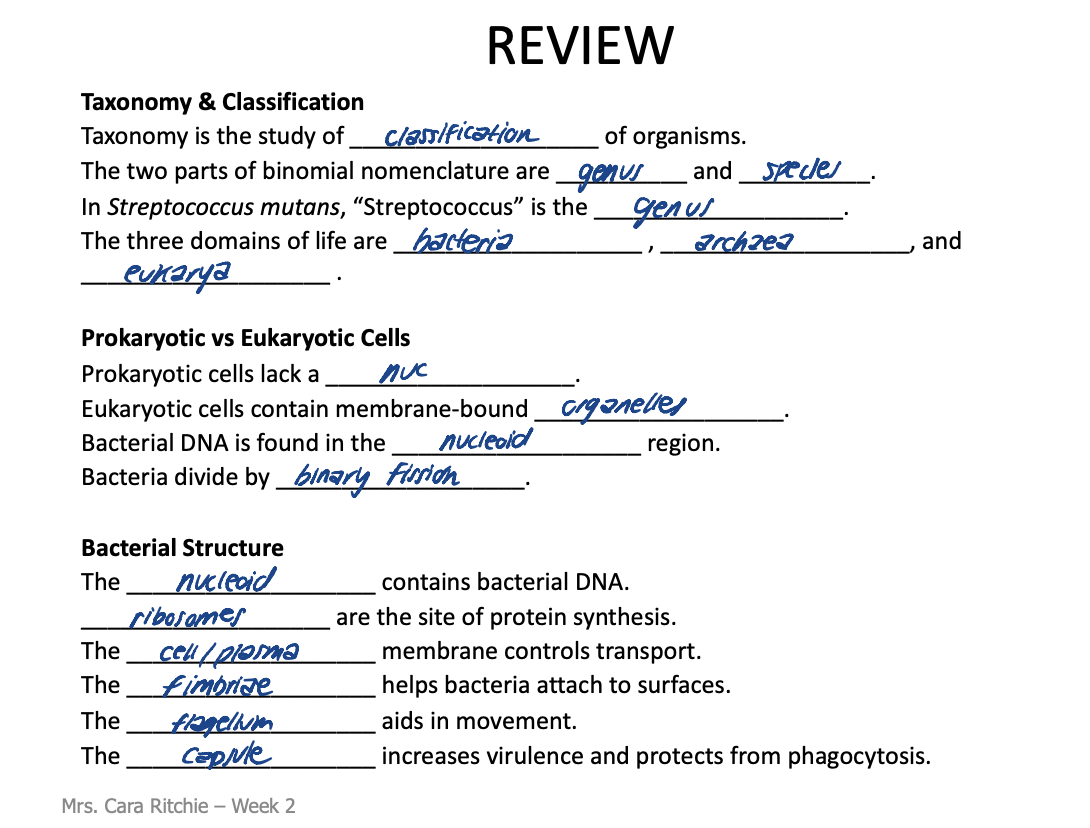
taxonomy?
systematic classif and categ of orgs into ordered groups
based on struct, genetics, hierarchy
whats binomial nomenclature
2 part naming sys
Genus (capital) species (lower)
ex: Streptococcus mutans
why do we classify them?
Identify microorganisms
Understand relationships
Organize biological diversity
Predict behaviour & disease potential
3 domains of life (BAE)
Bacteria - most pathogens
Archaea - extreme environ
Eukarya - humans, plants, fungi
Archaea (all need to know)
prokaryotic (no nuc mem bound orgs)
extreme environ
no peptidogylcan (polymer forming cell wall of bact)
review
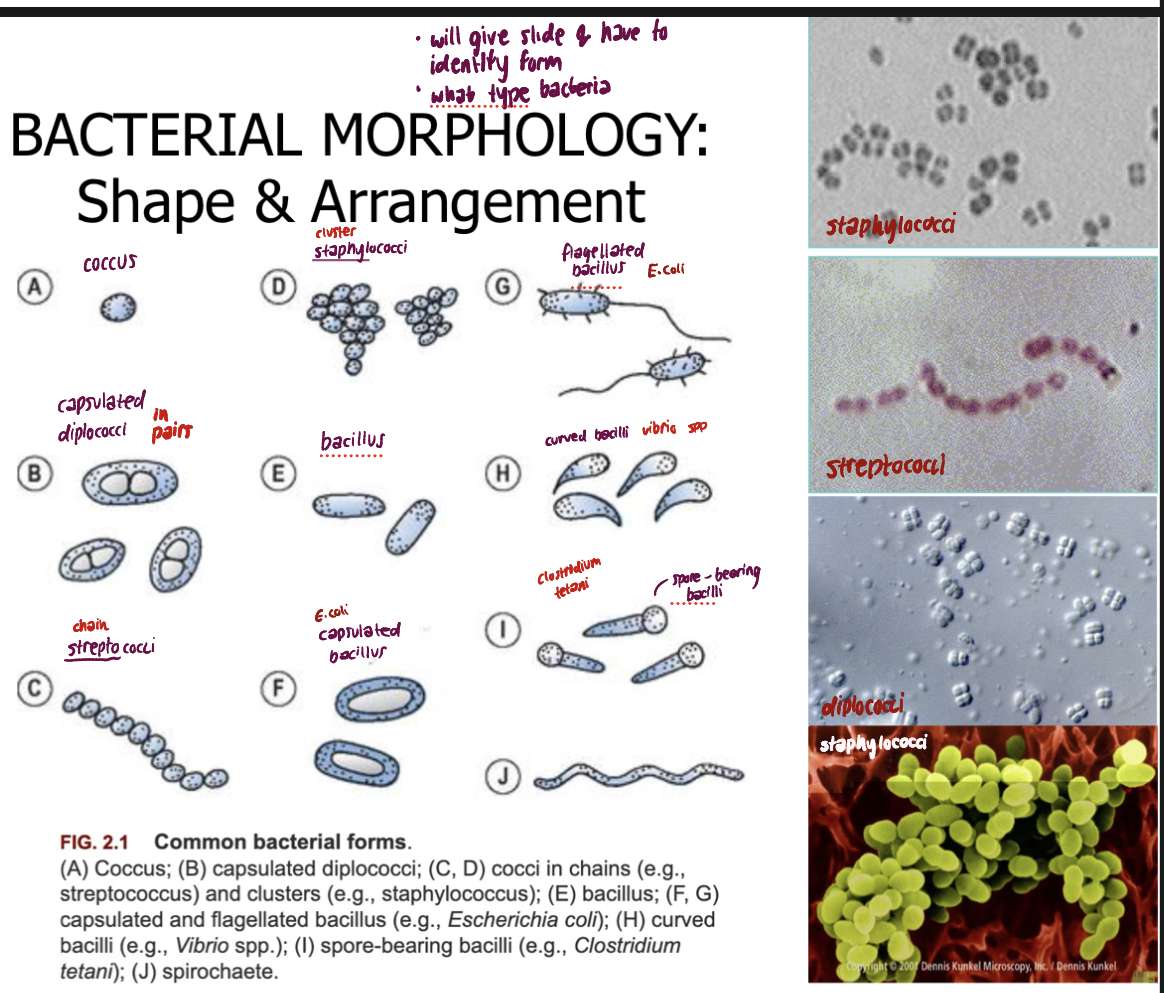
bacteria morphology (shape & arrange)
Shapes
bacilli - rod
cocci - circle
spirilla - spiral
vibrio - curved or comma
strept = chain
staph - cluster
diplo = pair
cellular microorgs (2 grps are?) know to this extent
Prokaryotes - (bact) no mem bound orgs/nuc, no nuc mem
one circular chrom made of dna
Eukaryotes- nuc mem (cytoplasm & nuc)

most prev oral bacteria name? details
Streptococcus mutans (on enamel)
break down dietary sugars > lactic acid = destroy enamel > caries

intracellular bact structures - cell wall
makes cell rigid
inner layer of peptidoglycan (polymer in prokar)
outer mem varying in comp
peptidoglycan = derived in peps & sugars that make up the molec
rigidity
cytoplasmic mem = lies just inside peptido layer & has phospholipid bilayer
TLDR = cell wall (peptido covered in outer mem) > cytoplas mem w phospholipid bilayer
FXNS ****
active & selective transport
electron transp & oxidative phosphorylation
secretion of enzymes & toxins
support receptors and other proteins
cytoplasm
gelatinous semi-transparent matrix filling most of cell
mainly water & dissolved inorg ions n stuff
in prokar cells = includes nucleoid region (where dna is; not mem bound)
in eukar cells = excludes nuc; it’s enclosed by double mem (nuc envelope
ribosomes
photosynthesis site
nuclear material/nucleoid (in prokar)
non-mem-bound region containing cell’s DNA
DNA is single circular coiled chrom

external cell wall structs
flagella - propel & guide toward nutritional + avoid preds
fimbriae & pili - hair like, mainly on gram-neg, adhesion of bact to receptors on human cell surf (initiation of infect
seex pilus form attach betw male/fem during conjugation (gene transf betw bact
capsule - amorphous (lack shape) gelatious layer surround bacteria (NOT ALL HAVE)
polysaccharide & protein
mediate adhesion of bact > tissue
can hinder/inhibit phagocytosis (inhib blood cell from eating it)

what capsule have to do with virulence factor
outermost layer
stop WBCs like macropage from swallowing
evade immune sys by hiding inner bacterial parts
help w attachment

periplasmic space (gist)
only in gram neg
betw inner plasma mem & outer
move & store nutrients round
antimicrobial mode of action
will give list of antibiotics - which inhib protein synth
tldr specif antibiotics targ specific bact/micros
b-lactams (penicillin ampicillin cephalosporin) - interfere w cross-linking of cell wall petidomolecs
targ cell wall
also bacitracin inhibs peptido formation
erythromycin and teracycline - target ribosome > inhib protein synth
polyenes like nystatin & amphotericin - affect cytoplasmic mem by disrupting yeast cell mem
metronidazole - affect nucleic acid rep by interfere w dna rep
idoxuridine & aciclovir - affect nucleic acid rep by interfere w dna synth in dna viruses

antibiotics work because they…
target bacterial structs
primary target of penicillin
cell wall synth
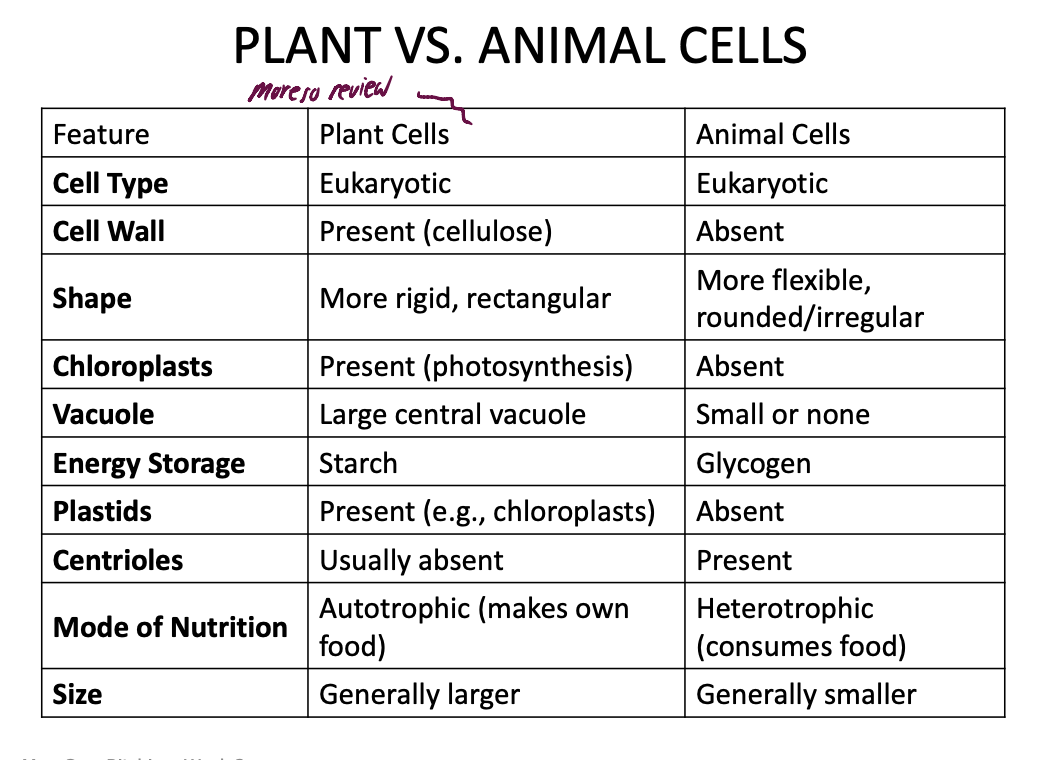
plant vs animal cell wall
plant cell wall have cellulose
animal no cell wall, just cell membrane

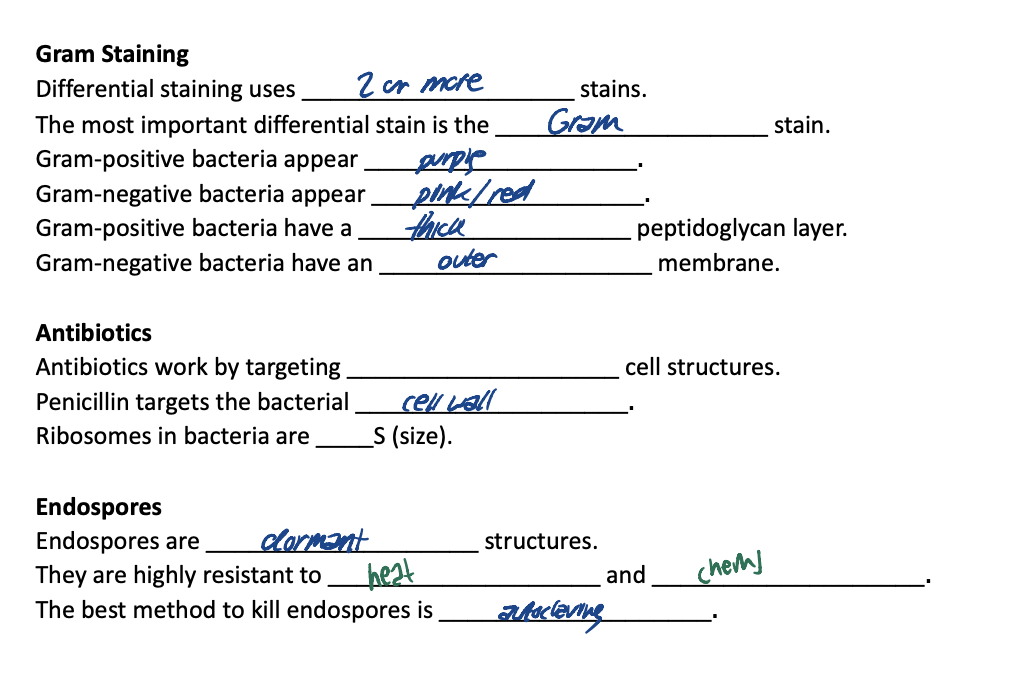
what allows us to use gram stains
structural differences in bacteria
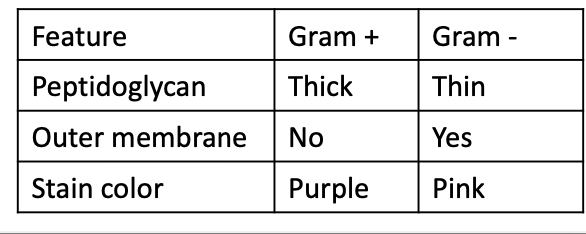
whats gram stain
4-step staining process for sep bacteria in 2 grps
crystal violet dye
iodine sol
alcohol wash (removes crystal violet from gram neg)
safranin
results
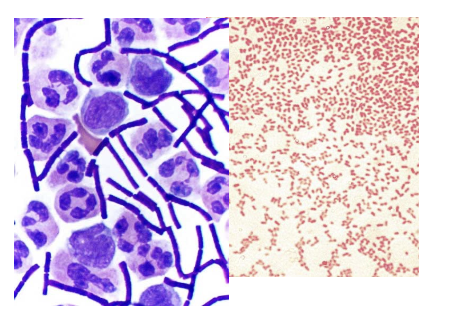
gram-pos > purple
usually aerobic (need O2)
its thicker walls are dehydrated by application of decolorizer, pores get smaller
gram-neg > pink
typically anaerobic (no O2)
walls too thin to retain crystal violet-iodine complex
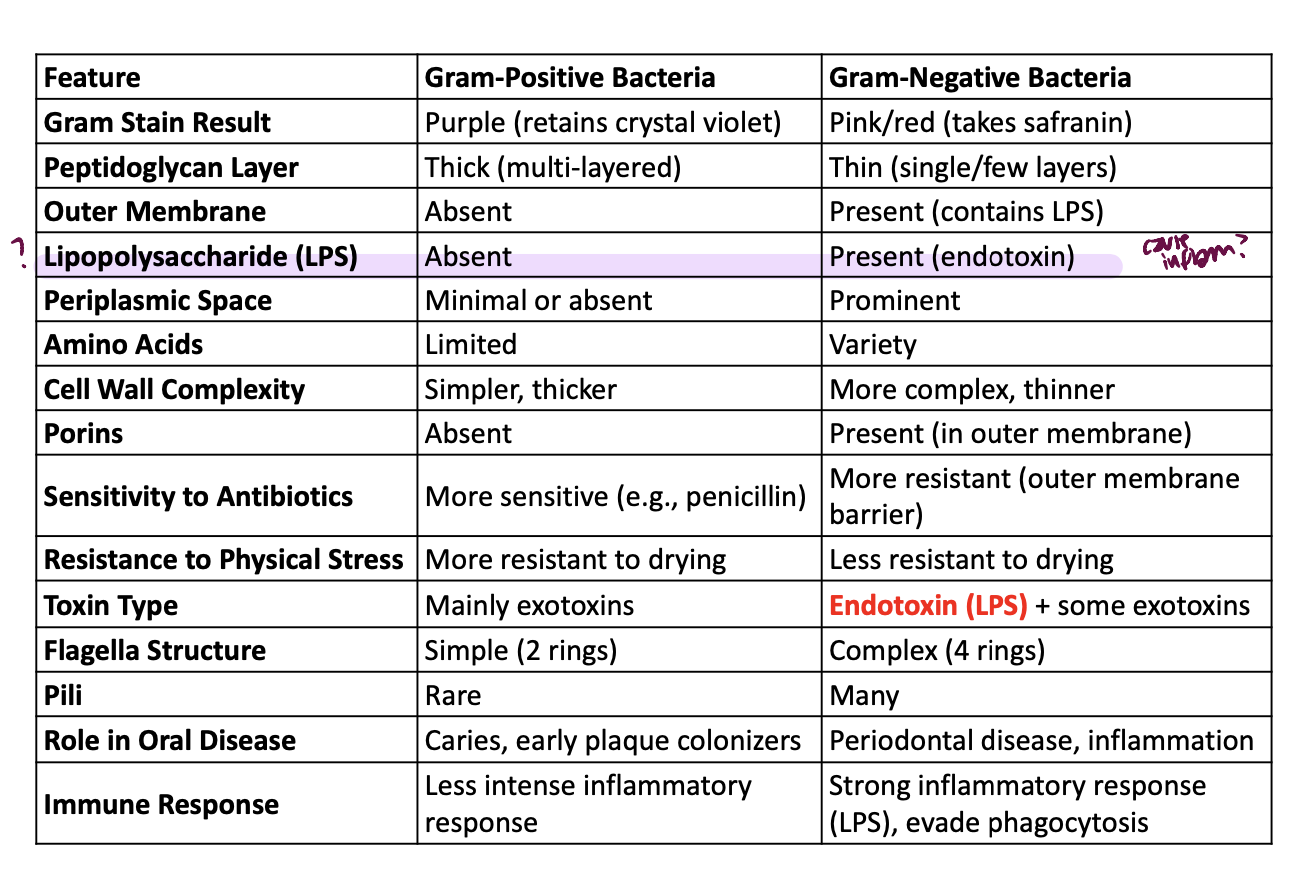
gist?
neg bacteria have outer mem, pos dont
neg bacteria have LPS (cause inflam), pos dont
neg retains red/pink (safranin), pos retain crystal violet
gram neg more resistant bc it has outer mem
presence of LPS in neg contrib to ability to trigger strong inflamm response
spore?
reproductive mech (usually haploid+unicell)
can dev > new org by mitosis (w/o fuse) & prod multicell gametophyte
bacterial spores are Endospores
dormant survival structs
very resistant to heat, chems, drying
found in gram-pos bact
dental bact like streptococcus usually pos > most can form endospores (not strept)
these are highly heat and disinfectant resistant
relevance - infection transmit, instrument sterility, patient safety
endospores resists sterilize