Adult Health II Exam 1
 Call Kai
 Learn
Learn Practice Test
 Spaced Repetition
 Match
Match Flashcards
 Knowt Play
1/295

There's no tags or description
Looks like no tags are added yet.
Name | Mastery | Learn | Test | Matching | Spaced | Call with Kai | Chat |
|---|
No analytics yet
Send a link to your students to track their progress
296 Terms
3 main indications for IV therapy
-maintenance
-replacement
-restoration
crystalloid vs colloid solutions
crystalloid: composed of electrolytes dissolved in water
colloid: composed of larger molecules such as protein or starch (plasma volume expanders)
normal serum osmolarity
270-300 mOsm/L
osmolarity of isotonic solutions
250-375 mOsm/L (no shift)
osmolarity of hypotonic solutions
osmolarity of hypertonic solutions
>375 mOsm/L (cells shrink)
the ICF consists of the what? ECF?
ICF = cells & interstitial spaces (tissues)
ECF = vascular system (blood)
when using isotonic solutions there is no fluid shift between the ICF & ECF, the purpose is to build ____ volume
intravascular (ECF)
2 examples of isotonic solutions
1) 0.9% NaCl (NS)
2) lactated ringer's (LR)
0.9% NS can be used in the treatment of what 4 things?
-hypovolemia
-resuscitation
-DKA
-shock
what is the only solution given with blood products?
0.9% NaCl (NS)
what electrolyte issues can be caused by overuse of NS?
-hypernatremia
-hypokalemia
-fluid overload
-dec. Hgb & Hct
LR contains multiple electrolytes, what are they? (5)
-Na
-K
-Ca
-Cl
-lactate
LR can be used in the treatment of what 5 things?
-hypovolemia
-burns
-dehydration
-acute blood loss
-mild metabolic acidosis
LR use should be avoided in patients with ____ failure
renal
excessive use of LR can cause metabolic ____
alkalosis (bc lactate increases pH = more basic)
when anything is added to an isotonic solution is becomes a ____ solution (ex: NS & abxs or K+)
hypertonic
with ____ solutions fluid osmolarity is less than serum osmolality, meaning fluid shifts from the ECF to the ICF
hypotonic
hypotonic solutions can be used in the treatment of what 3 things?
-hypertonic dehydration
-hypernatremia
-DKA (after initial treatment with NS)
three examples of a hypotonic solution
-0.45% NaCl (1/2 NS)
-0.33% NaCl
-0.25% NaCl
hypotonic solutions shouldn't be given to patients with what conditions?
-hypotensive pts (will make worse)
-head injuries with risk of inc. ICP
-liver disease
-trauma
-burns
D5W starts as an ____ solution in the bag, but is ____ in the blood
isotonic in bag, hypotonic in blood
D5W becomes hypotonic once it's in the blood because the ____ is ____ causing fluid to have a hypotonic effect on the cells
dextrose is metabolized
D5W is used in the treatment of what 3 things?
-hypernatremia
-fluid loss
-dehydration
D5W should be used cautiously and use of it should be avoided in those with ____ injuries
head
with ____ solutions fluid osmolarity is greater than serum osmolality, meaning fluid shifts from the ICF to the ECF
hypertonic
what 3 things can hypertonic solutions be used to treated?
-hypotonic dehydration
-circulatory insufficiency
-replace electrolytes
6 examples of hypertonic solutions
-3% NaCl
-5% NaCl
-50% dextrose (D50)
-D5NS
-D5LR
-D5 1/2 NS
3% or 5% NaCl is used only for treatment of ____
hyponatremia
when using hypertonic solutions, the labs & patient should be monitored closely, because it could cause ____ ____ or ____ ____
volume overload or pulmonary edema
50% dextrose (D50) is given along with IV ____ to shift ____ in the cells
insulin; K+
what systemic body effects could be seen with the use of hypotonic solutions? how about with hypertonic solutions?
hypotonic = edema & dec. BP
hypertonic = inc. BP & eventually dec. edema
colloid solutions draws fluid into the intravascular space similar to ____ crystalloids (ICF->ECF)
hypertonic
colloid solutions are used to maintain intravascular ____ & prevent ___ after major blood or fluid loss (severe hypovolemia)
volume; shock
2 examples of colloid solutions
-albumin
-dextran
when administering colloid solutions, the patient is at an inc. risk for what?
an allergic reaction
____ venous access is defined as when the tip of the intravenous access device (IVAD) ends outside of the central vasculature
peripheral
____ venous access is defined as when the tip of the intravenous access device (IVAD) terminates in the central vasculature at the level of the superior or inferior vena cava
central
____ access is when fluids are infused into the bone marrow after the device has been inserted using a handheld driver
intraosseous (IO)
intraosseous access is quick & easy for rapid fluid infusion in severely ____ patients or ____ situations
dehydrated; emergency
with IV cannula/needle sizes, the ____ the number, the ____ the IV size
large the number, smaller the IV size
what is the smallest size IV gauge that can be used for blood infusion?
20G
IV colors & sizes (plus indications)
24G - yellow (elderly pts, really desperate)
22G - blue (elderly pts, small veins, ok for fluids)
20G - pink (go-to, good for fluids & blood)
18G - green (preferred for blood, trauma, OR, CT, etc)
16G - gray ("now you're showing off")
when preparing to start an IV, before entering the room, what 3 things should be done?
-check providers orders
-check pt hx
-gather supplies
can IV's be placed in leg veins? if no, why?
no; risk of thrombophlebitis
when starting an IV why is it important to avoid areas distal to infiltrations or phlebitis?
you want to go above these areas so whatever is being administered doesn't pass through the affected area
when looking for an area to start an IV, you should start ____ & work your way up the arm; you should also avoid placing it in the ____ if you can
distal; antecubital
steps to initiating peripheral IV access
1) have all equipment ready to go- tape ready and reachable and lines primed
2) apply tourniquet 4-6 inches above site
3) cleanse site with alcohol or chlorhexidine for at least 30 seconds and allow to dry
4) anchor vein securely
5) hold catheter with bevel up and insert at 5-25 degree angle
6) maintain sterile technique- do not touch the cannula or needle!
7) once you see blood flashback, hold needle steady and slowly advance the cannula; never reinsert the needle into the cannula!!!!!
8) withdraw the needle and engage the built in safety device (don't let go of the cannula with your other hand!)
9) connect tubing and flush
10) once patency is confirmed and there is no swelling or significant pain, anchor the cannula with tape and cover with tegaderm
11) flush again, clamp tubing, date/time/initial site then start infusion
12) document everything in the patient chart
13) only 2-3 attempts per nurse
strict ____ technique is used during insertion of & during all dressing changes for a PICC line
sterile
what is needed to confirm placement of a PICC line? and what is needed from the patient before inserting it?
chest x-ray; consent
what should be checked regarding a PICC line before every single use?
blood return
labs can be drawn from PICC lines but be sure to ____ the first 10ml drawn & ____ with 10-20ml after
waste; flush
what type of access is a PICC line?
central
tunneled catheters are often used for dialysis, what is the nurses responsibility regarding these?
DO NOT touch, only assess
portacaths are protected by the patient's ____ & a special needles is needed to access them
skin
secondary IV tubing allows for administration of a second drug through the ____ IV site without disconnecting the patient by pausing the ____ infusion to infuse the ____
same; primary; secondary
when hanging a piggyback, the ____ bag must hang lower than the ____ bag
primary lower than the secondary
IVs should be flushed as ordered (usually q8h or q12h) along with before & after every ___
use
peripheral IVs should be flushed with ____ & central IVs should be flushed with ____ (unless otherwise noted)
peripheral = 3ml
central = 10ml
IV sites should be assessed how often? how often should tubing be changed? how often should IV bags be changed?
assess IV sites q1-2h; tubing changed every 4 days; IV bags changed q24h
when removing an IV, what should be checked on the cannula?
check to see if the tip is intact
what 3 things should be documented regarding IV removal?
-removal date
-removal time
-state of catheter
causes of IV clotting
-kinked IV tubing
-very slow infusion rates
-empty IV bag
-failure to flush line after intermittent medication admin
signs/symptoms of IV clotting
-dec. flow rate
-blood backflow into the tubing
treatment for IV clotting
-discontinue infusion
-DO NOT force flush or milk the IV line
prevention for IV clotting
-don't let fluids run dry
-tape tubing to prevent kinking
-flush, flush, flush!
-clamp extension tubing
a ____ is caused when a significant amount of blood leaks into the surrounding tissues at the insertion site
hematoma
causes of hematoma
-perforation of opposite vein wall during insertion
-needle slips out of vein during insertion
-inadequate pressure held when IV was d/c
signs/symptoms of hematoma
-ecchymosis
-immediate swelling at the site
-blood leaking from insertion site
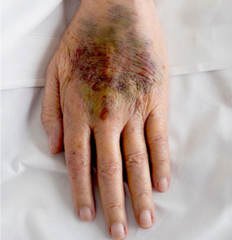
treatment for hematoma
-d/c IV & apply direct pressure with gauze at insertion site for 2-3 min
-apply ice on & off for 24hrs to prevent enlargement
-elevate the extremity
prevention for hematoma
-hold pressure for sig. amount of time when removing IV
-don't "fish" when placing IV
____ is defined as inflammation of the inner lining of the vein
phlebitis
causes of phlebitis
-chemical: irritating meds/solutions; rapid infusion rates; med incompatibilities
-mechanical: long cannulations; catheters in flexion areas; large catheter gauges; poorly secured catheters
-bacterial: poor hand hygiene; lack of aseptic technique;; failure to recognize early signs
signs/symptoms of phlebitis
-pain
-inflammation
-swelling
-warmth
-tenderness
-redness
-vein streaking

treatment for phlebitis
-discontinue IV
-apply warm/moist compress
prevention for phlebitis
-anchor cannula securely
-inspect IV site q1-2h
-change IV site according to agency policy
____ is defined as unintentional admin of a nonvesicant solution or medication into tissues
infiltration
infiltration causes
-IV cannula becomes dislodged
-IV cannula perforates the wall of the vein
signs/symptoms of infiltration
-edema
-blanching/leaking at insertion site
-discomfort at site
-dec. in flow rate
-coolness of skin

treatment for infiltration
-stop infusion & d/c IV
-restart IV in site proximal to infiltration
-warm compress
-elevate extremity
prevention for infiltration
-inspect IV site hourly
____ is defined as unintentional administration of a vesicant or irritating solution into tissues
extravasation
a vesicant medication is a med capable of causing injury & ____ in tissues (ex: chemotherapy drugs)
necrosis
signs/symptoms of extravasation
-pain & burning at site
-redness
-blistering
-necrosis or sloughing
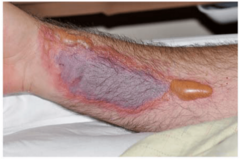
treatment for extravasation
-stop infusion immediately
-admin antidotes
-notify provider
-remove IV
-apply warm or cold compress depending on agent
-perform frequent neurovascular assessment of affected extremity
extravasation prevention
-inspect IV site hourly
-consider central line
signs/symptoms of nerve injury (caused by IV insertion)
-immediate sharp/shooting pain at the site or up/down arm
-sensation of pain that changes in severity depending on needle position
-pain/tingling in hand or fingers
prevention of nerve injury (caused by IV insertion)
-avoid sticking areas with lots of nerves (ventral surface of wrist, thumb)
-don't probe with needle when inserting IV
a ____ ____ is a sudden involuntary contraction of a vein resulting in cessation of blood flow
venous spasm
causes of venous spasm
infusion of cold solution, too-rapid of a rate, or irritating solution
signs/symptoms of venous spasm
-cramping above IV site
-resistance to PICC removal
prevention for venous spasm
-ensure adequate dilution of meds
-admin at prescribed rate
-allow refrigerated meds to reach room temp before admin
-use fluid warmer for rapid/large-volume transfusions
a bloodstream infection is defined as presence of bacteria in the blood; ____ is key to avoiding these
prevention
causes of fluid overload (IV related)
-rapid IV infusions
-excessive use of fluids in cardiac, renal, or hepatic disease pts
signs/symptoms of fluid overload
-inc. in BP or HR
-bounding pulse
-intake>output
-JVD
-cough
-weight gain
-edema
fluid overload can progress to pulmonary edema, what are s/s of this?
-moist crackles in lungs
-severe dyspnea
-anxiety
-blood-tinged sputum
-hypoxia
fluid overload treatment
-dec. IV rate
-access breath sounds/VS
-place pt in high fowler's position
-notify provider
prevention of fluid overload (r/t IV)
-use IV pump
-mont. IV infusion
-carefully & frequently assess pts
s/s of air embolism
- palpitations
- dyspnea
-cyanosis
-hypotension
-weak/rapid pulse
-LOC
-chest/shoulder/back pain
treatment for air embolism
-clamp cannula
-replace defective system
-assess VS/breath sounds
-mont. O2 sat
-place pt in left lateral trendelenburg position to trap air embolus in right atrium before reaches the pulmonary artery
-call rapid response