Chapter 15 Microbiology
 Call Kai
 Learn
Learn Practice Test
 Spaced Repetition
 Match
Match Flashcards
 Knowt Play
1/82

Earn XP
Description and Tags
Adaptive, Specific Immunity and Immunization
Name | Mastery | Learn | Test | Matching | Spaced | Call with Kai | Chat |
|---|
No analytics yet
Send a link to your students to track their progress
83 Terms
Third line of defense is usually
acquired
Antigen
Molecules that stimulate a response by T and B cells
Two features that characterize specific immunity
specificity and memory
Functions of receptors
perceive and attach to non-self or foreign molecules
promote the recognition of self molecules
receive and transmit chemical messages among other cells of the system
aid in cellular development
MHC class I Receptors location
all cells except RBCs
MHC class II Receptors location
limited to WBCs
Function of MHC
plays role in recognizing recognization of self and rejects foreign tissues
Function of MHC Class I
regulates immune reactions
required for CD8 Cytotoxic T-lymphocyte antigen presentation and CD8 T cell activation
Site of lymphocytic stem cell differentiation
bone marrow
When lymphocytic stem cells differentiate, they differentiate into these types of immune cells
pre-B and pre-T cells
pre-B cells stay in the bone marrow and become this type of B cell
naïve B cells
T cells migrate to this gland for maturation
thymus gland
Both T and B cells migrate to secondary lymphoid tissues to encounter antigens and become
Activated T cells
Plasma B cells
B-cell receptors typically bind ____ antigens
free
T-cell receptors typically bind _____ antigens along with MHC molecules
processed
Immunoglobulins
large glycoproteins that serve as specific receptors of B cells
Receptors of B cells
immunoglobulins
Chemical composition of immunoglobulins
4 polypeptide chains
2 identical heavy chains
2 identical light chains
Y-shaped arrangement
When the B cell receptor is secreted it is called an
antibody
T-Cell Receptors for Antigen
2 parallel polypeptide chains, most commonly alpha and beta chain
small, not secreted
Different classes of T-cell receptors are termed
CD (cluster of differentiation)
Types of CD
CD4 and CD8
Location of CD4
T-helper cells/helper T cells
Location of CD8
Cytotoxic T-cell/Cytotoxic T-lymphocyte
How B and T cells interact
B-cells finds an antigen which matches its receptors
It waits until a T-helper cell activates it
B-cell divides into plasma and memory cells
Plasma cells produce antibodies that attach to invader
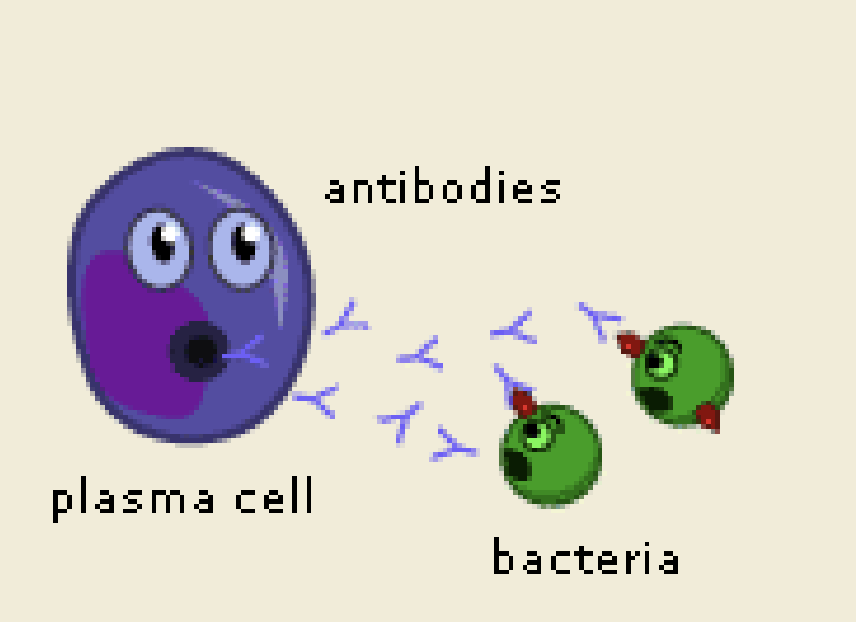
Plasma cells produce
antibodies
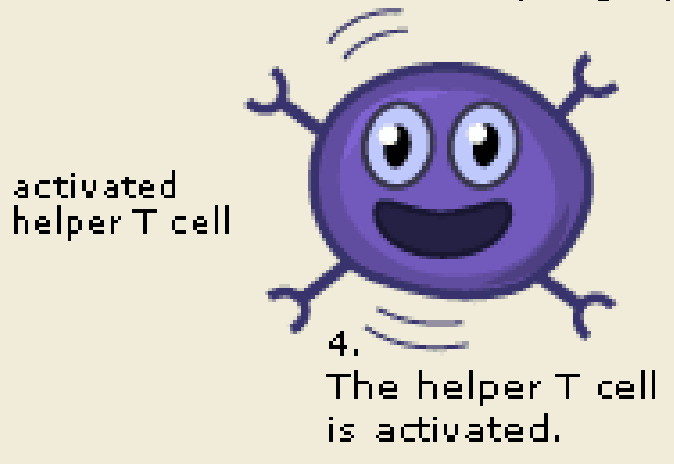
How CD4 Helper T cells are Activated
Phagocyte eats bacteria
Parts of the bacteria (antigen) goes to the surface of phagocyte
Phagocyte presents antigen to a helper T-cell
Helper T-cell is activated
Function of T-cells (CD4)
recruit neutrophils, kills helminthes
CD8 T cell Activation is caused by
binding of MHC I presenting an antigen
helper CD4 T-cells
Function of perforins in cytotoxic T cells
punch holes in target cells
Function of granzymes in cytotoxic T cells
cause apoptosis
Antibody-Antigen Interactions
opsonization
neutralization
antibody tagging
complement fixation
Opsonization
binding of antibodies or complement proteins to the surface of infected cells or directly to the microbes
Neutralization
Abs fill the surface receptors on a virus or the active site on a microbial enzyme (ex. C. tetani toxin) to prevent it from attaching
Antibody tagging increases the rate of
phagocytosis
Complement fixation
activation of classical complement pathway, results in rupturing of cells and some viruses
IgM
5 monomers
first synthesized following Ag encounter
Can serve as B-cell receptor
Immunoglobulin responsible for first line of defense
IgM
IgG
monomer
produced by plasma cells
most prevalent
Which immunoglobulin is produced by plasma cells
IgG
These immunoglobulins require class switching
IgA, IgD, IgE
IgA
monomer circulates in blood, dimer in mucous and serous secretions (membrane bound and secreted), found in GI and respiratory tract, passed to newborns in breast milk
Immunoglobulin found in breast milk
IgA
IgD
monomer, serves as B-cell receptor for antigen on B cells
Which immunoglobulin serves as a B-cell receptor
IgD
IgE
monomer
responsible for allergic responses and worm infections
When an infection passed, _____ cells undergo apoptosis, and _______ _____ cells remain
plasma cells, specialized memory cells
Primary response to Antigen
after first exposure to an Ag immune system produces IgM and a gradual increase in Ab titer (concentration of antibodies) with the production of IgG
Secondary Response to Antigen
immune system produces a more rapid, stronger response due to memory cells
Anamnestic response
renewed rapid production of an antibody on the second or subsequent encounter with the same antigen
All antibodies in the IgA class
Have identical Fc regions
Antigenicity
property of behaving as an antigen
Characteristic of antigenicity
Foreignness, size, shape, and accessibility
Characteristics of Antigens
foreign
epitope
immunogens
antigenic determines
Epitope
small molecular group that is recognized by lymphocytes/antibodies
Haptens
small foreign molecules that consist only of a determinant group
Special Categories of Antigens
superantigens
allergens
autoantigens
Superantigens
potent T cell stimulators; provoke an overwhelming response
Allergens
antigen that evokes allergic reactions
Autoantigens
molecules on self tissues for which tolerance is inadequate
Active immunity
results when a person is challenged with antigen that stimulates production of antibodies; creates memory, takes time, and is lasting
Passive immunity
preformed antibodies are donated to an individual; does not create memory, acts immediately, and is short term
Natural immunity
immunity acquired as part of normal life experiences
Artificial immunity
acquired through a medical procedure such as a vaccine
Treatment of choice in preventing measles and hepatitis A and in replacing antibodies in immunodeficient patients
passive immunity
Sera available for diphtheria, botulism, and spider and snake bites are produced by this animal
horses

Vaccination is identified as this kind of immunity
artificial immunity
Artificial active immunity
deliberately exposing a person to material that is antigenic but not pathogenic
Qualities of an Effective Vaccine
low level of adverse side effects
protect against exposure to natural and wild forms of pathogens
stimulate B and T cells
long lasting effects
should not require doses and boosters
Vaccines are usually prepared with
killed or inactivated viruses
alive, active cells or viruses
antigenic molecules derived from bacterial cells or viruses
genetically engineered microbes or microbial agents
mRNA
Killed or Inactivated Vaccines
Cultivate the desired strain, treat it with formalin or some other agent that kills the agent but does not destroy its antigenicity
often require a larger dose and more boosters to be effective
Attenuation
process that substantially lessens or negates the virulence of viruses or bacteria
eliminates virulence factors
Attenuated vaccinates usually have (lower/higher) doses and boosters
lower
Capsules are found in
pneumococcus, meningococcus
Surface proteins are found in
anthrax, hepatitis B
Exotoxins are found in
diphtheria, tetanus
Genetically Engineered Vaccines
Insert genes for pathogen’s antigen into plasmid vector, and clone them in an appropriate host
DNA vaccines create recombination by
inserting microbial DNA into plasmid vector
Examples of genetically engineered vaccines
Lyme disease, hepatitis C, herpes simplex, influenza, tuberculosis, malaria
If the capsule of the pathogen is being used as a vaccine, it would be called a/an
acellular vaccine
Some vaccines require addition of an ________ to enhance immunogenicity and prolong retention of antigen
adjuvant
Possible side effects of vaccination at local site
fever and allergies
rarely, mutation and neurological effects happen
Herd Immunity
concept that immune individuals will not harbor a pathogen, thus reducing the occurrence of pathogens
makes it less likely for a nonimmunized individual to encounter pathogens