MOD II 2.2 Final
 Call Kai
 Learn
Learn Practice Test
 Spaced Repetition
 Match
Match Flashcards
 Knowt Play
1/47

There's no tags or description
Looks like no tags are added yet.
Name | Mastery | Learn | Test | Matching | Spaced | Call with Kai | Chat |
|---|
No analytics yet
Send a link to your students to track their progress
48 Terms
what are the TORCH infections? transmission? symptoms?
toxoplasma gondii, other (syphilis, parvovirus, VZV, listeria), rubella, CMV, HSV
direct transplacental, placental damage, delta-maternal, asc. genital tract
ocular abnormalities, CNS lesion, microcephaly, cardiac issue, skin lesion, skeletal anomalies
irreparable → major cause of neonatal morbidity
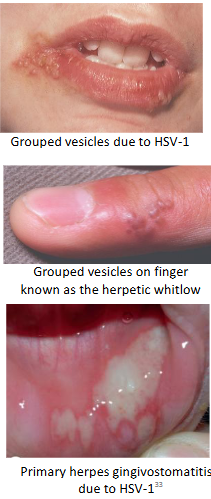
HSV class, family, identification?
enveloped dsDNA, herpesviridae
oral or genital vesicular lesions, keratoconjunctivitis, meningoencephalitis, sepsis, hepatic failure
multinucleated giant cell
HHV6&7 class, family, identification?
enveloped dsDNA, herpesviridae
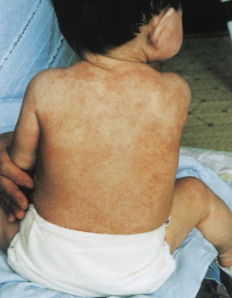
exanthem subitum (roseola infantum/6th disease) = maculopapular rash on neck/trunk + high fever (3-4 days); febrile seizure, meningitis, nagayma spots (uvulopalatoglossal spots)
CMV class, family, identification?
enveloped dsDNA, herpesviridae
heterophile-negative mononucleosis; microcephaly, PV calcification, jaundice, petechiae/purpura, hepatosplenomegaly, IRGR, sensorineural hearing loss
VZV class, family, identification?
enveloped dsDNA, herpesviridae
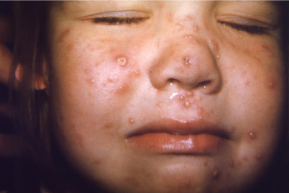
chicken-pox; limb hypoplasia, cicatricial skin lesions, ocular abnormalities, cortical atrophy
multinucleated giant cell
molluscum contagiosum class, family, identification?
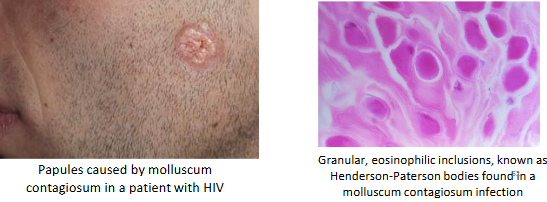
dsDNA virus, poxviridae
self-limited umbilicated (raised w/ center dimple) papular eruption (2-5 mm); severe = 15+
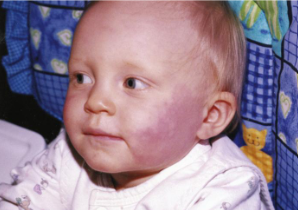
parvovirus B19 class, family, identification?
+ssDNA virus, paroviridae (N*)
nonimmune hydrops fetalis, erythema infectiosum = slapped cheek /5th disease, biphasal, arthralgia; chronic hemolytic anemia, sickle cell, immunodeficiency; infection of seronegative mother = inc. fetal death risk
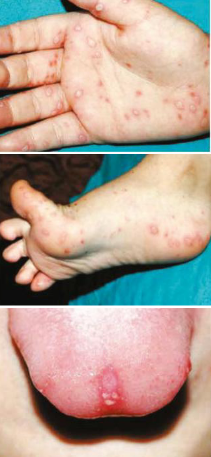
coxsackievirus (HFM) class, family, identification?
+ssRNA virus, picornaviridae (N*)
fever, sore throat, oral cavity lesion (buccal mucosa + tongue), palms + soles
no vaccine prevention
rubella class, family, identification?
+ssRNA virus, matonaviridae
cardiac defect, sensorineural hearing loss, cataracts (white pupils), microcephaly, blueberry muffin rash (discrete maculopapules, face → trunk), hepatomegaly, interstitial pneumonitis, myocarditis, disturb bone growth, IUGR
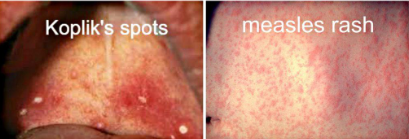
measles class, family, identification?
-ssRNA virus, paramyxoviridae
direct invasion via c. endothelium → SSPE (neurodegeneration via latency), maculopapular rash + koplik spots (mouths), cough, coryza, conjunctivitis
listeria monocytogenes class, family, identification?
gram+ (purple), rods (anaerobe)
catalase+, B hemolytic, GI issues, flu-like, abscess, granulomas, meningitis, fetal demise, neo. sepsis
streptococcus agalactiae class, family, identification?
gram+ (purple), cocci
catalase-, B hemolytic, fetal demise → abortion/premature/stillbirth, neonatal sepsis, meningitis
toxoplasma gondii class, family, identification?
protozoa, apicomplexa
bradyzoites encyst, hydrocephalus, brain calcification/abscess (ring enhancing lesion on CT/MRI), chorioretinitis, lymphadenopathy; death or blindness in pregnancy + AIDs; heterophile negative mononucleosis
mechanical injury (contusion, abrasion, laceration, puncture, incised)?
impact of force = microvascular injury w/ overlying skin intact → extravasation into adj. tissue
tangential force across skin, remove epidermal tissue
tearing tissue w/ tissue bridging → can occur w/ large vessels (deceleration)
penetration w/ no tissue bridging
longer than deep w/ no tissue bridging
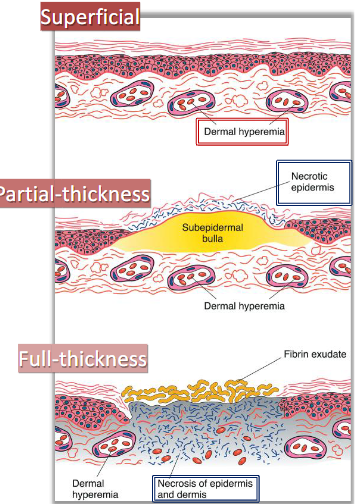
what to consider in burn wounds? degrees?
% of body, depth, internal injuries (e.g smoke inhalation)
superficial (epidermis, red, painful w/ no blisters or scar), partial thickness (dermis, pink, painful w/ blister + wet), full thickness (subcutaneous, white/charred, dry, painless)
causative agents of burn wounds?
flames (deep), hot solids (contact), hot liquid/steam (scald), electricity (voltage)
chemicals (acid, alkali)
alkali = liquefactive necrosis (deep penetration) → continue damage after exposure (saponification)
acid burn = coagulative necrosis (protein denaturation) → local damage
effects of burn wounds?
systemic inflammation → shock, sepsis, resp. insufficiency
hypermetabolic state → heat loss + inc. nutritional needs
hypovolemia + edema (fluid into interstitium)
site vulnerable to bacteria
hypertrophic scars via excess collagen
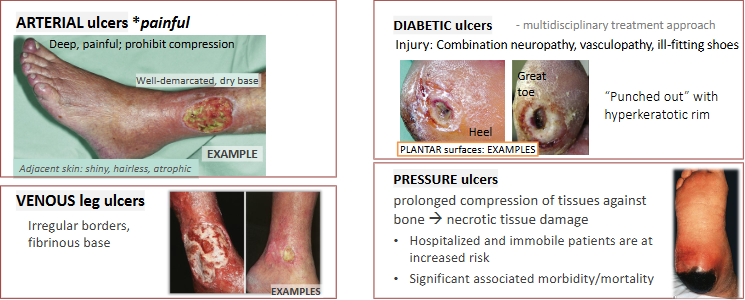
types of ulcerations (venous, diabetic, arterial, pressure)?
insufficiency → stasis → fibrin deposits + RBC breakdown → skin atrophy → ulcer
venous HTN → poor O2 → varicose vein, CHF
vascular disease (ischemia), neuropathy, systemic metabolic abnormalities, 2ndary infection
compromised vascularization (atherosclerosis) of peripheral a. → ischemia
mechanical pressure or local ischemia → tissue compression against bone (heels, post. pelvis, malleoli, greater trochanter)
sarcoma (malignant) morphology? tumor staging?
fascicular arrangement, spindle cell morphology, marked nuclear atypia
higher stage = more extensive
T= size/organ invasion (1-4, in situ)
N = regional LN involvement (0-3)
M = metastasis (0= none, 1= present)
adipocyte neoplasm? types of malignant (well-differentiated, myxoid, pleomorphic)
lipoma
liposarcoma
well-differentiated= indolent, mature adipocyte, atypical spindle cell → MDM2 + CDK4 gene amplification FISH
myxoid= abundant matrix → t(2:16) + FUS-DDIT3 gene amplification FISH
pleomorphic= aggressive; anaplastic cell, bizarre nuclei, admixed lipoblast → complex karyotype

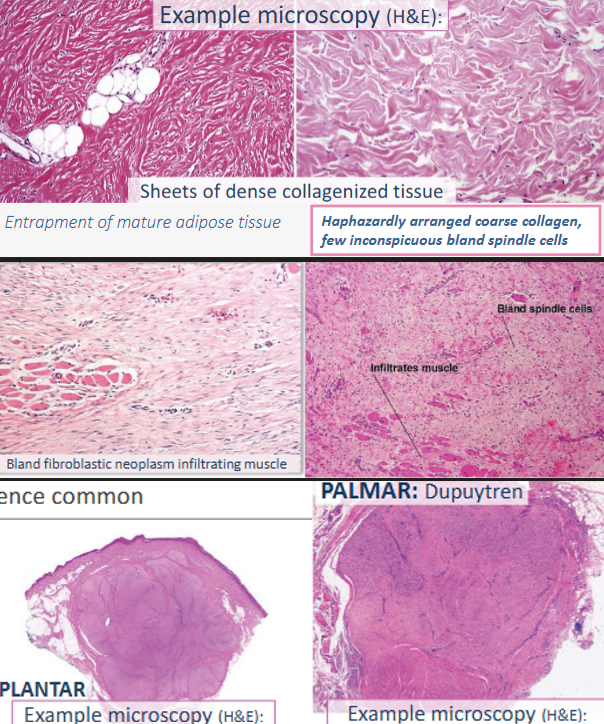
fibroblast-like neoplasm? types (gardner, superficial, desmoid)?
fibroma/fibromatosis (bland fibroblasts + dense collagen)
gardner → plaque-like sheets w/ few spindle cell (APC mut./FAP)
superficial → nodular proliferation (dupuytren, ledderhose)
desmoid (abdominal wall mass, post preg) → infiltrative, local/don’t metastasize, CTNNB1 (B-catenin)
fibrosarcoma → spindle cell w/ herringbone
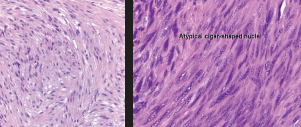
smooth muscle neoplasm? microscopy?
leiomyoma (uterine mass) → low mitotic
eosinophilic spindle cell, blunt nuclei, SM actin, desmin, caldesmon
leiomyosarcoma (retroperitoneal) → cigar-shape nuclei, high mitotic, necrosis
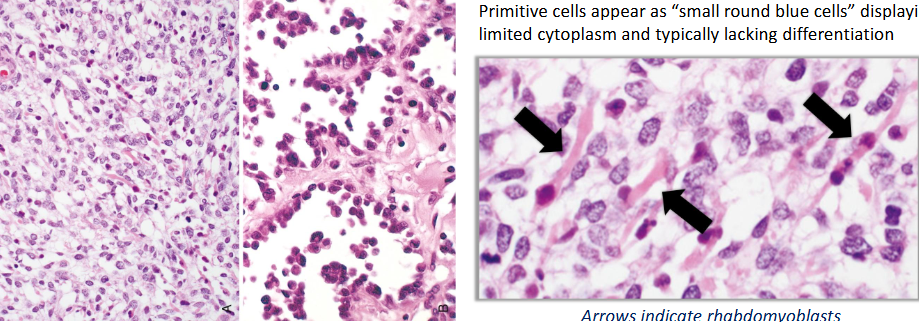
skeletal muscle neoplasm? microscopy? sarcoma subtype?
rhabdomyoma
rhabdomyosarcoma
embryonal (head/neck mass) → primitive round (blue)/spindle
alveolar → FOXO1 + PAX3 t(2;13) or PAX7 t(1;13), myogenin immunostain
pleomorphic → eosinophilic cytoplasm
spindle cell/sclerosing
germline mutation sarcomas?
neurofibromatosis → NF1 mut. (benign + malignant in nervous/non nervous)
gardner → APC mut. (familial adenomatous polyposis subtype) = osteomas, desmoid fibromas
li-fraumeni → TP53 mut. (early onset spectrum of cancer)
osler-weber-rendu → hemorrhagic hereditary telangiectasia (red speckle)
vascular masses? unknown origin?
vascular neoplasm → from endothelium or BV support cells
benign → kaposi sarcoma via HHV8, epithelioid via WWTR1-CAMTA1 fusion
malignant → angio sarcoma w/ endothelial differentiation (post radiation breast)
vascular malformation → venous, capillary, lymphatic, arterial components
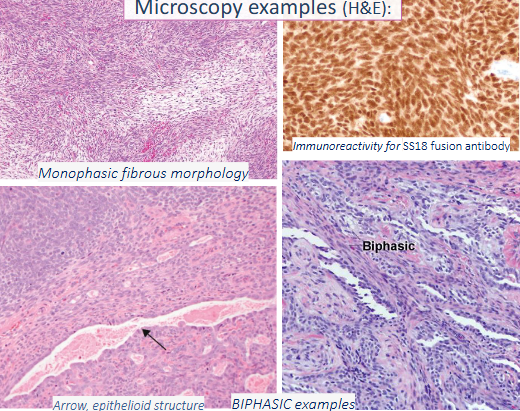
synovial sarcoma → biphasic (glandular + spindle) + monophasic (only spindle), t(x;18)(p11;q11), TLE1+
4 phases of drug studies?
drug safety + pharmacokinetics of healthy subjects
proper dosage + potential efficacy in small group pt. (depends on age, disease, pregnancy, lactation)
statistical evidence of efficacy + safety in controlled clinical trial
uncommon + serious adverse effects
drug interactions → inhibition/induction of biotransformation
where are weak acids and bases absorbed? overdose treatment? henderson-hasselbalch equation?
weak acid → stomach
aspirin/barbiturate overdose → Tx w/ NaHCO3 (sodium bicarb) → trap in urine
weak base → intestine
amphetamine → Tx w/ NH4Cl (ammonium chloride) → dec. urine pH
proportion of drug in unchanged state at any pH → predict how much drug can be absorbed
ionized vs non ionized forms of weak acids and bases?
ionized → water soluble
excreted, NOT RA = trapped in renal tubule
safe for pregnancy → can’t cross barrier (heparin + propylthiouracil)
nonionized → lipid soluble (cross cell membrane)
secreted + RA in renal tubules and cross BBB (levodopa) and placental barrier
volume of distribution equation? what does an increase mean? loading dose?
(Vd) = dose/conc. (inherent property)
drug binds tight w/ tissue → inc. Vd → inc. ½ life
higher Vd → higher conc. in extravascular tissue/cells (low Vd = higher conc. in vascular comp)
loading dose = (Vd)(steady state conc.)/bioavailability
what effects volume of distribution?
organ blood flow (first to high flow e.g brain), plasma protein binding, molecular size, lipid solubility
PBP drugs (bind albumin, a-1 acid, glycoprotein) kept in vascular comp.
drugs compete for PBP sites
metabolism (biotransformation) site? phases?
liver, kidney, skin, gut, lungs
toxicity → BM, liver kidney skin
phase I → ER (oxidation, other rxn)
oxidation (ethanol) via CYP450
also reduction (nitroglycerine) + hydrolysis (aspirin → salicylate)
phase II → cytosol (conjugation w/ acetate, glucuronate, sulfate, glycine)
also sulfation + methylation
CYP450 inducers?
griseofulvin, carbamazepine, phenobarbitone/phenytoin, barbiturates, rifampin, st. john’s wort, chronic alcohol etc. (glucocorticoids, nevirapine)
Guinness, Coronas, PBRS induce Chronic Alcoholism
CYP450 inhibitors (phase I oxidation)?
ciprofloxacin, ritonavir, amiodarone, cimetidine, ketoconazole, acute alcohol, macrolides, isoniazid, grapefruit juice, omeprazole, sulfonamide, etc. (erythromycin + valproate)
CRACK AMIGOS
conjugation of phase II metabolism?
acetylation → speed via genetic polymorphism
slow = isoniazid inc. peripheral neuritis; inc. SLE via sulphonamides, hydralazine, isoniazid, procainamide (SHIP)
phase II glutathione conjugation function? example?
inactivate highly reactive quinone or epoxide intermediate (from certain drugs)
acetaminophen poisoning → glutathione dec = hepatic tox → Tx w/ N-acetylcysteine (donate SH group + inc. glutathione)
phase II glucuronidation process? enterohepatic cycling function?
rxn w/ acetate, glucuronate, sulfate, glycine = more water soluble (e.g chloramphenicol) → easier to excrete
glucuronide conjugate → exc. in bile → hydrolyzed/deconjugated via gut bacteria → lipid soluble= drug RA (e.g OCC)
prolongs ½ life + inc. toxicity
what effect do genetic polymorphisms have on metabolism?
poor CYP2D6 metabolizers = codeine → morphine + tamoxifen → dec. endoxifen (active) → therapeutic failure
poor CYP2C19 metabolizers = omeprazole cause toxicity → extensive metabolizers need large dose for peptic ulcer Tx
familial atypical cholinesterase = DOESN’T metabolize succinylcholine (neuromuscular blocking agent)
renal clearance equation? half-life? clearance equation? who has increased sensitivity to therapeutic agents?
= (renal exc. rate)/(plasma drug conc.)
time for plasma drug conc. to dec. by 50% (exponential)
vol. of plasma from which a drug is eliminated per unit of time
CL = (0.7 * Vd)/t ½ → t ½ = (0.7 * Vd)/CL
young or old via dec. capacity to eliminate drugs (target organ more sensitive)
maintenance dose (oral, IV)? infusion rate?
= (CL * Css/target * dosing interval)/ bioavailability
= CL * Css/target * dosing interval → bioavailability is 100%
infusion rate (Ko) = (Css) * CL
first order kinetics? zero order kinetics? how many half lives required in continuous drug administration?
rate of drug elimination is proportional to plasma drug conc. at any given time
constant amount eliminated every half-life, when drug elimination mechanisms saturated → PEA (phenytoin, ethanol, aspirin)
4-5 ½ lives to reach steady state → rate of drug elimination = rate of drug administration
mosquito class, species? diseases?
insecta
aedes, culex, anopheles
yellow fever, dengue, encephalitis
fleas class, species? diseases?
insecta
yersinia pestis, bartonella henselae, rickettsia typhi
bubonic plague, pruritic, erythematous lesions
lice class, species? diseases?
insecta
pediculus humanus var. capitis or corporis and pthirus pubis, borrelia recurrentis, bartonella quintana, rickettsia prowazekii
itchy/crawling sensation rash
Tx scalp w/ topical ivermectin
Tx pubic w/ permethrin or piperonyl butoxide
bedbugs class, species? diseases?
insecta
cimex lectularius
larger pruritic, erythematous, raised lesions; linear clusters mostly on neck, torso, arms (hard to tell from flea bites)
ticks class, species? diseases?
arachnida
dermacentor variabilis + andersoni, ixodes dammini + scapularis, amblyomma americanum
tularemia, rocky mountain spotted fever, babesiosis, lyme disease
scabies class, species? diseases?
arachnida
sarcoptes scabiei var hominis
intense pruritis and visible pimple-like rash, web-like pattern (burrows)
chiggers (mites) class, species? diseases?
arachnida
larval form of a type of mite (trombiculidae)
pronounced pruritis, erythematous bite; maybe pustule/blister; mistaken for eczema or contact dermatitis due to scratching
spiders class, species? diseases?
arachnida
black widow (latrodectus mactans), hobo (tegenaria agrestis), brown recluse (loxosceles reclusa)
muscular cramps, chest pains, nausea, vomiting, diaphoresis, intestinal spasms, visual difficulties, spastic cramping → cardiac/resp failure