Platelet Disorders
 Call Kai
 Learn
Learn Practice Test
 Spaced Repetition
 Match
Match Flashcards
 Knowt Play
1/22

There's no tags or description
Looks like no tags are added yet.
Name | Mastery | Learn | Test | Matching | Spaced | Call with Kai | Chat |
|---|
No analytics yet
Send a link to your students to track their progress
23 Terms
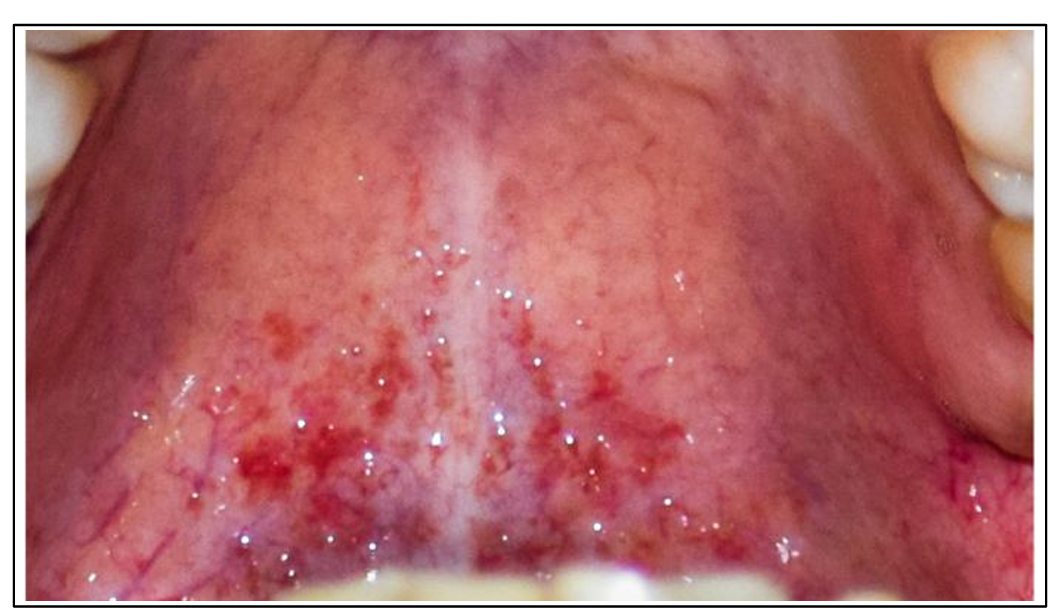
Describe two physical findings in severe thrombocytopenia
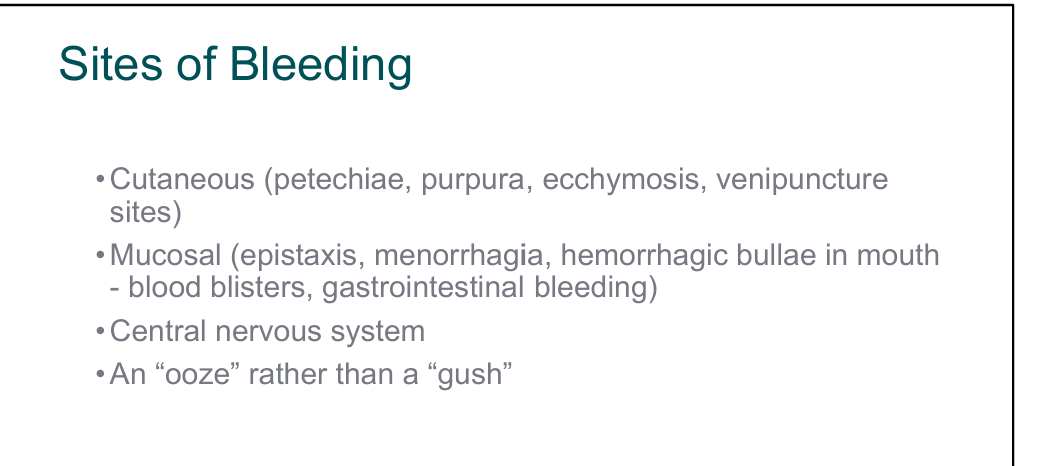
Petechiae (1–2 mm non‑blanching red macules) and mucosal bleeding such as epistaxis or hemorrhagic bullae (“blood blisters”) in the mouth.
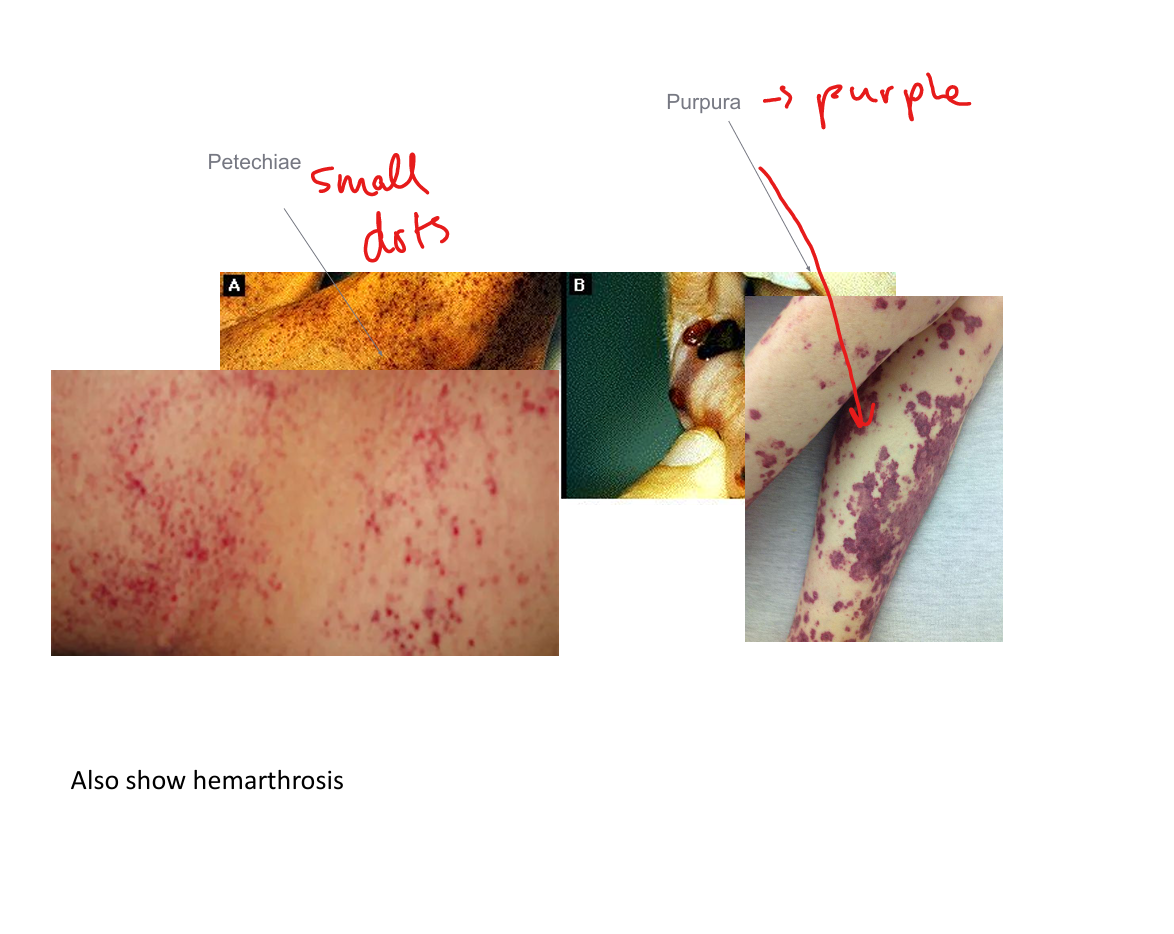
Describe additional physical findings in severe thrombocytopenia
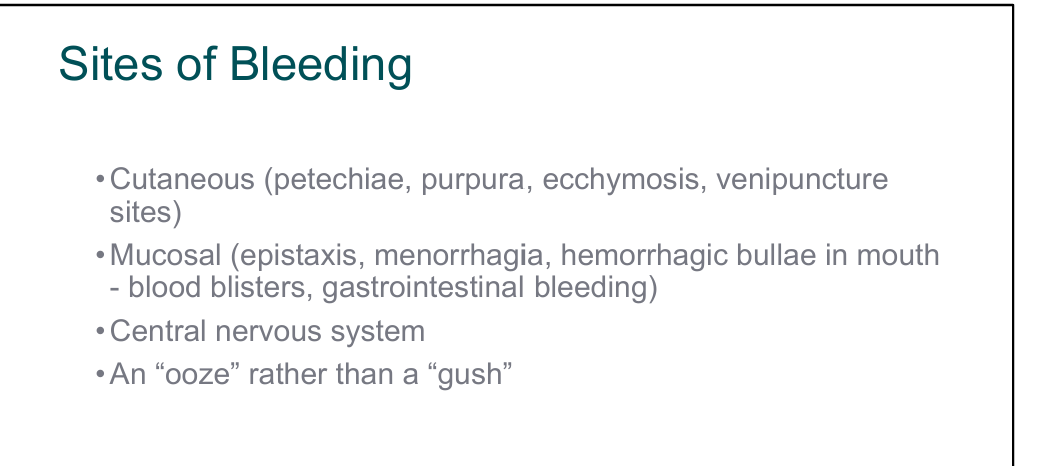
Purpura/ecchymoses, menorrhagia, GI bleeding, and in extreme cases CNS bleeding presenting as headache, confusion, or neurologic deficits.
Explain why thrombocytopenia causes petechiae rather than large hematomas
Platelet disorders impair primary hemostasis, causing capillary‑level “oozing” rather than deep tissue “gushing” bleeds typical of coagulation factor deficiencies.
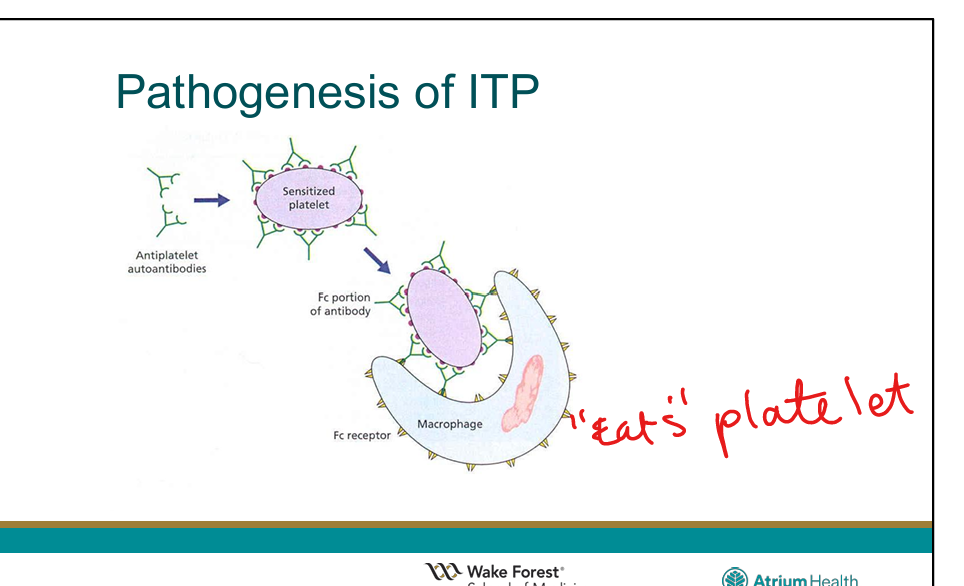
Discuss the mechanism of platelet destruction in Immune Thrombocytopenic Purpura (ITP)
Autoantibodies (IgG) bind platelet membrane glycoproteins (GPIIb/IIIa, GPIb), marking platelets for splenic macrophage destruction via Fc receptor–mediated phagocytosis.
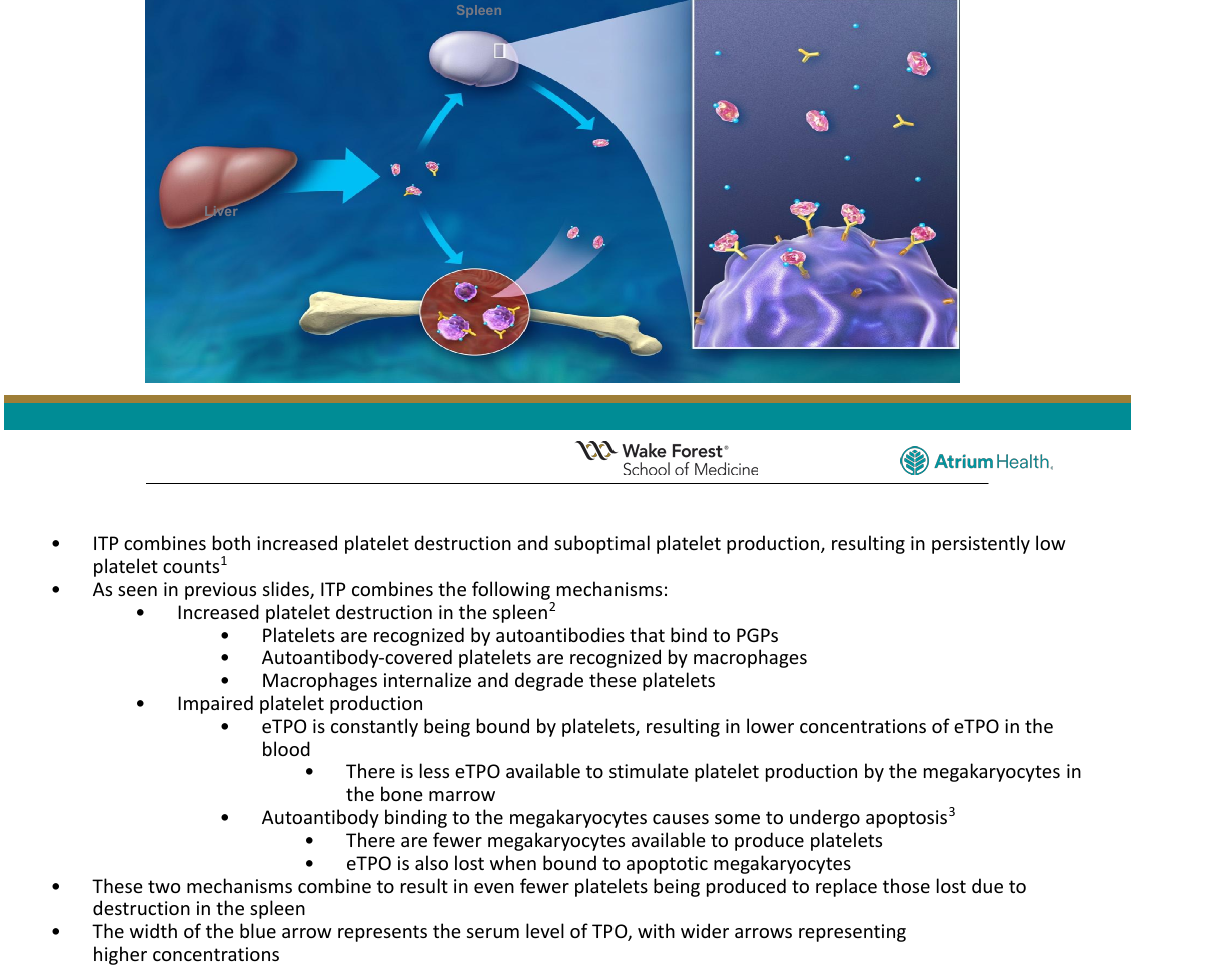
Explain impaired platelet production in Immune Thrombocytopenic Purpura (ITP)
Autoantibodies also bind megakaryocytes → apoptosis → decreased platelet production
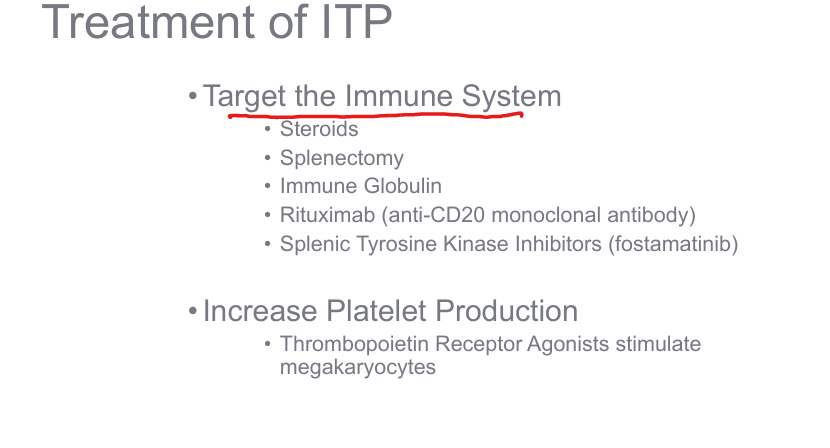
List treatment targets in Immune Thrombocytopenic Purpura (ITP)
Immune suppression (steroids, rituximab), splenic macrophage blockade (IVIG, anti‑D), splenectomy, and increased platelet production via TPO receptor agonists (eltrombopag, romiplostim).
Explain the pathophysiology of bleeding in platelet disorders
Defective platelet adhesion/aggregation → failure of primary hemostatic plug → mucocutaneous bleeding, petechiae, purpura, epistaxis, menorrhagia, GI bleeding.
Differentiate platelet‑type bleeding from coagulation‑factor bleeding
Platelet disorders cause superficial mucocutaneous bleeding (petechiae, purpura, epistaxis). Coagulation disorders cause deep tissue bleeding (hemarthrosis, muscle hematomas).
Recognize severe complications of Thrombotic Thrombocytopenic Purpura (TTP)
Microvascular thrombosis causing neurologic deficits (confusion, seizures, stroke), renal failure, fever, MAHA with schistocytes, and death if untreated.
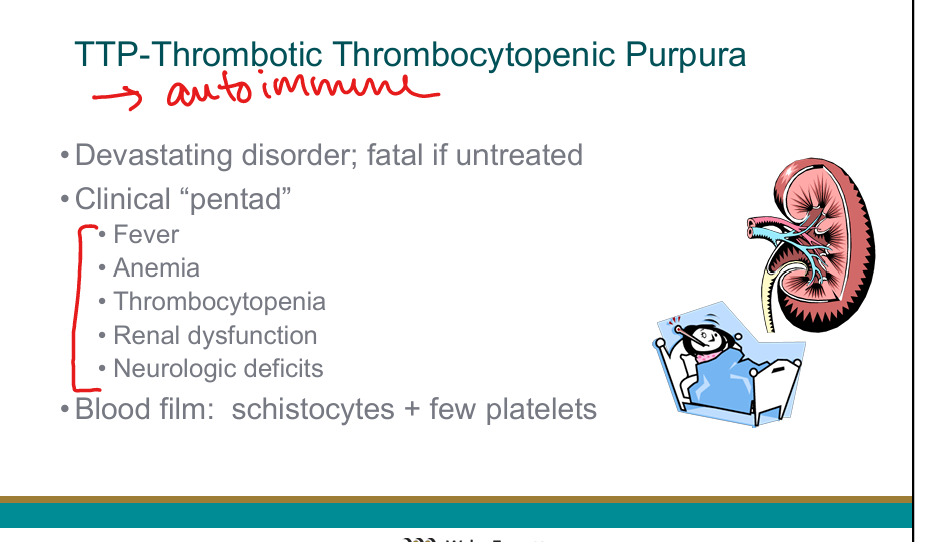
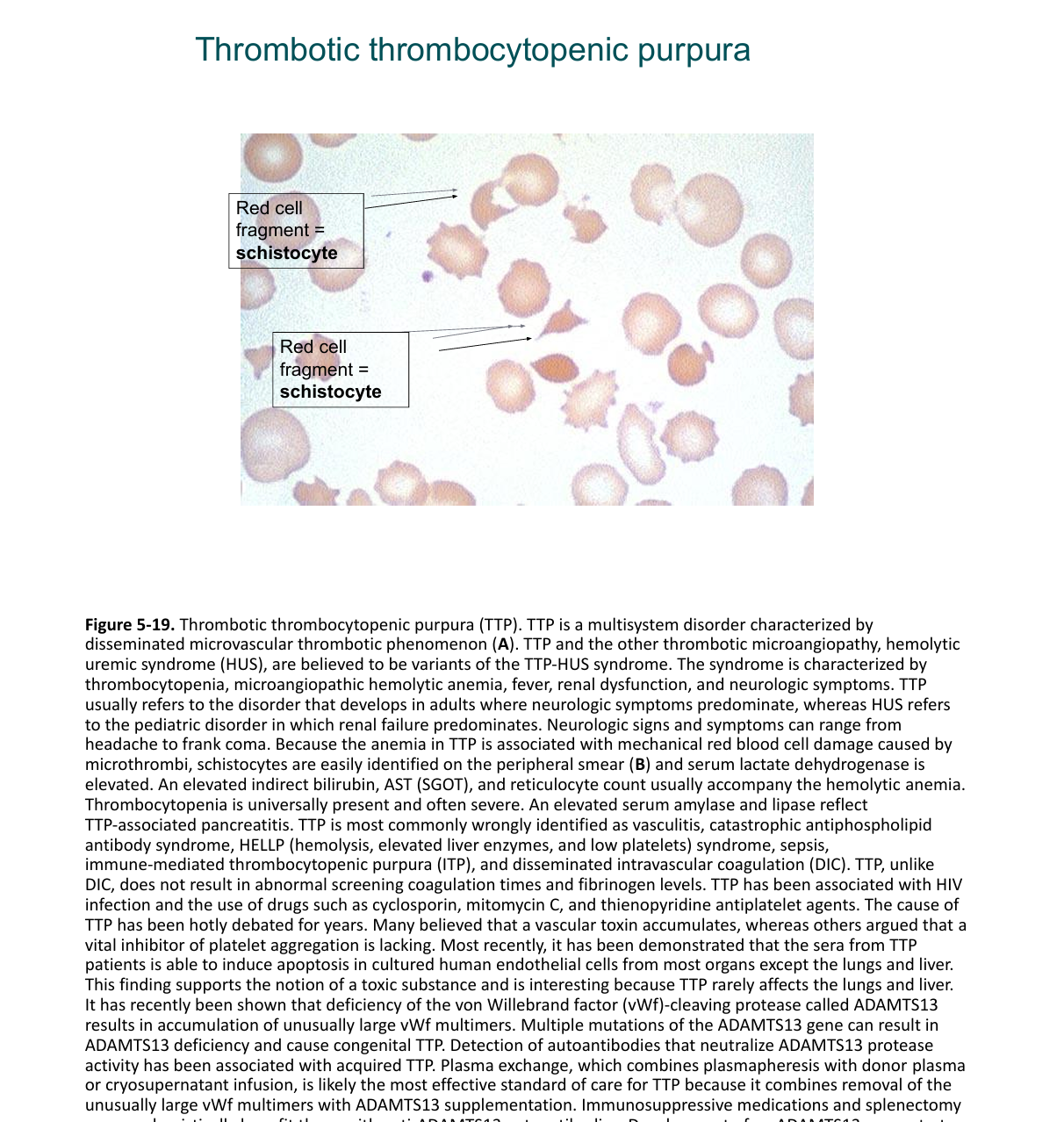
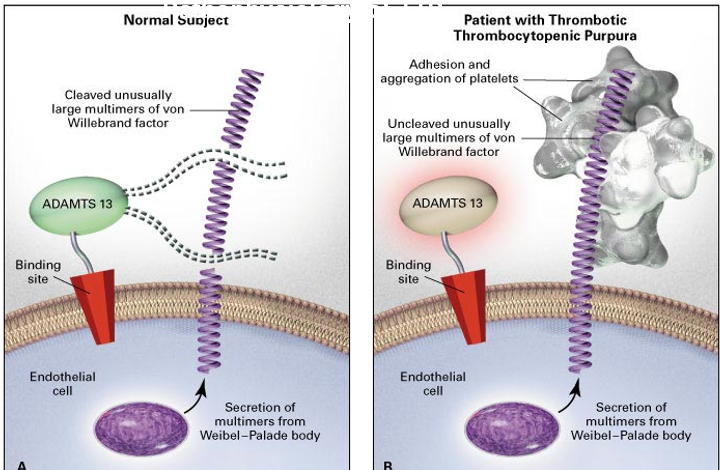
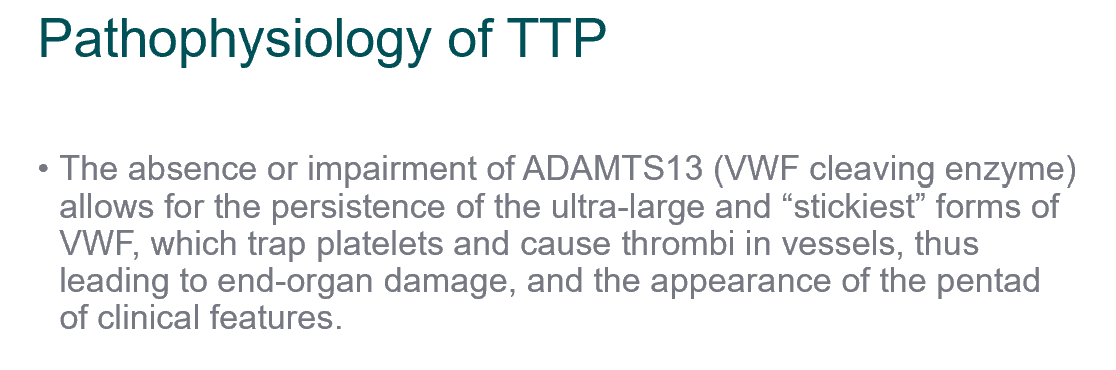
Explain the pathophysiology of Thrombotic Thrombocytopenic Purpura (TTP)
ADAMTS13 deficiency → failure to cleave ultra‑large vWF multimers → widespread platelet trapping → microthrombi → organ ischemia + thrombocytopenia + MAHA.
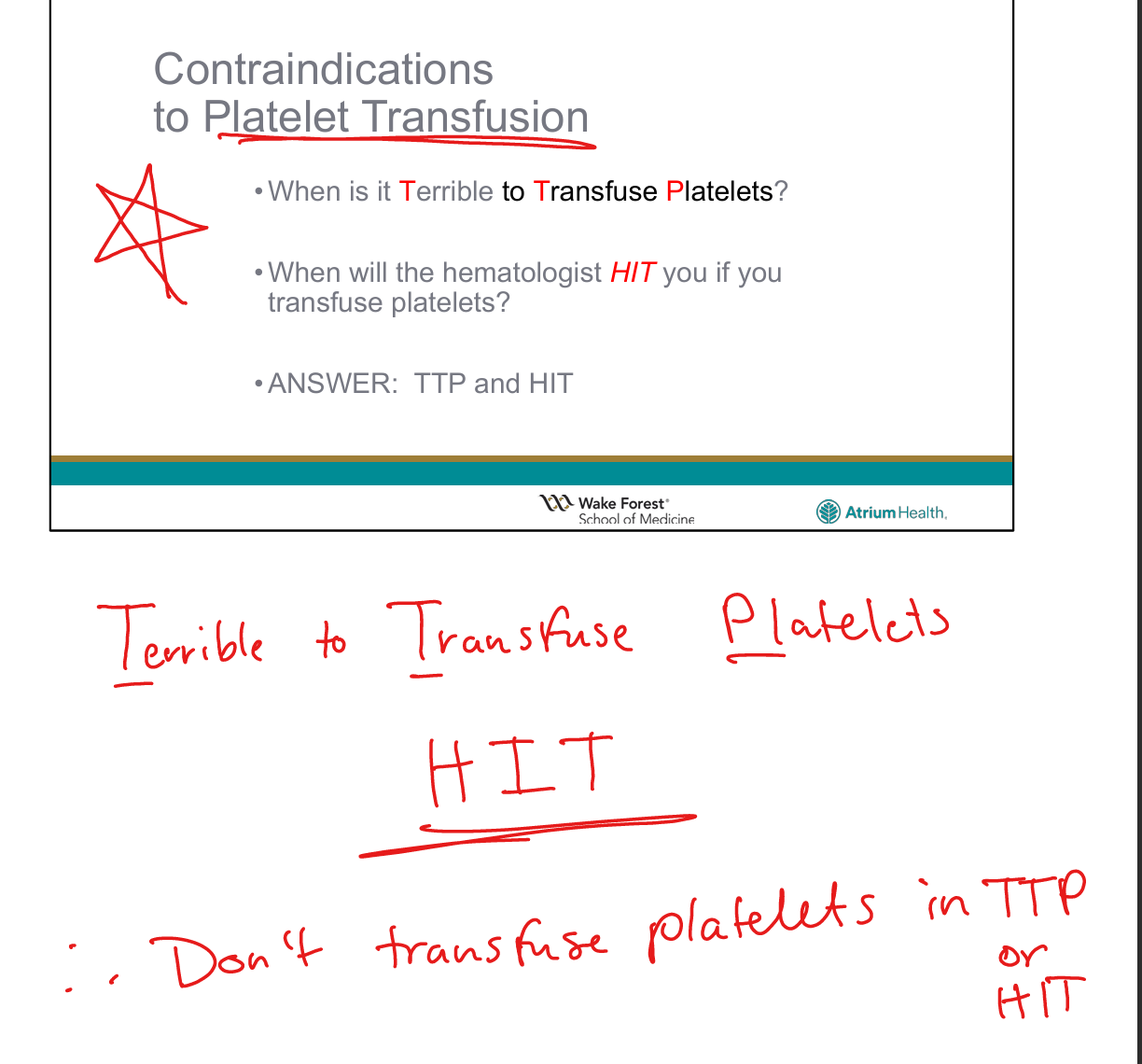
What is platelet transfusion contraindicated in
TTP and HIT (Terrible to Transfuse Platelets HIT) Transfused platelets worsen microthrombi formation because they are immediately consumed by ultra‑large vWF multimers → catastrophic thrombosis.
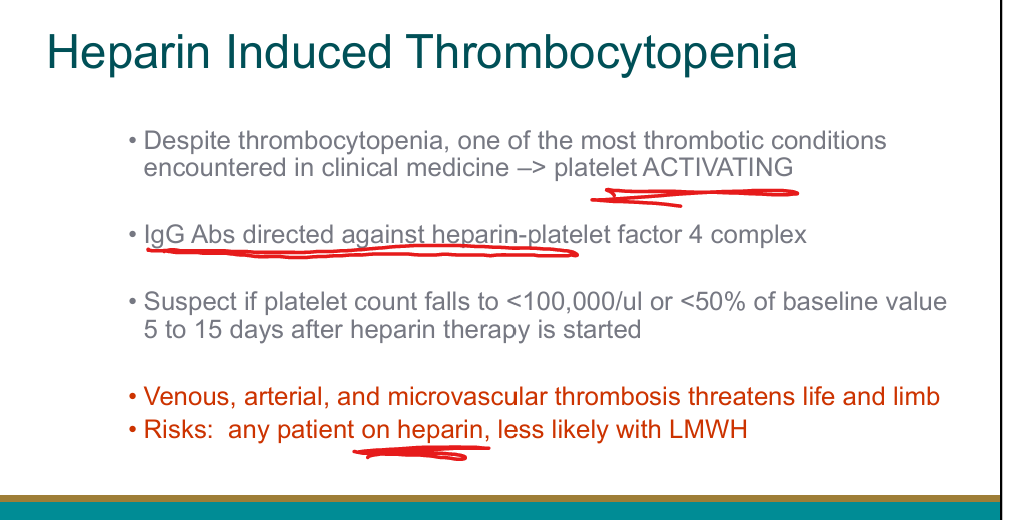
State the most serious complication of Heparin Induced Thrombocytopenia (HIT)
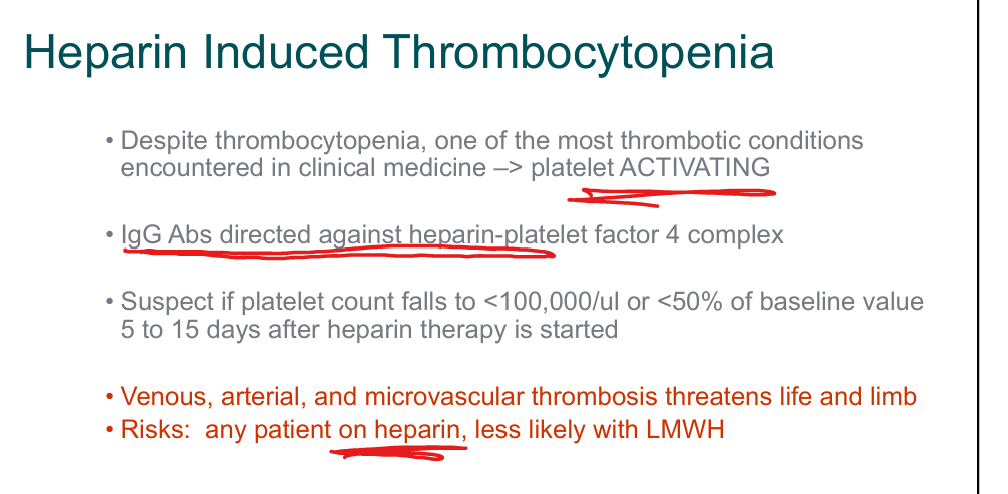
Life‑threatening thrombosis (venous, arterial, microvascular), including limb gangrene, pulmonary embolism, stroke, and myocardial infarction.
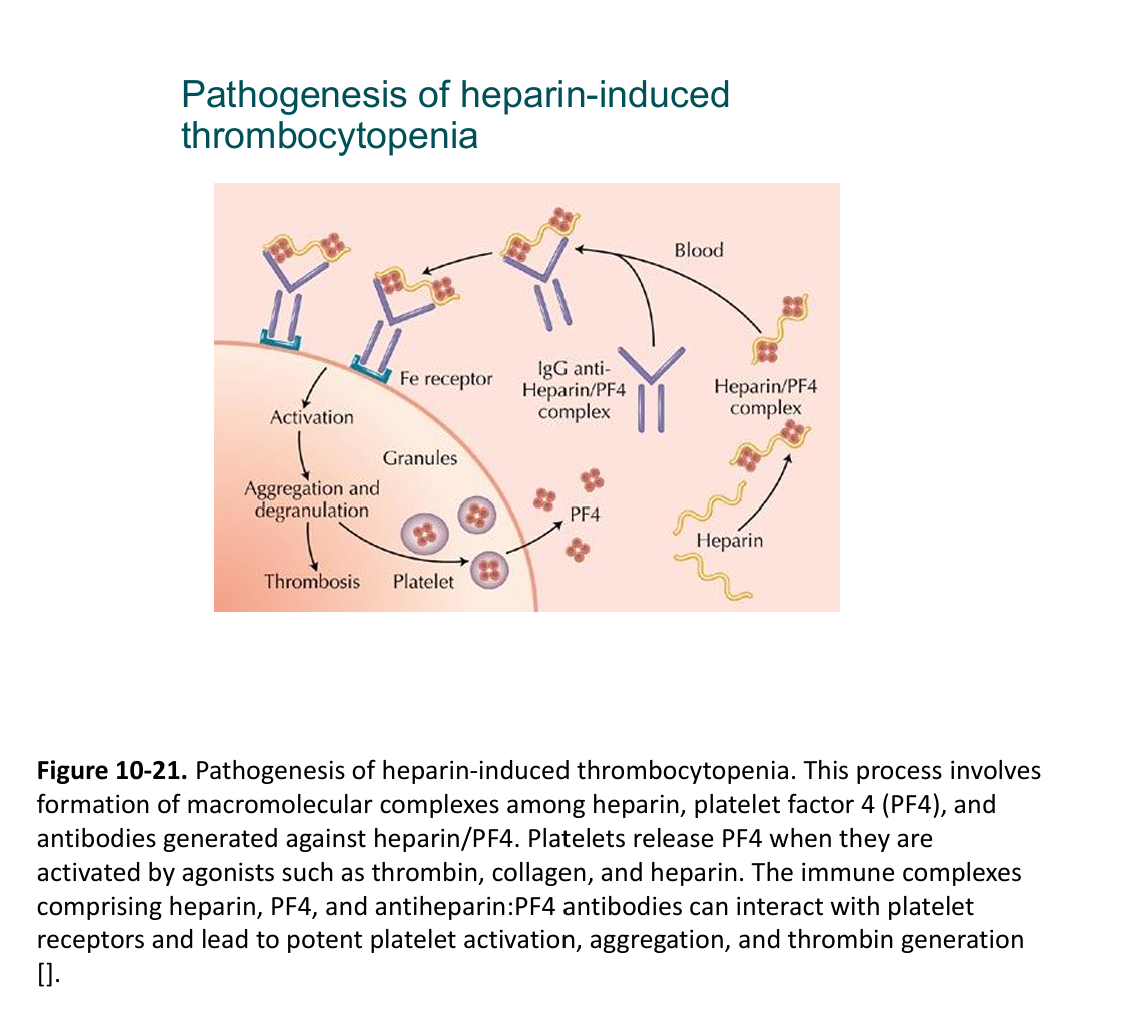
Explain the mechanism of Heparin Induced Thrombocytopenia (HIT)
IgG antibodies form against heparin–PF4 complexes → platelet activation → massive thrombin generation → thrombosis despite thrombocytopenia.
Describe two functions of circulating platelets
Formation of the primary hemostatic plug and release of vasoactive mediators (e.g., serotonin, thromboxane A2) to promote vasoconstriction and recruit additional platelets.
List additional platelet functions
Provide phospholipid surface for coagulation cascade, initiate tissue repair via growth factors, and regulate local inflammation.
Describe the role of alpha granules in platelet function
Alpha granules contain vWF, fibrinogen, PF4, Factor V, Factor XI, and PDGF → support adhesion, coagulation, and vessel repair.
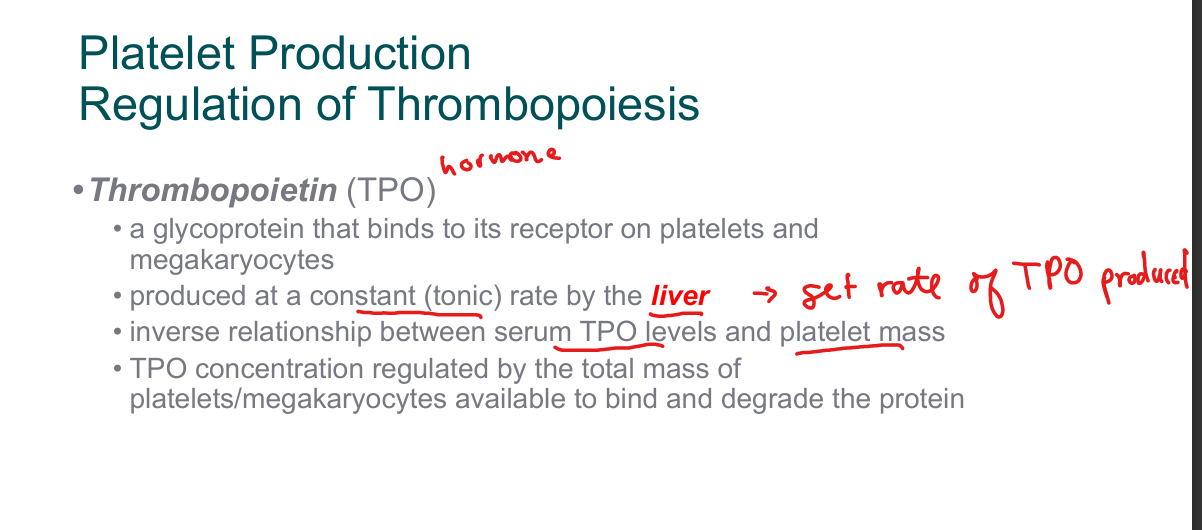
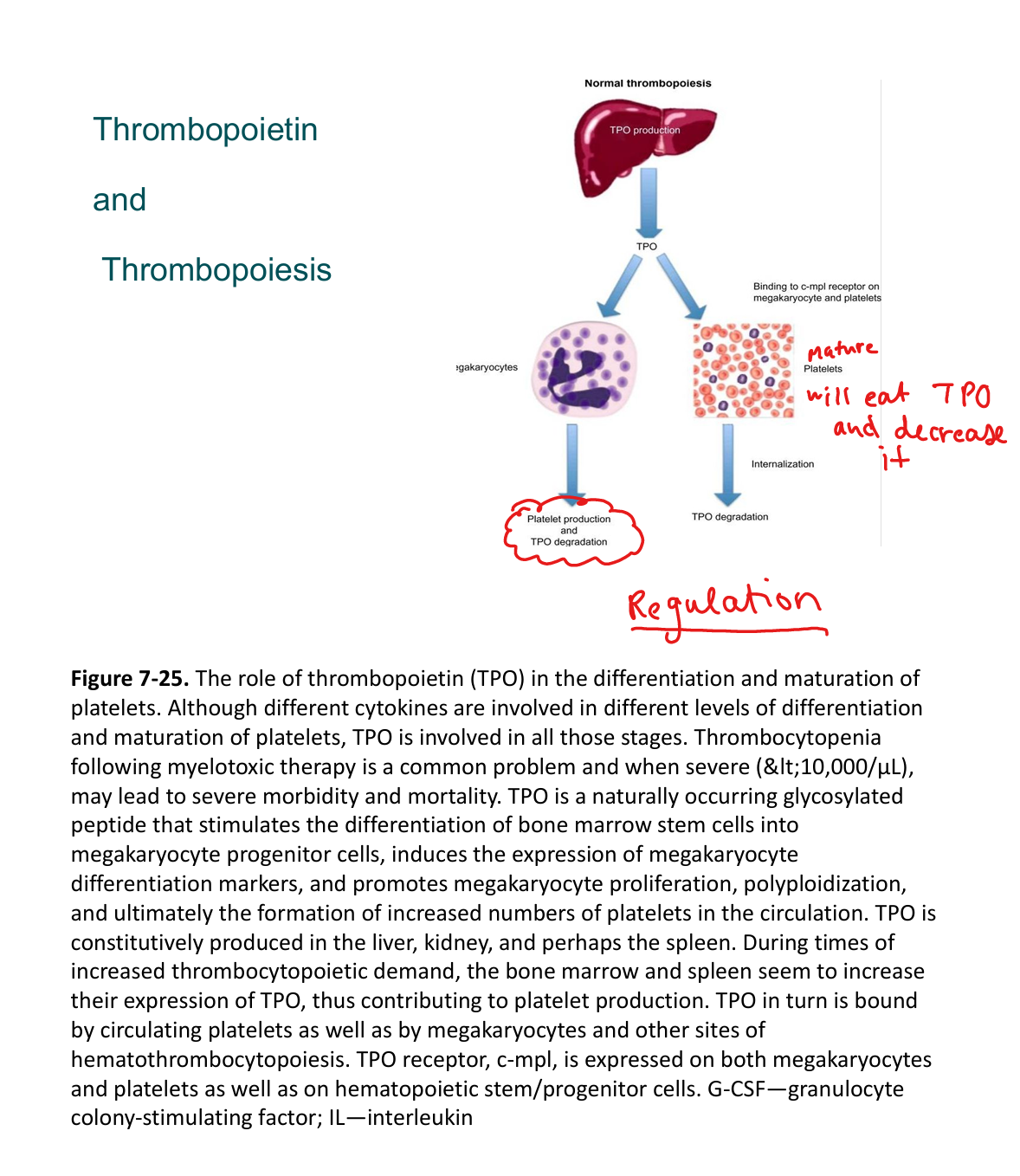
Explain thrombopoietin (TPO) regulation
TPO is constitutively produced by the liver. Megalokaryocytes will use it to mature and produce platelets while mature platelets will eat it and decrease TPO
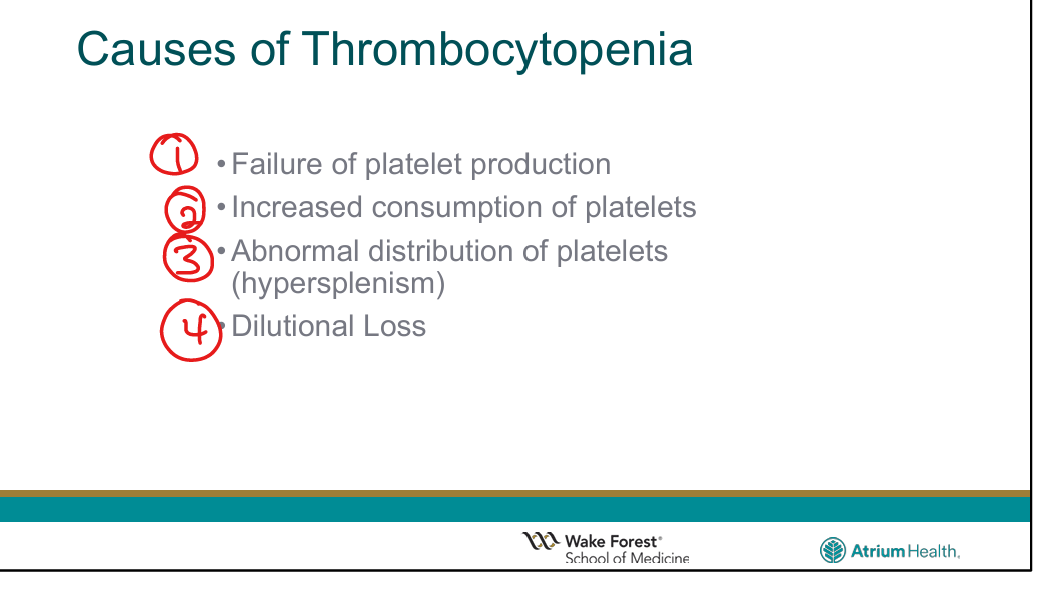
List causes of thrombocytopenia
Decreased production (marrow failure, drugs, HIV), increased destruction (ITP, HIT, TTP, DIC), sequestration (splenomegaly), dilutional loss (massive transfusion), pseudothrombocytopenia (EDTA clumping).
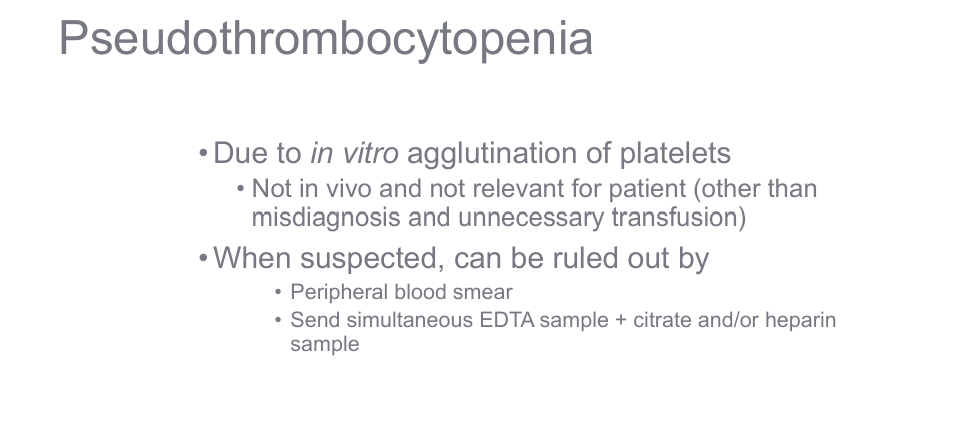
Describe pseudothrombocytopenia
In vitro platelet clumping due to EDTA → falsely low automated platelet count
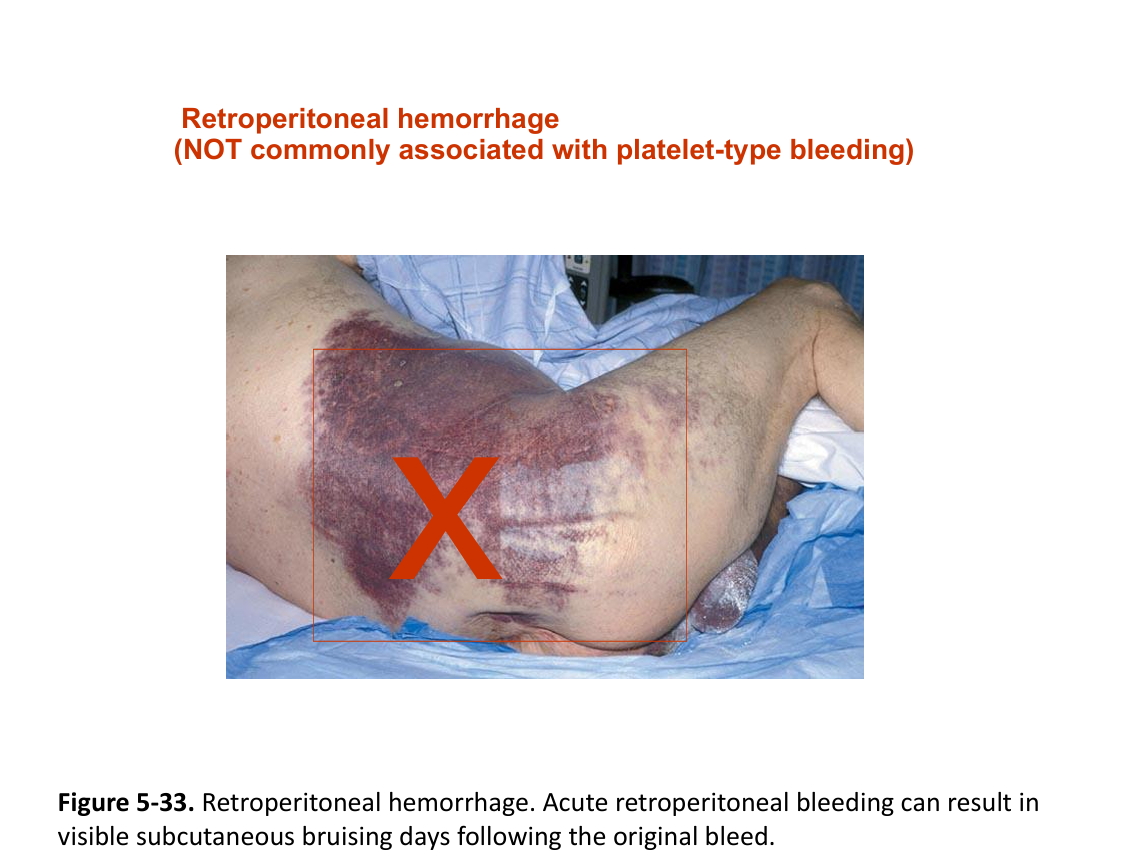
Explain why retroperitoneal bleeding is not typical of platelet disorders
Retroperitoneal hematomas require failure of secondary hemostasis (coagulation factors), not primary hemostasis (platelets).
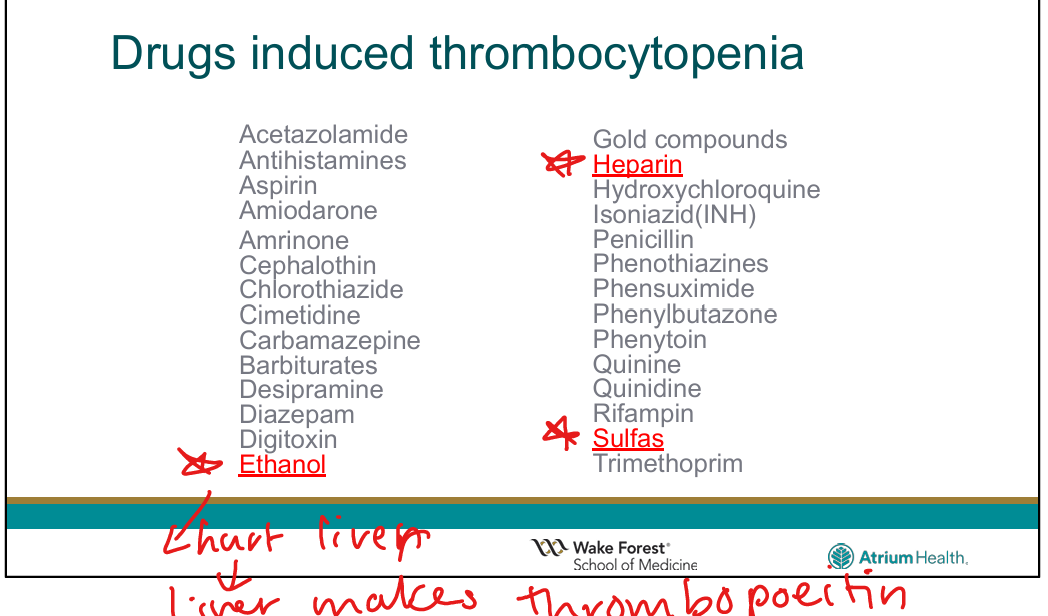
Drugs that can induce thrombocytopenia
Ethanol (bc liver makes thrombopoeitin and alcohol will cause liver damage), Heparin, Sulfas
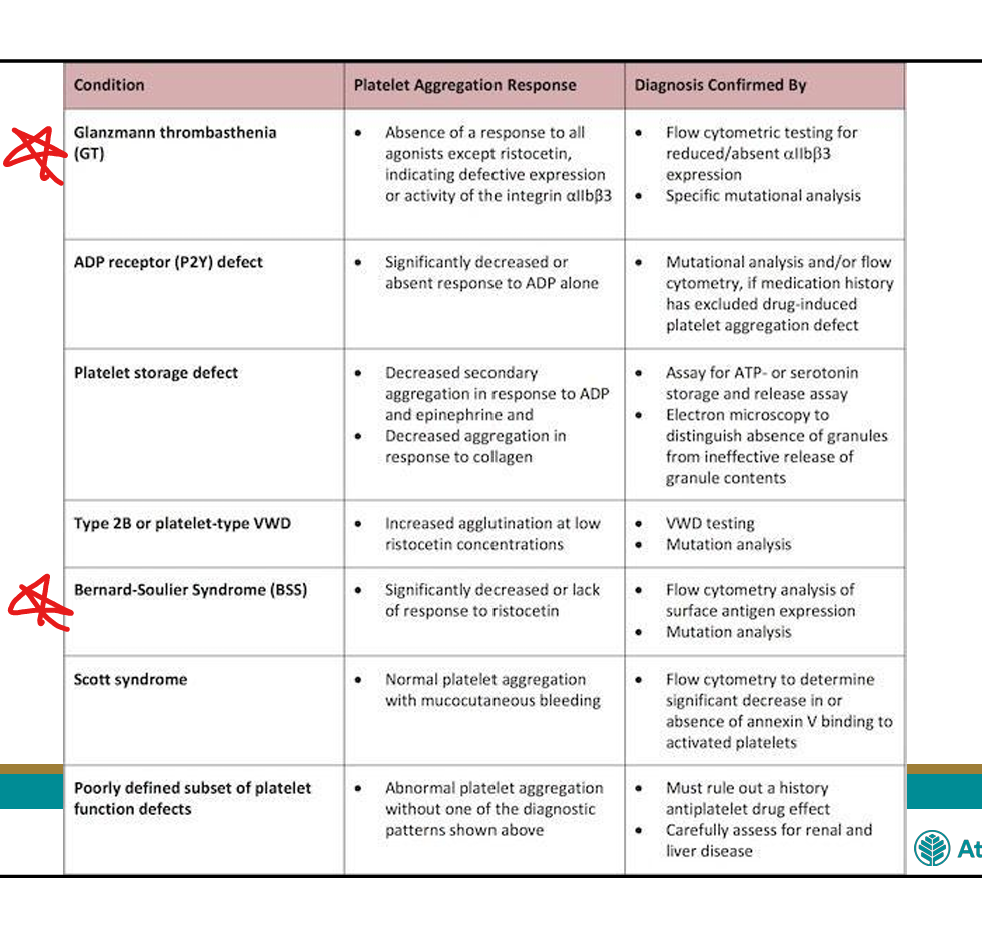
Glanzmann Thrombastenia (GT)
Defective integrin allbbeta3==> no platelet aggregation; will respond to ristocetin but no other agonists
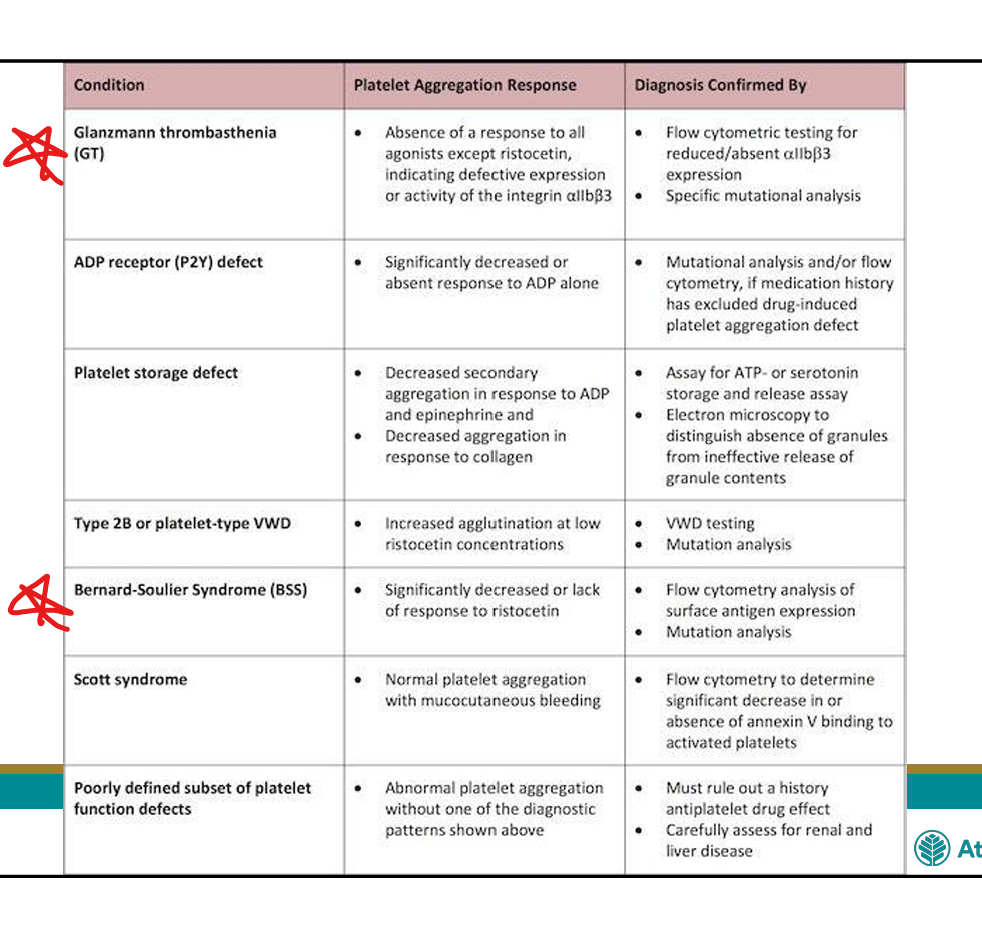
Bernard-Soulier Syndrome (BSS)
Significantly decreased or lack of response to ristocetin