chapter 19 air quality
 Call Kai
 Learn
Learn Practice Test
 Spaced Repetition
 Match
Match Flashcards
 Knowt Play
1/15

There's no tags or description
Looks like no tags are added yet.
Name | Mastery | Learn | Test | Matching | Spaced | Call with Kai | Chat |
|---|
No analytics yet
Send a link to your students to track their progress
16 Terms
volume composition of gases present in dry air
21% → oxygen
78% → nitrogen
1% → other gases, 0.04% → carbon dioxide, 0.96% → noble gases (mainly argon), water vapour and other gases

How are gases seperated?
Atmospheric air is liquified under very low temperatures.
Then, it is slowly warmed up inside a chamber attached to a fractionating column.
Nitrogen has the lowest boiling point, so it is the first to boil off and be collected
oxygen is the highest boiling point

Air pollutants

eg qn
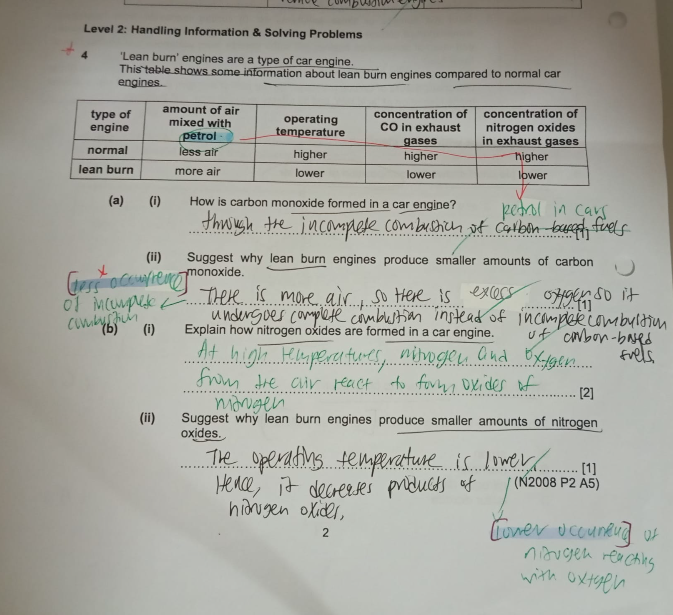
what is acid rain?

what are the effects of acid rain? (4)

what is the carbon cycle?
the amount of carbon dioxide in the atmosphere is regulated through balancing its removal and release

processes of carbon cycle
eqn for photosynthesis (respiration is the opposite)
Carbon dioxide + Water -> Glucose + Oxygen
6CO2 + 6H2O -> C6H12O6 + 6O2
gulcose is solid state
glucose is used in other processes that sustain plant life

global warming and the 2 greenhouse gases
Global warming is the increase in the average temperature of the Earth's surface due to increasing amounts of greenhouse gas in the atmosphere.
The atmosphere needs to trap some heat as it is essential for life on Earth.
However, too much greenhouse effect would make Earth too hot.
Carbon dioxide is the most common greenhouse gas.
The level of carbon dioxide in the atmosphere is regulated by the carbon cycle.
However, human activities such as the burning of fossil fuels or clearing of forests have increased the amount of carbon dioxide in the atmosphere significantly.
Methane is an even stronger greenhouse gas. The greenhouse effect of methane can be up to 80 times as strong as that of carbon dioxide
Cattle is a significant source of methane.

how does greenhouse gases cause global warming?
greenhouse gases trap heat in the atmosphere → leading to rise in the earth’s temperature
climate change and other consequences (5)
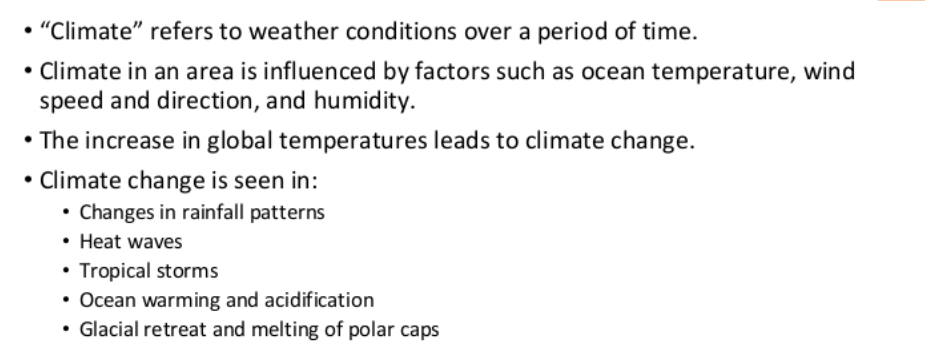
change in rainfall patterns (desertification of fertile land)

more frequent and severe heat waves

increase in frequency and intensity of extreme weather (tropical storms)

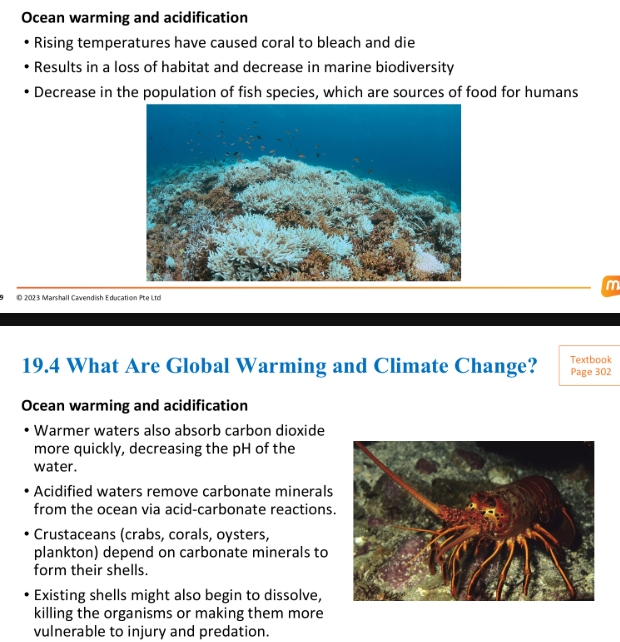
ocean warming and acidification
glacial retreat and the melting of polar ice caps
Increases in average global temperatures have caused glaciers and polar ice caps to melt and shrink → glacier-fed river levels will change
Many communities rely on a steady stream of meltwater from glaciers for drinking and for irrigation. Their lives will be affected if the glaciers deplete faster than they can be replenished.
sea levels would rise and permanently flood coastal areas
Climate-stabilising ocean currents would be disrupted