ANT 1003 Back Muscles
 Call Kai
 Learn
Learn Practice Test
 Spaced Repetition
 Match
Match Flashcards
 Knowt Play
1/18

There's no tags or description
Looks like no tags are added yet.
Name | Mastery | Learn | Test | Matching | Spaced | Call with Kai | Chat |
|---|
No analytics yet
Send a link to your students to track their progress
19 Terms
What are the extrinsic muscle groups and what does it innervate
innervation: anterior rami of spinal nerves
groups:
superficial group- upper limb movement
intermediate group- respiration (rib attachments)
What are the intrinsic muscle groups and what does it innervate
innervates: posterior rami of spinal nerves
group (only one)
Deep, related to vertebral column movements
What are the superficial back muscles
trapezius
latissimus dorsi
levator scapulae
rhomboid major AND minor
What are the groups that the superficial muscles can be separated into and what muscles in each?
2 groups:
vertebral column to scapula: trapezius, rhomboid major, rhomboid minor, levator scapulae
vertebral column to humerus: latissimus dorsi
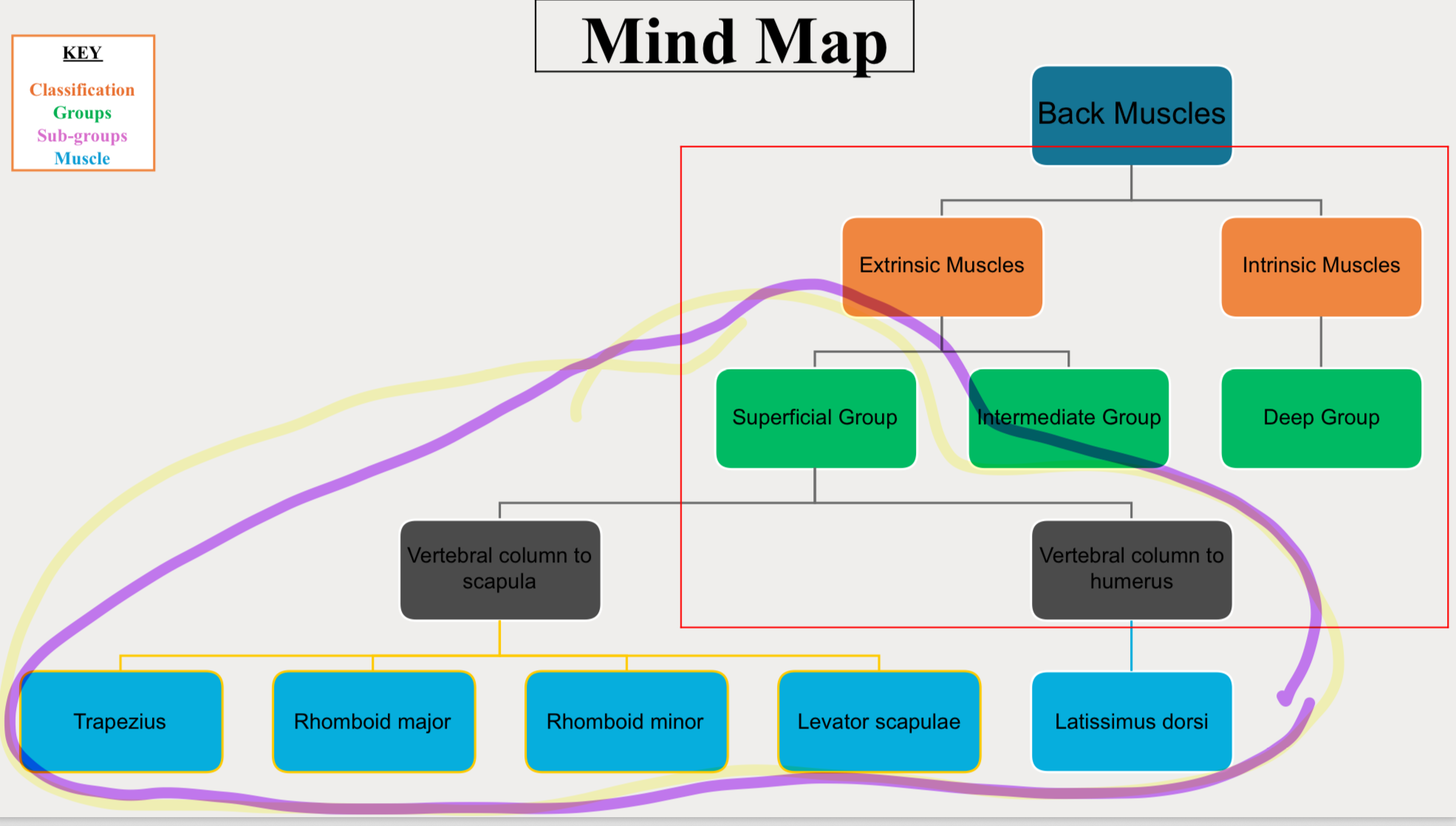
Trapezius Origins and Insertions
Origins (less mobile):
superior nuchal line (on occipital bone)
external occipital pertrubance
nuchal ligament
spinous process
Insertion (mobile):
lateral 1/3 of clavicle
spine of scapula
acromion
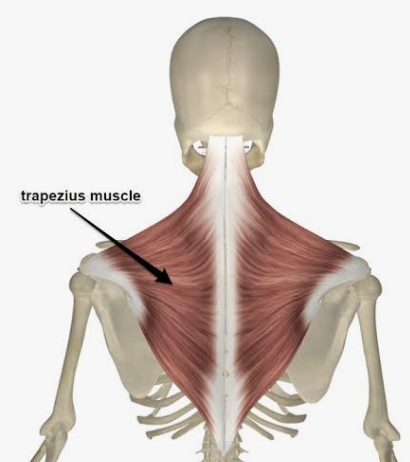
Trapezius actions and innervation
actions:
scapula rotation during abduction of humerus above horizontal
fibers:
superior - elevate
middle adduct
inferior: depress
innervation:
spinal accessory (motor)
c3-c4 (proprioception)
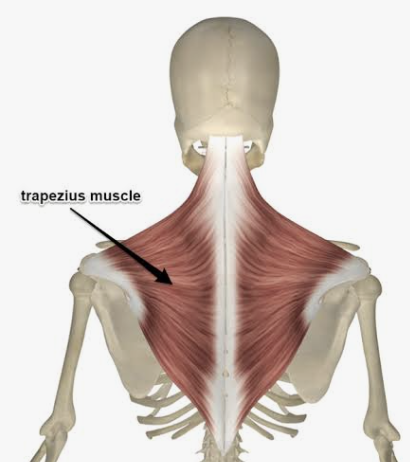
Levator scapulae orgin, insertion, action, innervation
origin: transverse process of CI-CIV
insertion: medial border of scapula
action: elevate scapula
innervation: dorsal scapular nerve (c4-c5)
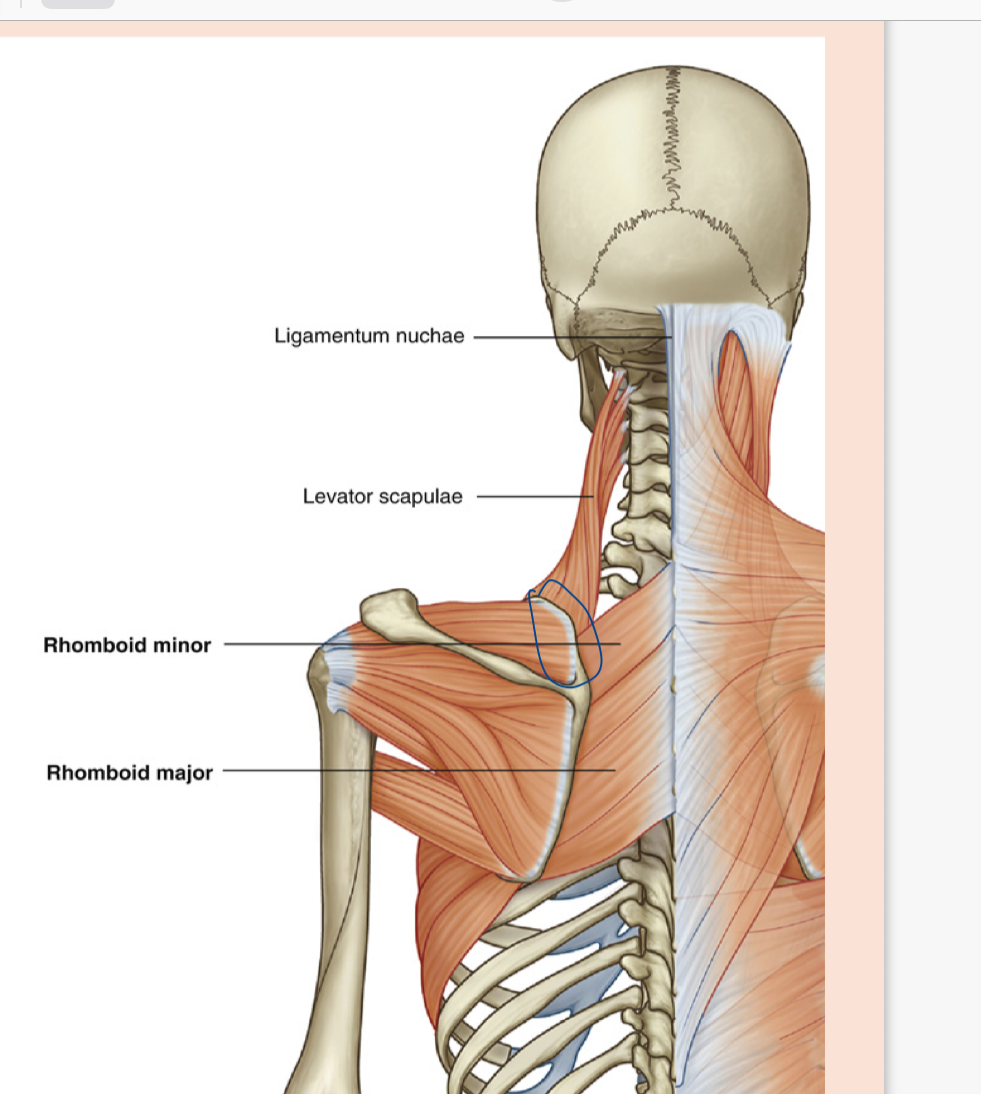
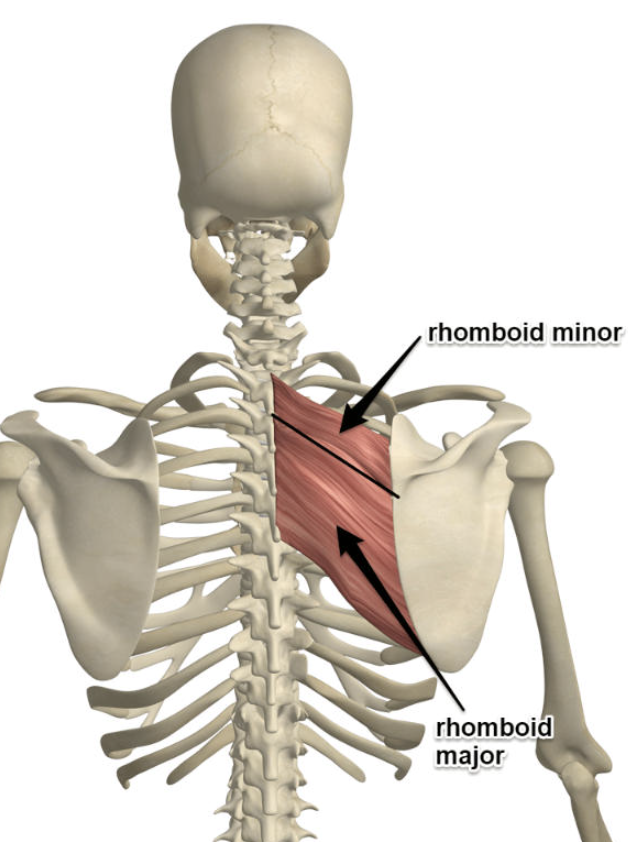
Rhomboid major origin, insertion, actions, innervation
Origin: spinous process of TII-TV
insertion: medial border of scapula at spine of scapula
actions: adduct and elevate scapula
innervation: dorsal scapular nerve
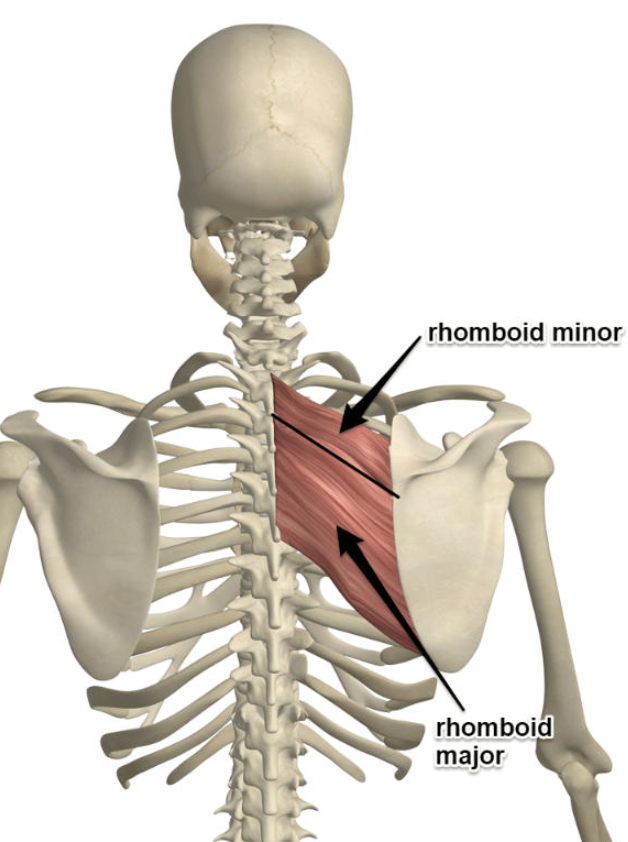
Rhomboid minor origin, insertion, actions, innervation
Origin: ligamentum nuchae, spinous process
insertion: medial border of scapula (at the spine)
actions: adduct and elevate scapula
innervation: dorsal scapular nerve
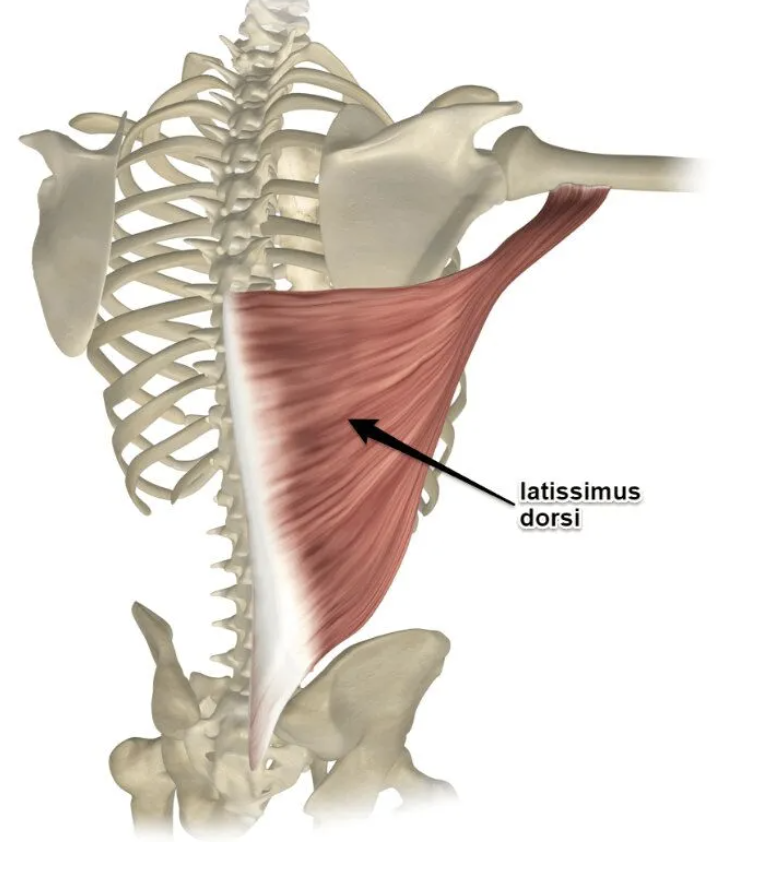
Latissimus Dorsi orgin, insertion, action, innervation
origin: spinous process, sacrum, iliac crest, ribs
insertion: intertubercular sulcus (humerus)
actions: externd, adduct, medially rotate humerus
innervation: thoracodorsal nerve
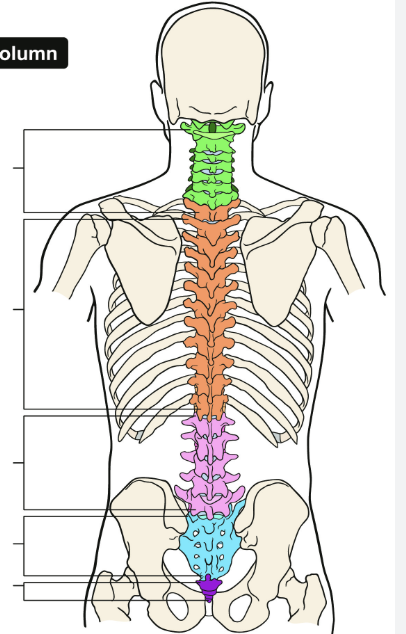
TIII vertebrae lines up with what bone/ area
root of the spine of the scapula
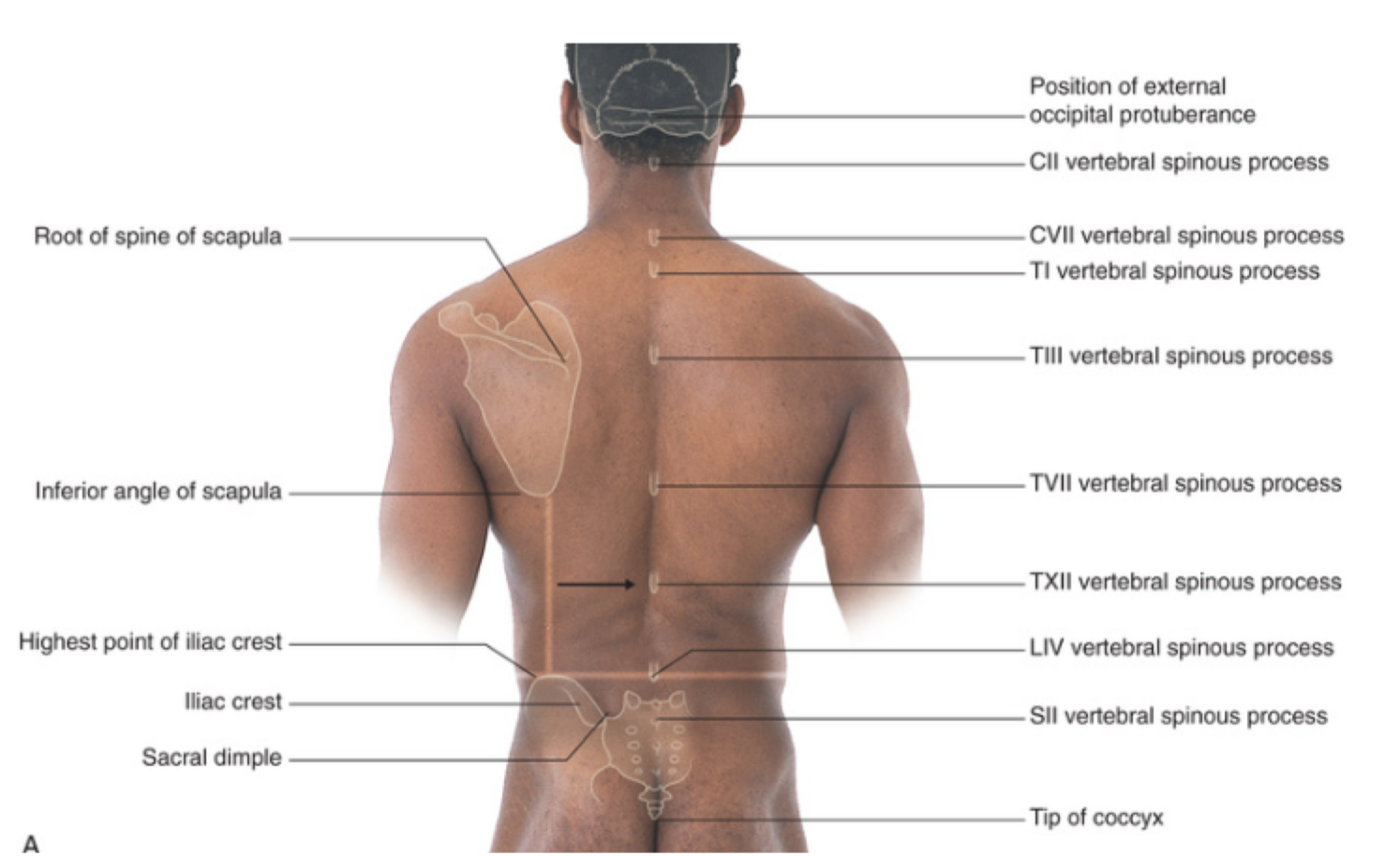
TVII vertebrae lines up with what bone and area
scapula, inferior part of it
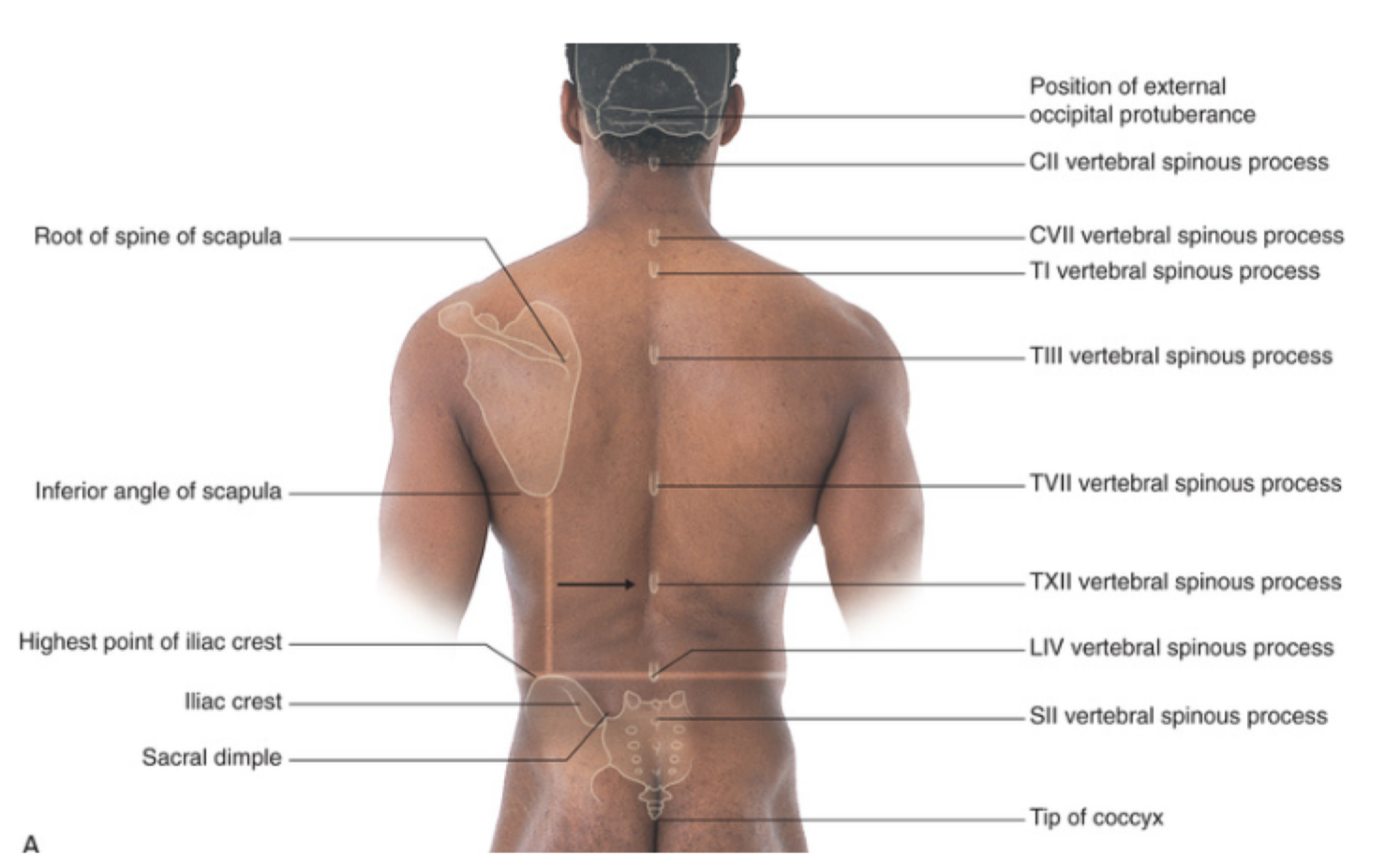
LIV vertebrae lines up with what bone/ area
highest point of iliac crest
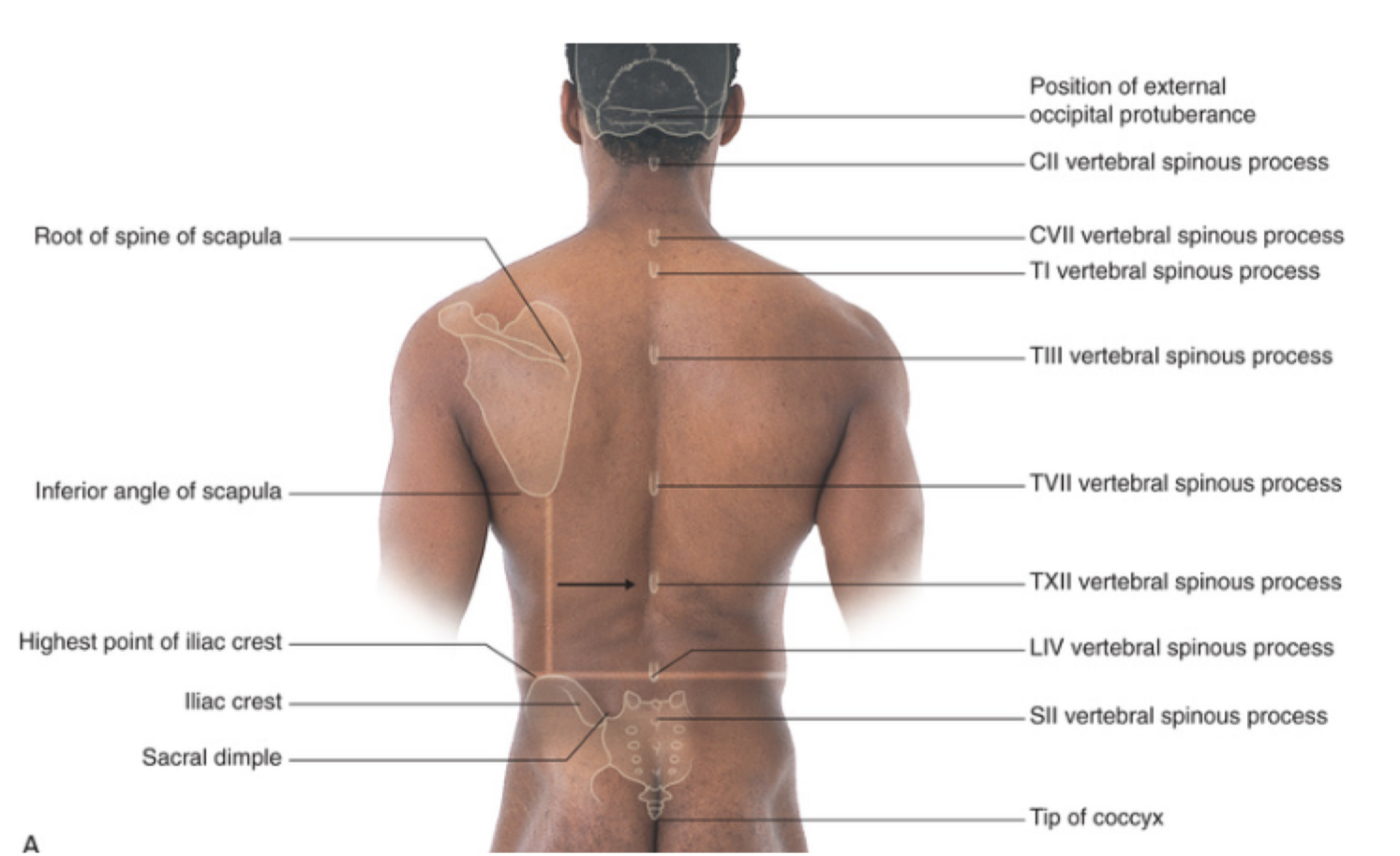
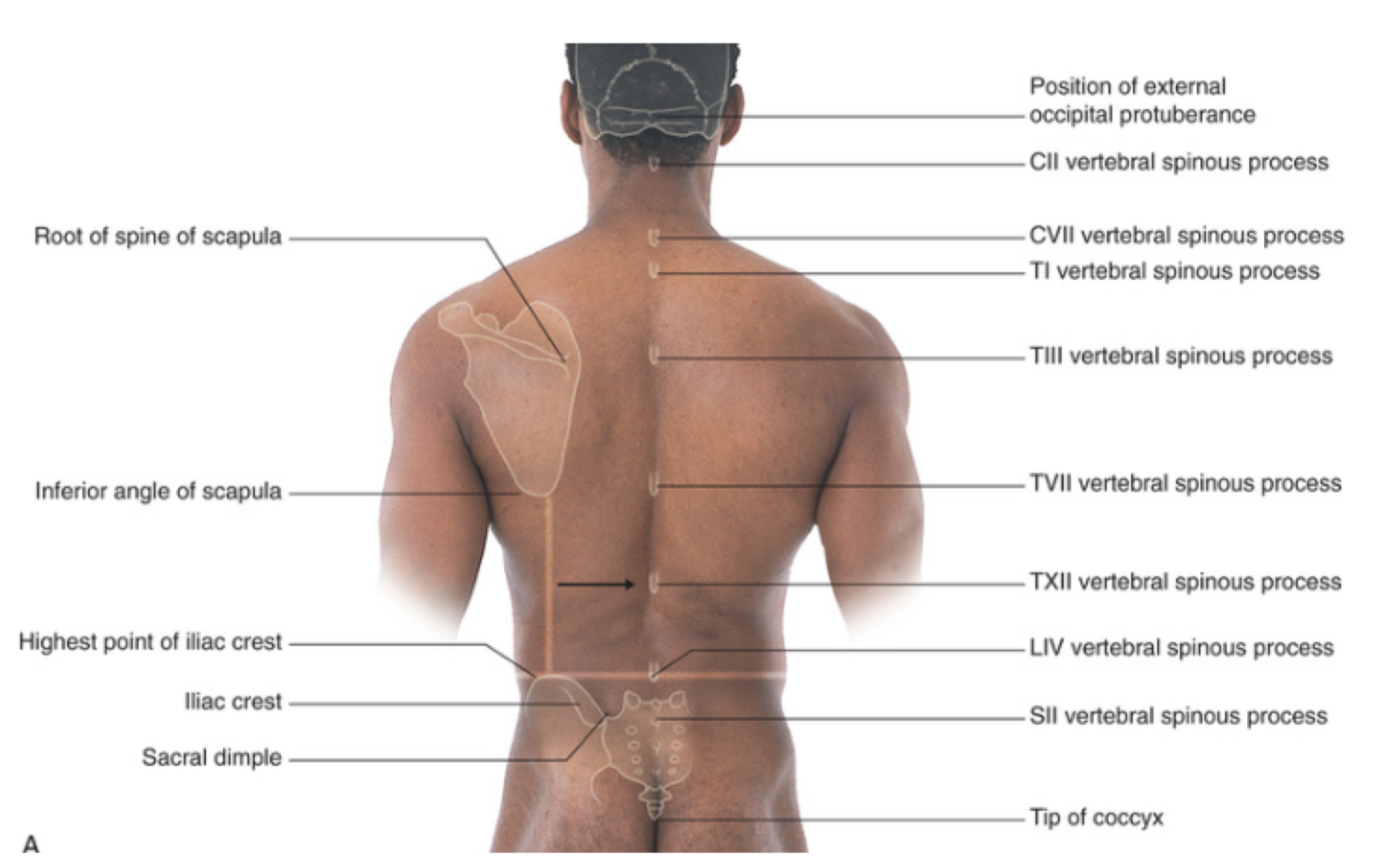
SII vertebrae lines up with what bone/ area
iliac crest and sacral dimple
What are the three groups of deep muscles
spinotransversales (superficial of the deep)
erector spinae (intermediate of the deep)
Transversospinales (deep of deep)
What are the muscles of the spinotranversales (superficial of the deep)
function: look up
splenius capitis: Originates at nuchal ligament
splenius cervicis
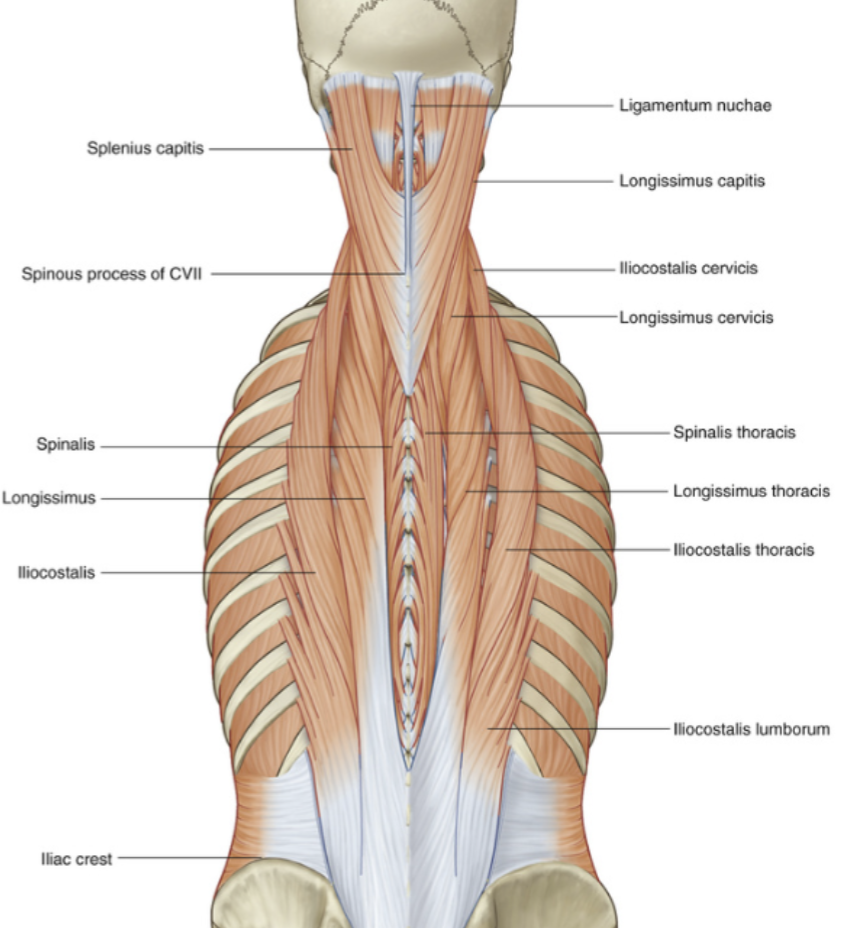
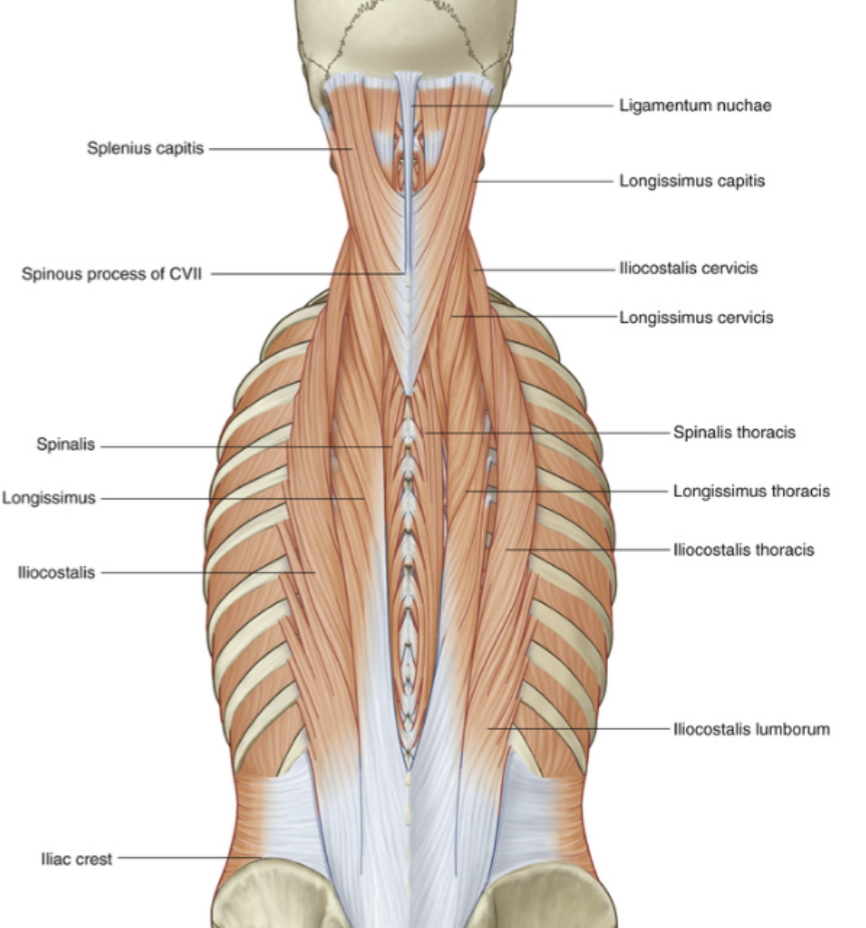
erector spinae (intermediate of the deep) functions
mid back area:
Bilateral movement: Primary extensor of vertebral column,
straighten back and head
Unilateral movement: bend vertebral column laterally
transversospinales (deep of deep) function
rotate the trunk (the two are semispinalis cervicis and semispinalis capitis)
What is the action of the suboccipital triangle
look up and to the right/ left at the same time