Exam 1 Human Pathophysiology
 Call Kai
 Learn
Learn Practice Test
 Spaced Repetition
 Match
Match Flashcards
 Knowt Play
1/189

There's no tags or description
Looks like no tags are added yet.
Name | Mastery | Learn | Test | Matching | Spaced | Call with Kai | Chat |
|---|
No analytics yet
Send a link to your students to track their progress
190 Terms
pathophysiology
functional changes in the body that result from disease processes (structural and metabolic)
pathology
study of physical changes in organs, tissues, and cells related to disease
autopsies, biopsies, IHC, diagnoses
Diagnosis
taking info we have and figuring out the cause
Differential Diagnosis
looking at history, physical exam, lab/imaging results, looking at what else it could be
VITAMIN D acronym (not in detail, just what each one stands for)
Vascular
Infectious
Traumatic
Autoimmune
Metabolic/Toxic/Nutritional
Idiopathic/Iatrogenic
Neoplastic
Developmental/Degenerative
What slice does MRI/CT scans see
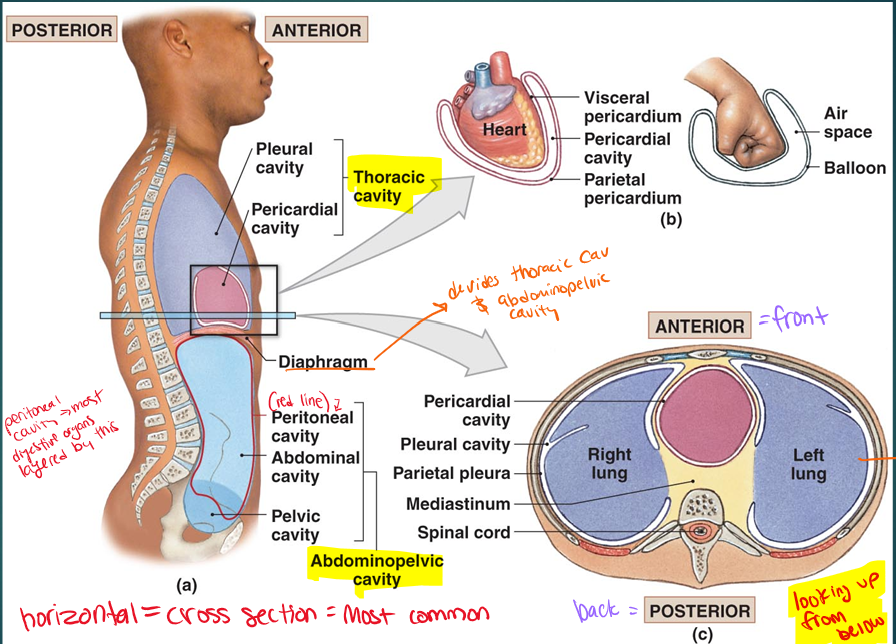
Anatomical planes and what their slices are

“vascular”
rupture/damage to vessel, blood clots
anuerysm, coronary artery disease
“infectious”
caused by infectious agent (virus, bacterium, fungi)
COVID
“Traumatic”
caused by physical force
broken arm, chronic traumatic encephalopathy (repeated head trauma)
autoimmune
immune system mistakes own tissues as foreign
MS, rheumatoid arthritis
Metabolic/Toxic/Nutritional
metabolic: not a structural cause, if someone born without a specific enzyme
toxic: kidney failure
nutritional: not having enough vitamin c
idiopathic/iatrogenic
idiopathic: we dont know what the cause is
iatrogenic: caused by healthcare (malpractice, staying in hospital for a while→ can get sick)
neoplastic
cells that escape cell cycle control
cancer
developmental/degenerative
developmental: happened during embryonic development/childhood
degenerative: structure that develops normally but breaks down over time, Alzheimer’s, arthritis
diagnostic techniques (xray studies)
radiography
computed tomography (CT)
contrast studies
contrast studies
xray studies
administer something in IV or orally so things light up easier on CT
barium-upper and lower GI series
iodinated IV contrast
xray characteristics/positioning
high energy electronegative radiation that penetrates tissues
penetrate tissues at varying degrees
exposes photographic plates
ionization and distruption of molecules like DNA
→damage dna, generate free radicals, cause cancer
not 3D, they pancake everything into 2D
radiolucent
tissues that dont block the radiation→lungs full of air dont deflect xray
radioplaque
bone blocks/reflects xray
CT scan
computed tomography
patient doesnt move, CT scanners rotate 360 degrees
xray rotates around very fast
a lot more radiation than xrays, dont want these often
a lot more detail of internal
usually get axial/horizontal sections and computers can change into diff planes
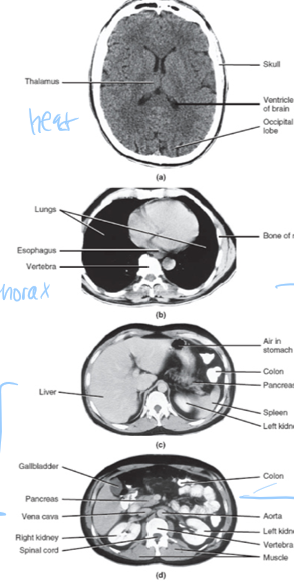
ultrasound
no radiation
can actively see how things are functioning
uses sound waves echoing off surfaces, density of material changes echoing, dense materials have lots of bounce back
cheap and convenient
poor resolution and depth penetration
MRI
magnetic resonance imaging
body exposed to intense magnetic field
emits radiowaves
highest resolution, no radiation
expensive
direct visualization techniques
endoscopy (colonoscopy(anus), bronchoscopy(bronchi), cystoscopy(urethra to look at bladder)
laproscopy (abdomen or uterus)
laboratory tests
blood (hematology-blood, chemistry, immunologic-antibody, drug levels)
fluids→urine, joint, peritoneal
feces
blood tests
CBC (complete blood count)
Chemistry panel
CBC
complete blood count (main 3 cell types)
RBC count (size, hemooglobin and hematocrit)
WBC count with differential
Platelet count
chemistry panel
na+, k+, cl- (big 3 electrolytes), ca+, hco3-
BUN and creatinine (kidney function)
glucose (blood sugar, diabetes)
blood tests
liver function tests
cardiac enzymes
LFTs(liver function tests)
blood test
for GI system
Bilirubin (liver responsible for metabolizing)
total protein
cardiac enzyme
blood test
CPK, CK-MB, troponin-I (if high, most likely had heart attack)
microbiology tests
gram stain (bac +/-)
Culture and sensitivity (exact identification; looks at resistance)
pharmacotherapy
treatment with drugs
drug
a substance causing notable change in the body
acute versus chronic toxicity (use a drug to describe)
acute: overdose on acetaminophen (all at once)
chronic: taking acetaminophen daily is hard on the liver
therapeutic index
ratio of toxic dose/effective dose
higher value= greater difference between effective dose=safer
no such thing as a safe drug, its all about the dose

route of drug administration, oral
tablet, capsule, liquid
most convenient
route of drug administration, sublingual
under the tongue (let dissolve, absorbed by tongue veins)
faster than oral
route of drug administration, subcutaneous injection
right under the skin
diabetes/allergy shot
anyone can
route of drug administration, intramuscular injection
skin→fat→muscle
usually deltoid or glute, vaccines given in arm muscle
nurse can, faster absorption than subcutaneous injection
route of drug administration, intravenous injection
“IV”, directly into bloodstream
route of drug administration, inhalation
inhale into respiratory tree
inhalers, anesthesia
route of drug administration, topical
gel, cream, spray, liquid
designed to stau onto skin or into for SLOW absorption
nicotine patch, topical acne meds
route of drug administration, suppository
give meds into rectum, many vessels so gets absorbed fast
why do some routes of drug administration get absorbed better/faster than others?

receptors
proteins on cell surfaces or within cells
ligand
molecule that binds to a receptor with some selectivity
agonist
ligand, attaches readily to the receptor and produces significant biological effect
if low BP, give IV dopamine to increase
antagonist
ligand, also fits the receptor but produces no cellular effect and blocks agonist from binding
for BP, a beta blocker which prevents epi/norepi from binding so keeps BP low
sits in receptor but not perfect so nothing happens
prescription notation
name of drug
strength of pill
how to take it
other forms of therapy not drugs
lifestyle changes (diet, exercise)
surgery
acupuncture
cognitive behavior therapy
inflammation
series of events that occur when there is damage in the body
nonspecific response to tissue injury
good: brings in protection (WBCs, fibroblast)
bad: response to inflammation can damage normal cells and go from acute to chronic and its painful
causes? almost anything
acute vs chronic inflammation
acute: specific injury/damage
chronic: constant low level damage
signs of inflammation
redness/erythema (rubor)
heat (calor)
pain (dolor)
swelling (tumor)
inflammation is triggered and regulated by…
WBCs (leukocytes)
white blood cells (leukocytes)
spend short time in circulation
mostly located in loose/dense connective tissue where infections occur
can migrate out of bloodstream
-contact and adhere to vessel walls near injection site
-squeeze betw
attracted to chemicals that damaged tissues, pathogens, and other wbcs release to attract wbcs
granular leukocytes
wbc type
have cytoplasmic granules
-neutrophil
-eosinophil
-basophil
agranular leukocytes
wbc type
lacking visual cyoplasmic granules
-monocyte
-lymphocyte
leukocytosis
elevated wbc count
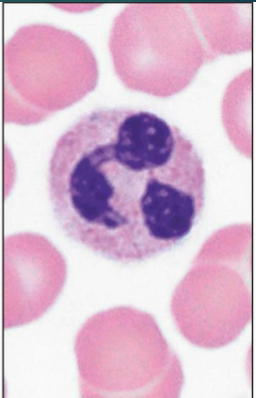
neutrophils
multilobed
phagocytic cells that engulf pathogens and debris
especially responsive to bacterial infection
1st ones to the scene
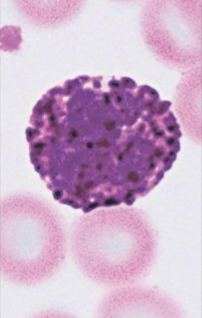
eosinophil
granules stain bright red
specialized to attack parasites
increase in abundance with allergies/asthma

basophils
granules generally stain blue
release histamine and other chemicals promoting inflammation
Monocytes
large cells with bean shaped nucleus
enter tissues and become macrophages and change shape
lymphocytes
slightly larger than rbc with large round nucleus
provide adaptive immunity
b and t cells
mast cells
similar to basophils (circular)
found in tissues
granules filled with histamine/heparin
mediate inflammation
allergy/anaphylaxis (excessive histamine release)

normal capillary exchange vs inflamm response
cut ourselves, rupture skin cells, releases contents (proteins, chemicals), activates mast and basophils to bring more chemical mediators and bring in immune cells and increase blood flow to the area, other cascades (increase pain simulation) increase permeability of capillaries to allow more fluid from vascular system to come in (makes tissue stretch which also triggers pain) and makes it easier for WBCs to come into the area

local effects of inflammation and why
redness and warmth→ caused by increased blood flow to damaged area
swelling (edema)→shift of protein and fluid into the interstitial space
pain→increased pressure of fluid on nerves, release of chemical mediators (bradykinins)
loss of function→may develop if cells lack nutrients, edema may interfere with movement
systemic effects of inflammation
inflation can spread all over the body
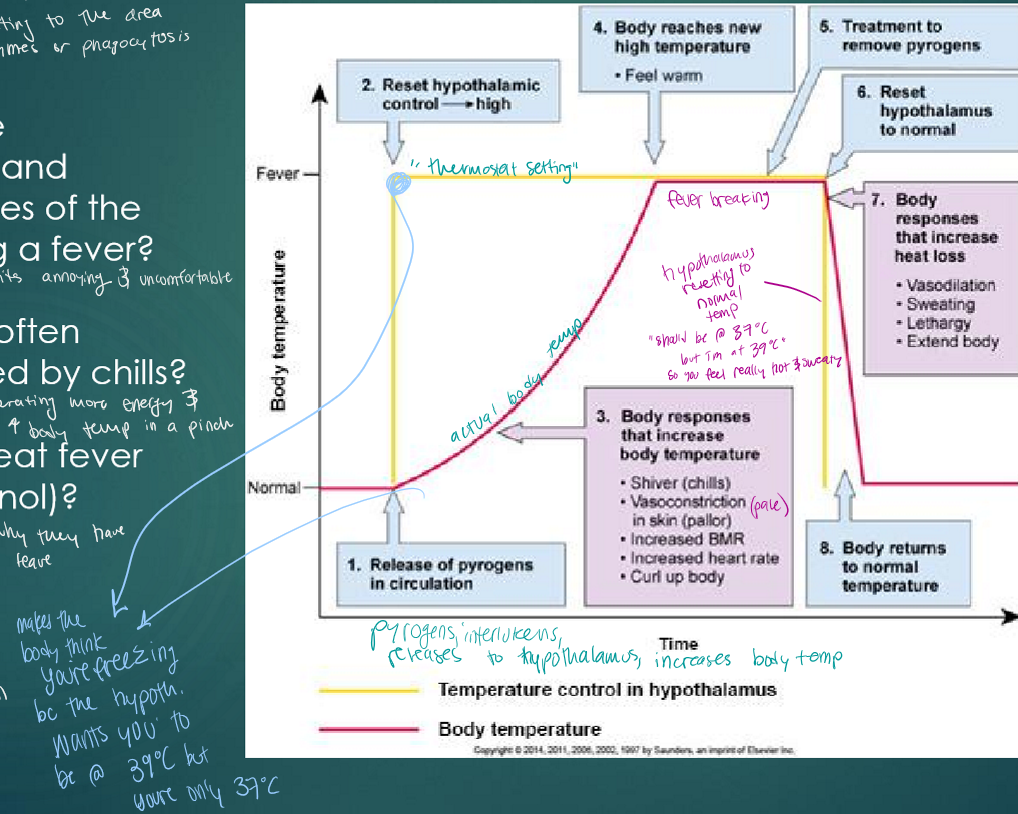
fever (pyrexia)→ common if inflammation is extensive, release of pyrogens, tissues and bacterias (IL1) makes way to hypathalamus to reset internal body temp
malaise→tired and feel like shit
fatigue→tired
headache
anorexia/loss of appetite
how does a fever occur, what are pros and cons of running a fever, why is fever accompanied by chills, should we treat fever
pros: increase in temp increases molecular speed and metabolic rate, means WBCs are getting to the area quicker, using their enzymes or phagocytosis to destroy pathogens
cons: proteins could denature, its annoying and uncomfortable
chills are muscles generating more energy and heat bc we wanna increase body temp in a pinch
treatment depends on if we know why they have one and if it isnt problematic or if its causing us problems
chronic inflammation cycle
chronic inflamm causes tissue damage which causes acute inflamm which brings more swelling

inflammation drug treatments
ASA (aspirin)
acetaminophen
nonsteroidal anti-inflammatory drugs (NSAIDs)
glucocorticoids/corticosteroids
ASA (aspirin)
blocks cyclooxygen pathway, antiplatelet effects (keeps them from clotting together)
GI bleeding, impaired clotting, reye syndrome (why its never given to anyone under 18), acidosis (overdose)
acetaminophin (tylenol)
poor anti-inflamm
doesnt work in peripheral body area
works well in brain and with pain
liver toxicity
nonsteroidal anti-inflammatory drugs (NSAIDs)
ibuprofen, naproxen (aleve), diclofenac (Rx)
mostly over the counter, very good at treating inflammation and inflammation related pain
GI bleeding(interferes with stomach producing mucus lining), impared clotting, kidney toxicity (over years and years)
block cycloogenase which prevents arachidonic acid from being broken down
glucocorticoids/corticosteroids
best for inflammation, mocks cortisol hormone that adrenal releases
prednisone (bee sting)
steroids are better antinflammatorys because they block the pathway higher up (block both sides), preventing arachidonic acid from even being produced
can be dangerous
different inflamm drug pathways

issues with corticosteroids
causes impaired wound healing/immune response bc suppresses immune systen bc of how it shuts down and takes over itself,
sodium retention (water retention, edema, elevated BP),
osteoporosis w calcium and phosphate in deposition of bones, cushingoid appearance (increased fat deposition),
adrenal withdrawal syndrome (if taking for a long time, adrenals stop producing them on their own, so you can get sick if you go off it cold turkey)
RICE
rest→get off of it
ice→reduces inflamm
compression→interferes with swelling to keep edema down
elevation→aid in venous and lymphatic drainage of fluid

types of healing of inflammation (3 Rs)
resolution→minimal tissue damage (sunburn), damaged cells recover
regeneration→damaged tissue replaced with cells by mitosis(significant cut/laceration in epidermis)
replacement→functional tissue replaced by scar tissue (if stem cells not in the area), loss of function
things that dont heal very well
cardiac muscle
tendons/ligaments (low blood supply)
neurons
glomeruli in kidneys
healing first intention
first pathway to healing, best way
sutured surgical wound or straight laceration

healing second intention
if cannot close wound (not enough skin to close open infection)

healing complications
stenosis-narrowing of esophagus
adhedions-operating in abdominal cavity, result causes intestines to stick together, can lead to blockage
keloid-abnormal healing of the skin, exaggerated response, giant lesions of collagen, surgically remove but then another keloid will form

somatic pain
from skin, bone, muscle
conducted by sensory fibers (afferent)
“fast” (localized, sharp, intense, right when cut finger) and “slow” (inflammation, aching) components
acute or chronic
visceral pain
originates in organs
conducted by sympathetic fibers
acute or chronic
caused by pathology (trauma, toxins, metabolic disease)
transmitted to spinal cord and spinothalamic tract by sympathetic fibers of autonomic NS
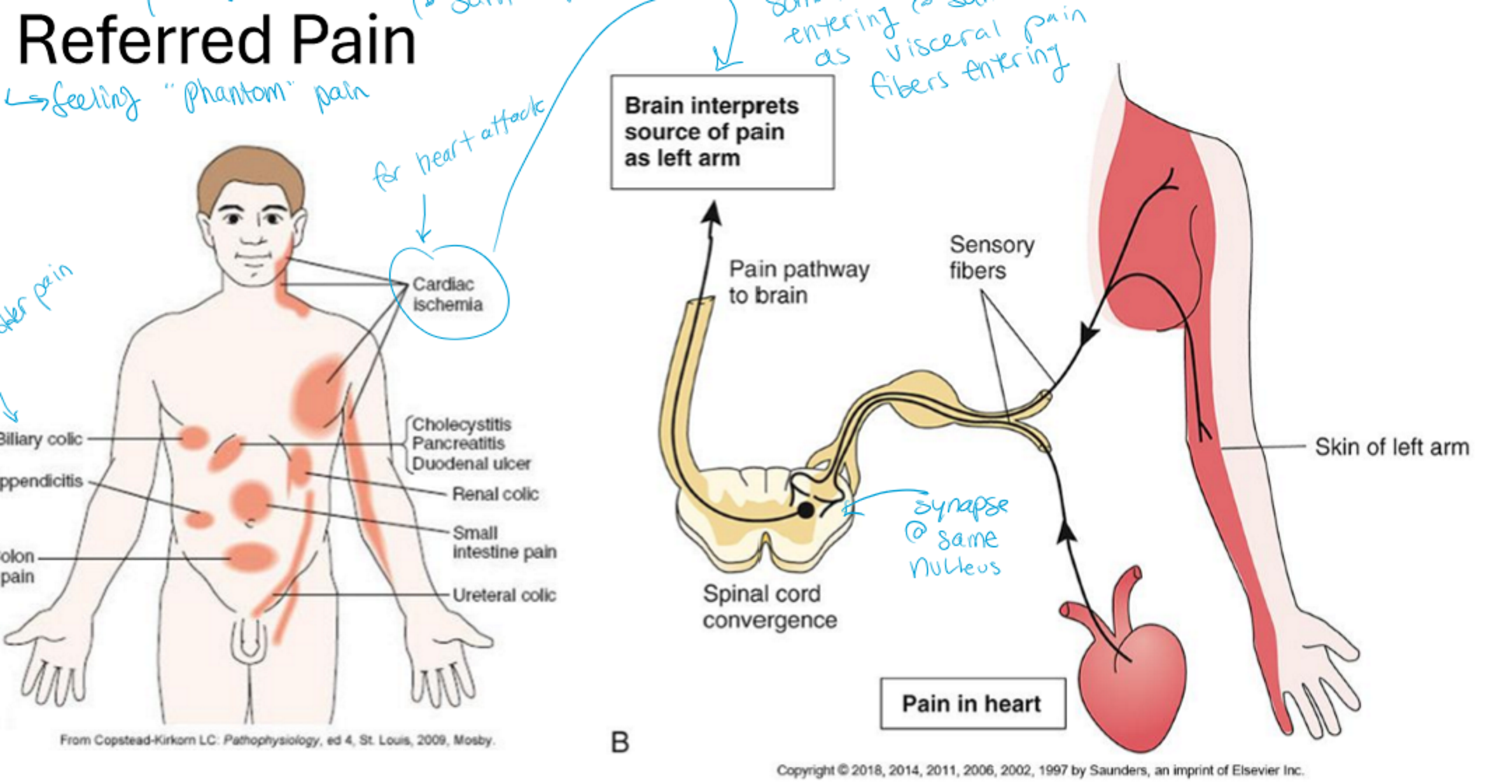
may present as referred pain
usually responds to pain control meds
nociceptors
nociceptors (pain receptors) are free sensory nerve endings
may be stimulated by:
-temp (extremes)
-chemicals (acids, histamine, bradykinin)
-physical means (pressure)
myelinated A-delta fibers
afferent fibers
transmit impulses very rapidly
fast pain (sudden, sharp, localized)
a larger cable (A sized) and myelination make it go very fast
fast pain doesnt persist
unmyelinated C fibers
transmit impulses slowly
slow pain (diffuse, dull, burning, aching, throbbing)
inflam mainly
touch and pain
enter neuron in spinal cord
crosses over up to thalamus
neuron from thalamus (gatekeeper, sometimes feels things sometimes doesnt) to cortex (if comes into cortex comes into consciousness)

referred pain
weird innervation patterns where somatic pain enters at same spot as visceral pain
feeling “phantom” pain
they meet at the same point so they act the same
neuropathic pain
when sensory neurons get damaged
caused by pathology (trauma, toxins, metabolic disease) that directly damages peripheral nerves
burning, tingling, shock-like
poorly responsive to analgesics (not gonna respond bc they block analgesics)
treated with anticonvulsants/antidepressants
anticonvulsants treat to prevent neurons from firing in sudden bursts
*diabetic neuropathy, chronically increases blood sugar and can damage nerve cells
pain treatments (meds, therapy, surgery)
meds: ASA, acetaminophen, NSAIDs (first line for musculoskeletal inflam), opiates (good but have bad side effects), sedatives (not good but dull senses)
therapy: physiotherapy, acupuncture, hypnosis
surgery (if absolutely miserable pain): cordotomy (cutting part of spinal cord), rhizotomy (blading part of dorsal root ganglion to kill all sensation in an area)
opioids/opiates
used to be all natural but they completely changed what its made of and now its entirely synthetic
very powerful, very addictive bc activates reward pathwaya
adverse effects of opioids
dysphoria (negative feelings)
restlessness/anxiety if not used to them
nausea and vomiting if not used to them (stimulates CTZ in brainstem bc recognized as toxins)
constipation (GI opiate receptors slow intestinal motility, overactivated opiates make it slow down, if food moving more slowly, more water gets absorbed and dries/hardens feces
itching (histimine response)
opioids at highest doses, what happens
unconciousness, hypothermia(hard to maintain body temp), hypotension(low BP), pinpoint pupils, respiratory failure due to brain stem depression (control centers dont fire fast enough so you dont breathe fast enough)
opioids and pain (tolerance for different areas)
tolerance occurs rapidly with opioids, but not at the same rate as all effects
analgesia and euphoria: rapid tolerance (over a few weeks, not enough anymore)
nausea itching: fairly rapid
respiratory depression-moderate (not tolerant to same level as euphoria, so easy to overdose)
constipation and constricted pupils-little to no tolerance
opioid receptor agonist
Naloxone (narcan)
blocks opiate receptor, prevents activation, blocks basically everything
SC/IM/IV, intranasal
rapidly reverses opiate intoxication
precipitates withdrawal symptoms
what does bone do
supports body
protects vital structures
movement (at articulations)(leverage for muscles and tendons)
fat storage (inside bone has yellow marrow which is fat tissue)
mineral storage (calcium, phos)
blood cell production (bone marrow, red bone marrow aka where rbcs are produced)

why does bone heal faster than tendons/ligaments
bone is very vascular and innervated, it heals faster than those avascular structures
osteoblast
immature bone cell that secretes organic components of matrix, as it matures, cells get trapped in bony matrix