Week 1-2 LifeStyles
 Call Kai
 Learn
Learn Practice Test
 Spaced Repetition
 Match
Match Flashcards
 Knowt Play
1/81

Earn XP
Description and Tags
From Surviving to Thriving, Pillars of Wellbeing + Models of Health Behaviour, An Introduction to Sleep Health and Disturbances
Name | Mastery | Learn | Test | Matching | Spaced | Call with Kai | Chat |
|---|
No analytics yet
Send a link to your students to track their progress
82 Terms
Why is exercise considered to be medicine?
5 dot points
Maintains healthy weight
Combats disease
Improves strength
Boosts energy
Acts as an antidepressant
How active should adults be each week?
2 dot points
2.5 to 5 hours of moderate intensity phys activity like brisk walk or swimming
1.25 to 2.5 hours of vigorous intensity activity such as jogging, soccer or netball
At least how many days a week should you include muscle strengthening activities?
2 dot points including 2 examples
2 days
E.g pull ups, push ups
What is constructing a healthy plate like?
3 dot points
consider the size of the meal and priorities a variety of vegetables
the rest should have lean proteins and whole grains in a relatively small amount
water as a recommended drink
What is sleep hygiene?
a term that refers to a series of sleep habits that improve your ability to fall asleep and stay asleep
What does a lack of sleep can lead you to?
Depression, heart disease, stroke, diabetes
What are some factors that can lead to lower quality of sleep?
Taking work home, stress in society, increased in urbanisation, increase in noise levels, using devices at night
2 ways of improving sleep health
sleep at 10-11pm, wake at 6-7am
get plenty of natural light when wake up
what should you avoid in terms of sleep hygiene?
caffeine, smoking, alcohol, exercising at night
Name 12 sleep hygiene strategies
Stop electronic use at least 30 minutes before bed
Use bed for only sleep, sex and sickness
Remove naps
Avoid caffeine + alcohol
Do relaxing activities before bed
Make a worry list
Do boring activities before bed
Improve sleep environment
Exercise at the right time
Get up and try again
Learn about sleep
Consult with a professional
How do you beat procrastination?
3 points
make the rewards of long term behavior more immediate
make the costs of procrastination more immediate
remove procrastination triggers from environment
Stress mindset
2 points
a core belief about whether stress is inherently harmful or enhancing
It shape show people interpret, respond to, and physiologically react to stressful experiences
The relationship between stress and sickness
2 dot points(both are studies)
If you are told to view the stress response as a helpful tool, people tend to have a healthier cardiovascular response to stress
If you show caring for others your stress related risk of dying decreases
What is oxytocin?
A stress hormone and neurotransmitter associated with bonding, trust, and social connection.
Three protective beliefs of stress
View your body’s stress response as helpful(not debilitating), stress could be seen as a energy you can use
View yourself as able to handle, and even learn and grow from the stress in your life
View stress as something everyone deals with.
Name the 3 Domains of Wellbeing
Psychological
Biological
Social
What are the 4 prevention methods and provide 1 fact:
Mindfulness
Successful people have 4 common factors: attention, emotional regulation, self control, and focus. This allows individuals to respond to situations thoughtfully
Exercise
After exercising 20-30 minutes, the brain releases endorphins, giving a reward as such
Healthy Diet
Meal prepping is a good way to balance work life relationships. Construct a health plate, half veggies, 25% protein, 25% whole grains
Sleep
sleep hygiene refers to a list of sleep habits to improve the quality of sleep
Explain what the Mind Body Connection
2 dot points
A foundational concept in understanding psychological wellbeing
It examines how our thoughts, emotions, and behaviours are linked with our physical health, and how lifestyle choices can influence both
How do the mind and body communicate?
3 dot points
our mental and physical health are deeply linked
This connection exists because of several major physiological systems constantly communicate with each other, sharing information about stress, emotions, pain, energy levels and illness.
These systems are like communication highways, they send messages back and forth between the brain and body so we can respond to what’s happening both inside and around us.
What’s the two way influences that highlights mental and physical states being deeply intertwined?
ANS: Parasympathetic and sympathetic branches
Define HPA Axis (Stress Response)
3 dot points
A system involving the hypothalamus, pituitary gland, and adrenal glands that manages the body’s response to stress.
The axis is central to the body's stress response. When you perceive a threat, this system releases hormones like cortisol, preparing the body to react.
Chronic activation of the HPA axis (often due to ongoing stress or mental health challenges) can disrupt hormone balance and contribute to physical health problems, including inflammation and metabolic issues.
Define neurotransmitters
3 dot points
Chemical messengers that transmit signals in the brain and throughout the nervous system. Their balance is essential for mood regulation, cognition, and physical health.
Factors like diet, stress, and inflammation can alter neurotransmitter levels, impacting both mental and physical wellbeing. This demonstrates how lifestyle and physiological processes are closely linked.
They are in the nervous system, whereas hormones are in blood stream.
Give 3 neurotransmitters
GABA
Dopamine
Serotonin
Define Cytokines
Small proteins released by immune cells(such as microglia) that help regulate inflammation and immune responses in the body.
Define a Bidirectional Relationship
A two-way interaction where mental and physical health influence each other through physiological pathways.
Define systemic inflammation
A widespread immune response that affects the entire body rather than just a single localized site of injury or infection.
Define Chronic Inflammation
A long-lasting, low-level immune response that can damage tissues and contribute to mental and physical health issues.
Define Acute Inflammation
A short-term, protective immune response to injury or infection that helps the body heal.
Effects of chronic inflammation
2 dot points (mental + physical)
Mental health
Disrupts brain function and contributes to mood disorders, cognitive decline, and other psychological challenges
Physical health
it can alter brain chemistry, impair neural communication, and increase vulnerability to anxiety and depression, highlighting the critical link between systemic inflammation and brain health
Define Neuroinflammation
3 dot points
Inflammation in the brain and nervous system
It happens when the brain’s immune cells(microglia) becomes overactive
Affects mood, memory, and emotion regulation —> anxiety
How does low serotonin, dopamine, and GABA affect a person?
Serotonin
Worry
Dopamine
Lack of motivation
GABA
Restlessness
What is the Diet Inflammation Connection?
3 dot points
Diets can either inflame or calm our brain
Some foods trigger chronic inflammation in the body —> inflammation signals gets to the brain
Anti-inflammation protects neurons and support healthy neurotransmitter balance
Name the 4 pillars of lifestyle factors that fights chronic inflammation
Nutrition (nutrient rich diets like fruits, vegetables and healthy fats)
Physical activity (reg exercise he;p reduce inflammation + support both physical and mental health. Lowers stress hormones, improve immune function + enhance mood)
Sleep (Good quality of sleep! Poor sleep/disrupted circadian rhythms can increase inflammatory markers and are linked to higher rates of mental disorders)
Social connections (Acts as a buffer against stress and inflammation, i.e +ve relationships enhance emotional resillience, reduce risk of depression and anxiety, supports a healthy immune system)
Explain why lifestyle choices are important (context of inflammation)
Daily habits can either increase or reduce chronic inflammation. Healthy eating, physical activity, adequate sleep and stress management help regulate the immune system and support long-term physical and mental wellbeing, while poor habits can raise the risk of chronic disease.
What best describes the bidirectional relationship between physical and mental health?
Physical and mental health influence each other through interconnected physiological pathways, problems in one can worsen outcomes in the other.
What is one major way chronic inflammation can impact psychological wellbeing?
It disrupts brain function and increases risk for mood disorders.
A student is experiencing persistent fatigue, poor sleep, and social withdrawal. What lifestyle factors might be contributing to chronic inflammation and psychological symptoms?
High stress, poor diet, and lack of sleep.
How Do Lifestyle Factors Influence Mental Health?
Lifestyle factors influence mental health by affecting mood, stress, energy, concentration and resilience. Nutrition, physical activity, sleep and social connection can support psychological wellbeing, while unhealthy habits or limited support may contribute to poor mental health.
Define Gut-Brain Axis
A communication network linking the digestive system and brain, influencing mood, cognition, and inflammation.
Define Endorphins
Natural chemicals released during exercise and positive experiences that reduce pain and boost mood.
Explain, for each pillar of well-being, how its mechanisms influence mental health both biologically and behaviourally.
Nutrition
Biological: Nutrients support neurotransmitters, brain function and gut–brain health, while a healthy diet can reduce inflammation and support stable mood.
Behavioural: Regular, balanced meals support energy, concentration and emotional stability.
Physical activity
Biological: Exercise improves brain blood flow, neuroplasticity and mood-related chemicals such as endorphins and serotonin, while reducing stress hormones.
Behavioural: Regular activity builds confidence, healthy routines and social opportunities, strengthening resilience.
Sleep
Biological: Sleep supports circadian rhythms, neurotransmitter balance and memory. Poor sleep can affect mood, thinking and stress tolerance.
Behavioural: Consistent sleep routines and good sleep hygiene improve emotional stability, concentration and overall wellbeing.
Social connection
Biological: Positive relationships can increase oxytocin and dopamine, supporting mood and motivation; isolation may increase stress and inflammation.
Behavioural: Social support reduces loneliness, provides emotional help and creates belonging, which protects mental health.
Define health behaviour
5 dot points
Also known as health related behaviours. These are actions taken by an individual that affects their mortality or health
These actions can be intentional or unintentional
Can be health-protective or health-harming
Health behaviours are unique to individuals and change over time.
There are also variations in health behaviours across different age groups, cultural and ethnic identities, and place
6 Examples of health behaviours
Diet
Exercise
Smoking
Alcohol consumption
Drink-driving
Adherence to medication and other healthcare regimens (e.g., completing prescribed exercises for physiotherapy)
What are Lifestyle diseases?
Conditions such as heart disease, cancer, and diabetes linked to modifiable behaviours like poor diet and lack of exercise.
What are Modifiable behaviours?
Health behaviours we can change, such as improving diet, increasing exercise, and reducing exposure to carcinogens/radiation.
Name the 3 Social Cognitive Models
The Health Belief Model
Theory of Planned Behaviour
The Common Sense Model
What is The Common Sense Model (CSM)?
2 dot points
This model talks about self-regulation, the ability to manage your own emotions and feelings in the face of particular threats(in this case, health threats).
A practical approach to understanding health behaviours. Its name reflects its straightforward and intuitive nature, making it accessible to a wide audience.
This model integrates personal beliefs and emotional responses to health threats, offering a comprehensive framework for behaviour change.
Name the key components of HBM
8 dot points
Susceptibility
Refers to a person's perception of how likely they are to develop a disease or health problem
Severity
The perception of how serious the consequences of a particular health condition or risk would be
Benefits
What a person believe they stand to gain from taking a particular health action
Costs(Barriers)
Refers to the perceived barriers/downsides of carrying out a healthy behaviour. Research shows that perceived barriers are the strongest predictor of behaviour in the HBM, i.e personal income
Cues to Action
Triggers that are either internal or external that prompts a person to act on a health behaviour. Internal cues includes experiencing symptoms, whereas external cues come from the environment, such as information or advice from others
Other Modifying Variables
Sociodemographic factors such as age, occupation, cultural background, and living circumstances that can influence a person’s health perceptions and behaviour
Self-efficacy
A later addition to the HBM and refers to a person’s level of confidence in their ability to successfully perform a health behaviour
Behaviour
The ultimate outcome of this model, the health action the person ultimately takes(or doesn't take) based on the interplay of all preceding factors
How Well Does the HBM Work? Name strongest predictor, second strongest predictor, and effectiveness.
Strongest predictor: Perceived barriers (cons)—reasons why you shouldn't do a behaviour or change your behaviour
Second strongest predictor: Perceived susceptibility—whether you think this particular health risk is relevant to you
Effectiveness: Meta-analysis research shows that most behaviour change interventions based on the Health Belief Model are successful at improving adherence (e.g., to medication, following a diet).
Name the key components of TPB
6 dot points
Attitude Towards the Behaviour
Refers to a person’s overall evaluation of performing a behaviour. Essentially weighing up the pros and cons. Very similar to the costs and benefits components of the HBM.
Subjective Norm
A component unique to the TPB and captures the influence of the social environment; what the important people around you think and do regarding the behaviour
Perceived Behavioural Control
Refers to whether or not someone believes they have control over performing(or ceasing) a behaviour. It is closely related to self-efficacy in HBM, the confidence that you can carry out a particular action.
Intention
A person’s motivation or plan to perform a behaviour. It is shaped by attitudes, subjective norms and perceived behavioural control, and is the strongest immediate predictor of whether a person will carry out the behaviour.
The model holds that high intentions to perform a behaviour strongly increase the likelihood of actually doing it.
Actual Behavioural Control
While perceived behavioural control is about what a person believes they can do, actual behavioural control refers to the real-world factors and resources that genuinely determine whether someone can carry out the behaviour.
Behaviour
The final outcome of the model. The action that results from the interplay of attitudes, subject norms, perceived behavioural control, and intention.
Name the key components of CSM
11 dot points
Situational Stimuli
The starting points for how we perceive health threats. They include: lay information stored in memory, information from expert sources, and experienced somatic and symptomatic information
Cognitive Illness Representations
These are thought-based ways a person makes sense of a health threat, organized into 5 categories:
Identity(what symptoms are associated with the illness), Cause (what caused it)
Consequences(how serious it is)
Timeline(how long it will last)
Control(whether anything can be done about it)
Coherence(whether it all makes sense)
Emotional Illness Representations
Running in parallel to the cognitive pathway, the model recognises that health threats also generate emotional responses such as distress, fear, or anxiety
Emotional Illness Representations
Running in parallel to the cognitive pathway, the model recognises that health threats also generate emotional responses such as distress, fear, or anxiety
Coping Strategies(Emotional)
These are the strategies a person uses to manage the emotional distress associated with a health threat
Coping Appraisal(Cognitive)
This is the evaluation of how well one's coping strategies are working in terms of illness outcomes, such as physical functioning and disease state
Illness Outcomes
Refers to the actual health-related results that flow from one's coping strategies, including disease state, physical functioning, role functioning, and social functioning
Emotional Outcomes
These capture the emotional well-being or distress that results from one's emotional coping strategies
Coping Appraisal(Emotional)
The evaluation of how well one's coping strategies are managing emotional distress and psychological well-being
Socio-cultural Context
The model situates all of these processes within the broader socio-cultural context, including institutions, groups, and social roles
Self System
Refers to a person's biological characteristics and psychological traits that shape how they process and respond to health threats
What makes CSM so different from HBM and TPB?
This model is interested in both our cognitive and emotional responses, something the other models haven't really addressed at all.
What is the The Parallel Path Approach in CSM?
The approach considers both our thought processes (cognitions) and emotions simultaneously when a person encounters a health threat or somatic symptom. It's particularly good at describing and predicting the ways we cope with and manage health threats and health-related situations.
What is the emotional pathway?
Refers to the feelings a person associates with an illness, such as fear, anxiety, distress, or worry.
These emotional responses influence coping strategies and health behaviours.
E.g someone who feels very anxious about getting the flu may be more likely to get a flu vaccination.
Why should you care about sleep?
Sleep is a core biopsychosocial health factor. Poor sleep is common in physical and mental health disorders and can affect mood, cognition, recovery and long-term disease risk. Deep sleep also supports the brain’s waste-clearance (“glymphatic”) system.
Sleep as Neurophysiological Definition
2 dot points
3 types of states:
1 state of wakefulness(awake)
2 states of sleep
NREM (Non rapid eye movement) sleep
REM (Rapid eye movement) sleep
These two alternate across sleep cycles
Define EEG
Electrophysiological activity.
How are NREM and REM sleep different?
Through distinct electrophysiological(EEG) activity and body and eye movements.
NREM and REM sleep are differentiated by unique EEG signatures and the presence or absence of certain physical movements, highlighting the complexity of sleep regulation.
What are the Measures of Interest in Sleep (extracted from objective or subjective)?
6 obj dot points, 3 subj dot points
Objective reports of sleep
Time spent in bed(from light off to light on)
Time spent awake after sleep onset
Sleep onset latency(time to fall asleep)
Total sleep time(sleep duration excluding the time awake and sleep latency)
Sleep efficiency(sleep duration/time spent in bed *100)
Sleep fragmentation(number of brief awakenings)
Specifically to subjective reports of sleep
Satisfactation towards sleep quality
Impact on daytime functioning
Refreshness in the morning
What does 'sleep onset latency' refer to?
Time it takes to fall asleep after turning off the lights
What Regulates Sleep-waking Timing?
Circadian process and homeostatic process
Define process s
The first process, refers to the build-up of sleep pressure
It is based on the principles of equilibrium; the body is driven toward a balance between sleep and wakefulness, i.e. there is a neurophysiological drive to sleep after long periods of wakefulness and drive to wake after long periods of sleep
This pressure is seen to build up during wakefulness and decreases as we sleep
It’s like the longer we go without food, the hungrier we get
This process is also called homeostatic => we can only go for so long without sleep before our sleep pressure builds up so high that we can’t maintain wakefulness
Falling asleep outside of the usual sleep timeframe such as naps or sleeping in can reduce sleep pressure but make it more difficult to sleep at night
Define process c
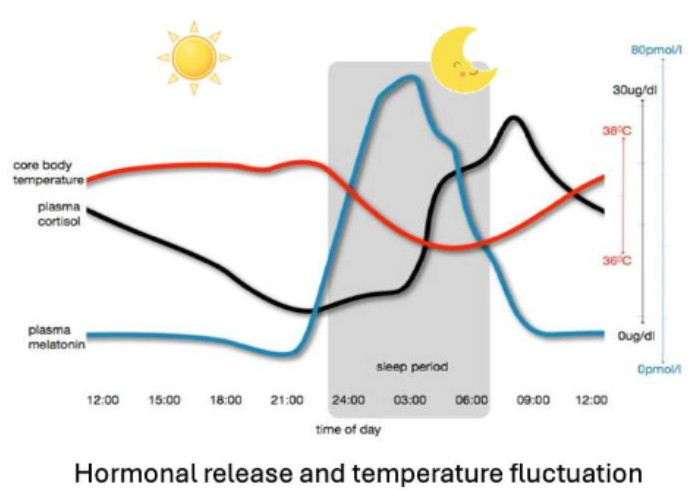
The second process, Circadian Rhythms, is responsible for the timing of the sleep process => the 24 hour cycle that oscillates like a sine wave
Many important bodily processes follows this 24 hours cycle including:
Body temperature
Digestion
Hormone production
E.g The brain produces melatonin at night when it’s dark but suppresses melatonin production in the morning and throughout day
How do Process S and Process C regulate sleep?
Process S builds sleep pressure during wakefulness, while Process C is the body clock that regulates the timing of sleep and alertness. Good sleep occurs when they align; when they are out of sync, such as during jet lag, sleep can be disrupted.
What is a Central Circadian Clock?
There are multiple physiological, behavioural, and social rhythms that are coordinated by the central circadian clock.
The image is an example.
“Do I sleep enough?”
Duration
Total amount of sleep obtained in 24 hours
Why is Duration in Sleep Health important?
Both short and long sleep duration are associated with poorer health outcomes. This is often described as a U-shaped relationship, with higher cardiovascular and mortality risk at both extremes.
“Do I sleep well enough?”
Quality/efficiency
How easily sleep begins and how well it is maintained; includes sleep latency and awakenings
Why is Quality/efficiency in Sleep Health important?
Long time to fall asleep and frequent awakenings reduce sleep efficiency and can contribute to fatigue, poorer mood and impaired daytime functioning.
“Am I satisfied with my sleep?”
Satisfaction
A person’s own assessment of whether their sleep was good, restorative and sufficient
Why is Satisfaction in Sleep Health important?
Low sleep satisfaction is associated with poorer wellbeing and mental health, even when total sleep time seems adequate.
“Am I sleepy during the day?”
Alertness
Ability to stay awake, attentive and functional during the day
Why is Alertness in Sleep Health important?
Persistent daytime sleepiness may indicate insufficient, fragmented or poorly timed sleep, and can affect concentration, safety and daily functioning
“When do I sleep, and is my schedule consistent?”
Timing/regularity
When sleep occurs in the 24-hour day and how consistent bed and wake times are
Why is Timing/regularity in Sleep Health important?
Sleep timing and regularity reflect circadian alignment. Shift work and irregular schedules can disrupt sleep and are associated with cardiometabolic health risks and accident risk.
What describes the nature of the relationship between sleep and biopsychosocial factors?
The relationship between sleep and biopsychosocial factors is reciprocal, meaning each influences the other, creating a cycle.
What system-level process can affect sleep due to stress?
Stress can activate the sympathetic nervous system (SNS) and HPA axis, which in turn affects sleep multidimensionality and increases cortisol + physiological arousal that disrupt sleep.
How do sleep patterns and needs generally change during the first 5 years of life?
Sleep becomes more nocturnal with decreased daytime sleep
In early childhood, sleep patterns evolve rapidly; newborns initially sleep for most of the day, which gradually transitions to a more biphasic sleep pattern—primarily nocturnal, with fewer daytime naps as they age.
Name 6 main domains of sleep disorders
Insomnia
Sleep-disordered breathing
Central sleep apnea
Obstructive sleep apnea(OSA)
Central disorders of hypersomnolence
Circadian Rhythms
Parasomnias
Sleep-related movement disorders
What is the recommended first-line treatment for chronic insomnia?
Cognitive-Behavioural Therapy for Insomnia (CBTi) is the first-line treatment for chronic insomnia, focusing on changing sleep habits and reducing related anxieties.
OSA is typically diagnosed during a clinical sleep study, which includes polysomnography to monitor breathing patterns.
True or False?
True
This diagnostic method is essential, as it monitors various physiological parameters during sleep, including breathing patterns, airflow, and blood oxygen levels, allowing for the identification of interruptions in breathing that characterize OSA.