Equations and Inequalities
 Call Kai
 Learn
 Practice Test
 Spaced Repetition
 Match
 Flashcards
1/16

There's no tags or description
Looks like no tags are added yet.
17 Terms
Input
The values that are fed into formula, or equation to initiate calculations
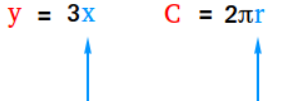
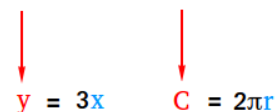
Output
The result of an operation, calculated by applying the order of operations to an input in an equation.
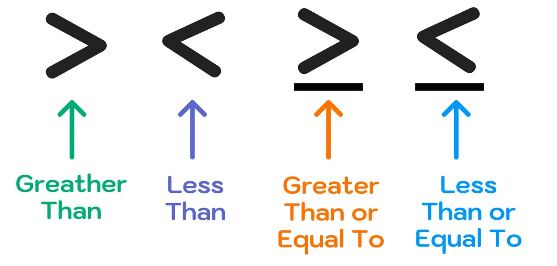
Inequality
A mathematical statement that compares two expressions and shows that one is greater than, less than, or not equal to the other, often using symbols like <, >, ≤, or ≥.
Inverse Operations
Pairs of mathematical operations that cancel each other out, such as addition and subtraction or multiplication and division.

Equations
Mathematical statements that assert the equality of two expressions, typically containing variables and constants.
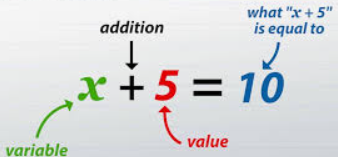
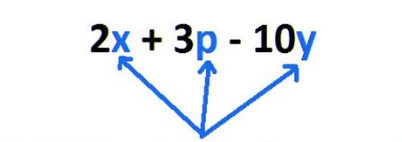
Variable
A symbol, typically a letter, that represents an unknown or changing quantity.
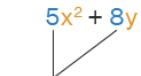
Coefficient
The number, or value, that is multiplied by a variable in a term.
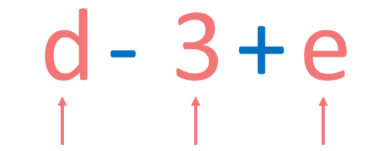
Term
An individual number, variable, or a product of numbers and variables within an algebraic expression that are separated by addition or subtraction signs.
Constant
A number, or value, that stands alone in an expression.

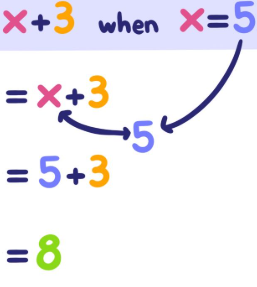
Substitution
The process of replacing a variable or expression with another, often numerical, value.
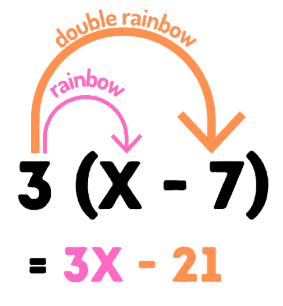
Distributive Property
A concept in mathematics that multiplies all values on the inside by the value of the outside of parentheses.
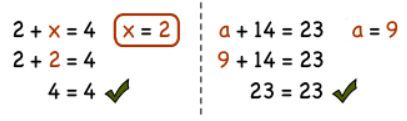
Solution
A value in mathematics that makes an equation true.
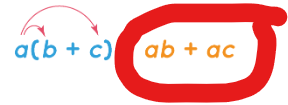
Expand Form
To rewrite an algebraic expression by applying the distributive property.
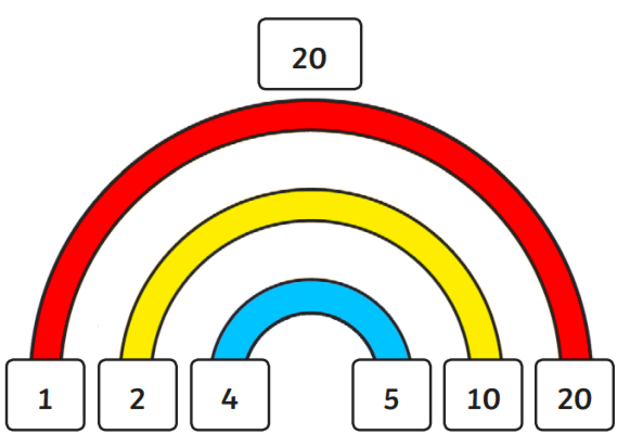
Factor
A whole number or an algebraic expression that divides another number or expression evenly with no remainder
Combine Like-Terms
An algebraic process used to simplify expressions by adding or subtracting terms that have the exact same variables raised to the exact same powers

Simplify
To rewrite an expression, fraction, or equation into a shorter, less complicated form while keeping the exact same value

Evaluate
To find a single, specific numerical value by substituting a value into an algebraic expression or equation.
