Equine Colic
 Call Kai
 Learn
Learn Practice Test
 Spaced Repetition
 Match
Match Flashcards
 Knowt Play
1/11

Earn XP
Description and Tags
Vocabulary flashcards covering diagnostic procedures, clinical signs, treatments, and specific types of equine colic.
Name | Mastery | Learn | Test | Matching | Spaced | Call with Kai | Chat |
|---|
No analytics yet
Send a link to your students to track their progress
12 Terms

Colic (Classic Clinical Signs)
Abdominal pain (rolling, pawing, looking at side, stretching, kicking at abdomen, recumbency, groaning), tachycardia, tachypnea, decreased appetite, decreased fecal passage, and shock in severe cases.

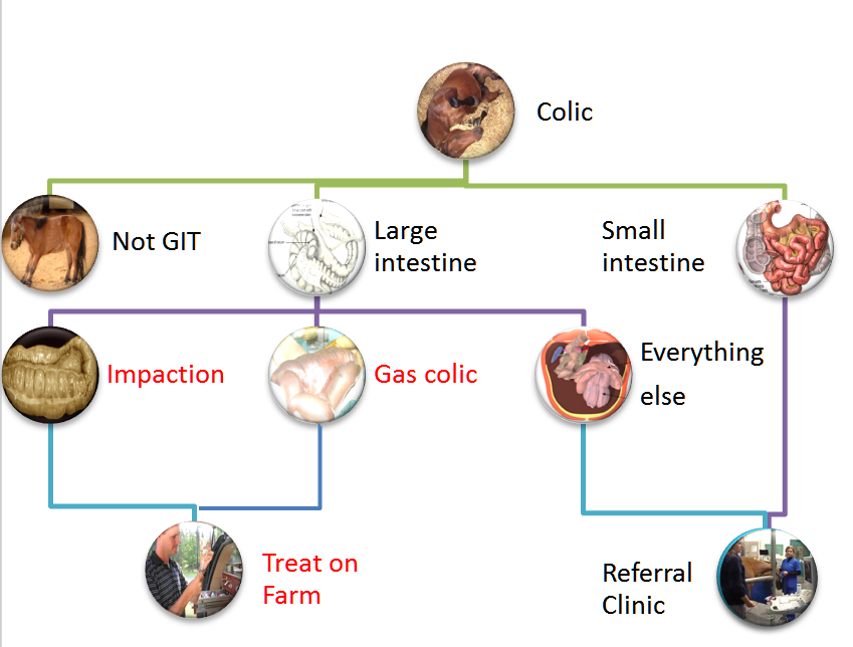
Goal of Colic Diagnosis
To identify the specific part of the GI tract involved and determine the type of colic.
Abdominal Palpation Per Rectum
A diagnostic procedure used to assess the location and dilation of the GI tract in a colicky horse.
Abnormal Net Nasogastric Reflux
A volume of greater than 2 L net reflux obtained after passing a nasogastric tube (NGT).
Abdominocentesis Findings Indicating Surgery
Increased total protein, serosanguineous color, and high lactate in the peritoneal fluid evaluation.
Buscopan®
A parasympatholytic medication used in the treatment of spasmodic colic.
Exploratory Laparotomy Indication
Surgical treatment indicated if pain is repeatedly refractory to analgesics and/or physical examination suggests a strangulating lesion.

Three Most Common Colic Types
Spasmodic/gas colic
impaction colic
strangulating obstruction (e.g., large colon volvulus, strangulating lipoma).

Large Colon Volvulus
A specific type of colic commonly encountered in broodmares.

Fecaliths
A specific cause of colic commonly seen in miniature horses.
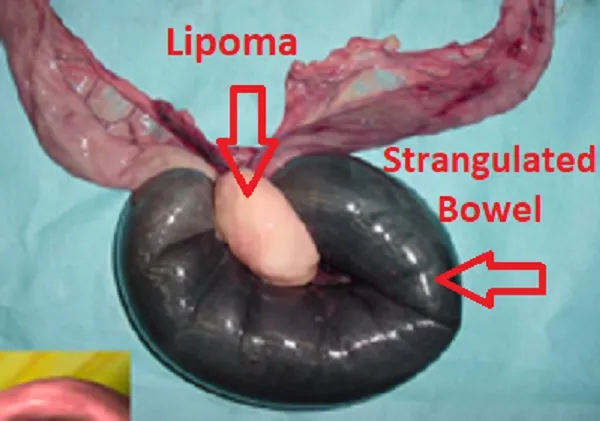
Lipomas
A specific cause of strangulating colic commonly found in old horses.

Enteroliths
A specific cause of colic commonly observed in Arabian horses.