Week 3: Labour Markets
 Call Kai
 Learn
Learn Practice Test
 Spaced Repetition
 Match
Match Flashcards
 Knowt Play
1/34

There's no tags or description
Looks like no tags are added yet.
Name | Mastery | Learn | Test | Matching | Spaced | Call with Kai | Chat |
|---|
No analytics yet
Send a link to your students to track their progress
35 Terms
How is the labour market the hear of the economy
(Important to ask, will higher min. wages generate higher unemployment?)
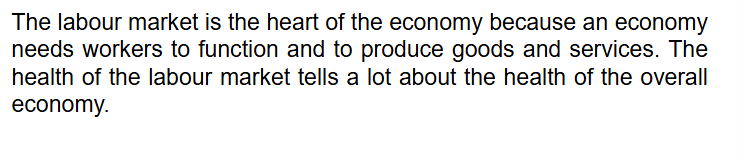
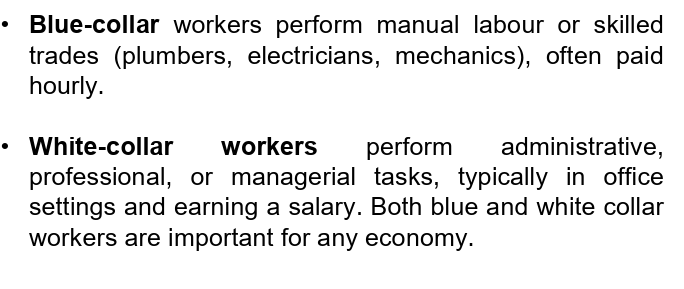
Labour= Blue collar+ White collar
Define the two types
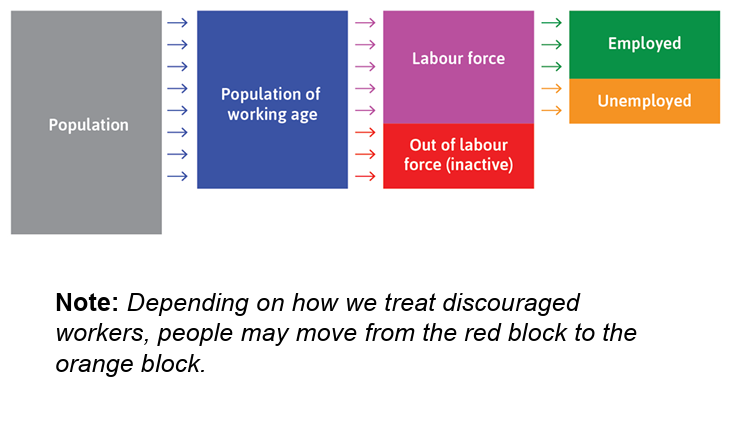
Explain the groups(+ sub groups) of SA labour market
Define discouraged workers
Are all inactive workers discouraged works
Discouraged workes: People who are able as well as willing and part of working-age population but have given up looking for a job solely because they believe the job market will fail them(past rejections,discrimination,weak economy)
No,some people might be inactive due to persoanl reasons (ie. want to be a stay-at-home parent for a bit)
Define:
Labour force/work force/economically active
Unemployed people part of LF are also …
Economically inactive individuals
Who does the expanded definition of unemployment include and exclude
are either employed or unemployed.
actively seeking employment and go to interviews when the opportunities are available=economically active
unemployed individuals that are discouraged and do not take active steps to seek employment and do not go to interviews, but have a desire for work
Included: Discouraged workers because they’re economically inactive
Excluded: Students, they decided to pursue studies instead
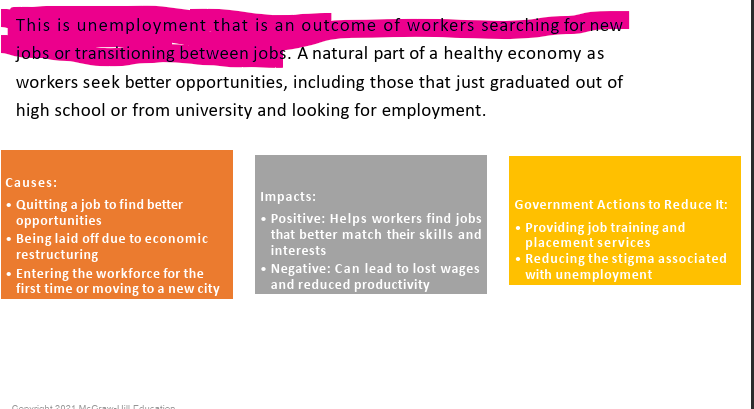
What is frictional unemployment
Who does it include
What are 3 causes
What are 2 impacts(1good,1bad)
Government actions to reduce it
*Individuals will likely find work in the short run
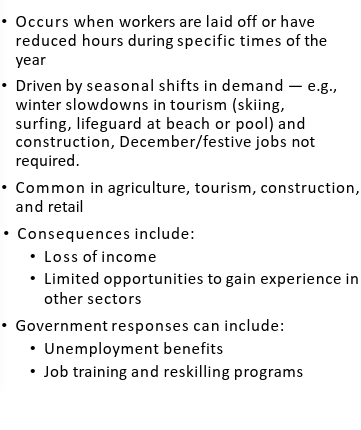
What is seasonal/cyclical unemployment
What is it driven by
Where is it common(4)
2 Consequences
2 Government responses
**Economic downturn people will likely lose their jobs
**Medium term=less than 12 months
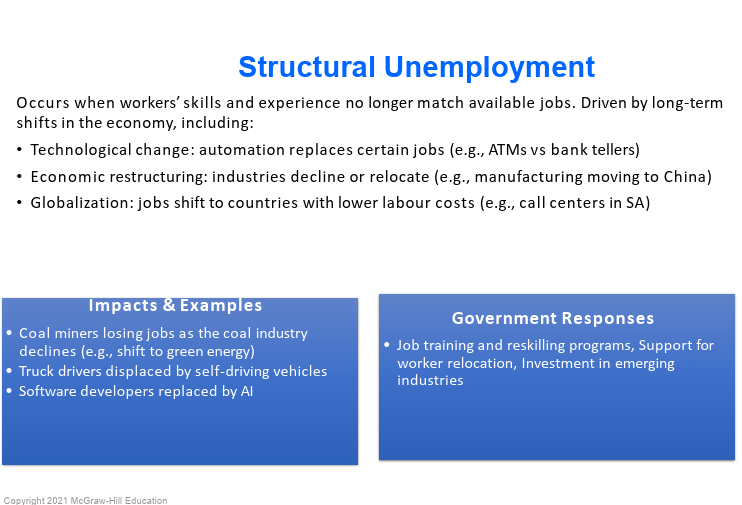
What is structural unemployment
What are 3 examples
Tech
Economic
Global
What are some examples
What are government responses
**no increase in the wage can negate the fact that the unemployed cannot perform the roles required by businesses.
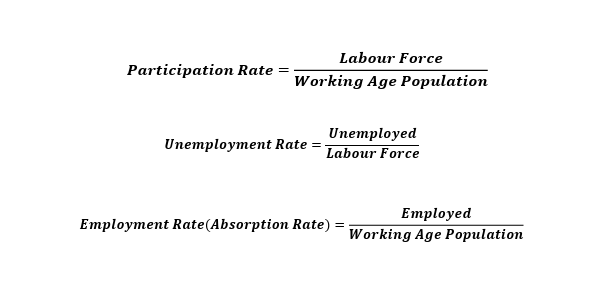
How to calculate___ rate:
Participation
Unemployment
Employment(absorption)
Who do we exclude when working with STRICT unemployment+ participation
Discouraged workers
Define:
Participation rate
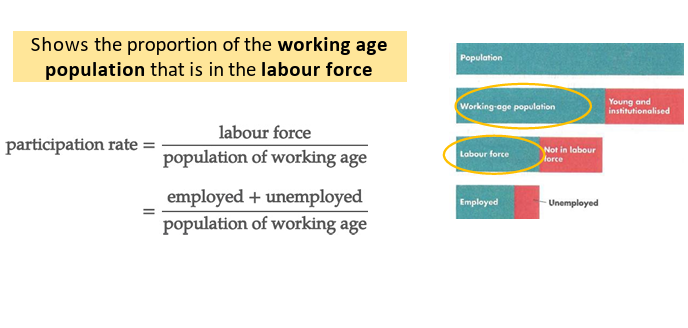
Define:
Unemployment rate
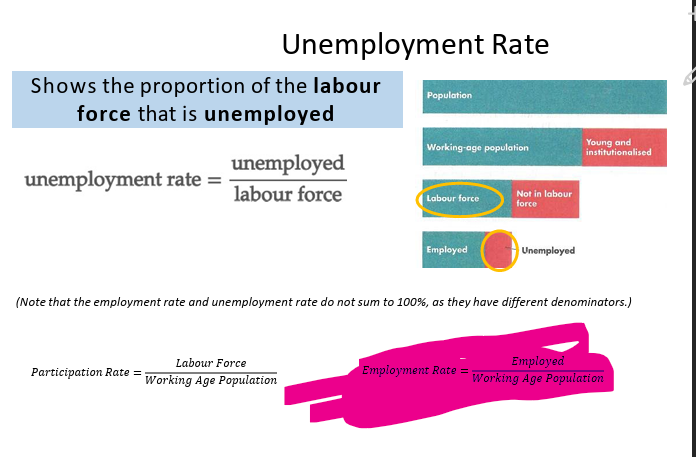
Define:
Employment rate( Absorption rate)
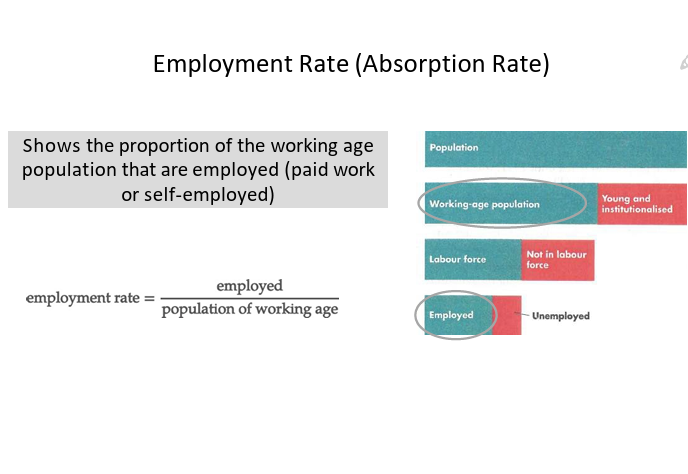
Define:
Population divided into
In SA working ages are,people that fall out of those are
Working-age population divided into 3 items
Working age and Non-working age
15-64,minors and pensioners
Employed, unemployed and economically inactive
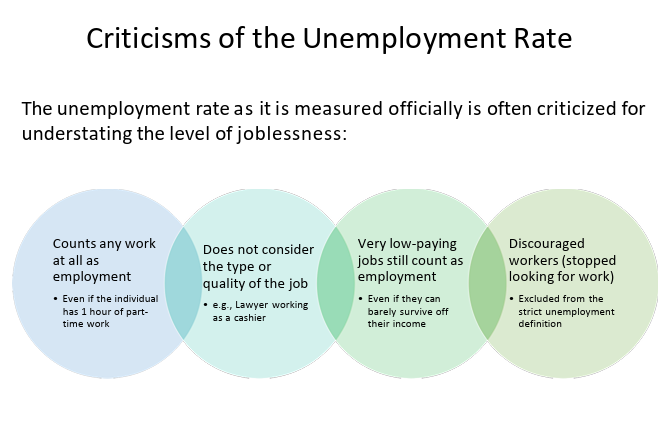
What are the 4 criticisms of the unemployment rate
Counts any__
Type/quality
Low-paying
Discouraged workers
Main honourable mention: Understating the level of joblessness
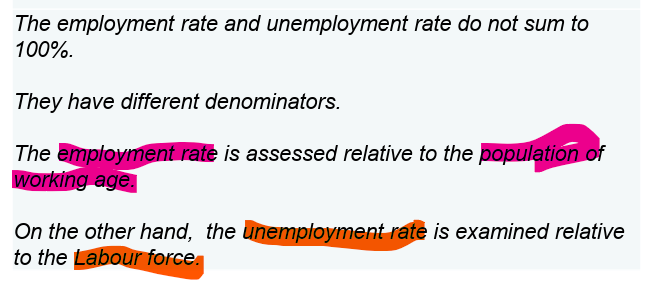
Does the sum of the employment rate and strict unemployment rate sum to 100 %?
NOPE, different denominators
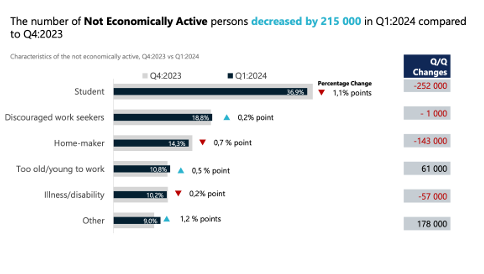
NEA=Not economically active
Which group forms the biggest part of it
Students that graduated
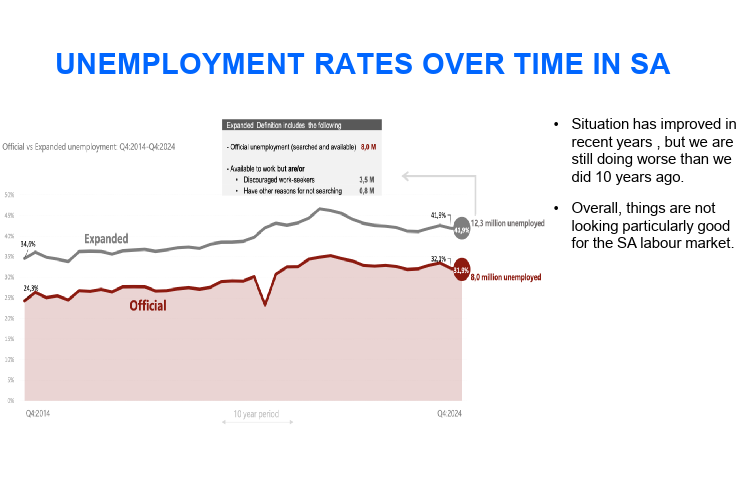
How are things in SA labour market
Official(strict) vs expanded unemployment
Which province has the worst unemployment and the best
Which gender and which race mostly unemployed
BAD
Official: Searching and available
Expanded: Discouraged and other reasons for not searching
NW and WC
Female,Black SA’ens
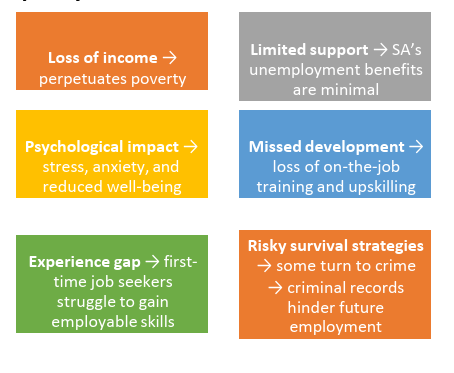
What are the 6 costs of unemployment(KNOW THESE):
Income
Psychological
Gap
Support
Development
Strategies
GP DISS
What is the TYPICAL measure to counter the negative effects of unemployment
What is the NECESSARY BUT NOT SUFFICIENT conditions (3)
Unemployment benefit payment or payments from the unemployment insurance fund.
The unemployment benefits need to be extensive and well developed and thus far reaching for those that do get unemployed.
Why are these conditions necessary but not sufficient
Availability
Reality of low income workers
Abuse of funds
Benefits may be available to all workers that have become unemployed, whether or not the workers contributed to these funds when they were employed OR in other countries benefits are typically available to those that actually contribute to these funds while they are working.
Because workers in developing or emerging countries are usually low income workers, they generally cannot afford to contribute towards medical aid and contribute towards unemployment benefits. Thus, the program does not become extensive and far reaching in this regard.
Some unemployed people/individuals may actually abuse these funds/payments instead of actually looking for jobs/work and instead rather receive these payments.
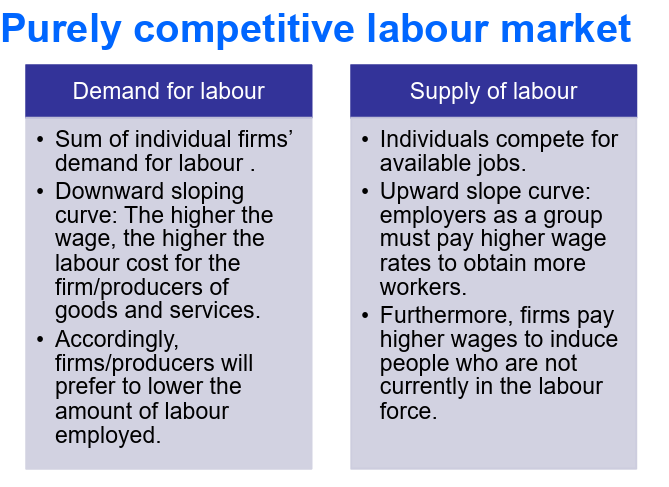
In a purely competitive labour market
What is demand for labour and what is supply for labour
What are the slopes respectively and why
What are the results of these decisions
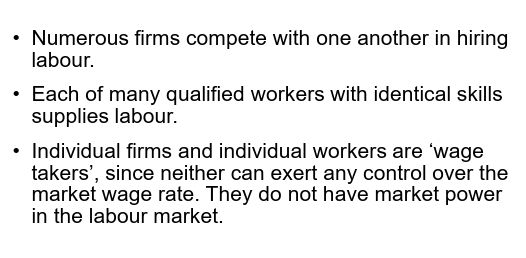
What are the 3 Assumptions in a purely competitive labour market
Compete
Qualified worker
Market power and ‘Wage takers’
Supply side (government) policies that may change unemployment outcomes?
What are the factors that may change POPULATION DYNAMICS
Age
Migration
Leading to increase in ____
Lower population growth can lead to an ageing population, affecting working-age population.
Migration can also shifts labour supply up or down.
Ultimately increased labour supply = more competition for jobs,but is labour skilled or unskilled?
Supply side (government) policies that may change unemployment outcomes?
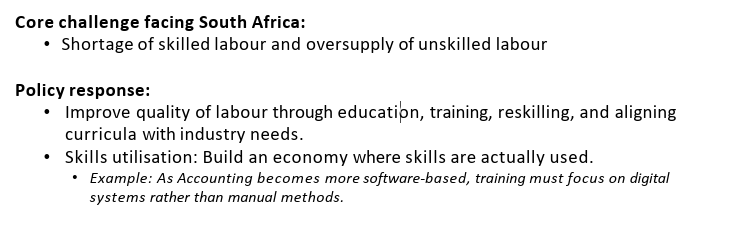
What is the core challenge SA is facing
What two policy responses have they made
Improve quality of labour through(4)…
Skills
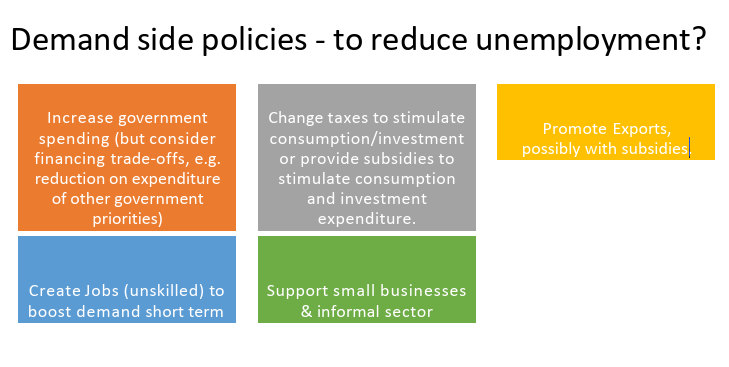
What are 5 demand side policies to reduce unemployment and what is the main goal.
Increase ___ Spending
Change taxes to stimulate
Promote
Create
Support
Ultimately, we want to stimulate demand (more spending= more production)
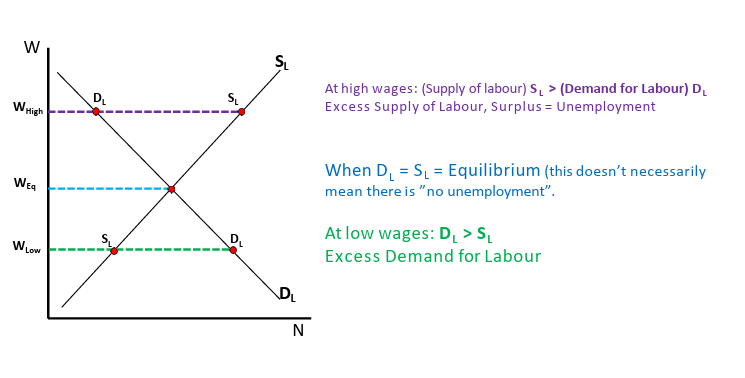
Who’s perspective are we look through when looking at this diagram
This is a LABOUR market diagram (not goods market where Housholds are demanders and firms are sellers)
The Demand for Labour (DL) comes from FIRMS (Employers). They are the ones "buying" or hiring work.
The Supply of Labour (SL) comes from WORKERS (Households). You are the one "selling" or supplying your time, skills, and effort.
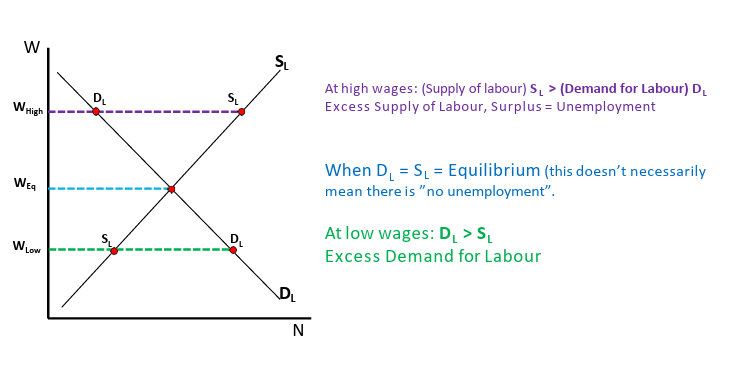
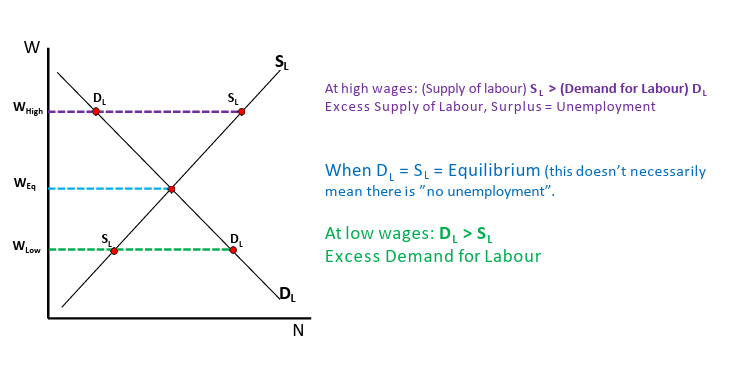
Explain the high wage and low wage
At a high wage, hiring is incredibly expensive. Businesses cannot afford to hire many workers at such high rates, so their Demand for Labour (DL) is very low.
The result: You have a massive queue of workers wanting jobs (SL), but very few businesses willing to hire them (DL).
Because SL>DL, we have an excess supply of workers. In the real world, a surplus of workers who want to work but can't find jobs is what we call unemployment.
At a very low wage (WLow), workers refuse to work. If a job pays almost nothing, many people will decide it isn't worth their time, effort, or travel costs. They would rather stay in school, look for work elsewhere, or stay home. Therefore, the Supply of Labour (SL) is very low.
For businesses, however, labor is a bargain. At low wages, employers want to expand and hire as many cheap workers as they can to boost their profits. Therefore, the Demand for Labour (DL) is extremely high.
The result: Businesses are desperate to hire (DL is high), but nobody wants to take the jobs (SL is low). This creates excess demand for labour (a worker shortage)
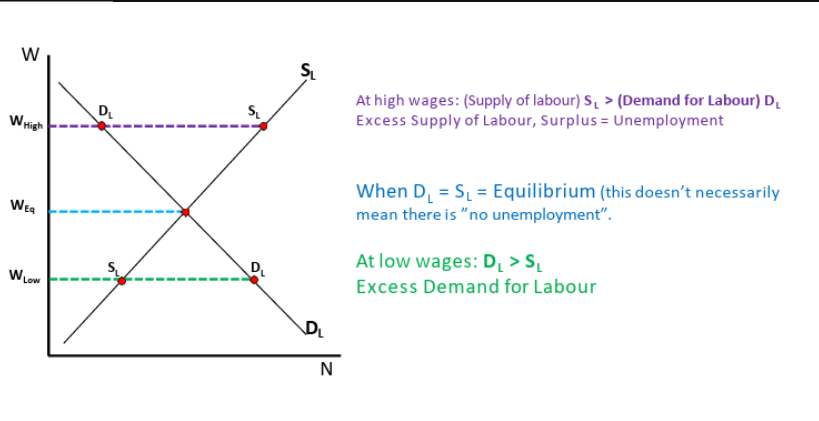
What does Equilibrium (WEq) mean if it doesn't mean "No Unemployment"?
At the equilibrium wage (WEq), the number of jobs offered by firms perfectly matches the number of workers willing to work at that wage (DL=SL).
Therefore, equilibrium simply means the market has found its stable price point—it does not mean that every single person in the country has a job.
Do min. wages (set above equilibirum) cause higher unemployment
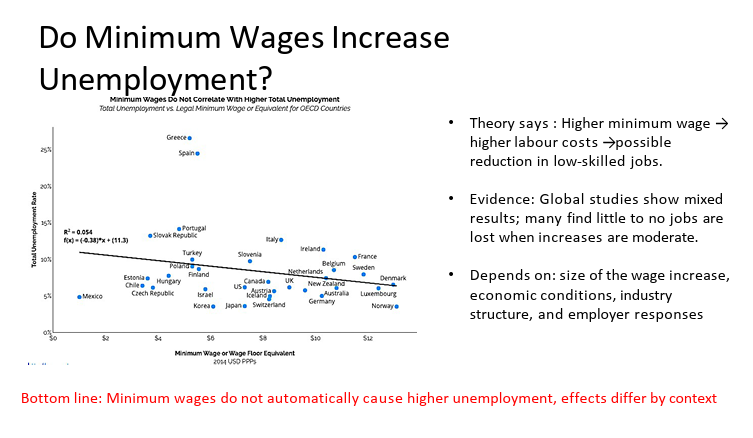
What two things do wages depend on
What two factors influence bargaining power
Labour market conditions can be UNEMPLOYMENT RATE
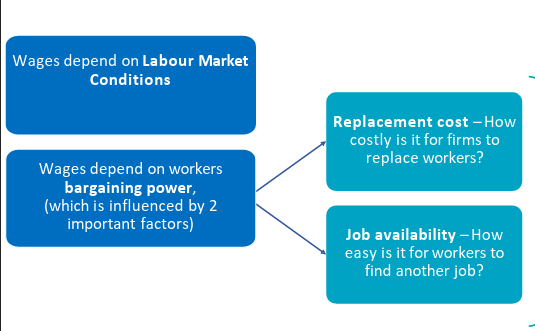
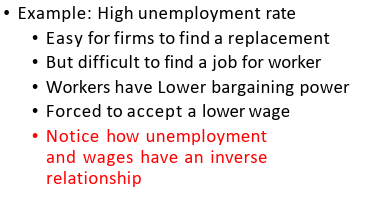
With high unemployment rate what does this do in terms of bargaining power
What type of relationship is est. between wages and unemployment
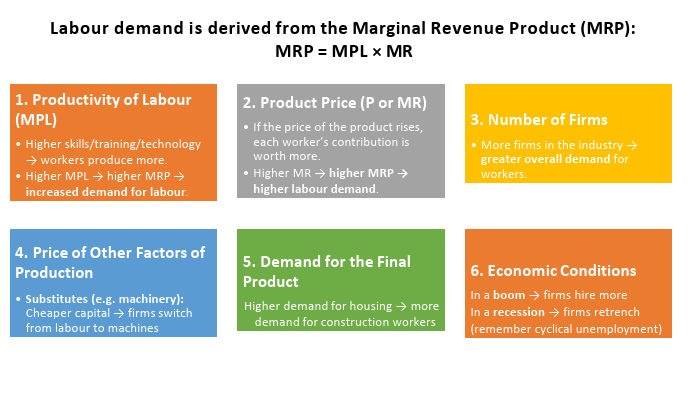
Why is labour demand derived from Marginal Revenue product
What are the 6 determinants for Firms demand for labour
Productivity
Price
Number
F.O.P
Final product
Conditons
profit-maximizing firms hire workers based on the financial value each new employee adds. A business will keep adding staff as long as the extra money made from selling the worker's output is greater than or equal to the wage paid
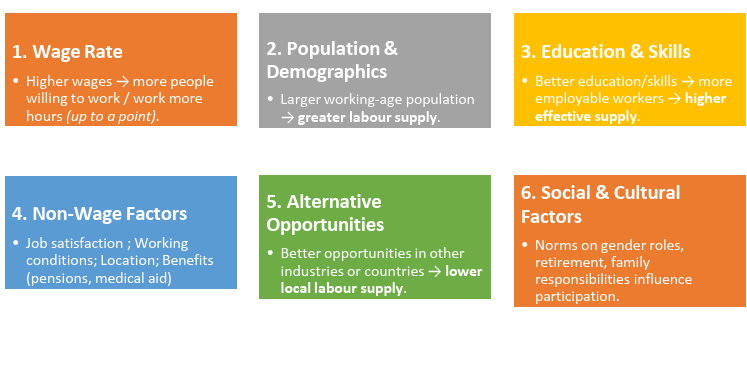
What are the 6 Supply of labour determinants( civilians)
Wage
Population
Education
Non-wage
Alternative
S & C factors
Define Labour unions
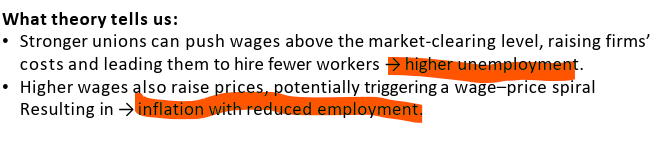
What does theory behind labour unions tell us
Stronger unions can push wages above the market-clearing level…
Higher wages also raise prices, potentially triggering a…
Definition: An organization consisting predominantly of employees.Its main activities include the negotiation of rates of pay and conditions of employment for its members.
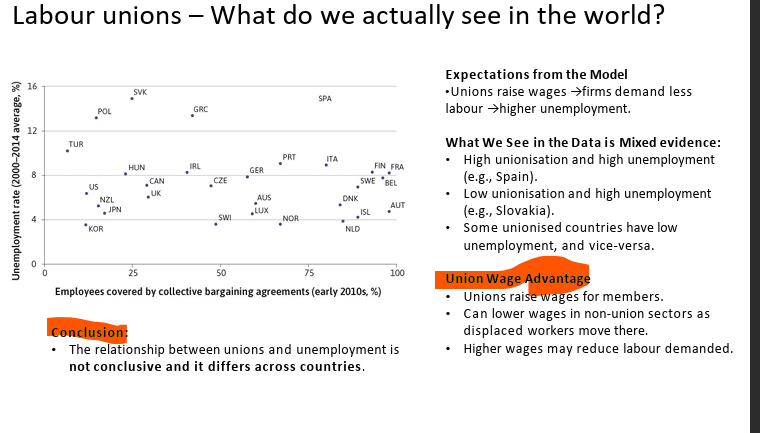
In conclusion what’s the relationship between unions and unemployment
What are the 2 Union wage advantages and the last one is a trade-off from unions successfully negotiating higher wages
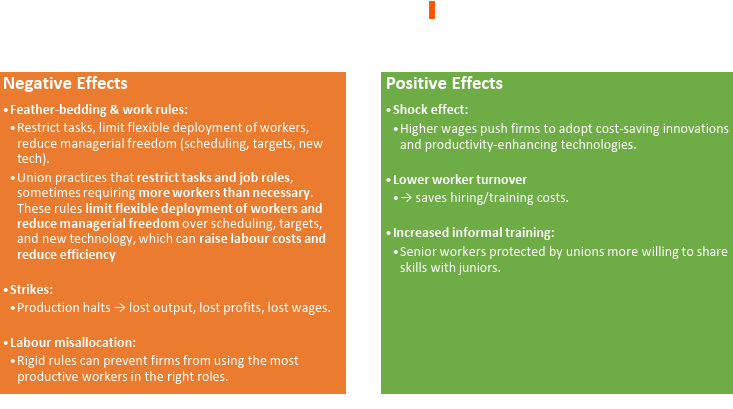
What are the 3 negative effects and the 3 positive effects of Unions
Feather-bedding, Halts, Misallocation
Shock, Turnover, Training