Human A&P - Exam 4
 Call Kai
 Learn
Learn Practice Test
 Spaced Repetition
 Match
Match Flashcards
 Knowt Play
1/121

There's no tags or description
Looks like no tags are added yet.
Name | Mastery | Learn | Test | Matching | Spaced | Call with Kai |
|---|
No analytics yet
Send a link to your students to track their progress
122 Terms
how many chambers does the heart have
4
how many valves does the heart have
4
middle cavity of thoracic cavity
mediastinum, central core (besides lungs)
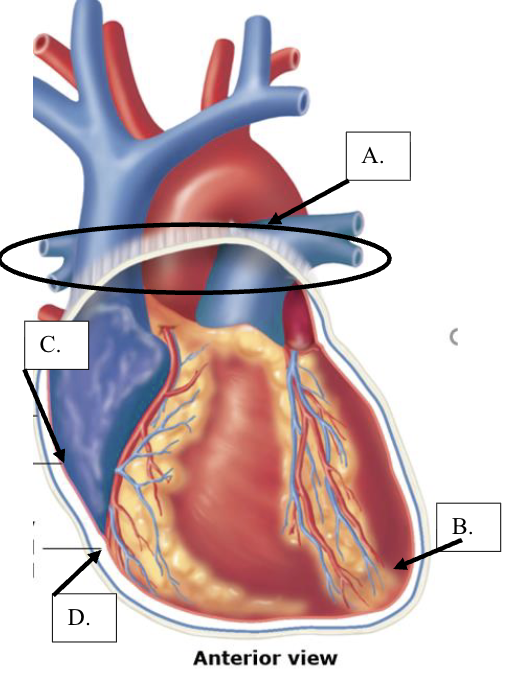
name A
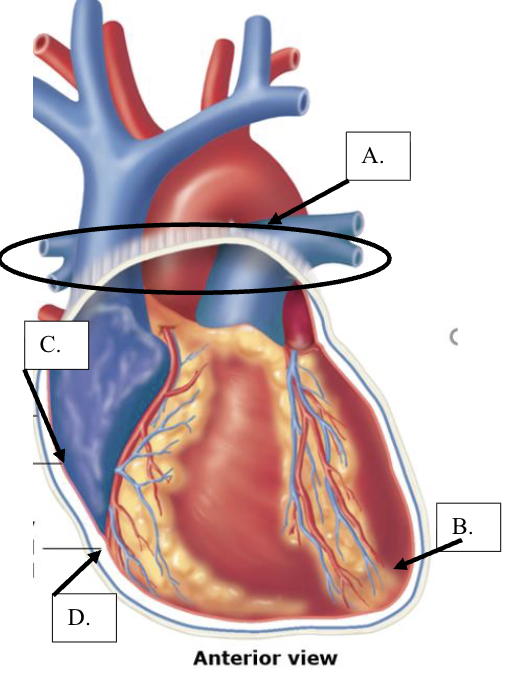
name B
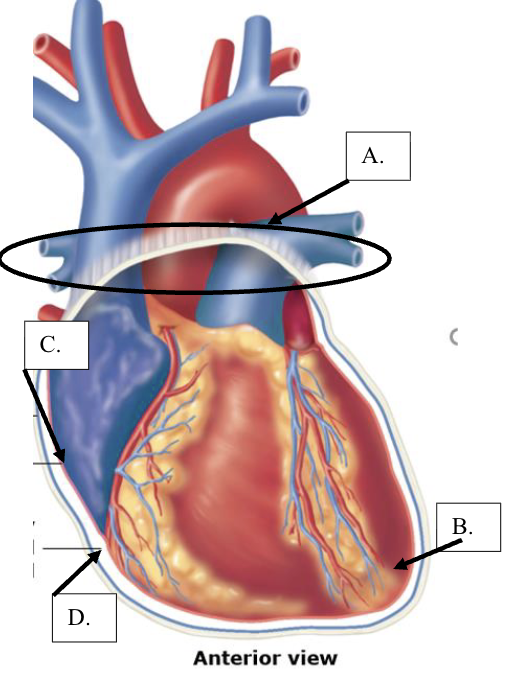
name C
visceral pericardium
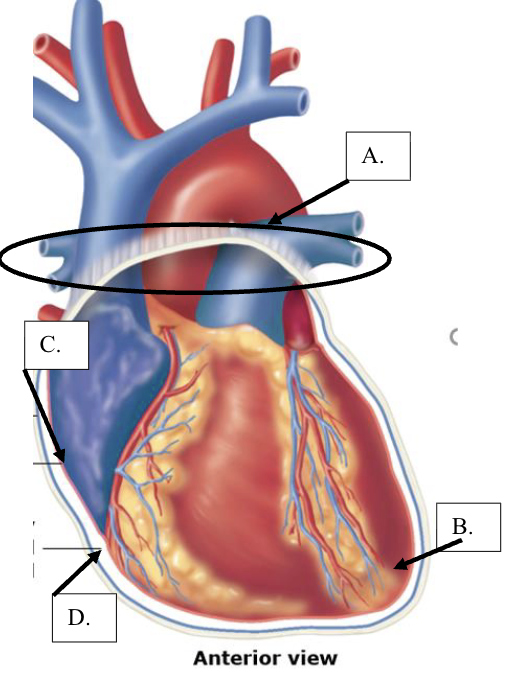
name D
pericardial cavity filled with pericardial fluid
which circuit carries blood to respiring bodily tissues from the heart through the body
systemic circuit, carries oxygenated blood from left to heart; returns deoxygenated blood from tissues to right side.
pathway; left ventricle, aorta, body tissues, venae cavae, right atrium
layers of the pericardium
outer to inner; fibrous pericardium, parietal layer of serous, pericardial cavity, visceral layer of serous
pericardial cavity/serous fluid in the cavity
pericardial activity; space between the parietal and visceral layers of the serous pericardium, contains serous fluid - reduces friction as the heart beats
layers of the heart wall
superficial to deep; epicardium (outer), myocardium (cardiac muscle; thick middle), endocardium (inner lining of heart chambers)
visceral pericardium and epicardium
are the same thing
which side of the heart pumps deoxygenated blood
right
which side of the heart pumps oxygenated blood
left
serous fluid in the pericardial sac (pericardium) within the pericardial cavity
example of an interstitial fluid
parietal and visceral pericardial membranes
continuous with each other and make up one membrane with two contact surfaces in relation to the heart
functions of the heart
generates blood pressure to move blood through vessels, pumps blood through pulmonary circuit to lungs/systemic circuit to body, maintains blood flow to deliver oxygen, nutrients, hormones and removes wastes
inflammation of the serous and fibrous membranes surrounding the heart
pericarditis
what system is the cardiovascular circulatory system
closed circulatory system; blood remains within blood vessels/heart, circulates through arteries, capillaries, and veins
what system is the lymphatic circulatory system
open circulatory system; not confined to a complete loop of vessels, interstitial fluid enters lymphatic capillaries and returns to the bloodstream
AV-bundle
bundle of his; passes through hole in cardiac skeleton to reach inter-ventricular septum
AV-node
atrioventricular node; medial to the right atrioventricular valve, action potentials conduct more slowly here than in any other part of the system, ensures ventricles receive signal to contract after atria have.
left/right bundle branches
extend beneath endocardium to apices of right and left ventricles, carry impulses down the interventricular septum toward the apex of the heart
SA-node
sinoatrial node; medial to opening of superior vena cava (pacemaker), specialized cardiac muscle cells, generate spontaneous action potentials, pass to atrial muscle cells to the AV node
initiates each heartbeat
purkinje fibers
large diameter cardiac muscle with few myofibrils, many gap junctions, conduct action potential to ventricular muscle cells
distribute impulses throughout the walls, causing ventricular contraction
p-wave
depolarization of atrial myocardium and signals onset of atrial contraction
atrial depolarization
QRS complex
ventricular depolarization and signals onset of ventricular contraction, repolarization of atria simultaneously
ventricular depolarization
t-wave
repolarization of ventricles precedes ventricular relaxation
ventricular repolarization
r-wave
largest upward deflection of the QRS complex; represents the main phase of ventricular depolarization
what small, ear-like flaps of the heart fill with blood when the atria are topped off
auricles (atrial appendages)
functions of peripheral circulation
delivers oxygen and nutrients to tissues, removes CO2 and wastes, transports hormones, helps regular body temperature
what the systemic blood vessel do
carry blood btwn the heart and body tissues, deliver oxygen and nutrients to cells, return blood from tissues back to the heart
examples of elastic arteries
aorta, pulmonary trunk, common carotid arteries
stretch and recoil to help maintain blood flow
examples of muscular arteries
radial artery, brachial artery, femoral artery, coronary artery
distribute blood to specific organs and tissues
examples of distributing arteries
brachial artery, radial artery, femoral artery
essentially for muscular arteries
examples of venules
collect blood from capillary beds, drain into veins
examples of vein types
small, medium, large veins
return blood to heart
blood vessels
elastic/muscular arteries, distributing arteries, venules, veins
which arteries are able to dilate and constrict
muscular arteries and arterioles
contain smooth muscle, can undergo vasodilation (widening), vasoconstriction (narrowing), help regulate blood pressure and blood flow
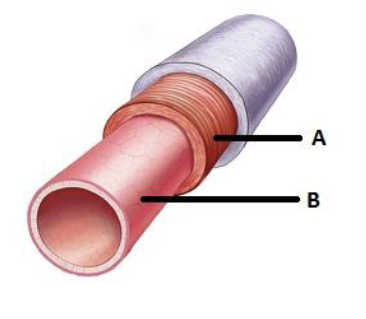
location and names of A
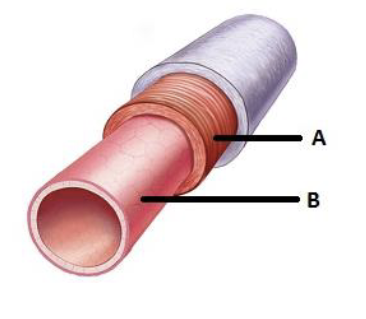
location and names of B
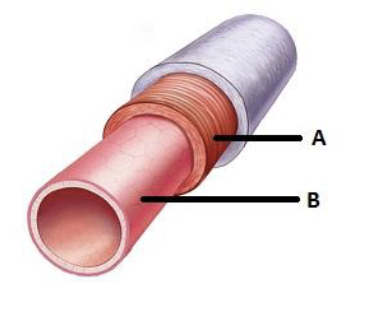
what layer of blood vessel is B composed of
functions of arteries
carry blood away from the heart, carry oxygenated blood
functions of arterioles
very small arteries leading into capillaries
transport blood from small arteries to capillaries, smallest of the arteries where the three tunics can still be differentiated, capable of vasoconstriction and dilation
functions of veins
carry blood toward the heart, carry deoxygenated blood back to the heart
functions of venules
smallest of veins - drain capillary networks
endothelial cells and basement membrane with few smooth muscle cells, as diameter increases, amount of smooth muscles increases
which blood vessels have no smooth muscle in their walls
capillaries, walls consists of one layer of endothelial cells and a basement membrane
pericapillary cells, what, where, examples
cells that surround capillaries and small venules, wrapped around the outside of capillaries
regulate blood flow, stabilize capillary walls, aid in tissue repair
EX : pericytes, smooth muscle cells around small vessels
continuous
no gaps between endothelial cells, no fenestrations, less permeable to large molecules than other capillary types
muscle, nervous tissue, especially in brain, blood, barrier
fenestrated
have pores, endothelial cells have numerous fenestrae (areas where cytoplasm is absent and plasma membrane is made of thin, porous diaphragm, highly permeable
intestinal villi, ciliary process of eye, choroid plexus in ventricles of brain, glomeruli of kidneys
sinusoidal
large diameter with large fenestra, less basement membrane
endocrine glads (large molecules cross their walls)
sinusoids
large diameter sinusoidal capillaries, sparse basement membrane
liver, bone marrow
venous sinuses
are similar in structure but even larger
spleen
large, insoluble lipids are absorbed by ___________________ and delivered to the circulatory system via the __________________ system
lacteals, lymphatic
lymph
interstitial fluid that entered lymphatic capillaries
clear fluid; water, proteins, white blood cells, fat absorbed from digestive tract
percentage/examples of intracellular fluids
about 2/3, 67% of total body water, fluid inside cells
interstitial fluid around body cells, serous fluid, lymph
percentage/examples of extracellular fluids
about 1/3, 33% of total body water, fluid outside cells
blood plasma, interstitial fluid, lymph, synovial fluid
defense
houses lymphocytes, filters pathogens, initiates immune response
fat absorption
absorbs dietary fats though lacteals in the small intestine, transports fats to the bloodstream
fluid balance
returns excess interstitial fluid and leaked proteins to the bloodstream, helps prevent edema (swelling)
formation of lymph
interstitial fluid enters lymphatic capillaries, once inside referred to as lymph
lymph
interstitial fluid that has entered lymphatic capillaries
returns excess tissue fluid to the bloodstream and transports immune cells and fats
lymphatic vessel
thin-walled vessels that transport lymph towards the heart, contain one-way valves to prevent backflow
lymphatic tissue
connective tissue rich in lymphocytes and other immune cells
immune defense
EX : lymph nodes, tonsils, spleen
lymphatic nodules
non-encapsulated found inside and outside of lymph nodes
EX : appendix, tonsils
lymph nodes
encapsulated
located throughout the body; superficial and deep about 600-800, bean shaped clustered in groups
tonsils
lymphatic tissue located around the pharynx, help trap pathogens entering through the mouth and nose
spleen
encapsulated, largest single mass of tissue, with dense connective tissue
thymus
lacteals, T cell maturation
most active during childbirth
lymphatic ducts
large vessels that return lymph to the blood stream
right lymphatic duct - drains right upper body
thoracic duct - drains the rest of the body
both empty into the subclavian veins
lacterals
specialized lymphatic capillaries in the villi of the small intestine, absorb dietary fats and fat-soluble vitamins
enzymes
cells/tissue
hormones
endocrine glands
ions
blood plasma
water
blood plasma (filtered from capillaries into tissues)
red pulp
contains; red blood cells, macrophages
removes old or damaged RBC, filters blood, stores platelets
while pulp
contains; lymphocytes (B cells and T cells)
immune response, produces antibodies and fights infection
lymphatic vessel valves
one-way valves
prevent backflow of lymph, ensure lymph flows towards the heart
lymphatic drainage areas
thoracic duct, drains 75% of the body’s lymph
left side of head/neck, left upper limb, left thorax, entire lower body
lymph nodes (alt name)
junctional filters
filter lymph, removes pathogens/debris, house lymphocytes/macrophages
peyer’s patches
aggregates of lymphatic nodules, located in the ileum (last part of small intestine), composed of lymphocytes
monitor intestinal bacteria, protect against pathogens entering through the digestive tract
chyle
milky white lymph, rich in absorbed fats (triglycerides), found in lacteals after digestion
other lymph
clear or pale yellow, contains less fat
properties of lymph
derived from interstitial fluid, clear to pale yellow
contains; water, proteins, electrolytes, lymphocytes, hormones, enzymes, fats
direction of lymph flow
peripheral tissues through lymph nodes, into lymphatic ducts into large veins in the thorax (subclavian veins)
lymphatic fluid collected from the upper right side of the head would enter the venous circulation through the __________
right lymphatic duct into the right subclavian vein
primary functions of the tonsils
trap bacteria and viruses entering the mouth of nose, produce lymphocytes, initiate immune response
primary functions of the spleen
filters blood, removed old RBC, stores platelets/blood, houses lymphocytes, initiates immune response
functions of the respiratory system
gas exchange (oxygen and CO2), supplies oxygen to blood, removes CO2, produces voice, assists in pH balance, filters, warms, and humidifies inhaled air, enables the sense of smell
respiration ensures that ________________ enters the body and that _________________ exits the body
oxygen, carbon dioxide
the ____________________ is the vocalization structure of the respiratory system
larynx (voice box)
the ____________________ is a common passageway for the respiratory and digestive systems
pharynx
the larynx is the air passageway between the _____________________ and the ___________________
pharynx and trachea
the ____________________ is a membranous tube reinforced by C-shaped cartilage; it is attached to the larynx and extends into the mediastinum
trachea
the __________________ are branched from the trachea that insert into the lungs
primary (main) bronchi
how many lobes the lung has
right lung; 3 lobes (superior, middle, inferior)
left lung; 2 lobes (superior, inferior)
which lung has the cardiac notch
left lung, it has 2 lobes for space occupied by the heart
respiratory membrane
thin barrier where oxygen and carbon dioxide diffuse between the alveoli and the blood
4 layers (alveolar epithelium), fused basement membranes, capillary basement membrane, capillary endothelium
allows rapid diffusion of oxygen into the blood and CO2 into the alveoli
eupnea
normal, quiet breathing
orthopnea
difficulty breathing while lying flat, improved by siting or standing upright