The Digestive System
 Call Kai
 Learn
Learn Practice Test
 Spaced Repetition
 Match
Match Flashcards
 Knowt Play
1/36

There's no tags or description
Looks like no tags are added yet.
Name | Mastery | Learn | Test | Matching | Spaced | Call with Kai | Chat |
|---|
No analytics yet
Send a link to your students to track their progress
37 Terms
Do a basic organ trace of food from the environment to the toilet.
Oral cavity
oropharynx
laryngopharynx
esophagus
stomach
fundus
body of stomach
pyloric part
pyloric sphincter
small intestine
large intestine
rectum/anal canal

Tunica mucosa
simple columnar epithelium
lamina propria— vascular loose connective tissue
muscularis mucosae— thin, smooth muscle and connective tissue
submucosal layer— vascular, loose connective tissue with elastin

muscular layer
circular layer
longitudinal layer
Both have smooth muscle and connective tissue
having two layers of muscle helps move the chyme through the digestive system

Tunica serosa
Mesothelium: thin, squamous epithelial layer
Secretes slippery fluid to help slide and protect

Sphincters
a thickening of muscle, so much that it can pinch the tube off to stop flow
Peristalsis
Means to move things through a tube
describes the coordinated muscle contractions in the muscular layer— muscle fibers running in both directions
Why does the tunica mucosa have those little fingers?
Those fingers exist to increase surface area. Usually, tubes branch to increase surface area, but this one can’t do that.
Function of the digestive tube?
transport
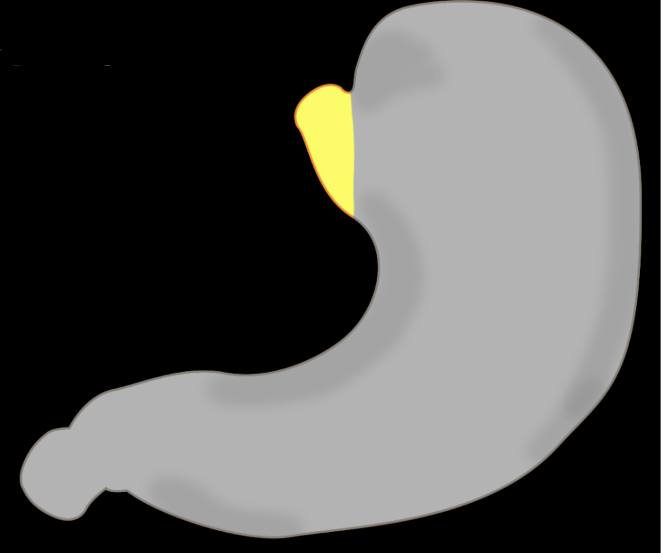
cardia

fundus

body of stomach

pylorus
bottom part of stomach
greater curvature
top part of stomach
lesser curvature

gastric rugae/folds
What kind of muscle fibers are in the stomach wall?
circular
longitudinal
oblique— fibers running in irregular directions
Function of the stomach?
storage

pyloric sphincter
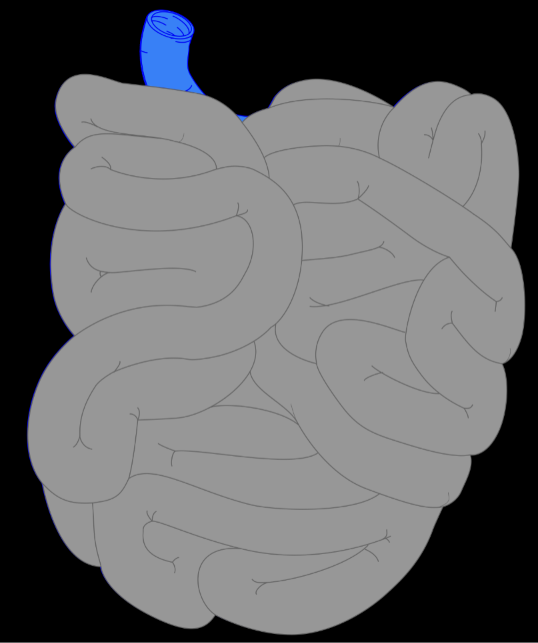
Duodenum

Jejunum
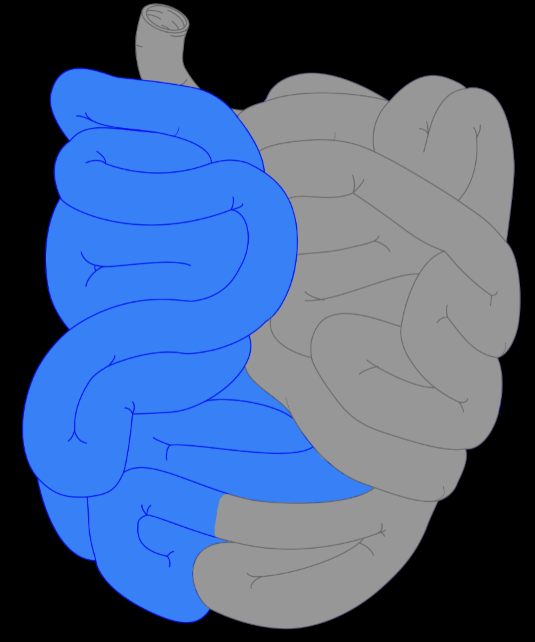
Ilium

liver

What is this and what does it do?
gallbladder; bile storage

What is this and what does it do?
Extrahepatic bile ducts; transport bile

What is this and what does it do?
Pancreas
exocrine: secretes digestive enzymes
endocrine: regulates blood sugar
Order of the small intestines:
Duodenum
Jejunum
Ileum
Why is the pancreas so important for the digestive system?
It is responsible for almost all of the metabolic regulation and digestive enzymes
Tube design of the mucosa of the small intestine
epithelium
lamina propria
muscularis mucosae
submucosa
muscular layer of small intestine:
circular layer
longitudinal layer
**one of the only places we’ve learned where circular is more inside
So far, where do had a serosa rather than adventitia?
Digestive system (not esophagus) & heart wall
**mesothelium
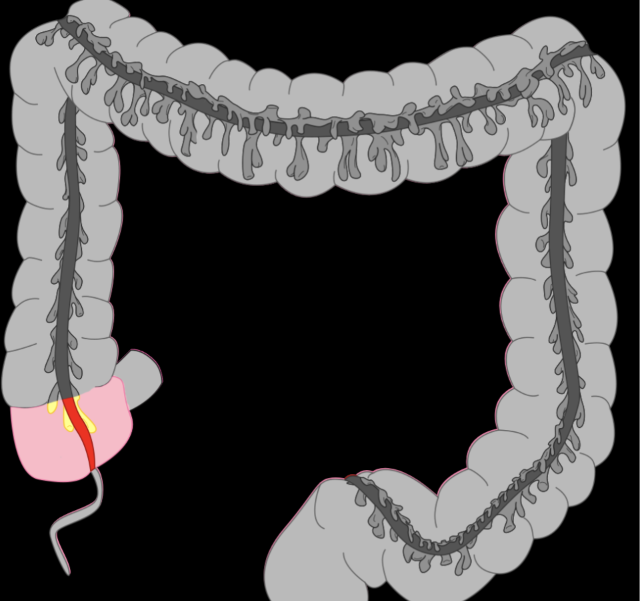
caecum

vermiform appendix
what is the order of the large intestine?
caecum
ascending colon
transverse colon
descending colon
sigmoid colon
rectum
How does the large intestine increase surface area, and why?
The large intestine has semilunar folds that absorb water and thicken the consistency of the fecal matter.
What changes happen to the tubular design of the large intestine?
Mucosa remains the same
Muscular layer:
the circular layer remains the same
the longitudinal layer bunches together to create taeniae coli, which are bands of muscle fibers that are in the middle of the large intestine
the contractions of the colon create haustra (the bumps)
Serosa gains fatty appendages
function of the large intestine?
storage and water absorption
function of the small intestine?
nutrient absorption and digestion