Being Aware of Your Surroundings
 Call Kai
 Learn
Learn Practice Test
 Spaced Repetition
 Match
Match Flashcards
 Knowt Play
1/8

There's no tags or description
Looks like no tags are added yet.
Name | Mastery | Learn | Test | Matching | Spaced | Call with Kai | Chat |
|---|
No analytics yet
Send a link to your students to track their progress
9 Terms
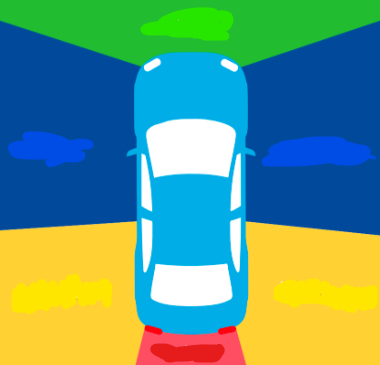
Which color is your blindspot(s)?
Yellow
How far behind should you follow a vehicle?
It’s safest to drive 3 seconds behind the car you’re following.
What should you do if a tailgater is behind you?
Maintain your course and speed until you can merge into the lane to your right.
What should you do when following in “abnormal” situations?
Maintain more distance in front of you when following motorcyclists on bridge grates, railroad tracks, metal plates, gravel, etc.
What are the rules for knowing what’s at your sides?
Don’t stay in a driver’s blind spot or drive directly alongside another vehicle. Make space for vehicles entering freeways (even if you have the right of way). Keep space between your vehicle and parked ones.
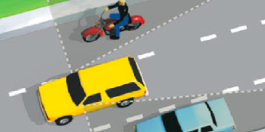
What are blind spots?
Blind spots are areas around a vehicle that a driver can’t see when looking straight ahead or using their mirrors. For most vehicles, the blind spots are at both sides, slightly behind the driver.
How do you check your blind spots?
Look over your right and left shoulders through your side windows. Turn your head only.
You need to check your blind spots before…
Changing lanes, turning @ an intersection, merging w/traffic, backing up, exiting a parking space, parallel parking, pulling out from the curb, or opening your car door.
Check behind you when…
Changing lanes, checking your blind spots, reducing your speed, turning into a side road/driveway, stopping to pull into a parking space, pulling up to/away from a curb, or backing up. Check traffic behind you often (by using your rearview mirror, side mirrors, and turning your head).