Econ externalities
 Studied by 0 people
 Call Kai
 Learn
Learn Practice Test
 Spaced Repetition
 Match
Match Flashcards
 Knowt Play
1/24

There's no tags or description
Looks like no tags are added yet.
Name | Mastery | Learn | Test | Matching | Spaced | Call with Kai |
|---|
No analytics yet
Send a link to your students to track their progress
25 Terms
Market failure
When goods are underproduced or overproduced, so resources are mis-allocated andthe market is not allocatively efficient
Externality
An externality exists anytime the productionor consumption of a good creates spillover benefits or spillover costs on a third-party not involved in the market.
Negative externality
demerit goods, over-allocated
positive externality
under-allocated
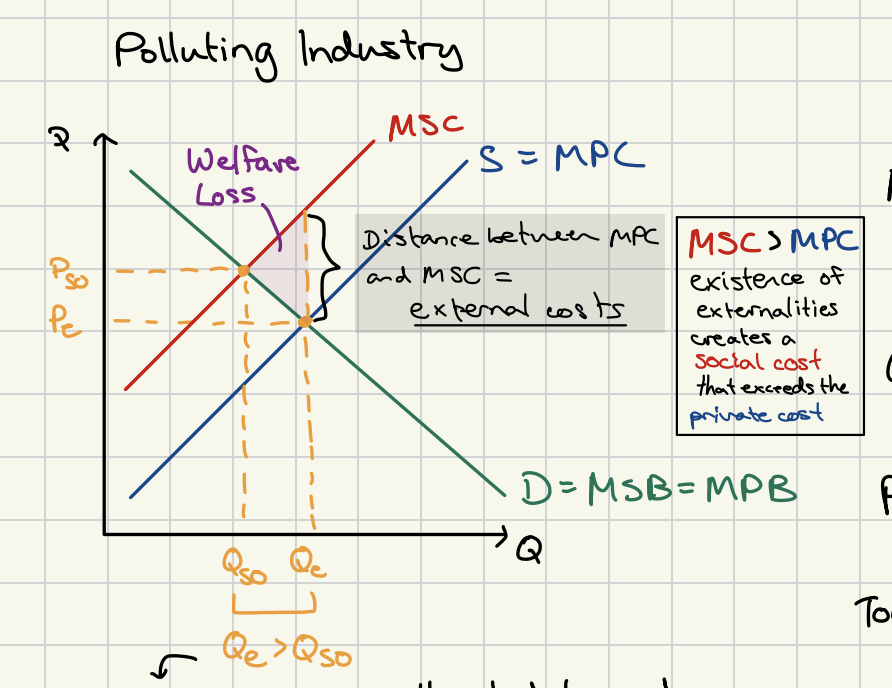
Negative externality production diagram, eg.
polluting firm,
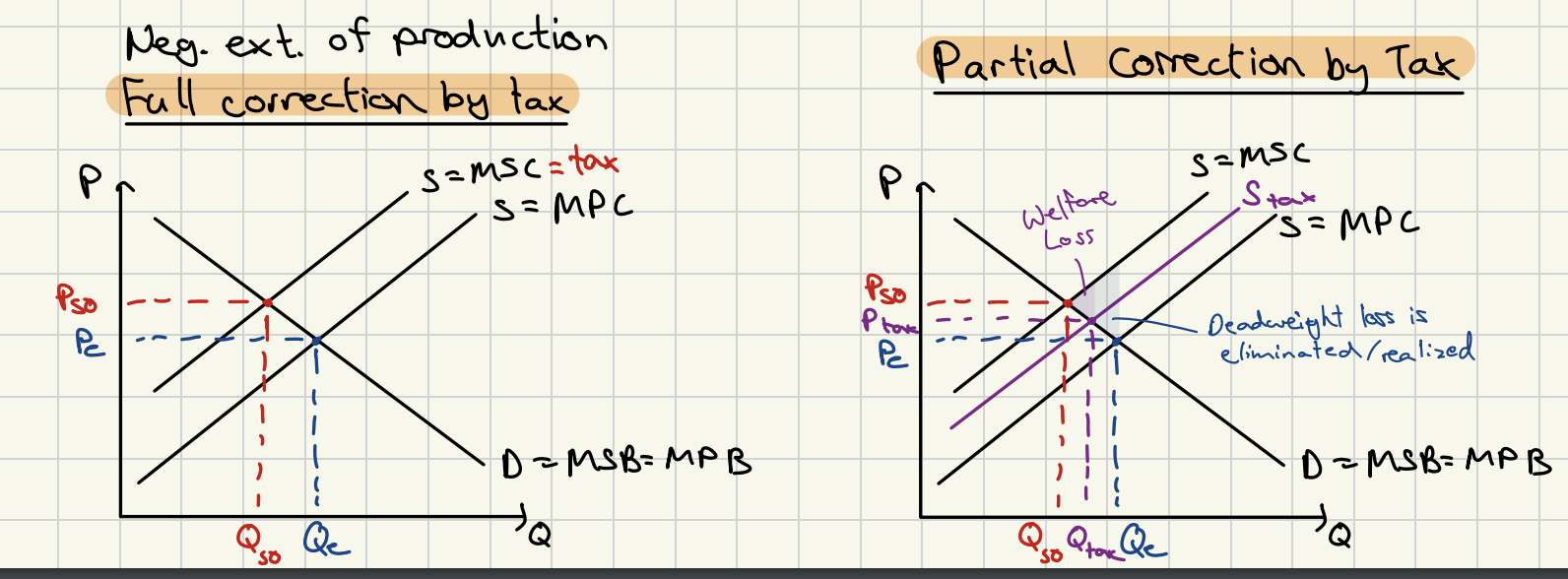
negative externality production diagram - partial and full correction by tax, adv/dis
ADV
Encourages firms to deal with problem in the most efficient way. Causing investment there. |
Irresponsible firms are penalised – but doesn’t affect clean firms. Encourages innovation |
Government revenue is generated |
promotes long term sustainability |
DIS
Policing Costs
Reduces competitiveness – if other countries don’t have tax
Difficult to measure externality – so difficult to set correct tax
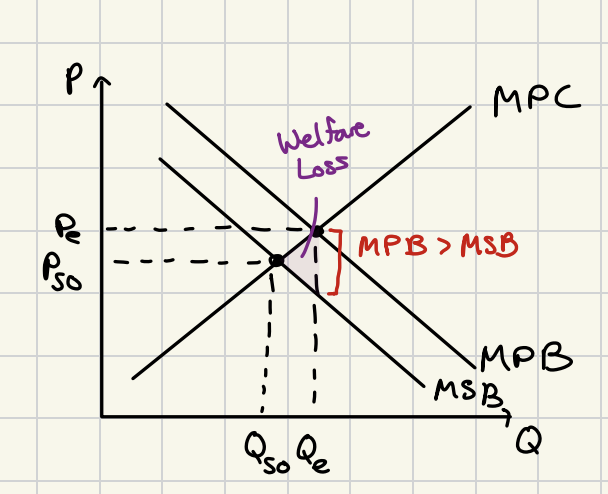
Negative externality consumption diagram, eg
alcohol, cigarettes
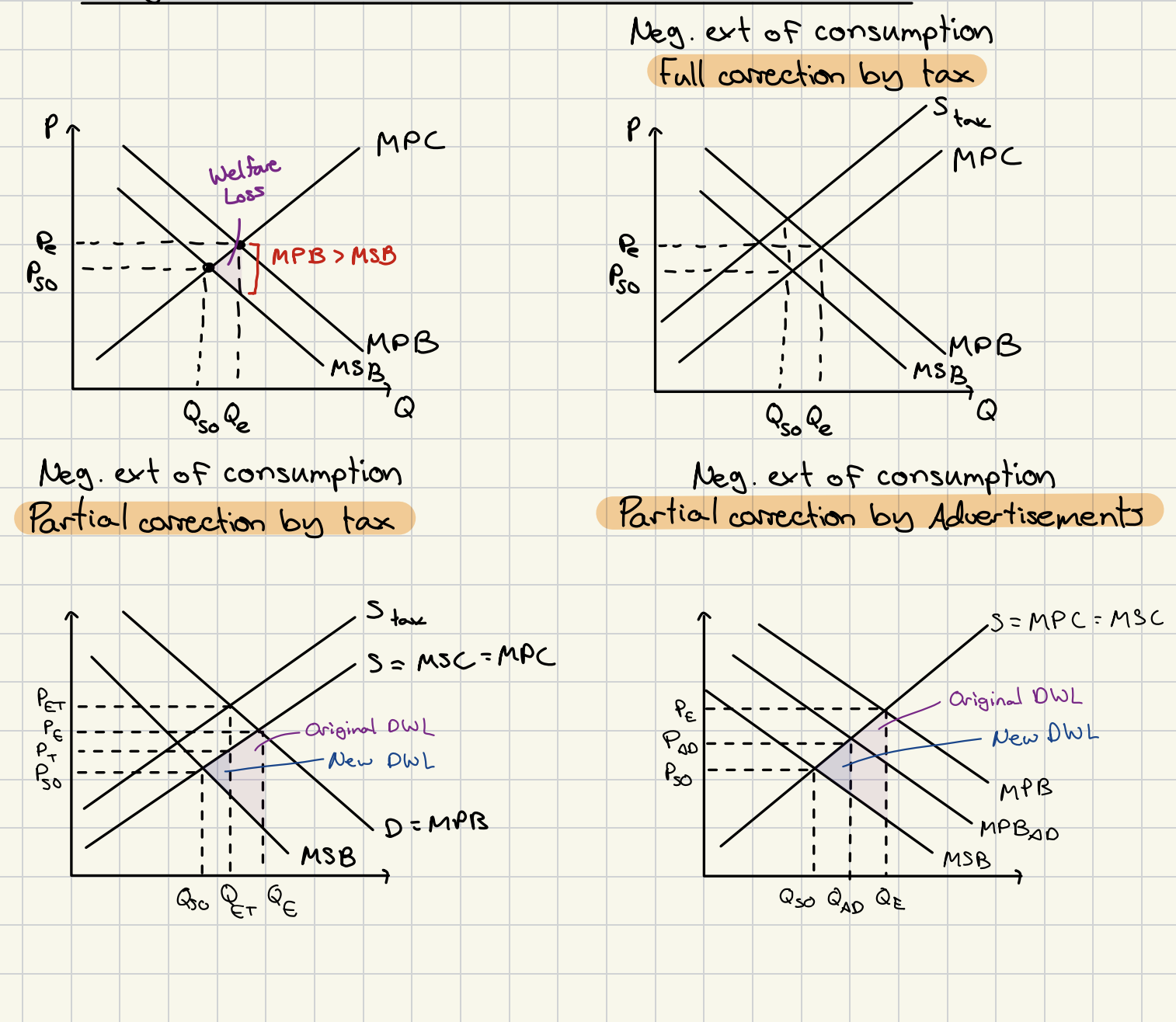
Negative externality consumption
diagram partial and full correction by tax, partial correction by advertisements
adv, dis
Maintains free choice |
Equitable – doesn’t penalise poor like a regressive tax |
May create lasting change |
Generate political support |
Costs money |
Will be ignored by some – so never fully successful |
corrective tax
Per-unit tax on a good meant to reduce supply , increase price, and reduce QD to a more socially optimal level. Meant to correct a failing market and help market achieve a higher level of efficiency 4> Unlike a tax on a good produced efficiently by the free market
carbon tax
Aims to shift consumption - away from carbon-intensive fuel sources
Regulation and legislation
form of partial correction Passing laws or making rules that require certain behaviors of producers and consumers -> to try and produce more socially optimal outcomes
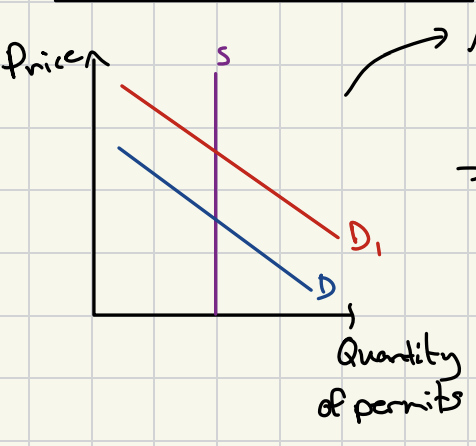
Tradeable permits
only for negative externalities of production
As demand for pollution permits rises, higher prices reward and incentivize 'greenerfirms - > Supply is constant - governments can control the number of Di permits issued to limit pollution
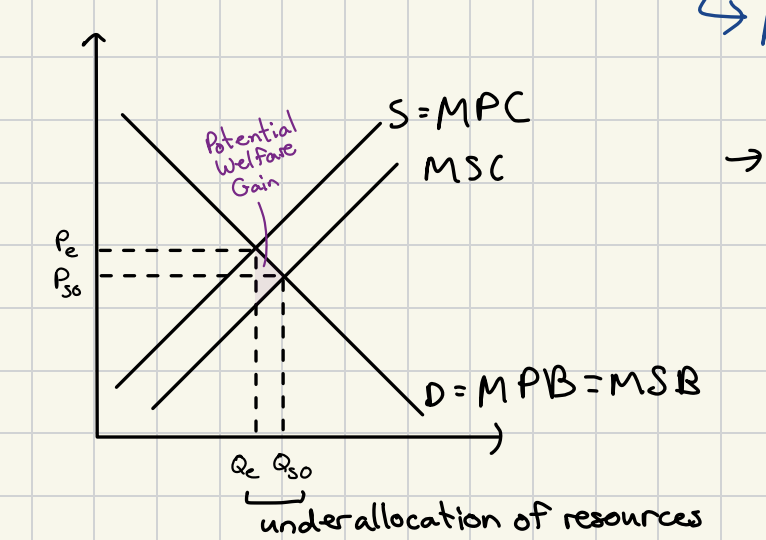
POsitive externality production - diagram and eg
beekeeping, eco-tourism
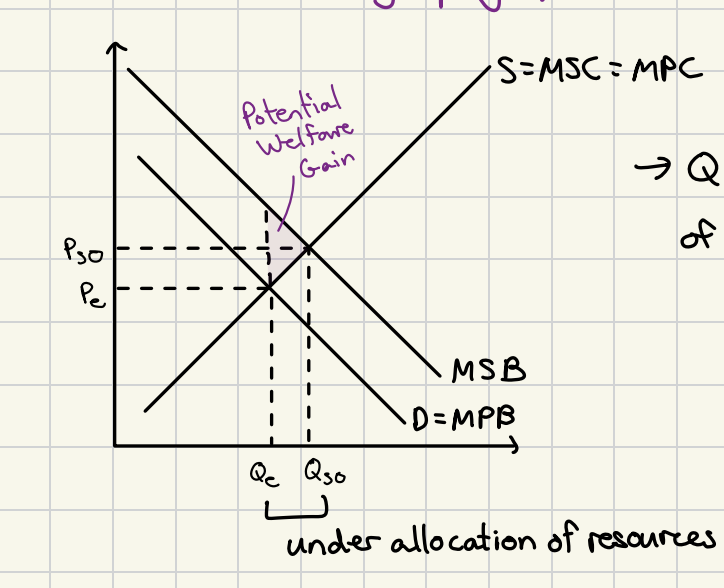
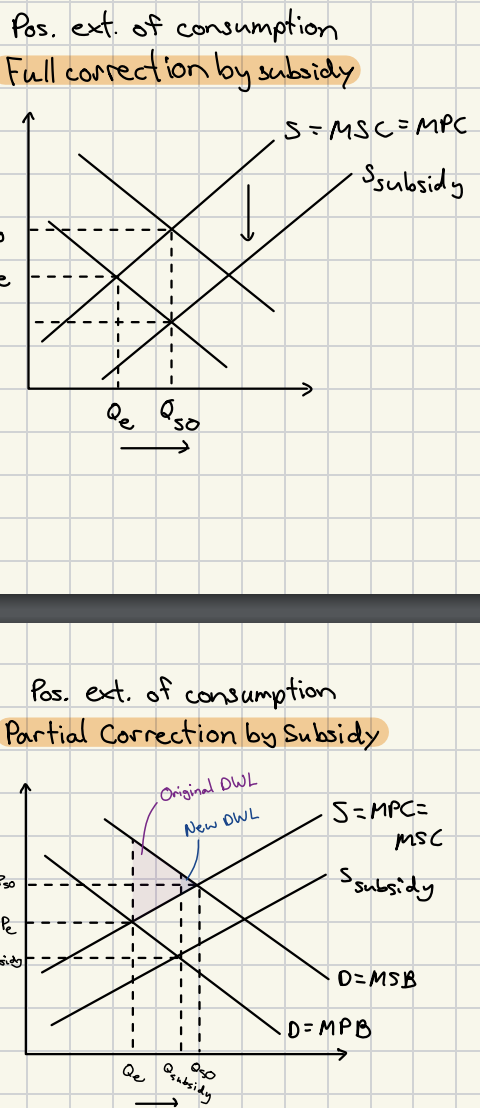
Positive externality consumption diagram and eg
vaccines, education
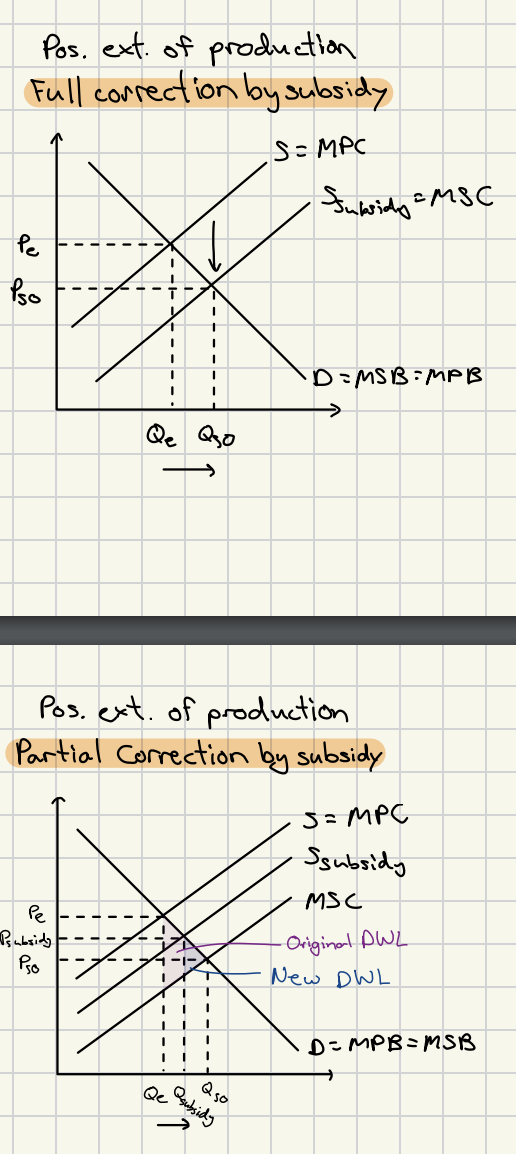
corrective subsidy
a payment from the gov't to producers , lowering the marginal private costs of production, increasing the supply , reducing the price, and increasing the QD
corrective subsidies for consumers
a subsidy to consumers of a good will increase the marginal private benefit on consumption (since individuals get paidto buy a good), increasing thedemand for a ter good. Higher price incentivizes firms to supply grea Exam Question : quantity, causing a more efficient allocation of - > Subsidy Q's resources towards the good .
Government provision
Many merit goods are provided directly by the gov't ↳ Ex. education, healthcare, infrastructure, police security
Positive advertising
Gov't programs that educate consumers about the positive private andsocial benefits ofa good to increase demand, incentivizing firms to produce more
Public good
A good which provides benefits to society which are non-rivalrous, and the benefits of which are non-excludable by the provider of the good
non -excludable
once the good is provided, you can't prevent people from consuming the good
non-rivalrous
one consumer's enjoyment of the benefits of the good does not diminish others enjoyment of its benefits
Common pool access goods/public goods
natural resources over which there is no private ownership, and therefore no effective means of regulating the use of the resource
Rivalrous and provided by government bcs of free riders
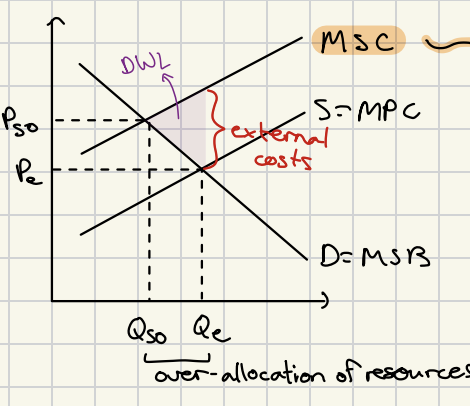
Tragedy of the commons
Lack of ownership over the resources creates an incentive for potential users to exploit them to the fullest extent possible
People try to exploit the resource as much as possible before other users extract and exploit this resource
Ultimately leads tothe depletion of the resource
Tragedy of commons diagram
same as negative externality of production
solutions for common access resources
Privatization - assigning private ownership ofa resource, creating an incentive among private owners to protect and manage its use in a sustainable manner, so as to benefit from it's existence into the future
Government Management - strict gov't control over the access to and use of common resources may limit access to them to a sustainable level -
Tradeable Permits - Issuing permits to private users to allow a 4 certain amount of extraction in a period of time may limit the exploitation of the resource to a sustainable level (eg. fishing permits)
 Note
Note  Flashcards (38)