ANAPHY (SKELETAL SYSTEM)
 Call Kai
 Learn
Learn Practice Test
 Spaced Repetition
 Match
Match Flashcards
 Knowt Play
1/127

Earn XP
Description and Tags
GET ME OUTTTTTTTT
Name | Mastery | Learn | Test | Matching | Spaced | Call with Kai | Chat |
|---|
No analytics yet
Send a link to your students to track their progress
128 Terms
Skeletal System
provides support & protection for the body’s internal organs + an attachment point for muscles
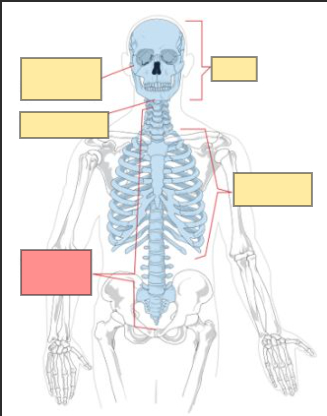
Axial Skeleton
central structure
provides support, protection & the framework for the attachment of muscles
(80 bones)
Skull
hint: axial skeleton
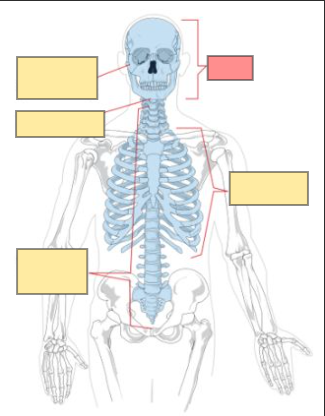
Ossicles (inner ear)
hint: axial skeleton
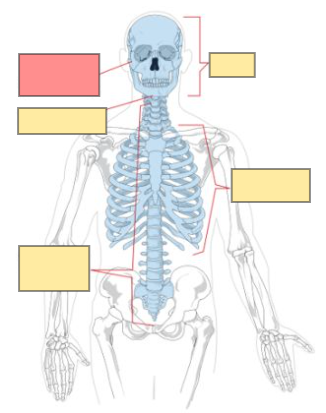
Hyoid Bone
hint: axial skeleton
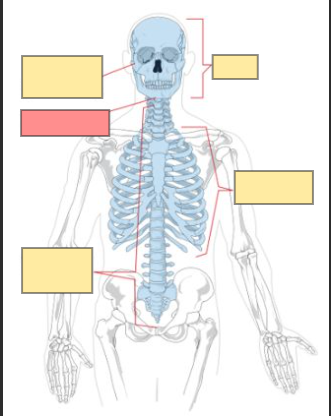
Rib Cage
hint: axial skeleton
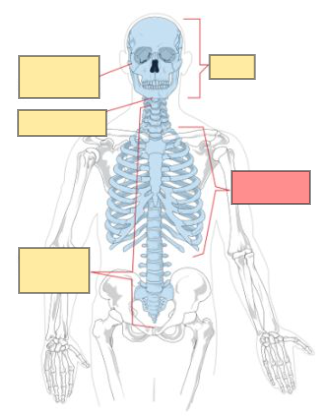
Vertebral Column
hint: axial skeleton
Appendicular Skeleton
facilitates movement & provides support
includes: bones of the limbs & their attachments to the axial skeleton
(126 bones)
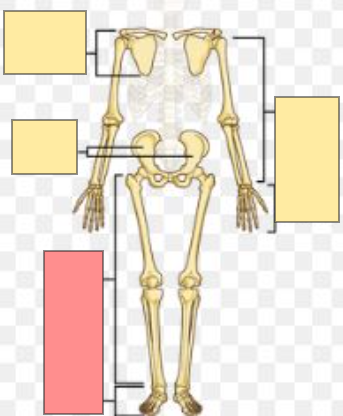
Shoulder Girdle
hint: appendicular skeleton
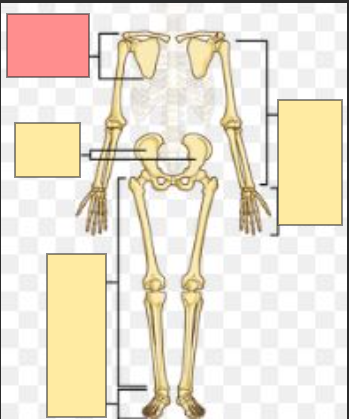
Upper Limbs
hint: appendicular skeleton
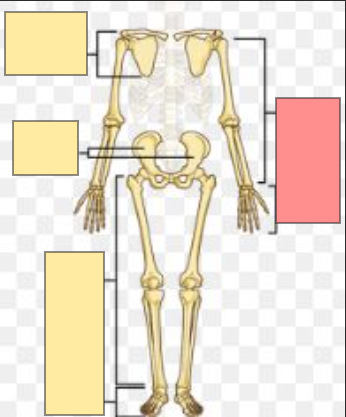
Pelvic Girdle
hint: appendicular skeleton
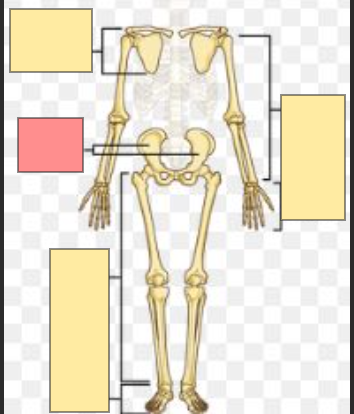
Lower Limbs
hint: appendicular skeleton
Support, Protection, Movement, Storage & Blood cell formation
5 main functions of the skeletal system
Long Bones
bones are longer than they are wide
provides leverage for movement
Short Bones
bones that have a squat, cubed shape
approximately equal in length, width & thickness
Flat Bones
bones are thin & often curved
protective shields
Irregular Bones
bones that do not conform to the shapes of the other 3 types
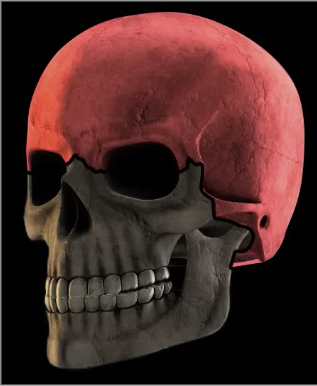
Cranium
part of the skull that encloses the brain
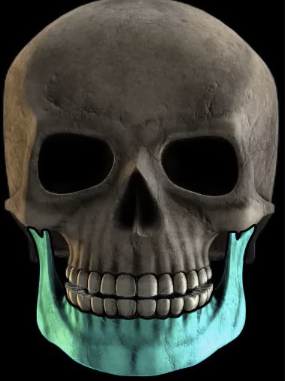
Mandible
located inferiorly in the facial skeleton
largest & strongest bone of the face
Vertebral Column
made up of vertebrae that forms the backbone
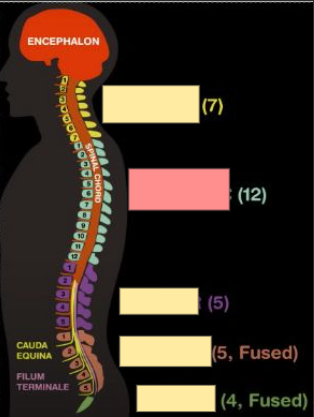
Cervical
cereal at 7 am
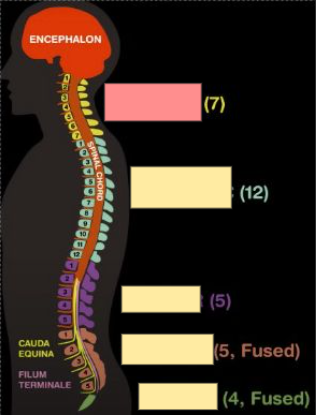
Thoracic
tasty lunch at 12
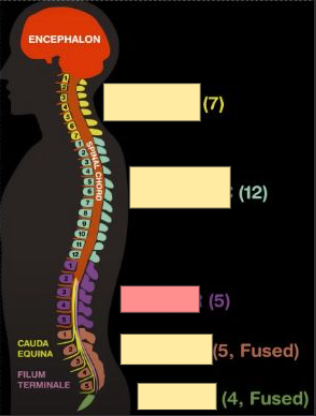
Lumbar
light dinner at 5
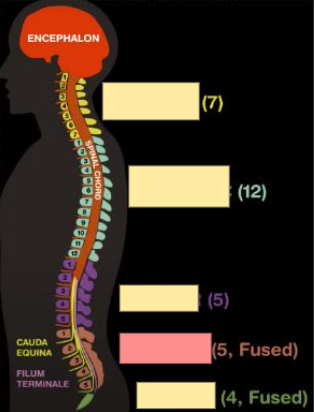
Sacrum
hint: theres 5 of them but fused
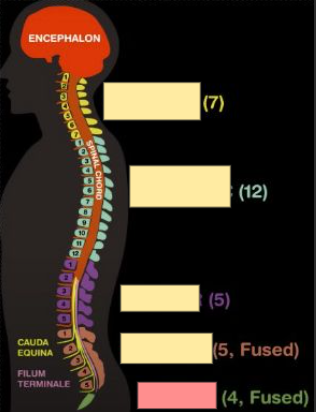
Coccyx
hint: theres 4 of them but fused
Scapula Pain
dull, aching & sharp pain that spreads across the upper back & shoulder
Cartilage
flexible, rubbery tissue
covers the ends of bones at joints
reduces friction & absorbs shock
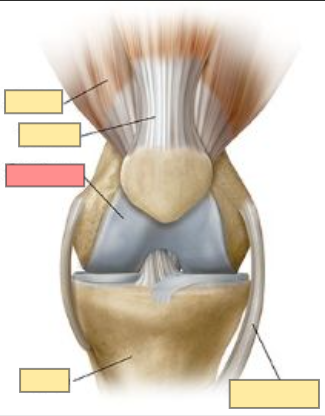
Ligaments
tough, elastic bands of tissue
provide stability and limit excessive movement in joints
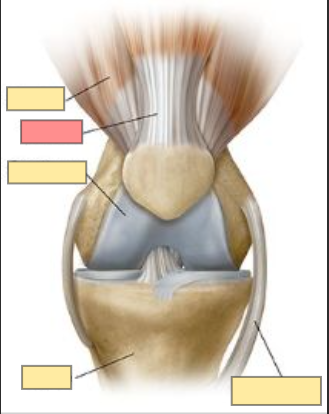
Tendons
tough, fiborus connective tissues
transmit the force generated by muscle contraction to produce movement
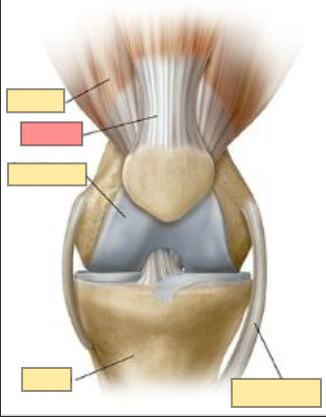
Metaphysis
site of the length-wise growth of long bones
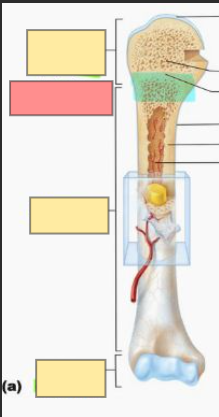
Diaphysis
long central shaft of the bone (for strength)
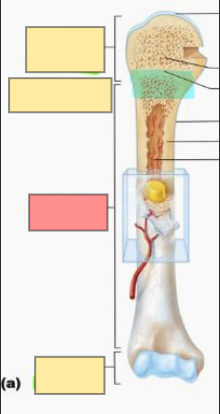
Epiphysis
ends of the long bone
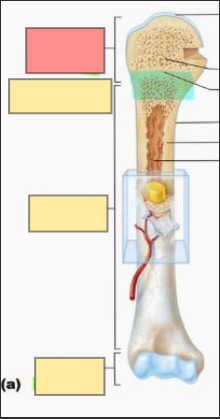
Epiphyseal Plate
bone elongation occurs here as chondrocytes proliferate, enlarge, die and are replaced by bone
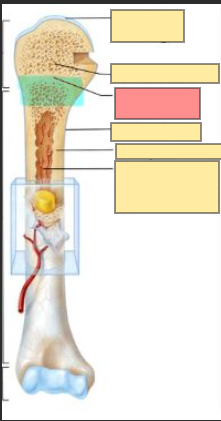
Longitudinal Growth (Length)
occurs at the epiphyseal plate until puberty
Appositional Growth (Thickness)
osteoblasts deposit new bone tissue on the surface which makes bones thick
Spongy (Cancellous) Bone
lighter and less dense than compact bone
irregular cavities taht contain red bone marrow
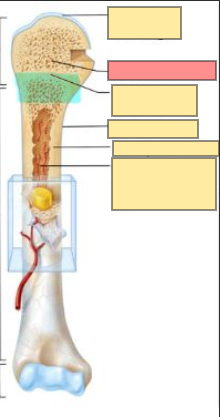
Articular Cartilage
special type of hyaline cartilage that covers the end of epiphyses
provides smooth surface which forms a movable articulation
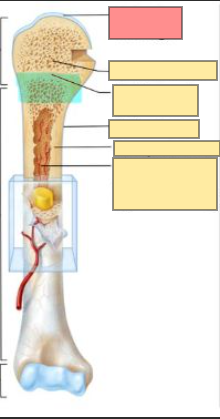
Medullar (Marrow) Cavity
red - myeloid tissue
yellow - bone marrow (adipose)
has walls composed of spongy bone
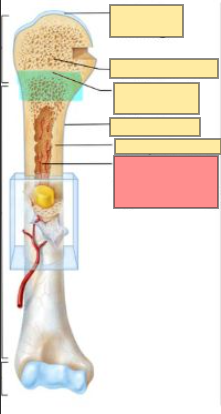
Endosteum
thin, vascular membrance (contains bone marrow)
part of the medullar cavity
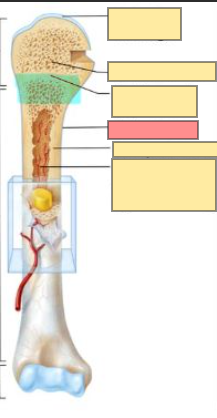
Periosteum
outer covering around bone
outer fibrous layer: fibrous (outer), cellular (inner)
provides a good blood supply to the bone and a point for muscular attachment
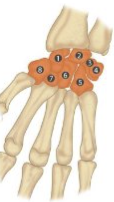
Scaphoid
1
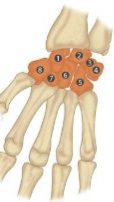
Lunate
2
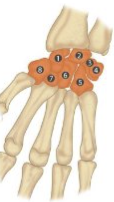
Triquetrum
3
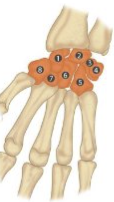
Pisiform
4
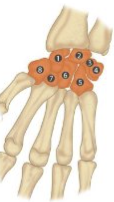
Hamate
5
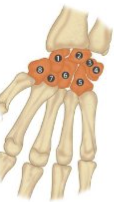
Capitate
6
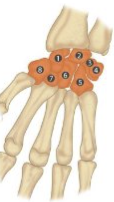
Trapezoid
7
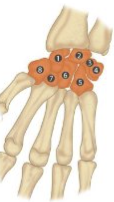
Trapezium
8
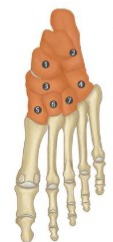
Talus
1
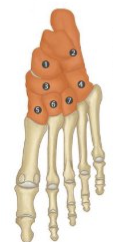
Calcaneus
2
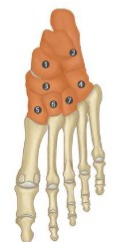
Navicular
3
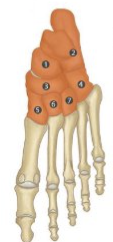
Cuboid
4
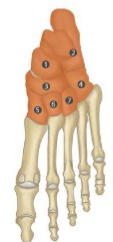
Medial Cuneiform
5
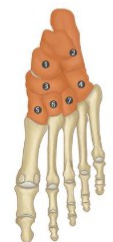
Intermediate Cuneiform
6
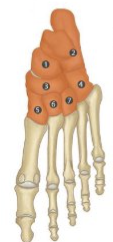
Lateral Cuneiform
7
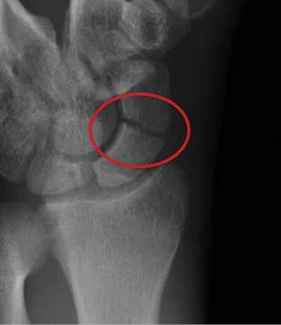
Scaphoid Fracture
most commonly fracture carpal bone, typically by falling on an outstretched hand
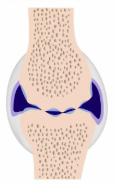
Osteoarthritis
type of arthritis that happens when the cartilage that lines ur joins is worn down and ur bones rub against each other
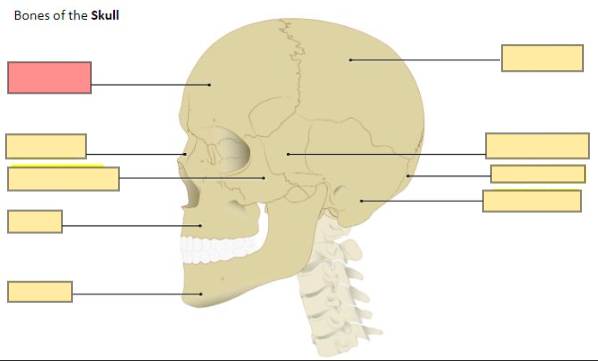
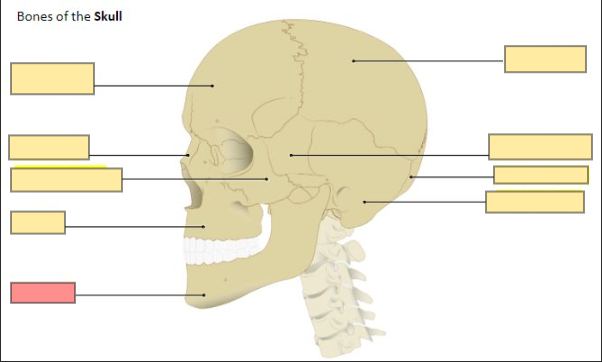
Frontal Bone
forms the forehead, the roof of the nasal cavity, and the eye orbits of the cranium
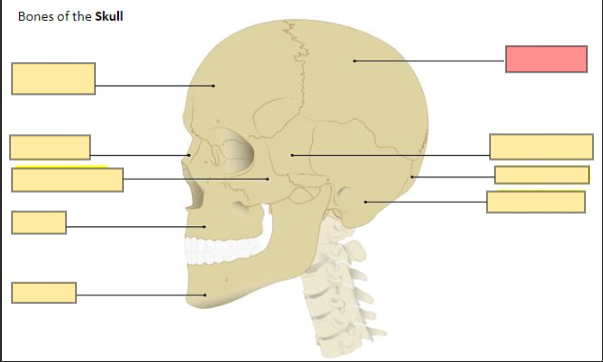
Parietal Bone
forms the roof and side of the cranium
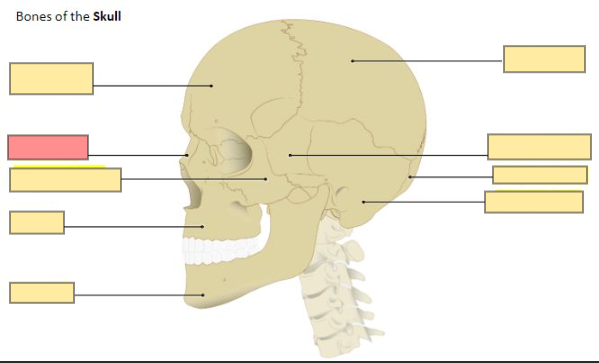
Nasal Bone
bones of the nose
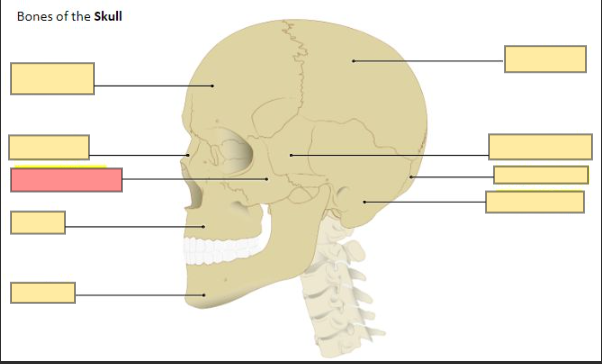
Zygomatic Bone
Sphenoid Bone
considered the key bone of the cranium
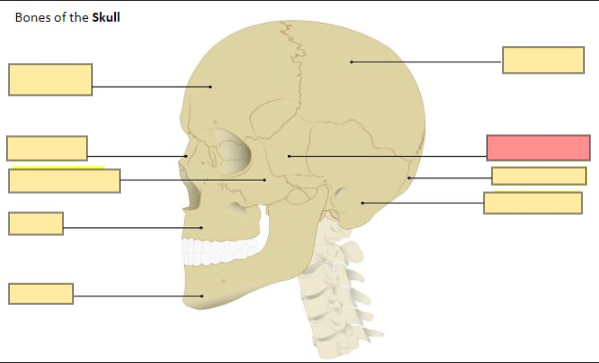
Occipital Bone
forms the posterior/base of the cranium
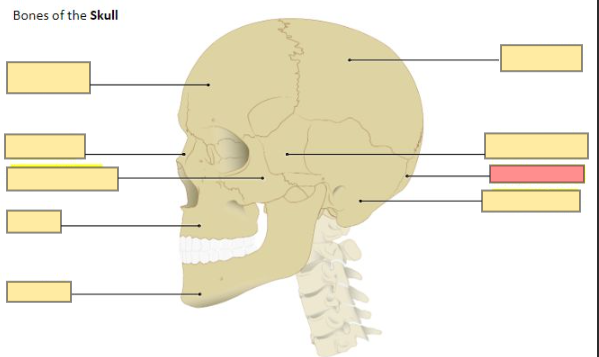
Temporal Bone
forms the sides of the cranium and house the ears
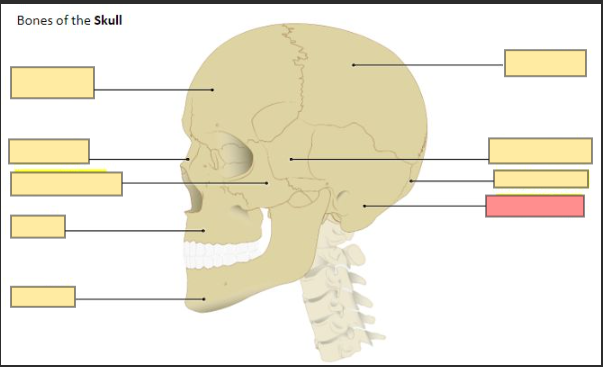
Maxilla
make up the upper jaw
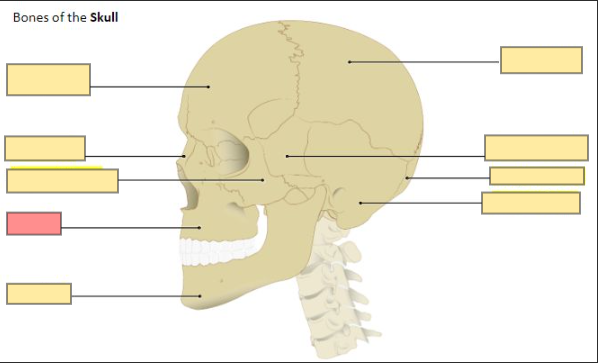
Mandible
the lower jaw, the only movable bone in the face
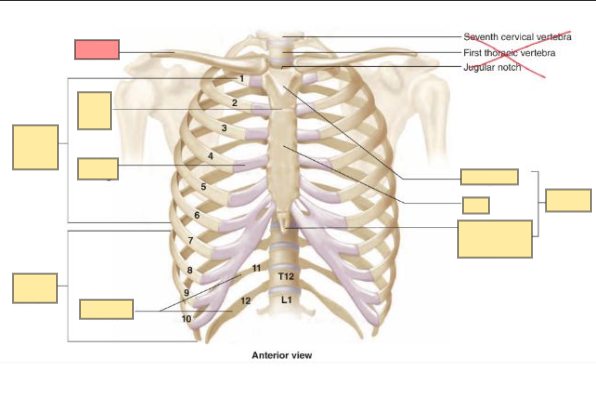
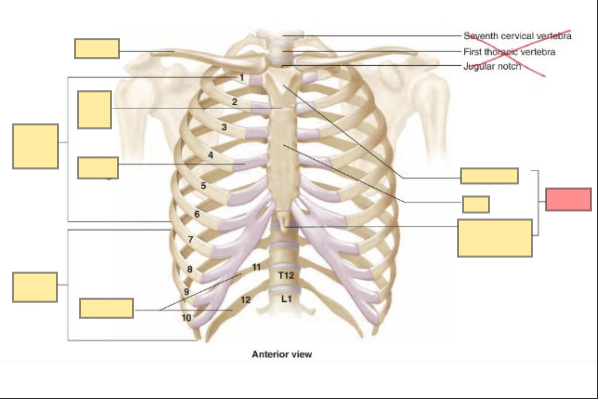
Clavicle
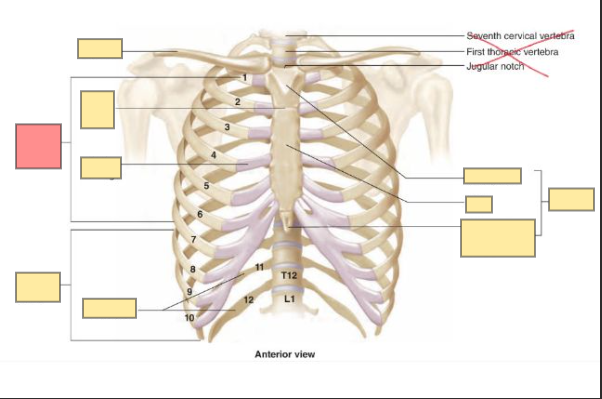
True Ribs
Sternal Angle
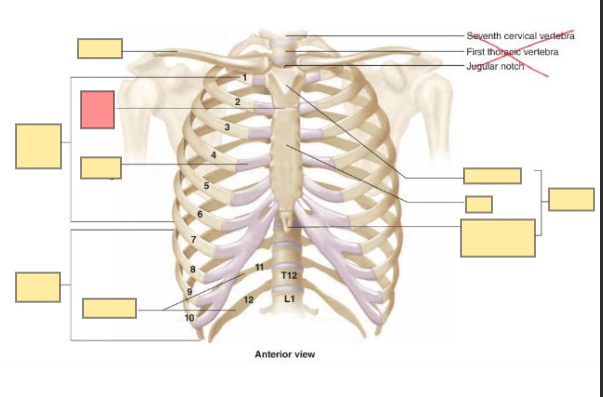
Costal Cartilage
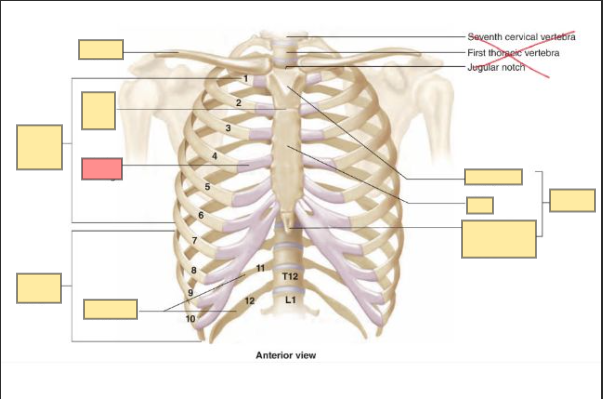
False Ribs
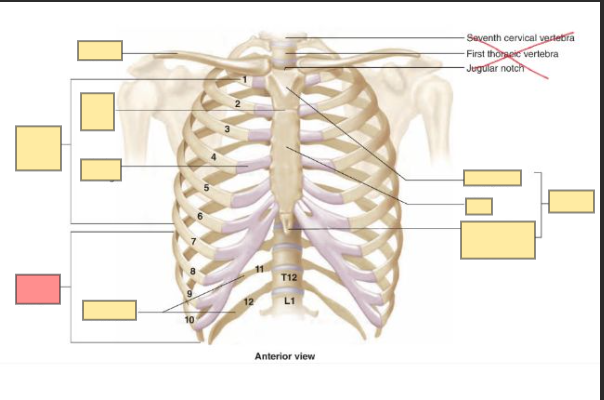
Floating Ribs
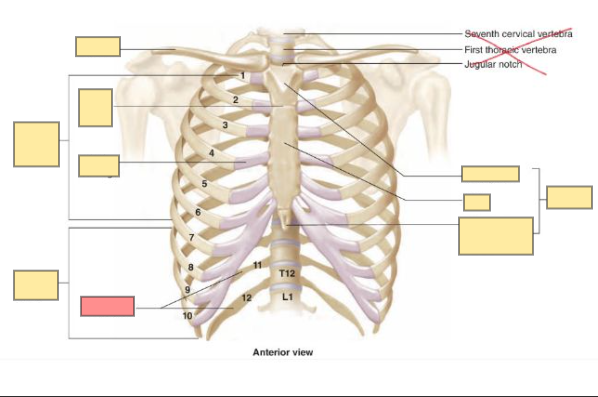
Manubrium
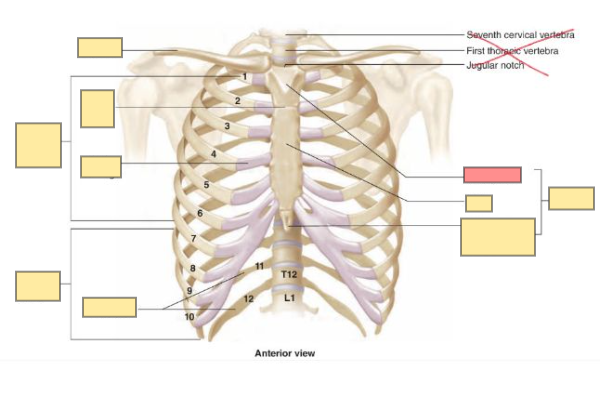
Body
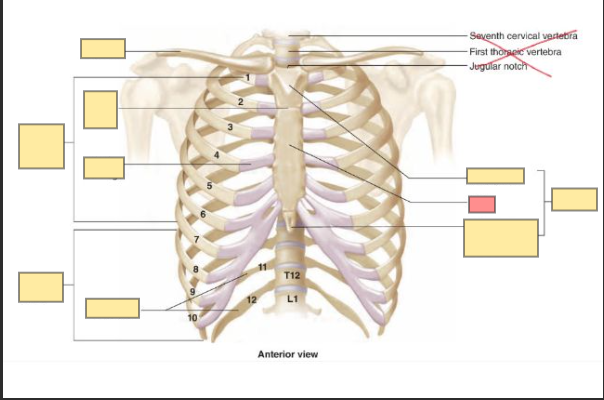
Xiphoid Process
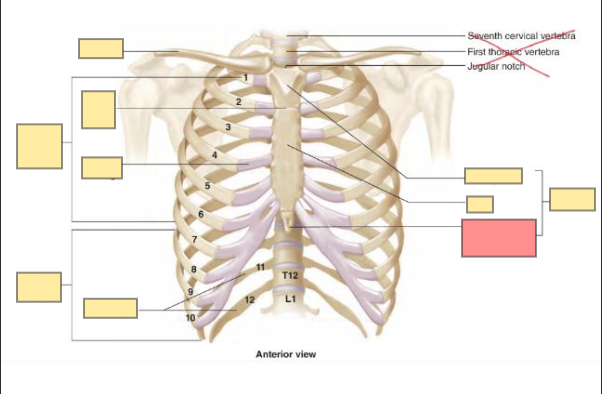
Sternum
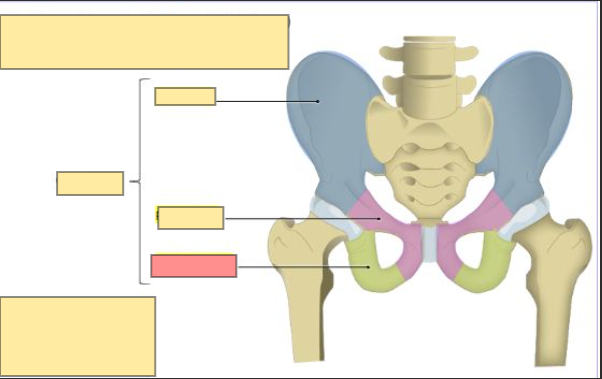
Coxal Bone
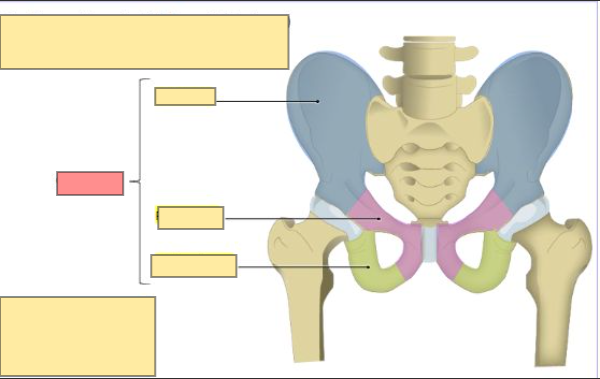
Iliac Bone
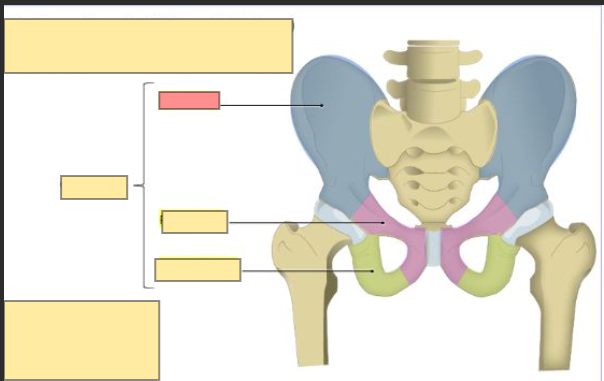
Pubic Bone
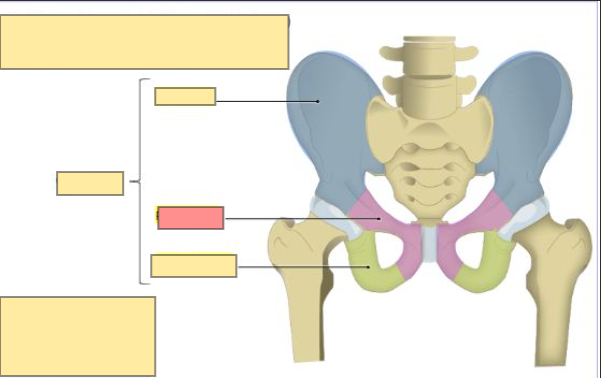
Ischium Bone
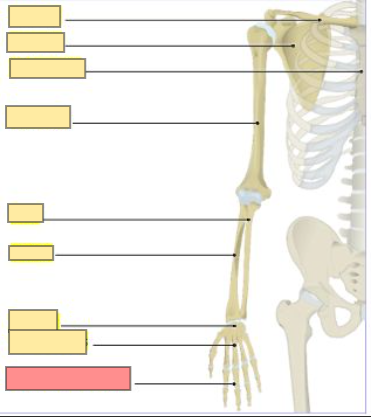
Clavicle
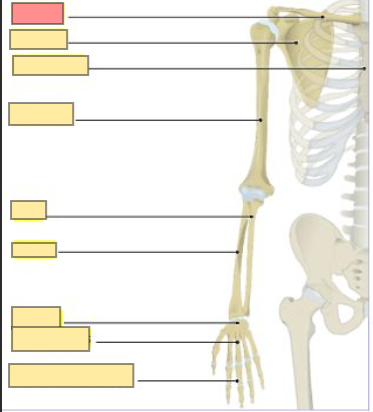
Scapula
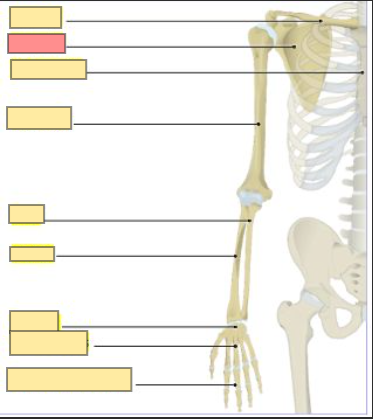
Humerus
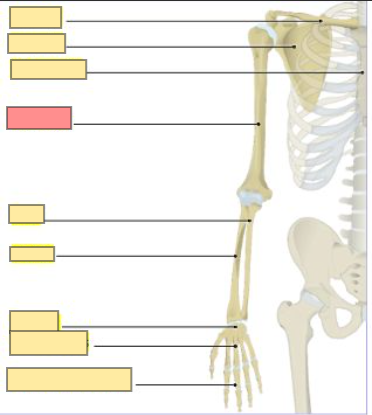
Ulna
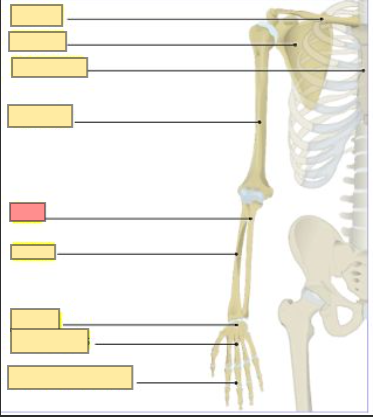
Radius
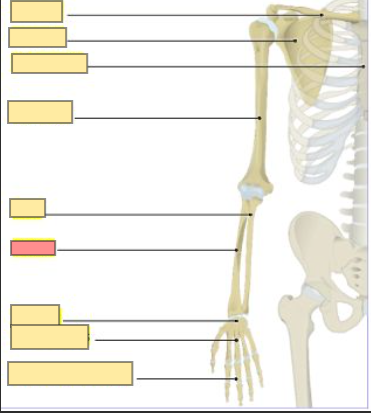
Carpals
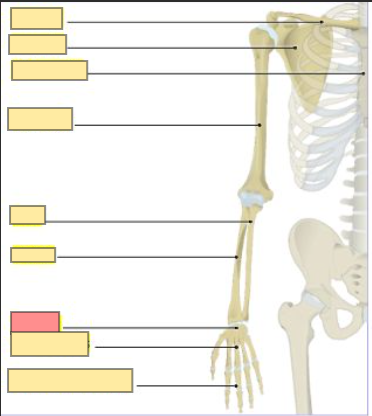
Metacarpals
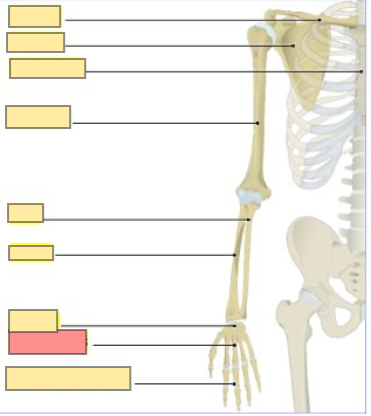
Phalanges
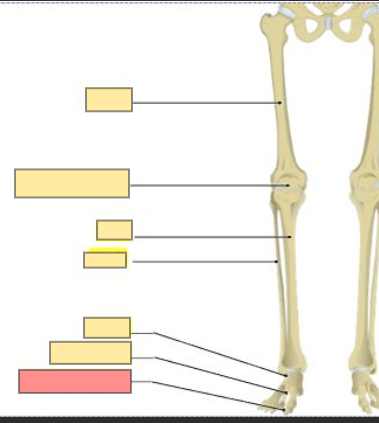
Femur
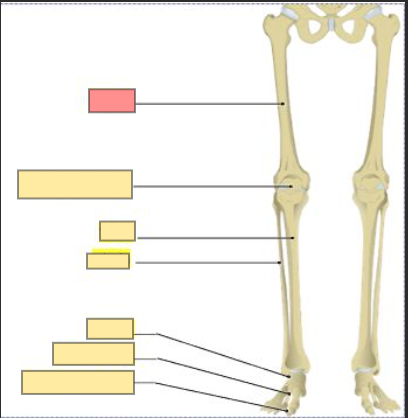
Patella (Kneecap)
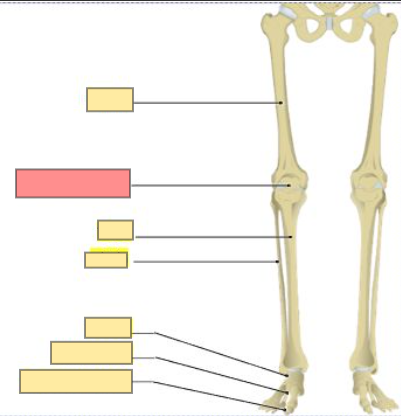
Tibia
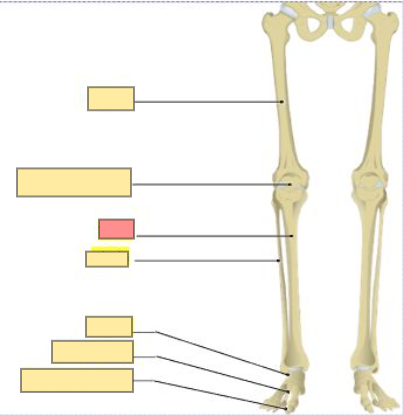
Fibula
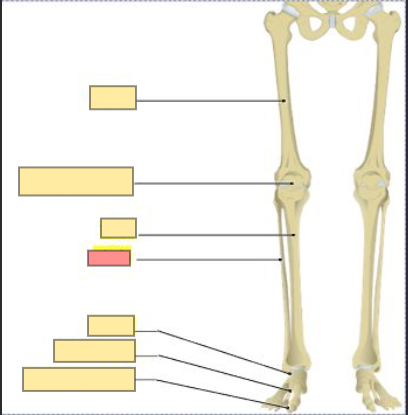
Tarsals
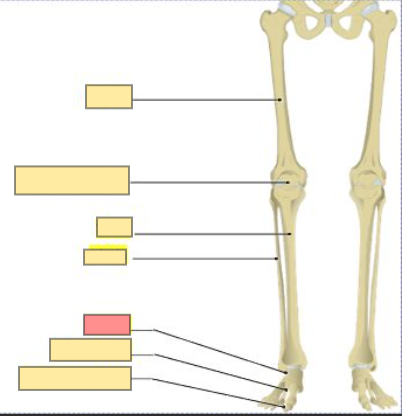
Metatarsals
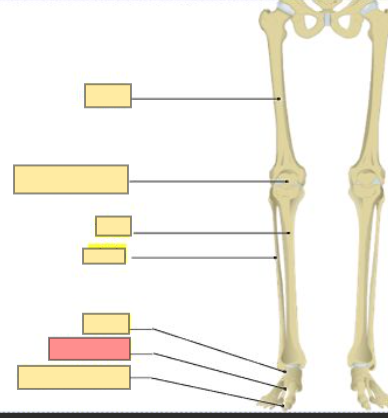
Phalanges (Toes)
Sesamoid
found in areas with significant joint movement and strain
Joints
points of contact between 2 points (bones)