ATI TEAS Integumentary System
 Call Kai
 Learn
Learn Practice Test
 Spaced Repetition
 Match
Match Flashcards
 Knowt Play
1/35

There's no tags or description
Looks like no tags are added yet.
Name | Mastery | Learn | Test | Matching | Spaced | Call with Kai | Chat |
|---|
No analytics yet
Send a link to your students to track their progress
36 Terms
integumentary system
-comprised of the largest organ in the human body, the skin, along w/ hair, nails, and accessory glands
-in constant contact w/ the external environment and provides protection from and picks up signals about the body's surroundings
-vital role in homeostasis
-regulates the body's internal temperature by controlling how the body interacts w/ the surrounding environment
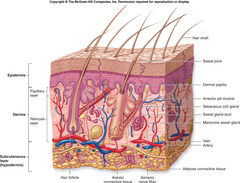
integument
-primary organ of the integumentary system
-known as the skin
-comprised of 3 layers: the epidermis, dermis, and the hypodermis
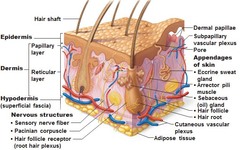
epidermis
-outermost layer of the skin
-it provides a barrier to infection from environmental pathogens and regulates the amount of water lost to the body's surroundings
-constantly being replaced w/ new skin cells from deeper layers
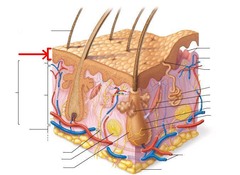
type of tissue present in epidermis
keratinized squamous epithileal tissue
Which layer of the skin is avascular?
epidermis
dermis
-middle layer of the skin
-contains nerve endings, hair follicles, sweat and oil glands, and capillaries
-is connective tissue
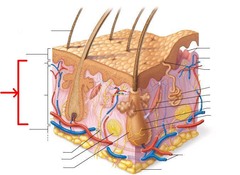
hypodermis
-deepest layer of the skin
-contains blood vessels, adipose (fat) tissues and areolar tissue (loose C.T.)
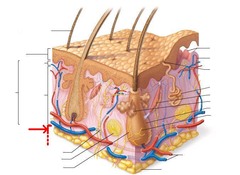
sebaceous gland
-oil glands in dermis that secrete sebum, a mixture of fats and proteins that prevents the skin and hair from drying out
-found all over the body w/ the exception of the soles of the feet and palms of the hands
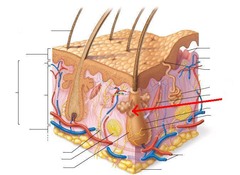
sudoriferous glands
-sweat glands
-responsible for the excretion of water and minerals from the body, in particular, sodium, chloride, and magnesium
-cooling the body: increase sweating
-heating the body: cease sweating
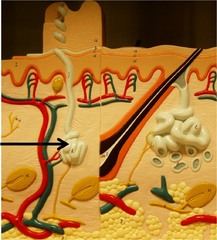
sweat
-can contain trace amounts of urea or other waste products in the blood, like alcohol or lactic acid
-2 types of glands: eccrine and apocrine
eccrine glands
(aka merocrine sweat glands) appear all over the body and are the primary sweat glands of the body
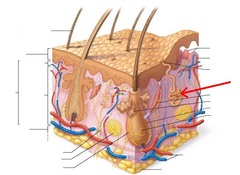
apocrine glands
are not active until puberty and are found in the armpits, nipples, and groin; contain high concentration of fatty acids and bacteria on skin make smelly
-might act as pheromone
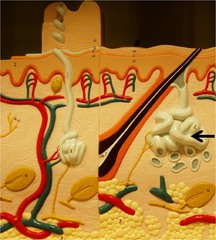
sebum
a mixture of fats and proteins that prevents hair and skin from drying out that is secreted by sebaceous glands
hair follicle
-columns in the skin that have a large concentration of keratin-producing cells
-the cells form the hair follicle while adjacent melanin-producing cells give hair its pigmentation
-cooling the body: relax
-heating the body: stand erect
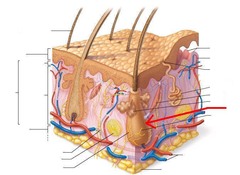
hairless parts of the body
include the feet, lips, inner labia, and glans penis
hair
protects the body from UV radiation by preventing sunlight from reaching the surface of the skin
nails
formed by keratin-producing cells at the ends of the fingers and toes
hyperthermia
-the body temperature is elevated above normal
-when this occurs, the integumentary system helps to reduce body temperature through sweat and vasodilation of the blood vessels
-the sudoriferous glands deliver water to the skin in form of sweat, which evaporates
-as sweat evaporates, it absorbs and carries heat w/ it
-dilated vessels in the dermis allow more blood to get near the surface of the skin, carrying excess heat from the body's core
-the heat is the released as thermal radiation
-hairs lie flat against surface which increases air flow and aids in radiative and evaporative heat loss
hypothermia
-body temperature drops below normal
-the integumentary system prevents heat loss
-blood vessels constrict to reduce the amount of blood flow through the skin, limiting the amount of heat lost
-the arrector pili muscles of the hair follicles contract to lift the hair upright, trapping air against the surface of the skin and helping insulate the body
-goose bumps occur when the contracted muscles can be seen as bumps
cutaneous vasodilation
-increase in blood vessel diameter in skin to allow more blood to flow near surface of the body, transferring heat externally. (vasodilation)
cutaneous vasoconstriction
triggered by hypothalmus, narrowing of blood vessels to reduce heat loss through skin.
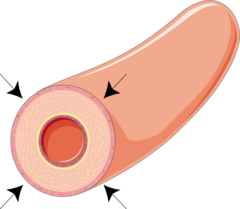
keratin
makes up hair and nails
How does the integumentary system protect the body from infection? (3 ways)
1) It forms a barrier that prevents pathogens from entering the body; 2) cerumen, hair & mucus traps particles that contain pathogens; 3) shedding epidermal cells cause pathogenic microbes to fall away.
How does skin create a water barrier
Skin prevents dehydration of epidermal water barrier maintained by sebum & keratin (protein secreted by epithelial keratinocytes).

How does skin discourage bacterial growth? (2)
Lactic Acid & fatty acids in sebum & sweat create low pH, which inhibits growth of bacteria; sweat contains antibacterial substances
How does skin encourage excretion?
large surface area for excretion of waste materials like mineral salts and urea.
Other functions of skin (4)
1) sensory receptors for heat, pressure, pain
2) communication and expression;
3) absorbs UV radiation and covert to a cholesterol based Vit. D precursor (D helps intestine absorb dietary calcium).
4) Shields deeper layer tissue from UV radiation.
Which of the following would be seen in a patient with hyperthermia?
Increased excretion by sudoriferous glands
Sudoriferous glands help regulate body temperature by facilitating which of the following methods of heat transfer?
Evaporation
Which of the following glands are not active until puberty?
Apocrine
Hair follicles are found in which of the following skin layers?
Dermis
Which of the following correctly lists the layers of skin from the outermost layer moving inward?
Epidermis, dermis, hypodermis
Which of the following describes a role of the sebaceous glands?
Protection of the skin from drying out
Nerve endings are found in which of the following layers of the skin?
Dermis
If an individual has excessively oily skin, which of the following glands in the skin is likely producing excessive secretions?
Sebaceous
Which of the following statements is true?
A. Ceruminous glands produce perspiration.
B. Eccrine sweat glands are only concentrated in particular parts of the body, such as the armpits and the genital region.
C. Sweat is produced by sebaceous glands
D. Hair is produced from epithelial tissue that dips down into the dermis to form hair follicles.
D.