UWL Bio 313- Exam 4
 Call Kai
 Learn
Learn Practice Test
 Spaced Repetition
 Match
Match Flashcards
 Knowt Play
1/65

There's no tags or description
Looks like no tags are added yet.
Name | Mastery | Learn | Test | Matching | Spaced | Call with Kai | Chat |
|---|
No analytics yet
Send a link to your students to track their progress
66 Terms
Role of male reproductive system
produce and deliver sperm
goal of reproductive system
produce offspring
2 bands of erectile tissue
1. Corpus cavernosum
2. Corpus spongiosum
Testes function
-produce sperm and testosterone
-"Sperm factories"
Spermatogenesis
-The process that forms sperm
-Consists of meiosis and spermiogenesis
Cells present in seminiferous tubules
1. Spermatogenic cells
2. Sustentocyte
3.Interstitial endocrine cells
Spermatogenic cells
sperm forming cells
Interstitial endocrine cells
Hormone producing cells (testosterone)
Sustentocyte
-provides nutrients, testicular fluid to developing sperm
-Phagocytose damaged cells
-Tight junctions form blood-testis barrier; open so B cells can pass, and close so immune system doesn't attack genetically different sperm cells
-"nurse cells"
Scrotum
-External sac that contains the testes
-Optimal spermatogenesis requires a lower body temperature
-Can raise or drop to monitor temperature
Mitosis
-cell division in which the nucleus divides into nuclei containing the same number of chromosomes
-Exact copies
Meiosis
-Cell division that produces reproductive cells in sexually reproducing organisms
-4 different daughter cells (2n-->1n)
-Only occurs in testes and ovaries
Meiosis I
-Homologous chromosomes separate
-Synapsis (coming together) occurs
-Crossing over of genetic material
-Results in 2 daughter cells that are haploid
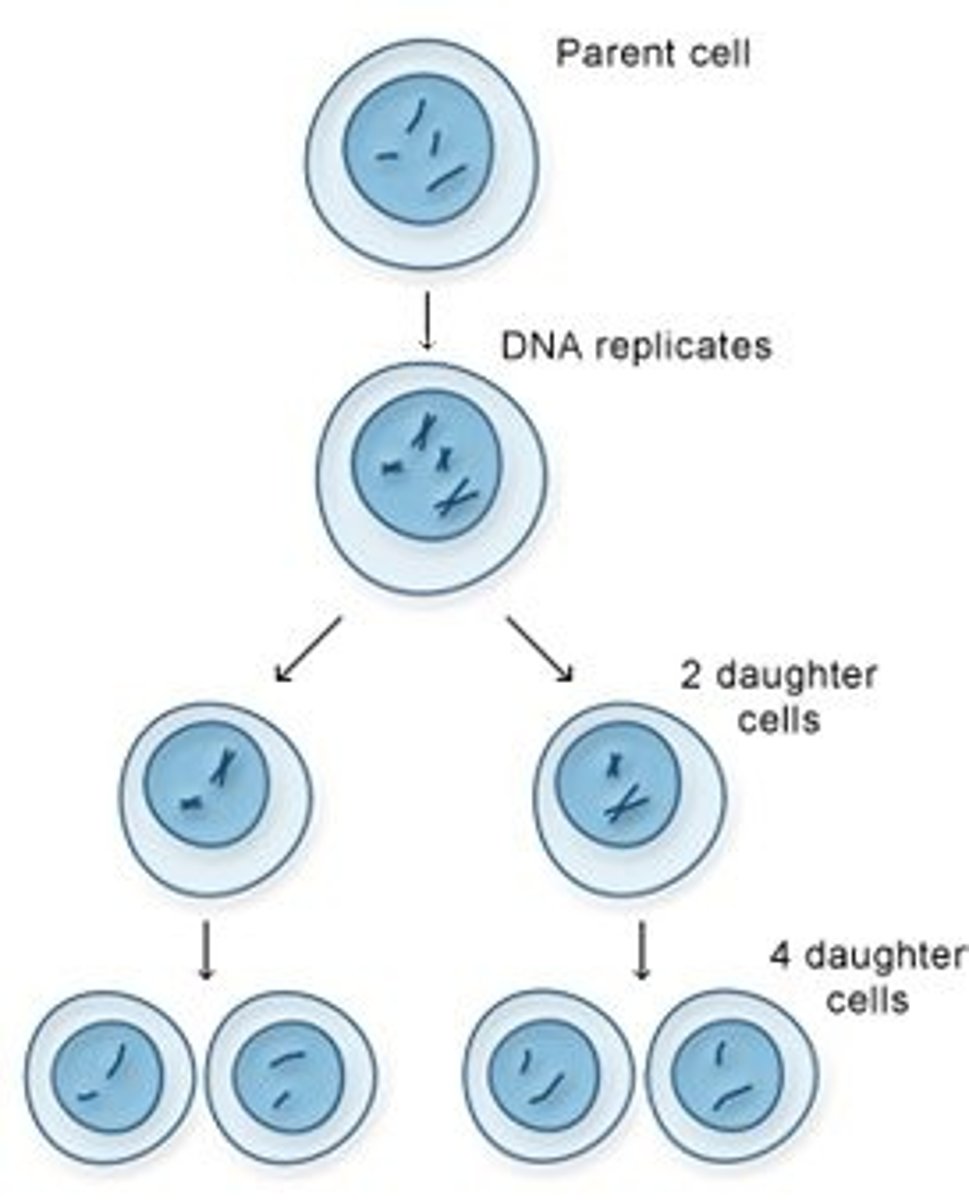
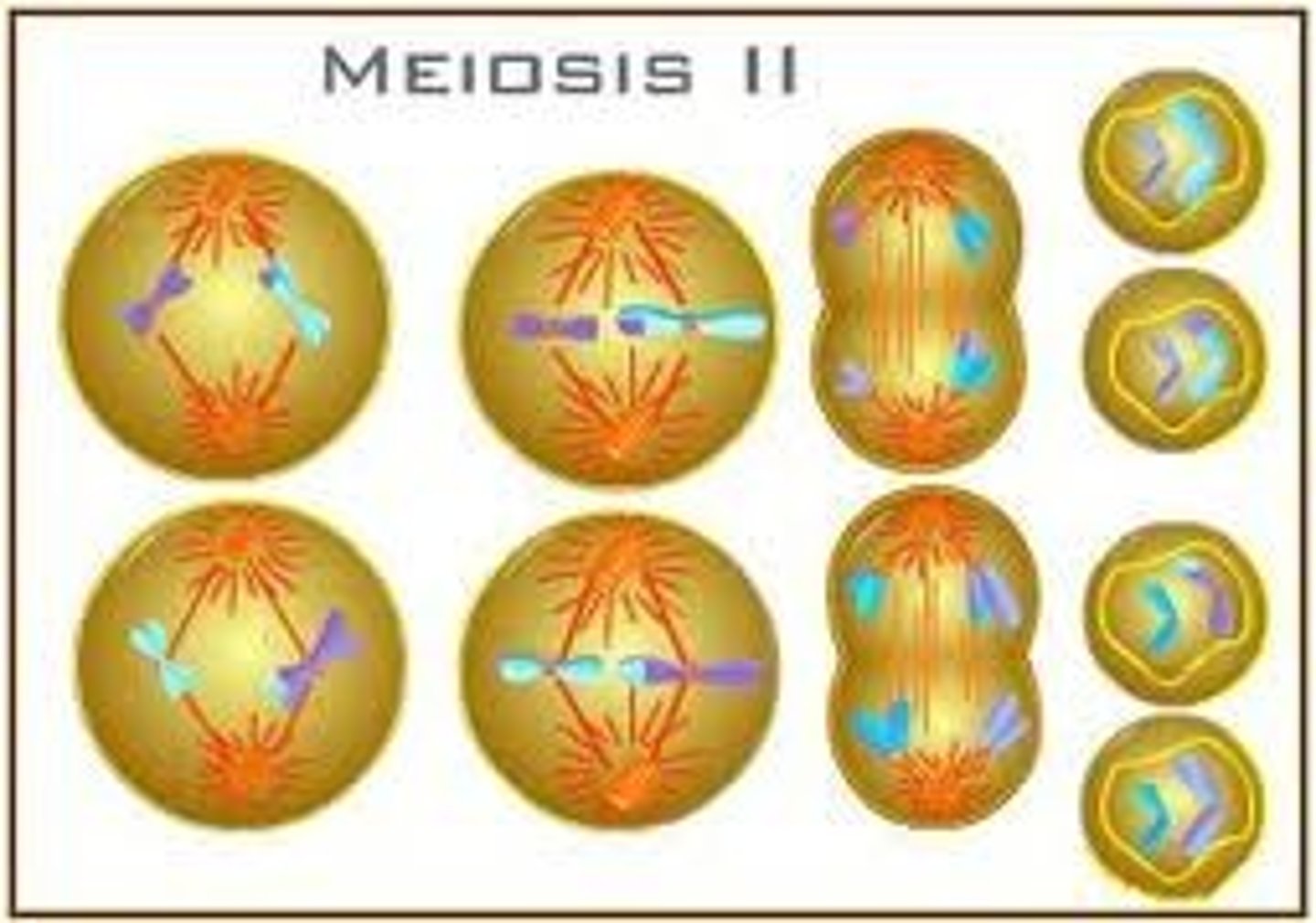
Meiosis II
-sister chromatids separate
-Starts with 2 haploid daughter cells
-Ends with 4 haploid daughter cells that are all different
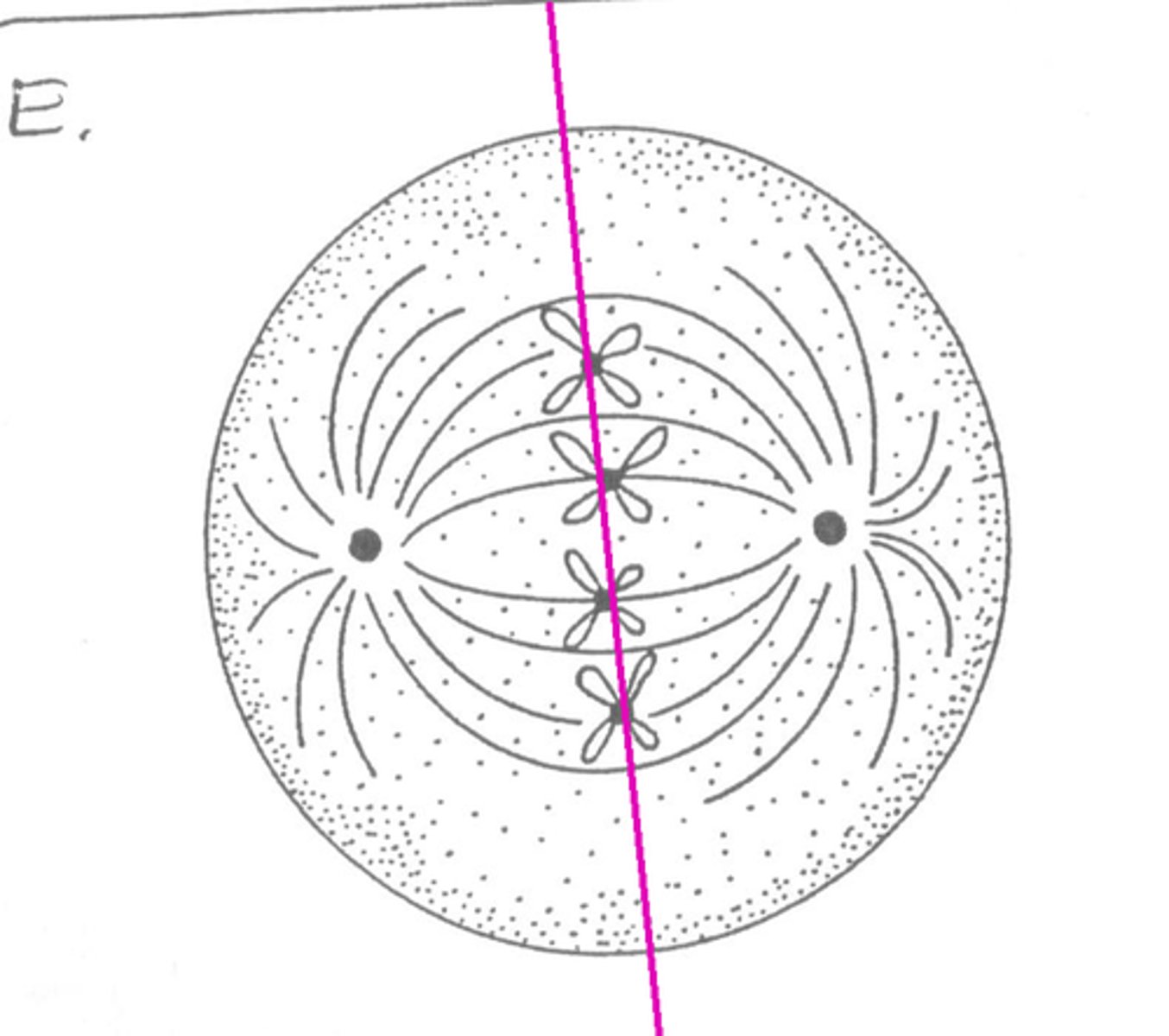
Metaphase I
-Pairs of homologous chromosomes move to the equator of the cell.
-Tetrads align randomly (independent assortment)
-Lots of diversity due to crossing over and independent assortment
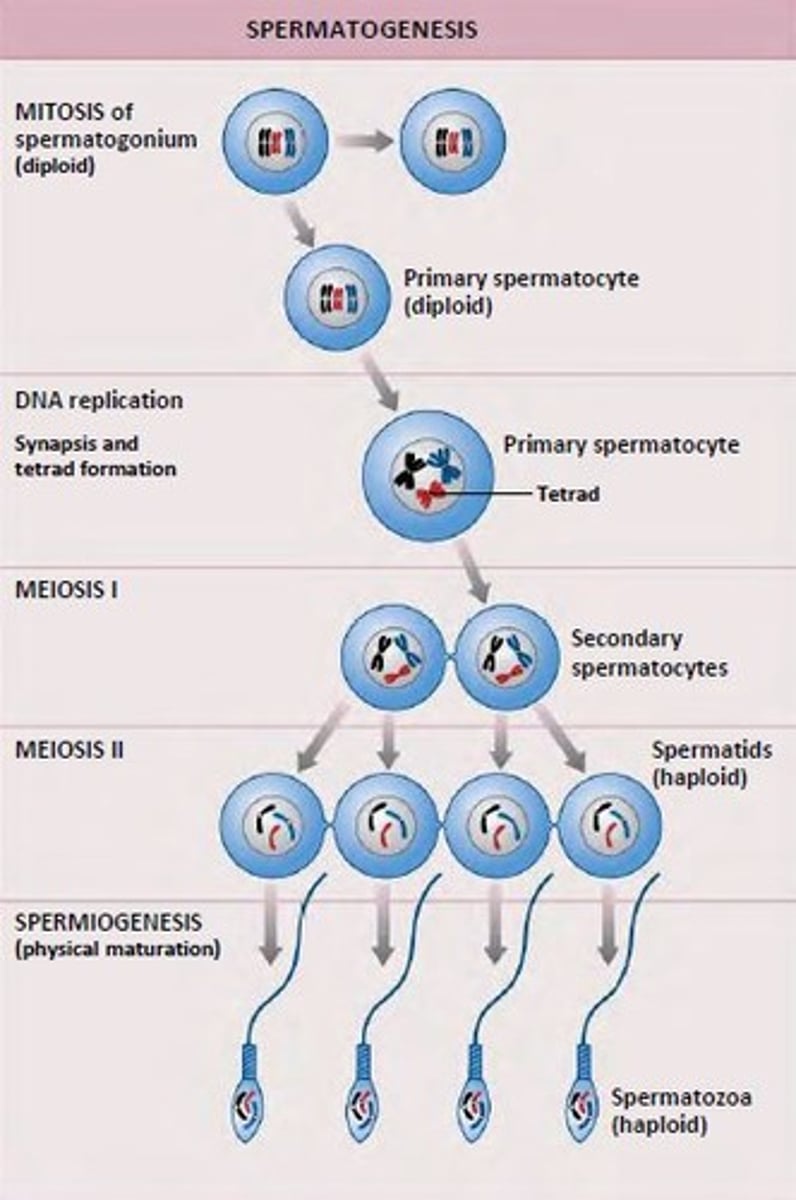
stages of spermatogenesis
1. Type A spermatogonium- stem cell on outside that makes copies
2. Type B spermatogonium- enter meiosis; grow to become primary spermatocyte
3. Primary spermatocyte- enters 1st meiotic division
4. Secondary spermatocyte- primary spermatocyte turns into 2 secondary spermatocytes; goes through 2nd meiotic division to become spermatid
5. Spermatid- last result of meiosis
6. Sperm- produced during spermiogenesis; elongation and acquisition of motility of spermatids
sperm anatomy
1. Head- contains acrosome (enzymes) and nucleus (genetic material)
2. Midpiece- contains lots of mitochondria which supply flagella with energy
3. Tail- Flagella which acts as a locomotor for motility
journey of sperm
1. After production in seminiferous tubules, sperm are funneled toward the rete testis
2. Leave testes through epididymis
3. Epididymis is continuous with the vas deferens
4. Vas deferens joins with seminal gland duct and forms the ejaculatory duct
5. Ejaculatory duct joins with the urethra
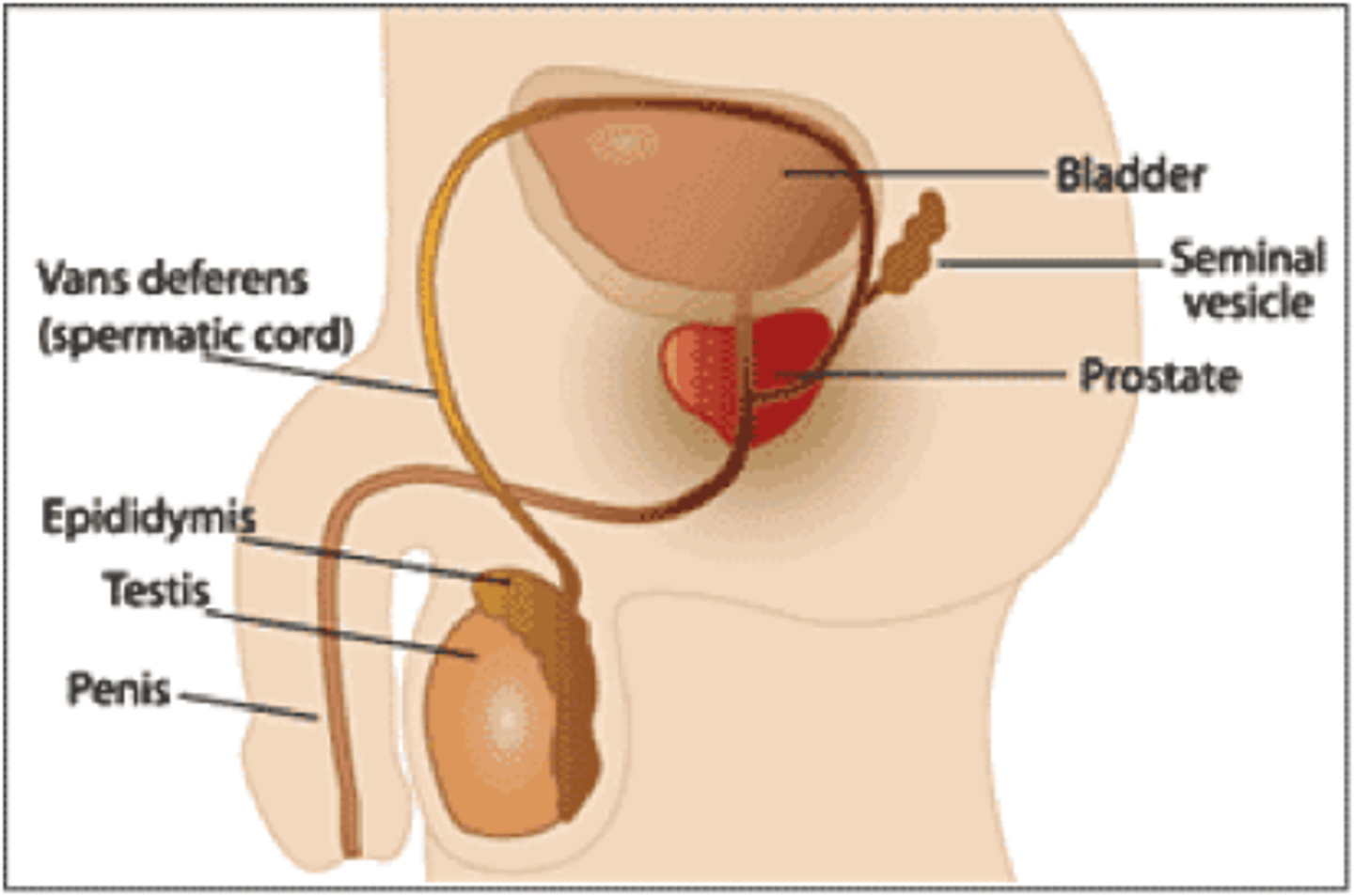
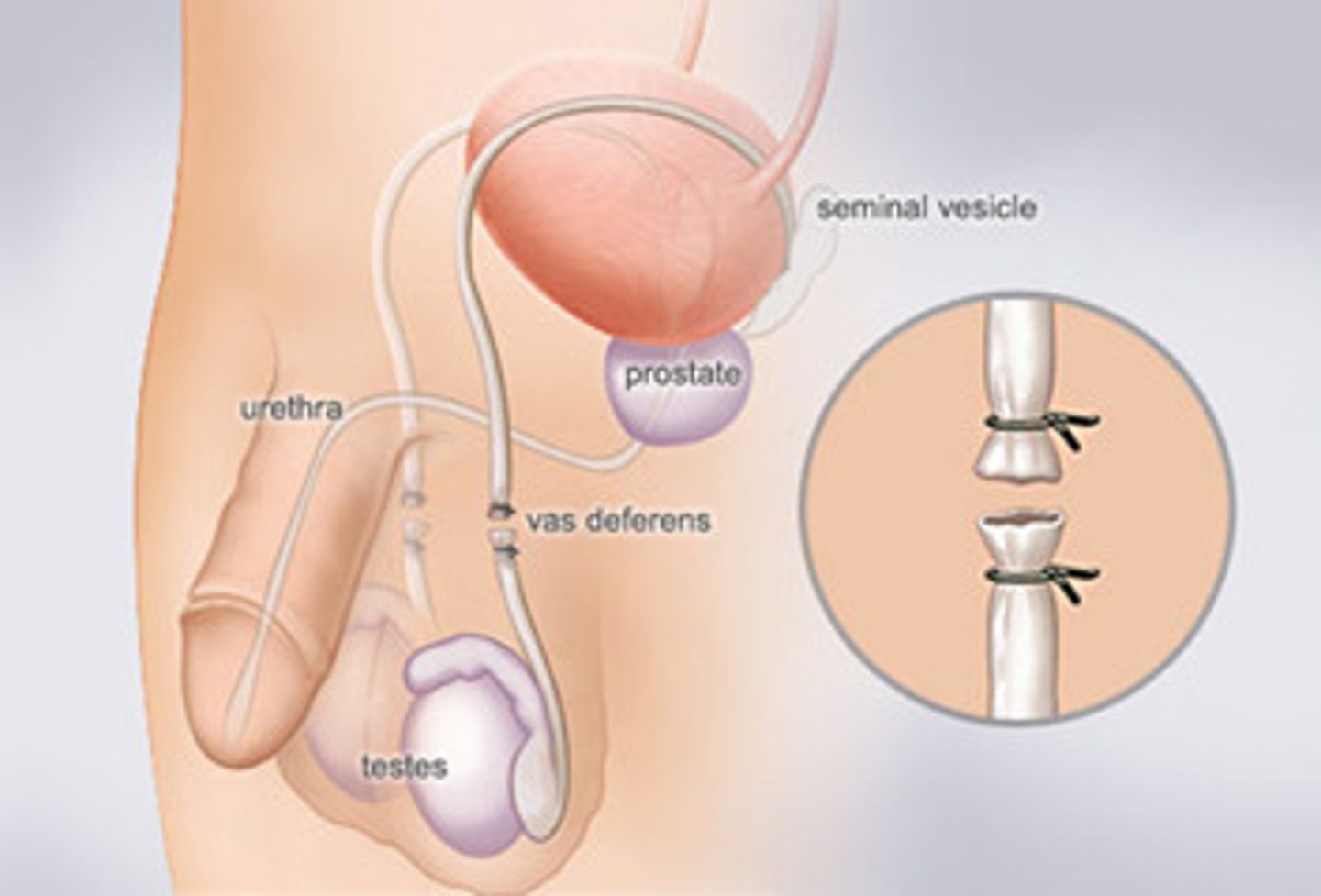
Vasectomy
-bilateral surgical removal of a part of the vas deferens
-Nearly 100% effective to prevent pregnancy
Semen
-A thick fluid containing sperm and other secretions (sperm supportive fluid)
-Sperm only makes up about 5% of semen
-Contains other secretions from prostate and seminal glands
Bulbo-urethral gland
-Pre-ejaculate
-adds a fluid that protects the sperm from acid conditions in the urethra (from urine)
How many sperm are contained in the ejaculate?
50-120 million sperm/mL of semen
Penis
-Copulatory organ
-Delivers sperm into female reproductive tract
-Contains penile urethra
-Contains erectile tissue
Male sexual response (2)
1. Erection (excitement)
2. Ejaculation (orgasm)
Erection
-Enlargement and stiffening of the penis
-Parasympathetic control
-Caused by nitric oxide (potent vasodilator)
-Veins on outside of penis are compressed
-Bulbourethral gland secretes bulbourethral fluid
Ejaculation (steps)
-Propulsion of semen
-Sympathetic control
-Peristalsis of "tubes"
1. Erection
2. Orgasm-emission stage
3. Semen in the urethra
a. IUS and bulbaceous muscle contract
4. Orgasm-expulsion stage
5. resolution-vasoconstriction
Erectile dysfunction
-inability of an adult male to achieve an erection
-Lack of NO release (less vasodilation)
Male hormone cascade (Hypothalamic-Pituitary-Gonadal axis)
1. Gonadotropin releasing hormone (GnRH) in hypothalamus stimulates anterior pituitary glad to release follicle stimulating hormone (FSH) and luteinizing hormone (LH)
2. FSH stimulates nurse cells (in the testes) to secrete androgen-binding protein (ABP) and LH stimulates interstitial cells (in the testes) to secrete testosterone
3. In the presence of ABP, testosterone stimulates spermatogenesis and also the libido
4. Testosterone has negative feedback effects that reduce GnRH secretion and pituitary sensitivity to GnRH
5. Nurse cells secrete inhibin, which selectively inhibits FSH secretion to reduce sperm and testosterone production
When is the balance of male hormones achieved?
-During puberty (stabilizes in adulthood)
-No sperm production before puberty
-During puberty, male productive structures grow to adult size and secondary sex characteristics develop
Role of the female reproductive system
Produce eggs and provide protective and nurturing environment for embryo development
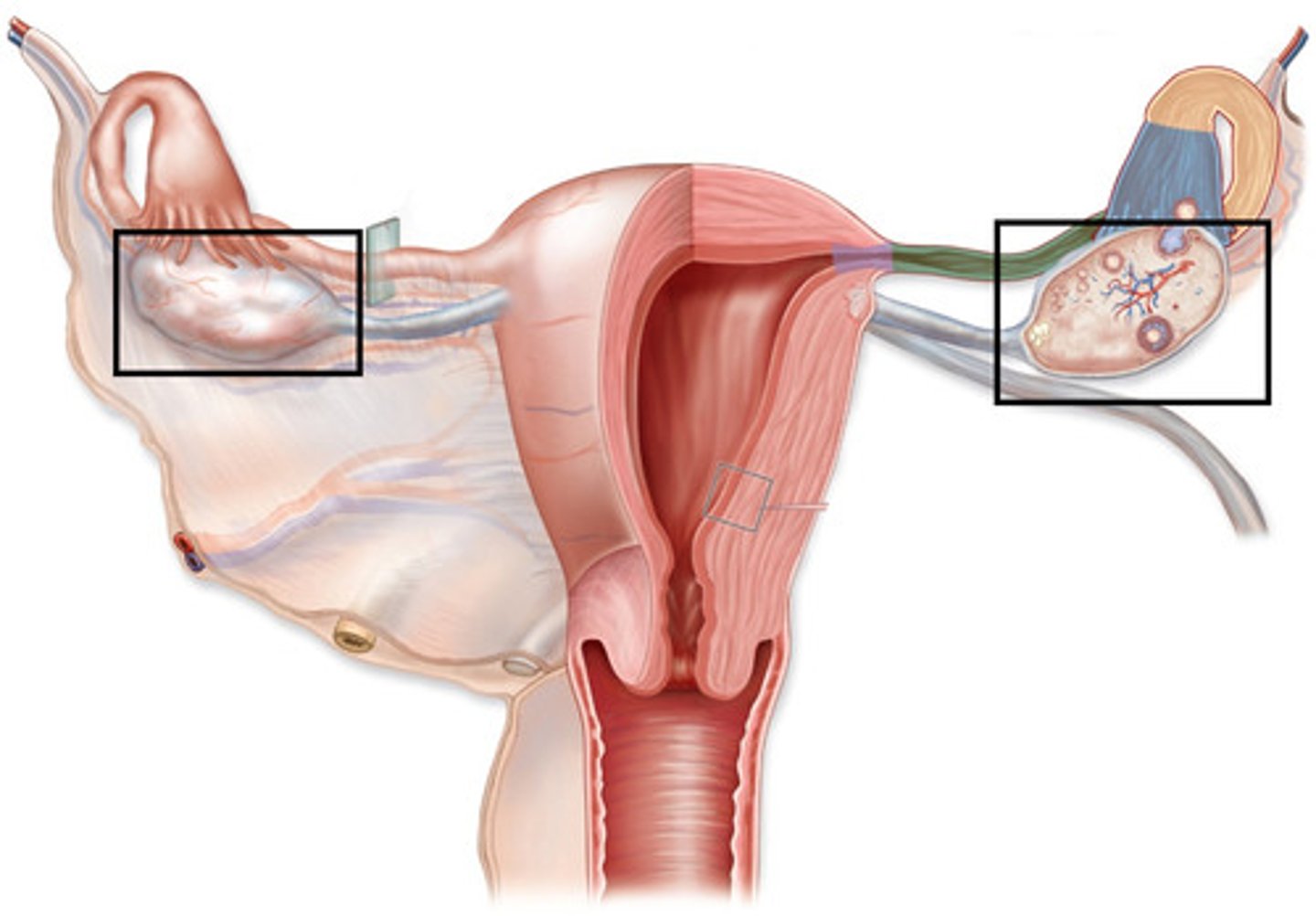
Ovaries (role)
Produce female gametes (ova)
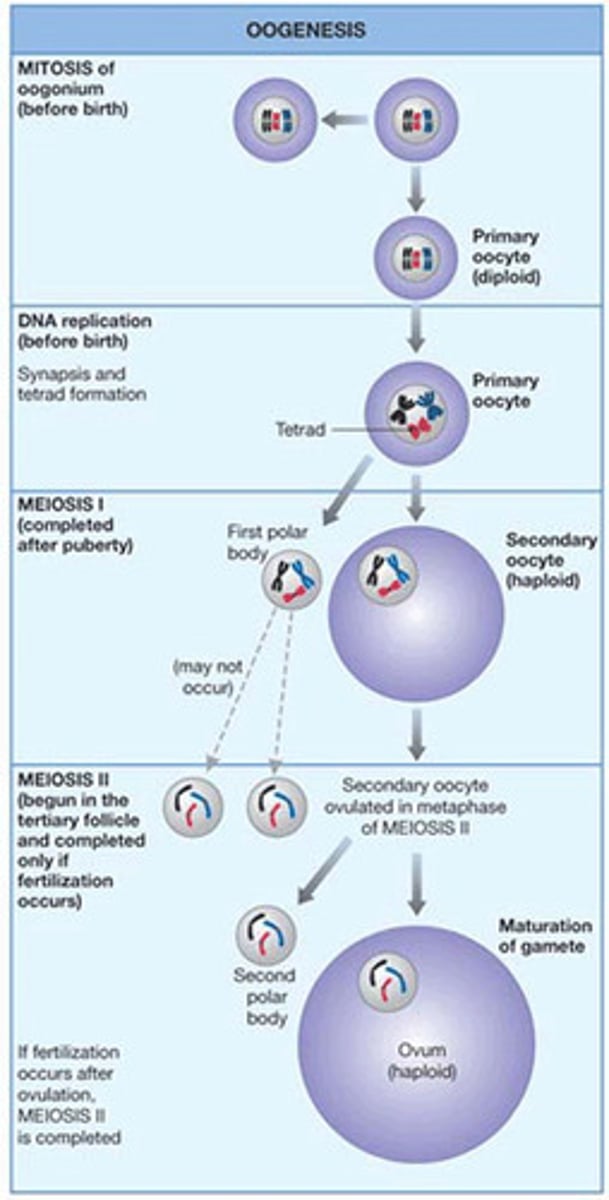
Oogenesis
-Process that forms eggs
-Starts before birth (in utero)
-Females are born with a lifetime supply of primary oocytes
-primary oocytes are "arrested" in development until puberty
-During puberty, 1 follicle becomes "dominant" and that oocyte would continue meiosis 1 and is ovulated
Oogenesis steps
1 primary oocyte --> 1 secondary oocyte (where all nutrients and genetic information went) + 1 polar body (dies) --> IF FERTILIZED: 1 functional ovum + 2nd polar body IF NO FERTILIZATION: secondary oocyte dies (menstruation)
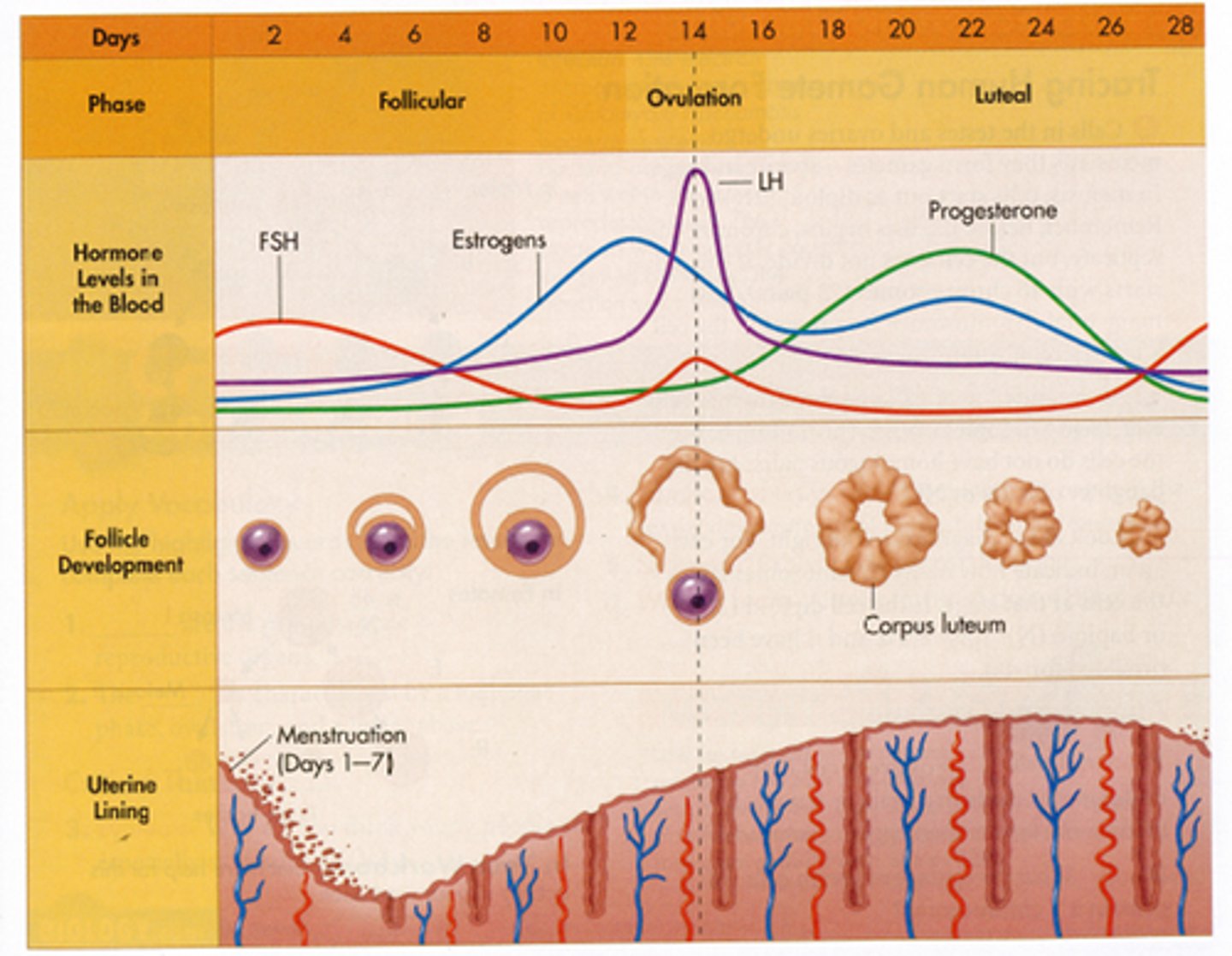
Ovarian cycle phases
follicular phase, ovulation, luteal phase
Follicular phase
-First phase of the ovarian cycle
-Follicle growth stimulated by FSH
-Dominant follicle is "selected" (most sensitive to FSH) and secretes estrogen
-LH surge causes first meiotic division to finish
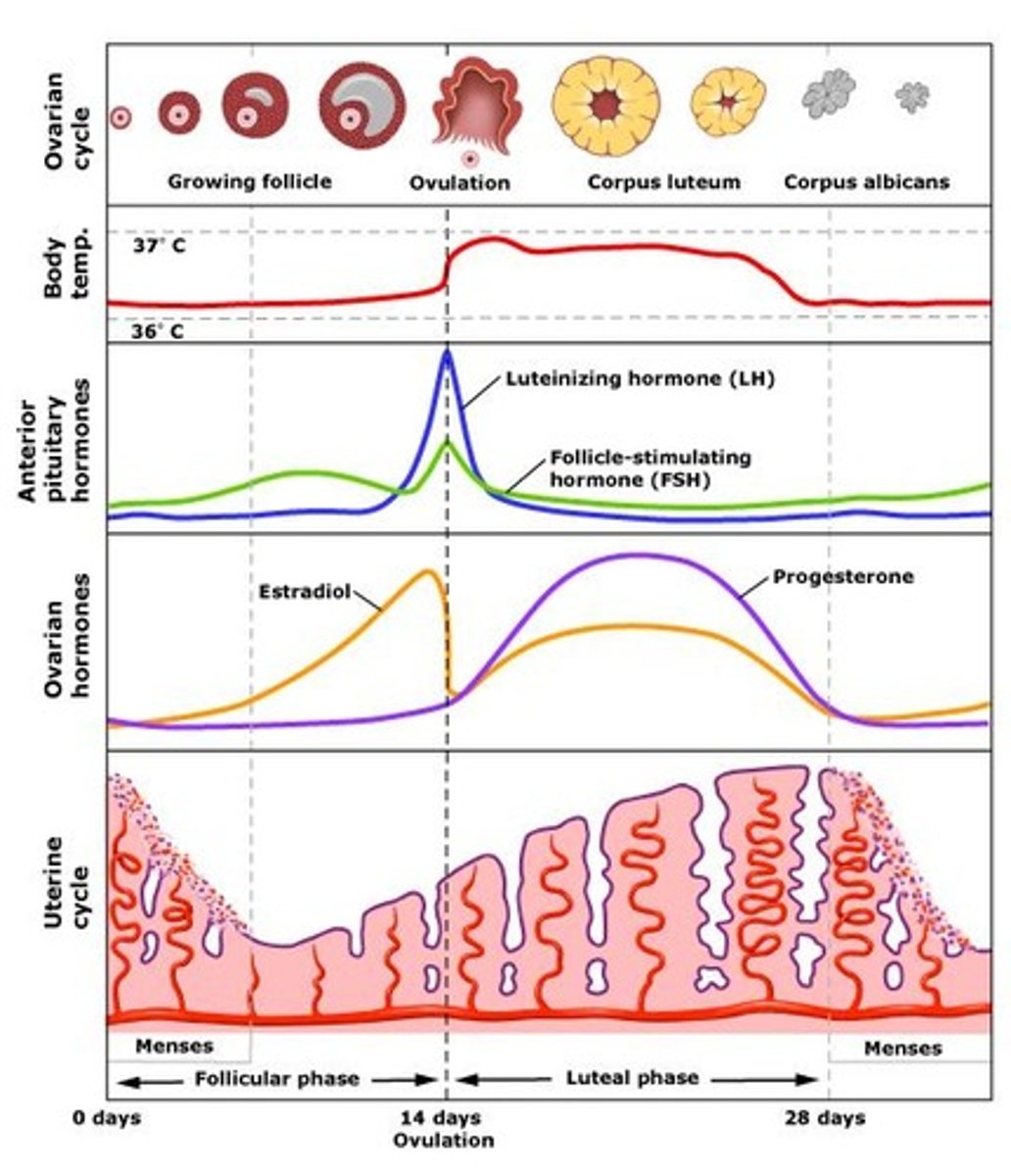
Luteal phase
-3rd phase of the ovarian cycle
-Corpus luteum develops from leftover follicle cell (ruptured cell)
-Produces estrogen and progesterone
-If pregnancy occurs, corpus luteum remains until placental development (if no pregnancy, corpus luteum degenerates)
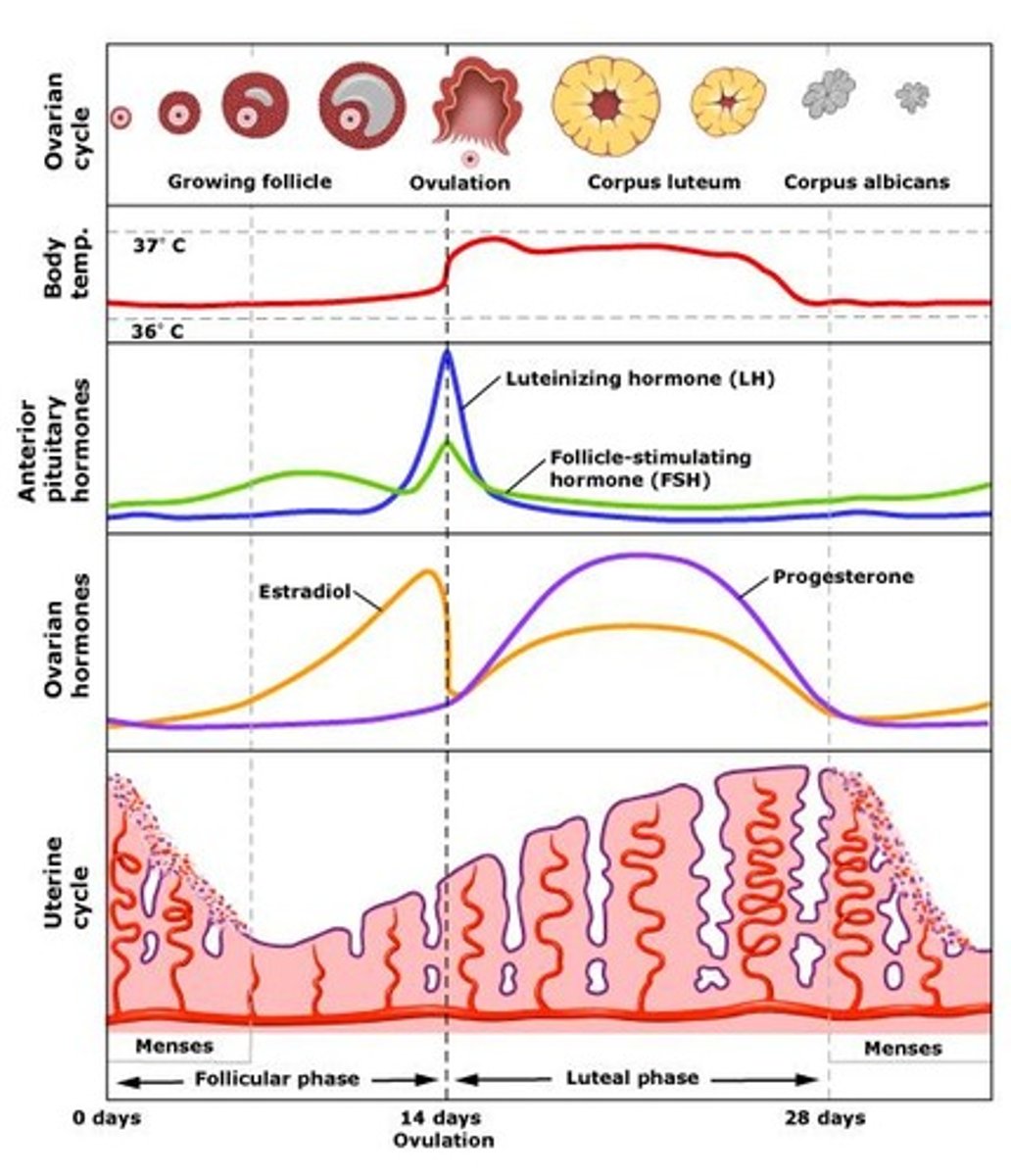
ovulation phase
-The 2nd stage of the ovarian cycle, when the ovum is released
-ovulated oocyte travels through uterine tube by fimbriae (sweep)
-Cervical mucus thins, allowing passage of sperm into the uterus
-Fertilization usually occurs in uterine tube
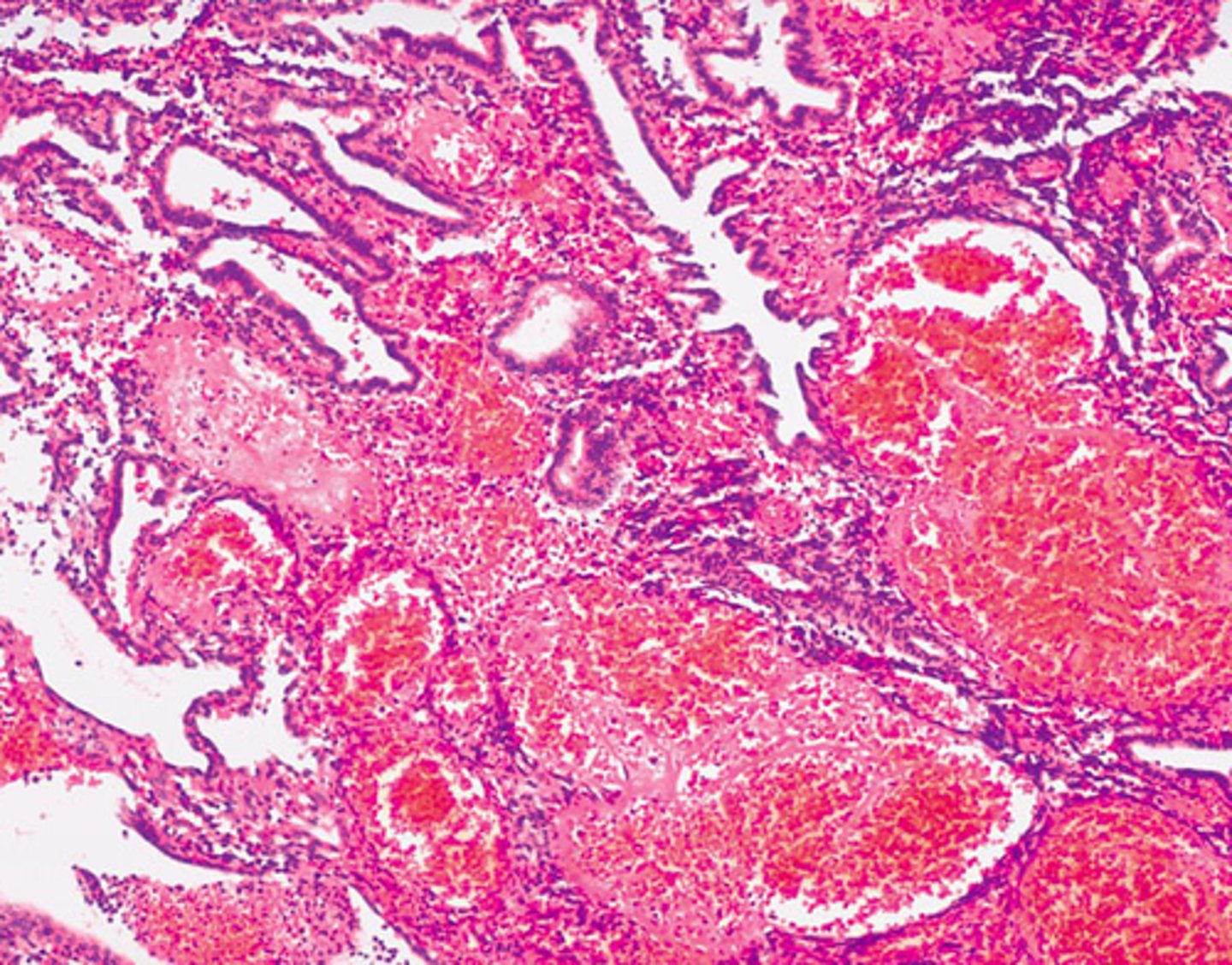
menstrual phase
-Shedding of the functional layer of the endometrium when no fertilization occurs
-Get rid of "trash" (leaves body)
Pap smears
Preventative tests that examine cervical cells for signs of cervical cancer
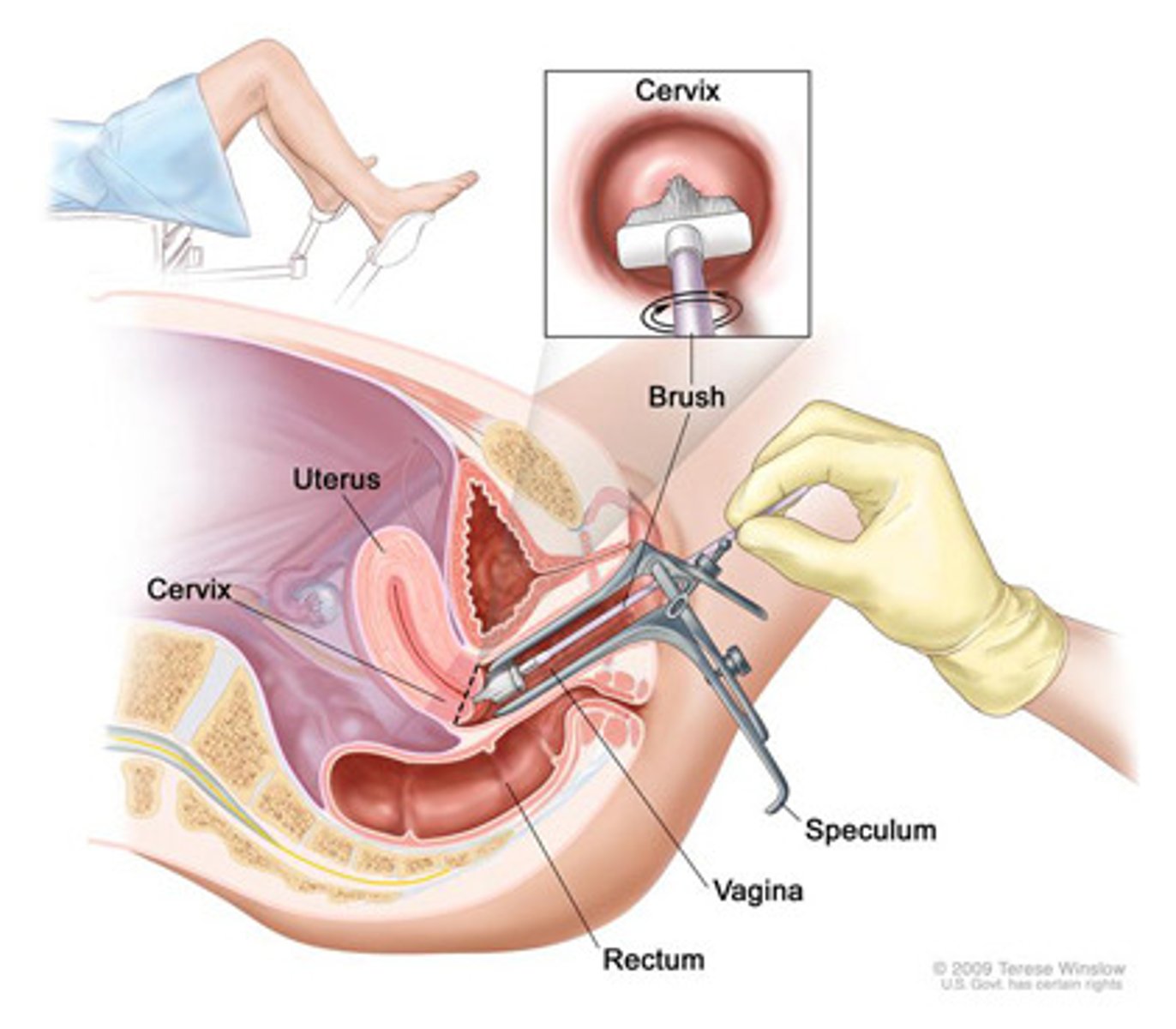
Vagina
-Receives semen during sexual intercourse
-Receives lubrication from cervical mucous glands, vaginal walls, and vestibular gland
Female sexual response
-Excitement caused by parasympathetic input
-Uterus lays flat during excitement phase (easier for sperm to enter)
-Orgasm= increased vaginal muscle tension; not required for conception
Female hormone cascade
1. Dominant follicle is selected and pumps out estrogen
2. Increased estrogen causes LH surge and stimulation of hypothalamus (positive feedback)
3. When ovulation occurs, estrogen levels drop, but corpus luteum increases progesterone levels
What else do puberty hormones do in females?
-body hair
-breast development
-increased subcutaneous fat
-widening of pelvis
Mammograms
-Preventative tests used to check for evidence of breast cancer
-Low dose x-rays
Menopause
-cessation of ovulation and menstruation
-Estrogen levels begin to decline as women reach mid-late 40's
Condoms
-barrier device prevents the exchange of body fluids
-Sperm never enters the female tract
-Protects against STIs
Short term hormonal contraceptives
-Contain hormones that inhibit body's natural hormone production
-Affect functional layer and cervical mucus
-Injectables, patch, pills
-Can be progesterone only or have estrogen and progesterone (holds estrogen levels high, so no LH surge)
-Progesterone thickens cervical mucus to plug entrance to uterus
Intrauterine devices
-Prevent sperm from fertilizing
-Can contain copper or hormones (usually progesterone)
-Hormonal thins uterine lining, inhibits perm from reaching egg, and thickens cervical mucus
-Long term
Sterilization
-Tubal ligation=cut and tie off uterine tubes, causing oocytes to be phagocytosed and disposed of; menstruation and ovulation would still occur
-Vasectomy= cut and tie off vas deferens; semen would still be produced
Why won't many sperm make it into the uterus?
-Can't pass mucus
-Can't survive acidic environment in vagina
-Leak out due to gravity
acrosomal reaction
-the discharge of hydrolytic enzymes from the acrosome, when the sperm contacts an egg
-Helps break through zona pellucida
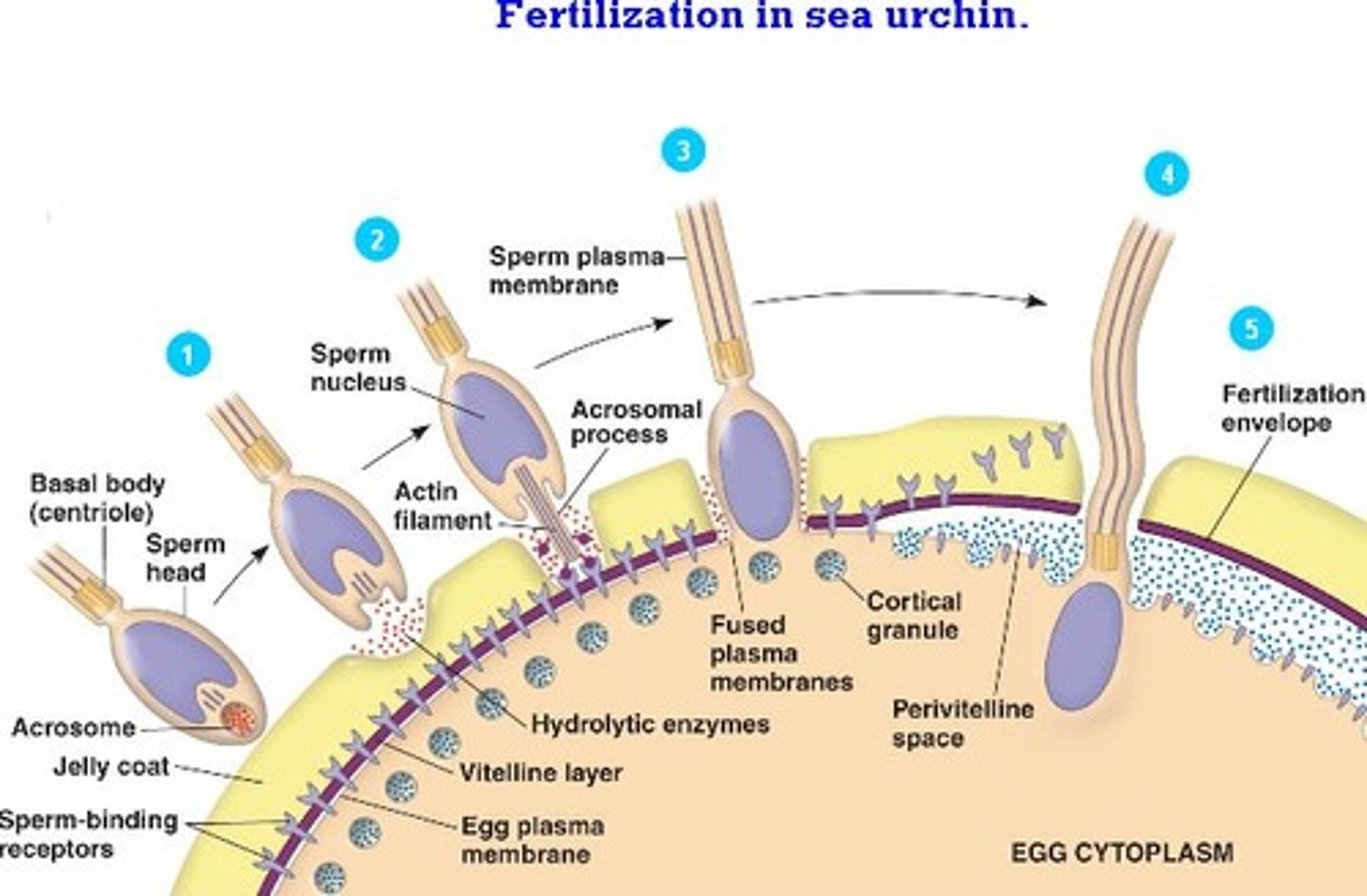
Cortical reaction
enzymes prevent any other sperm from binding to the egg
fertilization membrane
- hard layer that surrounds the ovum cell membrane
- prevents multiple fertilizations
-Once 1 sperm fertilizes the egg, then no more sperm can penetrate due to depolarized and impenetrable membrane
-Once fusion occurs, oocyte completes meiosis II and becomes an ovum
Ectopic pregnancy
-implantation of the fertilized egg in any site other than the normal uterine location
-Not viable
hCG hormone
-hormone that is secreted when pregnancy has occurred.
-It tells the body to continue the production of estrogen and progesterone in order to sustain the pregnancy
-Corpus luteum releases hormones and promotes placenta development
Placentation
Formation of the placenta from embryonic and maternal tissues
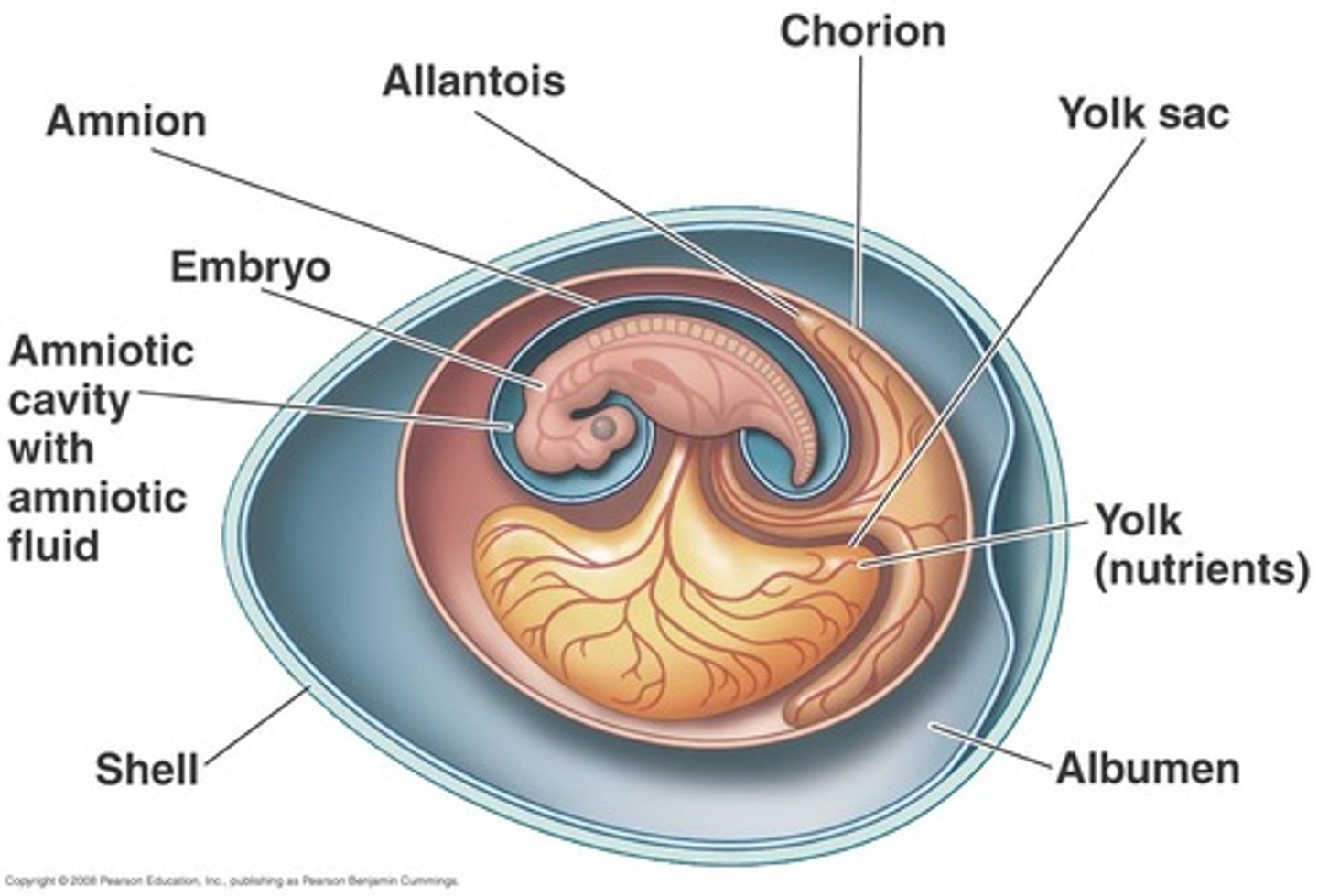
Chorion
Fetal part of the placenta
Decidua basalis
-maternal portion of placenta
-Endometrium side
Decidua capsularis
-The part of the decidua surrounding the chorionic sac
-Becomes compressed and degenerates as fetus develops
Placenta
-Serves as a nutritive, respiratory, excretory and endocrine organ for a fetus
-Exchange occurs via diffusion
What allows the uterus to stretch during pregnancy?
Smooth muscle
Relaxin
-Produced by the placenta
-Makes pubic symphysis more flexible (fibrocartilage)
Oxytocin
-Hormone responsible for the uterine contractions needed to expel the infant from the mother
-Released by posterior pituitary gland
-Increases to bring contractions closer together (more force)
-Increased oxytocin receptors in myometrium towards end of pregnancy
-Increases Ca2+ release and MLCK activation
Cesarean section
-Delivery of the infant through an incision in the abdominal and uterine walls
-Could be due to the baby being breached or the mother's anatomy
Lactation
-Production of milk by the mammary glands right after birth
-Oxytocin stimulates the release of milk, prolactin stimulates the production of milk
-Stimuli needed to make milk (ex. latching)
Prolactin
-Hormone that stimulates milk production
-Mom's hypothalamus releases prolactin releasing factors (PRFs), causing anterior pituitary gland to secrete prolactin
-Prolactin targets mammary glands to increase production