Emergency Care and Transportation of the Sick and Injured - Chapter 17: Neurologic Emergencies
 Call Kai
 Learn
Learn Practice Test
 Spaced Repetition
 Match
Match Flashcards
 Knowt Play
1/93

There's no tags or description
Looks like no tags are added yet.
Name | Mastery | Learn | Test | Matching | Spaced | Call with Kai | Chat |
|---|
No analytics yet
Send a link to your students to track their progress
94 Terms
brain stem
controls the most basic functions of the body, breathing, blood pressure, swallowing and pupil constriction
cerebellum
behind brain stem, controls muscle and body coordination
cerebrum
right and left hemispheres, front controls emotion and thought, middle controls touch and movement, back controls sight, speech usually controlled on the left side
cranial nerves
12 nerves that run to various parts fo the head
foramen magnum
A large opening at the base of the skull through which the brain connects to the spinal cord.
The brain
is the most sensitive changes in oxygen, glucose and temperature levels. a significant change in any one of these three levels will result in a neurologic change.
coma
a state of profound unconsciousness from which the patient cannot be roused
tension headaches, migraines and sinus headaches
are the most common type of headaches
Migraines headaches
are thought to be caused by changes in the blood vessel size in the base of the brain. Women are three times more likely to get it then men. described as pounding, throbbing, or pulsating.
Headache red flags
Sudden onset of symptoms
explosive/thunderclap pain
altered mental status
Age>50
depressed immune system(known to be at higher risk for infection)
neurologic deficits
neck stiffness/pain
fever
changes in vision
one sided paralysis or weakness
cerebrovascular accident (CVA) or stroke
an interruption of blood flow to the brain that results in the loss of brain function; also called a stroke. in the context of a total lack of oxygen, brain cells stop functioning and begin to die within minutes.
Spend as little time at the scene as possible.
two main types of stroke
ischemic (direct blockage) and hemorrhagic (rupture)
thrombosis
A blood clot either in the arterial or venous system. when the clot occurs in a cerebral artery . it may result in the interruption of cerebral blood flow and subsequent
embolus
a blood clot or other substance in the circulatory system that travels to a blood vessel where it causes a blockage.
ischemic stroke
a type of stroke that occurs when blood flow to a particular part of the brain is cut off by a blockage (eg a blood clot) inside a blood vessel. many patients deny or ignore their symptom and delay in seeking medical attention. this can cause devastating consequences because time is brain. Most common one
hemorrhagic stroke
a type of stroke that occurs as a result of bleeding inside the brain. accounts for 13% of all strokes. happens to people experiencing stress or excerption. highest risk are people with hypertension and a sudden severe headache.
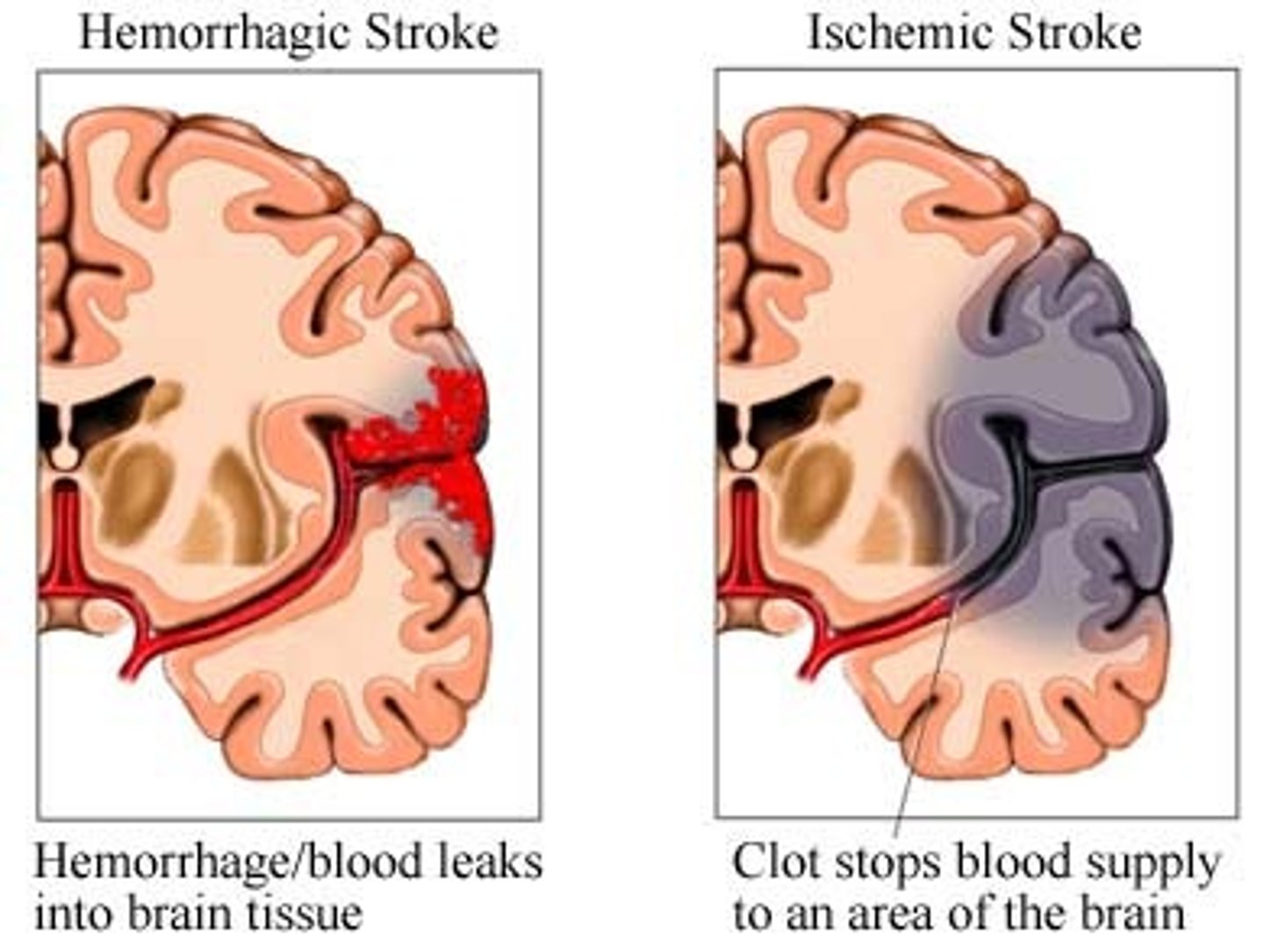
Atherosclerosis
condition in which fatty deposits called plaque build up on the inner walls of the blood vessels
aneurysm
a swelling or enlargement of the wall of blood vessel that results from weakening of the vessel wall
berry aneurysm
resembles a tiny balloon or berry that juts out from the artery. ruptures between two of the coverings of the brain called the subarachnoid space
transient ischemic attack (TIA)
a disorder of the brain in which brain cells temporarily stop working because of insufficient oxygen, causing stroke-like symptoms that resolve completely within 24 hours of onset
signs and symptoms of stroke
facial drooping
sudden weakness or numbness in the face, arm, leg or one side of the body
loss of movement and sensation on one side of the body
speech disorders
aphasia
sudden and severe headache
trouble walking
confusion, combativeness
tongue deviation
cerebral hemorrhage
bleeding in the brain
conditions that may mimic stroke:
Hypoglycemia,
Postictal state (labored respirations, AMS),
subdural and epidural bleeding (collection of blood near skull that presses on brain)
aphasia
the inability understand and or produce speech
postictal state
the period following a seizure that lasts between 5 and 30 minutes characterized by labored respirations and some degree of altered mental status
seizure
a neurologic episode caused by a surge of electrical activity in the brain; can be a convulsion characterized by generalized uncoordinated muscular activity and can be associated with loss of consciousness. needs immediate transport
generalized (tonic-clonic) seizure
Results from abnormal electrical discharges from the large areas of the brain, usually involving both hemispheres. a seizure characterized by unconsciousness and a generalized severe twitching of all the body's muscles that may last several minutes or more; formerly known as a absence seizure or petit mal.
partial (focal) seizure
a seizure affecting a limited portion of the brain. Classified as simple or complex
aura
a sensation experienced before a seizure, serves as a warning sign that seizure is about to occur
status epilepticus
a condition in which seizures recur every few minutes or last more than 30 minutes
medications for seizure disorders
Levetiracetam(Keppra)
Phenytoin(Dilantin)
Phenobarbital
Carbamazepine(Tegretol)
Valproate(Depakote)
Topiramate(Topamax)
Clonazepam(Klonopin)
cause of epileptic seizure
congenital origin
causes of structural seizure
tumor
infection
scar tissue from injury
head trauma
stroke
causes of metabolic seizure
hypoxia
abnormal blood chemical values
hypoglycemia
poisoning
drug overdose
sudden withdrawal from alcohol, medications
febrile seizure
seizure that results from sudden high fevers; most often seen in children
hemiparesis
weakness on one side of the body
T I P S
Trauma
Infection
Psychogenic causes
Seizure, syncope
possible causes of altered mental status
dysarthria
slurred speech
A E I O U
Alcohol
epilepsy, endocrine, electrolytes
Insulin
Opiates
Uremia (kidney failure)
possible causes of altered mental status
the right side of the brain controls?
the left side of the brain
the left side of the brain controls?
the right side of the brain
the front side of the brain controls?
emotions and thoughts
the middle side of the brain controls?
sensation and movement
the back side of the brain
processes sight
Cushing's triage
decrease in heart rate
increase in blood pressure
irregular respirations
aphagia
eating disorders, swallowing and eating issues
receptive
can understand speech
expletive
cant speak properly
Dura matter
outer layer / next to the skull
aracnoid
middle layer
apia
near the bottom of the brain
altered mental status
any deviation from alert and oriented to person, place, time and event or any deviation from a patients normal baseline mental status
delirium
a temporary change in mental status characterized by disorganized thoughts inattention memory loss disorientation striking changes in personality and affect hallucinations delusions or a decreased level of consciousness
epilepsy
a disorder in which abnormal electrical discharges occur in the brain causing seizure and possible loss of consciousness
hypoglycemia
an abnormally low blood glucose level. has altered or decrease level of consciousness
incontinence
loss of bowel and or bladder control; may be the result of a generalize seizure
ischemia
a lack of oxygen that deprives tissues of necessary nutrients resulting from partial or complete blockage of blood flow; potentially reversible because permanent injury has not yet occurred
syncope
a fainting spell or transient loss of consciousness
these are associated with altered mental status
coma, seizure, intoxication, body temperature abnormalities, hypoxia, hypoglycemia
an ischemic stroke
when blood flow to a particular part of the brain is cut off by a blockage inside a blood vessel the result is
untreated hypertension
patients who are at the highest risk of hemorrhagic stroke are those who have
headache
patients with a subarachnoid hemorrhage typically complain of a sudden severe
stroke
hypoglycemia can mimic conditions such as a
dilate
the platque that builds up in atherosclerosis obstructs blood flow and interferes with the vessels ability to
possible seizure activity
altered mental status, incontinence, muscle rigidity and twitching are signs and symptoms of...
migraine headaches
this is the second most common type of headache and are thought to be caused by changes in blood vessel size in the base of the brain
increased intracranial pressure
headache, vomiting, altered mental status and seizures are all considered early signs of
hemorrhagic
people with uncontrolled hypertension have a higher risk of what kind of stroke
tension headaches
headaches caused by muscle contractions in the head and neck are typically associated with?
the airway
when assessing a patient with a possible cerebrovascular accident (CVA) you should check what first
Transient ischemic attack (TIA)
what is usually a warning sign that a larger significant stroke may occur in the future
12
there are how many cranial nerves?
cerebellum
playing the piano is coordinated by which part of the brain
carbon monoxide poisoning
an incident to where you have more than one patient complaining of a headache may indicate
simple partial seizure
this may cause twitching of the extremity muscles that may spread slowly to another body part
complex partial seizures
these result from abnormal discharges from the temporal lobe of the brain
foreign body obstruction
a person who was eating prior to having a seizure may have a
glaskow coma scale score calculated
all patients with an altered mental status should have a
thrombolytic therapy
this may reverse stroke symptoms and even stop the stroke if given within 3 to 6 hours of the onset of symptoms
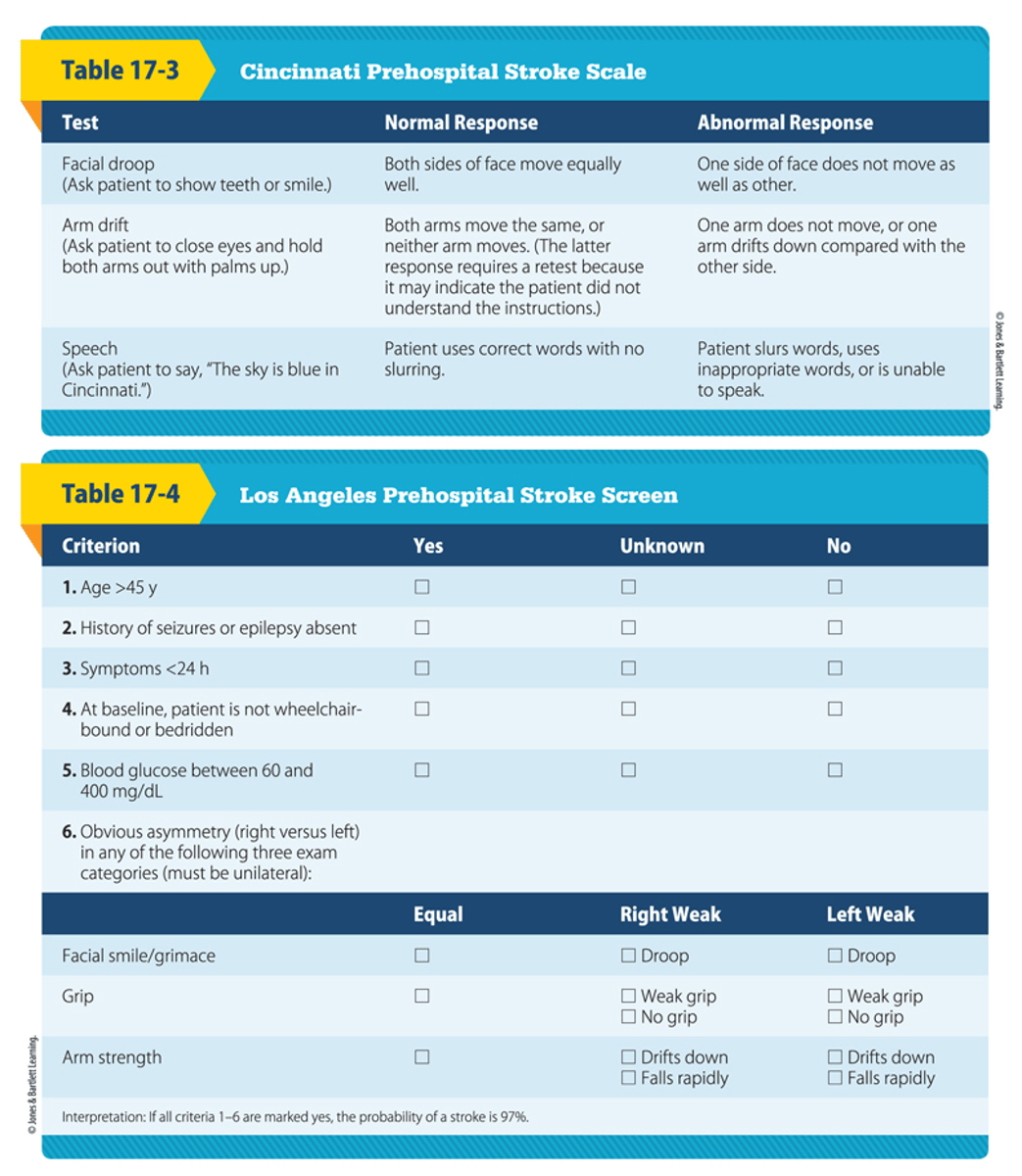
Cincinnati Pre-hospital Stroke Scale
-facial droop
-arm drift
-difficulty speaking
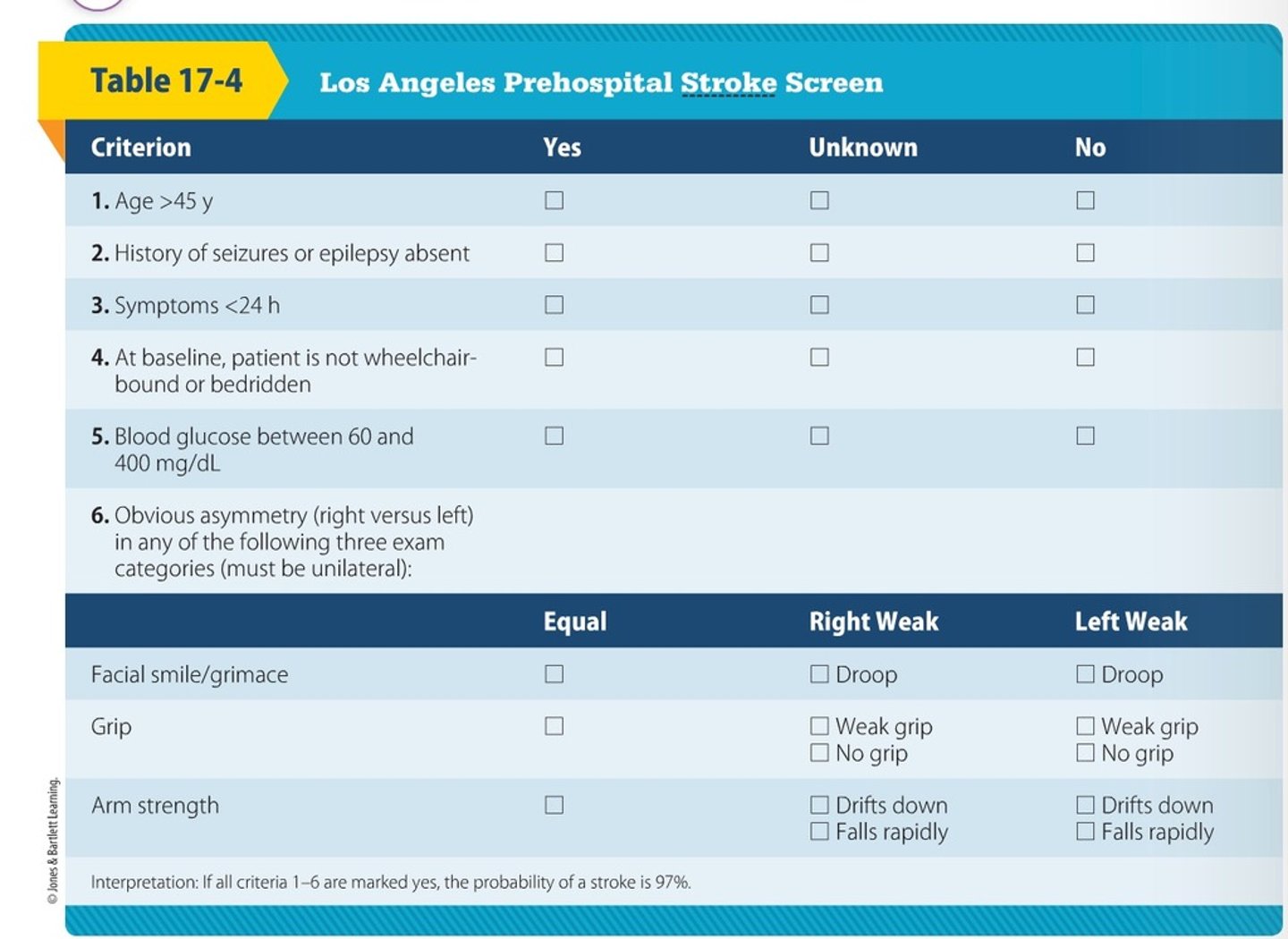
Los Angeles Prehospital Stroke Screen (LAPSS)
Age (>45)
seizure history
duration of symptoms
wheelchair bound
BGL within 60-400
Unilateral asymmetry
Facial Droop, Arm Drift, Speech, Time
F.A.S.T.
when was the last time seen normal
Hospitals will ask for stroke patients...
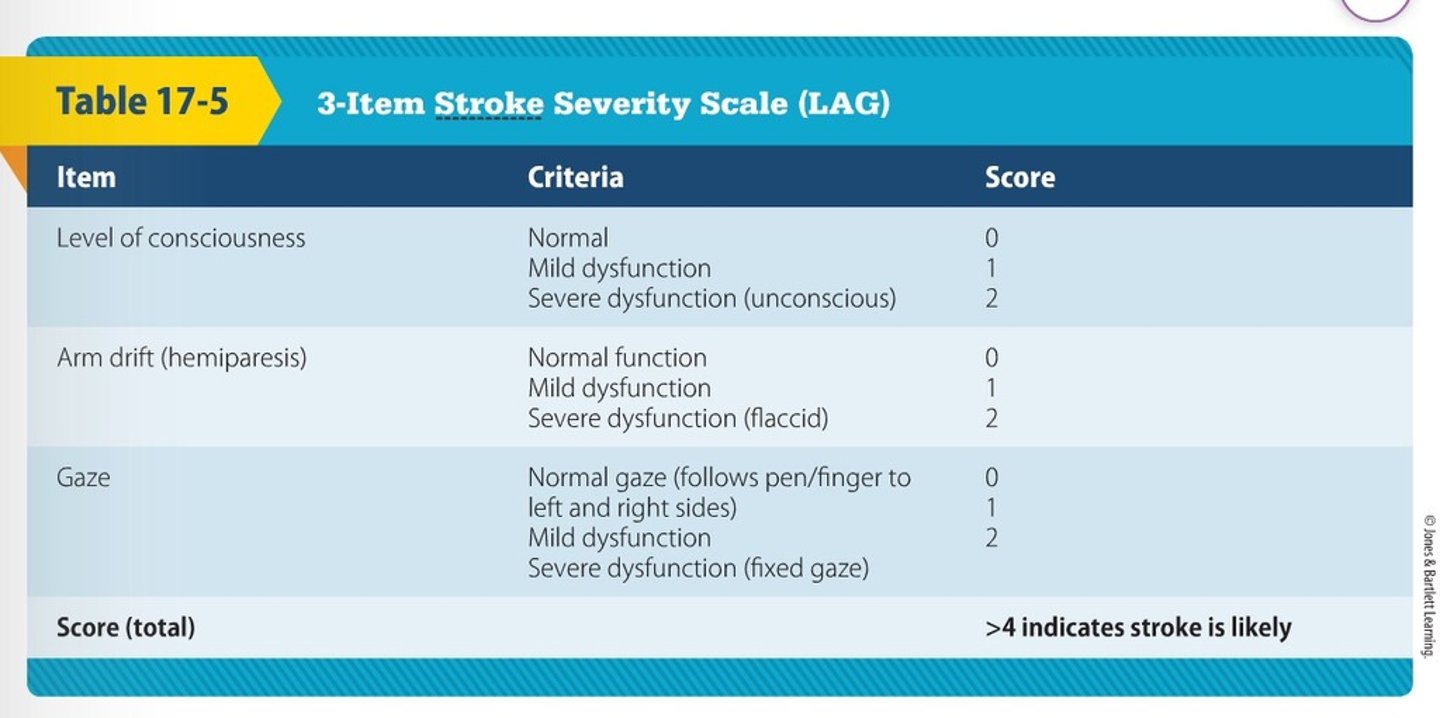
3-Item Stroke Severity Scale (LAG)
Blood clot-dissolving medication(Thrombolytic therapy)
in most patients with a suspected stroke, the physicians in the emergency department (ED) will need to determine whether there is bleeding in the brain. if there is no bleeding then the patient will receive __________________
A.brain stem.
1.A 41-year-old man presents with slow, irregular breathing; hypotension; and dilated pupils. These signs MOST likely indicate dysfunction of the:
A.brain stem.
B.hypothalamus.
C.cerebrum.
D.cerebellum.
D.a blocked cerebral artery.
2.An acute ischemic stroke is caused by:
A.a ruptured cerebral artery.
B.increased intracranial pressure.
C.an acute rise in a person's blood pressure.
D.a blocked cerebral artery.
A.hemorrhagic stroke
3.A 56-year-old man experienced a sudden, severe headache and then became unresponsive. He has a history of high blood pressure. The MOST likely cause of his condition is a(n):
A.hemorrhagic stroke.
B.acute ischemic stroke.
C.severe migraine headache.
D.transient ischemic attack.
B.symptoms that persist for longer than 24 hours.
4.Unlike an ischemic stroke, a transient ischemic attack is characterized by all of the following, EXCEPT:
A.symptoms that resolve within 24 hours.
B.symptoms that persist for longer than 24 hours. C.weakness or paralysis to one side of the body.
D.an acute onset of confusion and slurred speech.
D.dysarthria.
5.A patient with a suspected stroke presents with slurred speech that is difficult for you to understand. This is referred to as:
A.aphasia.
B.dysphasia.
C.dysphagia.
D.dysarthria.
D.generalized seizure.
6.A type of seizure that is characterized by severe twitching of all the body's muscles and lasts for several minutes or longer is called a(n):
A.partial seizure.
B.absence seizure.
C.tonic-clonic seizure.
D.generalized seizure.
B.medications may be given to reverse the stroke.
7.The MOST important reason for promptly transporting a stroke patient to the hospital is:
A.a transient ischemic attack can be ruled out. B.medications may be given to reverse the stroke.
C.the clot in the coronary artery may be dissolved.
D.he or she needs close blood pressure monitoring.
C.Facial symmetry, speech, arm drift
8.Which of the following are components of the Cincinnati Prehospital Stroke Scale?
A.Arm drift, blood pressure, speech
B.Speech, pupil response, arm drift
C.Facial symmetry, speech, arm drift
D.Pupil response, facial droop, speech
C.Without lights and sirens
10.If a patient complains of a severe migraine, how should she be transported?
A.In a brightly lit ambulance so she can see while her vision is impaired
B.With loud sirens so she can get to the hospital as soon as possible
C.Without lights and sirens
D.This patient should not be transported.