Intro to Physiology 7: Synaptic Transmission
 Call Kai
 Learn
Learn Practice Test
 Spaced Repetition
 Match
Match Flashcards
 Knowt Play
1/37

There's no tags or description
Looks like no tags are added yet.
Name | Mastery | Learn | Test | Matching | Spaced | Call with Kai | Chat |
|---|
No analytics yet
Send a link to your students to track their progress
38 Terms

what are synapses
junction between a neuron and another cell
electrical activity or presynaptic neuron influences post synaptic neuron

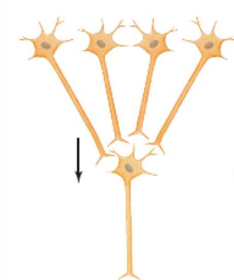
what kind of synaptic integration is this
convergence
inputs from many cells affects a single post synaptic cell

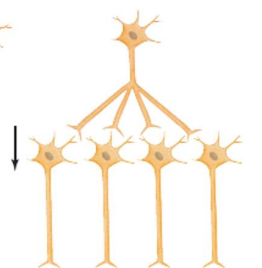
what kind of synaptic integration is this
divergence
one cell affects multiple pathways

what are electrical synapses/ gap junctions
presynaptic and postsynaptic plasma membranes joined by gap junctions for fast communication
what are connexons
the protein channels of junctions
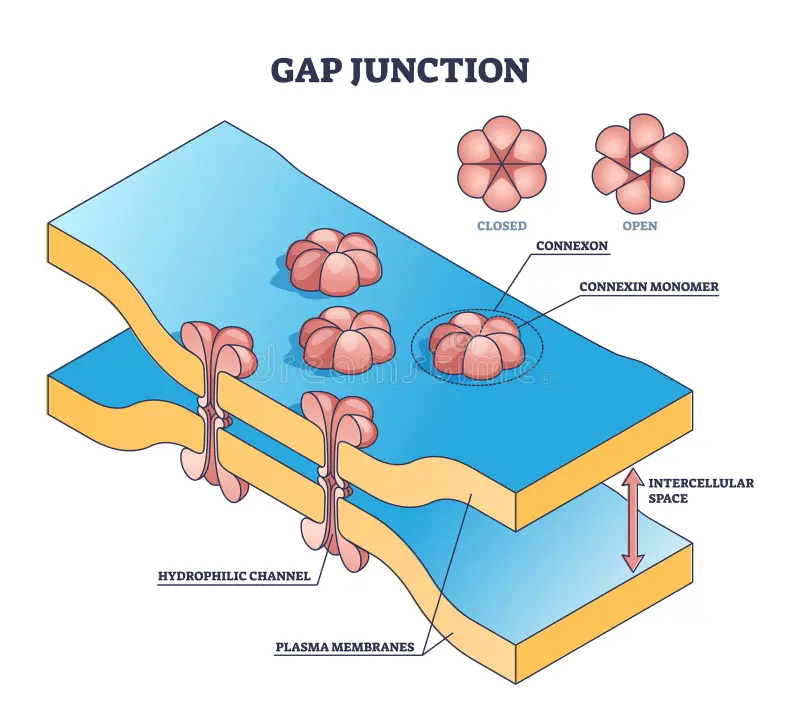

what are the functions of gap junctions
allow small molecules to move directly from one cell to another
ions and secondary messengers


where can gap junctions be found and why
cardiac and smooth muscle
synchronization of electrical activity in mass
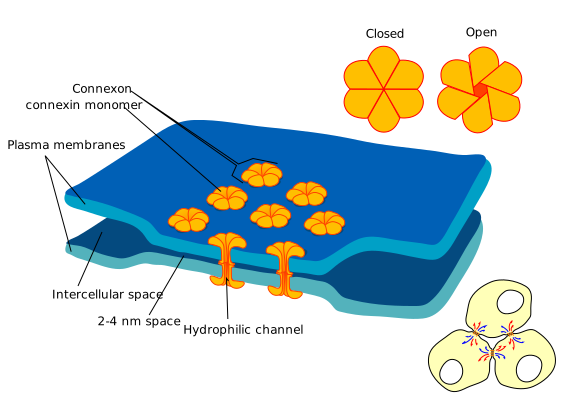

what is a functional electrical syncytium
network of separate cells that behave electromagnetically as a single, coordinated unit

what are some things that can close gap junctions
voltage
ion concentration
pH changes
faults in gap junctions in cardiac muscle can result in…
dysrhythmia

What are synaptic clefts
the space between pre- and post-synaptic cells
no direct contact
how do chemical synapses release message
depolarization of presynaptic axonal terminal releases chemical neurotransmitter
binds to and activate receptors on post-synaptic cell membrane
opens/closes ligand-gated ion channels leading to membrane potential change in postsynaptic neuron

what kind of receptor is this
ionotropic receptor
when neurotransmitter binds, ion channel opens up
immediate influx of ions

what kind of receptor is this
metabotropic receptors
G-protein coupled receptor activates interneural signal transduction cascade leading to cationic channels opening and depolarization
What is the biggest difference between ionotropic and metabotropic receptors
ionotropic
direct
fast
metabotropic
indirect
not fast

where are neurotransmitters stored
stored in special compartments called synaptic vesicles
in presynaptic axon terminal
what are the steps in chemical synaptic transmission
arrival of action potential depolarizes membrane potential
depolarization opens voltage gated Ca+ channels in presynaptic membrane
Ca+ moves INTO the axon terminal of presynaptic neuron
releases of neurotransmitter by exocytosis into synaptic cleft
vesicle and cell membrane fuse together via SNARE proteins
neurotransmitter release and diffuse
neurotransmitter binds to post-synaptic receptor
removal of neurotransmitter
how do neurotransmitters get removed
reuptake
degradation
diffusion
what do SNARE proteins need?
need calcium influx
calcium binds to synaptotagmin
describe how tetanus toxin impacts neurons
toxin chews up SNARE complex in inhibitory neurons for motor neurons
more muscle contraction
describe how botulism toxin impacts neurons
toxin attacks pre-synaptic SNARE in excitatory neurons
muscle weakness
describe excitatory postsynaptic potentials
local depolarization caused by opening Na+ channels
brings membrane potential closer to threshold
more positive
describe inhibitory postsynaptic potentials
local hyperpolarization caused by opening Cl- or K+ channels in postsynaptic membrane
more negative
what is synaptic integration
the summed membrane potential changes of all excitatory and inhibitory synaptic inputs
needed to reach threshold potential for AP
(in most cells, the amplitude of postsynaptic potentials are too small to cause anything on their own)
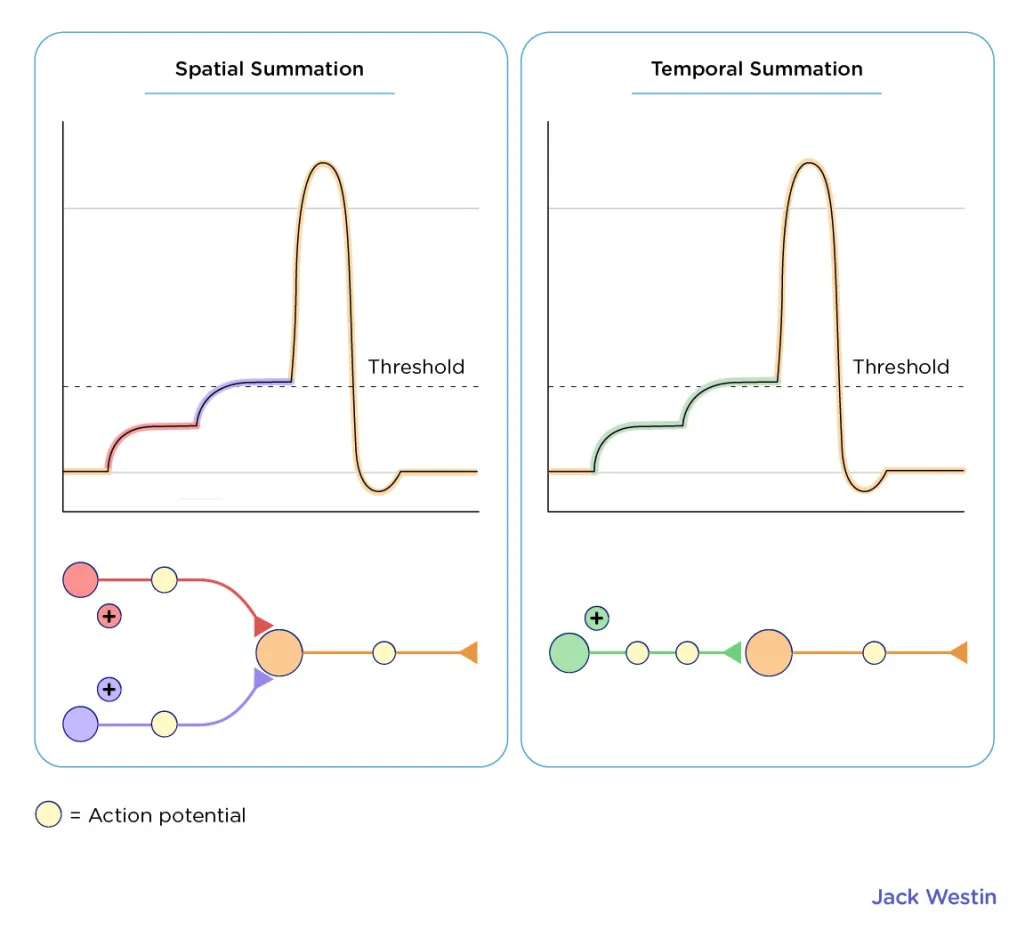
what is temporal summation
time
occurs when input signal from the same presynaptic cell is repeatedly rapidly
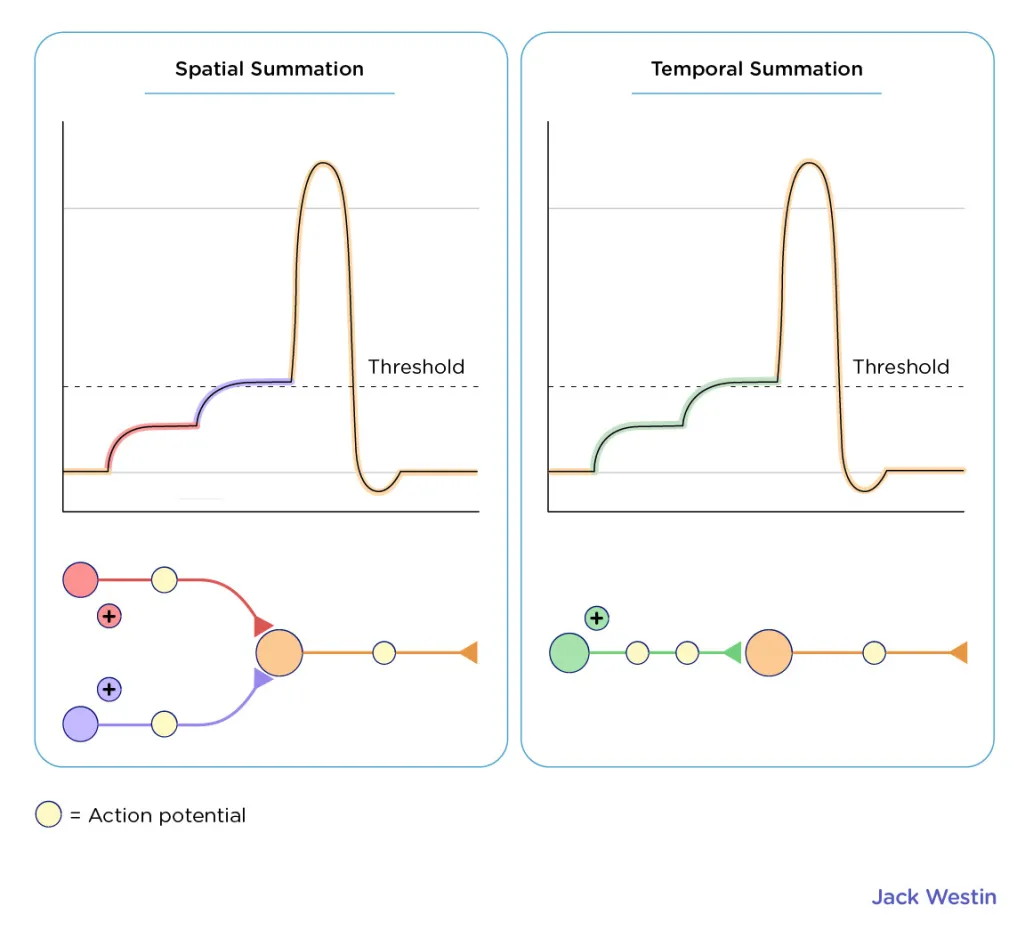
what is spatial summation
location
occurs when input signal is coming from two or more postsynaptic potentials spreading from different locations
what are trigger zones in neurons
regions where the threshhold for action potential firing is lowest
high density of Na+ channels
where are some possible locations of trigger zones
axon hillock
first node of ranvier near the axon terminal of sensory afferent neurons
what is synaptic strength
the effectiveness of a given synapse on the membrane potential of the post-synaptic neuron
what is synaptic strength determined by in postsynaptic cells
frequency of the action potential of the postsynaptic neuron
what is synaptic strength determined by in presynaptic cells
axo-axonal synapses
regulate the amount of transmitter released
what is presynaptic facilitation/inhbition
excitatory/inhibitory axo-axonic synapses cause presynaptic axons to release more or less neurotransmitter
what will happen if there is a presynaptic facilitation of an excitatory synapse?
more release of excitatory transmitters
postsynaptic cell more likely to meet threshold
what will happen if there is a presynaptic facilitation of an inhibitory synapse
more release of an inhibitory transmitter
postsynaptic cell less likely to meet treshold
what will happen if there is a presynaptic inhibition of an inhibitory synapse
less release of an inhibitory transmitter
postsynaptic cell more likely to meet treshold
how do autoreceptors impact synaptic strength
presynaptic receptors that respond to the neurotransmitters released into the terminal
use negative feedback
reduces the amount of transmitter that is released from the trial
what are the three regulatory factors of presynaptic strength
availability of neurotransmitter
auto receptor
presynaptic facilitation/inhibition
what are the three regulatory factors of postynaptic strength
types and number of available receptors
temporal and spatial receptors