BY 206 Lab Tope Week 9 (EX: 4-2, 5-6, 5-8, 7-3)
 Call Kai
 Learn
Learn Practice Test
 Spaced Repetition
 Match
Match Flashcards
 Knowt Play
1/59

There's no tags or description
Looks like no tags are added yet.
Name | Mastery | Learn | Test | Matching | Spaced | Call with Kai |
|---|
No analytics yet
Send a link to your students to track their progress
60 Terms
. . . . .
COLUMBIA CNA w/ 5% SHEEP BLOOD AGAR

staphylococci, streptococci, enterococci
COLUMBIA CNA
Columbia CNA agar is used to isolate ___, ___, and ___ (primarily from clinical specimens).
hemolysis
COLUMBIA CNA
The inclusion of 5% sheep blood allows differentiation based on a _____ reaction.
undefined, differential, and selective
COLUMBIA CNA
What type of medium is Columbia CNA?
Gram-positive
COLUMBIA CNA
Does this medium allow the growth of Gram-positive or Gram-negative organisms?
yeast extract
COLUMBIA CNA
What ingredient in this medium provides B-vitamins?
colistin and nalidixic acid (CNA)
COLUMBIA CNA
What are the antibiotics that act as selective agents against G- organisms by affecting membrane integrity and interfering with DNA replication?
Klebsiella, Proteus, and Pseudomonas
COLUMBIA CNA
Colistin and Nalidixic acid (CNA) are particularly effective against what species of bacteria (3)?
α-hemolysis
COLUMBIA CNA
Which hemolysis reaction partially hemolyzes RBCs?
α (alpha), β (beta), or γ (gamma)?
β-hemolysis
COLUMBIA CNA
Which hemolysis reaction completely hemolyzes RBCs?
α (alpha), β (beta), or γ (gamma)?
γ-hemolysis
COLUMBIA CNA
Which hemolysis reaction does NOT hemolyze RBCs?
α (alpha), β (beta), or γ (gamma)?
-organism is inhibited by CNA
-probable G- organism
COLUMBIA CNA
Poor/NO growth
-NOT inhibited by CNA and partially hemolyzes RBCs
-probable α-hemolytic Staphylococcus, Streptococcus, or Enterococcus
COLUMBIA CNA
Good growth with greening of medium (α-hemolysis)
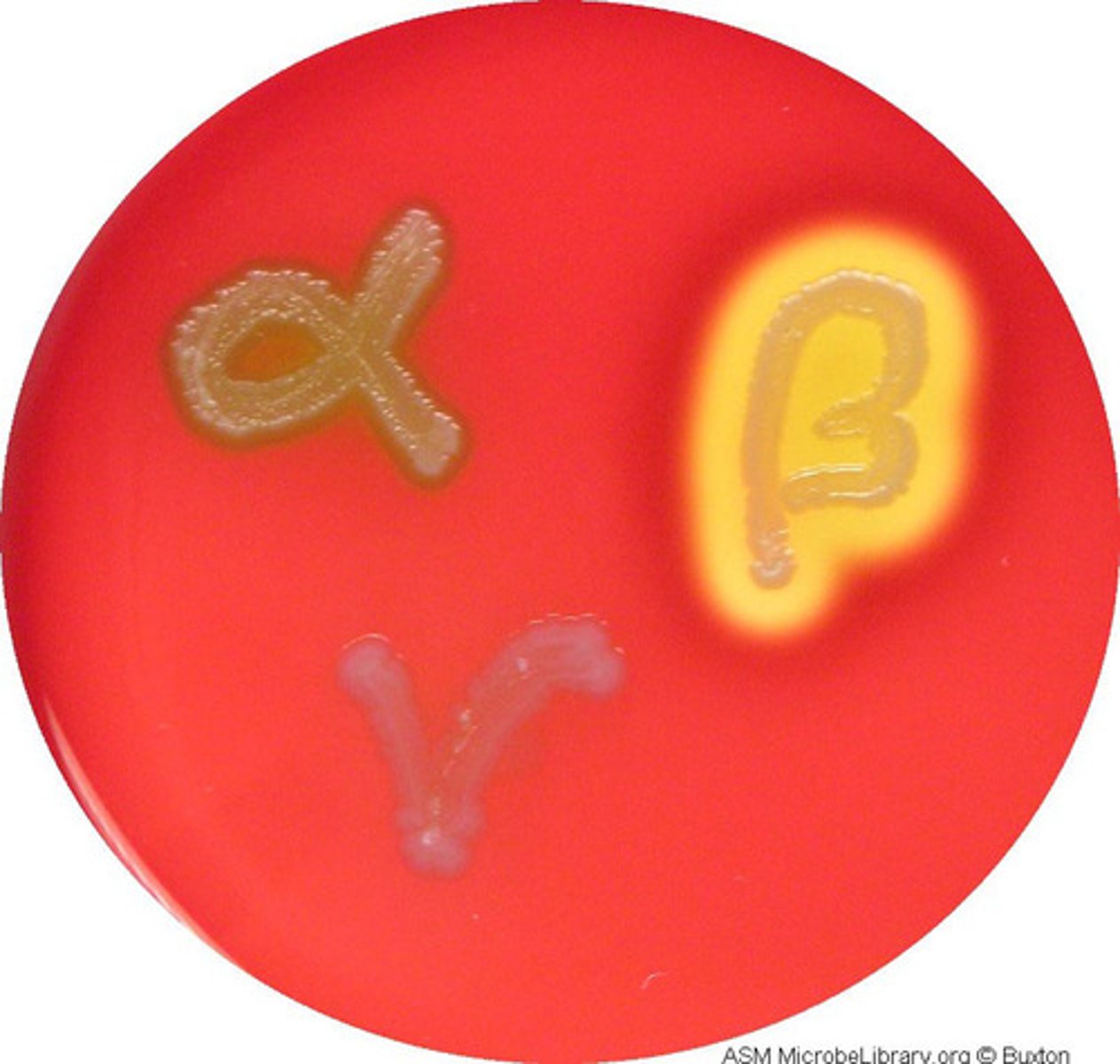
-NOT inhibited by CNA and completely hemolyzes RBCs
-probable β-hemolytic Staphylococcus, Streptococcus, or rarely Enterococcus
COLUMBIA CNA
Good growth with clearing of medium (β-hemolysis)
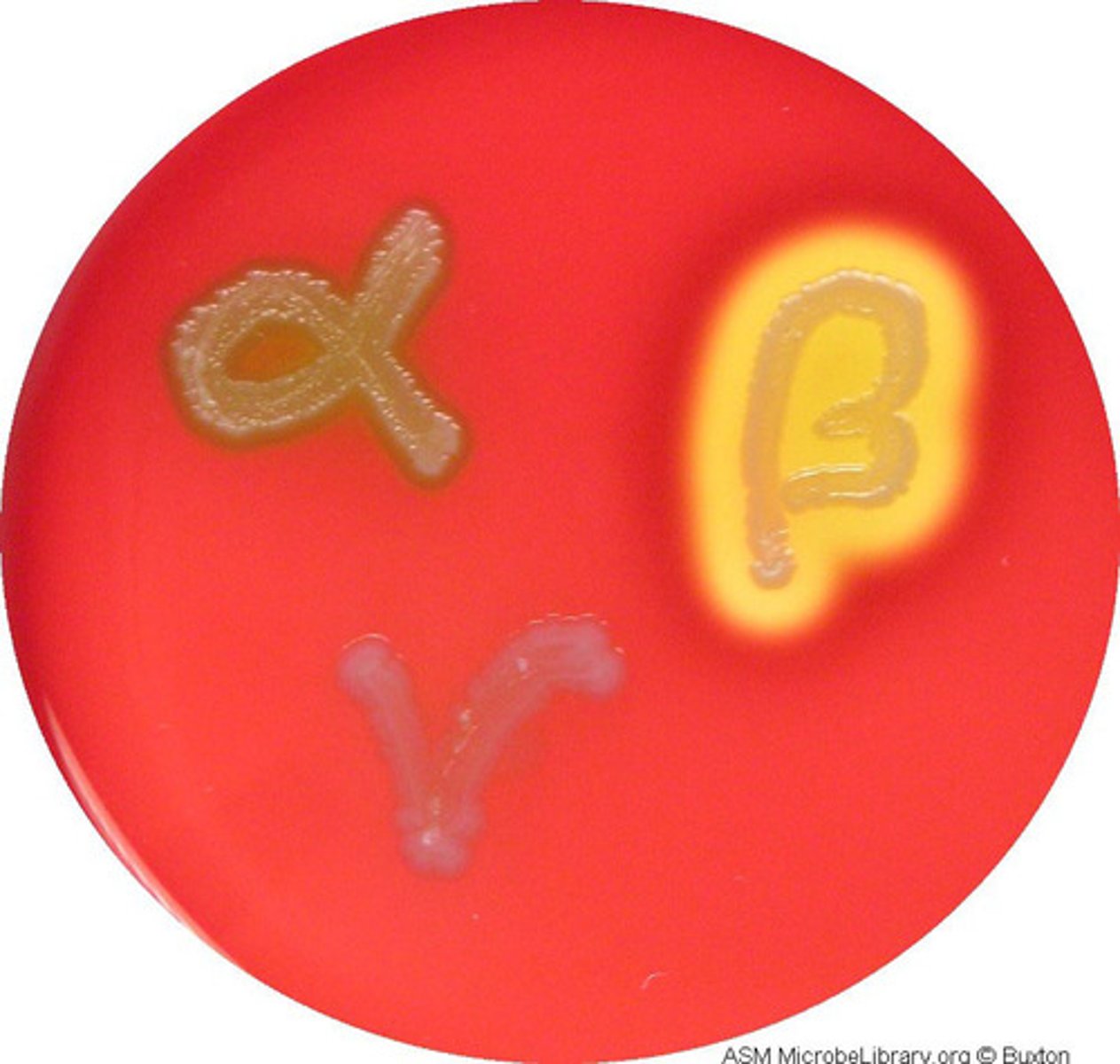
-NOT inhibited by CNA and does NOT hemolyze RBCs
-probable γ-hemolytic Staphylococcus, Streptococcus, or rarely Enterococcus
COLUMBIA CNA
Good growth with no change of color (γ-hemolysis)
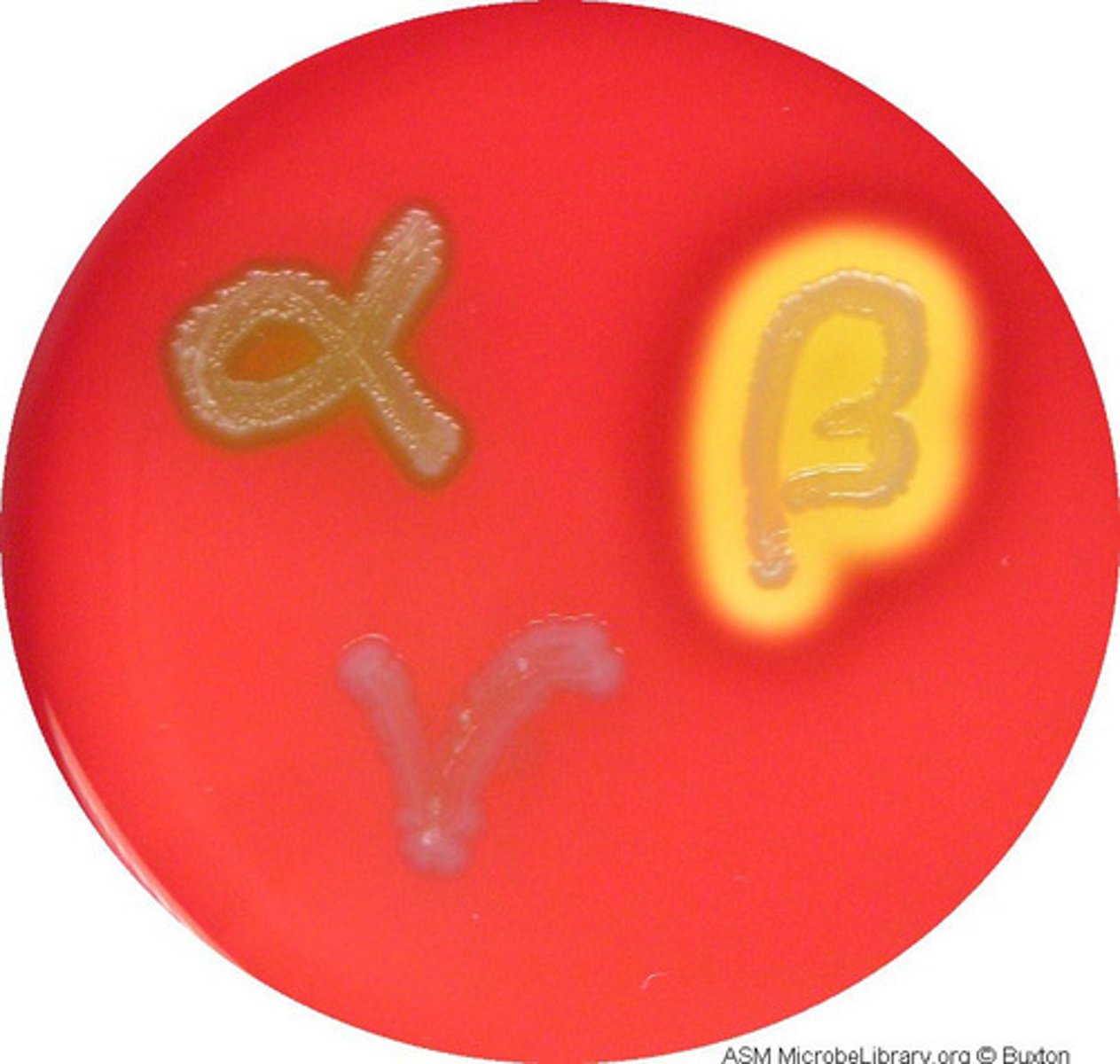
positive
*because the bacteria is expected to grow
COLUMBIA CNA
Was the control in this test positive or negative?
. . . . .
CATALASE TEST
Micrococcaceae, Streptococcaceae
CATALASE TEST
This test is used to identify organisms that produce the enzyme catalase.
It is used to differentiate members of the catalase-positive ____ from the catalase-negative _____.
flavoprotein
*FADH₂ is also capable of this reaction
CATALASE TEST
an ETC carrier molecule that can bypass the next carrier in the chain and transfer electrons directly to oxygen, producing hydrogen peroxide (H₂O₂)
Organisms that produce hydrogen peroxide and the superoxide radical are toxic because they oxidize biochemicals and make them non-functional. But, organisms that produce these can also produce enzymes to break them down.
CATALASE TEST
note:)

superoxide dismutase
CATALASE TEST
What enzyme catalyzes the conversion of superoxide radical to hydrogen peroxide?
catalase
CATALASE TEST
What enzyme converts hydrogen peroxide into water and gaseous oxygen?
positive
CATALASE TEST
If bubbling occurs after adding hydrogen peroxide, is the organism positive or negative for catalase?
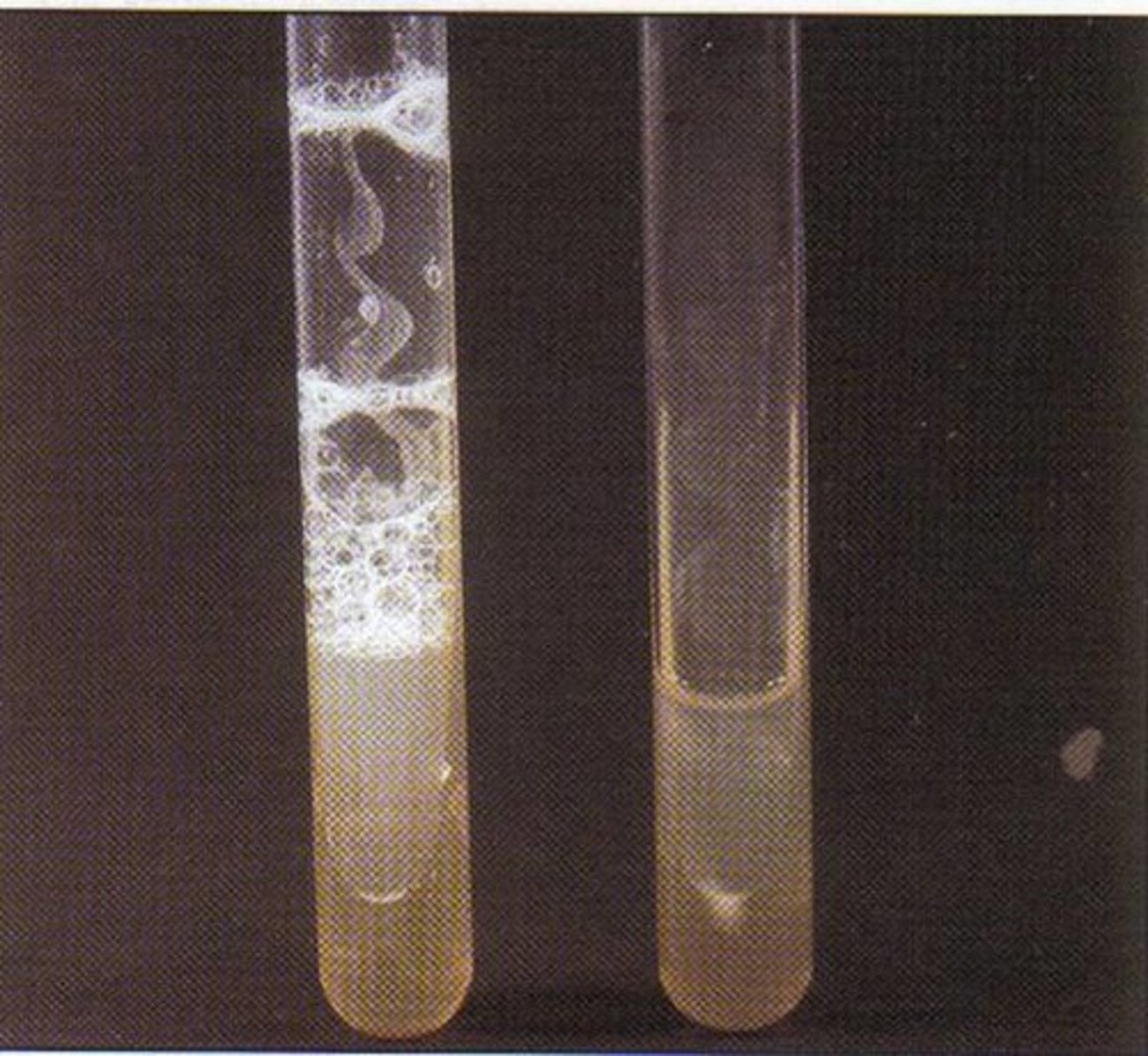
negative
CATALASE TEST
If bubbling does NOT occur after adding hydrogen peroxide, is the organism positive or negative for catalase?
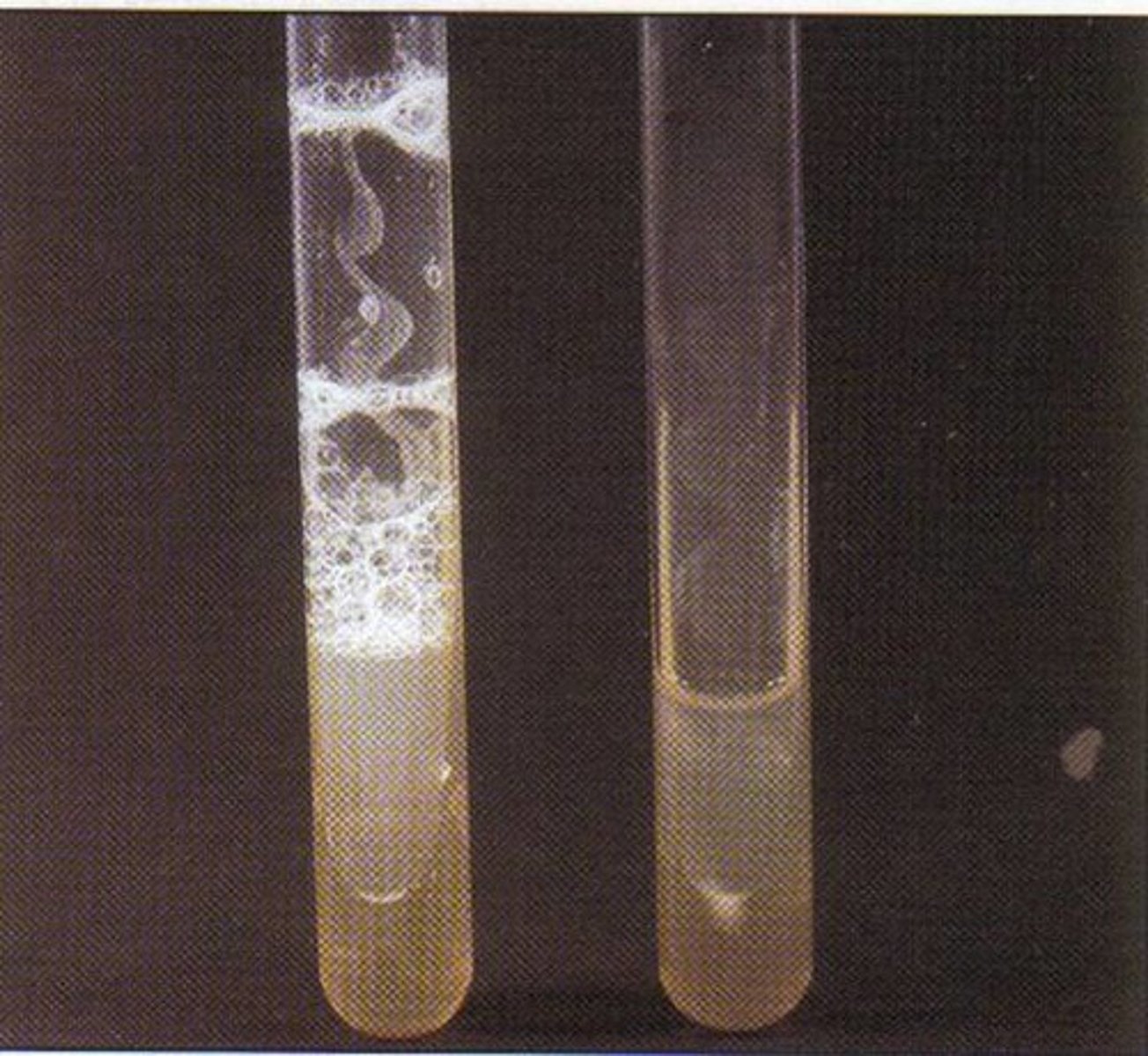
Obligate aerobe
superoxide dismutase: present
catalase: present
CATALASE TEST
Obligate aerobe
superoxide dismutase: _____
catalase: _____
Facultative anaerobe
superoxide dismutase: present
catalase: present
CATALASE TEST
Facultative anaerobe
superoxide dismutase: _____
catalase: _____
Microaerophile
superoxide dismutase: present
catalase: present in small amounts
CATALASE TEST
Microaerophile
superoxide dismutase: _____
catalase: _____
Aerotolerant anaerobe
superoxide dismutase: present
catalase: absent (alternative mechanism)
CATALASE TEST
Aerotolerant anaerobe
superoxide dismutase: _____
catalase: _____
Obligate anaerobe
superoxide dismutase: absent
catalase: absent
CATALASE TEST
Obligate anaerobe
superoxide dismutase: _____
catalase: _____
ur doing great <3

. . . . .
NITRATE REDUCTION TEST
undefined
NITRATE REDUCTION TEST
What type of medium is nitrate broth?
anaerobic respiration
*the reduction of an inorganic molecule other than oxygen
NITRATE REDUCTION TEST
Nitrate reduction is an example of . . .
nitrate reductase
NITRATE REDUCTION TEST
Many G- bacteria contain the enzyme ____ ____ and perform a single step reduction of nitrate to nitrite.
Enterobacteriaceae
NITRATE REDUCTION TEST
Virtually all members of _____ perform one-step reduction of nitrate to nitrite.
denitrification
*formation of gas/bubbles
NITRATE REDUCTION TEST
Other bacteria perform ____, a multi-step process by which bacteria convert nitrate into molecular nitrogen.
Durham tube
*if gas is produced, then denitrification has occurred and the test is complete/positive
NITRATE REDUCTION TEST
What is placed inside the broth to trap a portion of any gas produced?
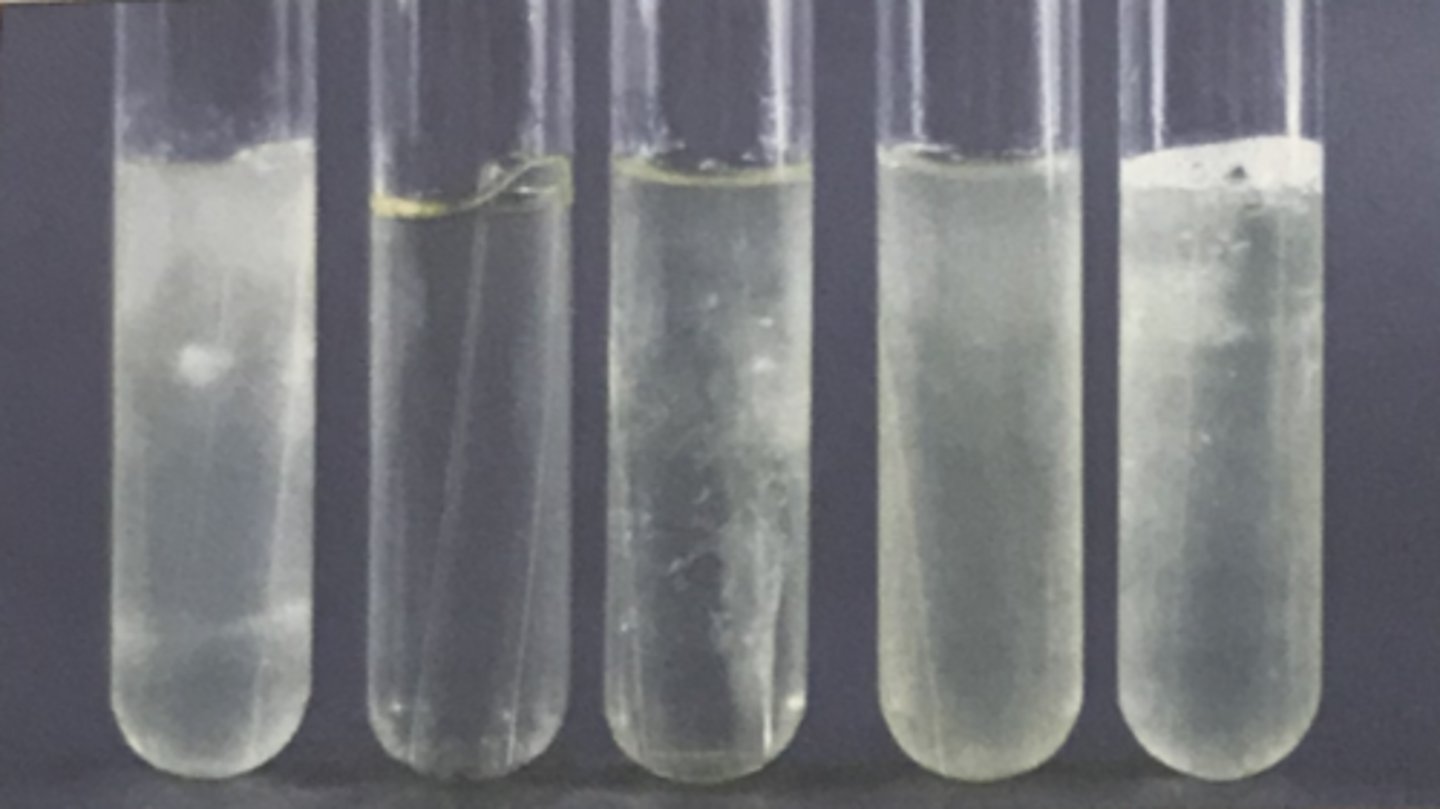
sulfanilic acid, α-naphthylamine
NITRATE REDUCTION TEST
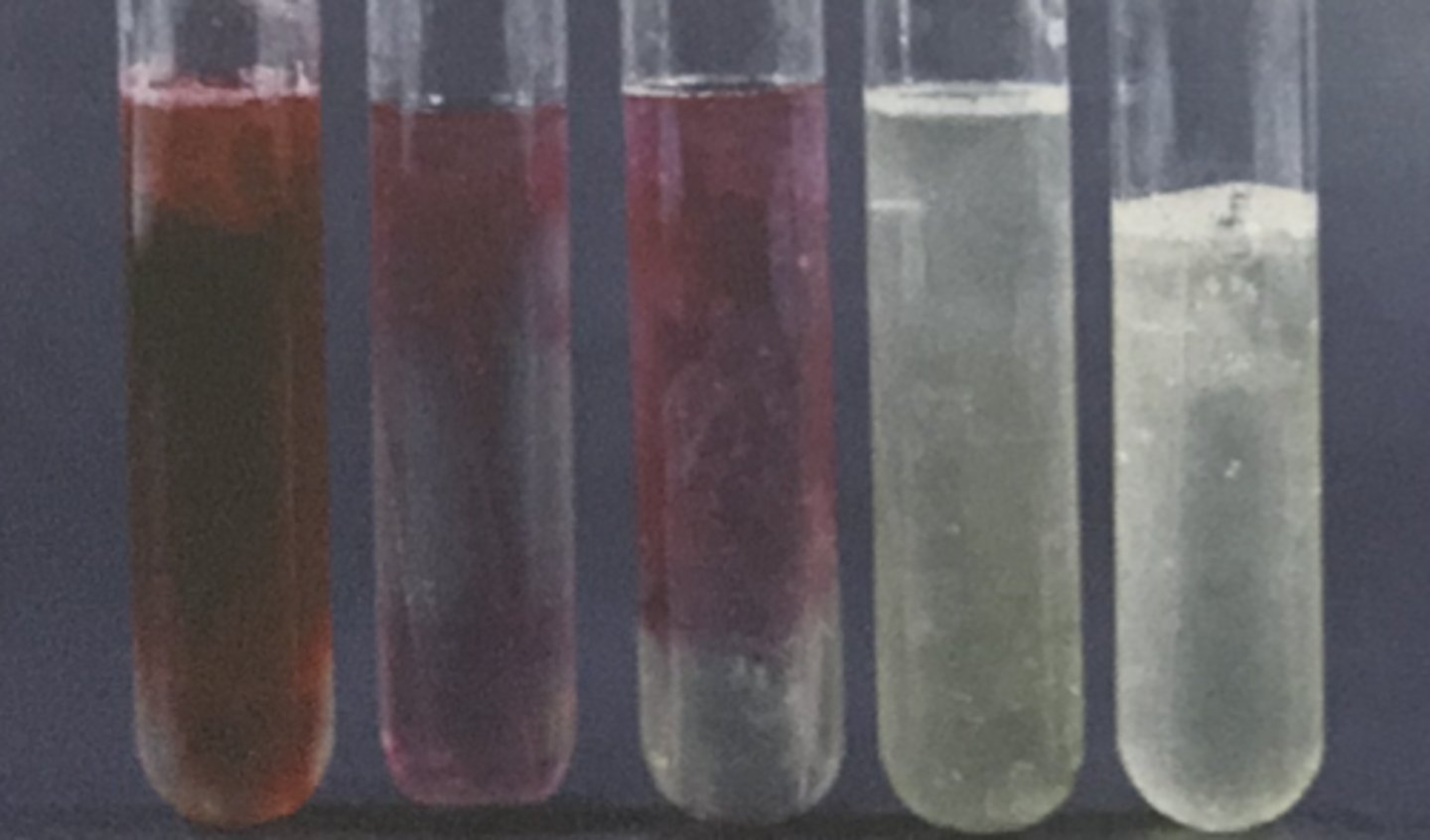
If there is no visual evidence of denitrification, ____ ____ (nitrate reagent A) and ______ (nitrate reagent B) are added to test for nitrate reduction to nitrite.
nitrous acid (HNO₂)
*it reacts with the reagents to produce a red color (positive test)
NITRATE REDUCTION TEST
If nitrite is present after adding the reagents, ____ ____ will form in the medium.
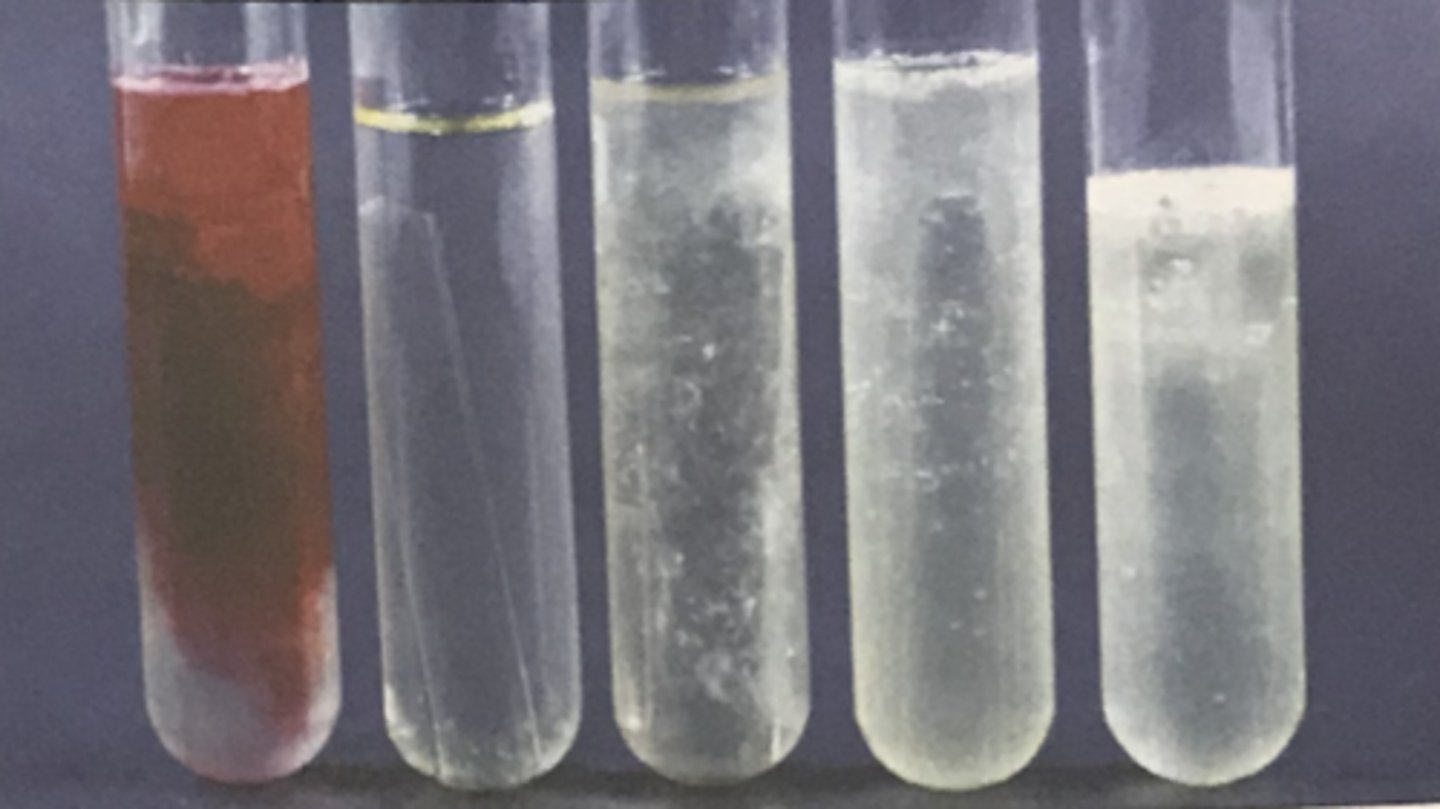
zinc dust
NITRATE REDUCTION TEST
If no color change takes place after the addition of the reagents, another test must be performed. What is added to the broth to catalyze the reduction of any nitrate to nitrite?
negative
NITRATE REDUCTION TEST
If the medium turns red after adding zinc, then nitrate is still present. Would this be a negative or positive result?
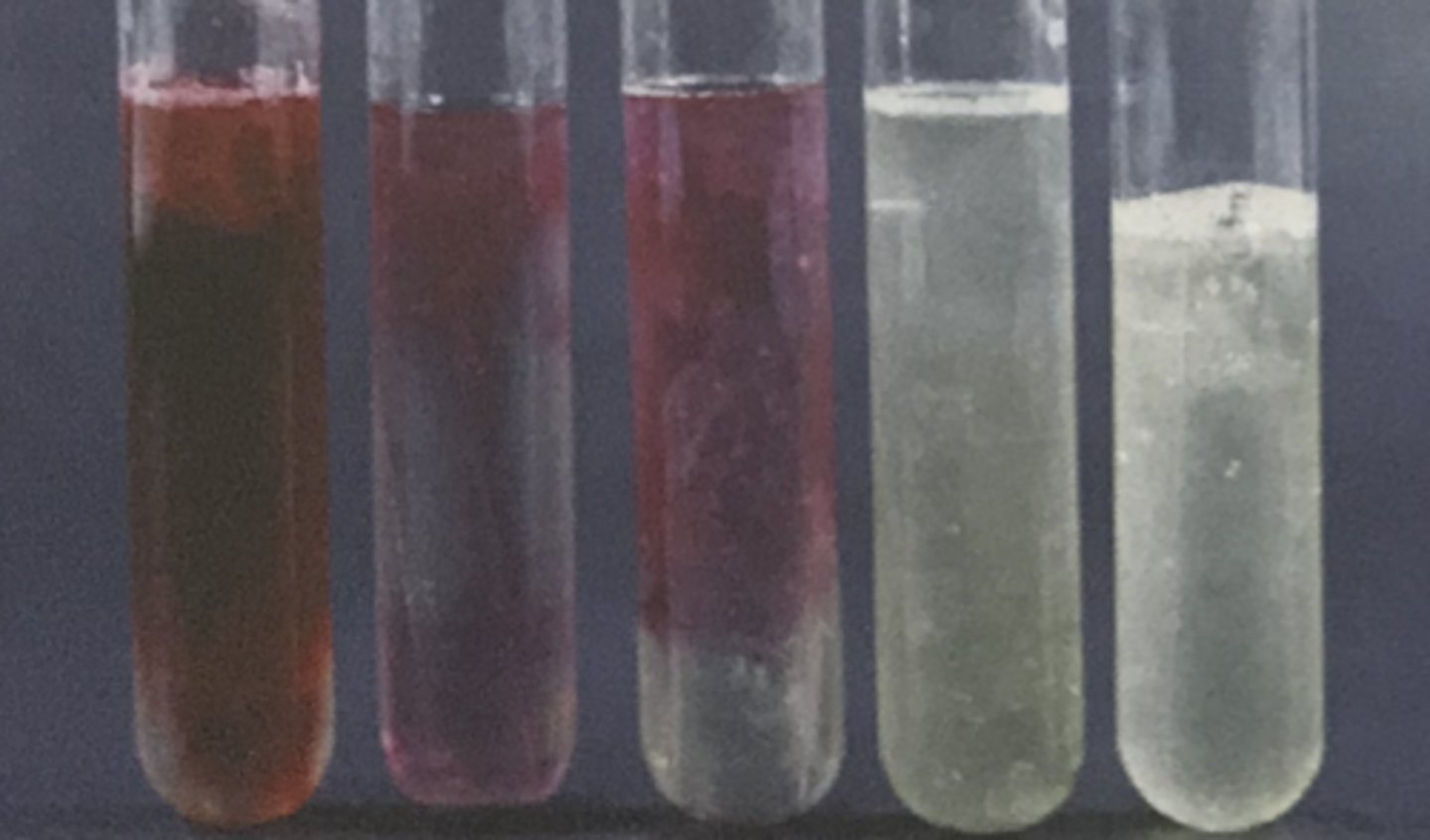
positive
NITRATE REDUCTION TEST
If the medium doesn't change color after adding zinc, then the organism has reduced nitrate to nitrite. Would this be a negative or positive result?
. . . . .
ANTIMICROBIAL SUSCEPTIBILITY TEST: DISK DIFFUSION (KIRBY-BAUER) METHOD
The disk diffusion test is a standardized method used to measure the effectiveness of antibiotics and other chemotherapeutic agents on pathogenic microorganisms.
DISK DIFFUSION (KIRBY-BAUER) METHOD
application:)

antibiotics
DISK DIFFUSION (KIRBY-BAUER) METHOD
natural antimicrobial agents produced by microorganisms
antimicrobials, antimicrobics
DISK DIFFUSION (KIRBY-BAUER) METHOD
Because many agents that are used to treat bacterial infections are synthetic, the terms ____ or ____ are used to describe all substances used for this purpose
zone of inhibition
*does not mean that the bacteria have been killed
DISK DIFFUSION (KIRBY-BAUER) METHOD
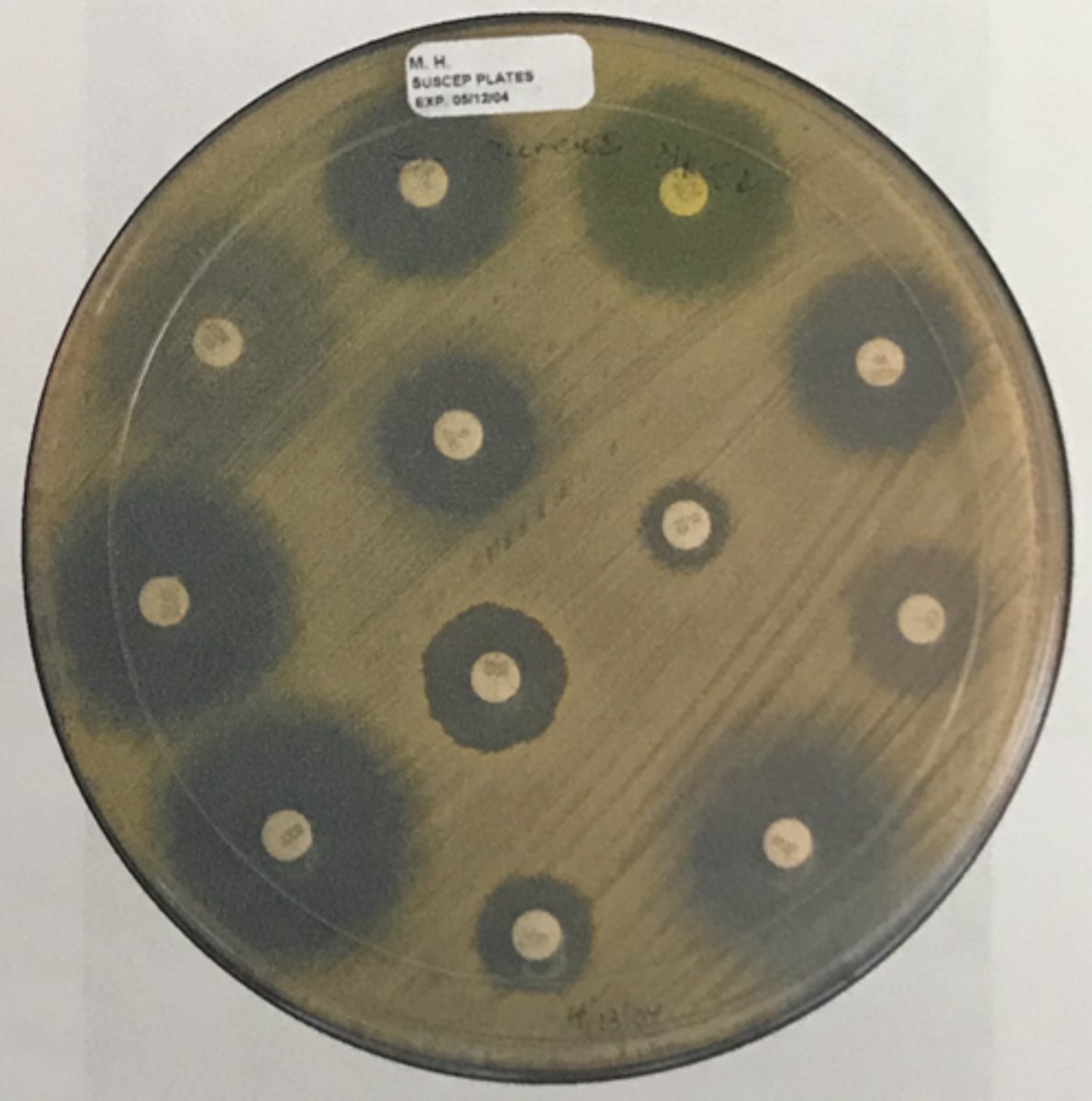
Antimicrobic-impregnated paper disks are placed on the agar plate inoculated to form a bacterial lawn. If the organism is susceptible to the drug, a clear zone, _______, will appear around the disk where the concentration is high enough to stop growth.
minimum inhibitory concentration (MIC)
DISK DIFFUSION (KIRBY-BAUER) METHOD
At the junction of the zone of inhibition, the concentration of the antimicrobic has become too low to effectively stop growth. What represents this junction?
bactericidal
DISK DIFFUSION (KIRBY-BAUER) METHOD
Drugs that kill the organism are said to be . . .
bacteriostatic
DISK DIFFUSION (KIRBY-BAUER) METHOD
Drugs that stop bacteria from dividing, but do not kill them are said to be . . .
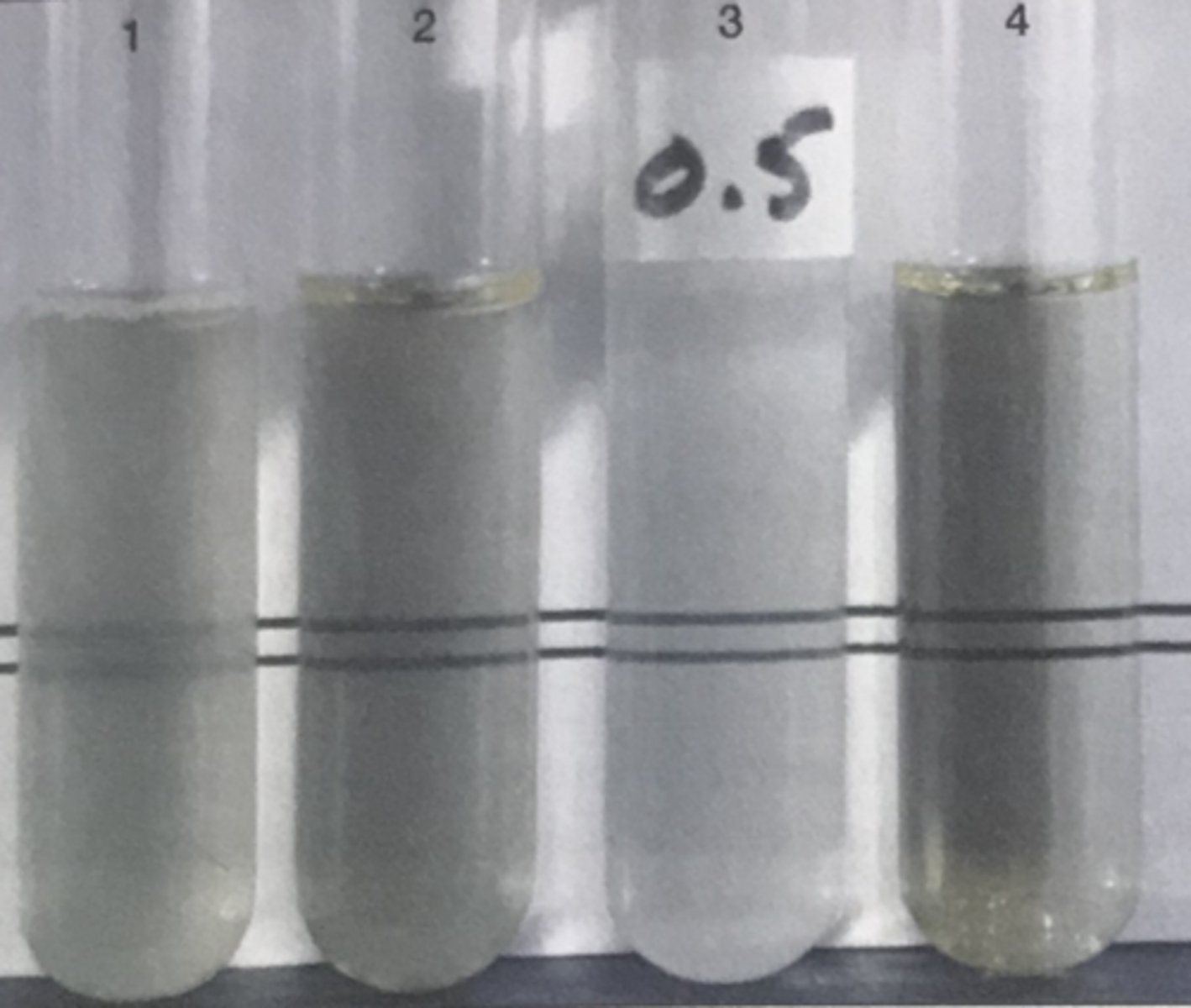
McFarland turbidity standard
DISK DIFFUSION (KIRBY-BAUER) METHOD
corresponds to a cell density between 1 and 2 x 10⁸ CFU/mL
resistance, susceptibility
DISK DIFFUSION (KIRBY-BAUER) METHOD
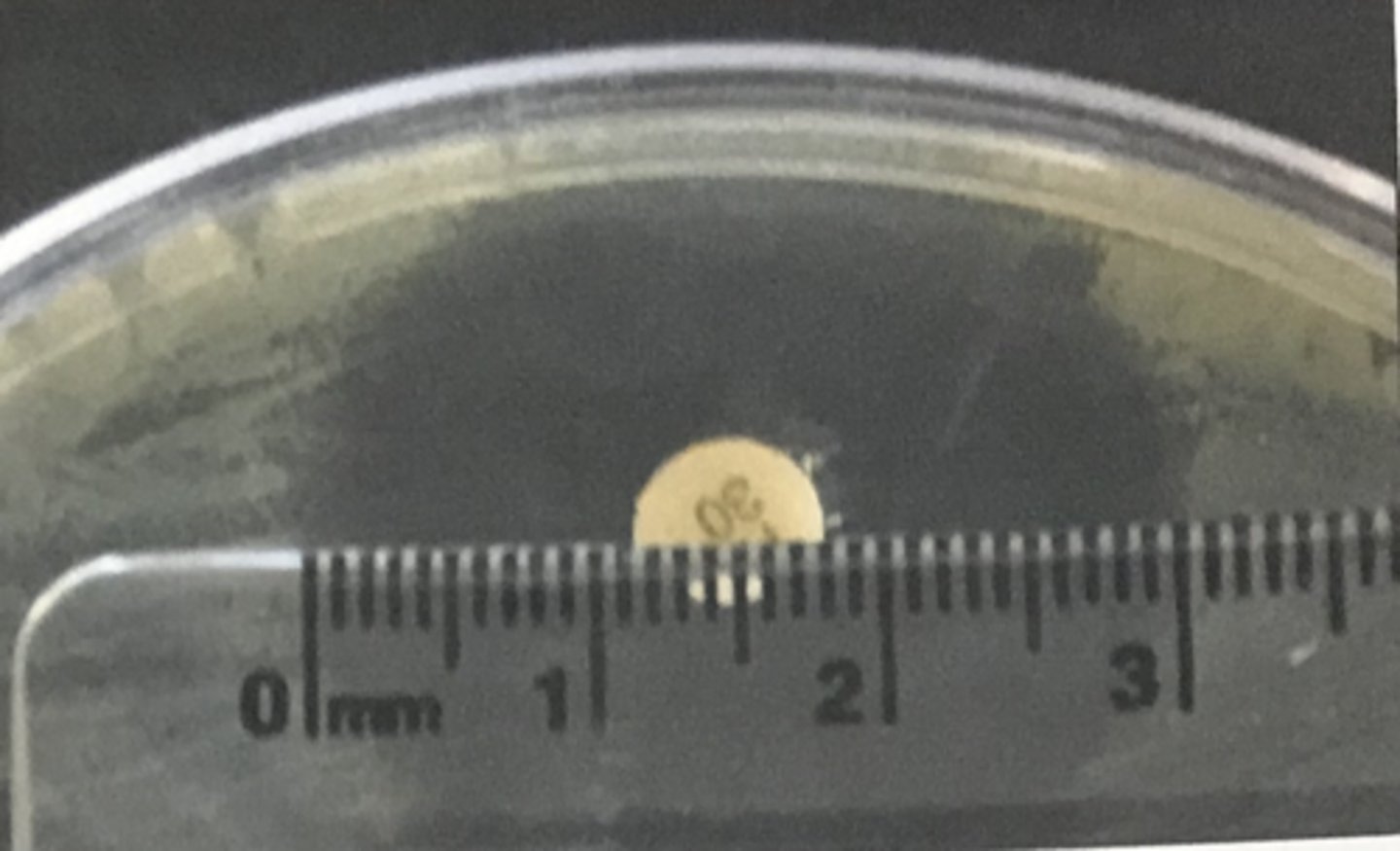
The zone diameter below which all resistant strains fall is the _____ breakpoint. The zone diameter above which all susceptible strains fall is the ____ breakpoint.
-altered target such that the antibiotic can no longer interact with the cellular process
-an alteration in how the drug is taken into the cell
-enzymatic destruction of the drug
-development or increased activity of an efflux mechanism
DISK DIFFUSION (KIRBY-BAUER) METHOD
Not all antibiotics affect cells in the same way. Resistance mechanisms can be broken down into four main categories:
Chloramphenicol
-prevents peptide bond formation during translation
-poor uptake and inactivation of drug
DISK DIFFUSION (KIRBY-BAUER) METHOD
Chloramphenicol
-cellular target?
-resistance mechanism?
Ciprofloxacin
-interferes with DNA replication
-altered target, poor uptake of drug
DISK DIFFUSION (KIRBY-BAUER) METHOD
Ciprofloxacin
-cellular target?
-resistance mechanism?
Penicillin
-inhibits cross-linking of the cell wall's peptidoglycan
-altered target, poor uptake of drug, or production of β-lactamases
DISK DIFFUSION (KIRBY-BAUER) METHOD
Penicillin
-cellular target?
-resistance mechanism?
Streptomycin
-blocks initiation complex formation in protein synthesis
-altered target
DISK DIFFUSION (KIRBY-BAUER) METHOD
Streptomycin
-cellular target?
-resistance mechanism?
Tetracycline
-blocks attachment of aminoacyl tRNA to A site on ribosome
-efflux mechanism
DISK DIFFUSION (KIRBY-BAUER) METHOD
Tetracycline
-cellular target?
-resistance mechanism?
Trimethoprim
-inhibits purine and pyrimidine synthesis
-altered target
DISK DIFFUSION (KIRBY-BAUER) METHOD
Trimethoprim
-cellular target?
-resistance mechanism?