Lab practical - project 1
 Call Kai
 Learn
Learn Practice Test
 Spaced Repetition
 Match
Match Flashcards
 Knowt Play
1/24

There's no tags or description
Looks like no tags are added yet.
Name | Mastery | Learn | Test | Matching | Spaced | Call with Kai | Chat |
|---|
No analytics yet
Send a link to your students to track their progress
25 Terms
corrosive
Destroys living tissue on contact
Flammable
Easily ignites and burns rapidly
irritant
Irritates living tissue on contact
oxidizer
Rapidly oxidizes, can result in combustion
poison
May be fatal to humans & animals
sensitizer
Causes severe immune reaction after repeated exposure
Toxic
Causes adverse health effects
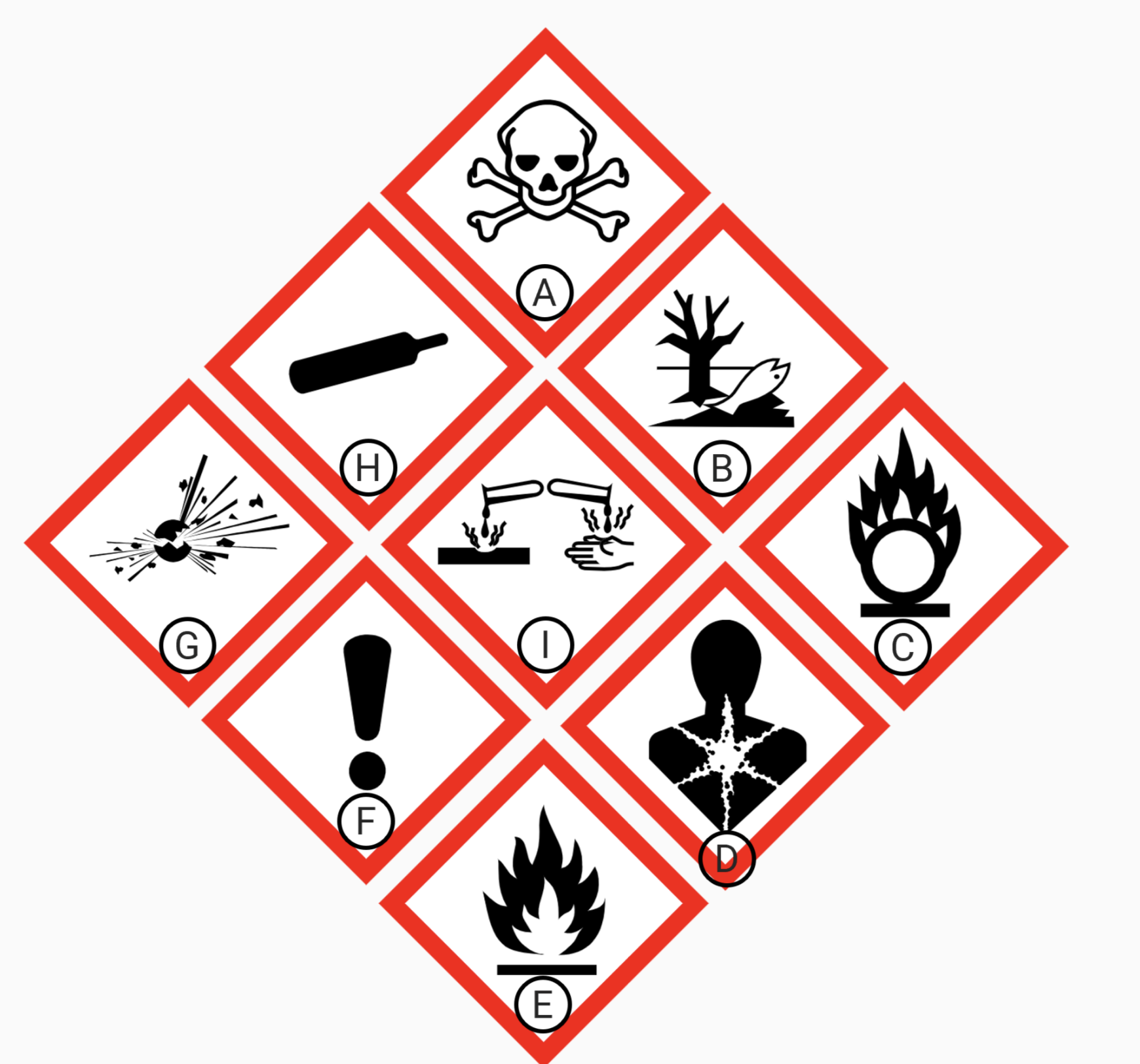
A
Fatal
NFPA: health
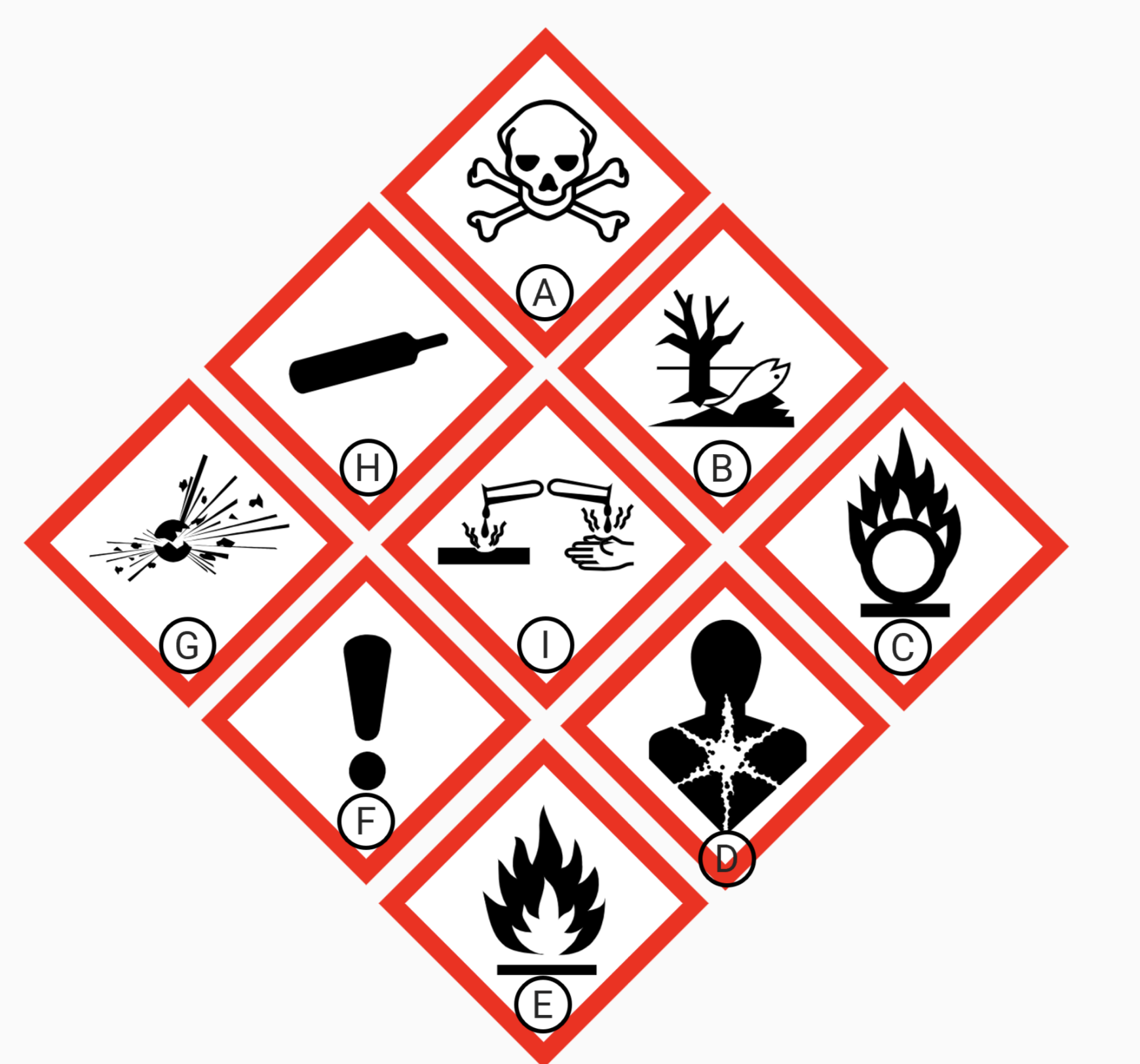
B
Aquatic toxicity
NFPA: none
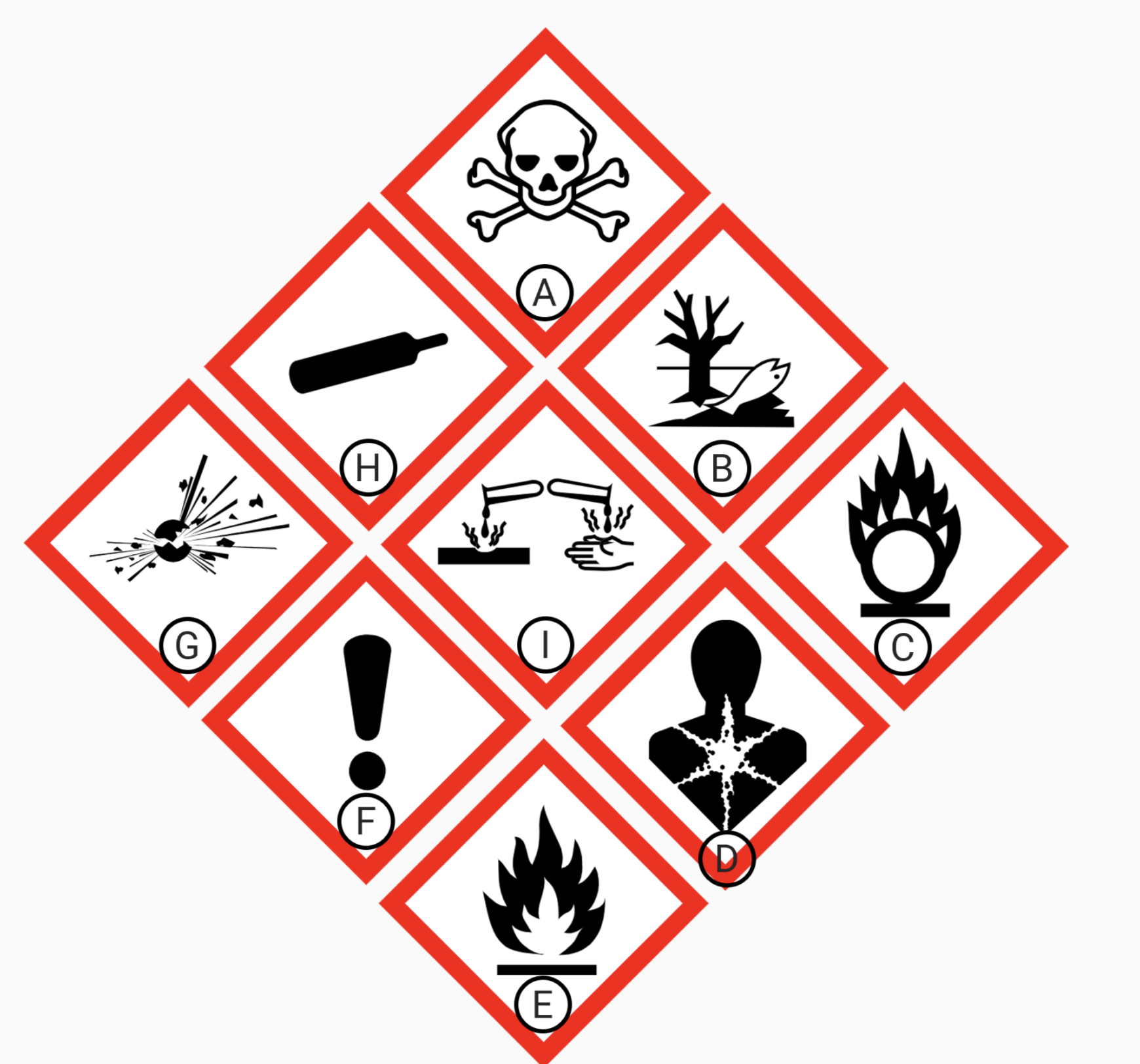
C
Oxidizer
NFPA: special hazards
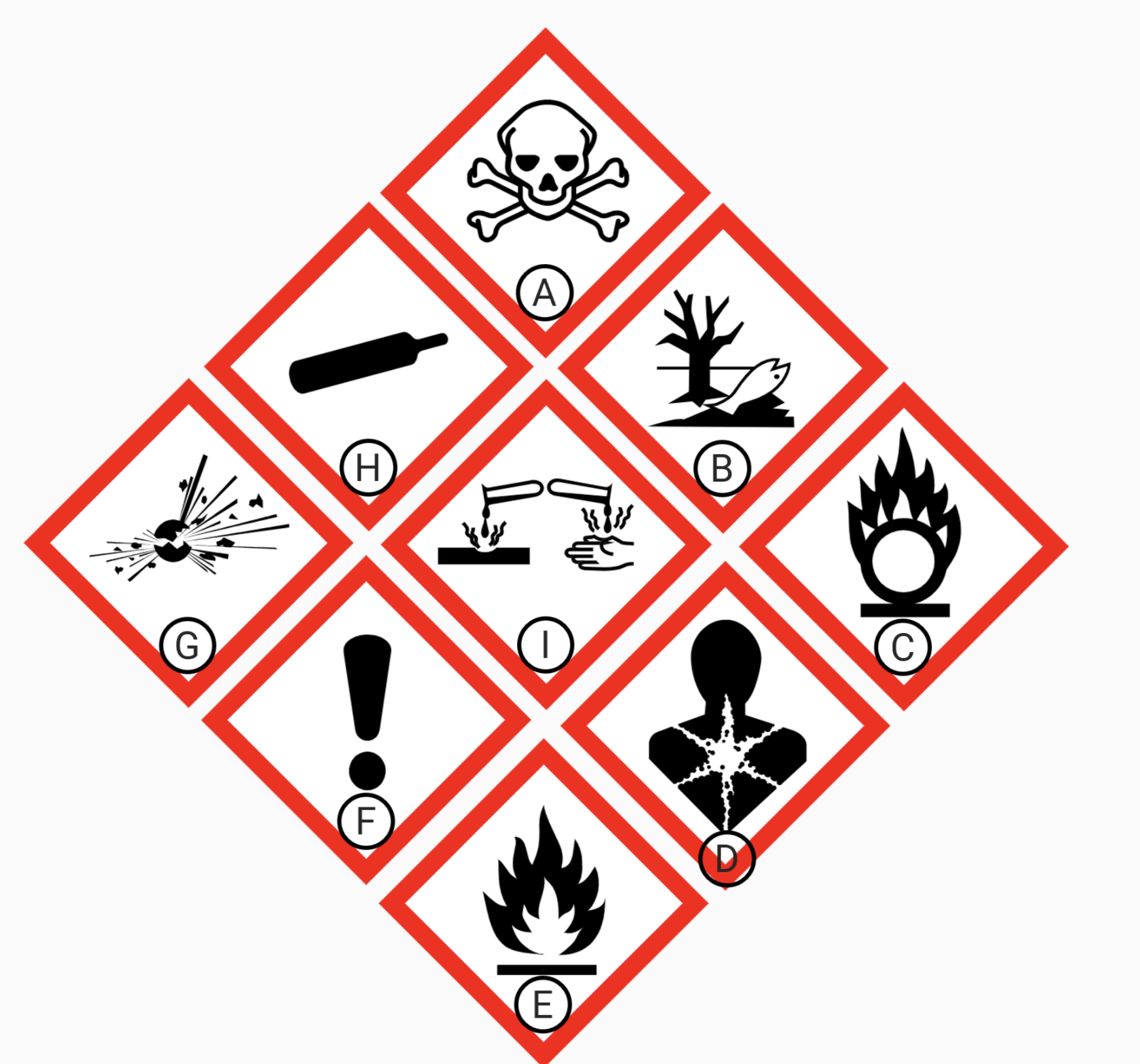
D
Carcinogen and toxic
NFPA: health
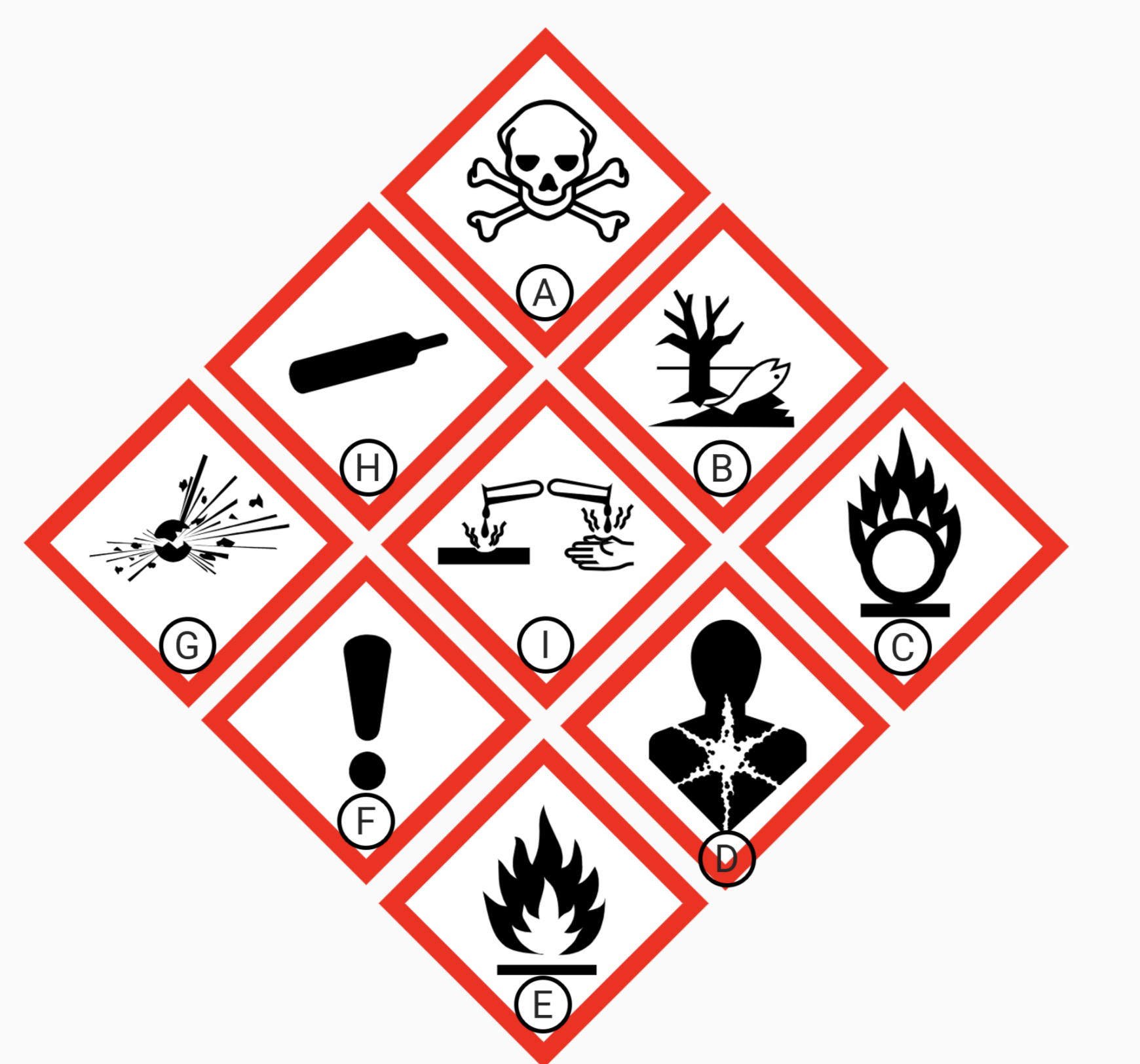
E
Flammable
NFPA: flammability
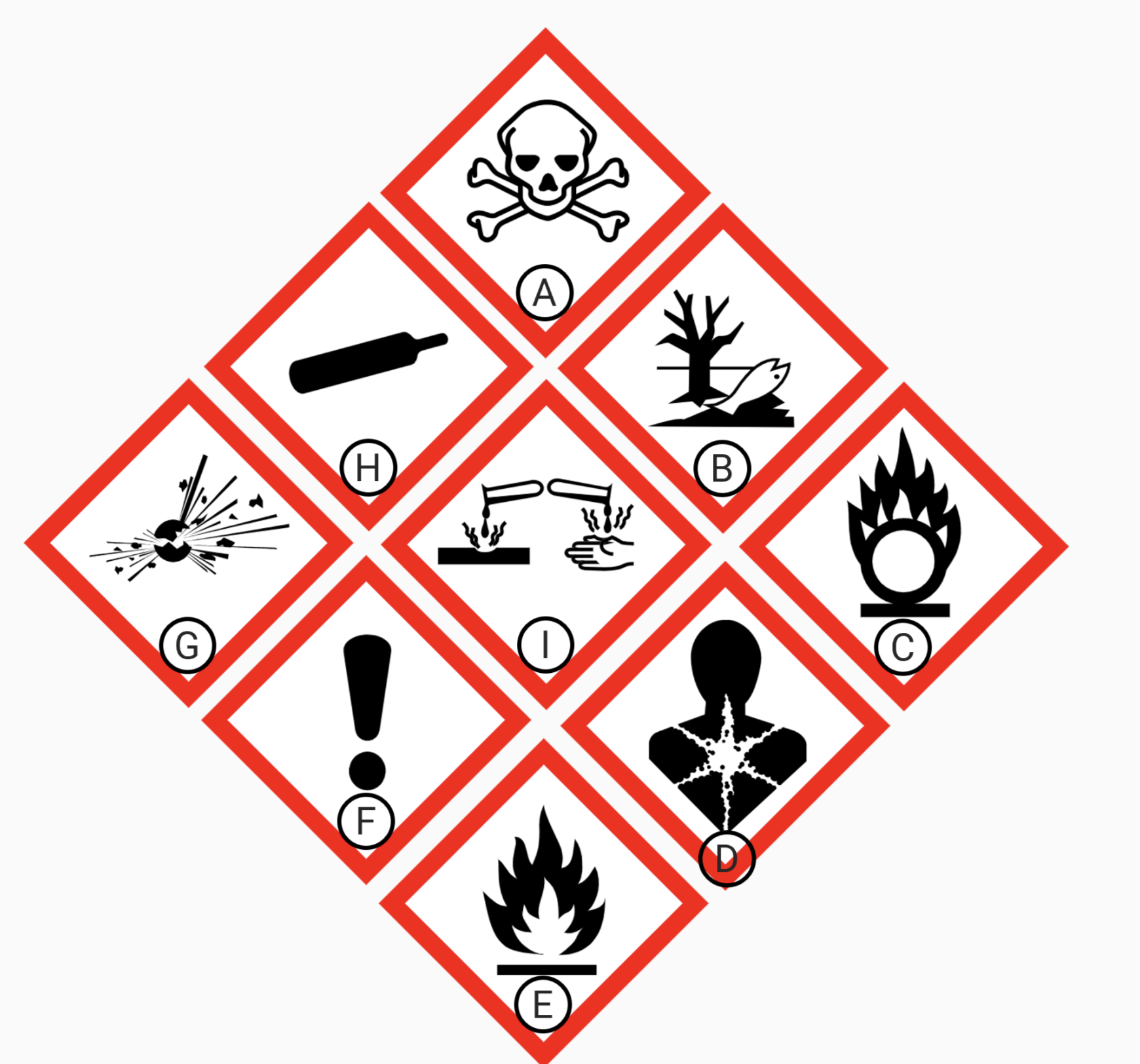
F
Irritant, skin sensitizer
NFPA: health
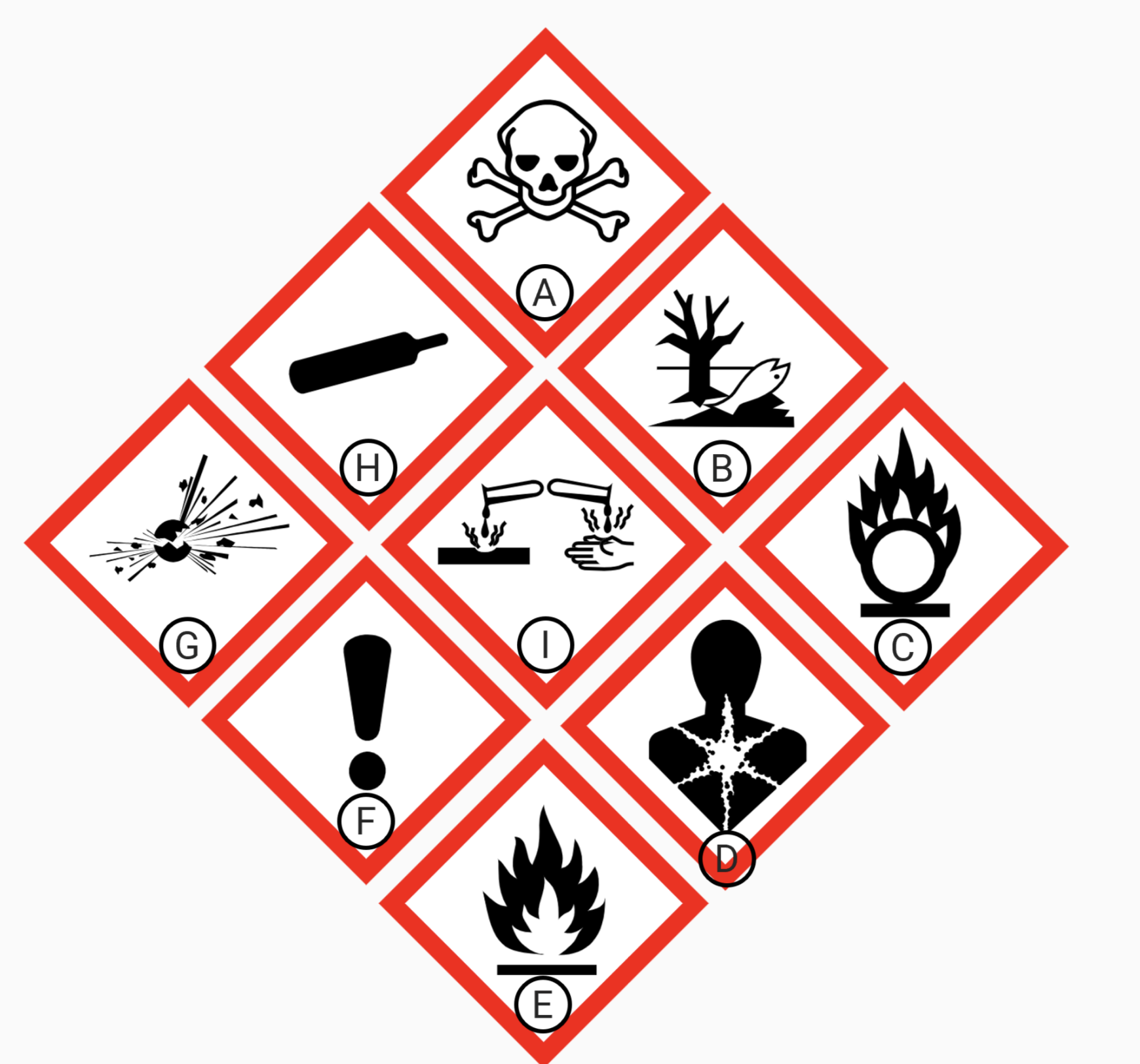
G
Explosive
NFPA: instability
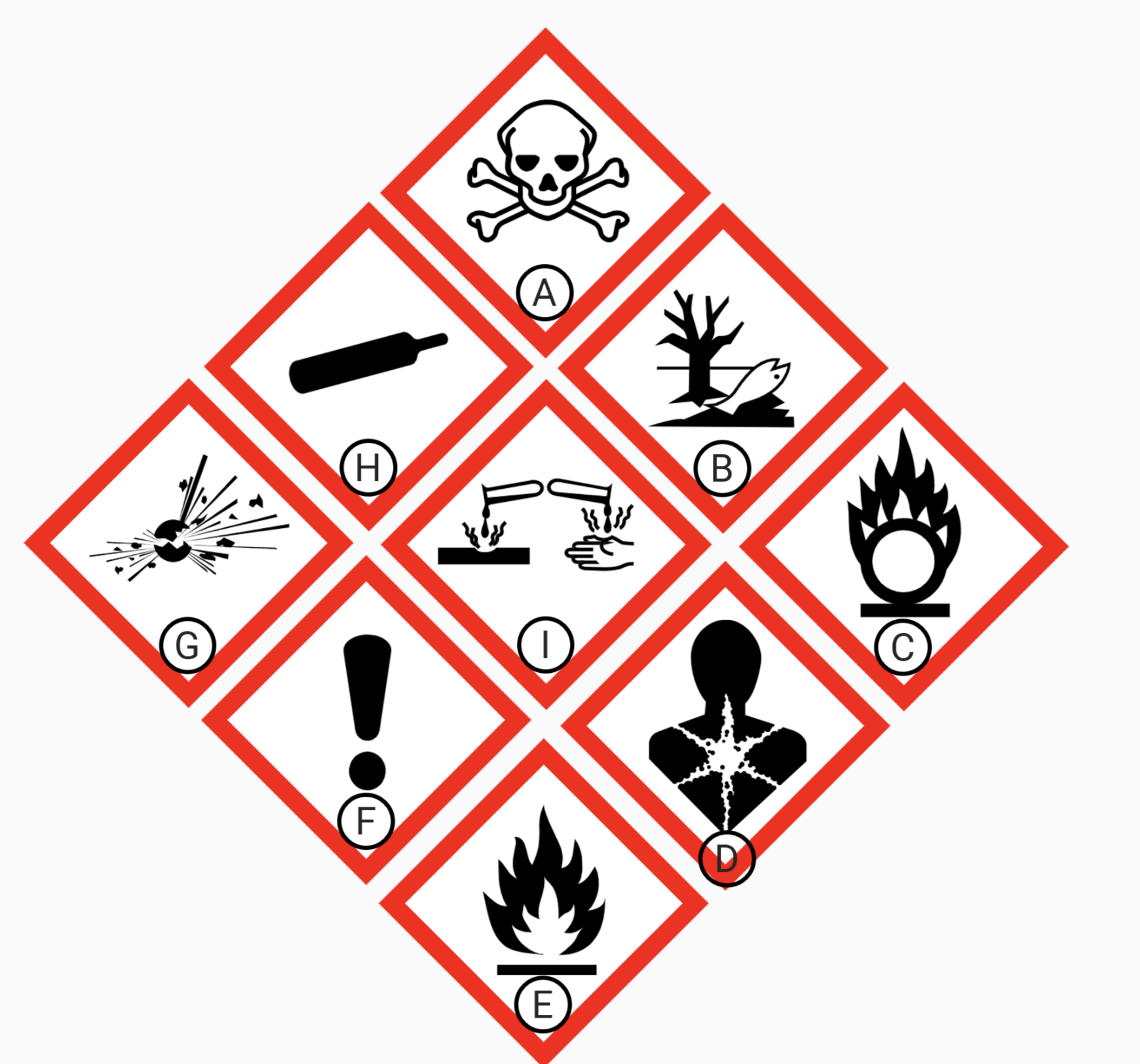
H
Gas under pressure
NFPA: none
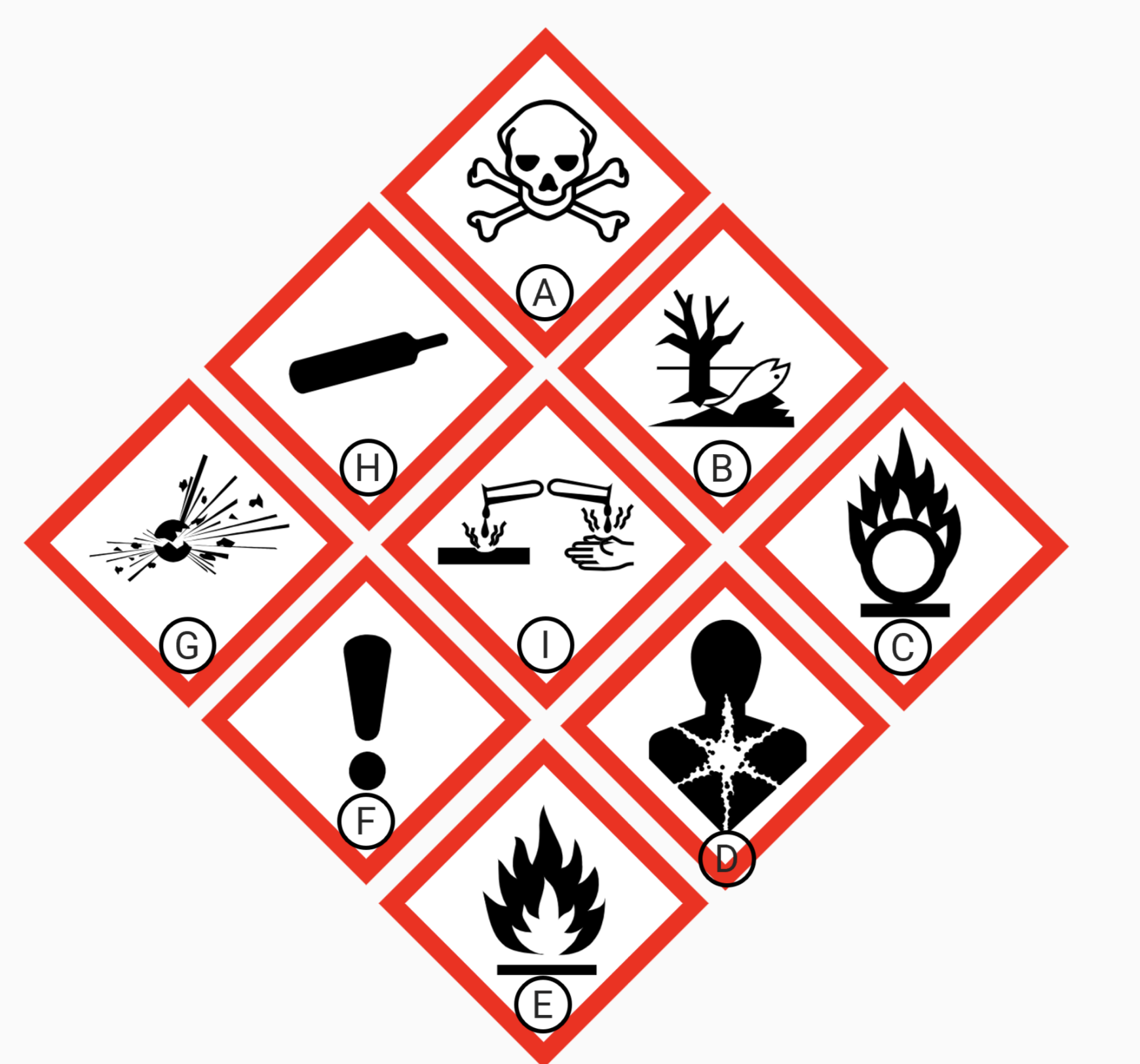
I
Corrosive
NFPA: health
What are the goals for project 1?
determine what dyes are in Gatorade
Determine dye concentration in Gatorade
Project 1 steps
Part 1
Materials: Volumetric pipet, volumetric flask, 2 beakers (1 for waste 1 for solution), disposable pipettes, and a pipet bulb
Create a dilution plan using MconcVconc=MdilVdil (mL and μM)
Mconc=concentration of stock solution
Vcocn=volume of volumetric pipette OR volume of solute (dye) you pipette
Mdil=concentration of diluted stock
Vdil=volume of volumetric flask
Part 2
Pre-rinse volumetric flask with solvent (DI water)
Pre-rinse volumetric pipette with DI water
pre-rinse volumetric pipette with solute (you’re allowed to blow out liquid)
transfer dye to volumetric flask (DO NOT BLOW OUT AT THIS STEP)
Create dilutions - solute is dye, solvent is DI water
Part 3
Pre-rinse cuvette with solvent (DI water), place into waste, wipe. fill with DI water, wipe, then calibrate/blank. pour into waste when done
Use the most concentrated solution to get lambda max. pre-rinse cuvette with the most concentrated solution + wipe, then pour into waste. fill cuvette with most concentrated solution again, then press “play”. get the lambda max (highest absorbance value)
Mode → events with entry → change name and change units to (μM). change the LabQuest’s wavelength to your lambda max
Find the absorbance spectrums for all concentrations, making sure to start collecting from the LOWEST concentrated solution to the HIGHEST concentrated solution. use the same cuvette every time to eliminate contamination + pre-rinse with DI water/the solution + wipe every time
press “keep” to keep the absorbance value once it has stabilized. repeat for all solutions, and press stop when you’re done.
beer’s law
A = ε C l
A=absorbance (at λmax, no units)
ε = molar absorptivity coefficient (units = L/mol(cm))
C = concentration of absorbing species (units = mol/L)
l = path length (units = cm)
the y=mx+b equation from the beer’s law plot is used
Order the steps for using a SDS to fully understand the hazards associated with the chemical.
Compare label info to make sure you have the right SDS
Determine GHS symbol
Look at procedures for safe handling
What do jagged lines in absorbance spectrums mean?
detector is saturated
Argumentation
construction of scientific ideas by a group of people
Claim
A conclusion supported by data
Evidence
a relationship between variables
Reasoning
Justification that connects data trends to scientific laws or theory