lecture 4- data collection
 Studied by 0 people
 Call Kai
 Learn
Learn Practice Test
 Spaced Repetition
 Match
Match Flashcards
 Knowt Play
1/22

There's no tags or description
Looks like no tags are added yet.
Name | Mastery | Learn | Test | Matching | Spaced | Call with Kai |
|---|
No study sessions yet.
23 Terms
What makes a sample appropriate?
goal- gaining knowledge about population
We can generalise from sample to population
Sample is representative of population
What samples are representative?
Large samples
Sample’s composition is similar to population
What is selection bias and what are examples?
Occurs when sample is non-representative, and this influences results.
volunteer bias- certain types of people are more likely to volunteer and may behave differently
Attrition bias- people who drop out of study are different from people who don’t. E.g. if investigating side effects of drug and some people drop out, may conclude that drug has no side effects.
WEIRD ppts- not representative of world population
What is probability sampling?
random selection
Each member of population has specific probability of being chosen as ppt
Makes it possible to know likelihood of sample being similar to population
High degree of representativeness
What is non-probability sampling?
non-random selection
Individuals have unknown probability for being selected
Impossible to know likelihood of sample being similar to population
Usually low degree of representativeness
What are the sampling methods for probability sampling?
simple random sampling
Cluster probability sampling
What is simple random sampling?
all individuals have known and equal probability of selection
Many statistical methods assume simple random sampling took place
On average, samples are perfectly representative
True random sampling difficult to achieve as it requires list of all individuals
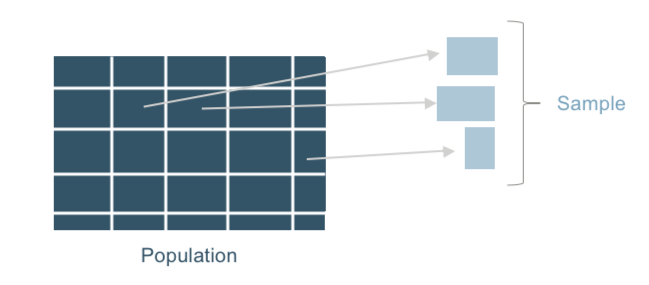
What is cluster probability sampling?
divide population into clusters
Select random sample of clusters
Every individual in cluster is part of sample
Example: how good are primary school students at reading?
no need for list of all students
Known probability of selection (1/number of schools)
Sample representative of school level characteristics
What are the sampling methods for non-probability sampling?
opportunity sampling
Purposive sampling
What is opportunity sampling?
ppts are conveniently available
Restricted sample
Probability of inclusion is unknown
Selection bias is likely
What is purposive sampling?
ppts are included/excluded based on researcher’s judgement
Example: how do senior managers cope with work-related stress?
who should be included in sample e.g. senior developers, professors, headmasters, CEOs?
What is physiological data?
quantitative
Body’s natural response to study environment
Requires specific apparatus
Usually continuous over time
Often requires intensive preprocessing to make it interpretable
Most objective type
No self insight required
Methods of collecting physiological data?
EEG
fMRI
Eye tracking
Skin conductance
EMG
What is behavioural data?
quantitative
Measurable behaviour in online/in-person settings
Small range of observable behaviours in controlled environments
Amount of data from each ppt can range from one data points to hundreds
What is survey data?
typically quantitative, can have qualitative elements
Predetermined questions with limited answer options
Can be collected via mail, online, phone, f-t-f
Efficient but may be selection bias/response bias
Huge samples possible
People may give socially desirable answers
What is test data?
typically quantitative
Predetermined questions with limited answer options that measure ppt’s ability, or a psychological construct, and make comparable to others
Combined to a single test score per ppt e.g. total points in math test
Psychometrics= sub-discipline of psych for developing good tests
What is interview data?
qualitative
Largely predetermined questions, answers are completely open
Data emerges from verbal info from audio/video recordings
Many pages of text per ppt
What is observational data?
quantitative or qualitative
Observation of natural behaviour in natural or artificially created environment
Behaviour not restricted, but researchers focus on specific aspects
Qualitative data- behaviour described verbally i.e. researcher diary
Overt/covert observation- balancing observer effects and ethical data collection
What are cross-sectional studies?
Researchers collect data from ppts at single point in time.
What are longitudinal studies?
Researchers collect data from ppts on multiple occasions over longer period of time.
data always repeated-measures
Different types- cohort, panel, intensive longitudinal
What are cohort studies?
longitudinal
Ppts share common experience or demographic trait
Ppts are followed forward and regularly assessed
Shows distinction between cohort effects and age/time effects e.g. old people more conservative
What are panel studies?
longitudinal
Panel= group of people with specific composition of demographic traits who agreed to take part in multiple studies
Ppts who drop out can often be replaced with other people with same traits
What are intensive longitudinal studies?
ppts take same survey at least once a day over extended period time, often via an app
Opportunity to collect data about behaviour and cognitive processes in natural environment, reducing inaccuracies due to memory bias