Intro + Sensory Receptors
 Call Kai
 Learn
Learn Practice Test
 Spaced Repetition
 Match
Match Flashcards
 Knowt Play
1/25

There's no tags or description
Looks like no tags are added yet.
Name | Mastery | Learn | Test | Matching | Spaced | Call with Kai | Chat |
|---|
No analytics yet
Send a link to your students to track their progress
26 Terms
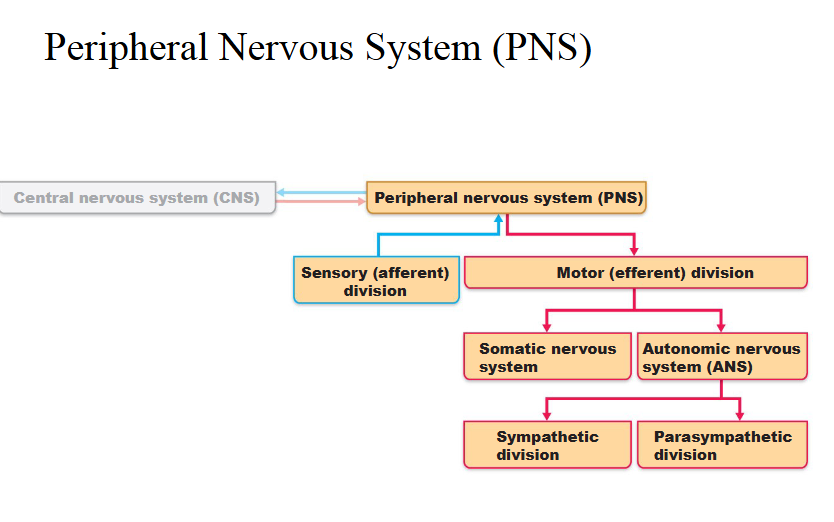
The Peripheral nervous system PNS consist of
all neural structures outside of the brain and spinal cord
Sensory receptors
Peripheral nerves (axons and dendrites) and ganglia (cell bodies)
Motor nerves
Division of PNS
PNS
Sensory afferent division
Motor efferent division
Somatic nervous system
Autonomic nervous system (ANS)
Sympathetic
Parasympathetic
Sensory receptors
detect and respond to stimuli (changes in environment)
When sensory receptors are activated
they create a graded potential → if strong enough action potential
What are the 5 stimulus type classifications of sensory receptors
Mechanoreceptors, thermoreceptors, photoreceptors, chemoreceptors, nociceptors
Mechanoreceptors
responds to touch, pressure, vibration, itch
Thermoreceptors
detect temperature changes
Photoreceptor
Detects light (ex: retinas)
Chemoreceptors
detects chemicals like smell taste and changes in blood chemistry
Nociceptors
Detects pain (extreme cold and heat, excessive pressure, inflammatory chemicals)
What are the three classification of sensory receptors by location
exteroceptor, interoceptor, proprioceptor
Exteroceptors
respond to external environments (ex: touch smell vision, etc)
Interoceptors (visceralceptors)
Respond to internal stimulis from organs (ex: blood pressure or organs stretching)
Proprioceptors
detect and respond to body’s position and movement (ex: knowing where your arm is without looking or touching your nose)
your muscles joints tendons
What are the 2 structural complexity classification of sensory receptors
General and special senses
General senses
Simple receptors like touch pain and temp
Special senses
complex organs
vision, hearing, smell, taste
Sensation and where does it happen
awareness of stimulus ( change in internal and external environment )
input comes from sensory receptors and the it gets sent to the brain where we become aware of the stimulus
Perception and where does it happen
conscious interpretation of stimulus
in the brain
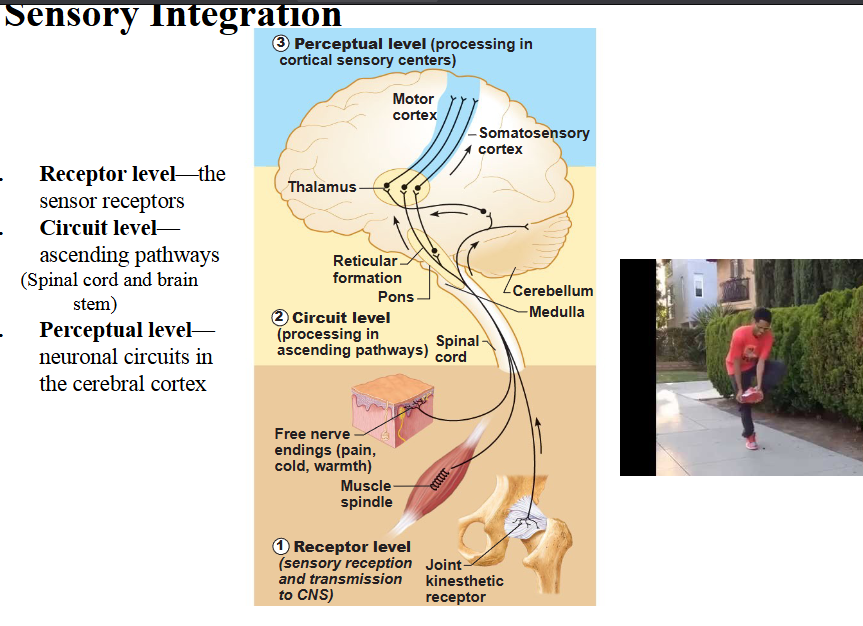
What are the three levels of sensory integration
Receptor level, circuit level, perceptual level
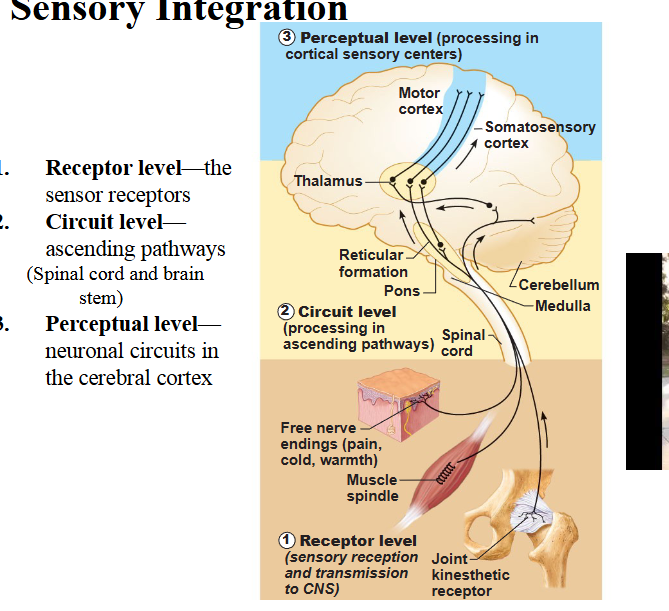
Receptor level of sensory integration
sensory receptor detects the stimulus
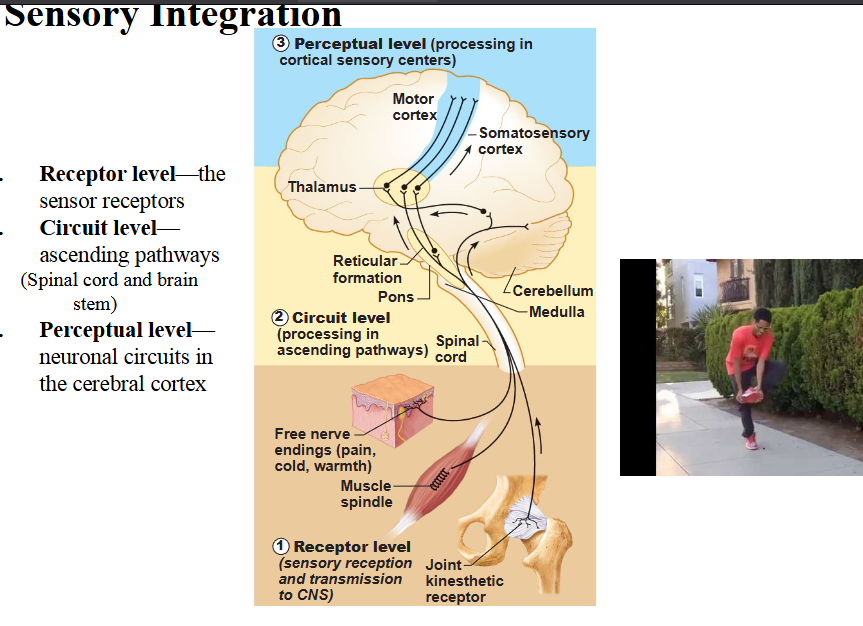
Circuit level of sensory integration
signal travels up ascending pathway of spinal cord and brainstem
integration
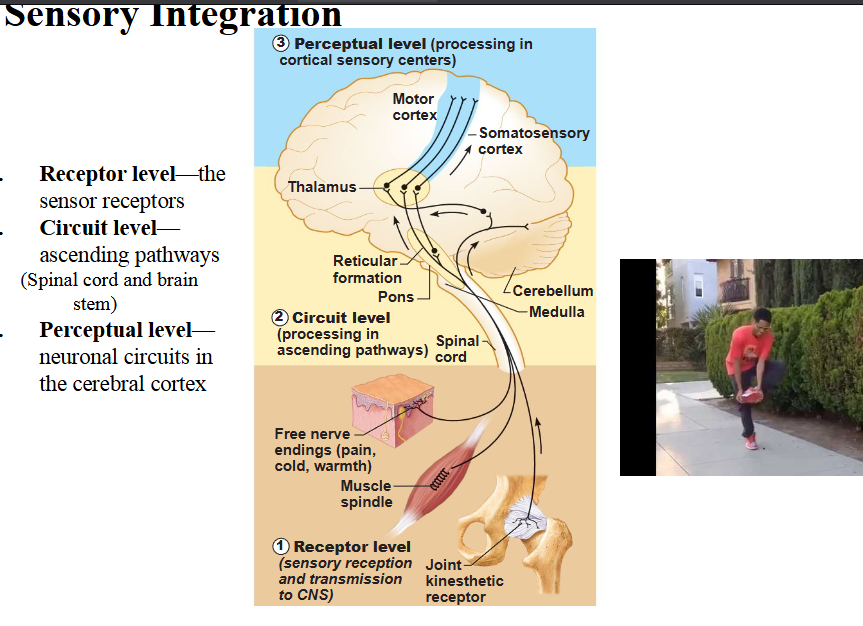
Perceptual level of sensory integration
Cerebral cortex interprets → final understanding
Adaptation of sensory receptor
receptors become less sensitive over time if the stimulus is constant
Phasic receptors
fast adapting → fire a lot at first but stops/slows down if stimulus is constant
detects change
ex: pressure, touch, smell (clothing)
Tonic receptors
Slow adapting receptors or doesnt adapt at all → keeps firing if stimulus continues
ex: nociceptors (pain) and most proprioceptors