Numbers and algebra
 Call Kai
 Learn
Learn Practice Test
 Spaced Repetition
 Match
Match Flashcards
 Knowt Play
1/61

There's no tags or description
Looks like no tags are added yet.
Name | Mastery | Learn | Test | Matching | Spaced | Call with Kai | Chat |
|---|
No analytics yet
Send a link to your students to track their progress
62 Terms
integers
Any positive or negative whole number, including zero, but not fractions, decimals, or mixed numbers
Prime number
any whole number greater than one that has only two factors, itself and 1 ( can divide evenly with just itself and 1 )
composite number
Any whole number greater than 1 that has more than two different factors; in other words, any whole number that is not a prime number
ex. has 1,2,4,6,,8
rational numbers
Include all integers, decimals, and fractions. Any terminating or repeating decimal number is a rational number
Irrational numbers
Cannot be written as fractions or decimals because the number of decimal places is infinite, and there is no recurring pattern of digits within the number. For example, pi begins with 3.14
Real number
are the set of all rational and irrational numbers
Common factor
a number that divides exactly into two or more other numbers, for example, the factors of 12 are 12 are 1, 2, 3, 4, 6, and 12, while the factors of 15 are 1, 3, 5, 15. the ___ of 12 and 15 are 1 and 3.
the greatest common factor
the largest number that is a factor of two or more numbers
the least common multiple
The smallest number that is a multiple of two or more numbers
exponents divide by each other and contain the same base, causing the exponents to subtract from one another
bm / bn = bm-n
improper fractions
Translating mathematical phrases
Dividing fractions
Two fractions can be divided by flipping the numerator and denominator of the second fraction and then multiplying it
converting decimals into fractions
move two decimal places to the left, then put it over a hundred, and then keep simplifying until you get the smallest possible fraction
adding and subtracting decimals
When adding or subtracting decimals, always make sure to line up the decimal places, and then if there is any empty space, just add a zero to fill up the space then do the problem normally
multiplying decimals
When multiplying decimals, forget the decimal point in the beginning and multiply it regularly, then at the end, you count how many numbers are behind the original factors and move the decimal to the left that many times
dividing decimals
When dividing decimals, you multiply both factors by 10 as many times as needed to get rid of the decimal, then you just have to do long division
rational numbers
numbers that an be expressed as a ration or fraction
irrational numbers
numbers that basically go on forever like pie
how to find a percent of a number
To find a percent of a number, just turn the percent into a decimal and multiply it by the whole ( in this instance, you have a calculator; if you don’t, there is another process for this )
How to find a percent increase

slope formula
Y2 - Y1 over X2 - X1 = M ( slope)
Perimeter of triangle formula
P = A + b+ C
Area of triangle formula
A = (Bh) 1/2
Area ot trapezoid formula
A = ½ h (b1 + b2)
perimeter of a trapezoid formula
P = a + b1 + C + b2
area of a parallelogram formula
A= bh
perimeter of a parallelogram
P = 2( a + b)
area of a rectangle
A = lw
perimeter of a rectangle
P = 2 (l +w)
area of a rhombus
A = ½ (d1 + d2)
Perimeter of a rhombus

area of a circle
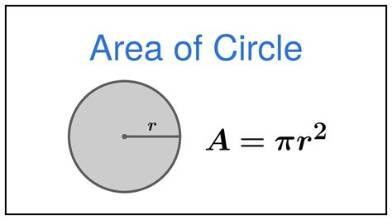
perimeter of a circle

volume of a prism

volume of cube

volume of sphere
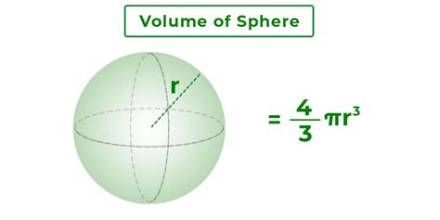
volume of cylinder

volume of pyramid
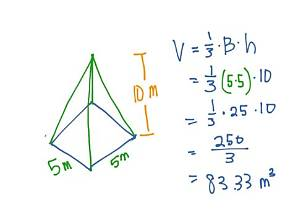
volume of cone

What does a weighted mean
What does it mean when there is a large standard deviation
A lot of the data is away from the mean
If the mean is skewed to the right of the median, it’s …
positive skewed
If the mean is skewed to the left of the median …
negatively skewed
unimodal
When a distribution has a single peak
bimodal
When a distribution has 2 peaks
uniform distribution
When a distribution has no distinct peaks
compound event
an event that involves two or more independent events ( rolling a pair of dice and taking the sum )
desired outcome
( success) - an outcome that meets a particular set of criteria ( a roll of 1 or 2 if we are looking for numbers less than 3)
independent events
two or more events whose outcomes don’t affect one another ( two cards drawn consecutively)
dependent events
two or more events whose outcomes do affect one another ( two cards drawn consecutively from the same deck)
certain outcome
probability of the outcome is 100% or 1
impossible outcome
probability of outcome 0% or 0
mutually exclusive outcomes
two or more outcomes whose criteria cannot all be satisfied in a single event ( a coin coming up head and tail on the same toss )
random variable
refers to all possible outcomes of a single event, which may be discrete or continuous
theoretical probability
P(A) = # of acceptable outcomes/ # of possible outcomes
probability of a compound event
P ( A or B ) = P(A) + P(B) - P ( A+B)
conditional probability
the probability that event A will occur, given that event B has occurred
probability of two independent events
P ( A and B) = P(A) x P(B)