9-1-2026 Advanced Airway Management
 Call Kai
 Learn
Learn Practice Test
 Spaced Repetition
 Match
Match Flashcards
 Knowt Play
1/48

There's no tags or description
Looks like no tags are added yet.
Name | Mastery | Learn | Test | Matching | Spaced | Call with Kai | Chat |
|---|
No analytics yet
Send a link to your students to track their progress
49 Terms
4 physiologic effects of CPAP
maintains bronchiolar dilation by stenting during forceful exhalation (pressure around the bronchioles from exhalation make them collapse)
increases minute alveolar volume by allowing for increased TV per resp cycle (MAV= RR x (TV-DS)
positive pressure in alveoli reduces edema formation
rests the pt by reducing WOB. May help prevent need for intubation in patients with Acute respiratory failure (ARF)
sizes and types of ET tubes, insertion depths, and criteria for selection
range from 2.5 mm- 9mm ID (internal diameter)
2.5-5mm comes in cuffed or uncuffed, and 5-9mm are cuffed
insertion depth
19-23cm for adult, 3x tube size for peds
size selection:
adult female- 7.5 (generally)
Adult male- 8.0 generally
pediatrics- can use braselow tape in field, class= (age +16)/4. Can use size of pt pinky or nare
have 3 sizes availble (size you calculate, and 1 above + below)
CUFFED ARE ALWAYS PREFERED.
list parts of ET tube and describe
bevel- slant at distal end. fascilitates placement through cords, better visualization through tip.
Murphys eye- opening in distal portion on lateral wall. If end becomes obstructed by tissues or other objects, air can still get in.
cuff- inflatable balloon at end of ET, produces seal against tracheal wall preventing gastric contents from entering trachea. Pressure monitored via Pilot Balloon.
Vocal cord guide- black line(s) at distal end of tube indicating where the cords should lie during proper placement. Prevents placing too deep.
Radiomarker- thin blue line running length of ET tube, facilitates x-ray placement confirm.
connector or adapter- located at proximal end, attaches the ETT to BVM or ventilator, usually 14-15mm
list all items that should be availble before Intubation begins
Suction
PPE
Larygoscope handle and blades
stylet
10 cc syringe
lubricant
padding to elevate head/shoulders
stethoscope
ETCO2 monitor
securing device
alternate rescue airway
Gum bougie if availble- (used to put in first and feel tracheal rings, then thread ETT over)
How do we evaluate the PT airway in prep for Advanced airway placement
LEMON
L- Look- evidence of difficult airway, trauma, teeth issues, facial hair, tongue, piercings
E- Evaluate- Interdental distance (3 fingers is good), hyomental distance (3), thyrohyoid distance (2)
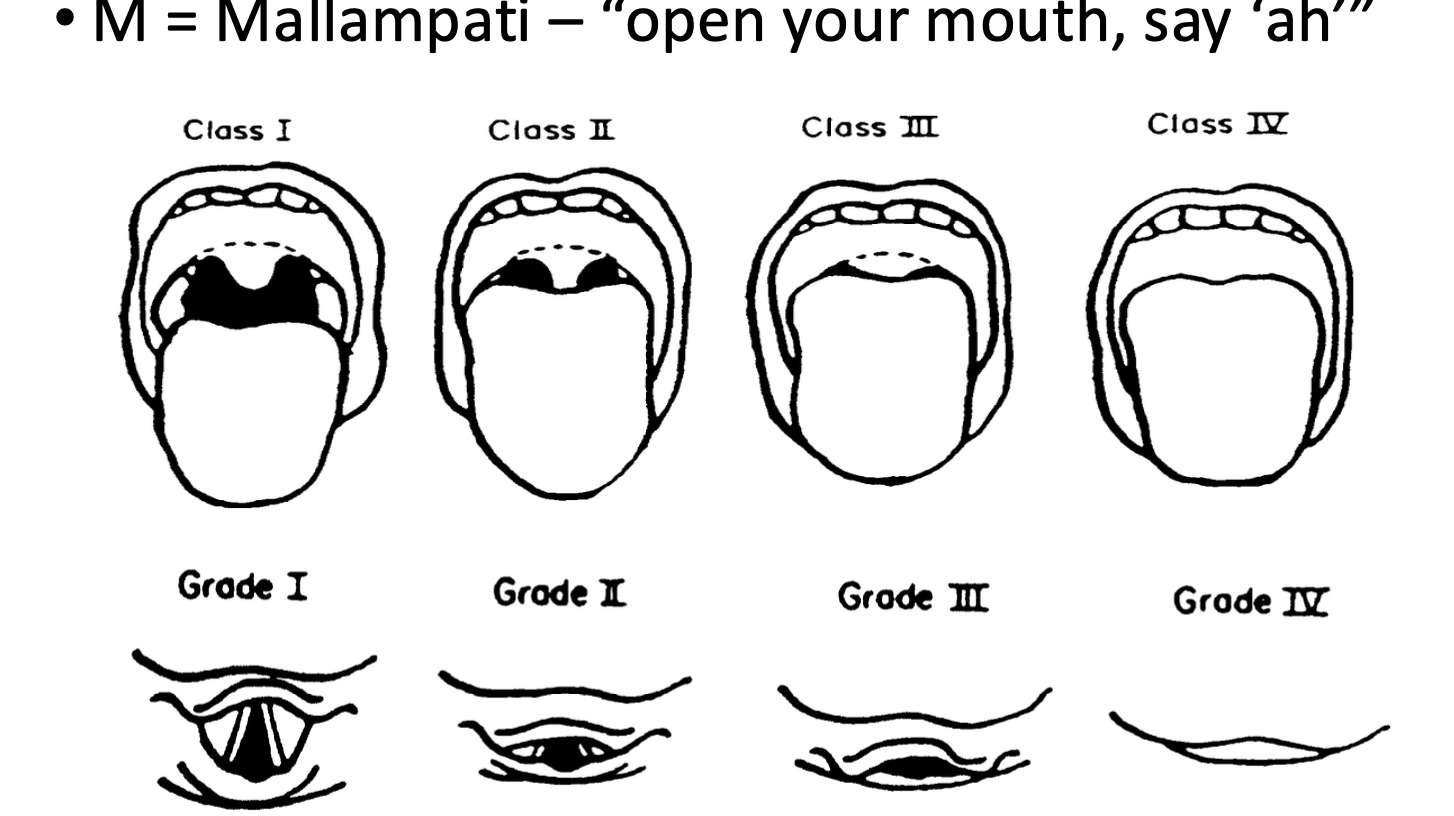
M- Mallampati- say “ah”, what structures you can see. class/grade of 1-4
O- Obstruction- airway swelling soft tissues, trauma, piercings, etc
N- Neck mobility- can they move their neck to align axis
what pt characteristics may indicate a difficult intubation
history of difficult intubation or trauma to pharynx/trachea
poor neck mobility
Obesity- large short neck
thyromental distance- chin to hyoid to thyroid is less than 4 finger widths
interdental less than 2
pharyngeal view mallampati class 3 or 4
poor laryngeal view
correct position for placement of different blades
straight (miller) blade- lifts the epiglottis directly- placed posterior to epiglottis
curved (macintosh)- inserted into vallecula lifting epiglottis indirectly- placed anterior to epiglottis
correct head positioning for intubation
sniffing position- by placing towel under head and neck. “flex the neck and extend the head”
ear is on horizontal plane with the sternum
at least 4 inches of lift
what 3 axes must be aligned for good visualization of vocal cords
oral, pharyngeal, trachea/laryngeal

2 risks when inserting laryngoscope blade into mouth
teeth and dentation damage
soft tissue damage like tongue and lips
precautions to takes when insertinb blade to avoid damage
use cross finger technique on MOLARS not incisors
introduce blade very carefully avoiding bumping teeth, or pinching tongue or lips between blade and teeth
utilize gentle but deliberate pressure (up and away) when attempting to visualize cords
5 anatomical landmarks progressively visualized during laeyngoscopy in order
tongue (sweep left), right tonsil, tip of epiglottis, arytenoids, laryngeal view
ELM and BURP
ELM- external laryngeal manipulation- intubator uses hand to manipulate thyroid cartilage for a better view of the glottis opening. Another rescuer may then hold it. AKA bimanual intubation
BURP= backwards, upwards, rightwards pressure. Done by assisstant to better see cords. Differs from ELM bc assistant does it
volume of air and goals for proper inflation of ET cuff
goal is no air leaking across cuff during ventilation
overfilling of cuff can lead to tissue damage and tracheal tears. ALLOW SYRINGE TO PUSHBACK
adult- 10ccs can be up to 20 depending on style of tube
pediatric- 5-10cc syring depending upon tube size`
why and how do we secure ETT
prevents dislodgement of tube
use a tube tamer with the channel facing down so we can suction. Can also use tape.
methods for confirming placement
SEE SEE HEAR HEAR CO2
See it pass through cords
see chest rise
hear no epigastric sounds
hear bilateral breath sounds
check ETCO2 wave form and number]
BVM compliance
pt improvement
AFTER moving pt, reconfirm all and revisualize tube in trachea
condensation and tube depth are not reliable confirmations
what can cause etco2 levels to be 0
esophageal placement
someone is dead
techniques to successfully manage a difficult airway
reposition head, airway adjunct, try 2 person BVM bagging
HELP= (head elevated larygoscopy position) ramp under head, neck, and shoulders. Align airway axes
Equipment utilization- stylet with effective shaping, suction
switch blades
ELM
rescue airway
gum bougie
video laryngoscopy if availble
steps in trouble shooting an ET tube when a pt is not ventilating
DOPE
Displacement of the tube
Obstruction (mucous, blood, aspirated food)
pneumothorax (likely due to increased intrapulmonary pressure from PPV)
Equipment (check for malfunction like cuff deflation or other things)`
Sizes for igel and LMA and criteria for selection
small to large sizes 1-5 and some half sizes. STANDARD adult size is 4
kg weight range for pt is noted on distal end next to the size. Size closest to pts weight and estimated airway size should be used. size up or down depending on ease or difficulty of placement
criteria for SGA vs ETT
ETT should be placed when less invasive methods are ineffective/inappropriate and do not meet pt care goals.
intubate- airway swelling/inflamation from asthma, burns, trauma, obstruction); aspiration protection (continuous vomiting or bleeding), including AMS with loss of airway reflexes; when anatomy does not allow seating of SGA (like in trauma).
SGA- when intubation criteria are not occuring and the pt requires advanced airway with ventilatory assistance (cardiac arrest, trauma with no airway damage, medical issues with no airway swelling/inflamation. - pediatrics are strongly suggested to use SGA over intubation if BVM/OPA is ineffective
PEEP, use, and proper settings
used to prevent alveolar collapse and secondary to maintain airways open in bronchiolar constriction states
should be used with BVM and in conjunction with CPAP. extreme care with ventilation in BVM, adequate time must be allowed for exhalation.
5cmH20 initial PEEP setting. Increase 2-3 cmH2O increments as needed allowing time for pt to adjust. Goal is to reach lowest PEEP possible needed for adequate ventilation.
PEEP of 15 or higher you should consult med control
what is the initial fio2 of CPAP
30%
What is a CPAP trio?
there are different attachements to the O2 bottle that can up the fio2 to either 60% or 90%
you could also add a NC for additional O2
a combitube is a
dual lume (tube) airway
how do you size a NG tube
nose-earlobe-xyphoid process
what is IVI
inadvertent ventilatory inattentiveness
to fix this, have one person with the sole job of ventilating
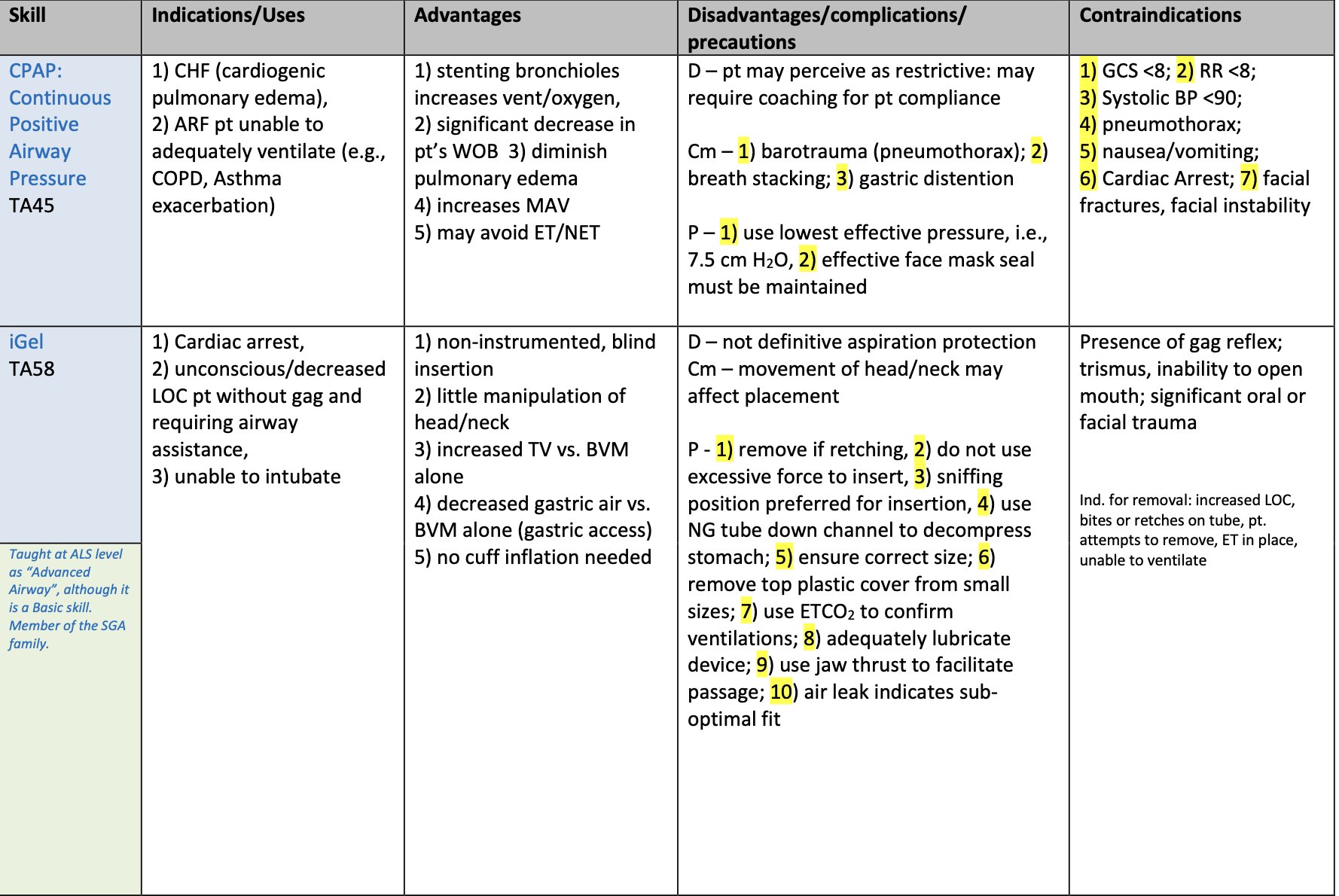
CPAP
general procedure, Indications, CI, advantages, disadvantages, complications and precautions
pediatric is not a C/I, we just dont do it in EMS
combitube
general procedure, Indications, CI, advantages, disadvantages, complications and precautions
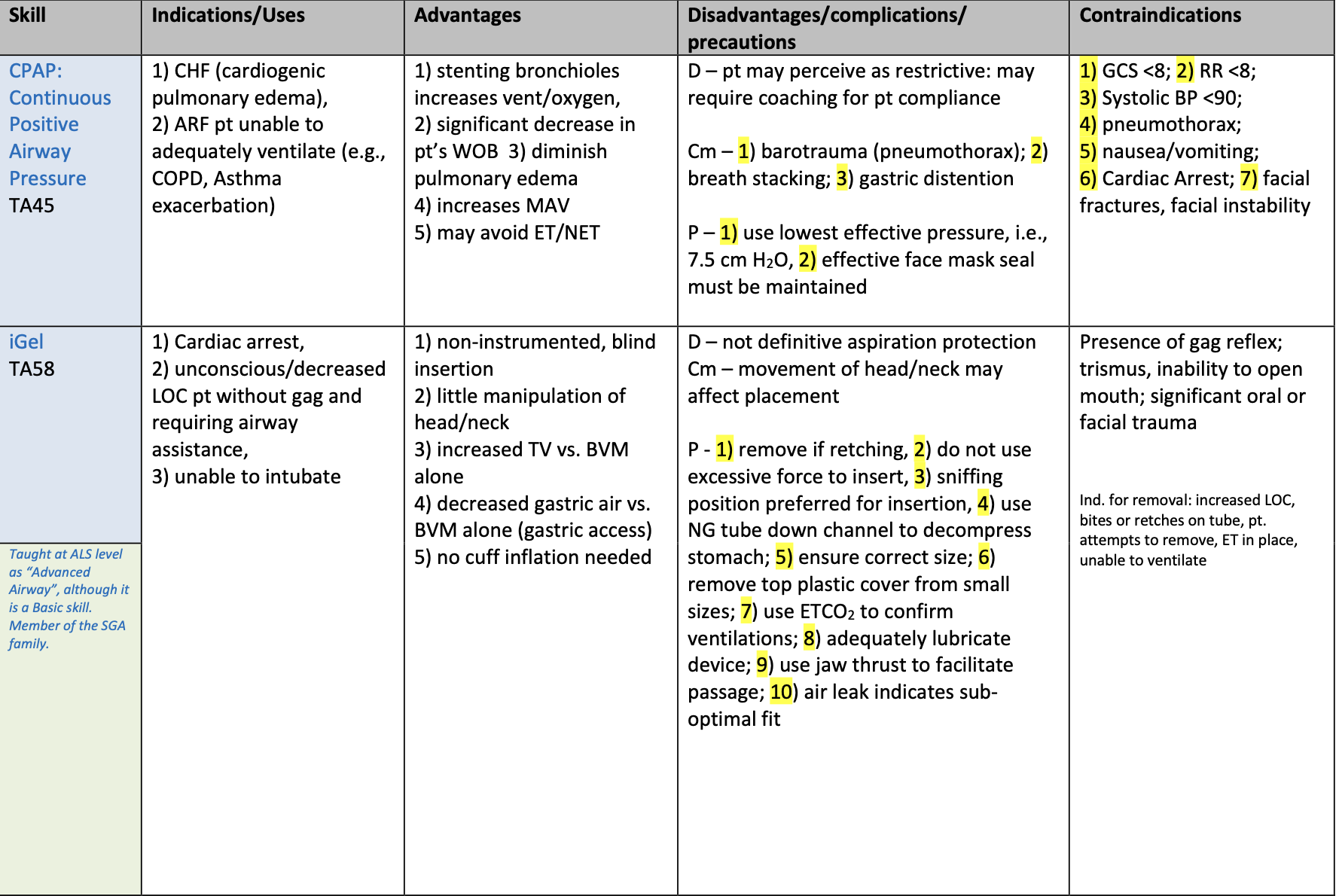
Igel
general procedure, Indications, CI, advantages, disadvantages, complications and precautions

LMA
general procedure, Indications, CI, advantages, disadvantages, complications and precautions
Inflate cuff with appropriate amount of air (labeled on tube)
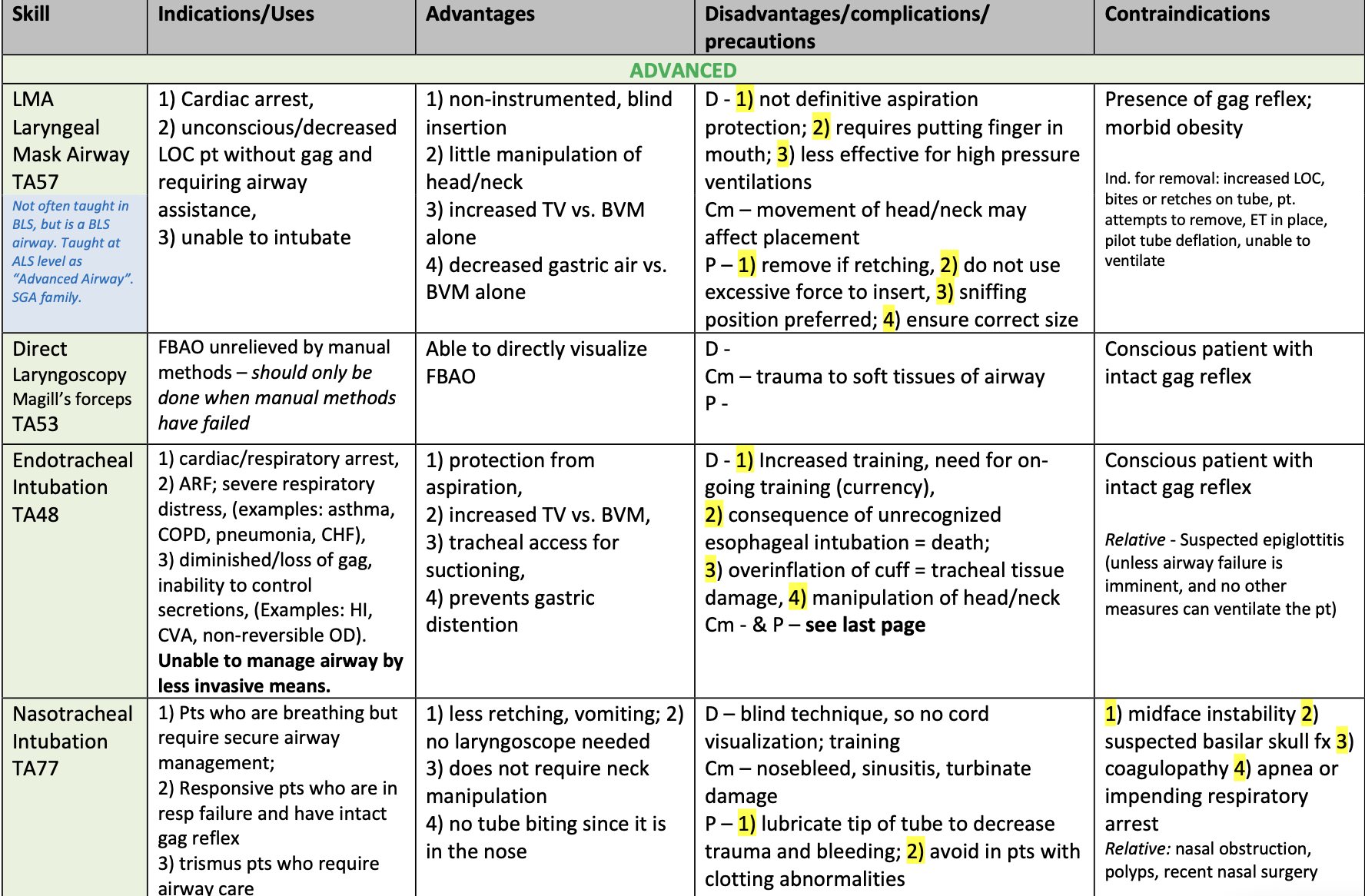
direct laryngoscopy
general procedure, Indications, CI, advantages, disadvantages, complications and precautions
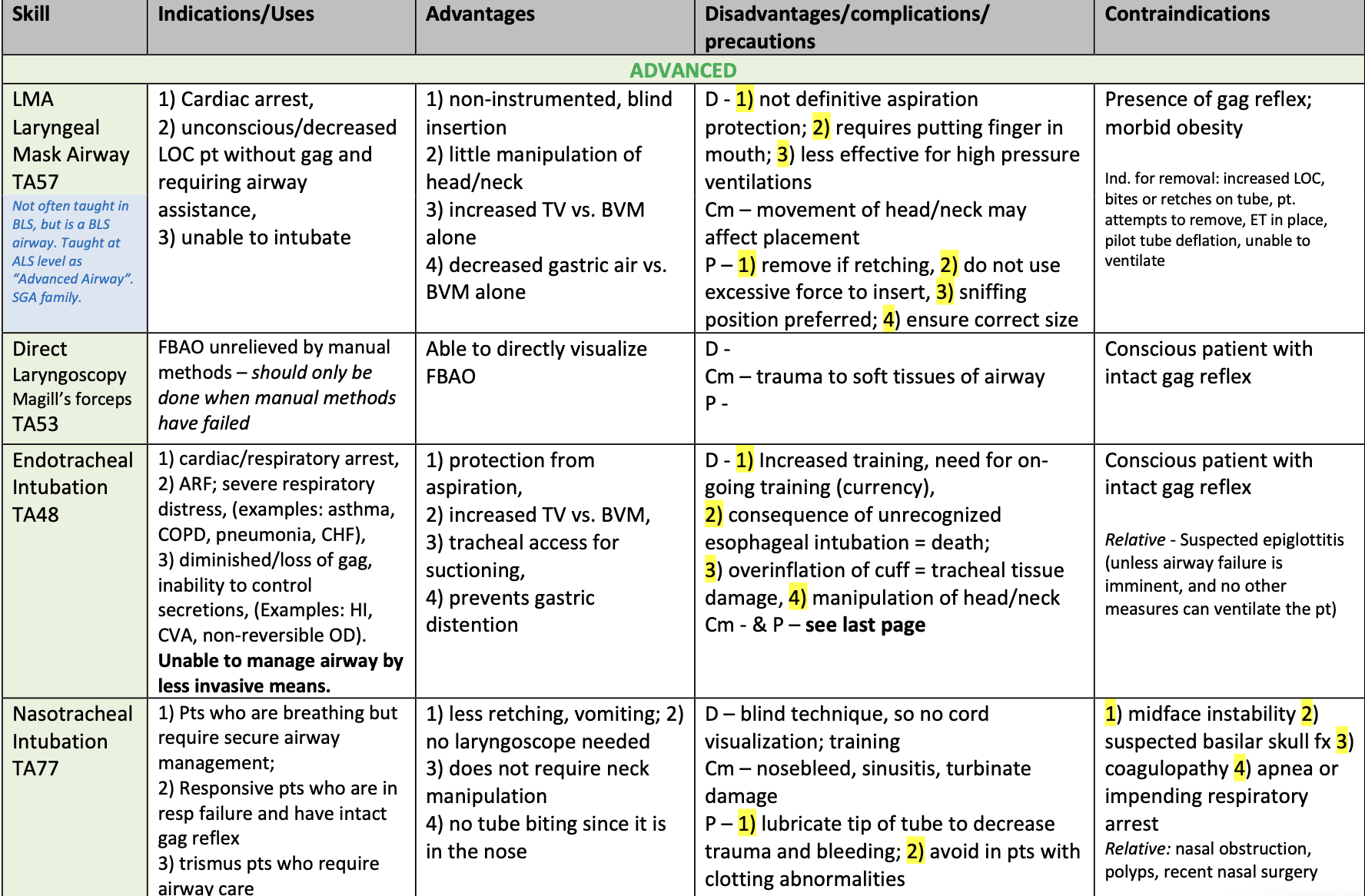
ET intubation
general procedure, Indications, CI, advantages, disadvantages, complications and precautions
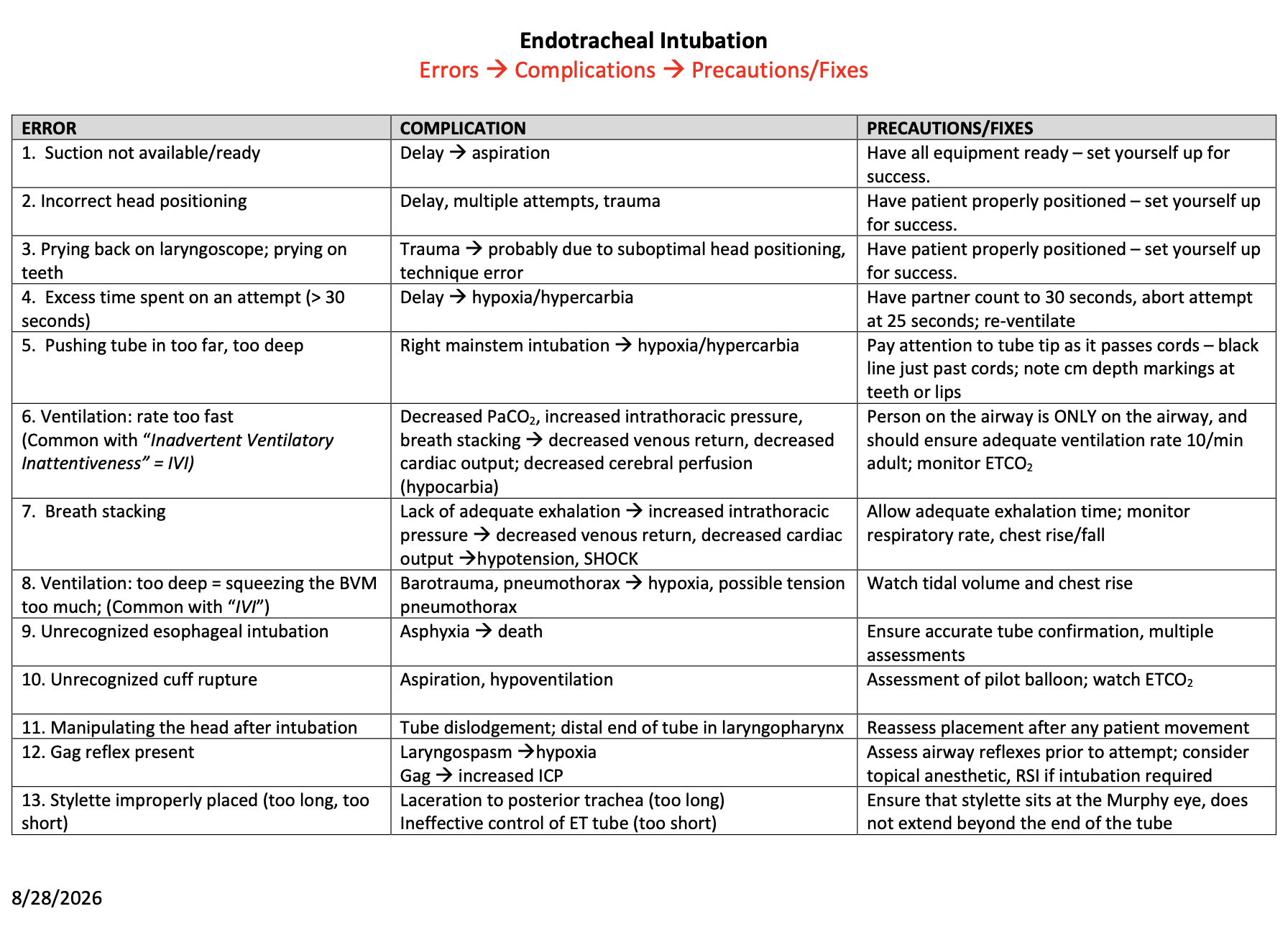
can also cause ICP bc of nerve stimulation
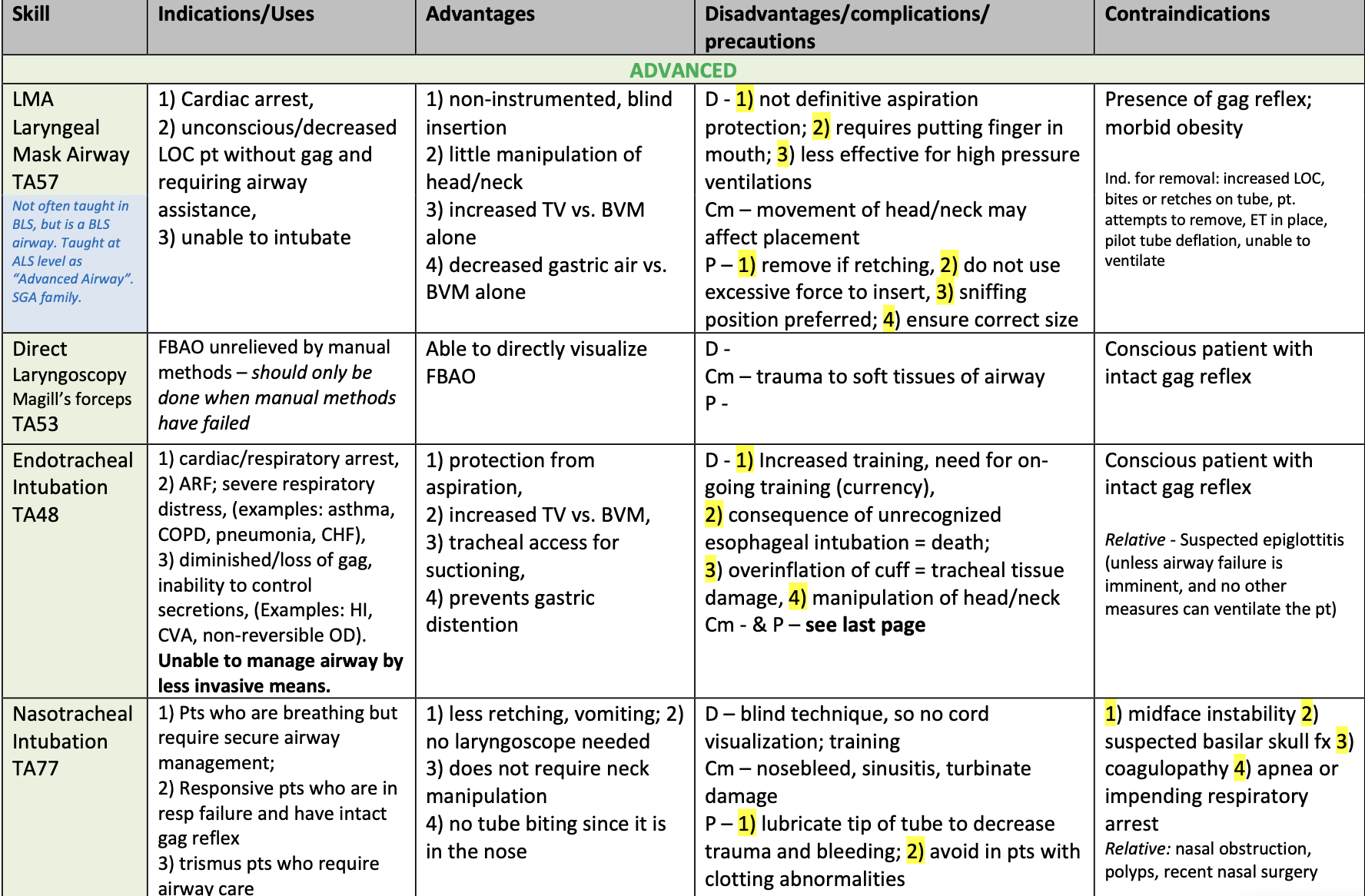
Nasotracheal intubation
general procedure, Indications, CI, advantages, disadvantages, complications and precautions

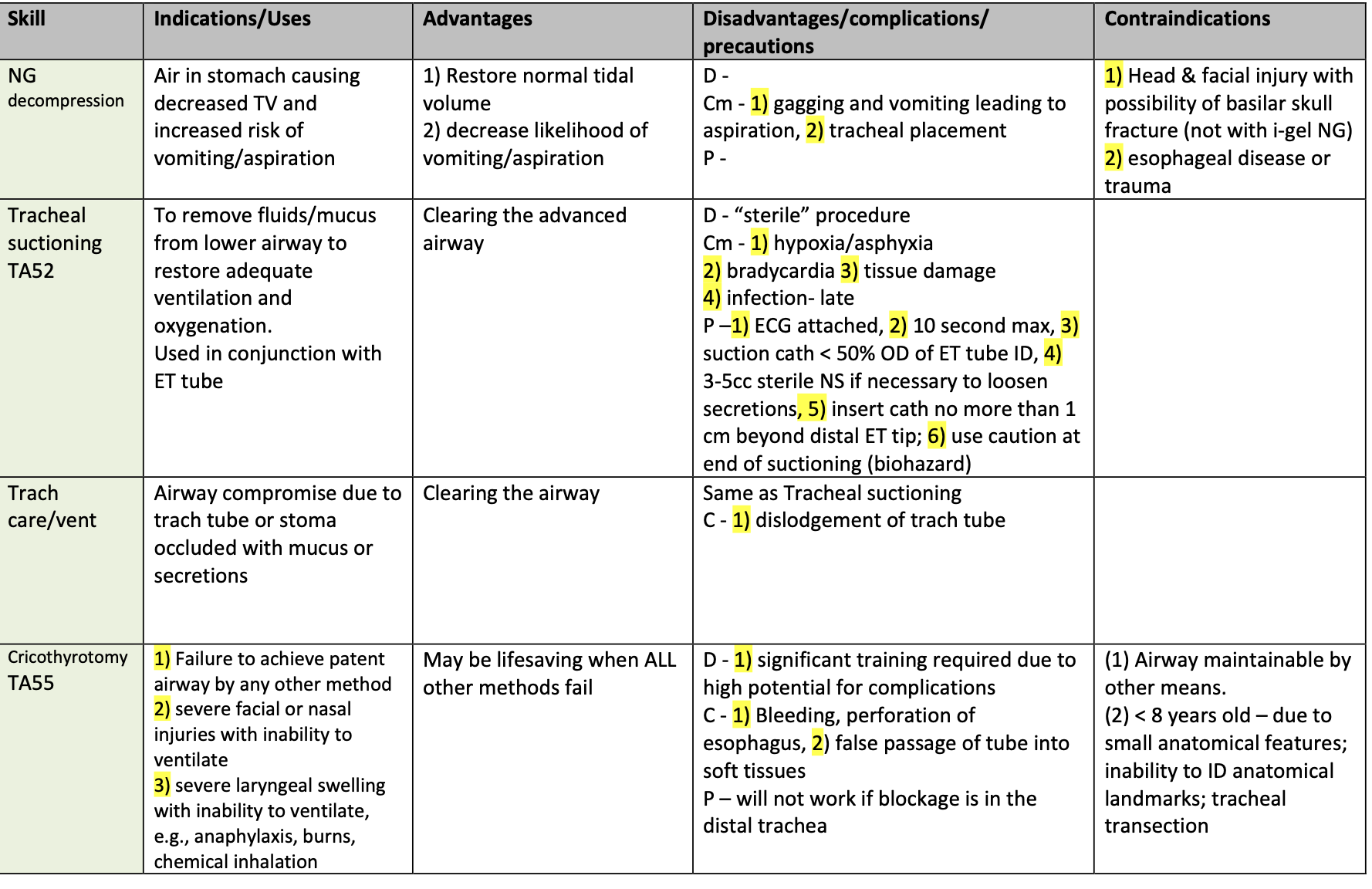
NG decompression
general procedure, Indications, CI, advantages, disadvantages, complications and precautions

tracheal suctioning
general procedure, Indications, CI, advantages, disadvantages, complications and precautions
insert a little bit use 3-5cc of sterile NS for loosening of mucus
at end of suctioniing, be sure you dont “flick” gunk everywhere
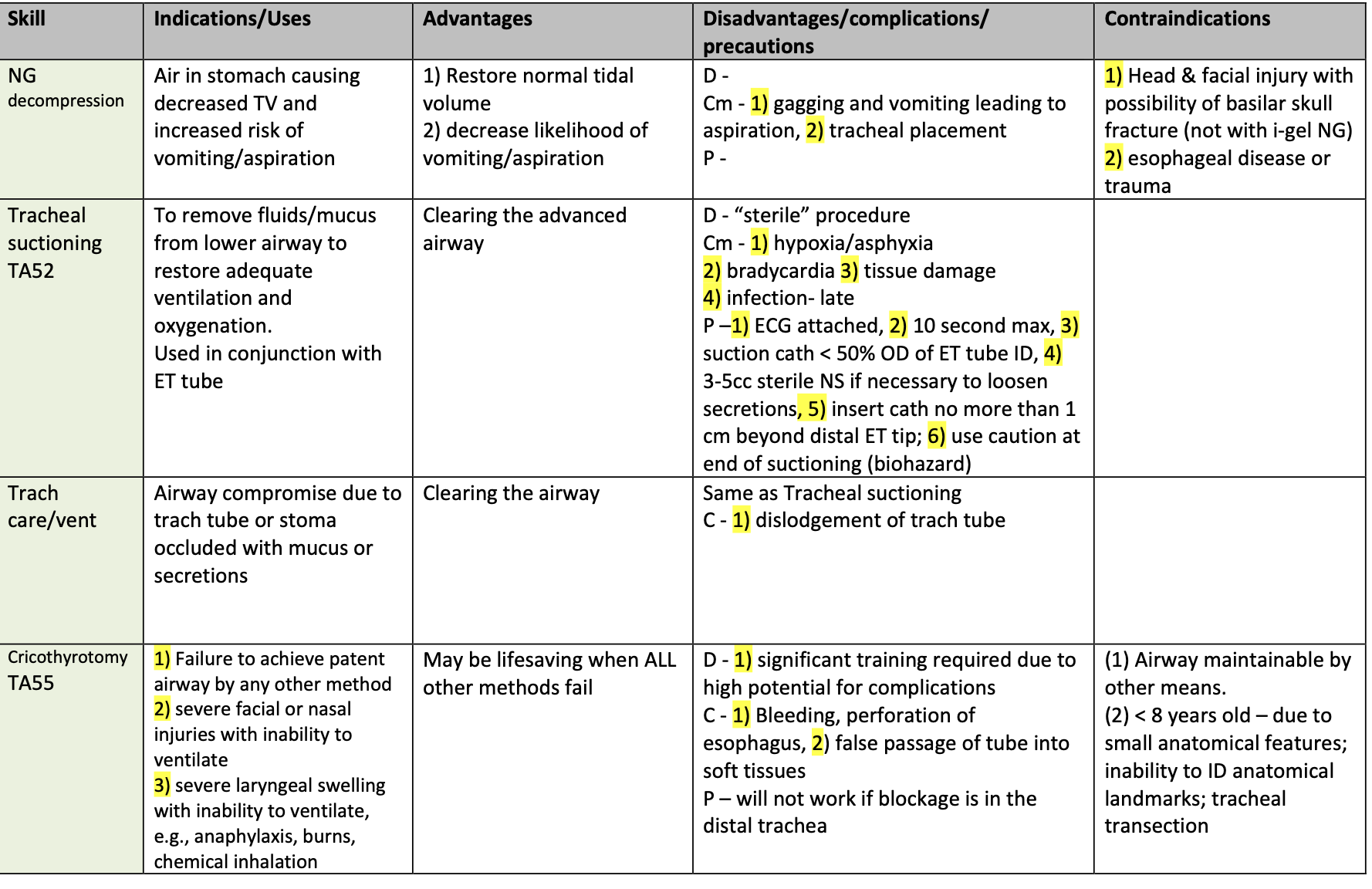
Trach care/vent
general procedure, Indications, CI, advantages, disadvantages, complications and precautions

cricothyrotomy
general procedure, Indications, CI, advantages, disadvantages, complications and precautions
TTJI- what does this stand for?
general procedure, Indications, CI, advantages, disadvantages, complications and precautions
transtracheal jet insufflation

how to choose proper size of catheter for tracheal suctioning
(ID of ETT or Trach tube -1) x2
it will be #french
tracheotomy
surgical procedure used to create opening
tracheostomy
the airway created by the surgery
larygectomy
surgical procedure to remove the larynx
full- this is when you must use a BVM over stoma
partial- air still moves through to the mouth
stoma
an opening or hole through which they breath through
laryngectomy considerations
you cannot orally intubate them, there are 2 seperate passageways.
what is an obturator
similar to a stylet in ET tube but for trachs
what should I do if a trach becomes dislodged
deflate the cuff
pull it out
cover it with gauze and tape, or a finger then use a BVM over the mouth
reassess
If something weird is going on with a trach what should i do?
Deflate the cuff
cover it
BVM them normally
P and cm for ET Intubation