HOD all
 Call Kai
 Learn
Learn Practice Test
 Spaced Repetition
 Match
Match Flashcards
 Knowt Play
1/99

There's no tags or description
Looks like no tags are added yet.
Name | Mastery | Learn | Test | Matching | Spaced | Call with Kai |
|---|
No analytics yet
Send a link to your students to track their progress
100 Terms
QN=77
It was a style that looked optimistically to the future rather than nostalgically to the past, using as its primary source of inspiration the visually seductive and tactile forms of the natural world. It was also a truly international style that was adopted comprehensively across all realms of the applied arts: from glassware, furniture, and lighting to jewelry, graphic design, and typography. What is this style?
a. Neo Classicism
b. De Stijl
c. Art Nouveau
d. Organic design
c. Art Nouveau
QN=78
Why is Art Nouveau argued as the first modern style?
a. Throwing off the historicizing, decorative shackles of the past
b. Decoration should always be informed by a design's construction rather than applied as surface ornamentation
c. Logical structure of products, uncompressing logic in the use of materials, proud and frank exhibition of working process
d. All of the above
d. All of the above
QN=79
Fill in the blank
It was understood that both art and commerce would be instrumental in the development of an authentic German identity, and as a result a new style emerged that was utterly distinct from other countries' interpretations of the New Art style. The branch that emerged in Germany during the 1890s was termed ..., which translates as "youth style"
a. Jugendstil
b. Kunstformen der Natur
c. Gesamtkunstwerk
d. All of the above
a. Jugendstil
QN=80
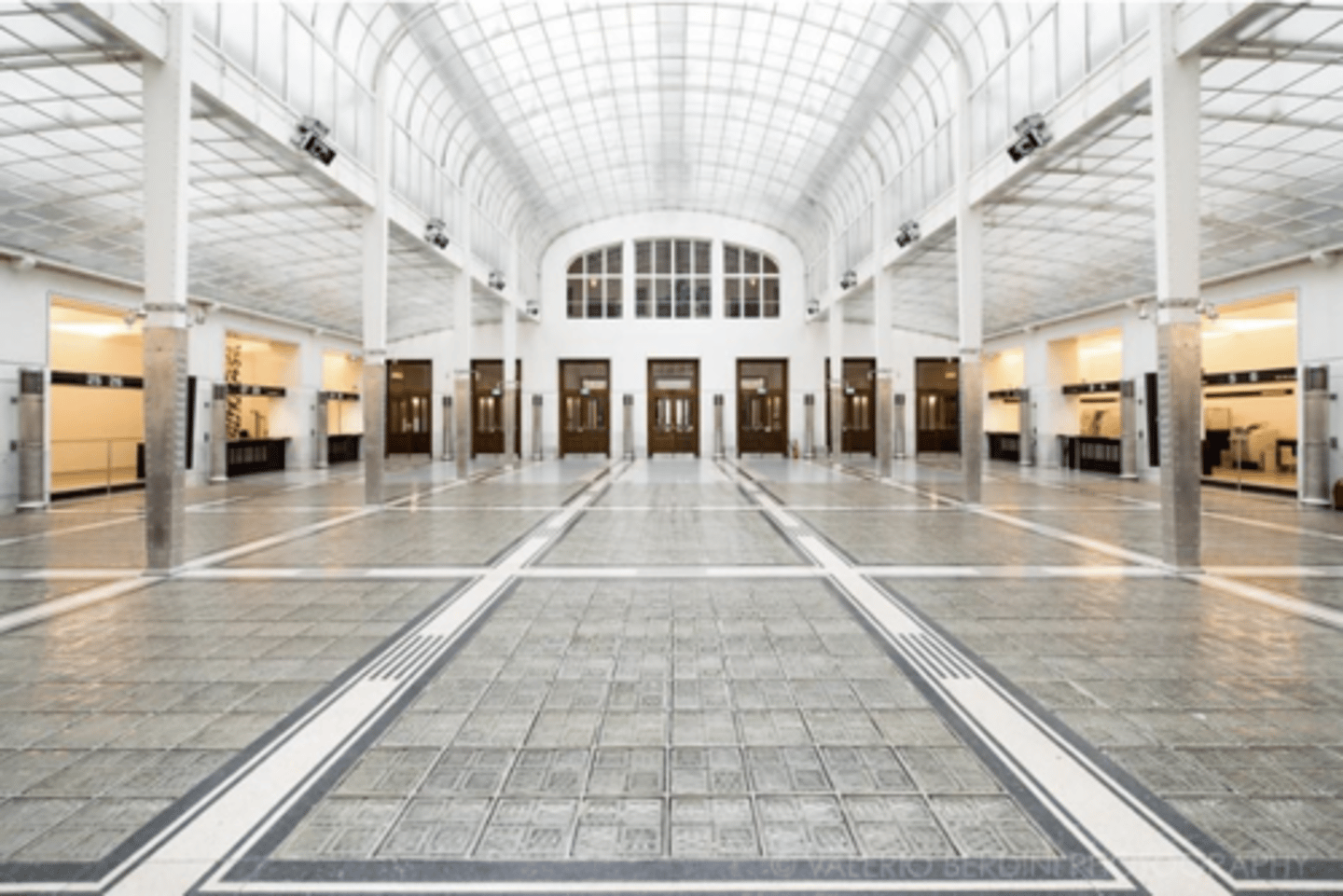
This picture shows an image of the interior of the Osterreichische Postparkasse (Austrian Postal Savings Bank) in Vienna designed by Otto Wagner, 1906. What style is this?
a. Vienna Secession
b. Bauhaus
c. Destijl
d. Constructivism
a. Vienna Secession
QN=56
Who laid the theoretical foundations for National Romanticism in the sense that the present a continuation of the past as well as a bridge to the future, and the importance of ancestry as well as the need for an identifiable sense of character within a nation's culture?
a. Baruch Spinoza
b. John Locke
c. Johann Gottfried von Herder
d. Voltaire
c. Johann Gottfried von Herder
QN=57
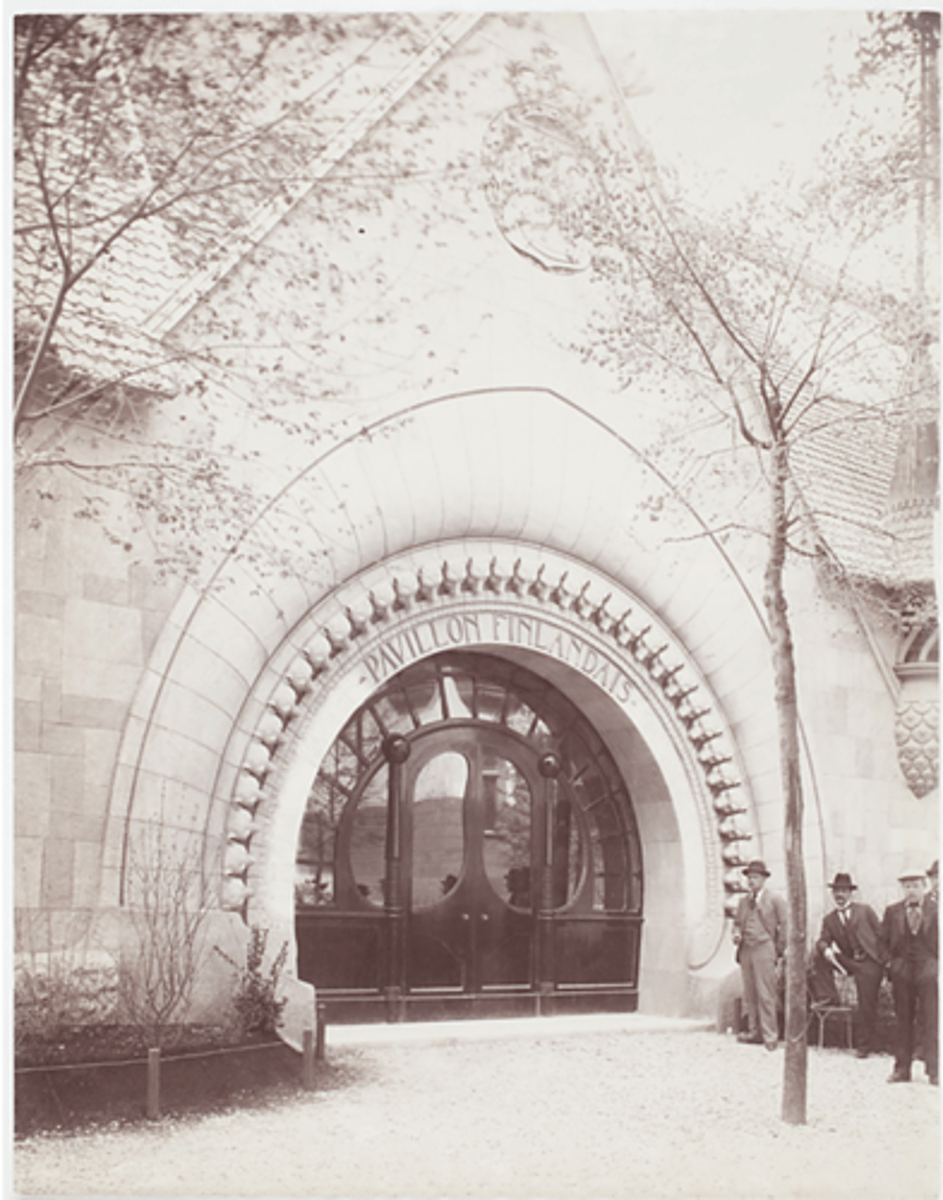
This picture shows an image of the Finnish Pavilion designed by the architect Eliel Saarinen, perhaps Finland's greatest exponent of National Romanticism, who pioneered a style of architecture and design that alluded to his country's ancient Karelian culture. Where the motifs on this building inspired?
a. Viking-revival style
b. Dragon motifs
c. Nature
d. Nordic folk art and vernacular architecture
d. Nordic folk art and vernacular architecture
QN=58
In Norway, National Romanticism as a definable Nordic style emerged around the 1840s and found expression not only in the musical composition of Edvard Grieg but also in the buildings, furniture and silverware. What motifs were most commonly used to interpret the curious medievalized Viking-revival style?
a. Dragon
b. Dragonfly
c. Wild flowers and insects
d. Sea anemones
a. Dragon
QN=59
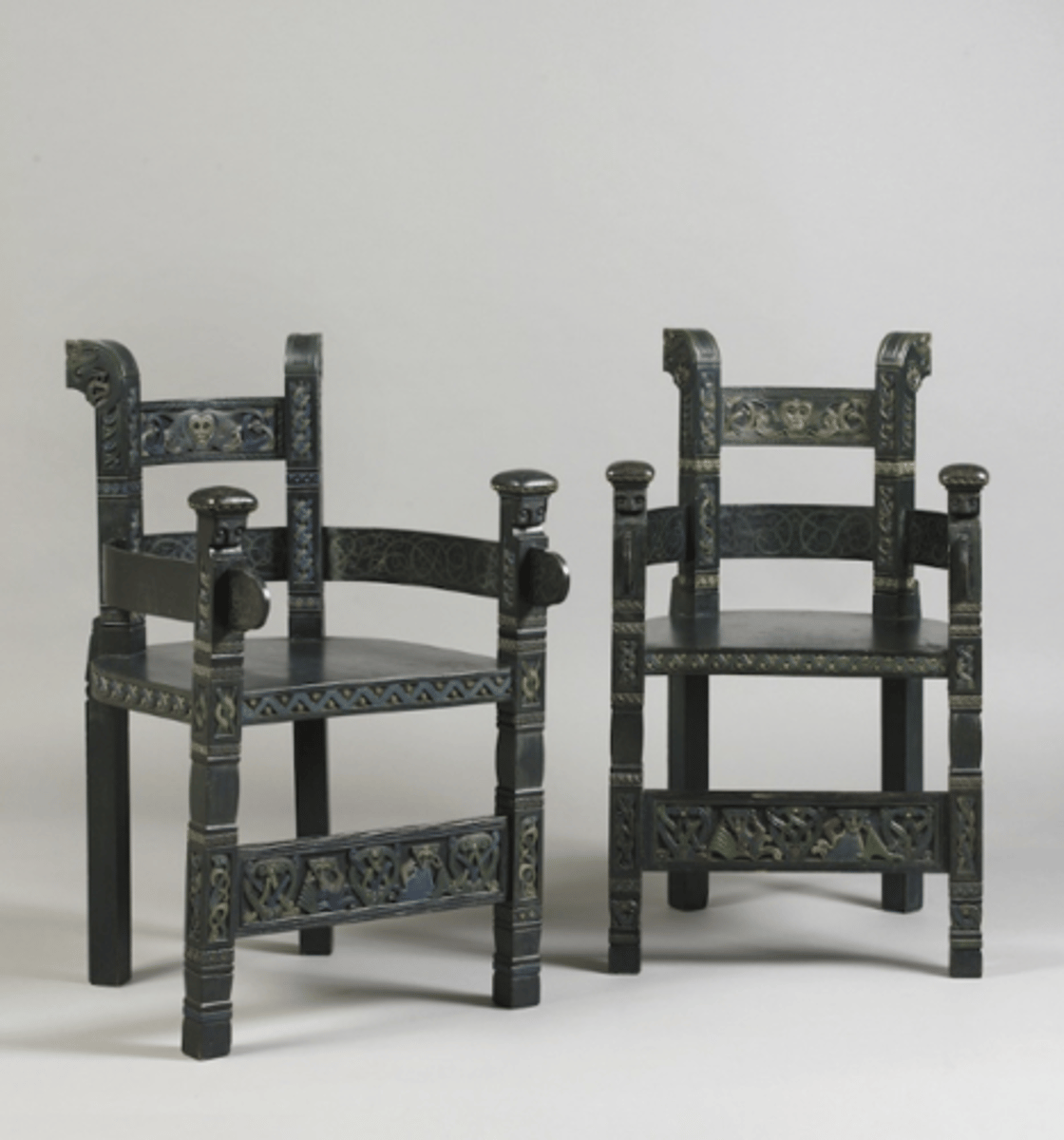
This picture shows an image of the Viking-revival armchair designed by Lars Kinsarvik that revealed a romantic notion of Norway's past with the motif of Dragon. What style was it designed?
a. Classicism
b. Neo-Classicism
c. Modernism
d. National Romanticism
d. National Romanticism
QN=60
What was another name for the second phase of the Arts and Crafts movement in Britain?
a. Aesthetic movement
b. The New Art movement
c. Modernism
d. Post-modernism
b. The New Art movement
QN=61
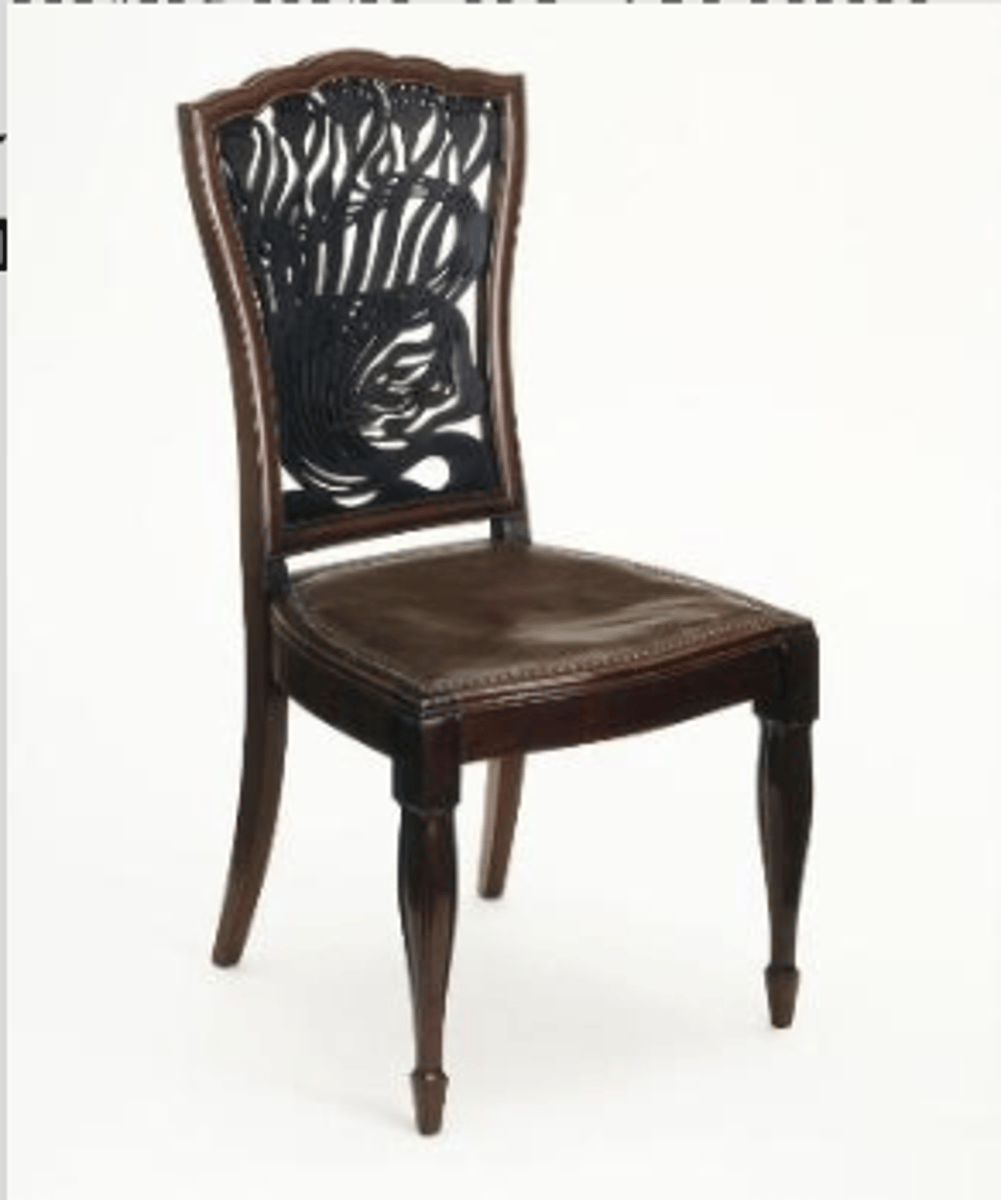
This picture shows an image of a highly innovative chair designed by Arthur Heygate Mackmurdo for the guild's dining hall that featured a back splat incorporating an asymmetrical motif of swirling foliage stems. What style was it designed?
a. Arts and Crafts movement in Britain
b. Arts and Crafts movement in America
c. Aesthetic movement
d. Neo-classicism
a. Arts and Crafts movement in Britain
QN=62
What was the significant difference between the second phase of the British Arts and Crafts movement and Morris's time?
a. Ornament was integral to the overall form of the design
b. Using floral patterns that swirled harmoniously across printed cottons and velvets
c. Employed highly stylized floral motifs based on ancient Celtic patterns
d. Harness the power of the machine, rather than to reject it
d. Harness the power of the machine, rather than to reject it
QN=63
What was the difference between the Arts and Crafts movement in America and Britain?
a. American Arts and Crafts designers focused more on function than decoration
b. American Arts and Crafts designers preferred to use strong vertical and horizontal lines and plain
c. American Arts and Crafts designers produced work that was more muscular and elemental than that created by European exponents
d. All of the above
d. All of the above
QN=64
What was the approach most used by American Arts and Crafts designers in expressing the rustic, unusual style of decoration and the use of simple elemental shapes?
a. Rough-and-ready approach
b. Human-centered approach
c. Co-design approach
d. All of the above
a. Rough-and-ready approach
QN=65
This picture shows an image of the side chair designed by Harvey Ellis for Gustav Stickley, c. 1903. What style is this?
a. Neoclassicism
b. Bauhaus
c. Arts and Crafts movement in Britain
d. Arts and Crafts movement in American
d. Arts and Crafts movement in American
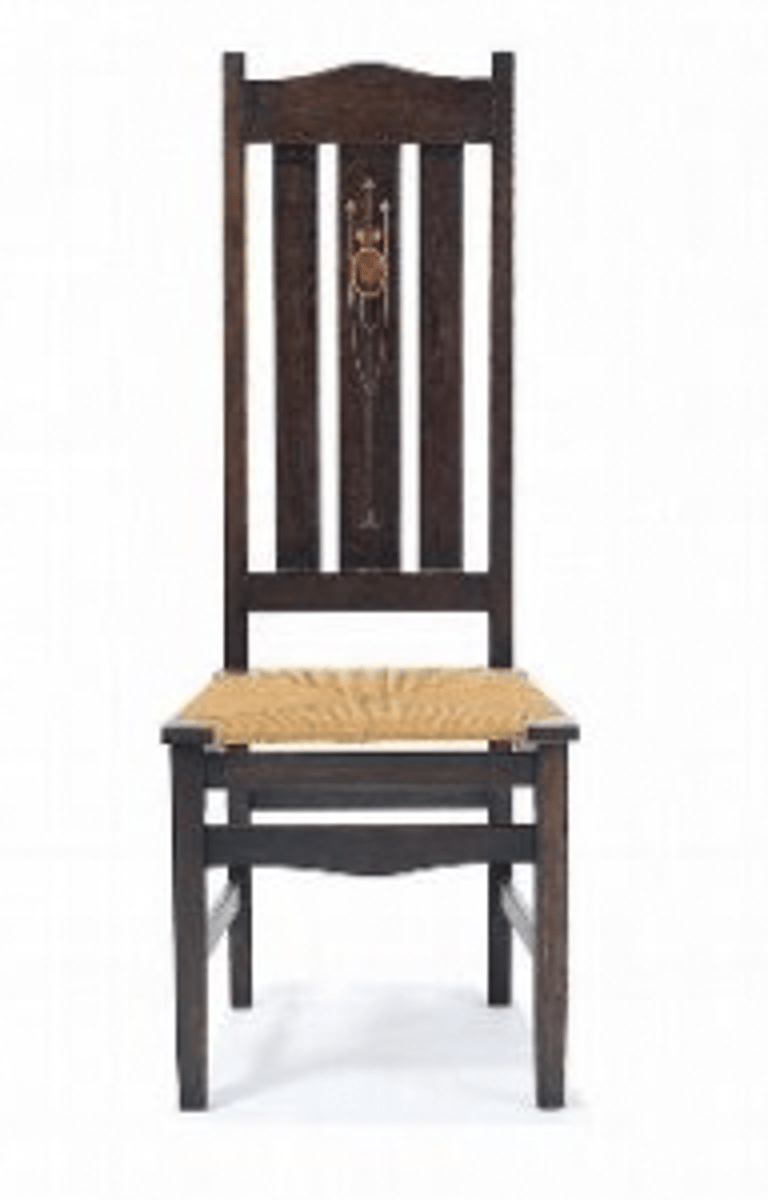
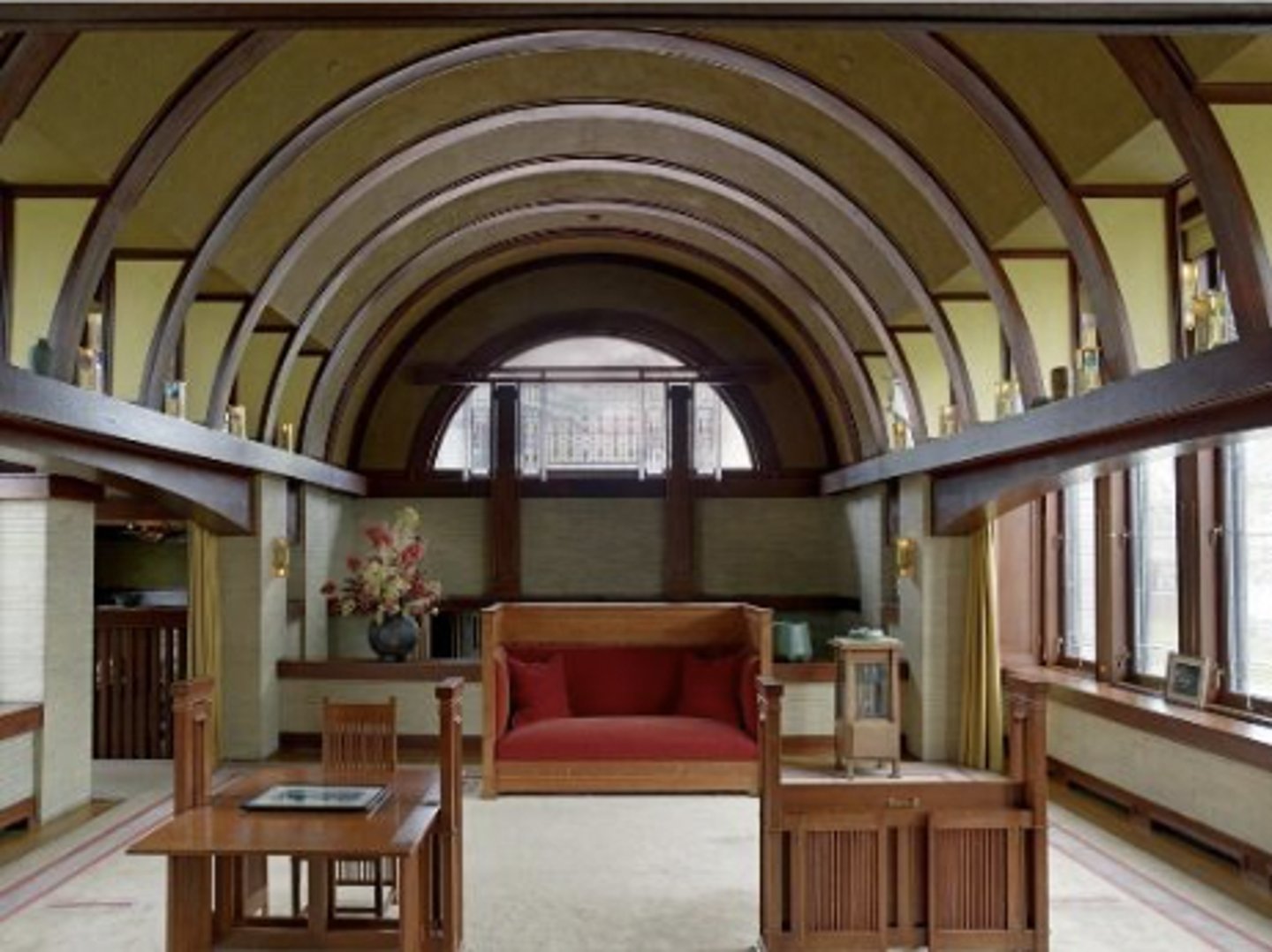
QN=66
This picture shows an image of the interior of the Dana Thomas House in Springfield, Illinois, that the architect took an enormous care in the minute detailing of his building, and more than any other individual he bridged the transition between the Arts and Crafts movement and the later International Style through his unified architectural schemes. Who is the architect mentioned above?
a. Ludwig Mies Van der Rohe
b. Frank Lloyd Wright
c. Le Corbusier
d. Walter Gropius
b. Frank Lloyd Wright
QN=67
During the fin-de-siecle period spanning the years 1890 to 1914, a new international style emerged that the designers rejected the slavish historical revivalism of the preceding decades. What inspiration were the designers seeking during this period?
a. Eastern culture
b. Machine age
c. Natural forms
d. Space age vision
c. Natural forms
QN=68
Art Nouveau designers took motifs directly from nature- a furling leaf, a peacock feather, a blossoming rose- and dramatically stylized them in designs that invoked dynamic, swirling growth. Which of the following designers are famous for the Art Nouveau style?
a. Hector Guimard
b. Emile-Jacques Ruhlmann
c. Dieter Rams
d. Victor Horta
a. Hector Guimard
d. Victor Horta
QN=69
This picture show an image of the first true Art Nouveau building that the interior was groundbreaking in its use of a steel-and-glass roof that bathed its stairwell core in warm, golden light and the writhing, decorative floral motifs in its staircases, which incorporated structural columns and integrated lighting fixtures to dramatic effect. Who is the author of this work?
a. Hector Guimard
b. Rene Lalique
c. Antonio Gaudi
d. Victor Horta
d. Victor Horta
QN=70
In the work of the famous Belgium architect Victor Horta, he used vegetal forms that recalled the whirling life force found in Haeckel's lithographs, with all elements of his interiors united by a strong stylistic interrelationship, from the specially designed door handles to the custom-made-furniture. What style was Victor Horta famous for?
a. Art Deco
b. Art Nouveau
c. De Stijl
d. Bauhaus
b. Art Nouveau
QN=71
This picture shows an image of the Salon of Victor Horta's house and studio in Brussels (now the Horta Museum), designed in 1898. What style is this?
a. Aesthetic movement
b. Art Deco
c. High Victorian style
d. Art Nouveau
d. Art Nouveau
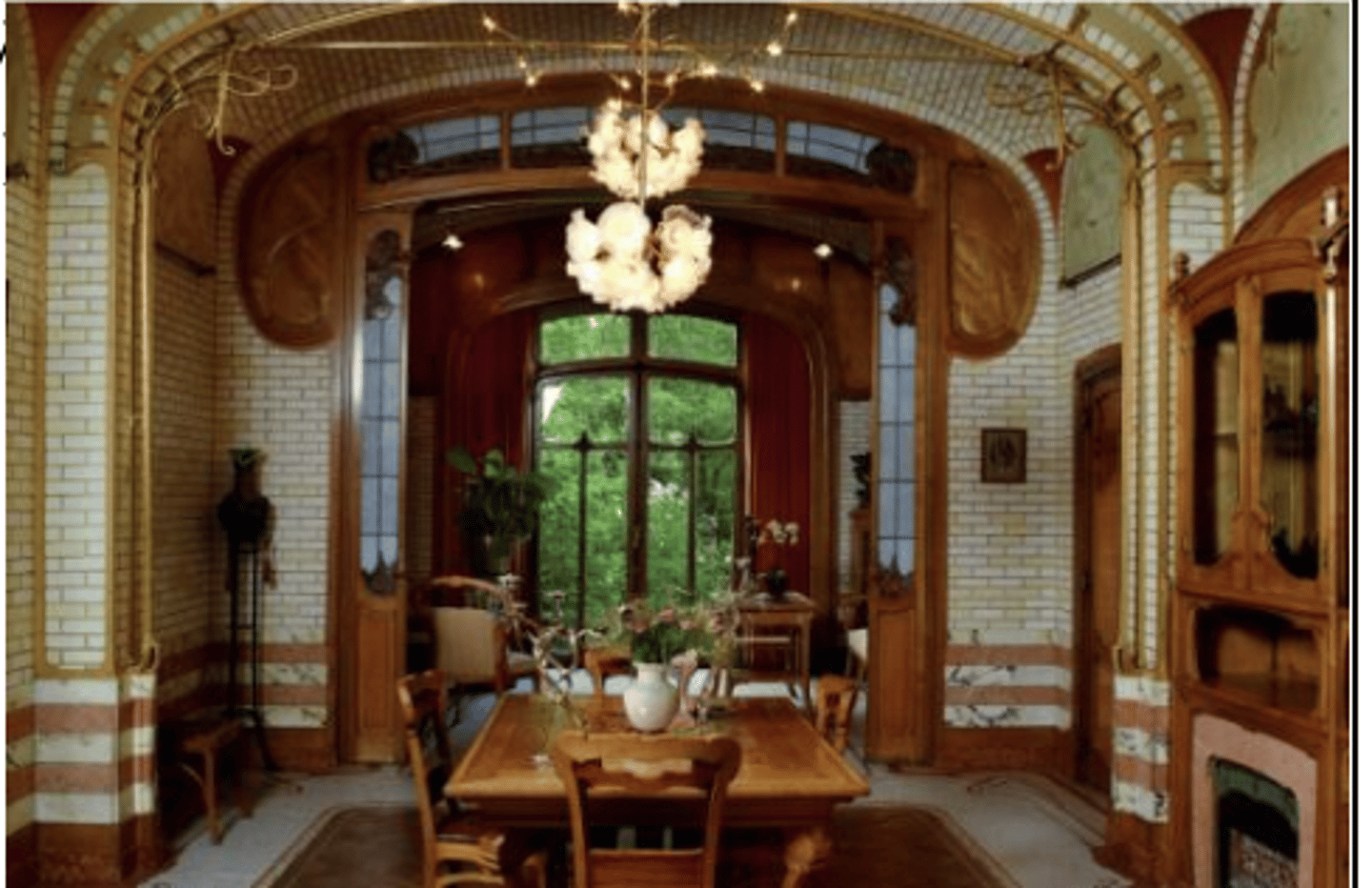
QN=72
Unlike designers aligned to the British Arts and Crafts movement, one designer saw the machine as a powerful catalyst with which to achieve a new kind of beauty, arguing that engineers were "the architects of the present day". Who is he?
a. Adolf Loos
b. Henry van de Velde
c. Peter Behrens
d. Antonio Gaudi
b. Henry van de Velde
QN=73
Art Nouveau style is considered the most similar to which of the following design styles?
a. Rococo
b. Neo Classicism
c. Memphis style
d. Biomimicry
d. Biomimicry
QN=74
This picture shows an image of the Sagrada Familia church, a very famous Art Nouveau building in Barcelona. The architect borrowed motifs from Gothic and Moorish architecture and then transformed them into exotic melting forms that made it looks like a fanciful fairy-tale castle out of sand. Who is the author of this work?
a. Hector Guidmard
b. Henry van de Velde
c. Frank Lloyd Wright
d. Antonio Gaudi
d. Antonio Gaudi
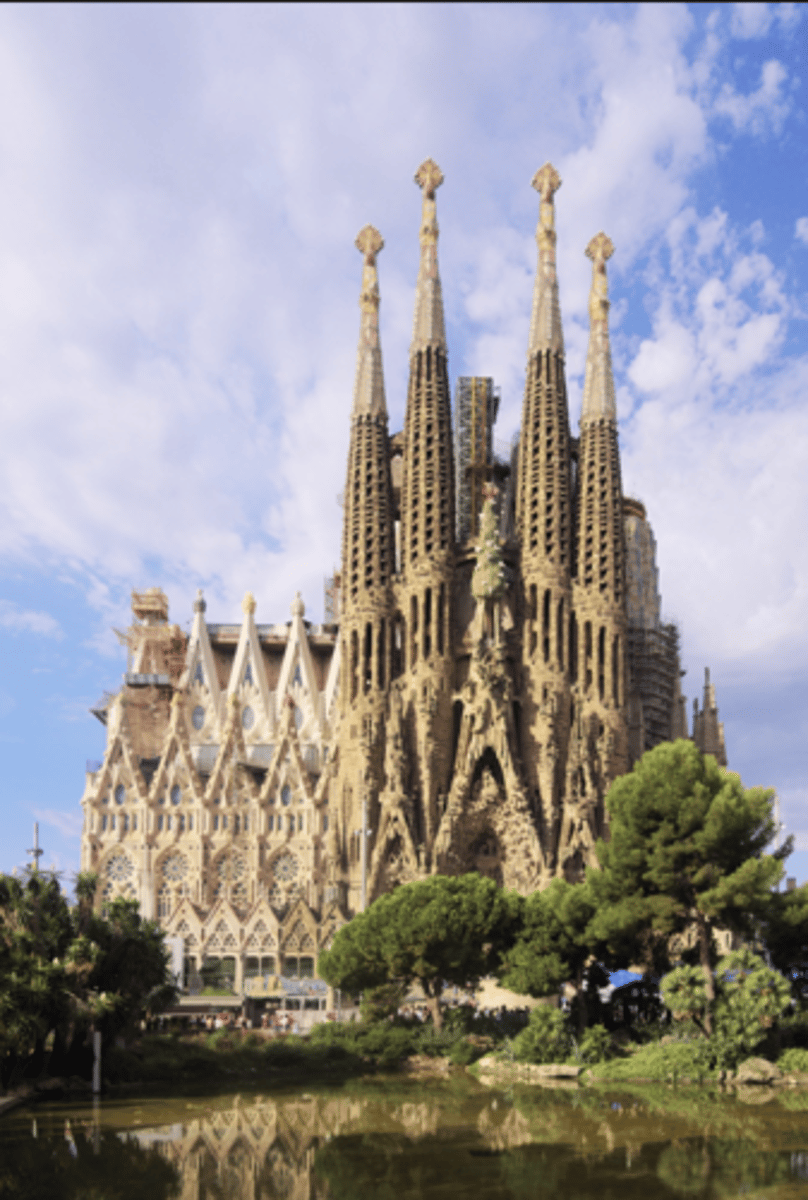
QN=75
Which of the following designers epitomized the French Art Nouveau style better than any other who created cast-iron entrances to the Paris Metro, designed for the Compagnie du Metropolitan in 1898, that brought him widespread acclaim?
a. Hector Guidmard
b. Emile-Jacques Ruhlmann
c. Piere Chareau
d. Rene Lalique
a. Hector Guidmard
QN=37
Who took the most important role in building the Crystal Palace - an ingenious building design where the first Great Exhibition of all nations was took place, London, 1851?
a. Joseph Paxton
b. Henry Cole
c. Owen Jones
d. Ludwig Mies Van de Rode
a. Joseph Paxton
QN=38
The Crystal Palace where the first Great exhibition of all nations took place was an ingenious building design that seemed to encapsulate the future in its soaring construction of tiered girder-work, which covered the old elm trees of Hyde Park to such dramatic effect. What material was this structure built of?
a. Brick and Timber
b. Concrete and Stone
c. Gold and Iron
d. Light cast iron and Glass
d. Light cast iron and Glass
QN=39
This picture shows an image of the objects produced and exhibited at the Great Exhibition of all Nations, 1851. This so called "fancy goods" were for the most part revivalist wares whose decoration teemed with references to every previous style in history, from Rococo, Baroque, and Neoclassical, to the more unusual Assyrian, Eritrean, and Celtic. What is the name of this style?
a. Mannerist style
b. High Victorian style
c. Empire style
d. Queen Anne revival style
b. High Victorian style
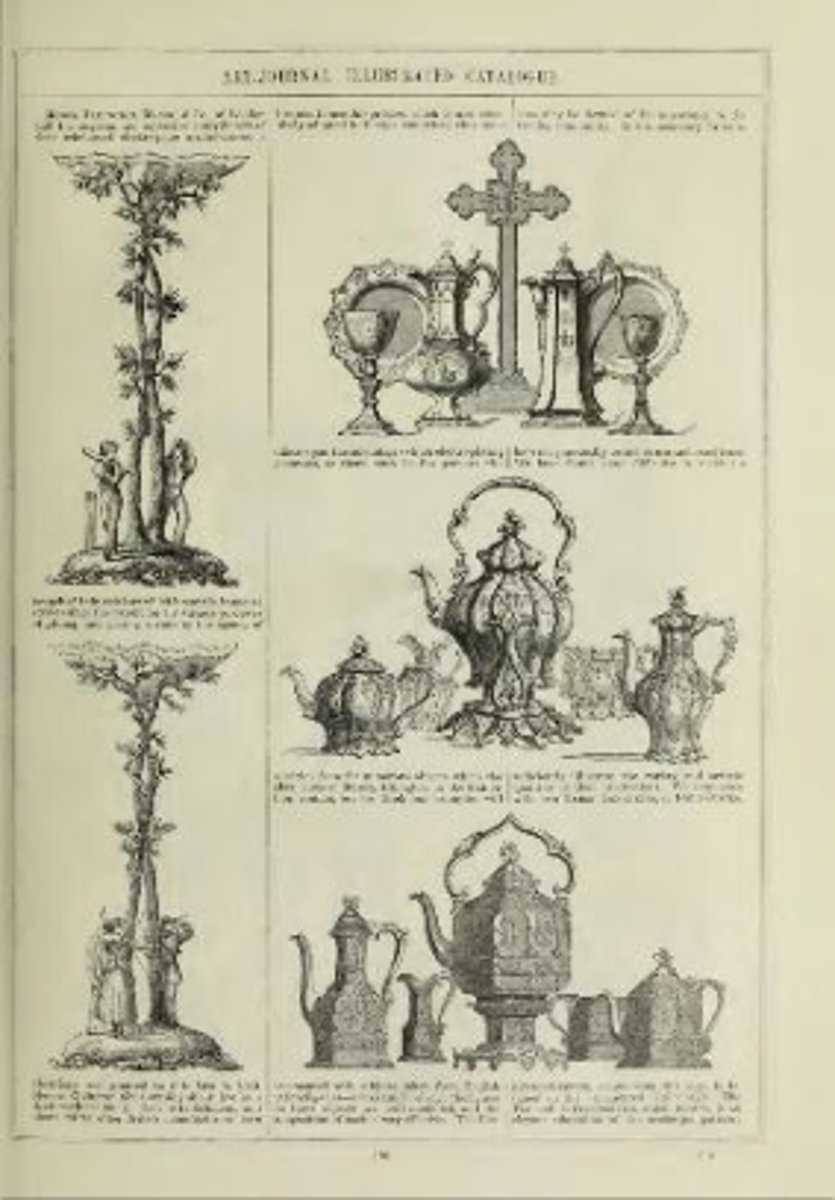
QN=39
Aesthetic movement was a branch of design reform that stemmed from the Gothic revival and the Pre-Raphaelite Brotherhood which was spurred on the idea of "art for art sake" rather than "craft for craft sake", and also looked further afield for decidedly more exotic inspirations instead of looking for to national vernacular precedents for design archetypes.
Which was the country that influenced the most for the Aesthetes and gave the British designers, artist and architects the first taste of a design culture that had evolved along very different lines from those in Europe?
a. China
b. Arabic
c. Turkey
d. Japan
d. Japan
QN=40
Among the Gothic Revival reformers, which of the following promoted a far more fanciful, almost fairy tale-esque interpretation of the Gothic style: his work captured the dreamlike world of the Pre-Raphaelites while also anticipating the work of the Arts and Crafts movement?
a. A. W. N. Pugin
b. George Edmund Street
c. William Burges
d. Emmanuel Viollet-le-Duc
d. Emmanuel Viollet-le-Duc
QN=41
Among the Gothic Revival reformers, which of the following was inspired by the plainer early English building of the 12th and 13th centuries that was characterized by the rudimentary and furniture design was less decoratively fussy and more modern looking, with simple, no-nonsense construction?
a. A. W. N. Pugin
b. George Edmund Street
c. William Burges
d. Emmanuel Viollet-le-Duc
b. George Edmund Street
QN=42
Who was the first design-reformer to highlight what he saw as the parasitic nature of the Victorian bourgeoisie, who profited from the abject drudgery of the working class? He asserted that the mindless production of useless luxuries, which he referred to as "slave wares", perpetuated the workers' bondage, and he proposed that all men should be allowed to work worthily.
a. William Morris
b. William Arthur Smith Benson
c. William Godwin
d. Christopher Dresser
a. William Morris
QN=43
In the 19th century, what design reform movement sought not only to infuse design with art but also to revitalize the age-old craft traditions, which were by now under severe threat from industrialization and mechanized production? (p.141)
a. Aesthetic movement
b. Arts and Crafts movement
c. National Romanticism
d. The New Art
b. Arts and Crafts movement
QN=44
Among the Arts and Crafts movement reformers, which of the following believed that decoration should only be employed if it had a use or a meaning and that the beauty of an object was derived from being in harmony with nature, rather than from mimicking it?
a. Philip Webb
b. William Arthur Smith Benson
c. Edward Burne-Jones
d. William Morris
d. William Morris
QN=45
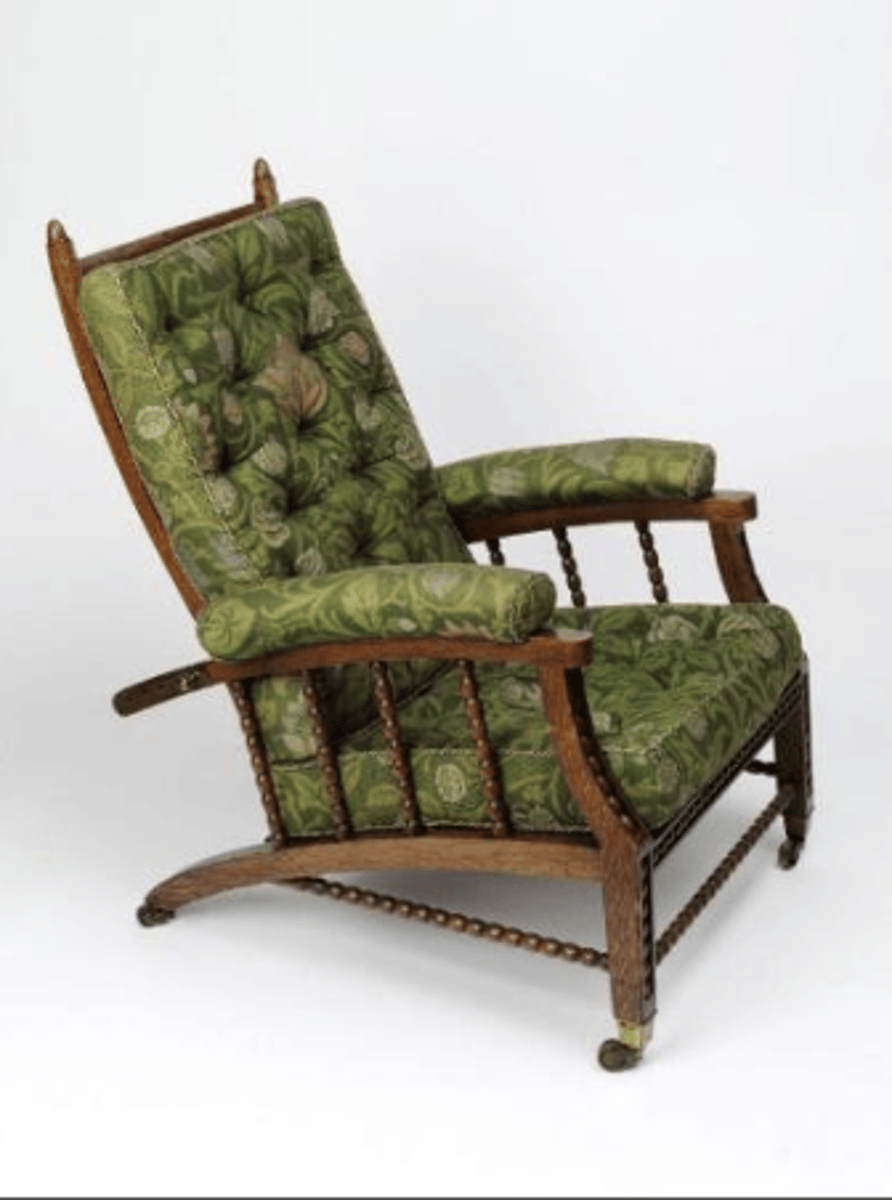
This picture show an image of an adjustable chair designed by Philip Webb, c. 1870, upholstered in Bird woven textile. What style is this?
a. Rocco style
b. High Victorian style
c. Art Nouveau style
d. Arts and Crafts movement
d. Arts and Crafts movement
QN=46
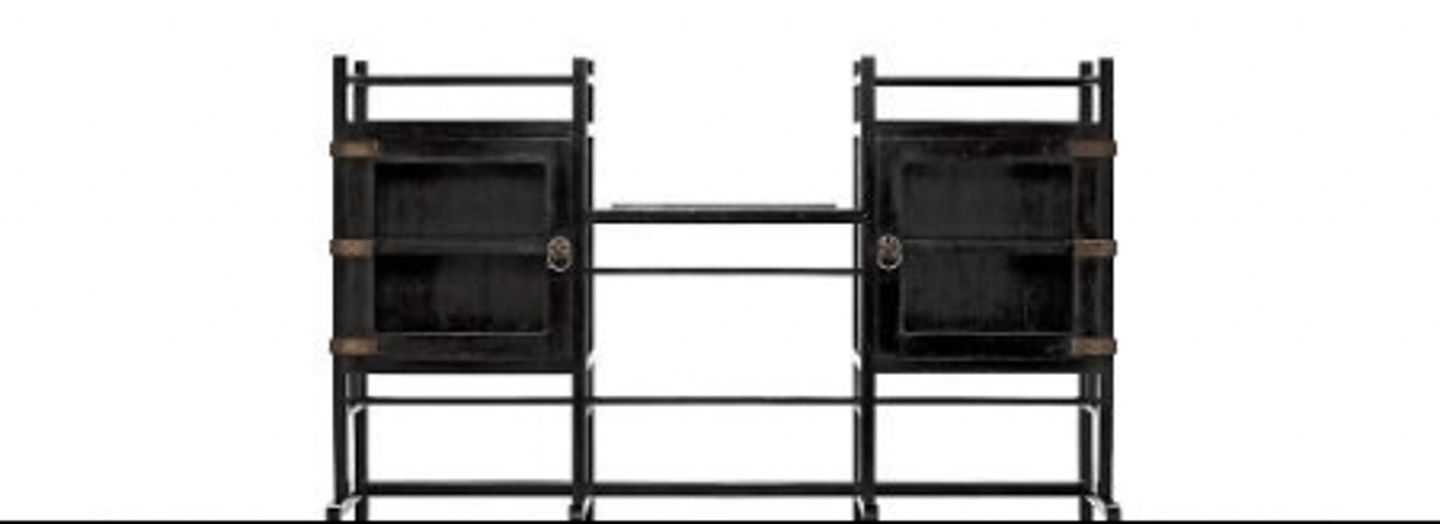
This picture shows an image of a sideboard created by William Godwin in accordance with fashionable taste which captured the spirit of Japan by referencing Japanese motifs and constructions while remaining at the same time very much British "art furniture". What style is this?
a. Aesthetic movement
b. Arts and Crafts movement
c. Art Deco
d. The New Art
a. Aesthetic movement
QN=47
During the late 1870s, which city became the creative crucible of Aesthetic movement?
a. NewYork
b. Paris
c. London
d. Milan
c. London
QN=48
In addition to the Japanese influence, what other decorative motifs have been recurred in Aesthetic movement style interiors?
a. Magnolia
b. Sea anemones
c. Dragon
d. Sunflowers and peacock feathers
d. Sunflowers and peacock feathers
QN=49
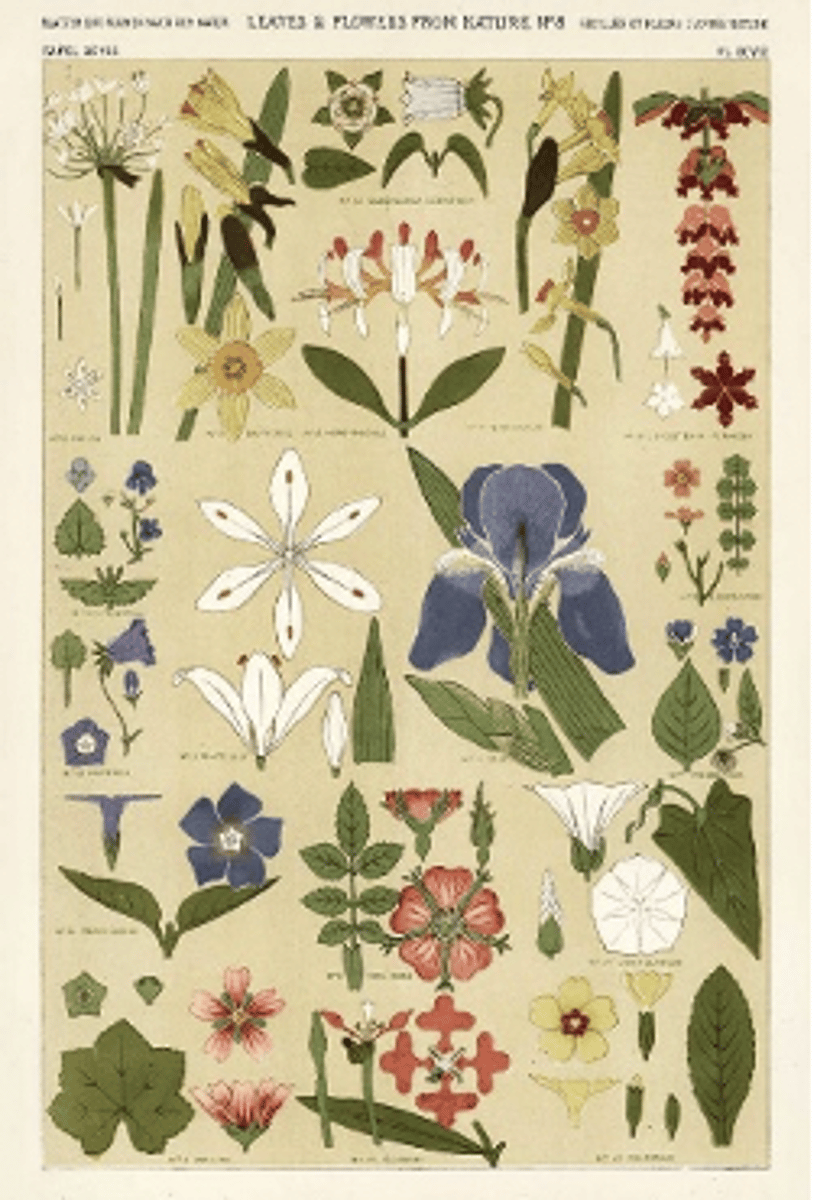
This picture show an image of a research drawing into botanical structural form and the insightful understanding of the art of Japan. Who is the author of this sketch?
a. Edward William Godwin
b. Christopher Dresser
c. A. W. N. Pugin
d. Edward Burne-Jones
b. Christopher Dresser
QN=50
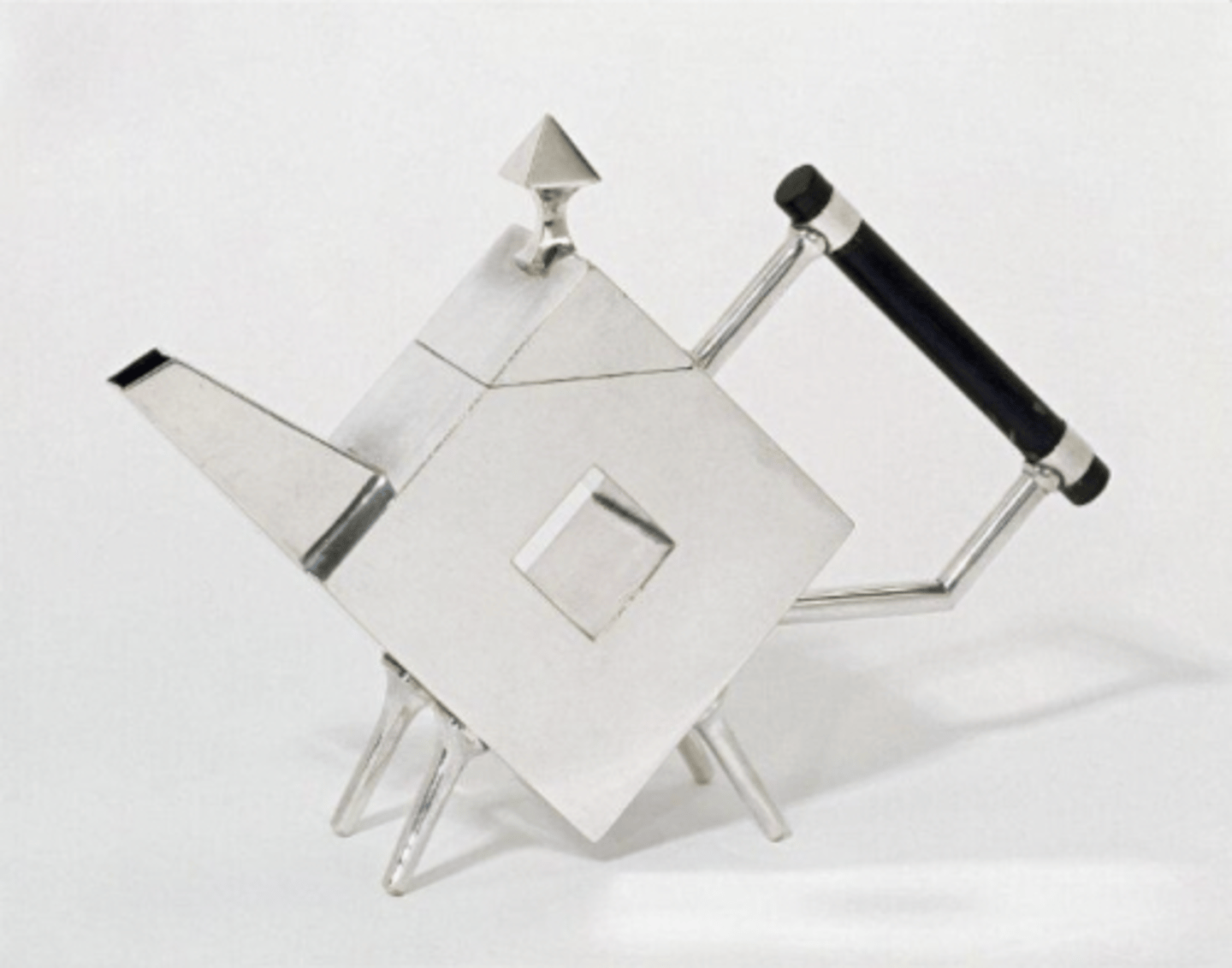
This picture shows an image of a well-known Model No.2274 lozenge-shape teapot, designed by Christopher Dresser and for James Dixon & Sons in 1879. Where was this object inspired?
a. Queen Anne revival-style
b. Anglo-Japanese
c. Moorish-inspired furniture
d. The element geometric formalism found in Japanese design
d. The element geometric formalism found in Japanese design
QN=51
The arts and crafts of Japan were a revelation to European designers and artists, who found them highly refined, both technically and aesthetically, and admired the fact that even the humblest of objects harmoniously balanced from and function. Who was the first Western designer to visit Japan officially in order to study its arts and manufacturing?
a. Christopher Dresser
b. William Morris
c. Henry Cole
d. A. W. N. Pugin
a. Christopher Dresser
QN=52
Fill in the blank
As a fervent believer in what he saw as the true faith, A.W.N. Pugin felt that Gothic architecture was a transcendental expression of ...
a. Buddhism
b. Catholicism
c. Islam
d. Confucius
d. Confucius
QN=53
The flowering of the "New Art" in the 1890s was in international phenomenon that played a key role in the story of design, which went a number of names depending on where it occurred. What did they call the "New Art" in France?
a. Art Nouveau
b. Jugendstil
c. Stilo Liberty
d. Vienna Secession
a. Art Nouveau
QN=54
The flowering of the "New Art" in the 1890s was in international phenomenon that played a key role in the story of design, which went a number of names depending on where it occurred. What did they call the "New Art" in Germany?
a. Art Nouveau
b. Jugendstil
c. Stilo Liberty
d. Vienna Secession
b. Jugendstil
QN=55
The flowering of the "New Art" in the 1890s was in international phenomenon that played a key role in the story of design, which went a number of names depending on where it occurred. What did they call the "New Art" in Austria?
a. Art Nouveau
b. Jugendstil
c. Modernisimo
d. Vienna Secession
d. Vienna Secession
QN=17
Fill in the blank
During the latter half of the century in England, there was a growing questioning within intellectual circles of the widespread taste for Neoclassicism as well as the validity of the values it embraced- simplicity, harmony, symmetry, and ... - which were all too often doggedly pursued for the sake of fashion at the expense of design rationality.
a. Ornamentation
b. Proportion
c. Color
d. Texture
b. Proportion
QN=18
For a period of roughly eighty years of seismic social and political change - from around 1750- to 1830 - Neoclassism was the dominant style in art, architecture, and design. While in England it is most commonly referred to as Georgian or Regency, in France Neoclassism became known as Empire style. In America, what another name was Neoclassism called, thanks to its political connotation?
a. Gustavian style
b. Directoire style
c. Mannerist style
d. Federal style
d. Federal style
QN=19
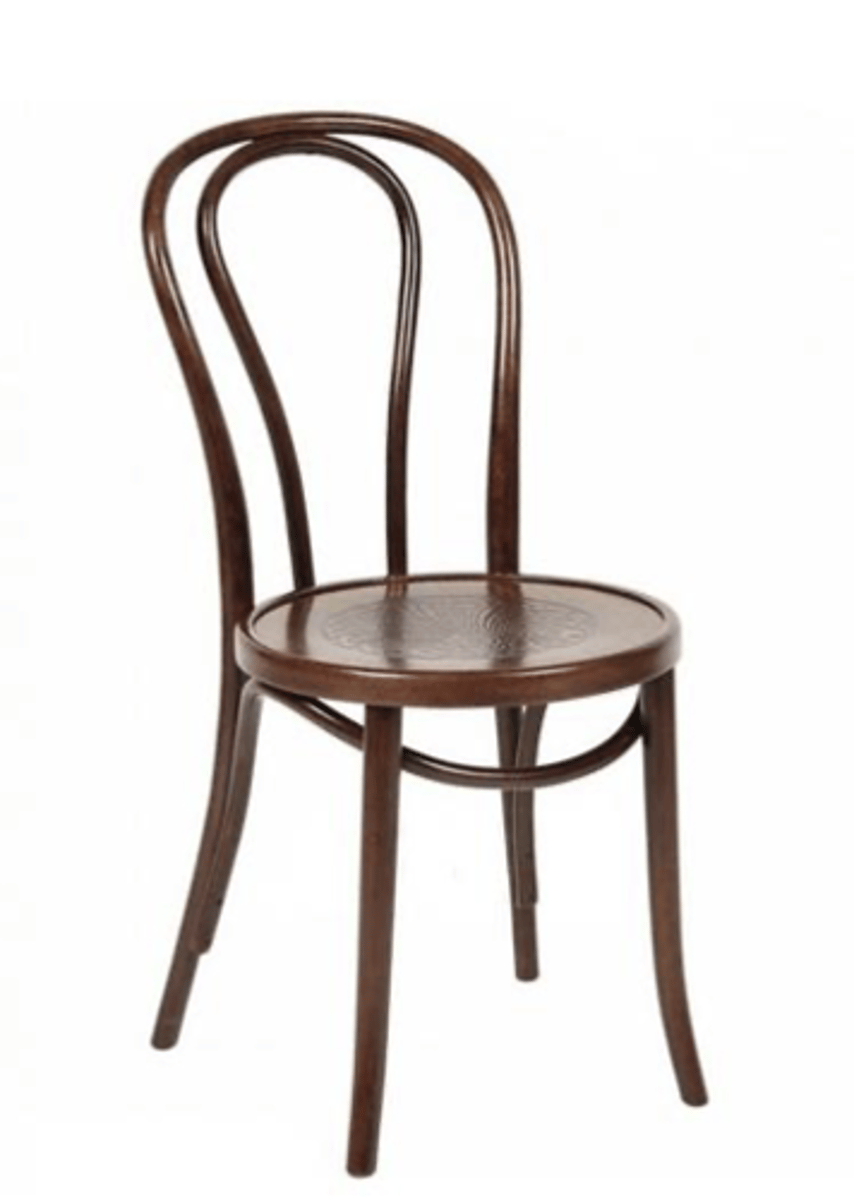
The Michael Thonet's classic café chair, the Model No.14 (image below), with its double-looped back, was essentially a form that was stripped of all superfluous ornamentation. Every element of its steam-bent frame and its caned or molded plywood seat was essential for its function: no more, no less. What style was this chair designed?
a. Minimalism
b. Modernism
c. Classicism
d. Biedermeier
d. Biedermeier
QN=20
By the eighteenth century, what kind of program had become a de rigueur rite of passage that helped to promote the belief that a fundamental understanding of design both past and present was a necessary aspect of a young gentlemen's fully rounded education?
a. Grand Tour
b. The British social agenda
c. The Marshall plan
d. The Paris Exposition
a. Grand Tour
QN=21
Who was one of the great pioneers of industrialized manufacturing understood the commercial necessity of being constantly à la mode and was one of the very first manufacturers to have the cultural wherewithal to employ some of the period's best artists and craftsmen to create designs for industrial production?
a. Sir Samuel Bentham
b. Josiah Wedgwood
c. Thomas Hope
d. Michael Thonet
b. Josiah Wedgwood
QN=22
Which manufacturer was commissioned to make the colossal entrance gates to the 1851 Great Exhibition that brought the foundry greater international fame?
a. The Portsmouth Block Mills
b. Danhauser Furniture Factory
c. Wedgwood
d. Coalbrookdale
d. Coalbrookdale
QN=23
By the early nineteenth, in order to profit from the social change, what kind of product was added to the manufacturer line of the Coalbrookdale factory that helped to include more commercial and affordable designs?
a. Doorstops
b. Umbrella stands
c. Garden seats
d. Both of them
d. Both of them
QN=24
Who took the Biedermeier style's simplification of form and construction to an even greater reductivist level with laminated wood, using thin veneers that were glued together, placed into molds, and then cured into the required form?
a. Robert Adam
b. Thomas Sheraton
c. William Morris
d. Michael Thonet
d. Michael Thonet
QN=25
For a period of roughly eighty years of seismic social and political change - from around 1750 to 1830, what style was dominant style in art, architecture and design?
a. Art Deco
b. Art Nouveau
c. Baroque
d. Neoclassicism
d. Neoclassicism
QN=26
During the 17th and 18th centuries an intellectually led secularism arose, bringing about a new forward-looking, cultural movement. It not only challenged age-old religious dogma but also promoted scientific knowledge and, accordingly industrial progress. What is the name of this movement?
a. Arts and Crafts movement
b. The Enlightenment
c. Aesthetic movement
d. The New art
b. The Enlightenment
QN=27
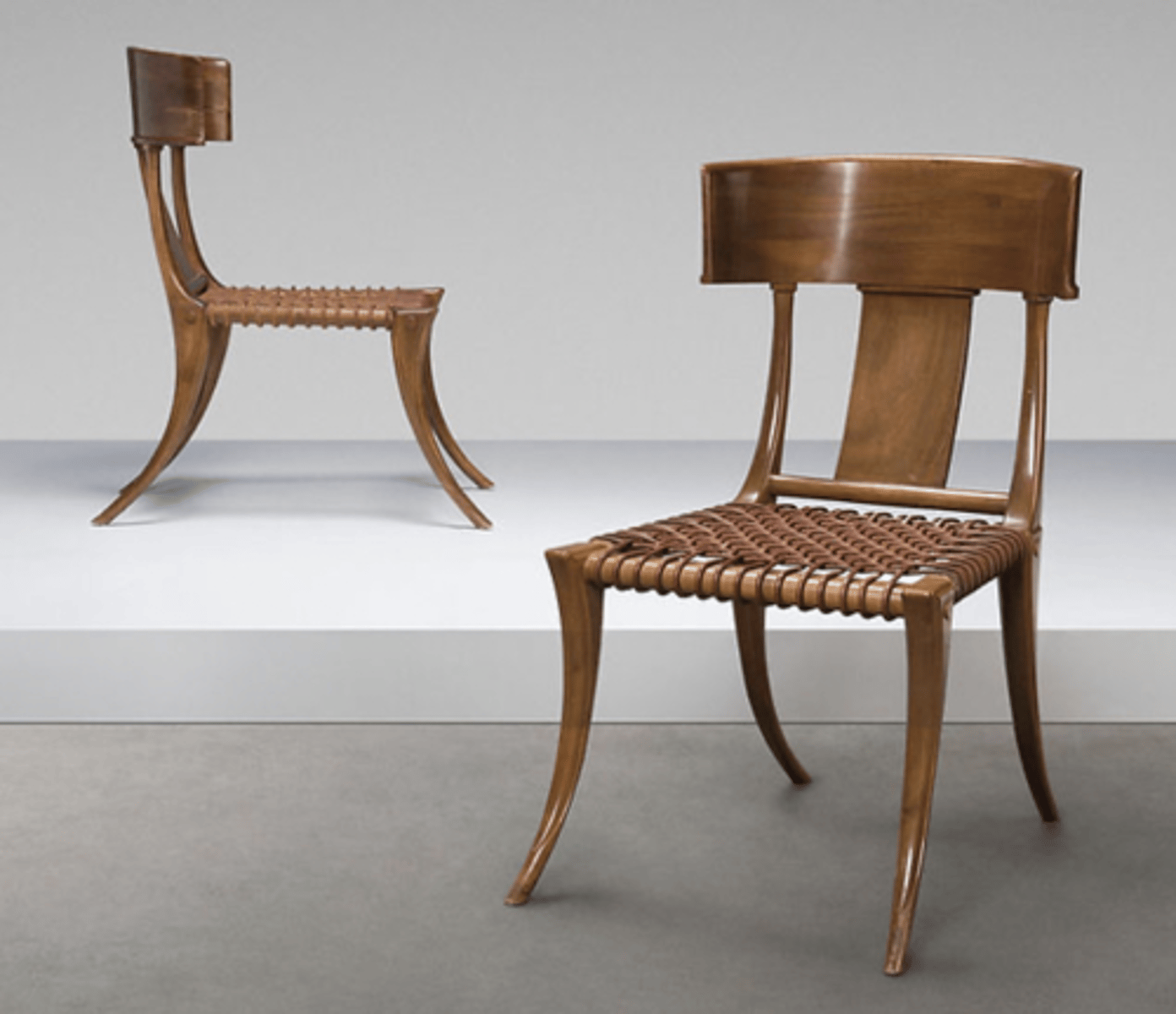
This picture shows an image of the "Klismos" chair (designed by Nicolai Abraham) which based on ancient Greek precedents, had an outstanding, almost modern structural simplicity. What style was it designed?
a. Baroque
b. Rococo
c. Renaissance
d. Neo-classicism
d. Neo-classicism
QN=28
Which manufacturer demonstrated for the first time that machinery and its logical implemetation could unequivocally make designs that were not only better in quality but also capable of being produced on a much larger scale and much more cheaply - a wining outcome not only for the Royal Navy but indeed for any canny manufacturer of goods interest in turning a larger profit?
a. Coalbrookdale
b. Wedgwood
c. Portsmouth Block Mills
d. Danhauser Furniture Factory
c. Portsmouth Block Mills
QN=29
Who was acclaimed as the "father of English potter" and one of the great pioneers of industrialized manufacturing that produced a new type of cream-glazed earthenware using simple Neoclassical forms?
a. Josiah Wedgwood
b. William Hogarth
c. William Morris
d. Michael Thonet
a. Josiah Wedgwood
QN=30
While the kind of standardization, allowing a degree of interchangeability, had been used previously to make weapons in ancient China and during the Roman period, who was the first to employ it within the context of industrial mechanization?
a. Eli Whitney
b. Samuel Colt
c. Thomas Blanchard
d. Alexander Graham Bell
a. Eli Whitney
QN=31
What laws were adopted in the United States that led to the rapid industrialization of the United States that occurred during the nineteenth century, especially after the Civil War?
Check two options.
a. Low wage
b. The Patent Act of 1836
c. The federal Law which increased import duties
d. Public Investment Policy
b. The Patent Act of 1836
c. The federal Law which increased import duties
QN=32
The Pope Manufacturing Company achieved impressive production rates in the late nineteenth century thanks to its adoption of armory practice? Which product was considered as iconic of this American firm?
a. The Type writer
b. The Sewing machine
c. The Kodak Brownie camera
d. The bicycle
d. The bicycle
QN=33
Before being known as the first to standardize the manufacturing process of weapons, what industrial invention did Eli Whitney become famous for?
a. The ingenious cotton gin
b. The Spinning jenny
c. The Singer machine
d. The Typewriter
a. The ingenious cotton gin
QN=34
Fill in the blank
By the mid 19th century, industrial progress had come, but at a price, and the resulting social ills often seemed outweigh the social benefits that it brought. In fact, the Industrial Revolution made ...
a. the century embraced National romanticism
b. the finance crisis
c. the rich richer and the poor poorer
d. about a new forward-looking cultural movement
c. the rich richer and the poor poorer
QN=35
Which class benefited the most from the first industrial revolution whose found prosperity in the growing cities through a mercantile endeavor or civil services, or by being engaged in a profession, such as medicine and law?
a. The Upper Class
b. The Middle Class
c. The Lower Class
d. The Royal Class
b. The Middle Class
QN=36
Among the great reformers during the period of the first industrial revolution, who was early identified the problems that many manufacturers saw design as the decoration of an object, rather than as an integral part of its conception, planning, and realization?
a. Henry Cole
b. Joseph Paxton
c. Owen Jones
d. Augustus Welby Northmore Pugin
a. Henry Cole
QN=3
What kind of technique that represented for the first-time designs could be replicated more or less exactly, thereby making them easier and less-time consuming to manufacture?
a. Paddle-and-anvil method
b. Simple ingot molds
c. Standardization
d. Interchangeability
b. Simple ingot molds
QN=4
What material, was to have an enormous impact on human development that created civilization?
a. Concrete
b. Bricks
c. Steel
d. Glass
b. Bricks
QN=5
What structure was built by the first bricks, made of sun-dried mud?
a. Walls of Jericho
b. Walls of Berlin
c. Colosseum arena
d. The Great wall in China
a. Walls of Jericho
QN=7
What designs could be viewed as an early example of design being used as metaphor, or an authoritative symbol, not only of the emperor's domination but also of the empire's might power?
a. The Roman oil lamps
b. The Roman Amphora
c. The Roman coins with the image of Caesar
d. The Roman Gladius sword
c. The Roman coins with the image of Caesar
QN=8
What were the groundbreaking inventions designed or refined during the Middle Ages or medieval period that irrevocably changed the course of human history?
a. Water wheel
b. Mechanical clock
c. Blast furnace
d. Both of them
d. Both of them
QN=9
The expansion of trade and its ensuing commercial opportunities created an increasingly competitive marketplace in which technological advancement was necessary in order to keep up with growing demand. How can medieval Craftsmen protect their interests?
a. The formation of craft guilds
b. Intellectual property
c. Law
d. Both of them
a. The formation of craft guilds
QN=10
Fill in the blank
... - which takes its name from the word for "rebirth" - was a time of reawakening as designers and artists shrugged off the pious religiosity and Gothic mantle of the Middle Ages and rediscovered the humanist ideals and sensual refinement of the Classical period.
a. Baroque
b. Rococo
c. Renaissance
d. Gothic
c. Renaissance
QN=11
Who was seen as a true Renaissance man or as innovative designer thinker who during his life time was admired as much for his work not only in fine art but also his ability to conceptualize revolutionary designs helped to raise the status of design practice?
a. Michael Angelo
b. Leonardo da Vinci
c. Raphael
d. Benvenuto Cellini
b. Leonardo da Vinci
QN=12
What was the most significant invention to be deigned during the Renaissance that led to the mass production of books, enabling thoughts and ideas to be disseminated widely for the first time in history?
a. Johannes Gutenberg's printing press
b. The Remington Typewriter
c. The Computer
d. Both of them
a. Johannes Gutenberg's printing press
QN=13
Fill in the blank
... - which took its name from the French word "rocaille", meaning the encrusted shell work or pebble work used during the eighteenth century to decorate grottos and fountains - had an altogether lighter air and frequently referenced Chinese patterns and motifs, or chinoiserie.
a. Baroque
b. Rococo
c. Neoclassical
d. Empire style
b. Rococo
QN=14
Who was one of the greatest proponents of the Rococo style, who published a book entitled "The Gentleman and Cabinet Maker's Director", which was lavishly illustrated with 161 engraved plates showing "elegant and useful designs of household furniture in the Gothic, Chinese and modern taste"?
a. Thomas Chippendale
b. Jean-Francois Leleu
c. Thomas Sheraton
d. Robert Adam
a. Thomas Chippendale
QN=15
During the eighteenth century, a well-known Scottish architect developed his own approach to Neoclassic by rejecting the robust neo-Palladianism and promoted a more delicate style that was based on the studies of surviving examples of actual Greek architecture. Who is he?
a. Thomas Chippendale
b. Jean-Francois Leleu
c. Thomas Sheraton
d. Robert Adam
d. Robert Adam
QN=16
Arranging the timeline corresponding to the launch of each following invention: 1. hourglass, 2. Blast furnace, 3. Improved water wheel, 4 Johannes Gutenberg Printing Press.
a. 7th century - 8th century - 12th century - 14th century
b. 8th century - 7th century - 12th century - 14th century
c. 8th century - 12th century - 7th century - 14th century
d. 7th century - 14th century - 8th century - 12th century
c. 8th century - 12th century - 7th century - 14th century
QN = 89
Whose hypertext system allowed different operating systems to run across the Internet, which gave rise to the World Wide Web?
A. Rudy VanderLans
B. Zuzana Licko
C. None of the answer
D. Tim Berners-Lee
D. Tim Berners-Lee
QN = 90
In 1989, which British computer scientist - created a new computer language-Hypertext Transfer Protocol (HTTP)-that enabled documents to be communicated over the Internet?
A. Rudy VanderLans
B. Zuzana Licko
C. None of the answer
D. Tim Berners-Lee
D. Tim Berners-Lee
QN = 91
What did the advent of the Internet promote?
A. The Internet facilitated the promotion of design on a number of levels: it allowed companies to market their products to a global audience easily, cheaply, and effectively
B. The Internet allowed customers to make purchases designs online
C. The Internet also significantly accelerated the convergence of the creative disciplines, and art, music, fashion, and film were soon interwoven in both two-dimensional and three-dimensional design practice.
D. All of the answer
D. All of the answer
QN = 92
Fill in the blank:
In New York, the Smart Design consultancy was starting revolution in the realm of housewares. This extensive line of kitchen tools, which includes numerous easy to-use products, from......to...., was the brainchild of Sam Farber.
A. vegetable peelers - dustpans and brushes
B. vegetable peelers - brushes
C. vegetable peelers - knife and scissors
D. cast iron pot - dustpans and brushes
A. vegetable peelers - dustpans and brushes
QN = 94
Fill in the blank:
During the mid-2000s laser stereolithography, now better known as .......... essentially grew prototypes in layers from vats of liquid photopolymer resin that was cured using ultraviolet beams of light.
A. Wall mural printer
B. Digital printer
C. Laser printers
D. 3D printing
D. 3D printing
QN = 95
Who pioneered the "design botany" of the 19th century?
A. Christopher Dresser
B. Marc Newson
C. Bouroullec brothers
D. Henry Cole
A. Christopher Dresser
QN = 96
What design approaches might offer design solutions to all sorts of ecological problems, from the development of sustainable water schemes to the construction of buildings that store carbon emissions?
A. Creative Salvage
B. Biomimicry
C. Ergonomic design
D. Organic Design
B. Biomimicry
QN = 69
French-Vietnamese designer Nguyen Manh Khanh is also known by what name?
A. Quasar
B. Leo
C. Piter
D. Michel
A. Quasar
QN = 70
Fill in the blank:
The origins of Pop as a cultural phenomenon can be traced to the formation of the ...............Group in London in 1952, to examine the technical achievements of American industrial production and its by-product, popular consumerist culture.
A. Peace
B. Independent
C. Democratic
D. Fine Arts Academy
B. Independent
QN = 71
In the 1960s, what lifestyle of younger consumers also prompted the rise of inexpensive flat-pack furniture, which was - easily transported and reassembled?
A. solitary
B. single
C. nomadic
D. All of the answer
C. nomadic
QN = 72
Fill in the blank:
Most of the designs emerging from Italy during the Pop era, which spanned a period of roughly ten years between 1963 and 1973, were highly futuristic, and were directly inspired by the age's cultural fixation on space travel and ..........research.
A. sun
B. lunar
C. Mars
D. Venus
B. lunar
QN = 73
Fill in the blank:
Many designers looked to the future optimistically and created products for a space age in which everything would be ................; the visions they conjured offered a much-needed respite from the Vietnam War and other earthbound troubles.
A. shiny, clean, and bright
B. clean
C. clean and bright
D None of the answer
A. shiny, clean, and bright
QN = 74
Fill in the blank:
The mid-to-late 1970s, most notably in the increasing use of ergonomics in design practice, with the goal of creating better performing, safer, and more user-friendly products, especially in the case of equipment destined for the..........
A. work environment
B. study environment
C. life environment
D. All of the answer
A. work environment
QN = 75
What are the roots of Ergonomic design?
A. Social ideas related to health and inclusivity
B. A manifestation of the wider return to rationalism in design
C. The social ideas related to health and inclusivity, but it was also a manifestation of the wider return to rationalism in design.
D. None of the answer
C. The social ideas related to health and inclusivity, but it was also a manifestation of the wider return to rationalism in design.
QN = 76
In what year did Sony launch the first recorder, or VCR (a videocassette recorder)?
A. 1970
B. 1971
C. 1972
D. 1975
B. 1971
QN = 77
Which video game by US game developer Atari has opened up a whole new set of design efforts and spawned an industry, will compete with the old entertainment markets for movies and TV?
A. Pong
B. Space Invaders
C. All of the answer
D. None of the answer
A. Pong
QN = 78
In the early 1970s, which company began experimenting with cellular radio technology, and the results of those tests went on to revolutionize communication devices? In 1973 the company tested the first portable radio phone" in New York.
A. Sony
B. Samsung
C. Apple
D. Motorola
D. Motorola
QN = 79
In 1981, which Italian designer founded a group of artists and designers called Memphis?
A. Ettore Sottsass
B. Quasar Khanh
C. Ralph Nader
D. Edgar Kaufmann
A. Ettore Sottsass
QN = 80
Fill in the blank:
The Memphis Group went on to create furniture, fabrics, patterns, ceramics and other products in a distinctly Postmodern style that blended stylistic traits of 1950s kitsch, ..................
A. Art Deco
B. Pop Art
C. Art Deco and Pop Art
D. None of the answer
C. Art Deco and Pop Art
QN = 81
Fill the blank
The shrinking of the world through the increasingly global reach of the media-catalyzed by the launches of CNN and MTV in............. This cross-pollination of ideas contributed to a growing understanding and acceptance of postmodernism throughout the international design community.
A. 1970 and 1981
B. 1980 and 1985
C. 1980 and 1981
D. 1960 and 1961
C. 1980 and 1981
QN = 82
Creative Salvage had an anarchic aesthetic and an anti-mainstream agenda. What is the key to Creative Salvage success?
A. the recycling of scrap to form stylish and functional artifacts for the home and office.
B. the use of expensive materials to form stylish and functional artifacts for the home and office.
C. the use of plastic raw materials to form stylish and functional artifacts for the home and office.
D. the emphasis on design to form stylish and functional artifacts for the home and office.
A. the recycling of scrap to form stylish and functional artifacts for the home and office.
QN = 83
Fill in the blank:
As part of the wider postmodern movement, Creative Salvage helped to revolutionize design in much the same way that Punk changed music and fashion. Also, it was significant to the subsequent development of avant-garde design because it helped to break down traditional barriers between ............
A. Art and craft
B. craft and design
C. art, craft, and design
D. None of the answer
C. art, craft, and design
QN = 84
Who launched i-D magazine in 1980?
A. Art director Terry Jones
B. Art director of The Face magazine
C. Tom Dixon
D. Ron Arad
A. Art director Terry Jones