[USELF] L4 | PSYCHOLOGICAL PERSPECTIVES ON THE SELF
 Call Kai
 Learn
Learn Practice Test
 Spaced Repetition
 Match
Match Flashcards
 Knowt Play
1/41

There's no tags or description
Looks like no tags are added yet.
Name | Mastery | Learn | Test | Matching | Spaced | Call with Kai | Chat |
|---|
No analytics yet
Send a link to your students to track their progress
42 Terms
WILLIAM JAMES (I and ME SELF)
in one of his most respected works "The Principles of Psychology (1890)" was able to look into one's self in a way that combined his knowledge on "physiology, psychology, philosophy, and personal reflection" (Goodman, 2022, para. 1).
1. Me Self
2. I Self
According to WILLIAM JAMES, there are two understandings or categories of the self: (2)
Me Self
Self as object of experience (self as object)
Also referred to as the empirical self
The self we refer to when talking about our personal experiences
"Human individuals turn themselves into a "me" or self when they make themselves the object of their own thinking (Zhao, 2014, p. 201).
Example: "I know it was me who ate the cookie. The Me is the empirical self, the one who does the acting, who are the cookie" (Cooper, 1992, as cited in Ruhl, 2020).
Material Self
Social self
Spiritual Self
Me Self into three sub-categories: (3)
Material Self
[Me Self] consists of the material belongings of a person such as body, family, clothes, money, etc.
Material Self
[Me Self] consists of the material belongings of a person such as body, family, clothes, money, etc.
Spiritual Self
[Me Self] who we are at our core, including our personality, values, and conscience.
Material Self
[Me Self] consists of the material belongings of a person such as body, family, clothes, money, etc.
WILLIAM JAMES (I and ME SELF)
His definition of self is clearly first-person based: the self is "me" seen from the standpoint of "'" (Zhao, 2014, p. 202). The ability to reflect about ourselves and our sense of self is crucial in achieving self-awareness.
CARL ROGERS (Real vs Ideal Self)
According to him, the self or our self-concept "is an organized, consistent set of perceptions of and beliefs about oneself" (Passer & Smith, 2007, p.451). These perceptions and beliefs that comprise our self-concept are called self-schemas.
Self-schemas
According to Carl Rogers, the self or our self-concept "is an organized, consistent set of perceptions of and beliefs about oneself" (Passer & Smith, 2007, p.451). These perceptions and beliefs that comprise our self-concept are called ________.
Self-schemas
These are formed by numerous factors that we may be aware or unaware of, some of which are the following:
past experiences;
personality traits;
abilities;
physical features;
values;
goals;
social roles;
own observations; and
feedback from others (Weiten et al., 2014).
Real Self
Ideal Self
Rogers asserted that we have two selves: (2)
Real Self
[CARL ROGERS asserted that we have two selves:]
Who we actually are
How I see me
Actual self
Ideal Self
[CARL ROGERS asserted that we have two selves:]
Person we want to be
Idealized version of ourself
How i should be
Self/Self-concept
According to Carl Rogers, the _____________"is an organized, consistent set of perceptions of and beliefs about oneself" (Passer & Smith, 2007, p.451). These perceptions and beliefs that comprise our self-concept are called self-schemas.
Self-schemas
According to Carl Rogers, Our notion of both selves are results of our __________. Our ideal self is essential in and motivating us to behave in a way that would lead us to the best version of who to be.
Napoleon Hill
"Whatever the mind can conceive and believe, the mind can achieve."
-_________
imagining exercises
In achieving the ideal self or any goal, numerous studies emphasize the importance ___________. It is best that we know as accurate as possible who we want to be or achieve. Being as specific as possible is beneficial in visual imagining so we may vi our ideal self taking shape.
CARL ROGERS (Real vs Ideal Self)
According to ________, the congruence or incongruence between the ideal and real self has effects on our self-esteem.
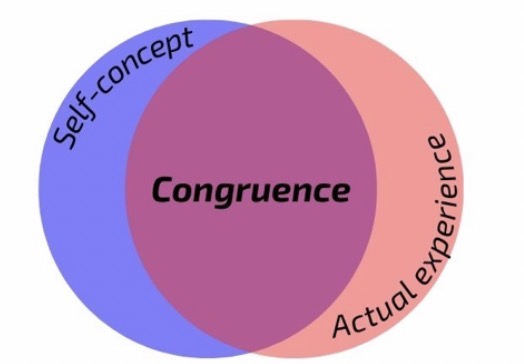
Congruence
[CARL ROGERS (Real vs Ideal Self)] Self-concept meshes well with actual experience (some Incongruence is probably unavoidable)
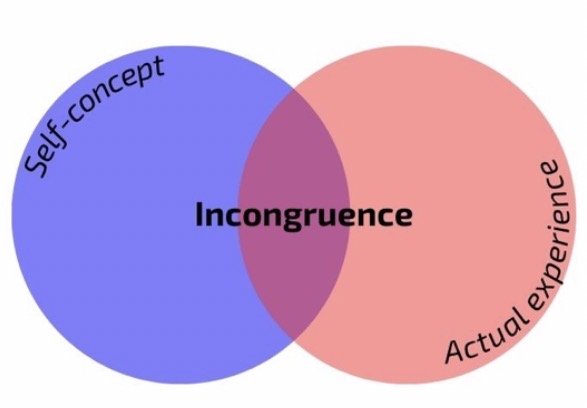
Incongruence
[CARL ROGERS (Real vs Ideal Self)] Self-concept does not mesh well with actual experience
Congruence
[CARL ROGERS (Real vs Ideal Self)] When we feel good about ourselves, it is said that there is _________ or alignment or there is a small gap between our real self and ideal self. This gives us confidence, satisfaction, and a sense of self-actualization or fulfillment leading to a high self-esteem.
Incongruence
[CARL ROGERS (Real vs Ideal Self)] However, when we disappointed or frustrated about ourselves, it is said that there is __________ or misalignment or disparity or a huge gap between our real and ideal self. This results to us being distressed, anxious, leading to a low self-esteem or self-worth and be defensive in their actions. In cases where in the gap between the real and ideal self is immense, this may be cause instability to one's psychological well-being.
denial and perceptual distortion
[Congruence vs Incongruence]
"This gap causes anxiety, and to deal with it, we use two defenses: ________ and ________. The process of defense... consists of the selective perception or distortion of the experience and/or the denial to awareness of the experience or some portion thereof.." (Shpancer, 2018, para. 13).
Self-esteem
[CARL ROGERS (Real vs Ideal Self)] refers to one's overall assessment of one's worth as a person (Weiten et al., 2014, p. 118), one's self-worth. People with high _______ succeed more, have better relationships, and are happier compared to those with low self-esteem (Oswalt, 2010). Our ________refers to how we value our selves and perceive our worth as a person (Weiten et al., 2014).
Self-esteem
[CARL ROGERS (Real vs Ideal Self)] Specific elements of the self-concept may contribute to _______. This presents evidences that who we are is never defined by one success or one failure.
Hindu Proverb
"There is nothing noble about being superior to some other man. The true nobility is in being superior to your previous self."
-___________
fully functioning person
Carl Rogers presented the idea of a _____________. For him, "this means that the person is in touch with the here and now, his or her subjective experiences and feelings, continually growing and changing" (McLeod, 2014, para. 9). Some of the key characteristics of a ______________ include: "openness to experience, a flexible self-concept, unconditional [positive] regard for the self, and the ability to live in harmony with others" (Cherry, 2017, para. 16).
ALBERT BANDURA (Human Agency)
is one of the most influential psychologists in the field of social cognitive theory. He emphasized the role of observational learning, self-efficacy, and human agency. His work shifted the focus from behaviorism to a more interactive view of people and their environments.
ALBERT BANDURA (Human Agency)
"People are not just reactive organisms shaped by environmental forces or driven by inner impulses. They are self-organizing, proactive, self-reflecting, and self-regulating."
-__________
Human agency
According to Albert Bandura, is the ability of individuals to intentionally influence their functioning and life circumstances. It is the active role we play in shaping our experiences, making choices, and taking control over our actions and environment. Bandura believes that human beings are agents of change, not just passive observers or reactors to the world around them.
1. Intentionality
2. Forethought
3. Self-Reactiveness
4. Self-reflectiveness
Four Core Properties of Human Agency
Intentionality
[ALBERT BANDURA: Four Core Properties of Human Agency]
The ability to set goals and act purposefully toward achieving them
It's the planning and deliberate action that guide our behavior.
Example: A person who wants to lose weight sets a goal to exercise five days a week.
This intention to exercise is a purposeful, self-driven action that moves them toward their goal.
Forethought
[ALBERT BANDURA: Four Core Properties of Human Agency]
Anticipating future outcomes before taking action.
The ability to predict the consequences of our behaviors and plan accordingly.
Example: When a person wants to lose weight and sets a goal to exercise five days a week, the individual might consider how regular exercise will help them lose weight and improve their overall health. They could anticipate challenges, such as time constraints or fatigue, and plan to work out at times when they have more energy (like in the morning) or make time in their schedule. They might also visualize the positive outcome: fitting into their desired clothes or feeling more confident. This creates motivation to stay on track.
Self-Reactiveness
[ALBERT BANDURA: Four Core Properties of Human Agency]
The ability to regulate our behavior in accordance with our goals
It involves self-control, motivation, and adjusting behaviors to stay on track with our goals.
Example: A person who wants to lose weight sets a goal to exercise five days a week. If the individual feels tired after work, they might set a plan to motivate themselves (self-reactiveness) by reminding themselves of the benefits, like improved energy levels or reaching their weight loss target. If they miss a workout, they might reassess and adjust their schedule to make sure they catch up the following day. This regulation of their behavior helps them stay on course with their overall fitness goal.
Self-reflectiveness
[ALBERT BANDURA: Four Core Properties of Human Agency]
The ability to reflect on and evaluate one's actions.
It allows us to learn from our successes and mistakes, and adapt for future efforts.
Example: When a person wants to lose weight and sets a goal to exercise five days a week. After a week of consistent workouts, the person reflects on their progress, feels proud, and acknowledges that setting smaller, achievable goals helped them stay motivated. They adjust their approach by setting a new goal, such as increasing workout intensity, based on their past success; or after missing a few workouts, the person reflects on why it happened (perhaps poor time management) and decides to create a more realistic workout schedule for the next week. They use this reflection to adjust their approach and stay focused on their fitness goal.
Personal Agency
[Types of Human Agency]
This is when you take control of your own actions and outcomes
is most effective when you believe in your ability to succeed
Example: A person who decides to start a new business is using ________. They take all necessary steps to make it successful, from creating a business plan to seeking funding.
Proxy Agency
[Types of Human Agency]
occurs when you rely on others to achieve your goals.
You may not have direct control over the situation but can influence others to act on your behalf.
Example: A student who relies on a career counselor to guide them in their career choice is exercising _______. They trust the mentor's expertise to help them make decisions.
Collective Agency
[Types of Human Agency]
This refers to the power of groups of people working together to achieve common goals.
This highlights the importance of collaboration and the power of social action.
Example: A community organizing to improve local parks is demonstrating ________. Through collective action, the group works together to advocate for better resources and improvements.
1. Personal Agency
2. Proxy Agency
Collective Agency
Types of Human Agency (3)
Human agency
is a powerful concept that reminds us we are not passive bystanders in life. We are proactive, intentional, and reflective individuals who can shape our own destinies. Whether acting alone, relying on others, or working in groups, human agency allows us to achieve personal and collective success.