Chapters 13: Physical and Cognitive Development in Emerging and Young Adulthood
 Call Kai
 Learn
Learn Practice Test
 Spaced Repetition
 Match
Match Flashcards
 Knowt Play
1/30

There's no tags or description
Looks like no tags are added yet.
Name | Mastery | Learn | Test | Matching | Spaced | Call with Kai | Chat |
|---|
No analytics yet
Send a link to your students to track their progress
31 Terms
emerging adulthood
Proposed transitional period between adolescence and adulthood commonly found in industrialized countries.

alcoholism
Chronic disease involving dependence on use of alcohol, causing interference with normal functioning and fulfillment of obligations.

premenstrual syndrome (PMS)
Disorder producing symptoms of physical discomfort and emotional tension for up to 2 weeks before a menstrual period.

postformal thought
- Mature type of thinking that relies on subjective experience and intuition as well as logic and allows room for ambiguity, uncertainty, inconsistency, contradiction, imperfection, and compromise.
EXAMPLE:
The Situation: Entitled relatives demand your hard-earned salary because "they raised you."
The Postformal Fix: You don't cut them off completely, nor do you go broke. You pay for your sibling's school directly but say no to the aunts and uncles. You accept the messy family drama and make a compromise.

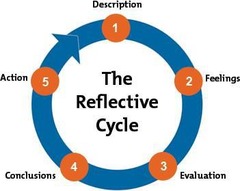
reflective thinking
Type of logical thinking that becomes more prominent in adulthood, involving continuous, active evaluation of information and beliefs in the light of evidence and implications.
EXAMPLE:
The Situation: A mother's relatives tell her to cure her sick baby using an albularyo (folk healer) and herbal oils.
The Reflective Fix: She questions the traditional advice, evaluates the risks of delaying real medicine, and decides to trust a licensed pediatrician instead.
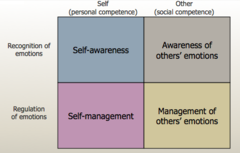
emotional intelligence (EL)
- Salovey and Mayer's term for the ability
to understand and regulate emotions;
an important component of effective,
intelligent behavior.
- Managing emotional responses in ways that support goals and relationships.
- is related to social functioning but should not be treated as a single explanation
for success.
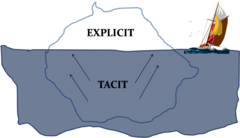
tacit knowledge
Sternberg's term for information that is not formally taught but is necessary to get ahead.
EXAMPLE:
The Situation: A new employee wants to get promoted faster in a Manila office.
The Tacit Fix: Instead of just working hard, they learn the unwritten rule: join the office chika (small talk), know who the real influencers are, and bring pasalubong (snacks) after a trip to build good relationships.
substantive complexity
Degree to which a person's work requires thought and independent judgment.
EXAMPLE:
The Job: Handling an angry foreign client who demands a refund that violates company policy.
Why it fits: The supervisor cannot just read a basic script. They must use independent judgment, balance company losses against customer satisfaction, and solve a messy problem on the spot.
spillover hypothesis
Hypothesis that there is a carryover of cognitive gains from work to leisure that explains the positive relationship between activities in the quality of intellectual functioning.
EXAMPLE:
The High School Teacher
At Work: They constantly think of creative ways to explain history, design lesson plans, and keep students engaged.
The Spillover: During the weekend, their leisure time reflects this high mental energy. They run a local community book club, write poetry, or volunteer to organize educational youth camps in their barangay.
SHIFTING GEARS
- The ability to change your way of thinking depending on the situation. You don't use the same approach for every problem.
EXAMPLE: You use logical thinking when solving a math problem, but when
dealing with a friend who is upset, you use empathy and emotional understanding.
PROBLEM DEFINITION
- Understanding that before solving a problem, you need to figure out what the actual problem is.
EXAMPLE: Instead of saying, "I failed because I'm stupid," a student examines the situation and realizes, "Maybe I didn't study
effectively or manage my time well."
PROCESS-PRODUCT SHIFT
- Focusing not only on the final answer (product) but also on how you arrived at the answer (process).
EXAMPLE: Instead of only asking, "Did I get the correct answer?" a student asks, "How did I arrive at this answer, and what did I learn from the process?"
PRAGMATISM
- Choosing a solution based on what actually works in real life, rather than relying only on theories or ideal answers.
EXAMPLE: A student wants to attend graduate school but cannot afford it
yet, so they work first and save money before enrolling.
MULTIPLE SOLUTIONS
- Understanding that a problem can have more than one reasonable solution.
EXAMPLE: If you have financial problems, you could work part-time, reduce
expenses, apply for scholarships, or find a better-paying job. There isn't only one solution.
AWARENESS OF PARADOX
- Recognizing that two seemingly opposite ideas can both be true.
EXAMPLE: "I want to be independent, but I still need help from my family." These ideas may seem contradictory, but both can be true.
SELF-REFERENTIAL THOUGHT
- Being able to reflect on your own thinking and recognize that your perspective influences how you understand something.
EXAMPLE: "I think this career is the best choice because I value financial stability, but someone who values creativity might make a different choice."
Analytical intelligence
Creative intelligence
Practical intelligence
(3) Triarchic Theory of Intelligence
Analytical intelligence
— evaluating, comparing, and solving problems.
Creative intelligence
— generating novel ideas and adapting to unfamiliar situations.
Practical intelligence
— applying knowledge effectively in everyday contexts.
Moral Reasoning
using principles of justice, rights, care, and responsibility.

ethics of justice
ethics of care
ethics of self-interest
(3) three ethics:
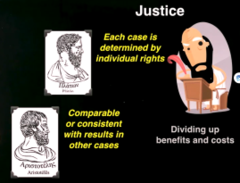
Ethics of Justice
- Focuses on fairness, rights, rules, and equality.
EXAMPLE: "Everyone should be treated fairly, so the same rule should apply to everyone."
Ethics of Care
- Focuses on relationships, compassion, and reducing harm to others.
EXAMPLE: "I should consider how my decision will affect the people I care about."

Ethics of Self-Interest
- Focuses on one's own needs, goals, and well-being.
EXAMPLE: "I need to consider what decision will protect my future and well-being."

Moral reasoning
is influenced by culture, relationships, experience, and the situation.

Career development
is shaped by interests, abilities, opportunities, socioeconomic conditions, culture, and labor-market realities.

PHYSICAL
generally strong functioning, but health depends heavily on behavior and context.
COGNITIVE
adult thinking becomes increasingly practical, flexible, and emotionally/contextually informed.
MORAL
people can consider justice, care, self-interest, and competing responsibilities.
EDUCATION & WORK
major settings for competence, identity exploration, independence, and future planning.