AQA A Level Psychology Research Methods
 Studied by 0 people
 Call Kai
 Learn
Learn Practice Test
 Spaced Repetition
 Match
Match Flashcards
 Knowt Play
1/221

There's no tags or description
Looks like no tags are added yet.
Name | Mastery | Learn | Test | Matching | Spaced |
|---|
No study sessions yet.
222 Terms
Empirical method
The only source of knowledge comes through our senses (not inherited) and is gained through experience
Objective
All sources of bias are minimized and personal or subjective ideas are eliminated
Control
All extraneous variables need to be controlled in order to be able to establish cause and effect
Predictability/determinism
We should be aiming to be able to predict future behaviour from the findings of our research
Replication (reliability)
Whether a method and finding can be repeated with different/same people and/or on different occasions, to see if the results are similar
Features of science
Empirical methods
Objectivity
Replicability
Hypothesis testing/ theory
Scientific research methods
Lab experiment, field experiment, observation, natural experiment and quasi-experiment
Non-scientific research methods
Case study, questionnaire, interviews, content analysis and correlations
Aim
general statement of the purpose of an investigation
Hypothesis
testable statement about the expected outcome of the investigation
Operationalisation
Making the variables testable
importance of operationalisation
a hypothesis can only be tested if the variables being studied can be measured
Independent variable
the variable the researcher changes in order to test its effect on the DV
Dependent variable
the variable measured by the experimenter
Null hypothesis
A statement which predicts no difference or relationship in the results
Experimental/alternative hypothesis
A statement that predicts a difference or a relationship in results
Directional hypothesis (one-tailed)
Specifies the direction of results/correlation
Non-directional hypothesis
Does not state the direction of results and is used when there is no previous research or previous research has found contradictory results
Repeated measures design
same pps. used in both conditions of IV

Strength of repeated measures design
No participant variables as individual differences are eliminated and less pps. needed

Weakness of repeated measures design (d.c.)
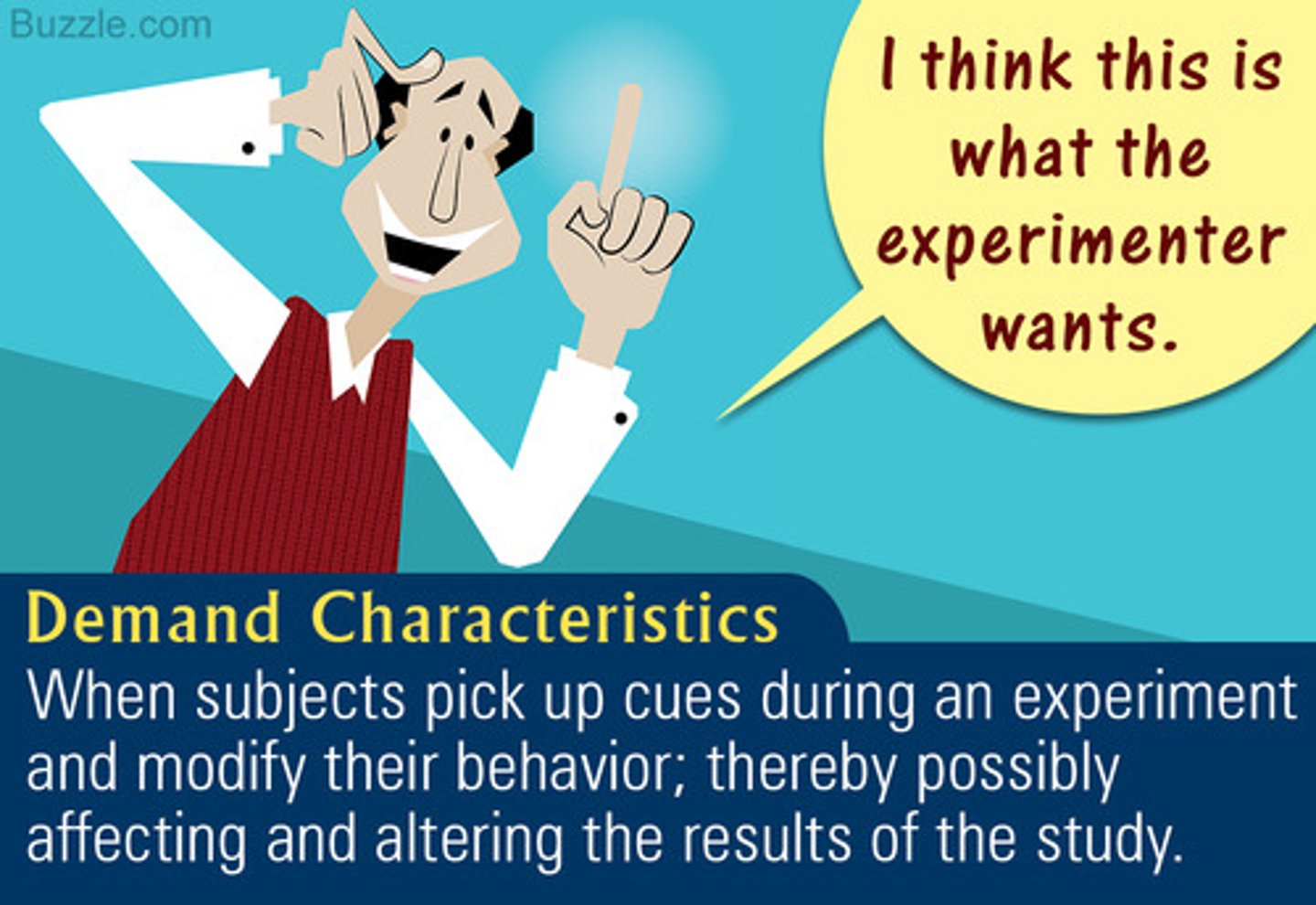
demand characteristics due to pps. take part in all conditions
Weakness of repeated measures design (o.e.)
order effects e.g. boredom may occur (control using counterbalancing)
Independent groups design
Participants randomly allocated to 2 different groups
Strength of independent groups design
Lower chance of demand characteristics, no order effects due to only doing one condition
Weakness of independent groups design
Participant variables confound results cos there's different participants in different conditions, more pps. are required
Matched pairs design
pairs of pps. closely matched and randomly allocated to one condition/other

Strength of matched pairs
avoids order effects and demand characteristics, reduced individual differences, same material can be used in both conditions
Weakness of matched pairs
Can't fully match participants, time consuming and requires more pps.

Extraneous variable
a variable other than the IV that might have an effect on the DV (e.g. weather or noise) - should be controlled so they don't become confounding
Confounding variable
extraneous variables which do affect the DV i.e. 'confound' the results e.g. participants personalities

Situational variable
Aspects of the situation that interact with aspects of the person to produce behaviour (e.g environment, noise or time of day)
Operationalism
defining the variable so it can be measured numerically and specifies how variable will be tested
Participant variable
Individual differences between the pps. in the conditions of the IV

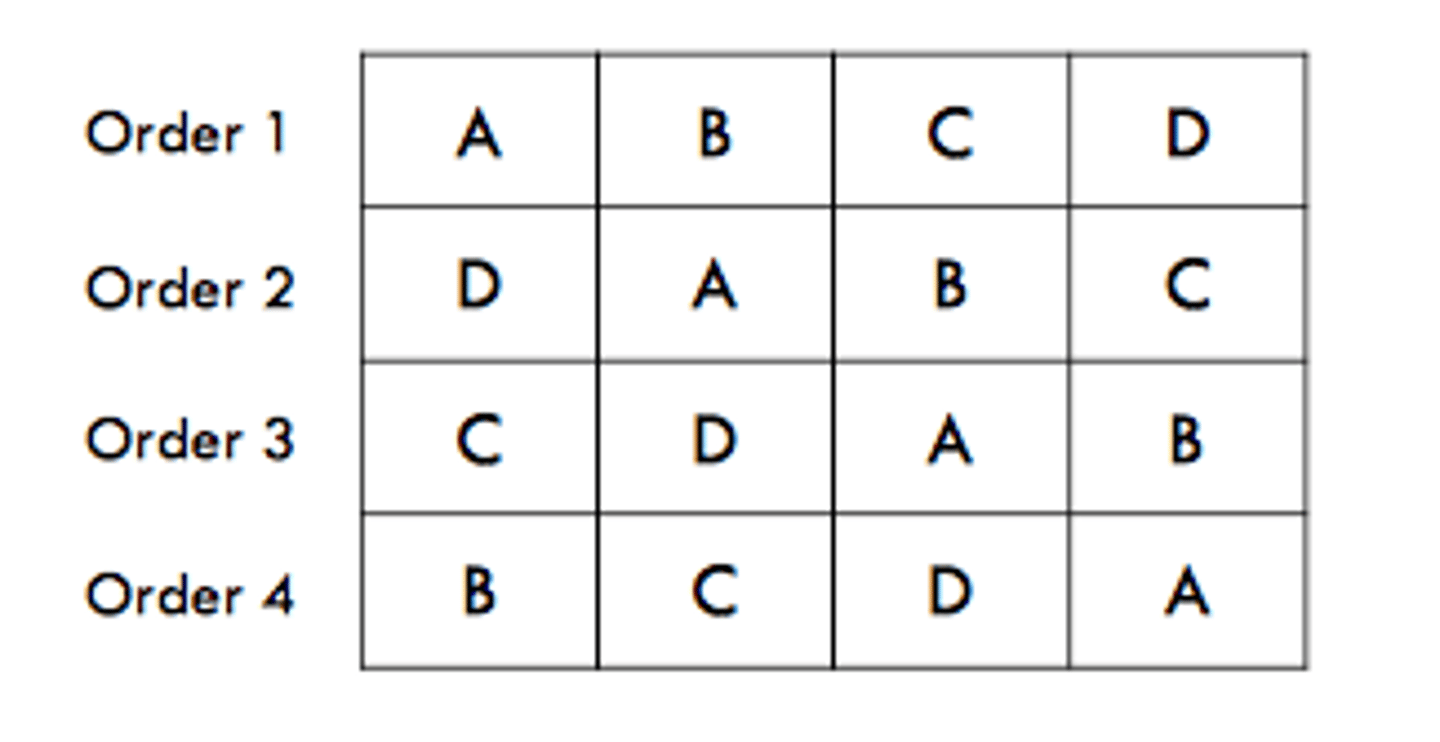
Counterbalancing
Used to balance out impact of order effects in repeated measures design (involves making sure each condition comes first/second in equal amounts) i.e. allows for order effects to be distributed evenly across both conditions
Random allocation
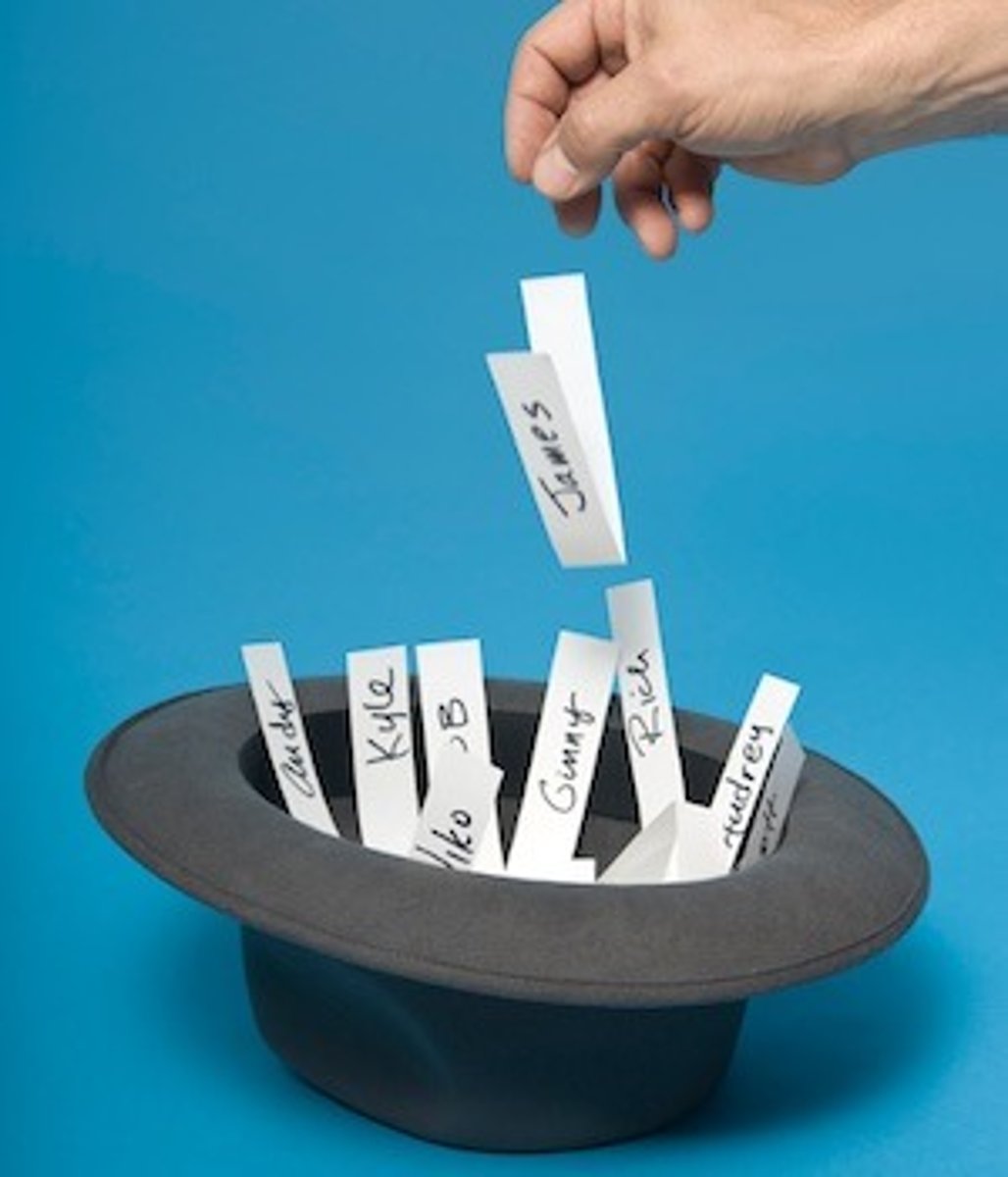
Allocating pps. to experimental groups/conditions so pps. have an equal chance to take part in each condition (allows even distribution of pp. characteristics across conditions to avoid extraneous variables)
use of random allocation
addresses problem of pp. variables in an independent groups design
Standardisation
Using exactly the same formalised procedures and instructions for all participants so individual experience does not become a confounding variable and i.e. enable replication
use of standardisation
addresses issue of experimenter bias as standardised procedures includes standardised instructions that are the same for all pps. i.e. deals with investigator effects
Randomisation
Making materials/order of conditions random to avoid researcher bias influencing design of the study
use of randomisation
avoids researcher bias influencing the design of the study i.e. control investigator effects
pilot study
small scale trial run of a study which takes place before the study
aims of a pilot study
check procedures, materials and measuring scales work, and allow the researcher to make changes if needed
use of pilot studies
allows practical details to be checked e.g. ensure instructions are easy to understand/ decide no. of pps. needed
use of pilot studies (questionnaires + interviews)
try out questions in advance, re-word/remove confusing ones
use of pilot studies (observation studies)
check behavioural categories + coding systems
significance of pilot studies
improves quality of research and avoid unnecessary work, save time and money
Demand characteristics
A cue in the experiment that helps pps. work out the aim of study, pps. then change their behaviour - either help/hinder this = confounding variable
reducing demand characteristics
single blind technique
deception
distractor questions
Single-blind technique (reducing DC)
The participants are unaware of the aim of the study

Investigator effects
Any influence of the investigator's behaviour that can affect the pps. performance
reducing investigator effects
- have an interviewer who had not witnessed the event /did not know the aims of the study so that they would not be affected by their own perception of the event
- use open-ended questions so that the interviewees were able to give a more detailed and accurate version of what they saw
- use questionnaire (or other means) to collect data without face to face interaction.
Double-blind technique (reducing IE)
A procedure in which neither the pps./experimenters know aim of experiment/key details of experiment i.e. no expectations

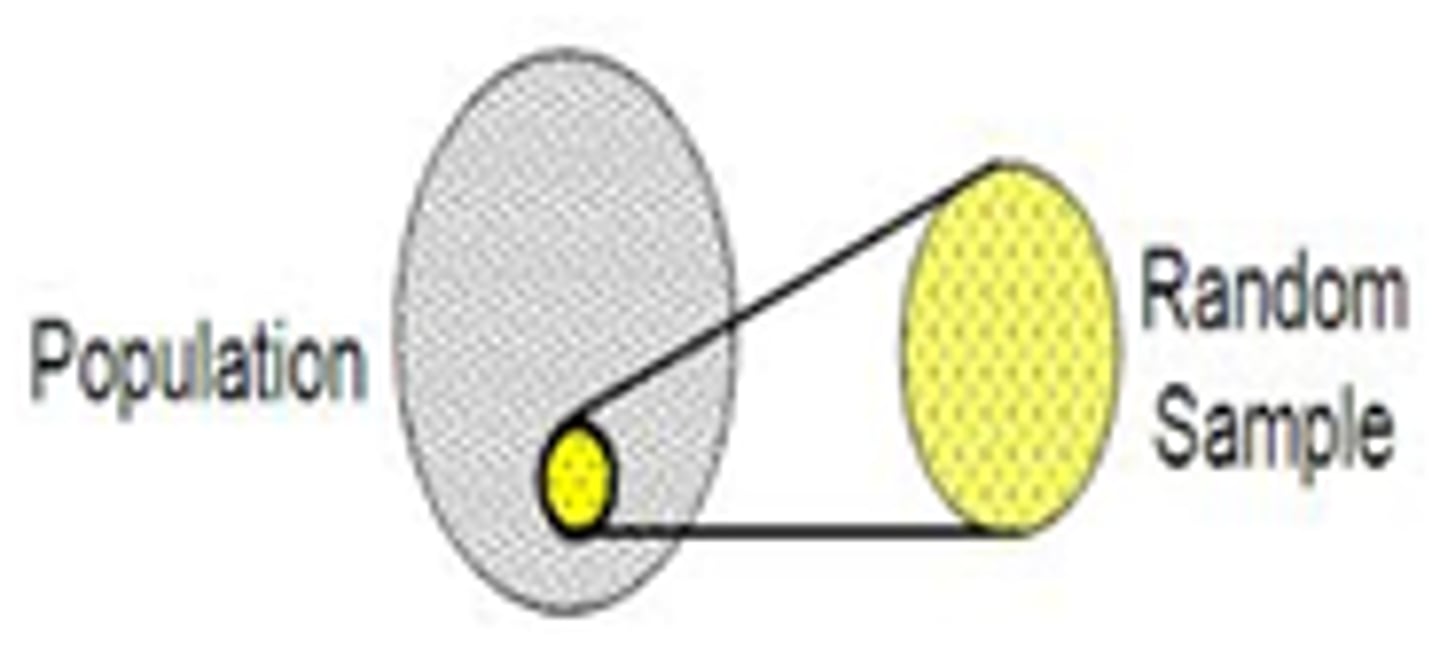
random sampling
every member of population has an equal chance of being selected, unbiased way, done by lottery in hat or computer generation
advantage of random sampling
unbiased as all members have equal chance of selection

disadvantage of random sampling
must know names of all pps., may not be representative of the population if bias occurs by chance, relies on all pps. participating if seleted
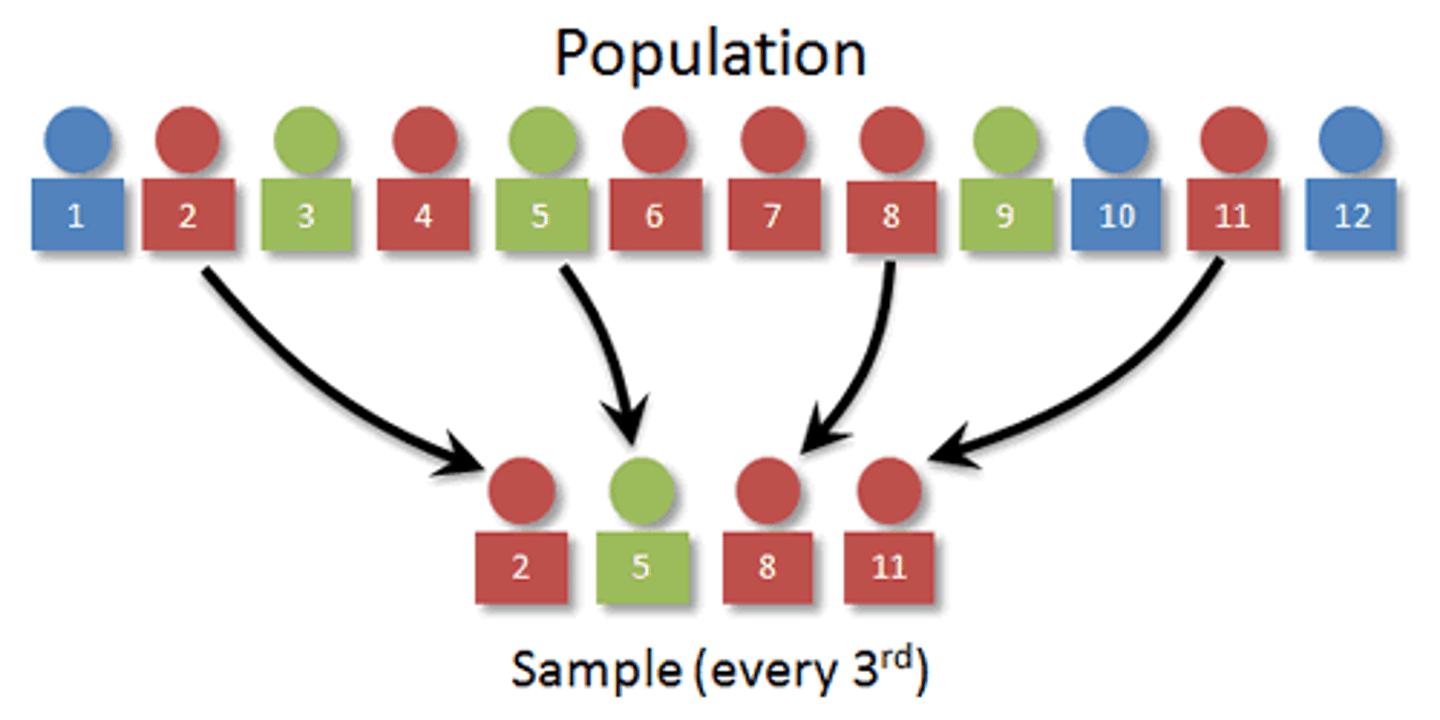
systematic sampling
selecting every nth pp from list of pps.
advantage of systematic sampling
reduces investigator bias cos researcher only decides sample size
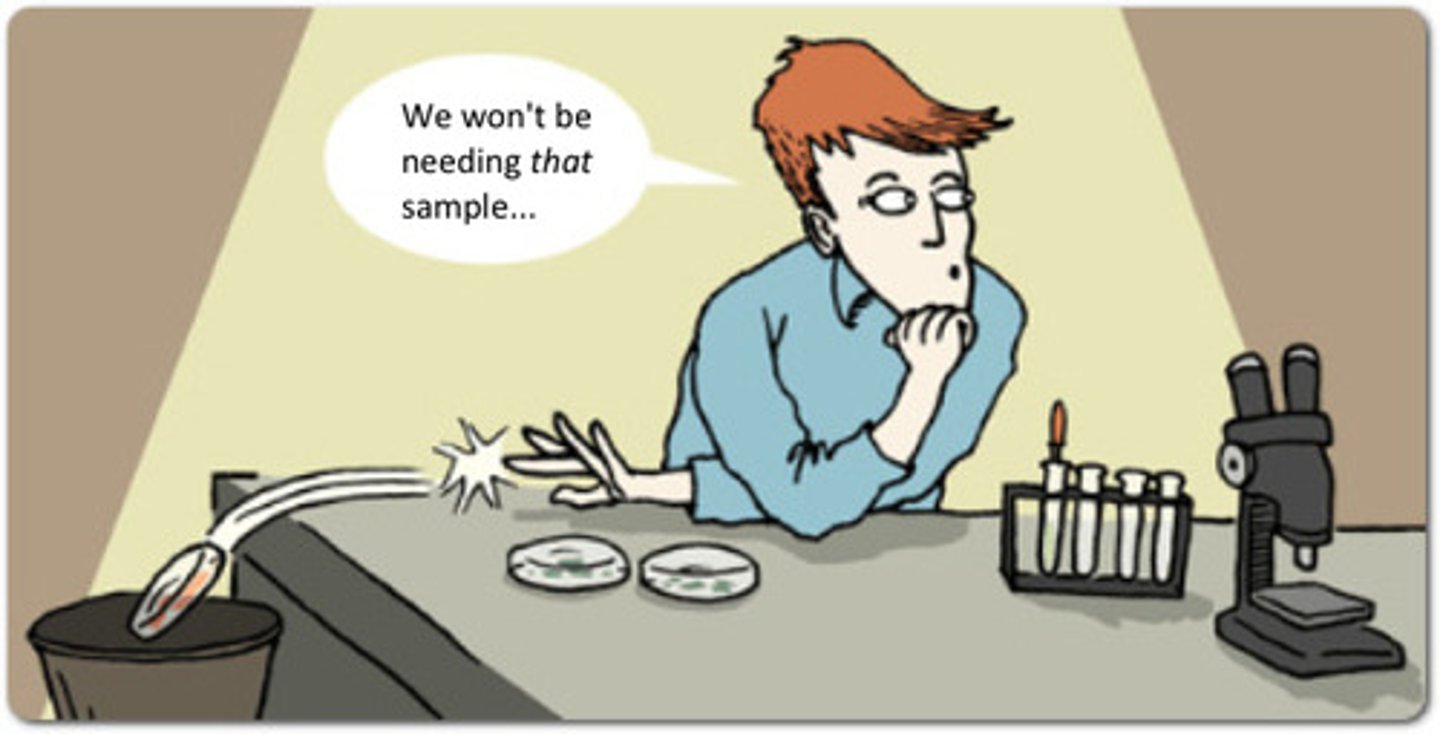
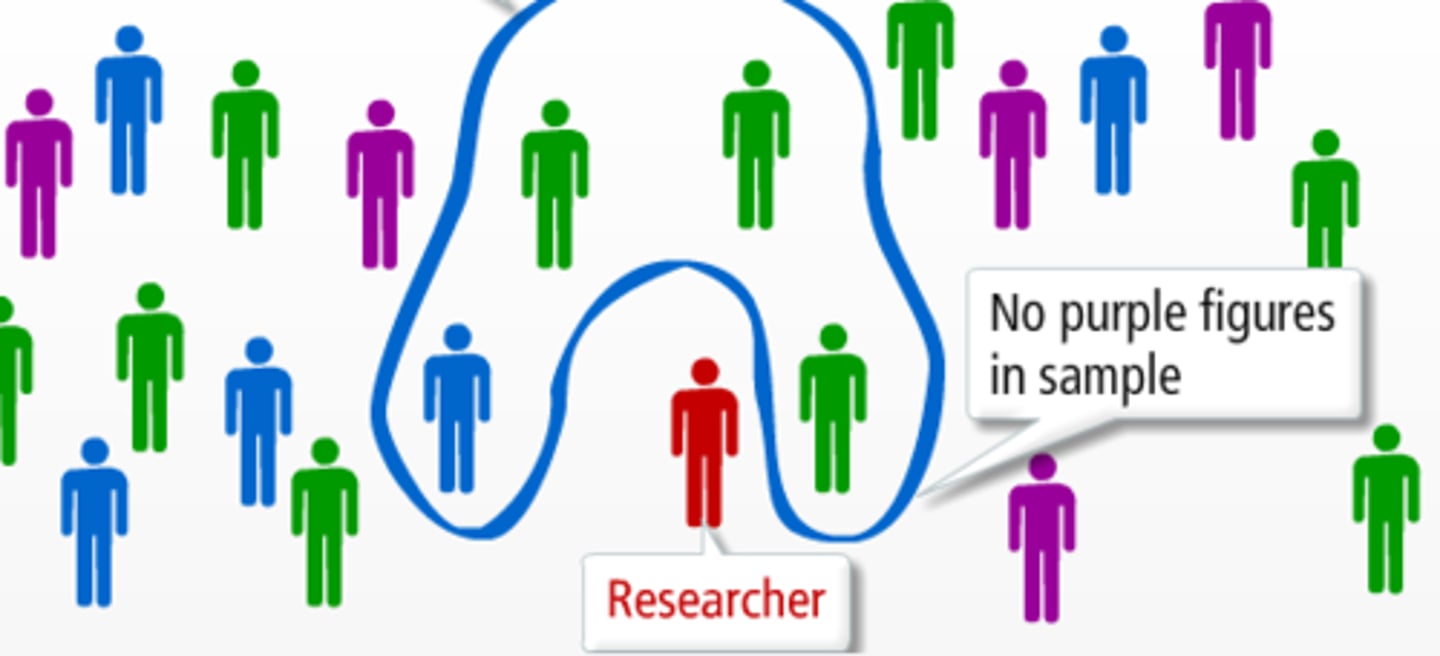
disadvantage of systematic sampling
possibility of unrepresentative sample i.e. limiting generalisability
stratified sampling
subgroups within a population are identified and pps. are randomly selected from each strata in proportion to their occurrence
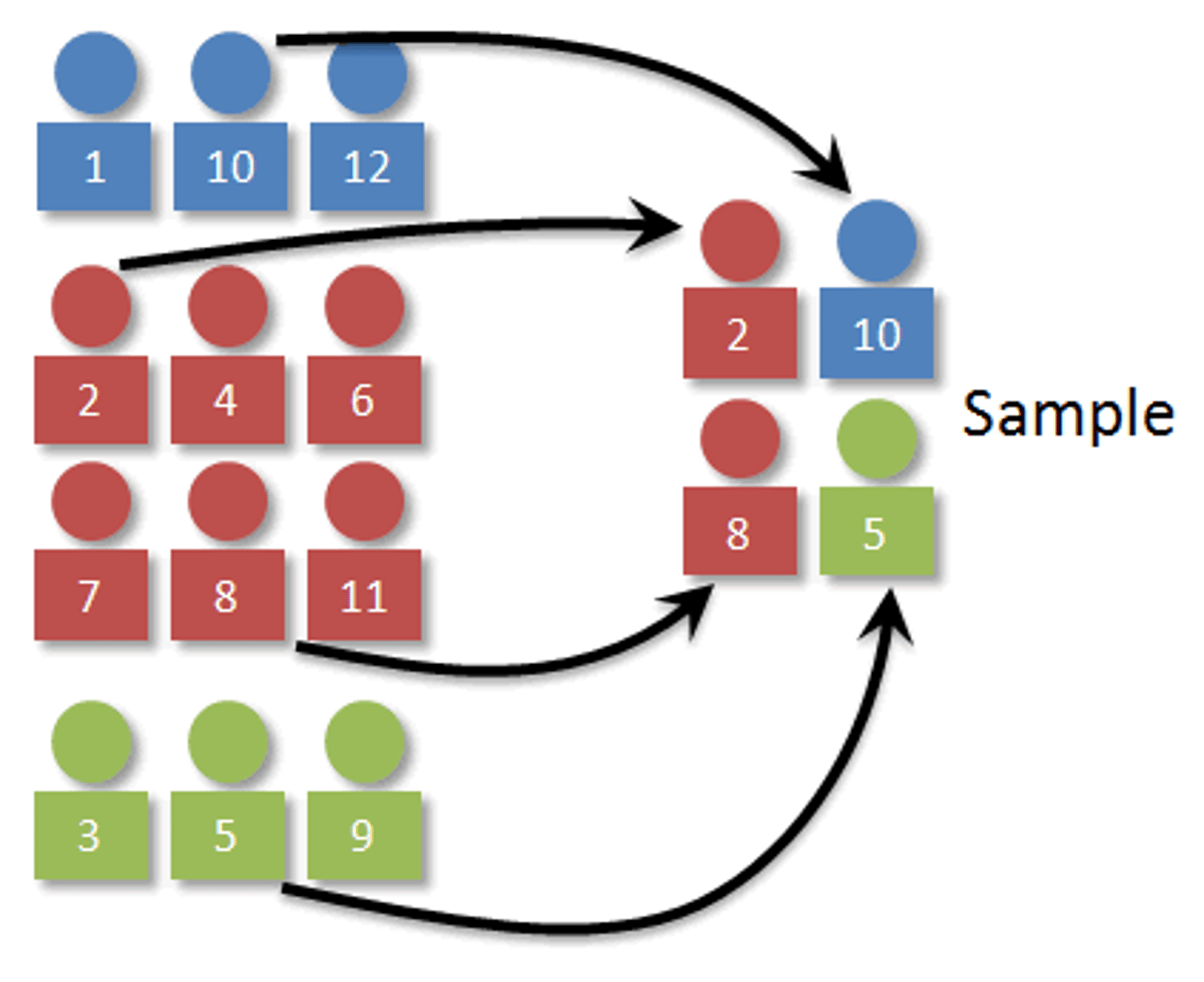
advantage of stratified sampling
sample is representative of population so can be generalised and avoids investigator bias afterwards

disadvantage of stratified sampling
if key features of population aren't identified sample won't be representative, limiting generalisability, very time consuming process and names of pps. need to be known

opportunity sampling
selecting people who are available at the time of the study
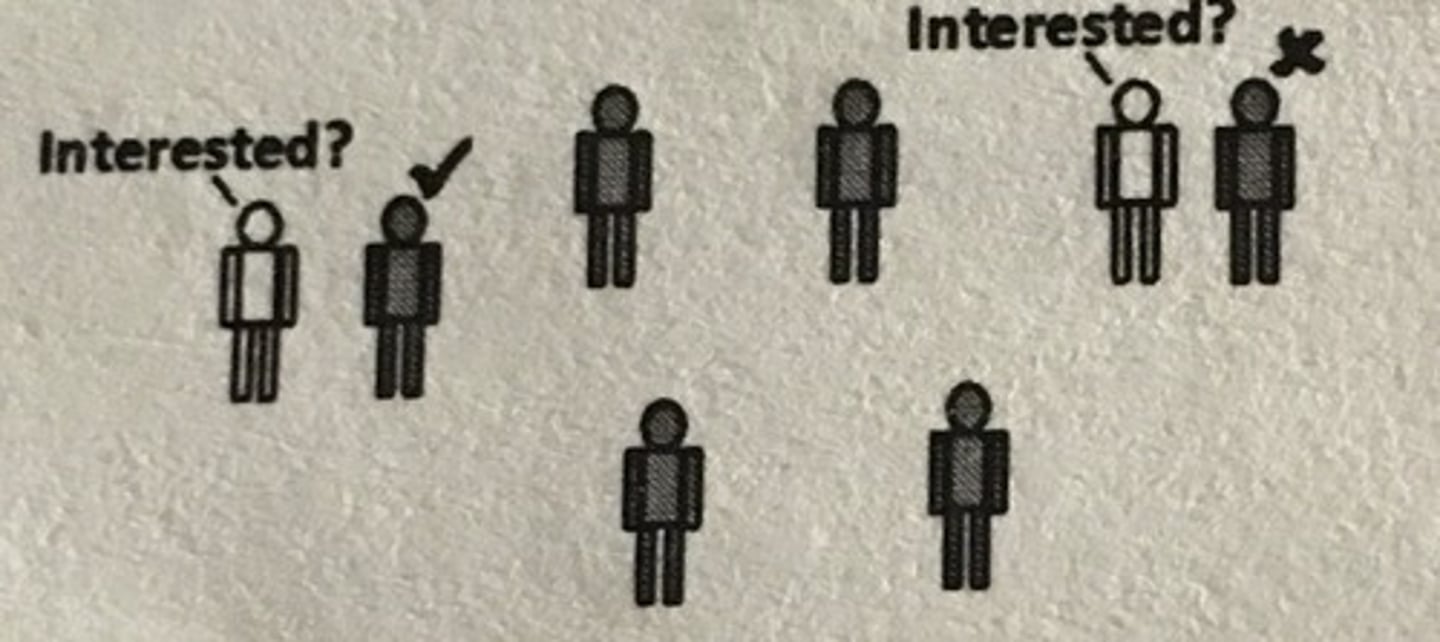
advantage of opportunity sampling
takes less time to locate sample as you use the first pps. you find

disadvantage of opportunity sampling
not representative of target population, and possibility of researcher bias in sample selection i.e. limits generalisability
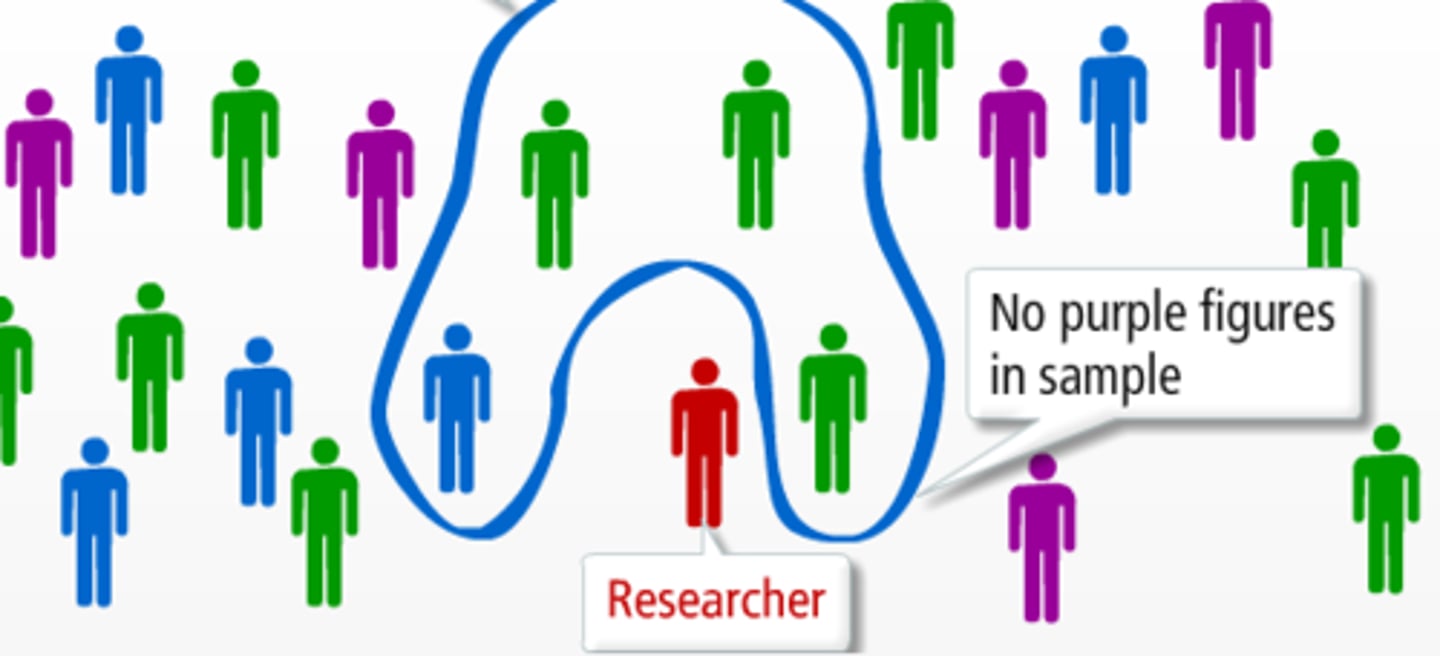
volunteer sampling
advertisements are used to attract pps., pps volunteer, requires an incentive (dosh/prize)

advantage of volunteer sampling
easy method, less initial work (than random sampling)
disadvantage of volunteer sampling
sample bias - only set people will volunteer (atypical respondents with unique characteristics e.g. highly motivated, time wise) i.e. limits generalisability
Laboratory experiment
controlled environment, researcher manipulates IV and records effect on DV, whilst maintaining strict control of confounding variables

strength of lab experiment (control)
successful control/elimination of all confounding variables (not easy to do so in field/natural/other research methods) allows cause and effect to be established

strength of lab experiment (replicability)
well carried out lab experiments can be repeated (hard to do so in field/natural due to rarity of circumstance) and if results are similar, reliability and replicability can be established

limitation of lab experiment (artificiality)
high levels of control = artificiality + different from real life (naturalistic obs/field experiments more likely to rep. real life), artificiality = difficult to generalise findings to other settings i.e. lacks ecological validity
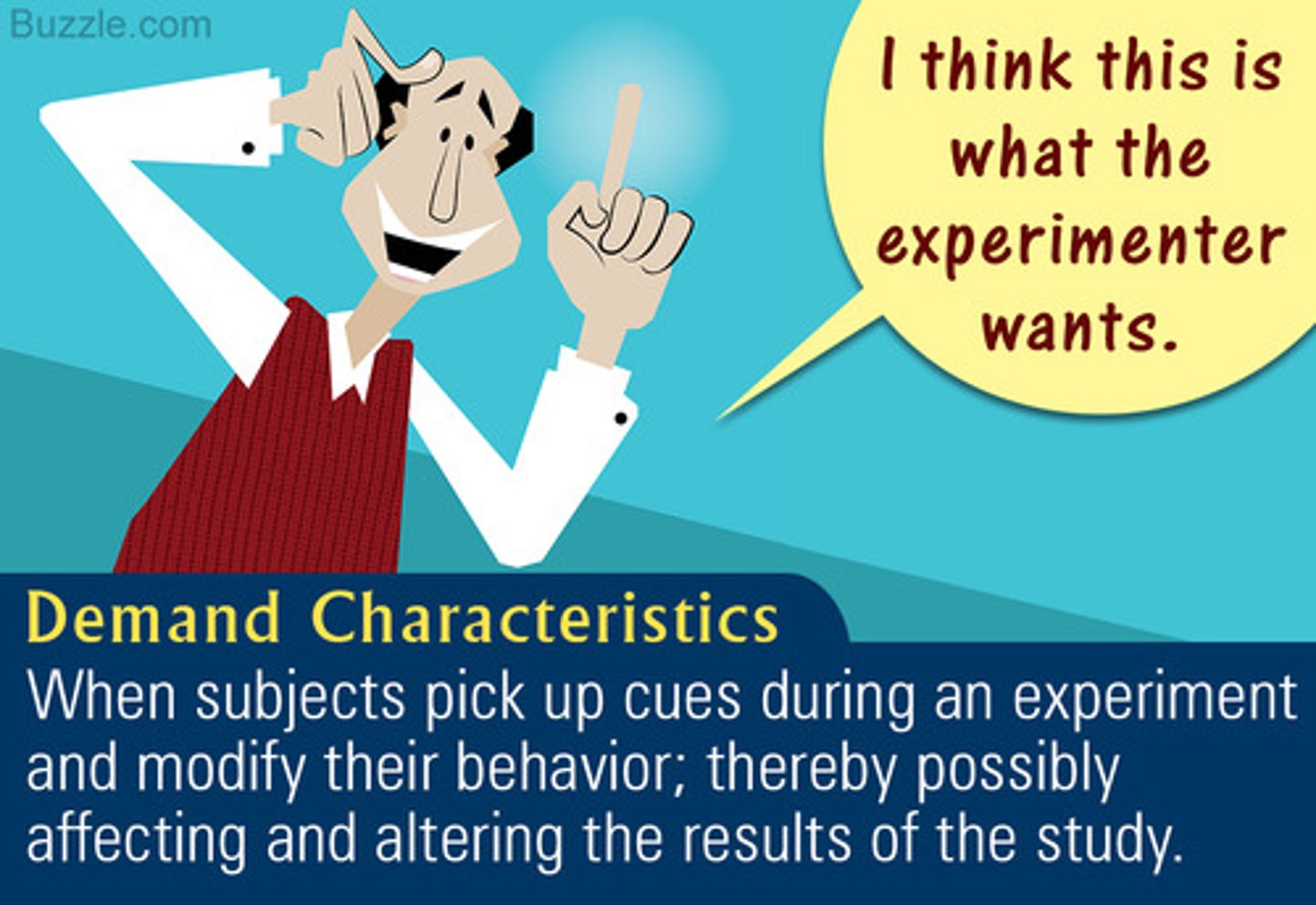
limitation of lab experiment (demand characteristics)
(define demand characteristics) pps. may help experimenter/purposefully confound results (does not occur in field/natural experiment as pps. unware)
Field experiment
carried out in natural environment, experimenter manipulates the IV, pps. may be unaware of participation

strength of field experiment (improved ecological validity)
natural environment i.e. findings can be generalised to real life settings (advantage over lab experiment - why?)
strength of field experiment (reduced demand characteristics)
pps. unaware they're taking part i.e. demand characteristics minimised (advantage over lab experiment - why?)
limitation of field experiment (less control)
hard to control confounding variables - hard to replicate properly i.e. more hard to establish cause + effect (but lab experiment easy to do so cos of high control)
limitation of field experiment (time consuming)
takes longer to do cos of waiting for set conditions to occur (no issue for lab as experimenter controls timing)
Natural experiment
experiment where IV isn't directly manipulated but occurs naturally and researcher has no control over allocation of pps.
strength of natural experiment (reduced demand characteristics)
pps. are unaware they're taking part in study i.e. less influence of demand characteristics (advantage over lab experiment - why?)
strength of natural experiment (lack of direct intervention)
experimenter doesn't intervene directly i.e. insight into real life behaviour (advantage over lab experiment - why?)
limitation of natural experiment (loss of control)
IV not directly not manipulated - less control than lab/field i.e. hard to establish cause and effect cos of bare confounding variables
limitation of natural experiment (replication impossible)
naturally occuring situation occurs very rarely - replication = almost impossible i.e. hard to verify external validity of findings (lab experiment this is possible cos of control of variables)

Quasi-experiment
experiment that has an IV based on existing differences e.g. gender differences i.e. no manipulation of IV
strength of quasi experiment (replicability)
carefully planned out and carried out in controlled environments to allow replication (unlike natural experiments)
strength of quasi experiment (comparisons)
useful to compare between people where manipulation of variables = unethical/impossible/impractical
limitation of quasi experiment (confounding variables)
quasi experiments cannot randomly allocate pps. to conditions = confounding variables i.e. cannot establish cause + effect
limitation of quasi experiment (demand characteristics)
carried out in labs so may be demand characteristics
Ethical issues (crippd)
confidentiality
right to withdraw
informed consent
privacy
protection from harm
deception

Confidentiality
personal info should be kept anonymous + protected at all times
dealing with confidentiality
assign all pps. with a unique number/name
Right to withdraw
pps. right to leave study + withdraw data at any time

dealing with right to withdraw
inform pps. at the start/during/debriefing the study that they have the right to withdraw
Informed consent
pps. must be told true purpose of study before agreeing to take part - might make study pointless as it will result in artificial behaviour i.e. demand characteristics

dealing with informed consent
use prior general consent where pps. do a questionnaire and are asked indirectly whether they would take part in a study they are unaware of

Privacy
people are not observed unless publicly agreed
dealing with privacy
use retrospective consent where pps. are told after the study if they agree for their data to be shared

Protection from harm
Looking after the rights and welfare of participants to ensure no physical/psychological damage

dealing with protection from harm
debrief pps. at the end of the study to ensure they are good physically/mentally
Deception
Misleading participants about the true purpose of a study or withholding info about events

dealing with deception
use presumptive consent where a similar group of people are asked if they would take part in the study