ServSafe Food Safety Principles and Regulations for Food Handlers
 Call Kai
 Learn
Learn Practice Test
 Spaced Repetition
 Match
Match Flashcards
 Knowt Play
1/84

There's no tags or description
Looks like no tags are added yet.
Name | Mastery | Learn | Test | Matching | Spaced | Call with Kai | Chat |
|---|
No analytics yet
Send a link to your students to track their progress
85 Terms
What is considered an outbreak?
An illness is considered an outbreak when two or more people have the same symptoms after eating the same food, an investigation is conducted by state and local regulatory authorities, and the outbreak is confirmed by laboratory analysis.
What are the three ways to contaminate food?
Biological, Chemical, and Physical.
What are five ways foods become unsafe?
Time-Temperature abuse, Cross Contamination, Personal Hygiene, Poor Cleaning and Sanitizing, Buying from Unapproved Sources.
What does TCS stand for?
Time and Temperature Controlled for Safety.
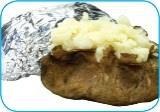
What are examples of TCS foods?
Milk and dairy, eggs, meat, poultry, fish, shellfish, baked potatoes, heat treated plant food, tofu or soy protein, sprouts and sprout seeds, sliced melons, tomatoes, cut leafy greens, untreated garlic and oil mixtures.
What does RTE stand for?
Ready To Eat.
What is the role of the FDA?
Inspects all food not under USDA's jurisdiction, across state lines, and publishes Food Code as a recommendation for state and local authorities.
What does USDA stand for?
United States Department of Agriculture.
What does the CDC do?
The CDC does not inspect but conducts research and assists during outbreaks.
What are common symptoms of foodborne illness?
Diarrhea, vomiting, fever, nausea, or abdominal cramps.
What are the Big 6 foodborne pathogens?
Salmonella (Typhi), Salmonella (common), Shigella, E. coli, Hepatitis A, Norovirus.
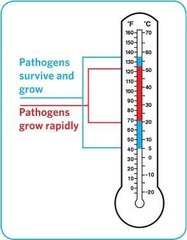
What is FATTOM?
Food, Acidity, Temperature, Time, Oxygen, Moisture.
What are the symptoms of Ciguatera toxin?
Diarrhea or vomiting, tingling in extremities, hot/cold flashes, flush in face, hives, difficulty breathing, heart racing.
What are the Big 8 allergens?
Milk, eggs, fish, crustacean shellfish, tree nuts, peanuts, soy, and wheat.
What is the proper handwashing temperature?
100°F.
How long should you wash your hands?
20 seconds total, with 10-15 seconds for scrubbing.
What should you do if you have a sore throat with fever?
Restrict from food or exclude if serving high-risk population; a doctor's note is required to return.
What is the Danger Zone for food temperature?
41°F - 135°F.
What is the purpose of using separate equipment for each food item?
To prevent cross contamination.
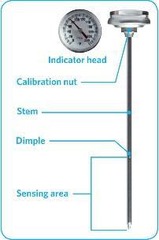
What is the function of a bimetallic thermometer?
Measures temperatures from 0°F to 220°F from tip to dimple through the stem.
What is the purpose of infrared thermometers?
Checks surface temperature using laser light.
What should be done with infected wounds on hands?
They must be covered with an impermeable bandage and a single-use glove.
What is the requirement for single-use gloves?
They are required to be used at all times except when washing produce or handling RTE ingredients that will be cooked.
What should be done if an employee has jaundice?
Exclude the employee, report to local health authority, and they can return after 7 days with a doctor's note.
What is the recommended action for cleaning and sanitizing procedures after vomiting or diarrhea?
Follow strict cleaning and sanitizing procedures.
What is the significance of monitoring and recording temperatures?
To prevent time and temperature abuse.
What is the role of state and local authorities in food safety?
They inspect and enforce locally, investigate complaints, and issue licenses, permits, and approve construction and HACCP plans.
What is the accuracy requirement for thermometers?
Accuracy must be within +/- 2°F for most thermometers; air thermometers must be accurate to +/- 3°F.
What should be done to thermometers after every use?
They must be washed, rinsed, and sanitized to avoid cross-contamination.
When should thermometers be recalibrated?
At the beginning of every shift and whenever dropped.
What is the maximum internal temperature for live shellfish?
Live shellfish must not have an internal temperature more than 50°F.
What is the required temperature for cold food?
Cold food must be at 41°F or lower.
What should be checked when receiving food deliveries?
Visually inspect every delivery immediately when it arrives.
What should be done if food packaging is damaged?
Reject the food.
What is FIFO in food storage?
FIFO stands for First In, First Out.
What is the safe cooking temperature for poultry?
165°F.
What is the cooling requirement for food?
Food must cool from 135°F to 70°F in two hours and from 70°F to 41°F in four hours.
What is the maximum time hot food can be held without temperature control?
Hot food can be held for no longer than 4 hours.
What is the maximum time cold food can be held without temperature control?
Cold food can be held for no longer than 6 hours.
What must be done with food that is returned by a customer?
Never reserve it for reuse.
What are the four methods for thawing food?
In a cooler at 41°F or lower, submerged under running water at 70°F or less, in the microwave if cooked immediately, or as part of the cooking process.
What is the requirement for labeling food packaged on-site?
It must include the common name, quantity, list of ingredients, artificial colors and flavors, and allergen sources.
What temperature must RTE food be stored at?
RTE food must be stored at 41°F or lower.
What is the maximum holding time for RTE food?
RTE food can be stored for only 7 days if held at 41°F or lower.
What is the safe cooking temperature for seafood?
145°F.
What should be done with melons, tomatoes, and leafy greens before cutting?
They should be washed before cutting.
What is the requirement for take-home containers?
They must be designed to be reused and cleaned and sanitized properly before refilling.
What is the procedure for cooling food quickly?
Food cools faster in smaller portions or shallower containers.
What is the purpose of a HACCP plan?
To analyze hazards and establish critical control points for food safety.
What temperature must chicken be cooked to?
165°F for 15 seconds
How does a cook check the temperature of chicken?
Using a thermometer to check the thickest part
What should a cook do if chicken is not at 165°F?
Put it back in the oven for another 3-5 minutes
How long should temperature logs be kept?
60 days
What are the requirements for floors, walls, and ceilings in food facilities?
They need to be smooth and durable for easy cleaning
What characteristics should equipment have?
Smooth, non-absorbent, durable, and resistant to corrosion and damage
What is the minimum height for tabletop-mounted equipment?
4 inches
What is the minimum height for floor-mounted equipment?
6 inches
What must automatic dishwashers be able to measure?
Water temperature and pressure, cleaning and sanitizing chemical solutions
What must be available in handwashing sinks?
Hot and cold running water, soap, a way to dry hands, garbage container, and a sign
What are approved water sources?
Approved public water mains, regularly tested private sources, closed portable water containers, water transport vehicles
What is a cross connection?
The physical link between clean water and dirty water
What is backsiphonage?
Backflow that occurs when there is a water pressure drop
What is required to prevent contamination in a cross connection?
A backflow device or an air gap
What are the requirements for garbage containers inside?
Leak proof, cleaned regularly, covered when not in use
What are the requirements for garbage containers outside?
On a smooth, durable surface, have tight fitting lids, drain plugs in place
What are the three rules of pest prevention?
Deny access, deny food/water/shelter, work with a licensed Pest Control Operator
What are the two ways to sanitize a surface?
Heat and chemicals
What is the minimum water temperature for heat sanitizing?
171°F
What is the minimum surface contact time for chlorine sanitizing?
7 seconds
What is the concentration range for chlorine sanitizing?
50-99 ppm
What is the surface contact time for iodine sanitizing?
30 seconds
What is the concentration range for iodine sanitizing?
12.5-25 ppm
What is the surface contact time for Quat sanitizing?
30 seconds
What is the concentration for Quat sanitizing?
500 ppm
What are the five steps to cleaning?
Scrape, wash, rinse, sanitize, air dry
When should food contact surfaces be cleaned?
After use, before working with different food, any time contamination may have occurred, every 4 hours if in constant use
What is the first step before cleaning equipment?
Unplug the equipment
What is the high-temperature requirement for dish machines?
180°F
What should the first sink in a three-compartment sink be filled with?
Detergent and water at least 110°F
What should the second sink in a three-compartment sink be filled with?
Clean water (room temperature is fine)
What should the third sink in a three-compartment sink be filled with?
Water and sanitizer to the correct concentration
What must be done when cleaning up vomit?
Wear protective clothing (PPE)
Where should mop water or liquid waste be dumped?
In a mop sink only
What must be on-site for every chemical being used?
An MSDS sheet
What is coving?
A requirement to assist in keeping floors clean and dirt-free